
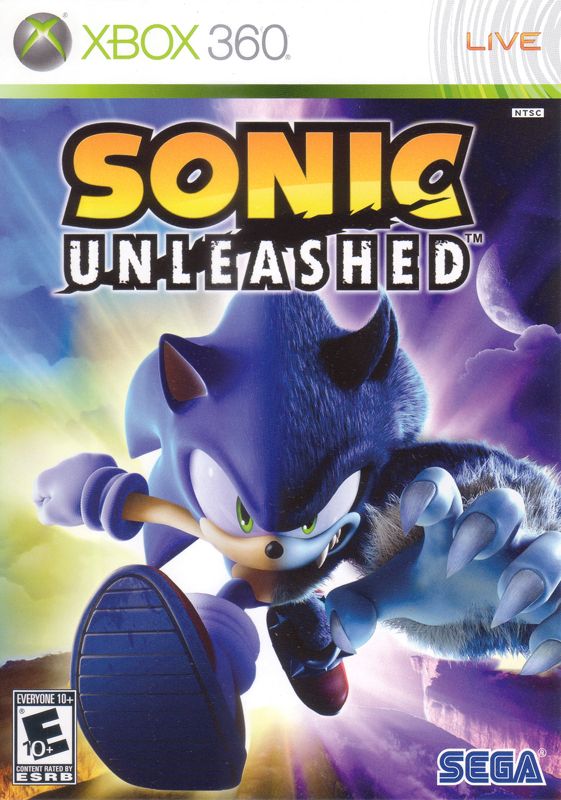
In 2008, the Sonic franchise was in a different place than it is today. Two years prior, one of the most infamously bad games of all time, Sonic the Hedgehog (2006), came out and set blaze to the blue blur. A narrative of “the 3D Sonic games were always bad” started to take hold in the mainstream media and would stay in place for some time. Sonic Unleashed would come out that year and it seemed the writing was on the wall before a single second had been played by anybody. It was another bad Sonic game. The Xbox 360 version of the title currently has a score on metacritic of 60 and the PS3 version is even worse off with a 53.
A website I was writing for at the time, 411mania, even had a slight controversy over this back in the day. The person assigned to review the game was caught only having an achievement that suggested they hadn’t even beaten the first world. So, in their mind, the decision had already been made: another blunder for Sonic. They played a level or two and had seen enough. The only trace of this review I can find online is in this GameFAQs thread.
Yet, metacritic is not only home to professional reviews. It also houses reviews from players and the score here is a very optimistic 8.6 out of 10. If you know anything about the Sonic franchise, you’re probably well aware of how beloved Sonic Adventure 2 is. After all, they just released a movie that’s essentially focused on Adventure 2’s plot in theaters. That game only has a score of 8.3 on Metacritic. Unleashed has a better reputation with fans than the most well known 3D Sonic adventure.
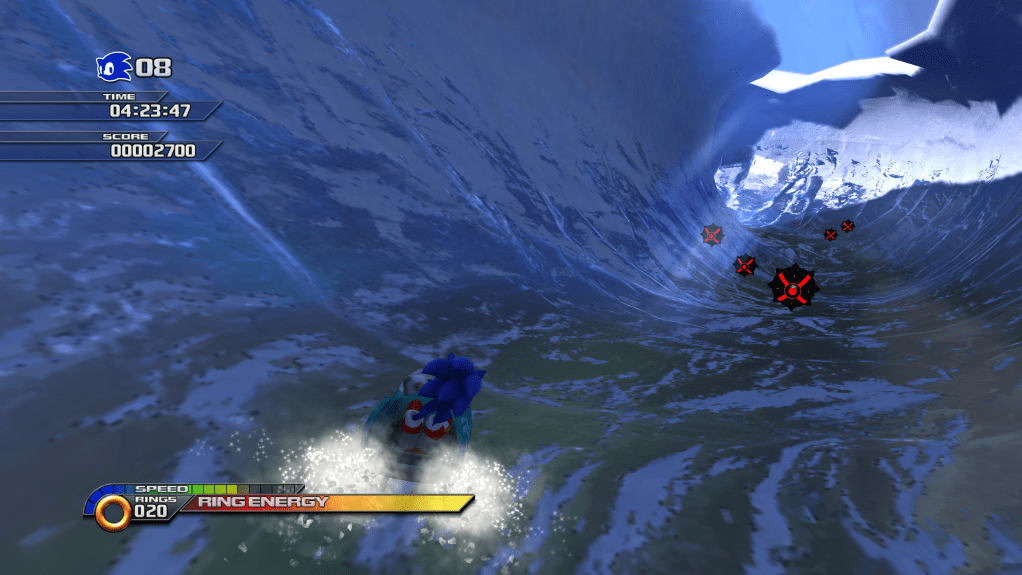
Recently, fans have resurrected Unleashed and given it a modern PC port. It can run at 240 FPS if you want it to, it runs in 4K, it is basically what an official port of the game would look like. There has never been a better time for a reevaluation of this title. Was the critical consensus onto something here or were they lost in a “SONIC BAD” fever pitch? Are the fans right that this is an all-time classic? This game is only rated .4 points lower than The Legend of Zelda: Ocarina of Time? I don’t think I need to tell you about the reputation that game has.
And I unfortunately have to tell you that the reality is somewhere in the middle. Sonic Unleashed is not a 6/10 bad game. It is not a game that should be put down before even finishing the first world – it’s not something that shows all of its tricks up front and then leaves the player to muddle around in mediocrity of eight hours. But it is also not platforming perfection. It is not an absolute must-play 360 gem, it is not something that everyone needs to play. It is simply an alright game. It exists, as most games do.
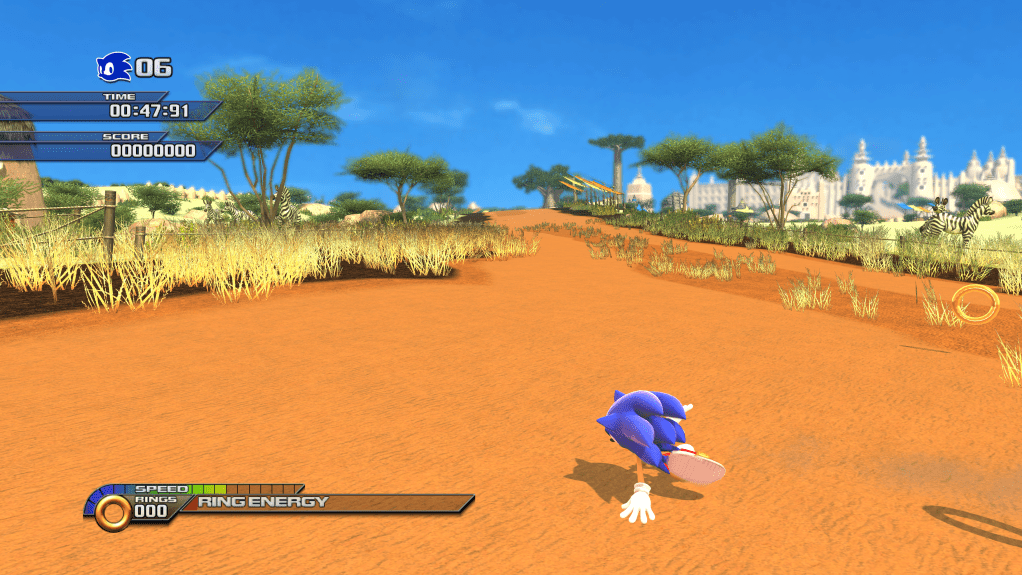
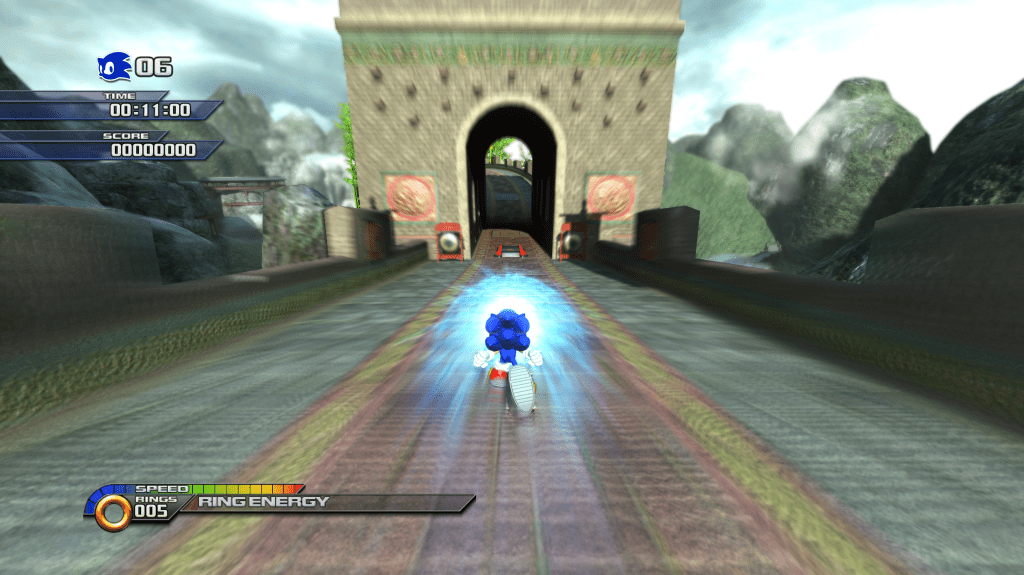
Unleashed features two different styles of gameplay. First let’s get the obvious one out of the way. During the day, the blue blur plays like you’d expect him to. He runs fast and the stages are designed around keeping the player moving while also throwing challenging obstacles in his way. If you look at these nakedly, the day time levels in Unleashed are probably the height of 3D Sonic level design. They mix challenge with open level design and speed. Levels like Rooftop Run and Dragon Road are some of my favorite in the entire franchise.
However, Unleashed has a gimmick that brings these levels down. Platformers often have a separate sub-genre called “collectathons.” In collectathons, the player is encouraged to grab a bunch of tchotchkes in order to continue their adventure. The most famous one is Mario 64. The player needs to collect a certain number of stars in order to progress the game. The player knows about these up-front, as they immediately are confronted with doors blocking their progress if they don’t have a certain number of stars. This tells the player they need to engage with individual levels for long periods of time, they can’t just pop in and pop out.
Unleashed takes this element from the collectathon but does not tell the player up front. Every stage has two sets of tchotchkes – sun and moon medals. They are littered throughout stages and you probably have collected a couple of them on accident, but the game never directly tells you that you need to collect them.
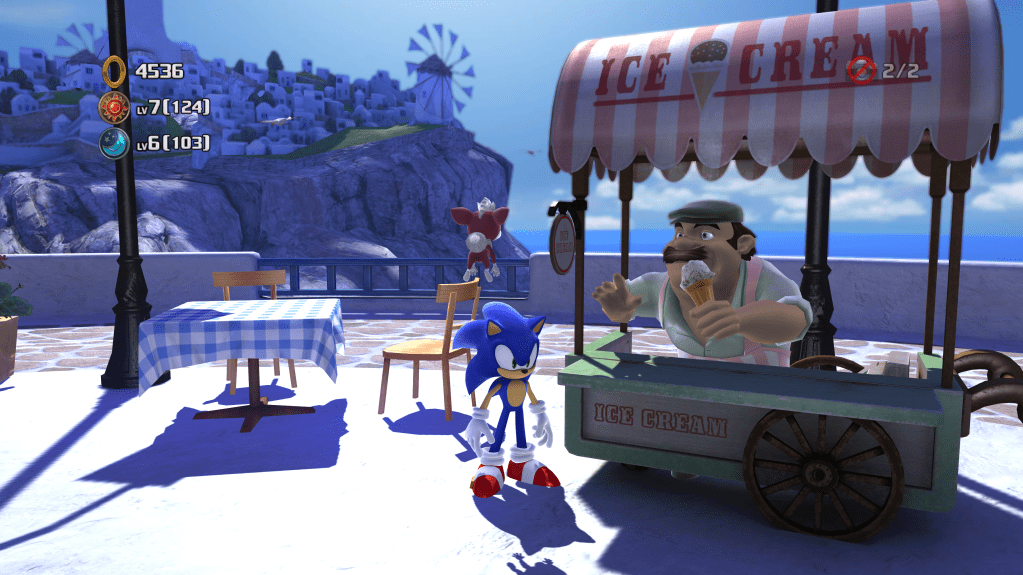
If you’re coming off a more recent Sonic game (Generations, Colors, Frontiers, Forces), you might think these function a lot like the red coins from those do. Those are also scattered around levels, but they don’t gate level progress – instead, you unlock artwork and little extras. They’re the cherry on top, a bit of a reward for exploring each level.
The sun and moon tokens are not like that. Instead, they function like stars do in Mario 64. But instead of telling the player up front about how many they need to access certain areas, you are only told about their importance if you don’t have enough. So a new player might make it to Cool Edge and be met with a “you need more sun medals!” prompt. Now that they’re aware, they will go out of their way to track medals down, but it also requires them to go back and play the levels again. Not necessarily the end of the world, but certainly annoying.
My issue with this design comes from after the player knows how important these things are. When playing through a daytime level and going fast, as one does in a Sonic game, you’re probably going to blow by a medal. In a red coins-style Sonic game, this would just result in a shrug. “Eh, I’ll just replay and get it if I feel like it.” Since Unleashed never outright tells the player how many medals they need and instead tells them when they don’t have enough, the reaction to missing a medal changes. It moves to “oh shit, I need that, I better go back and get it.”
And sometimes that isn’t possible. So the instinct shifts to “well I better kill myself to go back to a previous checkpoint” or “well I better restart the level because if I missed THAT obvious one who knows what I might have missed?” In my experience, this takes the first playthrough of these fast-paced levels and turns them into long slogs. If I’m going too fast, I feel compelled to slow down because I might miss something. I’m not taking in the sights because I want to, I’m doing it because I have to.

This makes the first playthrough of the standard Sonic levels something of a different beast than usual. They become slower, more plodding and more focused on getting everything you can. It just doesn’t meld with what I come to the franchise for. In order to feel like I played every level, I need to go back and play through some courses twice just because the first time didn’t feel right. It felt like I experienced something else entirely. So while the levels are all around pretty solid, this gimmick brings the experience down. Sonic doesn’t need to be a Mario or a Banjo-Kazooie. Collect things on your own time!
Unfortunately it bogs these otherwise great levels down. A lot of people simply never replay games or stages unless they absolutely have to and if your first impression of a stage is bad, you’re less likely to engage with it again. This gimmick takes something great and can turn it into something merely “pretty good” for a lot of players. That’s a real shame, because there are a lot of high hights during these portions of the title.
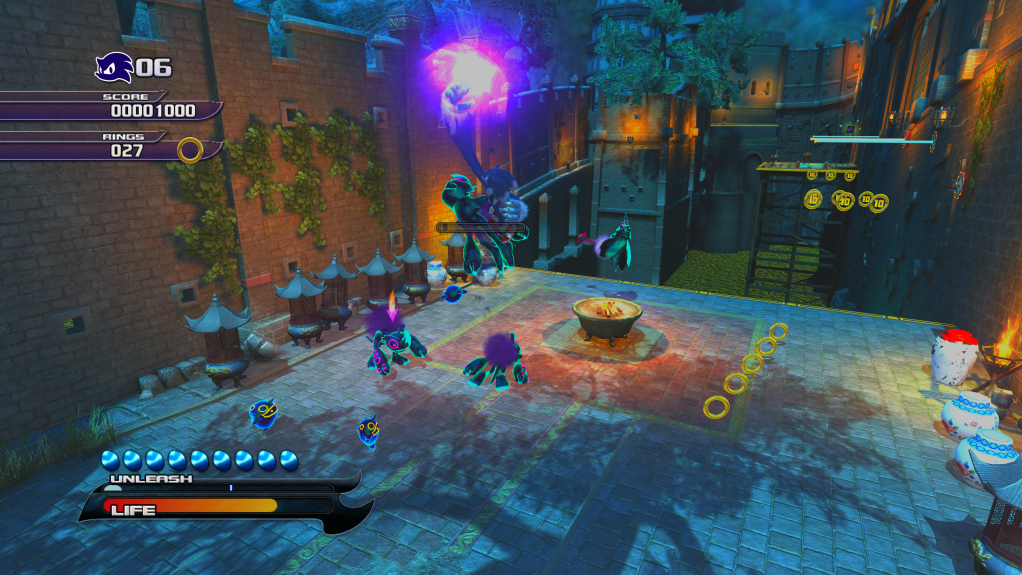
This mechanic is better suited for the other primary gameplay style of Unleashed, the night stages. The infamous werehog. This creature of the night feels like a direct response to criticism of 3D Sonic. People would frequently complain that they don’t want to play as Sonic’s friends, they just want to play as Sonic. Instead of looking at the actual complaint – players wanted the high speed platforming over the emerald hunting and junk like that – Sega took it literally. You’re JUST going to play as Sonic. He’s going to have different playstyles, but it’s JUST Sonic.
The “just Sonic” method brought us the werehog, which turns the speedy Sonic into a slower combat-focused beast. The speed of your character goes way down and the once quickly-dealt-with bad guys become sluggish individual encounters. These segments play like a budget God of War title. You have combos you can pull off, but you never really need to do that. Just mashing and occasionally blocking and dodging will carry you to victory. It’s nothing complex.
The slowed-down nature of gameplay feels better suited for the medallion collection that the daytime stages. Since you’re moving at a much less rapid pace, you’re more likely to take in the scenery. You never have to physically stop yourself like you do in the daytime stages, instead you are already plodding along. Exploration actually helps these levels feel like less of a slog – I was always happy to be done with the slow, tedious combat so I could get back to rummaging around. These levels were sometimes interesting to explore, even!
Slowed-down also applies to the length of these sections. Every werehog stage is long. I would say the average time of completion is around 20 minutes, which is pretty long for a game that still uses a life-based system (that is to say, if you run out of lives before you finish a level, you have to start all over from the beginning to clear it). These levels really drag as a result. So it’s good for getting those mandatory tchotchkes, but not so much for having fun. And that’s half of the game, slowly plodding around and mindlessly smashing bad guys.
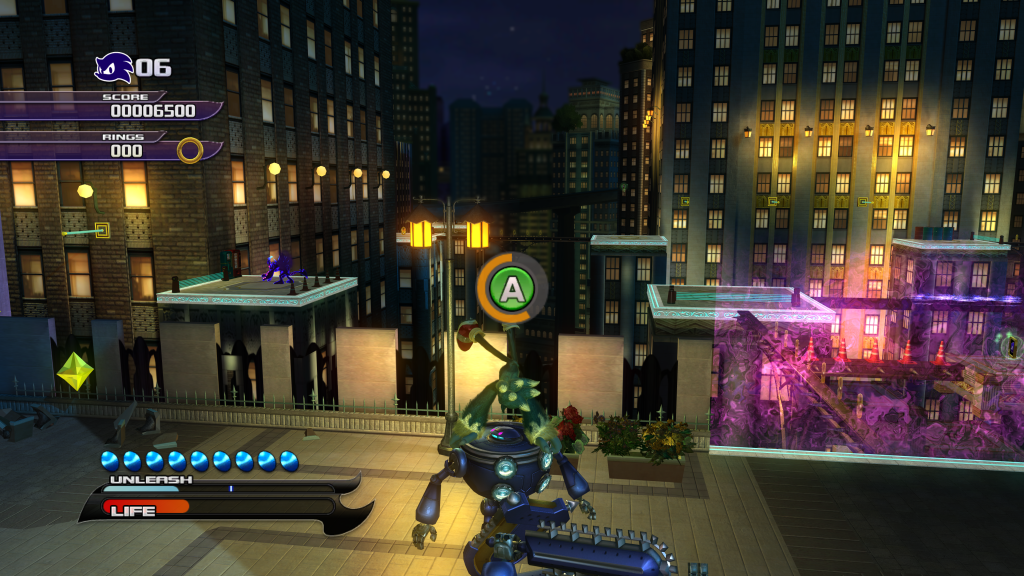
The bigger the bad guy, the more annoying they are to pummel. Occasionally the player runs into these giant hulking behemoth bad guys that take a lot of punishment. They aren’t super hard or anything like that, but they do take time to wear down. About halfway through their health bar, you can grapple them to initiate a quick time event (QTE) sequence that will kill them instantly. However, if you fail, the enemy regains health. The QTEs are, and maybe this is a skill issue, not auto-win by any means. So you can beat the crap out of these giant behemoths, fail a QTE that you yourself initiated, and then be back at square one.
On top of this, sometimes these giant enemy fights are on very narrow platforms. So if you get hit once by an attack with a lot of knockback, you can just plummet to your death. I need to stress that I do not find these enemies difficult, they’re just time consuming. And when you’re fighting on the small platforms, this also requires focus. So these segments require you to pay a lot of attention to an extremely simply combat system from long periods of time or risk potential death. It’s just not fun.
I should also mention that the QTE thing is present in standard encounters featuring lots of little bad guys, too. However, they don’t always seem to initiate, instead occasionally the player will need to mash on a button in order to grapple the enemy and place them above your head. Fine in theory, but if you’re surrounded by other enemies, this is basically a guaranteed way to get yourself damaged. While you’re mashing, you’re defenseless, so you can just get smacked out of this. This leads to just mindlessly mashing through every fight since you can’t always trust grappling.
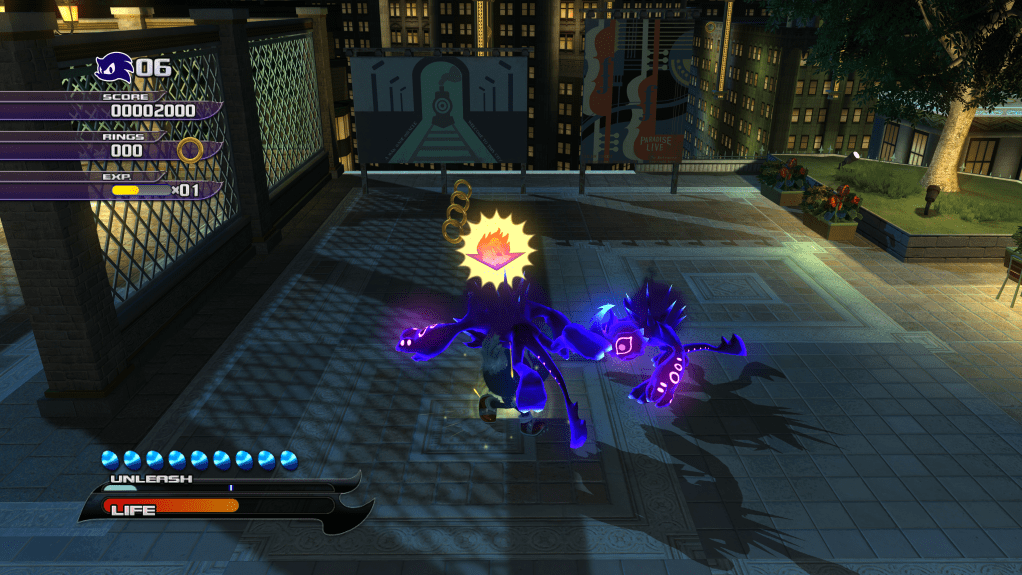
Making the werehog worse is how clunky the platforming is. It feels like you need to be extremely precise when making any maneuver. If you’re even slightly off mark, you plummet to your death. This is annoying when Sonic is forced to use small tightrope style walkways. Why do these demand such precision from the slow version of Sonic when grinding rails feel incredibly easy to latch onto for the fast version of the character?
In this playthrough, I also came across a number of glitches that hindered play. You frequently have to grab onto ledges and pull yourself along them – if you’ve ever played a 3D platformer, you probably know what I’m talking about. Multiple times when I’d pull myself up from these ledges, I would clip into a wall or something and Sonic would be stuck in the wall. When this happened, there would be no way out. There is no auto-kill Sonic or “restart at checkpoint” option. Instead, you need to restart the entire level again.
When these levels take 20+ minutes to complete and you are faced with starting over from the beginning due to something out of your control, it’s crazy frustrating. It made me not want to play anymore. In short, I can live without these sections. I think exploring the levels at a more leisurely pace is alright and the music is pretty snappy, but that’s it. The brawler segments are the clear weak point of this title.
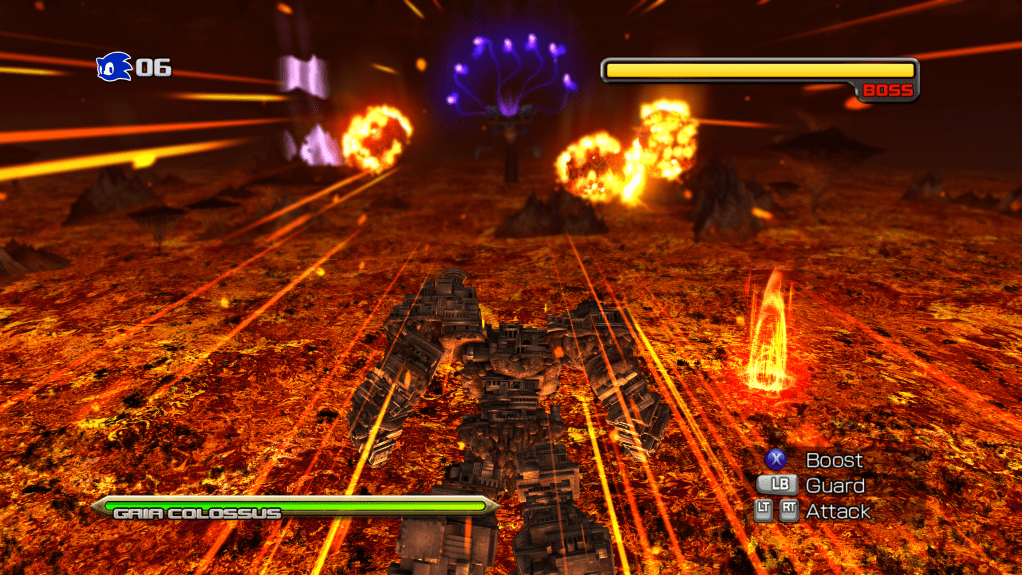
Well, maybe the weakest point is the boss battles. I’m not gonna pretend bosses have ever been my favorite part of Sonic, but I think the penultimate fight in this game is probably my least favorite boss in any game ever. Slow and takes forever. Awful.
One final thing that needs mentioning is a tonal impact Sonic the Hedgehog 2006 might have had on this title. That game had a pretty self-serious story and featured a pretty notorious semi-romance between the blue blur and a human princess, including a scene where Sonic kisses a human. The widespread mockery led to Sonic games taking themselves less serious for about a decade. Instead of a more serious – and yes, sometimes cringey – narrative the game focused on telling very childish jokes. The humor is straight up unbearable and not worth engaging with. The worst example of this is Sonic Colors, a game I encourage everyone reading to skip completely.
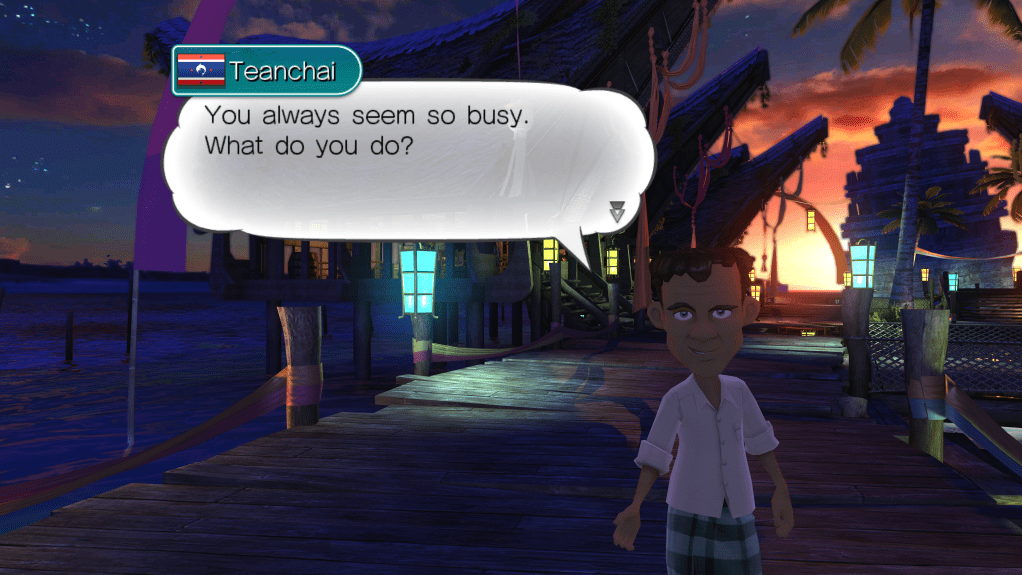
The beginnings of this can be seen in Unleashed. On the surface, the story does take itself seriously in spots. However, the secondary protagonist is a little goofball that only really talks about eating snacks. All of the humans look ridiculously cartoony – to the point that I don’t even really care what they have to say, they look ridiculous. It reeks of a game afraid to be different, like “this is just a silly title, you wouldn’t mock a clown for being ridiculous. What are you gonna say, the clown has big shoes? Of course it’s silly, it’s meant to be silly.”
To be an old man about it, give me Sonic Adventure 2. That game has an incredibly stupid plot and is unapologetically corny. But you know what? It takes itself seriously. It isn’t afraid to be called cringe, it isn’t trying to appeal to people who would never engage with a talking anthromorphic hedgehog man. It just is. Unleashed marks the start of a decade of a period where Sonic felt ashamed to be, well, Sonic.
In this little review, I probably come across a little harsh. I need to reiterate, the actual Sonic stages are probably my favorite in the franchise. I think they are tired up in a gimmick that takes away from the initial awe one might feel in their first experience with them, but the overall quality there is really high.
Unfortunately, this high point is dragged down by a lot of mediocrity. At its heights, Unleashed can hit that 8 range that its fans place it at. But there’s too much junk there, there’s too much one has to put up with. When over half of the package has me scratching my head, trying to figure out what other people see, that’s the problem. I think 6/10 is harsh, but it’s closer to that than what the reputation with the fanbase is.
Perhaps the adulation comes from a group of people who ‘grew up’ with this title. There’s nothing wrong with that, but Sonic Unleashed is no hidden gem. It isn’t a waste of time, either. It just exists.
 Vidya Thoughts
Leave a comment