
- Some background info
- Graphics and narrative focused discussion
- Gameplay and side activity (Tetra Master) discussion
- Notable characters
- It continues here – a look at similarities between IX and other mainline Final Fantasy titles
- In Conclusion
Final Fantasy IX was the first mainline title I got to play when it was still new, that is to say about a month or so after it released. I got to explore the world of the game at the same time as everyone else. As a result, it’ll always hold a special little place in my memories.
Lots of my early online footprint used elements of Final Fantasy IX. One of my first Internet usernames was Master_Vivi2. I once had a little message board that was named Lindblum. I think my oldest e-mail address that I still have access to is great_mage_vivi@yahoo.com.
So, needless to say, the teenager version of myself was ready to grip onto the mass hype of Final Fantasy IX. VII and VIII took the Internet by storm, so surely IX would follow suit. Right?
Rumors and origins
Rumblings about Final Fantasy IX first hit the Internet in 1999. While SquareSoft didn’t have anything official, news sites of the era reported that the aesthetic for the next Final Fantasy title was wildly different. Quoting “Gaming Intelligence Agency” an inside source referred to these designs as ‘hobbit-like.’ Final Fantasy VIII featured humans with realistic proportions, a pivot from the more deformed overworld models of VII, so a step in a different direction seemed like a strange thing to do.
Internally at Square, it doesn’t seem like they knew what to do with this next Final Fantasy title either. Shinji Hashimoto, Square’s Senior Vice President of Software Development and Character Licensing, had this to say when asked about the next Final Fantasy by Next Generation Online
“Whether it will be called Final Fantasy 9 or not is not yet decided,” Hashimoto said. “At Squaresoft, we are always looking to come up with cutting edge storylines and systems. Whether that new storyline will be called FF9 has not been decided.”
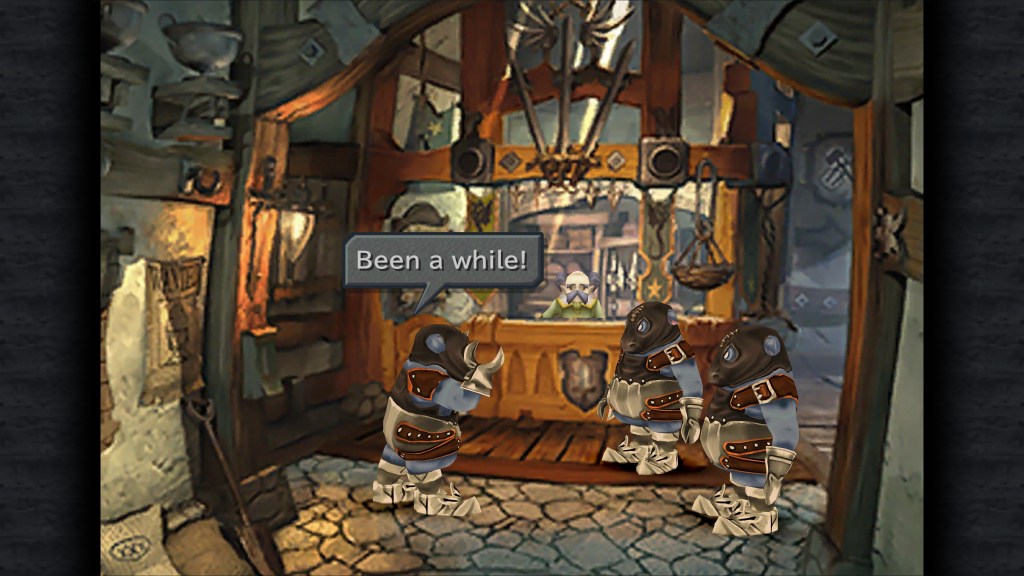
Fans online had speculated that this hobbit Final Fantasy was going to be a bit of a spin-off title like Final Fantasy Tactics. The most common title I’ve seen online for it is “Final Fantasy Gaiden.” Gaiden essentially means ‘side-story.’
Speculation on whether this new Final Fantasy title would be numbered or not came to a close in late 1999 when SquareSoft officially announced that Final Fantasy IX was in the works. And on January 31, 2000, the insider-dubbed ‘Hobbit Final Fantasy’ was officially debuted to the world as Final Fantasy IX at the Square Millennium Event in Tokyo. IX would be coming out later in the year 2000!
IX didn’t come alone. In what would qualify as a “one more thing” style reveal in the modern sense, Square also announced the first ‘next gen’ Final Fantasy title, Final Fantasy X. This would be on the upcoming Playstation 2 and feature graphics that would render Final Fantasy IX immediately dated.
They also announced Final Fantasy XI, the first real multiplayer Final Fantasy title. XI was going to be something called a massively multiplayer online RPG, a genre popularized in the West by Everquest.

As a result of this, Final Fantasy IX felt like an afterthought. The previous two Final Fantasy games were cutting edge graphical showpieces. Final Fantasy VII helped usher in the 3D-era for the franchise on a new piece of hardware. VIII looked like money was bleeding off the screen at the time.
IX looked good, and because it leans more into artstyle than graphics it has aged better than a lot of other titles from the era, but it wasn’t cutting edge. The cutting edge title was coming in 2001 on new hardware.
And people also had to wrap their mind around the multiplayer nature of XI. What did that mean? How would they communicate stories to the player? How would parties work? Would there be a main protagonist? Is this a game you could beat? These questions might sound really stupid in 2024 where we all know what an MMO is, but in 2000, this is where I was at. What the hell was XI gonna be?
Also, releasing on the original Playstation was not a point in its favor. By the time the game released in North America, the Playstation 2 was already out.
While FFIX’s art style is a huge asset these days, at the time of release when you compared the look of these deformed characters to something like PS2 launch title Tekken Tag Tournament, it was hard to feel too excited. Most people will tell you they’re gameplay first, but this era was a graphics revolution. The jump from the PS1 to PS2 was so vast that, at the time, it was hard to really put much focus on what was on the PS1.
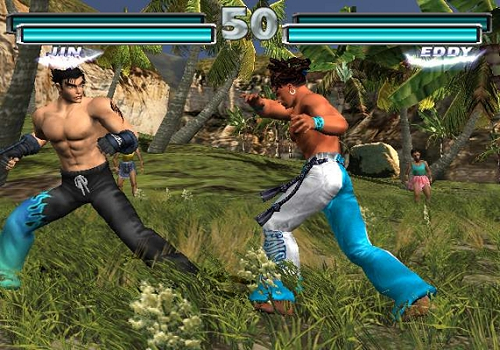
This random screenshot I found looks better than Final Fantasy VII’s cutscenes. And it’s actually PLAYABLE. I don’t think anyone considers Tekken Tag Tournament an all-time classic, but just knowing graphics like this were possible on a device you could actually own did a lot of heavy lifting.
At the time of IX’s release, I feel there wasn’t much chatter around it. I was excited for it, I let everyone within earshot know that it was actually the best one yet and that VII is overrated, but I didn’t see as much love for it online as I did for the other two. It felt like the forgotten Final Fantasy. This Penny-Arcade strip encapsulates the general sentiment at the time.
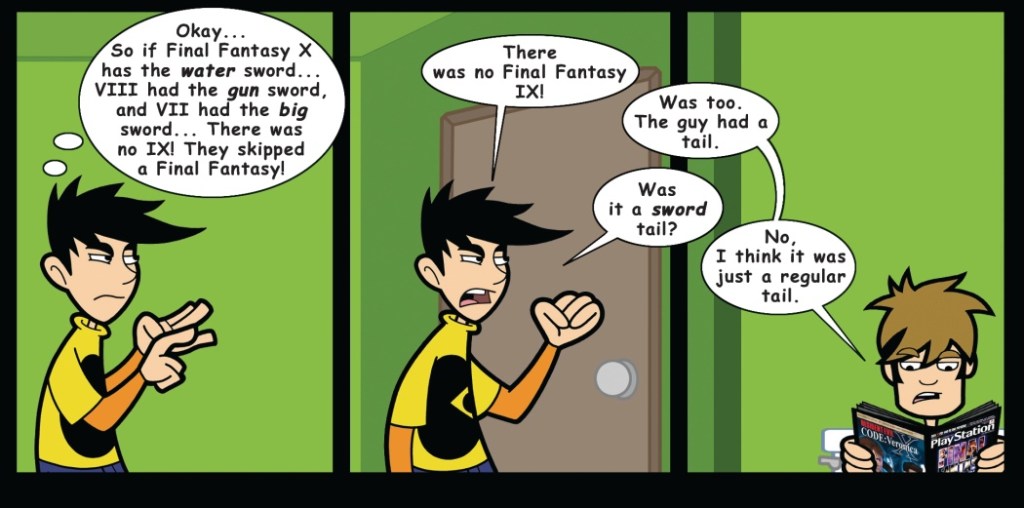
Hey, I owned that Official Playstation Magazine that Tycho is reading!
This probably comes as news to some of you since IX feels like the title people shout about from the rooftops about. This is a very well loved game, but let me assure you, that was not always the case.
So which identity fits IX more? The under-heralded swan song of the original Playstation? Or the Final Fantasy title that falls between VIII and X, the ‘other’ Playstation Final Fantasy?
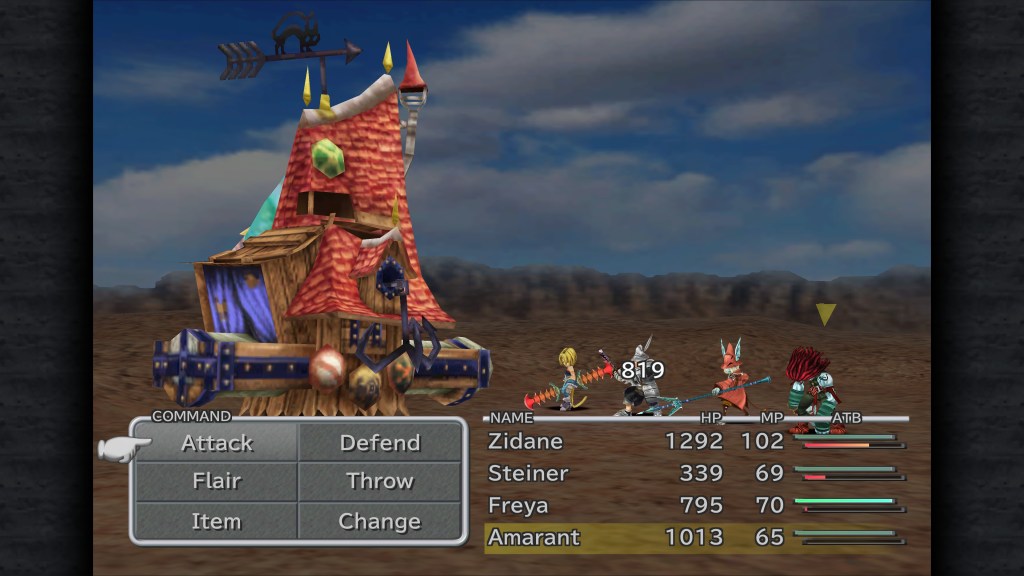
A different approach
Final Fantasy IX feels like a hard pivot away from VII and VIII. While the first six numbered games in the franchise went for pretty traditional feeling high fantasy worlds, VII and VIII broke off of this and gave us something more modern. IX instead goes back to the general feeling of the first few games of the franchise. You have kings and kingdoms and knights and fantastical races (hippo men! bird ladies!) and an evil empire.
“Since FF9 is the third of the original PlayStation trilogy of Final Fantasy games, we’re not struggling to squeeze every last drop of performance out of the hardware―instead, we can once more focus on building a world and atmosphere that really feels like Final Fantasy. That was the direction I wanted to go in,” Series creator and producer (at the time) Hironobu Sakaguchi said.
“With FF9, I’m hoping to free up the Final Fantasy series itself a bit. … I understood that people may be expecting another realistic game like FF7 or FF8. But if we did that, I thought, we’d probably become locked into this pattern for FF10 and FF11 and not be able to create anything new ever again. So that’s why I wanted to break down everyone’s assumptions about Final Fantasy, and remind them that Final Fantasy was a free world where anything was possible.”
This quote has me siding with the “Final Fantasy Gaiden” people. It just doesn’t make a lot of sense to me that they made this harsh left turn with the franchise right here. I think Sakaguchi saw this spin-off title in development, really liked it, and suggested that it become IX. X, a landmark anniversary number, needed to be a title worthy of that number and I feel from a spectacle standpoint, Sakaguchi and Square probably felt the in-development PS2 game was worthy of such a number.

It’s also really humorous that Sakaguchi was worried about the style of VII (battle) and VIII becoming the sort of default aesthetic for Final Fantasy. Because X and XI look significantly more like those two games than IX. In fact, every mainline game since IX has that style of character. It makes IX really stick out, but it also helps push the idea that IX started out as something different. It would definitely explain the different art style.
As a theoretical spin-off title, Final Fantasy IX had a lot of elements that would be considered franchise staples. It feels like a sort of celebration of the franchise. So if you’re going to make a big bang and step forward with the tenth entry, why not make the ninth entry a sort of ‘greatest hits’ of the franchise up to this point? Make it act as something of a farewell to the old days, a celebration of life.
Sakaguchi backs up that it’s a title that is intended to harken back to older entries.
“The upcoming Final Fantasy IX. This title (currently under development) is based on a reflection of all the previous works in the series,” Sakaguchi said in an interview with IGN. “The coming installment is my ‘favorite,’ it’s closest to my ideal view of what Final Fantasy should be. But, I’ve set my standards too high, so I think there’s room for more Final Fantasy titles to come.”
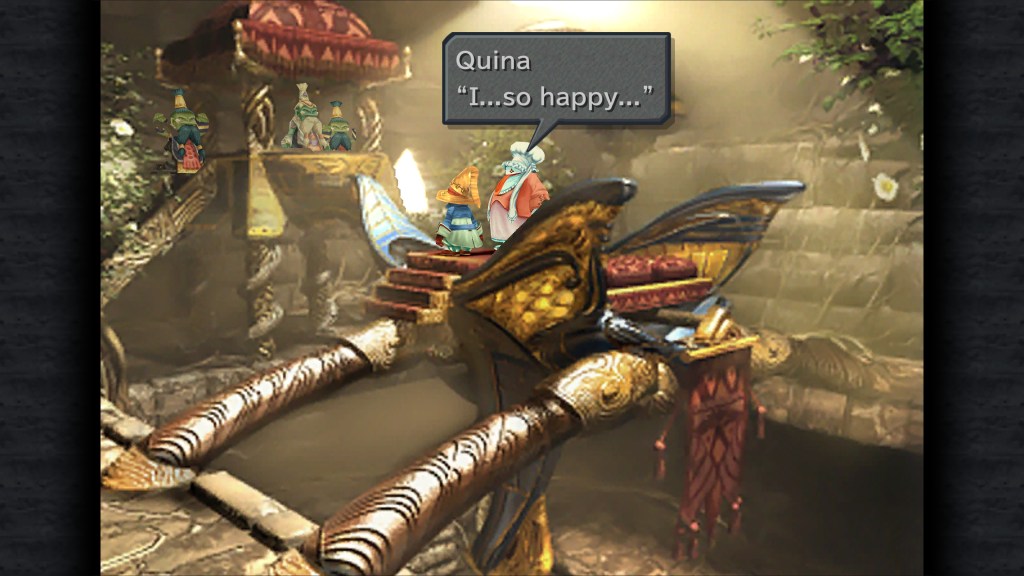
The ‘favorite’ part of that quote makes me think IX is ‘mission accomplished’ as far as Sakaguchi is concerned. Though like the first quote, this could just be PR. Across all mediums, pre-release hype for something features lots of hyperbole. I’m sure you could find interviews with people on Godfather III where they proclaim it’s the best one yet.
About the looks
Since IX isn’t trying to hit you in the face with its impressive tech, the game focuses more on art style. As a result, it has aged phenomenally. The currently available ‘remaster’ for IX probably has less work put into it than the remaster for VIII does, but because everything is a little more stylized, I feel it visually holds up better. It looks like it could have been released on the Nintendo 3DS.
I think the stylization helped IX achieve its current reputation. If you pop in a copy of Final Fantasy VII, an unfamiliar person is going to be hit in the face with the most 1997 3D graphics to ever exist. But if that same person popped in a copy of IX, they wouldn’t be assaulted with something so visually ancient. It makes it a little easier to grasp, a little easier to approach for newcomers.

I have no ways of proving this, but I would wager more ‘first time players’ have completed IX after the year 2005-or-so than VII.
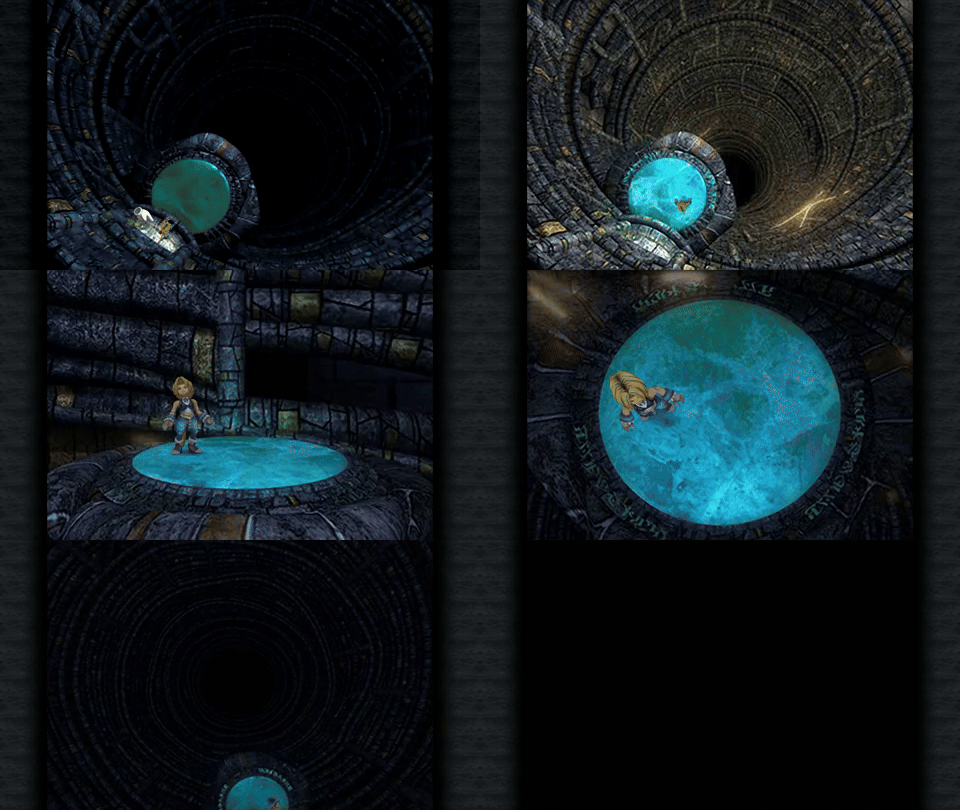
In previous entries, I often talk about how Square would use graphics in order to further storytelling. That era of innovation is mostly gone, as IX and X mostly just take things Final Fantasy VIII did well on and expounds on them. You have stuff like your overworld characters moving through cutscene style background and character models giving details about the personality of the characters. If you want a more detailed rundown of that, check out my FFVIII writeup!
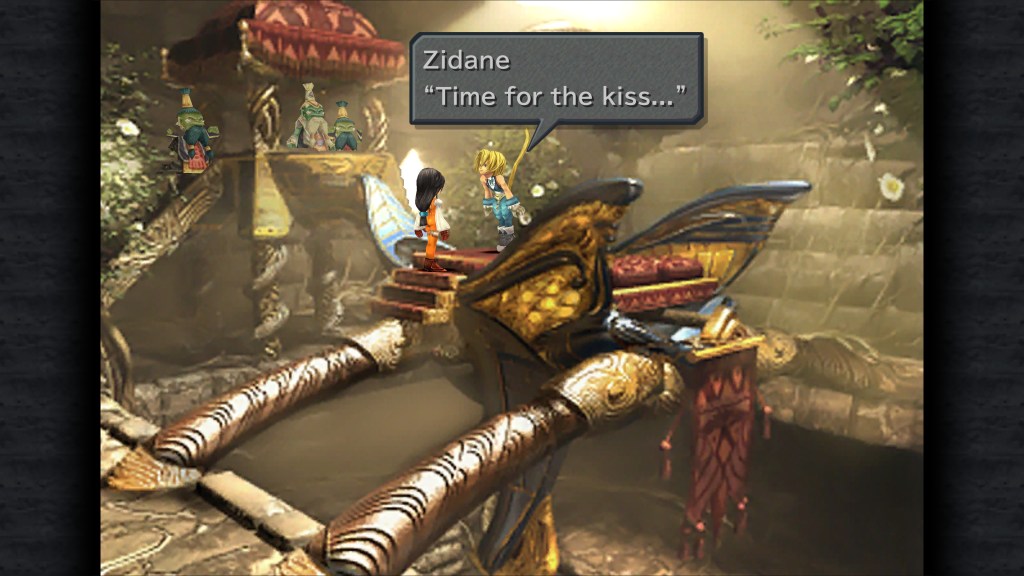
Expanding the narrative
Graphics aren’t the only way to further storytelling. IX gives us a really large crop of NPCs and a party of eight people. In something like Final Fantasy Tactics, another game with a hefty crop of non-playable characters, I feel like a lot of things get lost in the background. You have to go digging if you want to learn the background of these people, so learning about the world can be a bit overwhelming.
Final Fantasy IX’s approach to ‘character bloat’ is pretty clever. They put optional scenes, called active time events (A.T.E.), right in front of the player to tell you what other characters are doing in the background. These can range from what your party members are doing while Zidane is exploring a village to what some minor NPCs are doing offscreen.
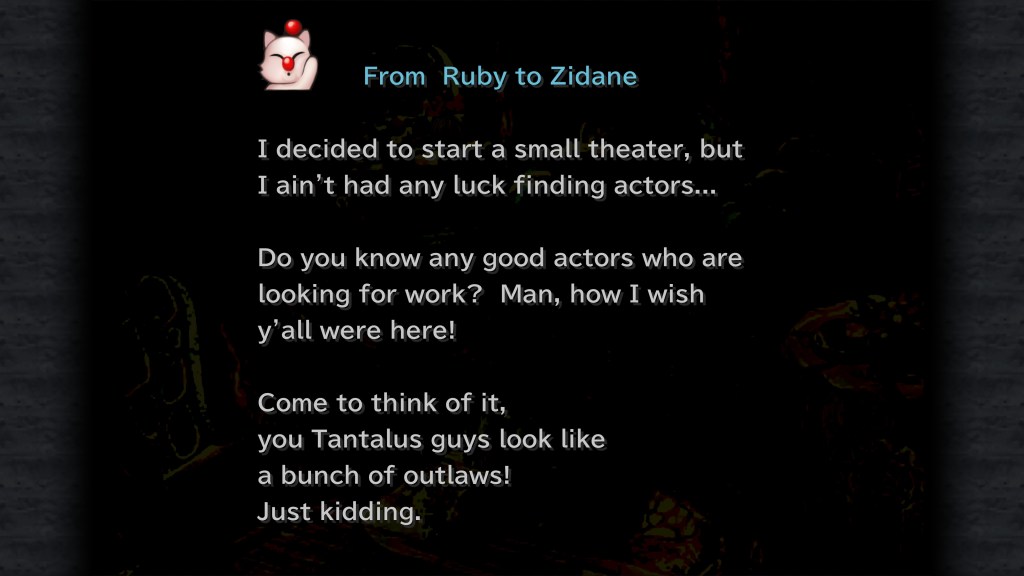
This helps the world feel more alive. There isn’t some constant pause button hovering over every character while the player is shopping or grinding. Characters that would get lost in the background, like Ruby from Zidane’s theater troupe Tantalus, are given actual personalities and things to do.
Usually these characters would just pop up when the player is in whatever town the character is in. For instance, you wouldn’t expect to learn more about Bugenhagen outside of Cosmo Canyon in FFVII. So it’s nice to see NPCs sort of evolve.
When combined with characters who will occasionally write to you, via an in-game mailing system called Mognet, it really helps you feel immersed in this world.
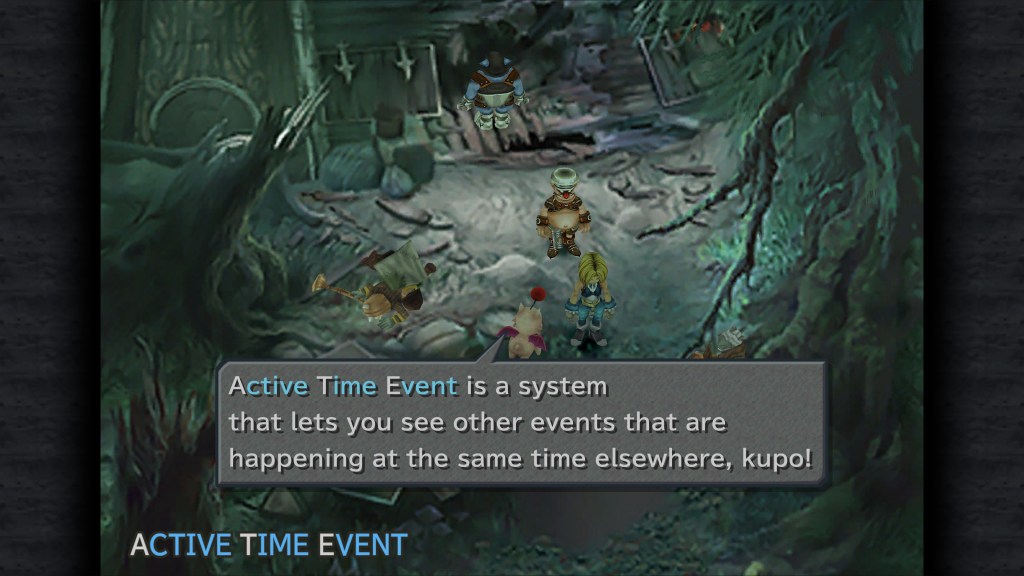
The vast majority of these A.T.E. scenes are entirely optional. You don’t need to press select in order to see what Blank from Tantalus is up to if you don’t want to, you can still just mainline the narrative. But if the player does that, they will be missing out on a lot of good content and even some key character motivations. A.T.E.s end up feeling mandatory.
I generally love the system, but there is one issue I feel that needs to be pointed out. I think Square used the A.T.E. system to shove in characterization for main party members when the main story couldn’t do the job. This sort of thing is well done for some characters, however, for some others it feels like their only source of characterization.
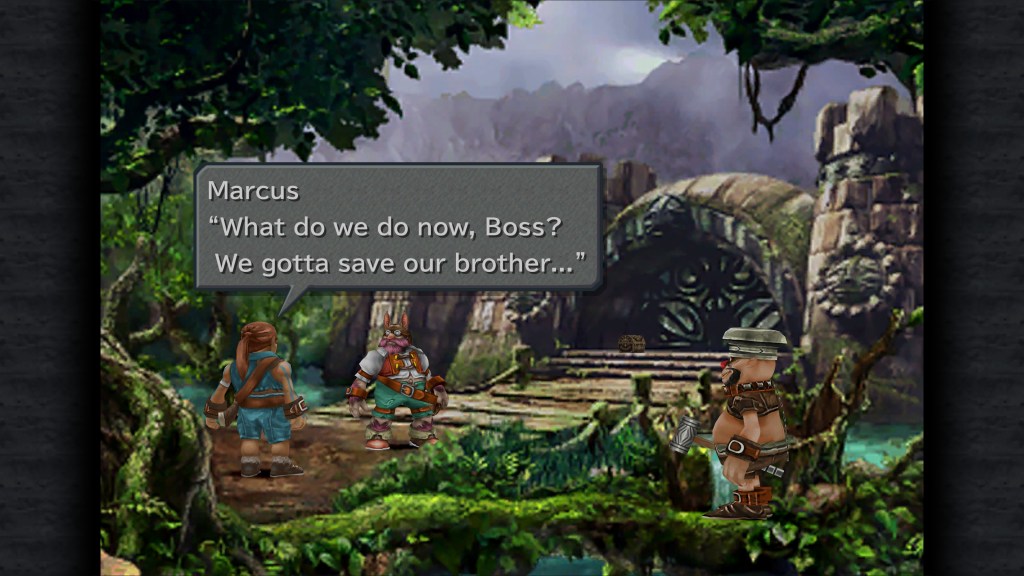
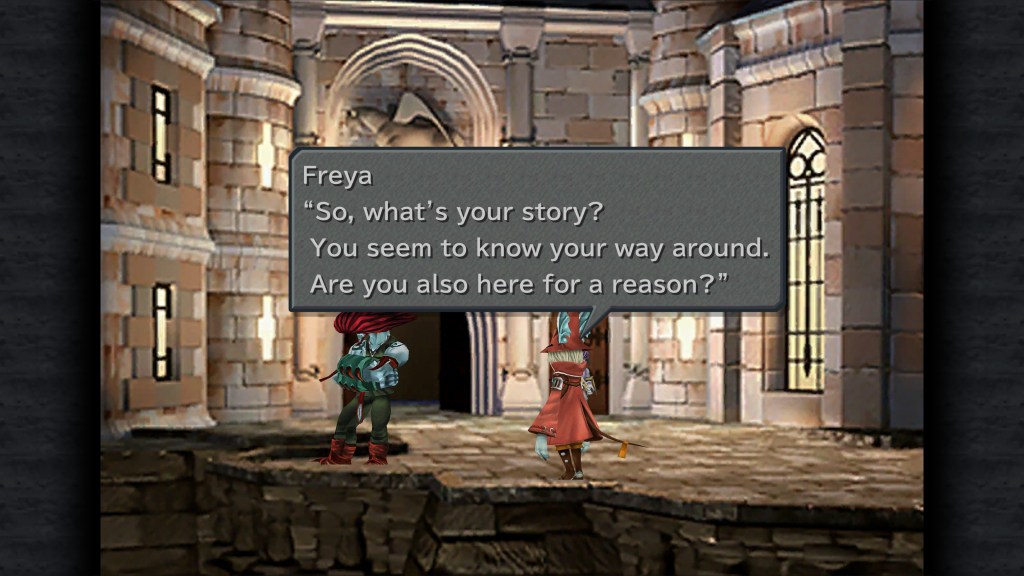
I’m speaking specifically of main party member Amarant. Amarant’s backstory is told exclusively in an A.T.E. and the player is given a choice about whether they even want to hear it or not. If the player doesn’t activate the A.T.E. or has player character Freya say she isn’t interested in what Amarant has to say, that’s it. The player doesn’t get to know any more about this guy. He’s just a big lug that hangs around the party for some reason.
It makes a guy who already feels like an afterthought feel MORE like an afterthought. It was like “shit, shit, we forgot to give this guy a story, shove an A.T.E. in there somewhere to cover our tails!”
I really wish this sort of system came up again in the franchise. In something like Final Fantasy XVI, they will often give you updates on more minor characters after big story moments, but it’s always something you can count on. Like “okay I got this part of the story done, so I know that I’m due for an update on the realm” or something like that.
In IX, it felt like every time I got to a new story beat, there was something put in front of my face explaining what else was going on in the world. It’s great!
Two halves to a story
Peripherally, FFIX feels like its own beast, but when focusing on the main plot, I get more of a ‘franchise celebration’ feeling. The original Playstation version comes on four discs. The first two discs feel, tonally, completely different than the second two. Discs 1 and 2 feel like the pre-Playstation days at times while Discs 3 and 4 feel more like an homage to some of the stuff you’d see in VIII and IX.

Let’s start with the first two discs. I feel that the main narrative over this course of time is pretty focused and straightforward. The evil Queen Brahne is trying to conquer everything on the planet and become the most powerful individual in the world. She is bolstered by the shady weapons merchant Kuja. It feels like the ultimate end goal is to stop Brahne and Kuja and save the world.
It’s very simplistic and straightforward. When Cecil left the Redwings at the beginning of IV, there was no question about who the bad guys were or about their motivations. Your former king was an evil being bent on world domination and you needed to stop him. You learn a fair bit about your companions as you go on your way and the first two discs of IX feel like a blown up version of this.
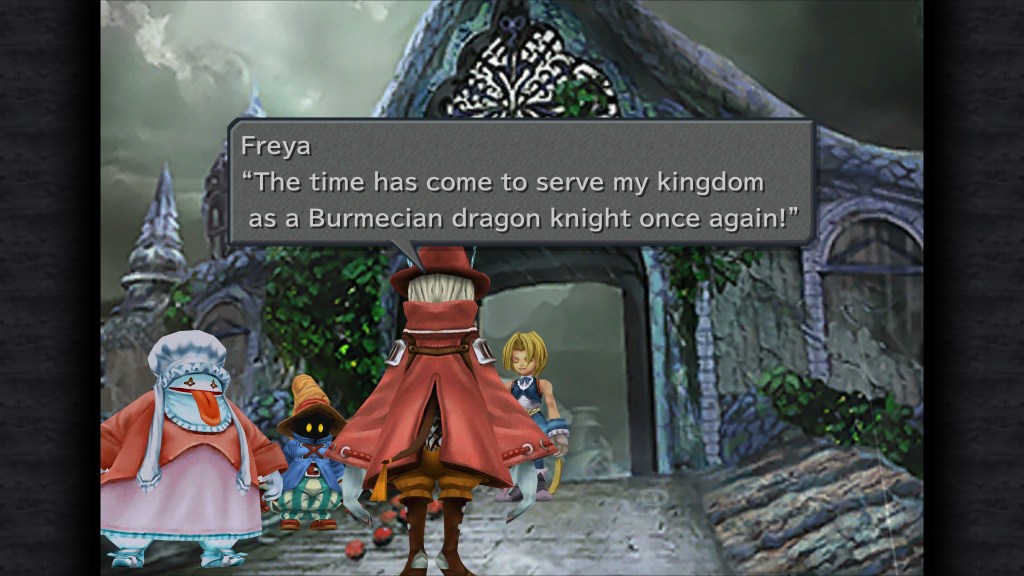
During this stretch of the game, the side cast members all get a lot of focus put on them. I will talk more about individual highlights in the character section below, but party members Vivi and Freya do a lot of heavy lifting during this portion of the story. The individual character arcs are more interesting than the relatively shallow main scenario.
From a narrative standpoint, these first two discs do a great job of making the main cast of characters seem personable and distinct. Going back to Final Fantasy IV, that game doesn’t have a lot of deep or engaging characters beyond the leads. It was a different time for video game writing.
The way the first two discs of IX feels, it makes me think of what a modern (err, year 2000) version of Final Fantasy IV would feel like. I think they really captured the spirit of old Final Fantasy here.
No Zack, No Laguna shall hinder us
Disc 3 is where there’s a bit of a shift. At this point in the story, the previous main villain, Brahne, has died and the focus moves to ramping up the main plot to give the player an exciting conclusion.
This portion of the game primarily focuses on the backstory of Zidane and the planet in general. The plot goes from slow-paced to throwing new concepts and ideas at the player left and right. It feels reminiscent to how Final Fantasy VIII tossed about 83,000,000 ideas at the player in disc 3 when they remembered their love story needed a final boss.
To me, the reasoning behind this is to give Zidane a bit of an arc that’s similar to what Squall and Cloud had. Hence my calling it a “Playstation-era throwback.’ Heavy portions of VII and VIII were focused on delving into the main character’s psyche and figuring out why they ticked.
This worked really well with Cloud and Squall because they were pretty enigmatic characters. They weren’t super verbose and it felt like they put a barrier between themselves and everyone else in the game.
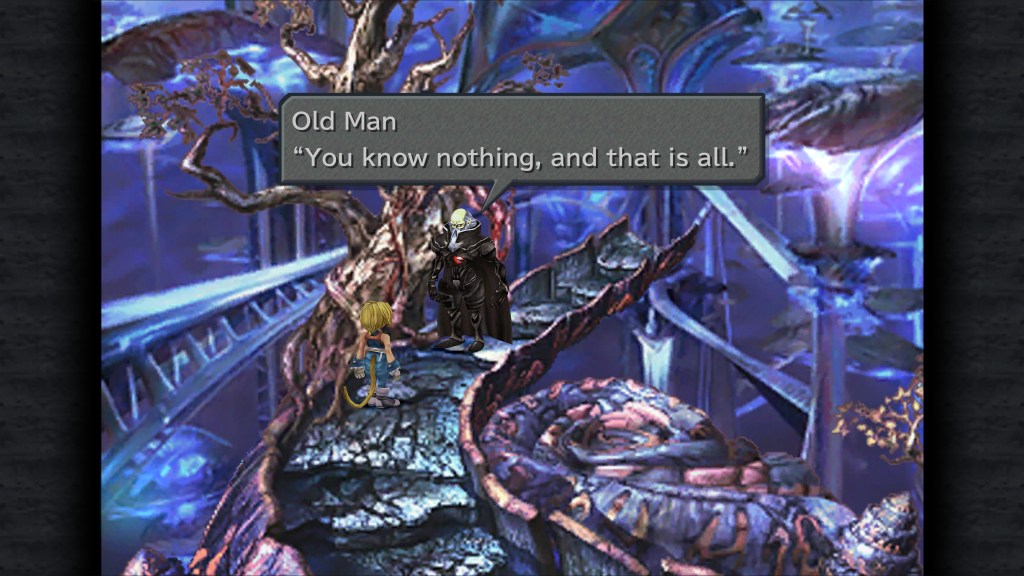
Zidane doesn’t feel like this at all. Up until the point his backstory is revealed, he feels like a totally different type of main character. He’s very wordy, he’s not a loner at all, he values friendships and it seems like he has a really good idea of who he is and what the world is.
In short, Zidane feels like a guy you could invite over for dinner in the real world and it wouldn’t result in your significant other asking “what’s his DEAL?” the second the door closes behind him.
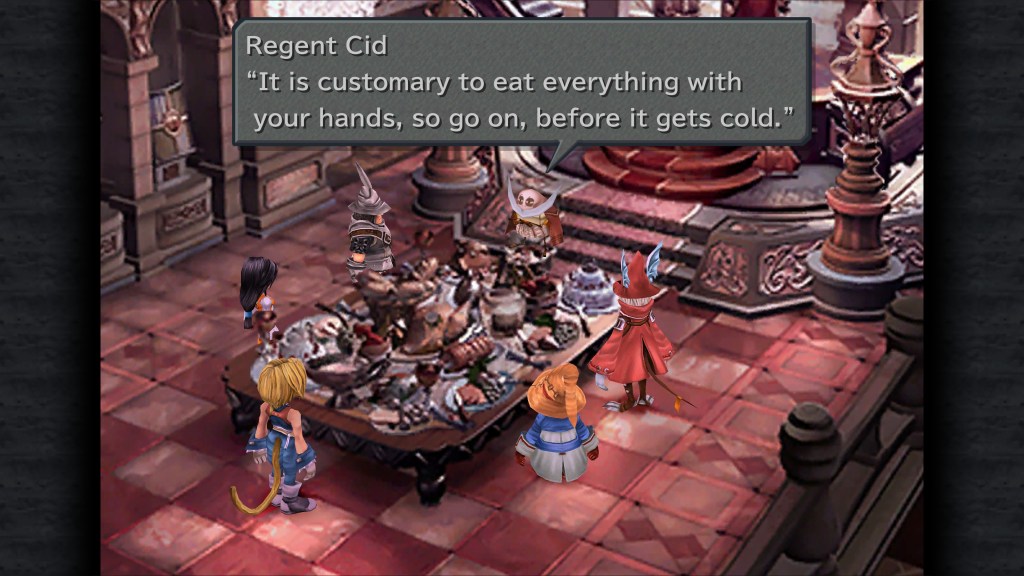
So when Zidane is confronted with a similar type of personality shattering event, essentially he’s an artificial being from a separate world originally born to destroy the game’s main world, it just doesn’t hit as hard to me.
He’s not discovering who he is as a person during this segment, he is instead just discovering his origins. He breaks down and has an emotional moment, but instead of the player witnessing a subtle character shift throughout the story, Zidane’s personality shifts to brooding an angry right back to upbeat and optimistic over the course of about 40 minutes.
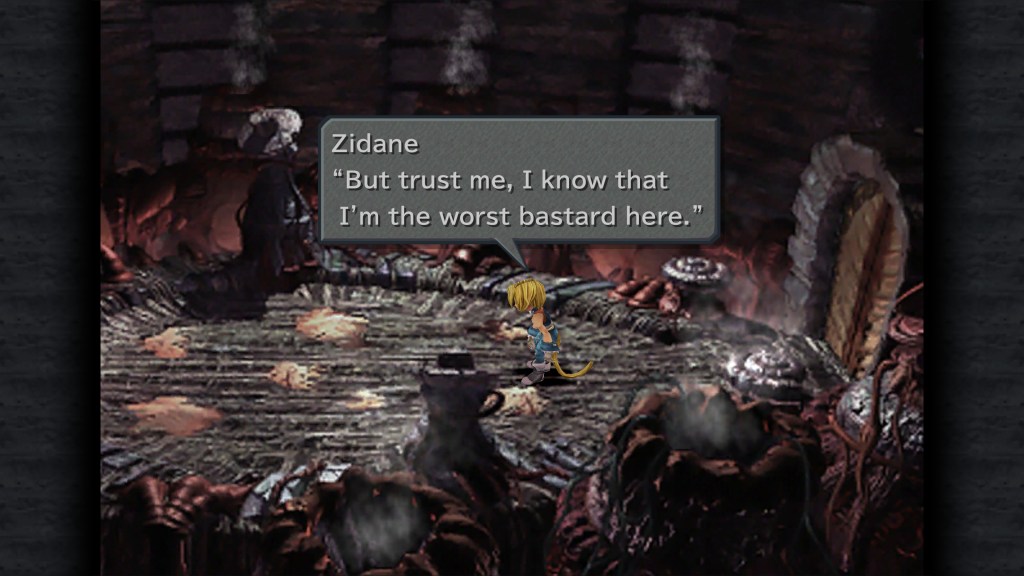
Rapid fire
I know this isn’t how game development works, but to me it feels like the first two discs started off as that Final Fantasy celebration spin-off title while the last two were where Sakaguchi dictated the title be mainline. The last two games had these big main character moments so IX needed that too. Zidane didn’t need that moment though. He didn’t need to be crushed and brought back to reality.
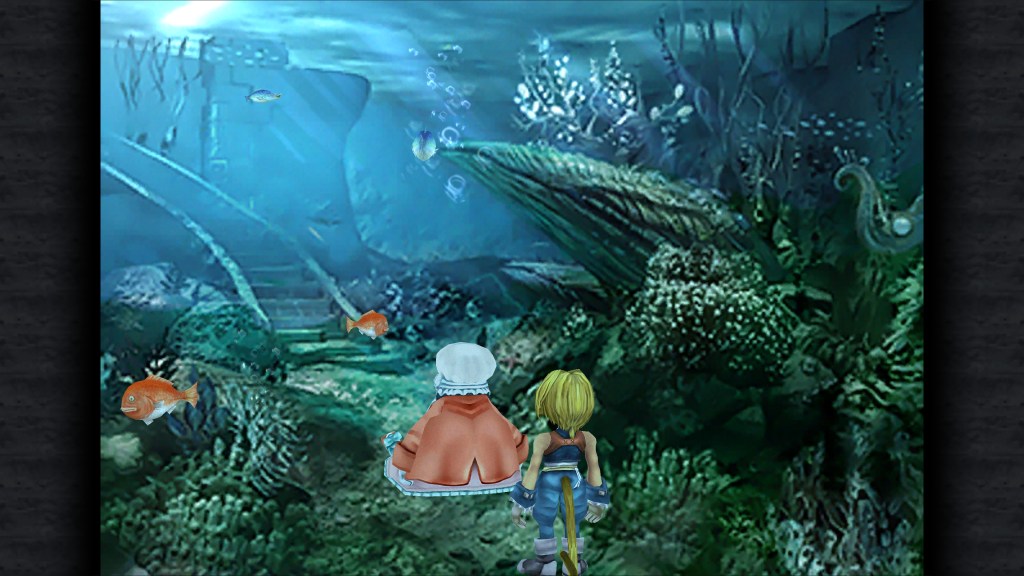
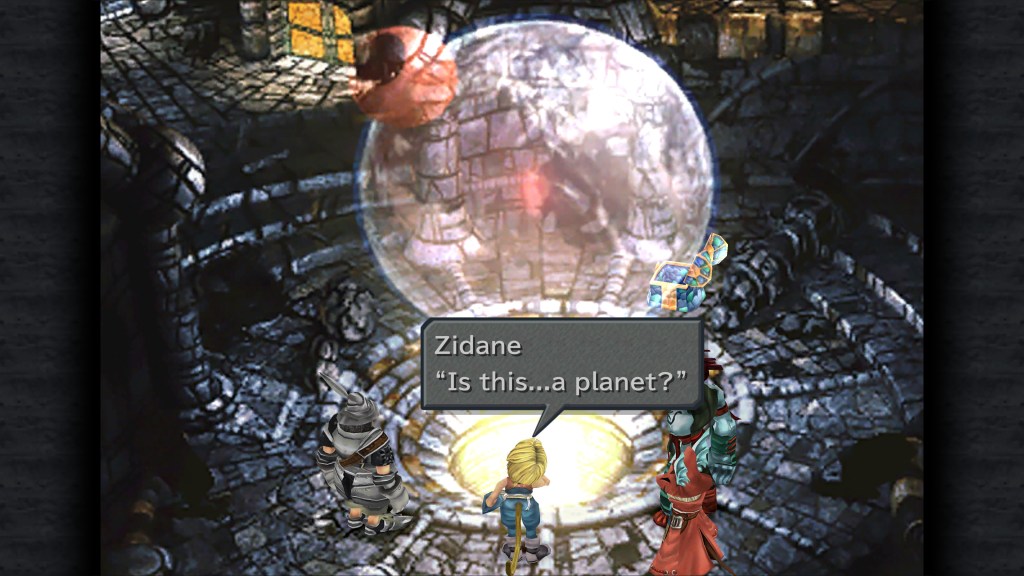
Despite this, I feel obligated to compliment the scenery towards the end of disc 3 and 4. Final Fantasy IX is a lot more ‘traditional’ fantasy than the previous two Playstation games, but that is dropped entirely when the party moves to Terra and once again during the final dungeon. The atmosphere becomes weird and almost alien like, I would say these are some of the best backgrounds of the Playstation-era. A very solid farewell to pre-rendered backgrounds.

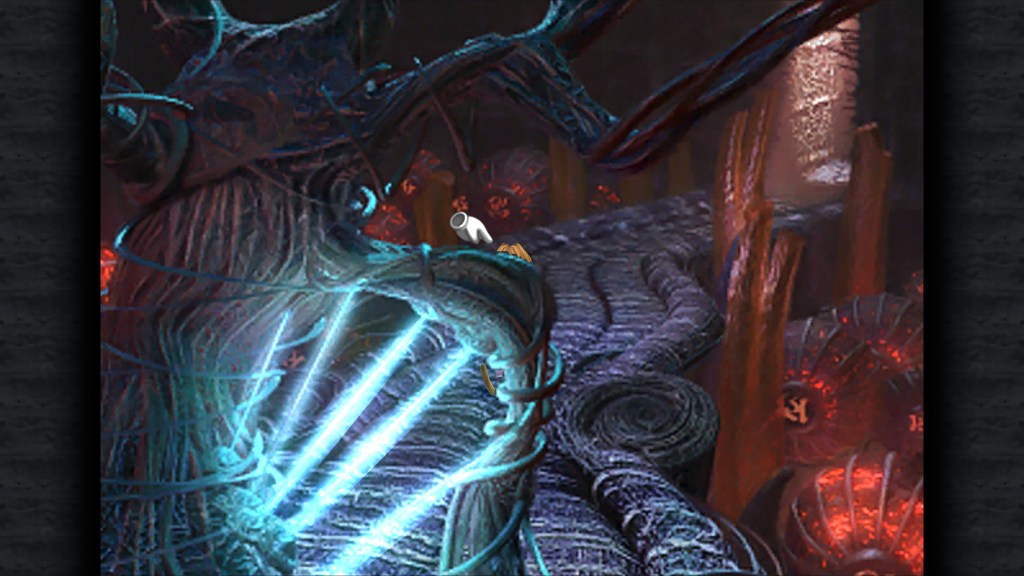
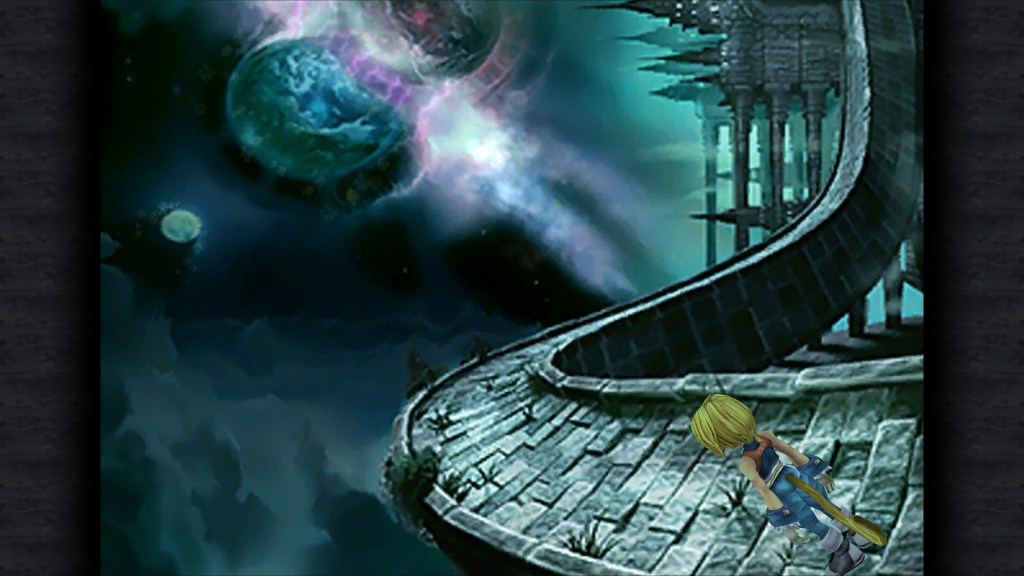
The constant twists and turns make disc 3 and 4 a lot less easy to parse than the first two. Just like Final Fantasy VIII, there is suddenly no time for breathing and the stakes are ramped way up. Nothing really gets a chance to sink in. The inter-party communication is still a highlight, but it takes a backseat to the main narrative here and I feel that is probably the weakest part of IX.
In VIII, the game would lean on the Squall and Rinoa romance when the story got a little zany. While the leads here have a romance too, it’s not meant to be the focus of the game. So the messiness of the final parts of the title muddy things a bit more than they did in VIII.
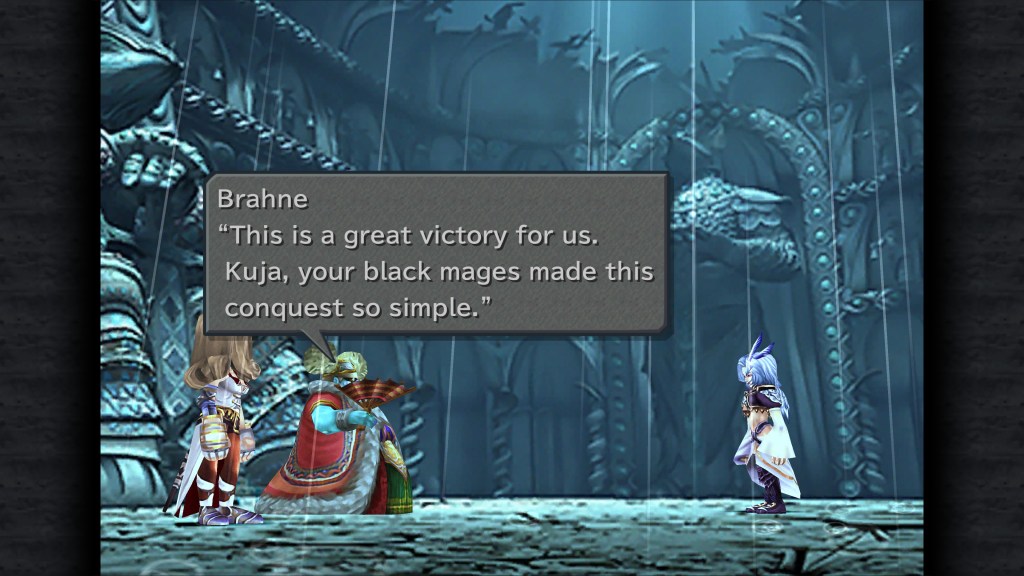
There was a need to give the player all the information they would need to feel interested in the final confrontation with the game’s primary antagonist Kuja, but since a lot of this setup happens in disc 3, it just comes at you rapidfire.
Perhaps if they stagnated reveals throughout the game, I’d be more compelled by the overarching narrative. For instance, if something popped up in the first disc that suggested there was a second world, maybe the revelation that the second world is meant to take the souls of the first world and put them into humanoid dolls to live on that second world would hit harder.
Instead we just get fed all that information at once and it feels rushed and overwhelming.
Character development
Thankfully, the ending is probably the most fulfilling one the franchise has seen to this point in time. The game’s strengths lies in the characterization of the main cast and that is what the ending leans into.
The insane rush of a plot that discs 3 and 4 had are mostly an afterthought. I might have some complaints with how Zidane gets handled towards the end, but as a whole, I think IX does a great job of fleshing out its cast and making them seem likable. There are a couple of playable weak links, but the characters the game does focus on are handled very well.
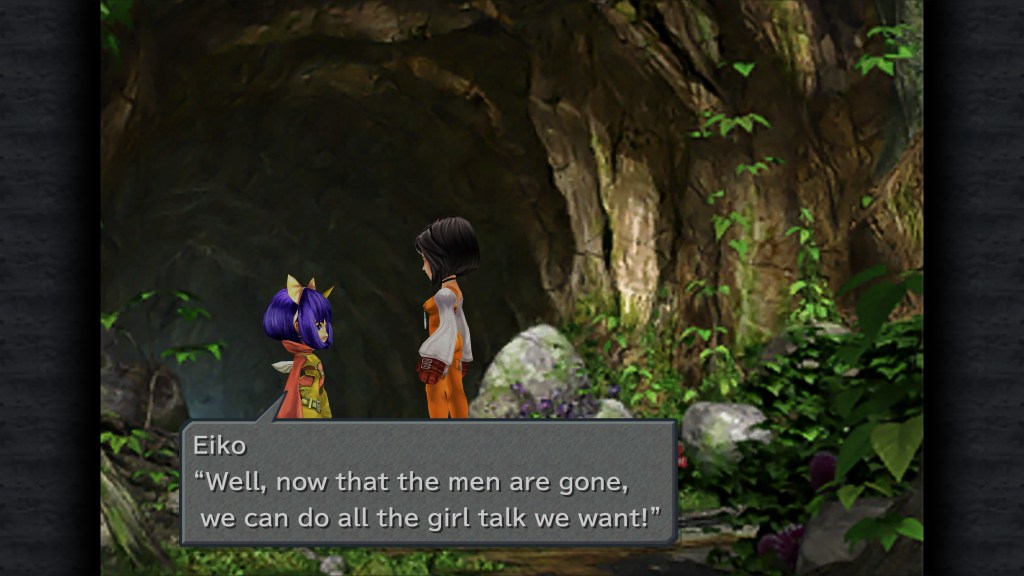
I see a lot of people complain about how party member Freya has nothing to do after disc 2, for instance. And they are right, her character growth screeches to a halt after the events of Cleyra.
However, her side story and characterization to that point is beyond what we have received out of a lot of side characters to this point. Can you tell me about any character growth or big plot moments Zell had in VIII? Or Red XIII after Cosmo Canyon?
I think Freya comes off as disappointing because of how much is put into the other side characters. Vivi, for example, has so much time dedicated to his story that it would make him the main character in every pre-Sony era Final Fantasy game.
If it weren’t for two very obvious weak points, I could point to IX as the most balanced main cast for a mainline game to this point. VI is its main competition in that arena. Shame about those two weaknesses…
Squad goals
To end this era, Square elected to return to a more traditional party size than the previous two games had access to. Four had been the standard party size for most of the mainline games until VII came out. Then it appeared that three would be the new standard for the series – and it was, as the next three single player entries use three-man teams – but IX decided to buck the new norm and go with four.
Does this meaningfully make combat feel deeper than it did in VII or VIII? No, not really. But it’s still nice to make use of most of your party members. FFVII had a cast of nine (later eight) playable character, so it felt weird to mainline only three of them. At least here you get to use half of the cast.
In fact, this is the only aspect of IX’s core gameplay that I think serves as an improvement over the previous two Final Fantasy titles.
Modern remasters of classic JRPGs very frequently include a fast-forwarding function. This is to make slower feeling older titles more accessible to gamers of today, you know, the type who aren’t as used to things like long loading times or waiting to see meters fill up. I am of the belief that if you have to fast forward a game to make it feel tolerable, there’s a failing in the game’s combat somewhere.
During my playthroughs of VII and VIII, I never felt the urge to hit that fast-forward button during normal gameplay. Sure, if I was off trying to get a screenshot in a weird location, I might turn off encounters or fast forward through them so I can get on with my life. But that urge never came up when I would just play the main story. I cannot say the same for IX. I didn’t speed my game up, but let me tell ya, I wish I had.
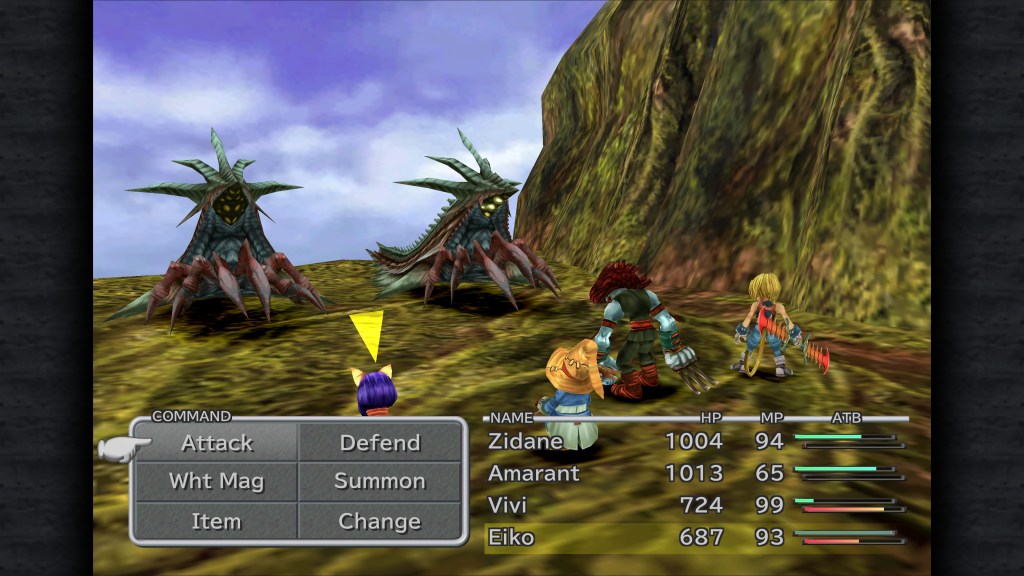
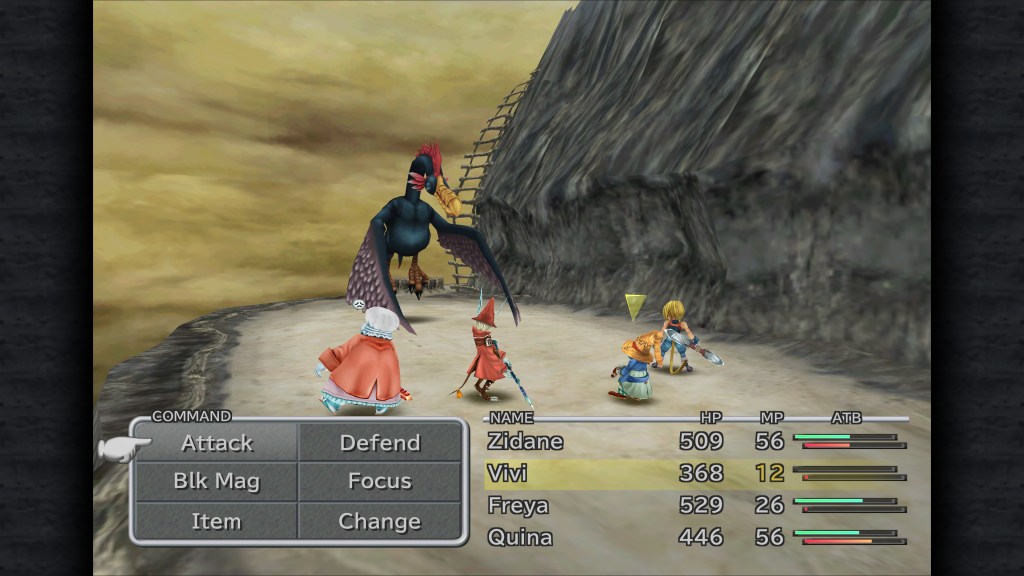
Combat is glacially slow here. Your ATB meter fills at a slug’s pace and when you select your move, it is never an instant action. Instead you have to wait while your party just sits there and sits there and sits there until they eventually do something. It makes random battles feel so much longer than they need to.
This approach makes sense for casting, and casting time would not even be a new thing for the franchise. But do items and standard attacks need that treatment too? I think not.
It also makes in-game strategizing an entirely different beast. Often times a player will put in all of their commands and then the opponent will pop a command off while you’re waiting for your characters to do what you told them to do.
So what if the bad guy uses an attack that knocks your entire party down to 1 HP? What if they use a status effect that kills you as soon as your character makes an action? You’re screwed. So it’s imperative, for more important battles, to hold a character back from acting so they are able to react to what an enemy does. Or blindly heal every turn, I suppose.
It can make it feel like there’s some strategy involved with how you execute commands, but I prefer the previous version of strategy.
In other games, you would often have to ask yourself questions about what you’d be doing this turn. “Okay, so my party is in rough shape. Do I think I can act again before the boss acts so I can heal, or should I just heal now and not risk it?” Here it feels less like thinking and adapting to battle on the fly and more of a ‘you need to choose what characters act when their meters fill up and what characters wait around’ thing.
The art of fighting
Compounding this slow combat is the ability system. This title uses something similar to the mechanic Final Fantasy VI used for learning new abilities. Every battle sees the player earn AP and that AP goes into learning skills assigned to whatever pieces of equipment the player has equipped. Not every piece of gear has new skills for every character who can equip it, so it’s important to stay vigilant about who has what equipped.
The way this system works in VI is far better. In that game, you equipped magicite onto a character and learned the skills attached to the magicite. From encounter-to-encounter, you don’t really notice the different aspects of the magicite. So if you equip a low level one in order to earn the abilities off of that, one of your characters isn’t suddenly useless. Attaching your abilities to an item that doesn’t see use every battle was the way to go.

In IX, the player is encouraged to keep items equipped until they learn the skill. So if someone isn’t specifically grinding to learn all the skills, they will need to carry weak weapons into areas where they will need something better, which can create some frustration.
Experienced players might know what skills or abilities are worth skipping over, but most people don’t get such a luxury. Final Fantasy Tactics Advance uses this system too and I find that game to be a lot less fun to play than the Playstation original, so this approach to learning abilities just isn’t for me.
That said, I do like the customizability the ability system gives the player. There aren’t as many items that nullify status effects this time, so in order to prevent things like poison or blind, the player typically needs to have their characters learn that ability. So you can customize your party in a way that has certain characters shine while others are prone to certain status effects.
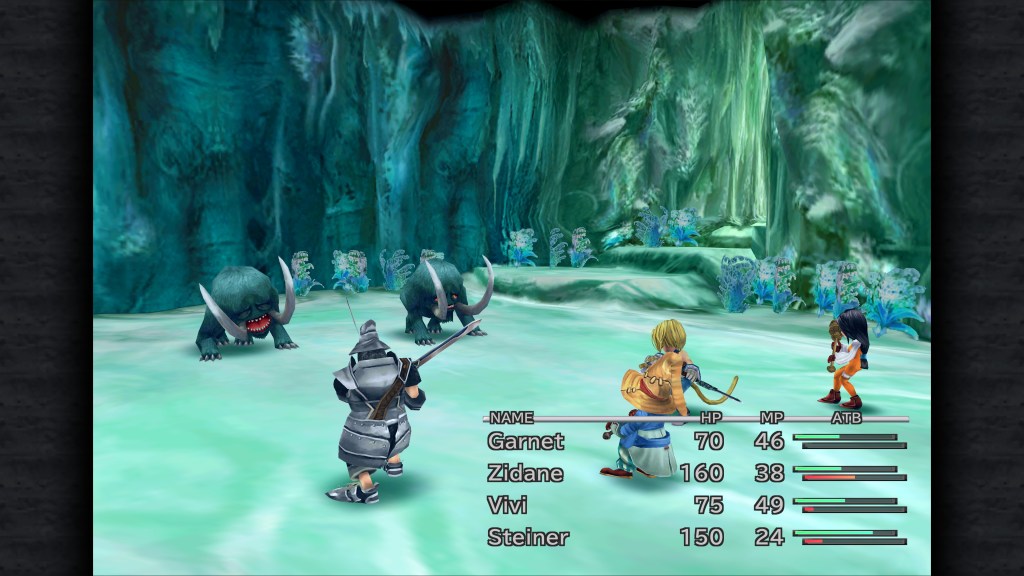
You also can’t just equip everything at once, so the player really needs to strategize over who has what. Certain skills, like Level Up, cost a lot to equip. So you need to figure out whether you want your characters to be flashy or functional. For most of the game, I had abilities like level up and Ability Up equipped, so I wasn’t some invincible force to be reckoned with in battle.
But sometimes I’d fight a boss, I’m thinking like the twin red dragons in Mt Gulug, and I’d hit a wall. I think I died before I could even attack on my first attempt in this playthrough. Without grinding, I went in and fidgeted with my abilities and resistance and was able to win my rematch.
Yeah, the first fight might not be considered fair, but being able to come up with an effective strategy and win WITHOUT needing to go out and up my stats is really appreciated.
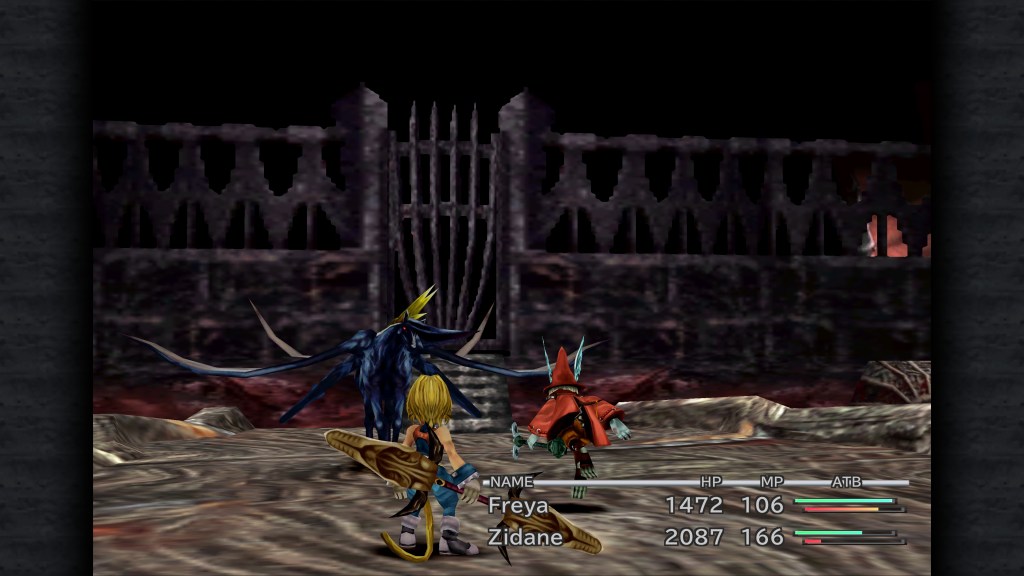
Abilities will be your primary way to buff your team. I think the battle system is too slow to use buffs effectively, which is unfortunate because buffs are better here than ever before. For instance, late in the game, Vivi had an ability called 2x reflect, which doubles the damage of magic that is reflected. This allowed Vivi to consistently hit the 9,999 damage cap for me.
Cool right? Well, with how slow the combat is, I can get off maybe two flares before reflect fades. I even had a battle where I could only do it once and hit myself with flare on the second attempt. So this method of attack can hit hard, but it requires such dedication to use it that it sort of feels worthless. Especially when Steiner right by him can cause 9,999 instantly with shock. No buffs needed!
Things like protect, regen and shell fade similarly fast, so unless you have abilities that give you these boons by default and infinitely…maybe don’t bother.
Off-roading

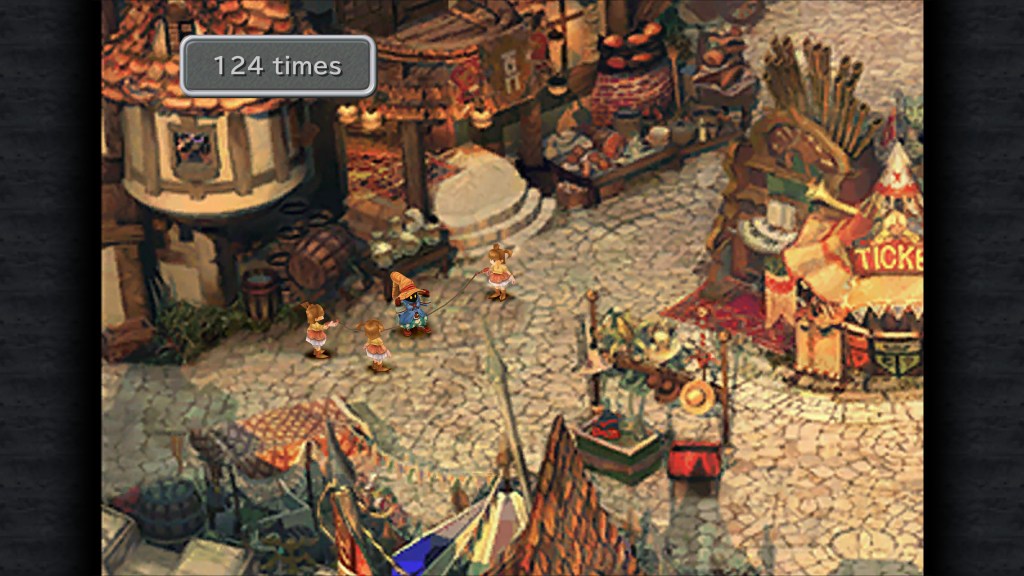
The Playstation-era of Final Fantasy titles really made side quests and optional things the player can do far more vast than in the Nintendo-era of titles. IX continues this trend with a lot of side activities and quests to occupy your time in between battles. Some of these things are short and sweet. Stuff like jump rope, racing Hippaul or catching frogs doesn’t take a lot of time but adds some variety to the gameplay and feel charming.
It feels something like in FFVII where it seems there’s a new gameplay type around every corner. The sword fighting in Alexandria feels like an equivalent to the marching in Junon, for instance. So if the heavily, heavily rumored Final Fantasy IX remake happens, I would expect there to be a horde of minigames thrust at the player to emulate this feeling.


The game-spanning minigames also return. You have two major ones this time. Chocobo Hot n Cold features this games take on chocobos. The big ol birds didn’t have a lot to do in VIII unless you had the JP exclusive Pocketstation (or you played on PC), so it’s nice that the first big minigame involves these fellas. Basically you go pecking around three different maps looking for treasure. Simple, yet fun.
These treasures can lead to bigger treasures found with something called a chocograph. The chocograph treasures can range from form changes, which allow your bird to scale different types of terrain to reach even more treasure, to some really top-of-the-line equipment.
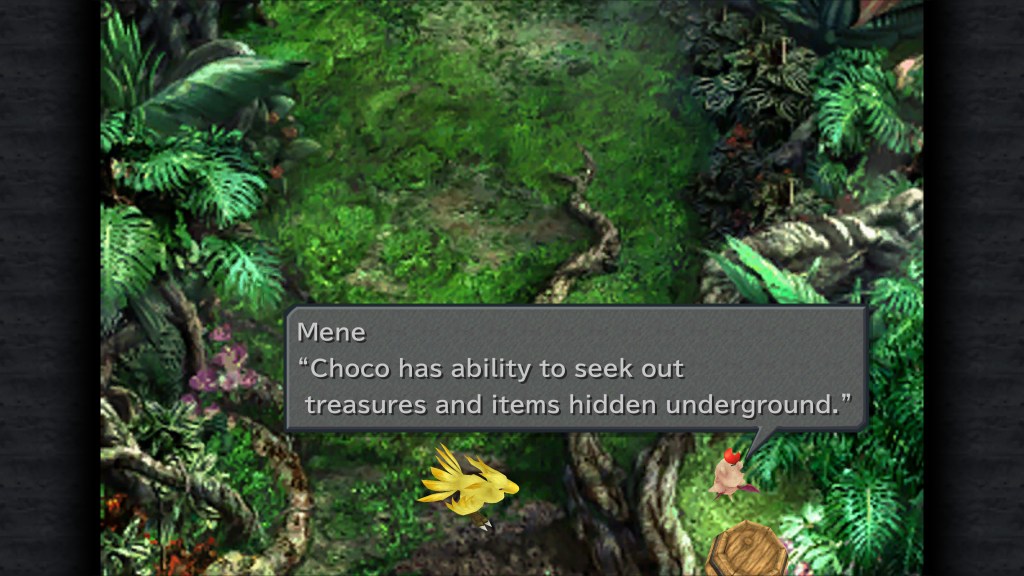
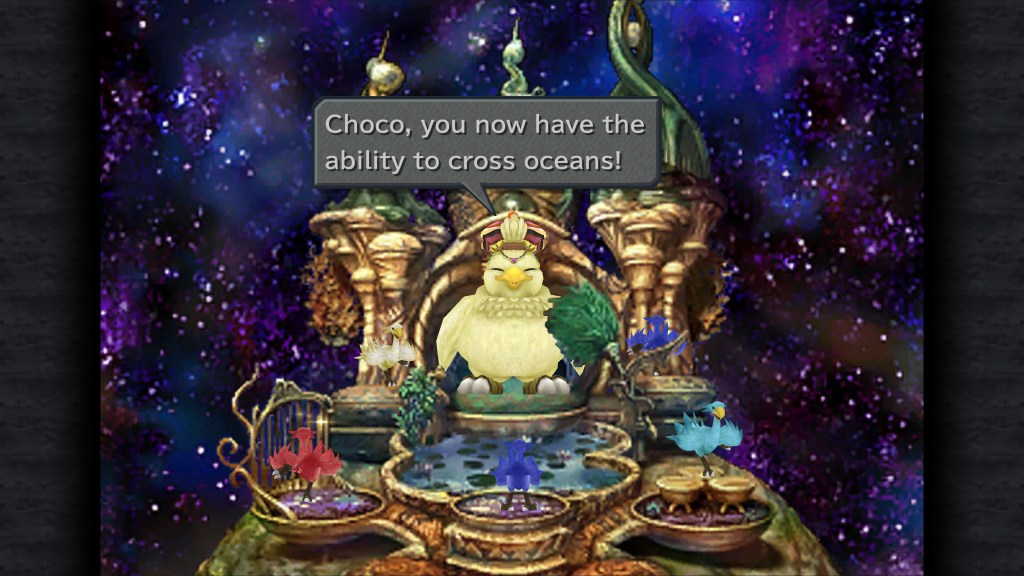

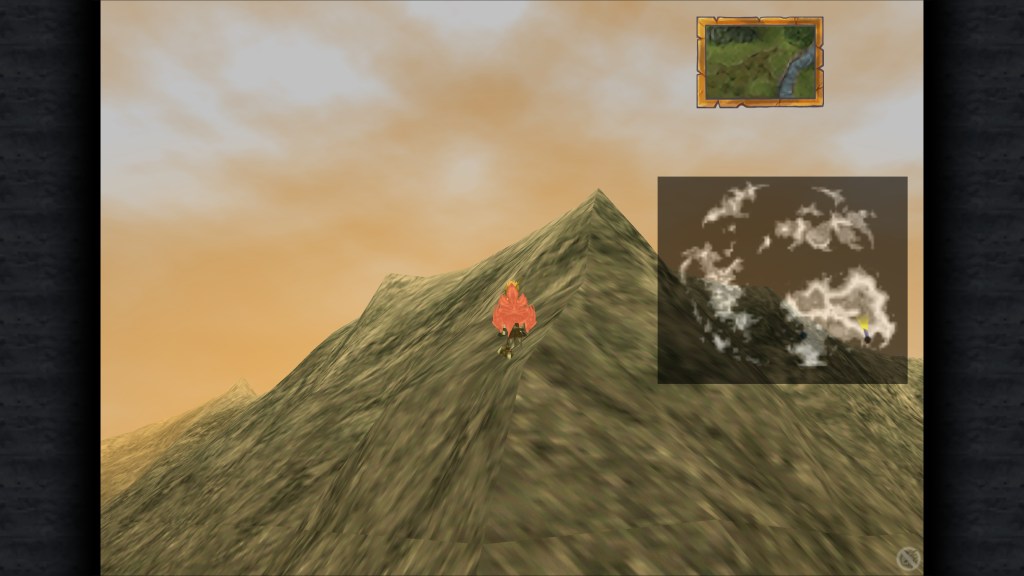
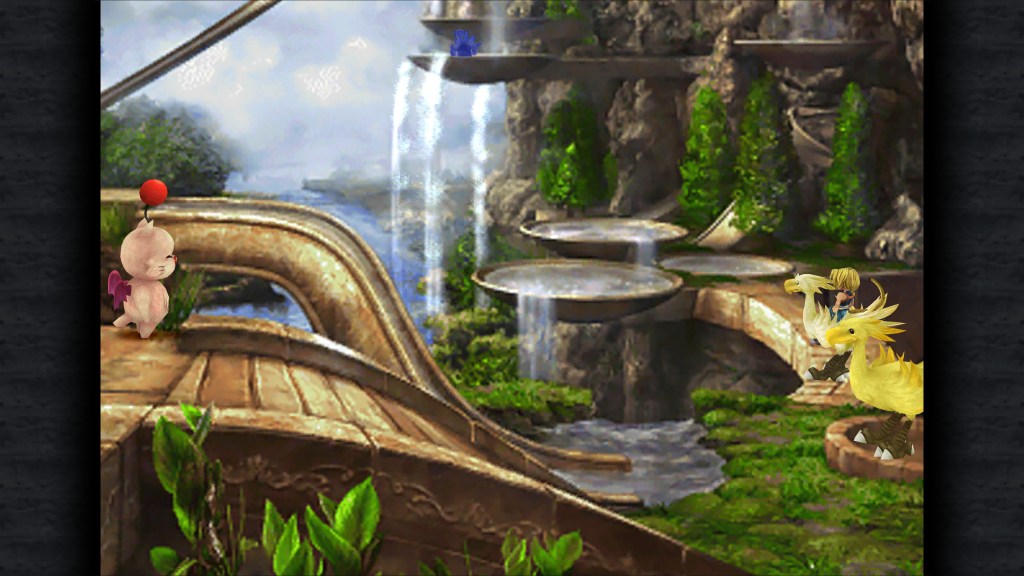
A couple of your main party’s best weapons are found via chocograph or by skills your chocobo learns as part of the Hot n Cold quest. You can do this gradually throughout the game or just wait until midway through disc 3 to do everything. No matter the decision, it’s worth your time and isn’t a pain in the ass. Big win!
Calling card
The other game spanning minigame is the return of a trading card game from VIII. In VIII, Triple Triad could be used to give your character a lot of advantages outside of cardplay. If someone was dedicated enough, they could play FFVIII as a card battling JRPG.
The card game of IX, Tetra Master, is much more standalone. The rewards for getting good and collecting every card aren’t stupendous. So if the player doesn’t like the card game, they’re not really missing out by avoiding it.
Kind of a bummer. You don’t need to play VIII’s cardgame in order to beat VIII, but if you did engage with it, your time was well rewarded. Here it’s purely the joy of the game that will carry you and I hate to break it to you, but Tetra Master is a pretty infuriating card game that I can’t really recommend in the same way I did Triple Triad.

The rules are confusing and not really explained to you. Games take place on a 4×4 grid. Each card has arrows on it, if an arrow is pointing in the direction of a card and there isn’t an arrow pointing back at it, you capture the card.
If arrows collide, there are four values on a given card that determine how this will play out. The first one is your attack value, the second one is a letter that determines what kind of attack the card will use, the third one is a physical defense value and the fourth one is a magical defense value.
I think. That’s what the game claims. And yet I have card encounters that make no fucking sense like this one.
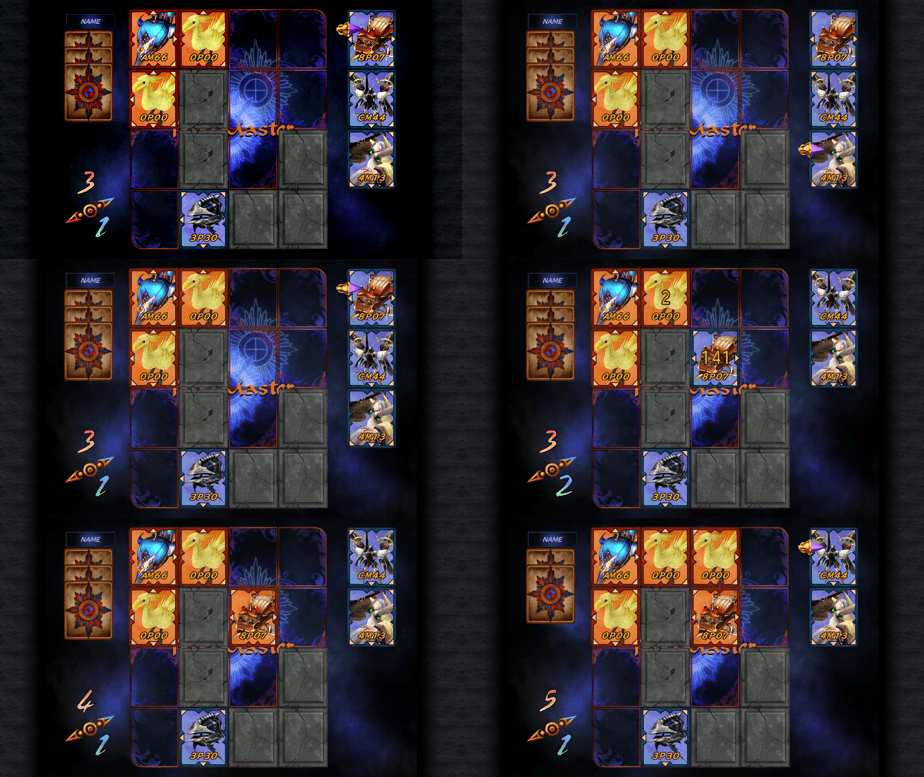
That’s a card with 8 physical attack going after a card with 0 physical attack/defense/magic defense. And yet, while going on the attack, it loses. Why? How? It feels like who wins card encounters is totally random. I ended up winning a vast majority of the card games I played – I think I played around 80 this go around – but many battles featured outcomes I could not understand. Tetra Master is really poorly communicated with the player.
I still clearly like the game, but for the life of me I don’t know how people say this is one of the best Final Fantasy side activities. I go out of my way to play it a lot and get as many cards as I can on each playthrough, but it is a gigantic step back from the glory that is Triple Triad.
This is going to be a very unpopular opinion, especially considering what X’s game-spanning minigame is, but this is my least favorite ‘one of those’ in the franchise.

While I may be critical of the card game, I really like the way the series approaches side content and IX is no exception. The world feels more alive as a result of it. I wouldn’t trade exchanging letters with moogles for anything. Collecting 75% of the game’s treasures in order to find out the four-armed man is really another version of Gilgamesh is charming. Finding a bunch of friendly monsters in order to fight the super boss? Yes please!
Given how I feel the best part of the narrative is how they use A.T.E.s to expand the lore on side characters, maybe my feeling on FFIX is that straying from the beaten path is the way to play this game. Take your time and explore the side quest side of life. You can worry about Kuja, Garland and Necron later!

Notable characters
- Zidane Tribal
- Tantalus
- Princess Garnet Til Alexandros XVII
- Vivi Ornitier
- Adelbert Steiner
- Freya Crescent
- Brahne Raza Alexandros XVI
- Beatrix
- Quina Quen
- Cid Fabool IX
- Eiko Carol
- Amarant Coral
- Garland and the Genomes
- Kuja
- Necron
While trying to put together my character intro portraits, I ran into a bit of a roadblock. IX doesn’t have a way to easily view ‘clean’ models of the party and looking around online didn’t give me models I felt were accurate to my player experience.
After ramming my head into a wall trying to extract models from IX to screenshot them manually, I decided to wave the white flag of surrender and just use the elaborate character naming screens of the mobile/remaster port of the game as introductions to the characters.
An exception to this is in the Tantalus section, I’m using a group picture of them posted by deviantart user Lopieloo. Thanks for that!
Before that though, here is a brief explanation of mist.
Mist
The early portions of the game take place on the mist continent. It’s exactly as it sounds. The mist is expelled from the roots of something called the Iifa Tree.
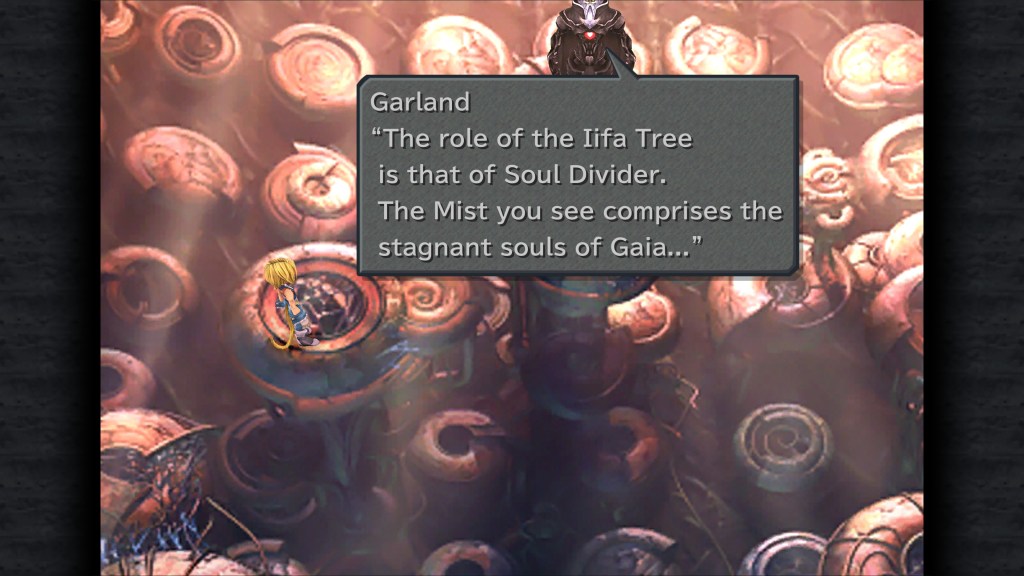
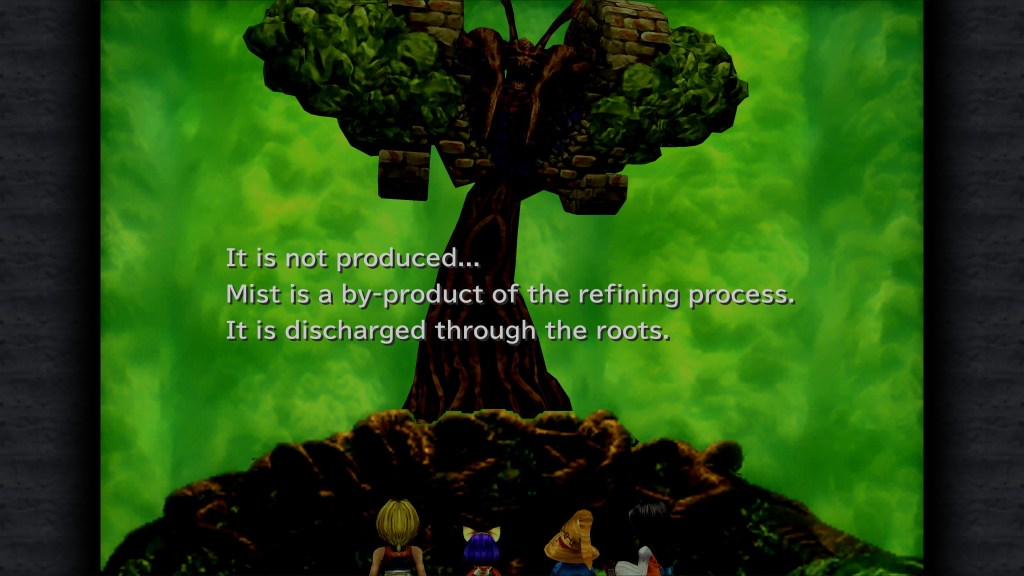

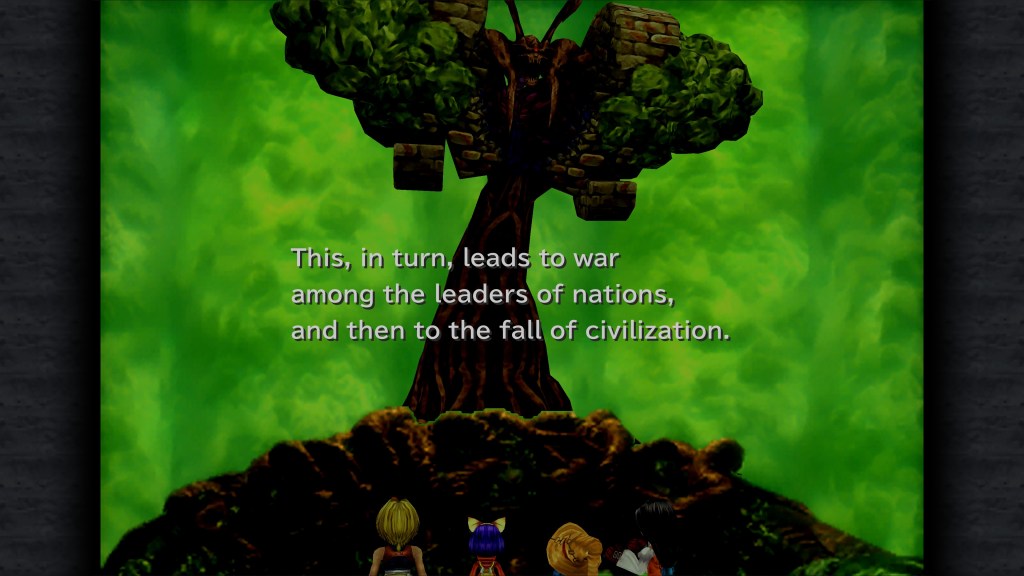
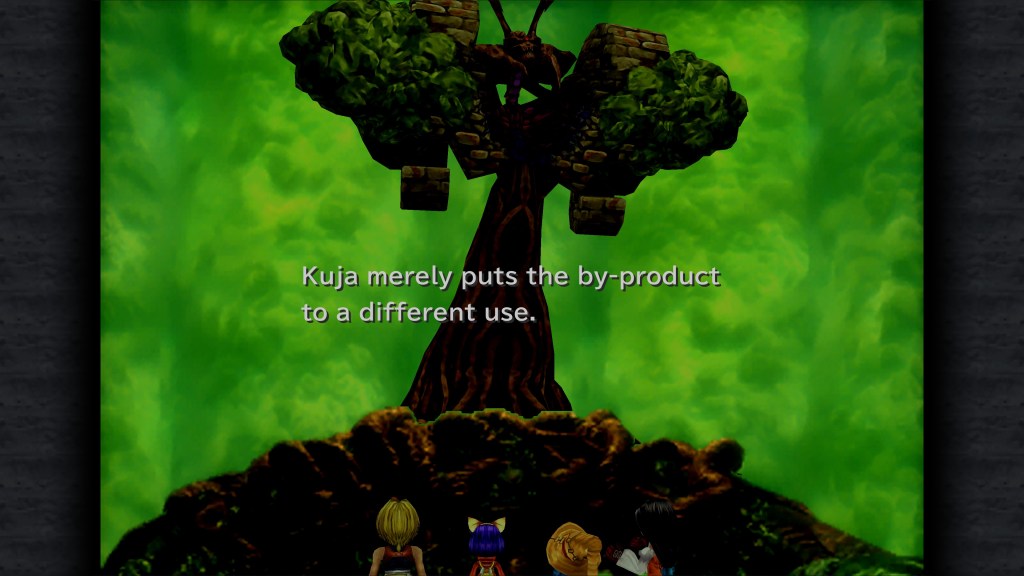
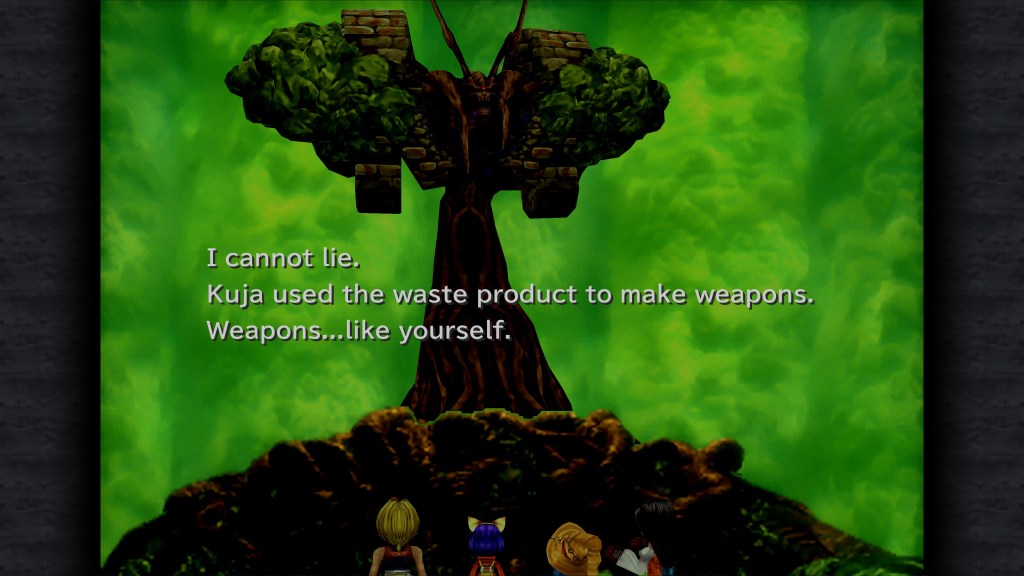
This stuff warps various creatures and turns them into monsters and is also the primary ingredient for the golem like black mage creatures. The mist was introduced to the world as a means to eradicate all life on the planet, which I will go into more detail with later.
Most sentient life lives on the mist continent. Other life elsewhere has either been snuffed out or consists of beings that aren’t quite humans.
Zidane Tribal
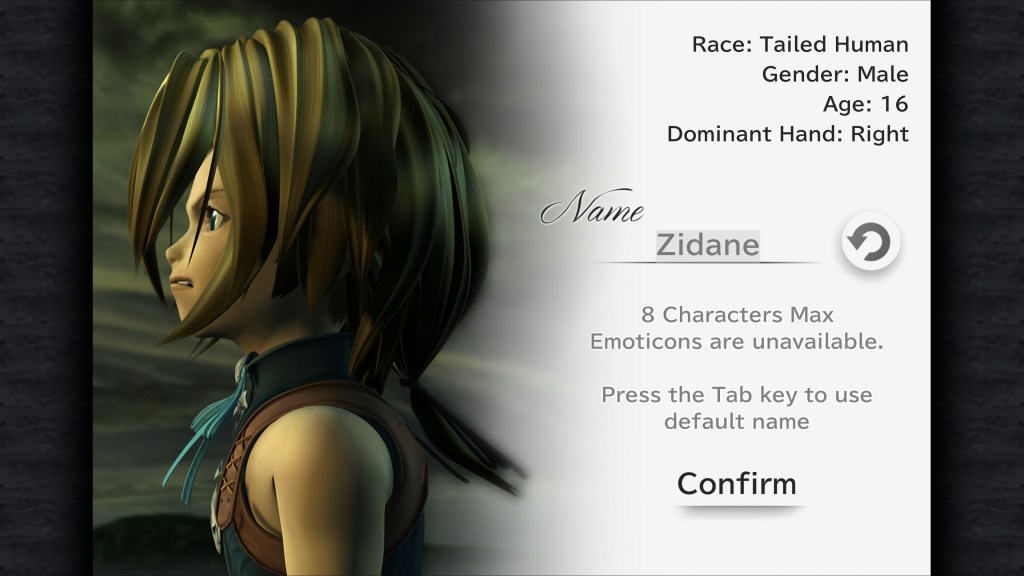
The main character of our journey through IX is a vastly different hero than the two fellas we dealt with in the Playstation-era so far. Cloud was a bit of an enigmatic headcase and Squall was a brooding teenager. In contrast, Zidane is pretty spirited and good natured for the vast majority of Final Fantasy IX’s runtime.
His biggest and most focused on personality trait is ‘ladies man.’ One of the first abilities he can learn is even called ‘protect girls.’ At the beginning of the game, he and his theater troupe Tantalus are tasked with kidnapping the princess of the Kingdom of Alexandria.
Zidane is immediately shown chatting up and flirting with the princess, commenting on how if he had ever seen a woman like her before, he’d never let her go. When he encounters another party member, Freya, it comes immediately after he invites a random waitress out for a wild night on the town.
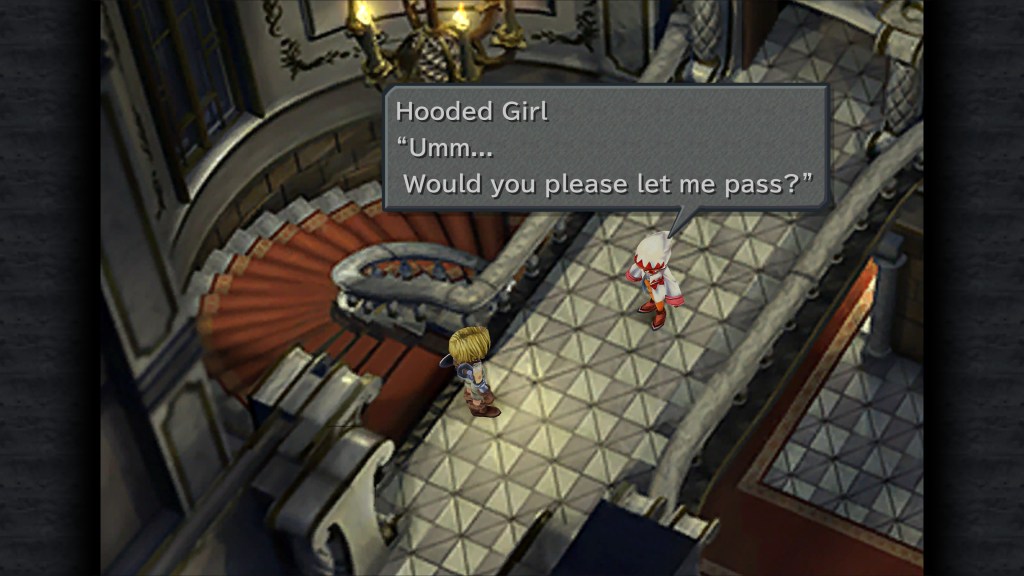
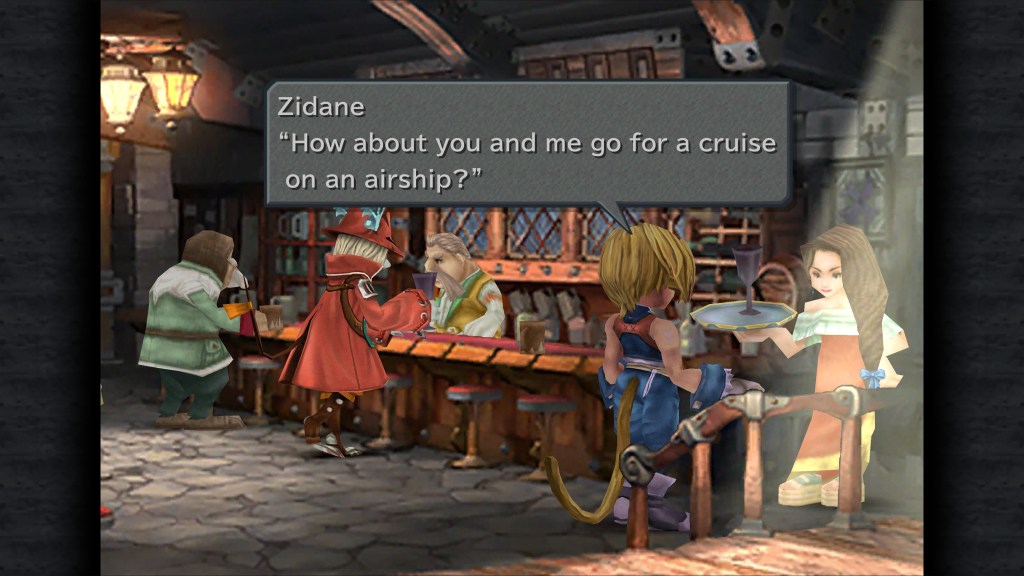
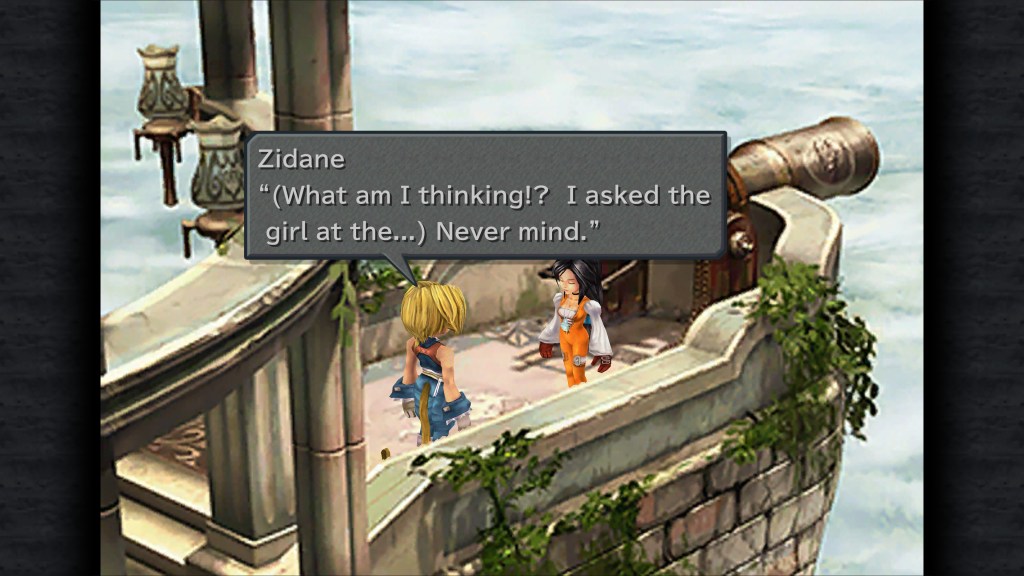

This sort of writing can be a delicate balance, because it’s important to make your main character feel ‘charming’ as opposed to ‘creepy’ and I feel they did a really good job with Zidane.
While the flirting can be a little over-the-top at times, it always comes across as playful and harmless. The princess goes on to become a major party member and the dynamic between Zidane and the still-discovering-herself Princess Garnet (Dagger) is one of the best parts of the game.

I also like how his theatrical nature shines through in his romantic antics. At the very end of the game, the party thinks he’s dead. But he comes back and, harkening back to Rinoa’s unique movements from VIII, has a very over-the-top and theatrical reveal right before the credits roll.
It’s a “I’m still alive! Everybody look at me!” statement that would ring as supremely annoying in a less likable character. But for Zidane, not only is it fitting, but it makes you emotional.
In an ending I had a lot of praise for above, this is the best moment. Hands down.

Our lead is also shown to be compassionate and caring towards his party members. Final Fantasy IX features a lot of the side cast going through self-discovery themed character arcs, Zidane included, and our hero is typically there and very understanding of what they’re going through.
He doesn’t hesitate to drop what he’s doing to help someone in need or to give them a speech to help them process their feelings. Squall was a very selfish and intrinsically motivated protagonist, Zidane is just different in every way.


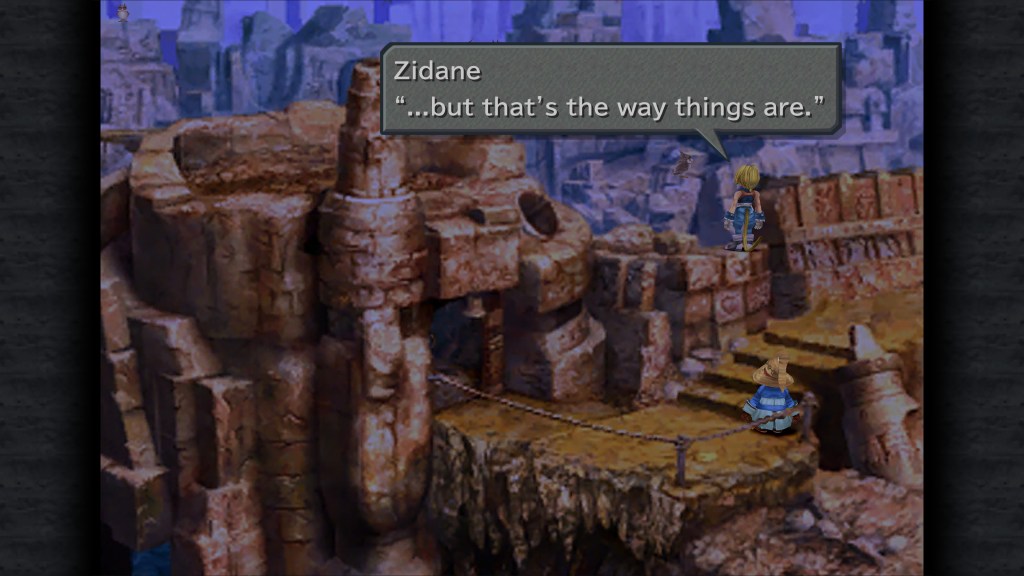

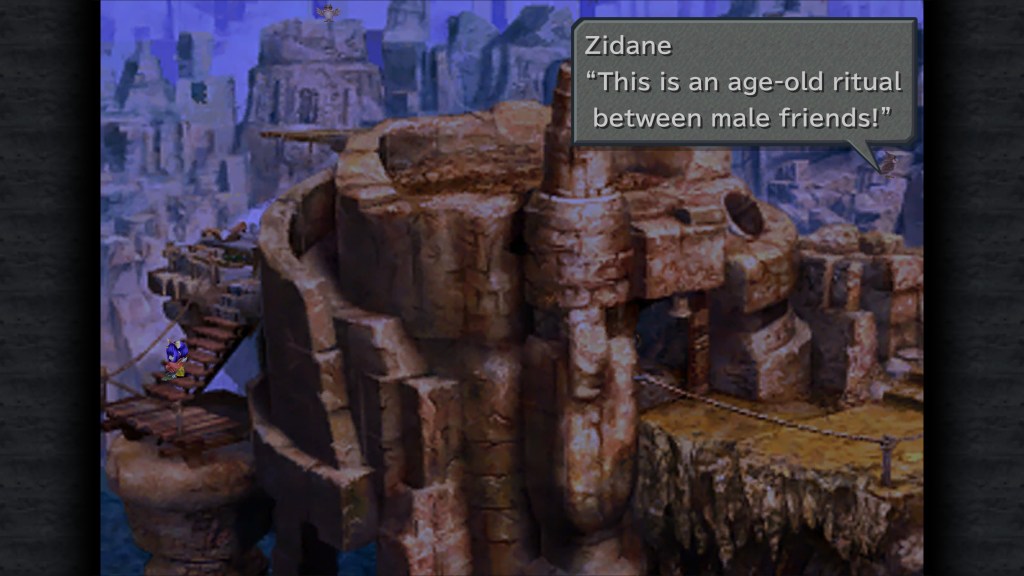
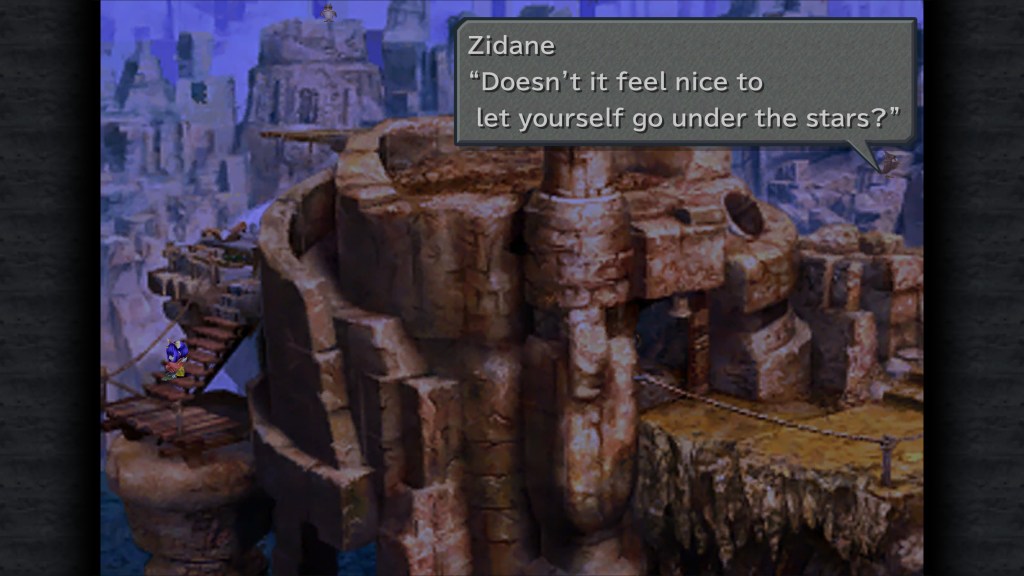
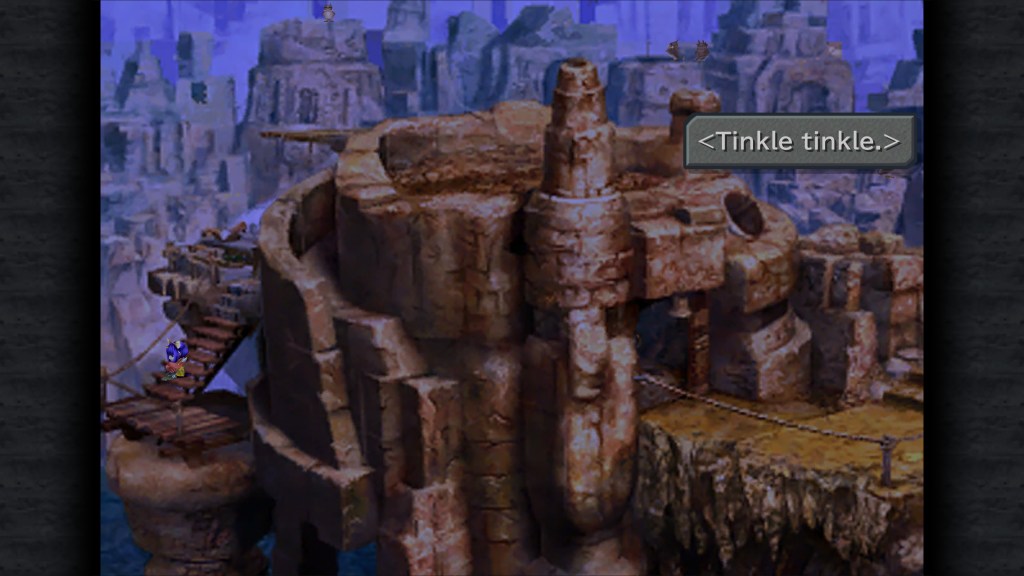
My favorite example of this is a scene shortly after the black mage of the party Vivi discovers the truth of his origins. He was an artificially created golem with a shortened lifespan, he has to process a lot of feelings about life in a very short time.
During a late night conversation at the end of disc 2, Zidane and Vivi discuss life in general and close it with a ‘male bonding ritual’ AKA ‘peeing outside.’ It comes across as silly on screen, but I’ve always found this scene very compelling and relatable.
Unfortunately, I feel like Zidane’s discovery of self isn’t quite as well done. Towards the end of the game, our lead finds out that much like the Vivster, he was an artificially created being. He was made on another planet, Terra, with the intention of helping to destroy the beings of his current home planet, Gaia, so the souls of Terra could infest Gaia and take over things for themselves.
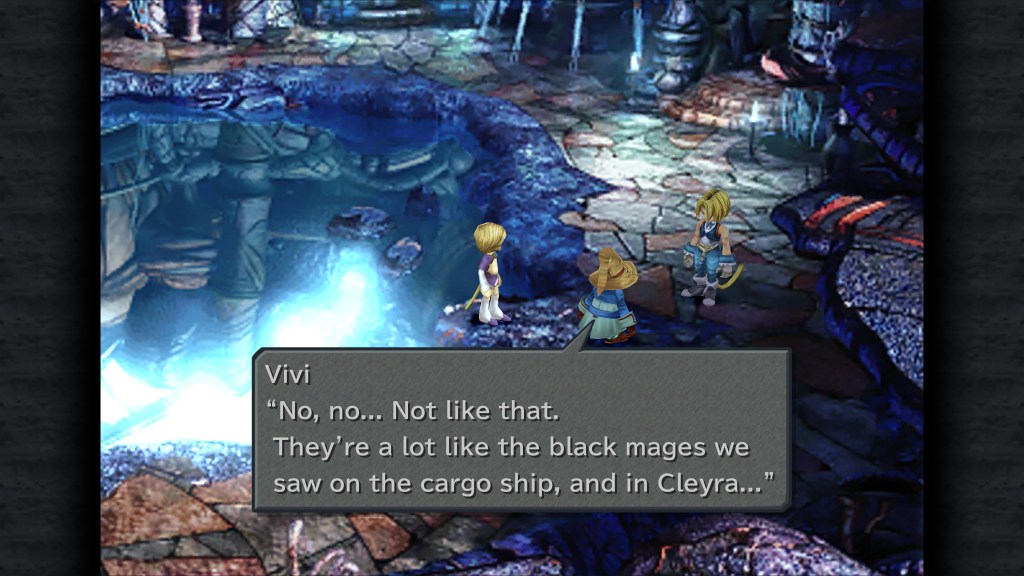
Kuja, the main villain of the game, was also given this task. Zidane was meant to replace Kuja when he came of age, but the protagonist was sent to Gaia at an early age and it warped his view on things. Gaia was his home, why would Zidane ever turn against his new home for a place he’s never heard of? Son Goku refused to align with Vegeta to serve Earth up to Frieza on a silver platter.
This twist is meant to tie Zidane even more closely with the main villain and serve as his breaking point, similar to what we’ve seen out of Cloud and Squall. As mentioned above, this approach really didn’t work for me. Zidane already had the personality of a post-growth character. He had already reckoned with being an orphan and had identified his theater troupe of Tantalus as his true family.
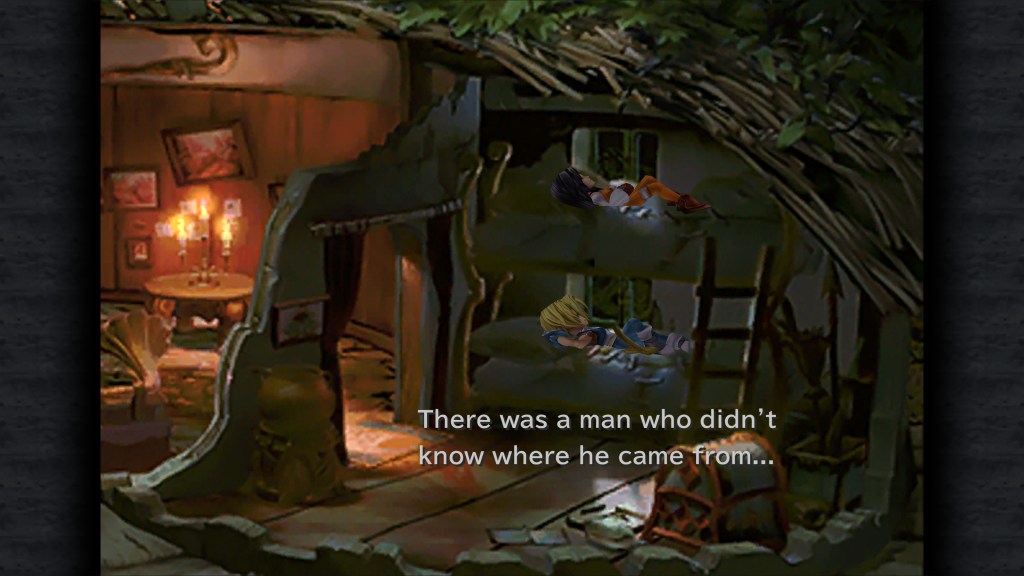


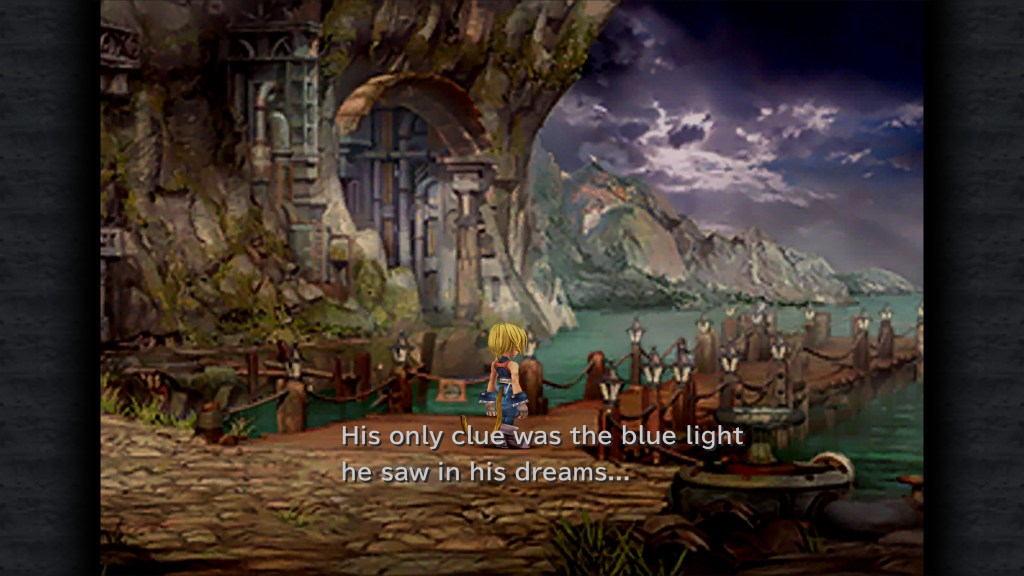

Yes, he mentioned how he was searching for where he came from in a touching scene with Dagger, but his personality always gave me the impression that he had already come to grips with never finding the truth about himself. He acts like a guy who had already seen the plot twist, like he grew off screen from it before the events of the story. So this scene, which causes Zidane to act very cranky, feels like it comes up at a point in the plot where it doesn’t make sense.
The resolution involves his other party members telling him that ‘while you were watching our backs, we had yours as well’ which is all well and good, but I never got the impression that Zidane took his team for granted.
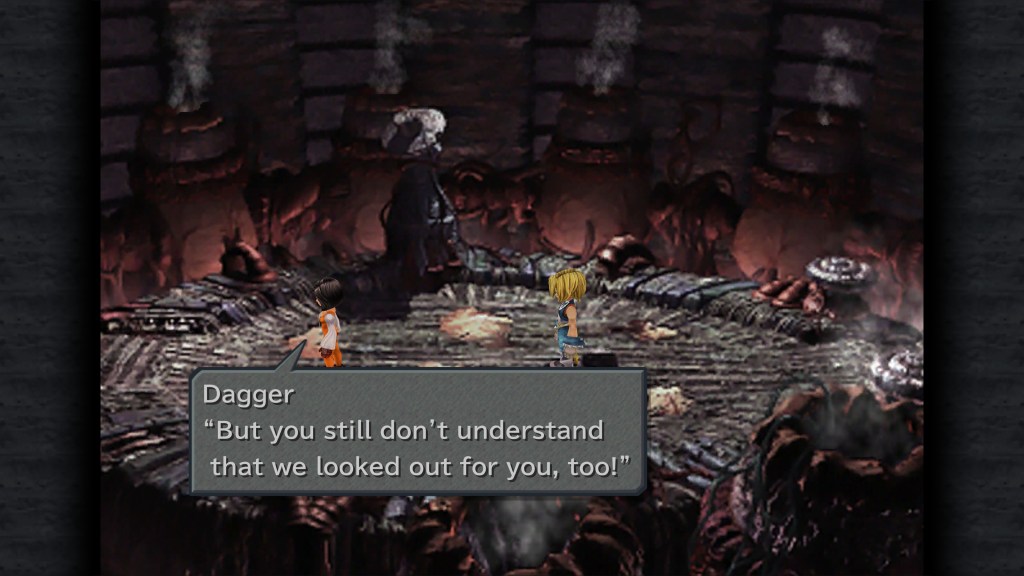
He would occasionally tell the princess that he didn’t love her stepping into danger, but he never shied away from letting other people help him in the past. Early in the game when the forces of Alexandria are storming the city of Burmecia, he never explicitly tells Vivi not to come with him and the Burmecian Freya. So I feel like this is the game trying to teach him a lesson that he already knows.
Maybe I’m just overthinking things here. Another read of the scene could be that Zidane doesn’t realize how appreciated he is and this is how the party communicates it to him after he’s lost his way. Regardless, I feel like he didn’t need this moment. Of the three big ‘protagonist discovering himself’ bits of the three PS1-era games, this has to be my least favorite.
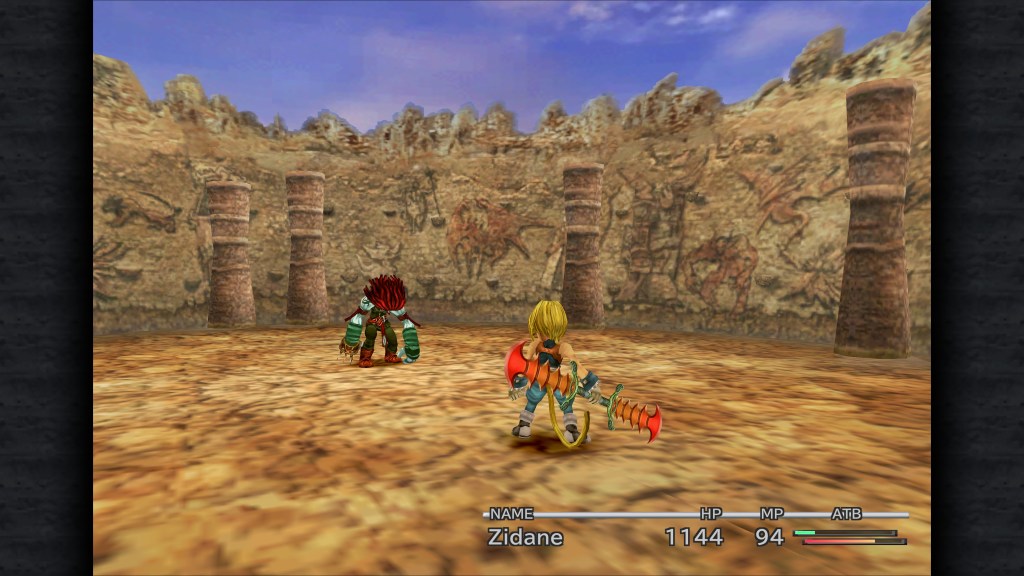
From a combat perspective, in a bit of a change from the previous two games, our lead is not upper tier compared to his crew. At the end of the game, I was able to cause max damage with everyone in my main party EXCEPT Zidane, which is pretty odd. The job he’s saddled with is thief and thieves aren’t known for their hard-hitting nature, so at least they don’t break the rules for our tailed friend.
That said, IX has far FAR more thievery chances than any other Final Fantasy game, so making the lead a thief is greatly appreciated. Enemies have multiple things to steal and some really handy loot to boot! We’ve come a long way since Final Fantasy III where it was just looting potions over and over again.
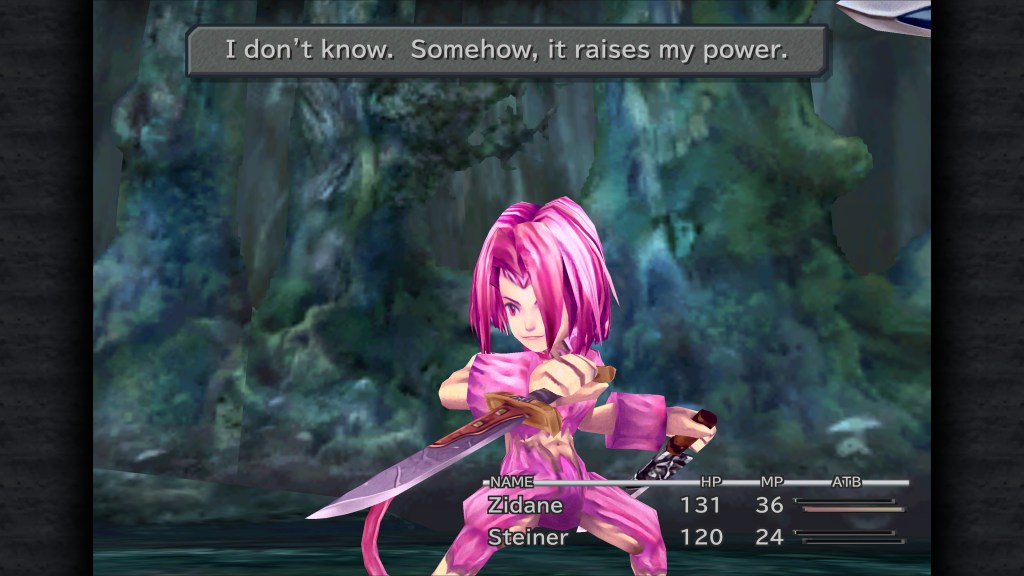
Zidane’s trance mechanic leans into his monkey-like nature. He sprouts fur all over his body, going for a Super Saiyan 4 like red fur appearance, and is able to sling heavy hitting damage early on.
Encounters like the early boss fight with the first Black Waltz – a black mage like enemy sent by Alexandria – are made far easier with Zidane going into trance. He can cause mid-to-late game damage pretty early on, which is extremely handy whenever it pops up.
In short, I like Zidane a lot. I think he has less overall growth than the other main protagonists to this point, but that’s just because he shows up as a pretty well developed person already. He doesn’t have a lot of growing up to do. He might be immature, but he has a good idea of who he is as a person and what he wants out of this world.
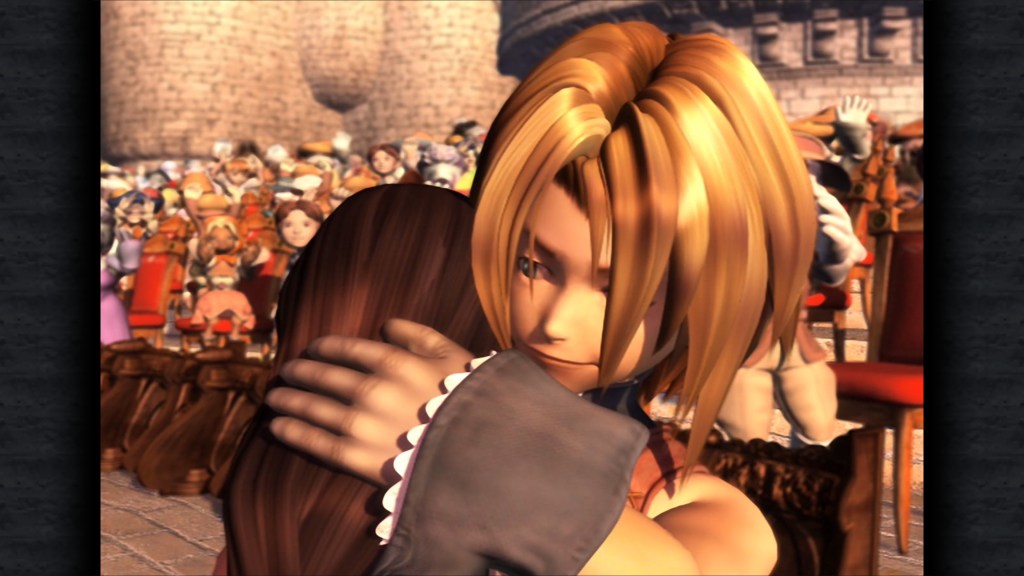
Tantalus
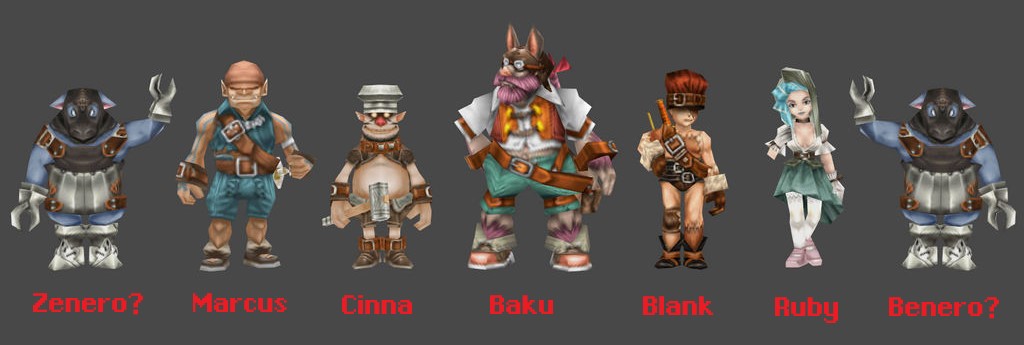
Felt like it was important that Zidane’s theater friends get their own little section, even if there’s not a whole lot to say about them!
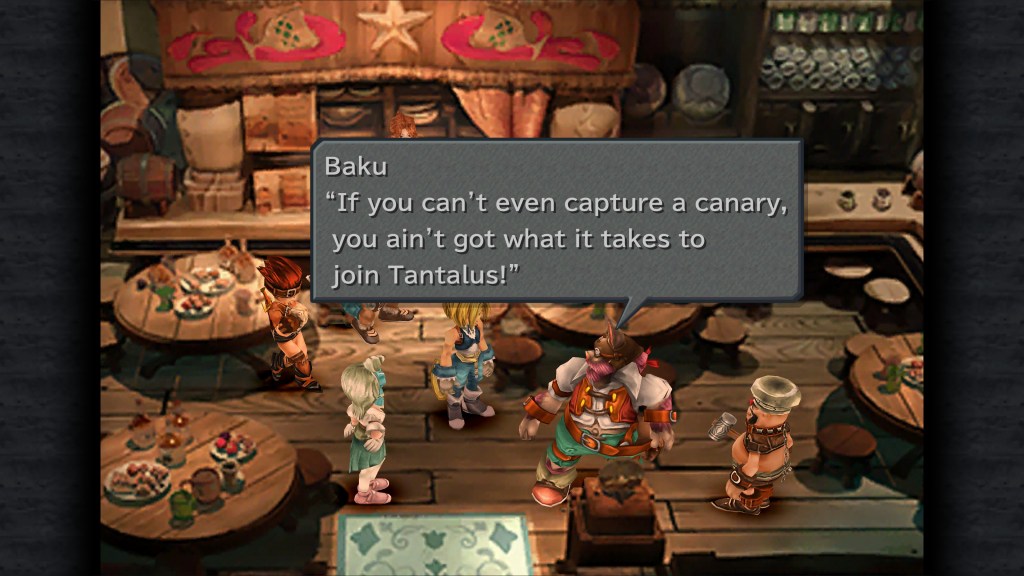
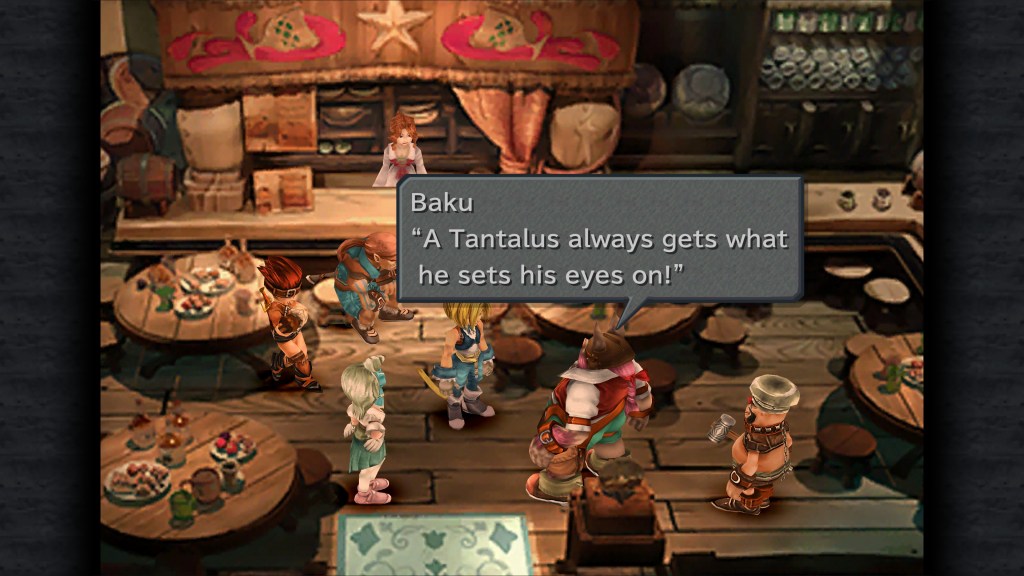
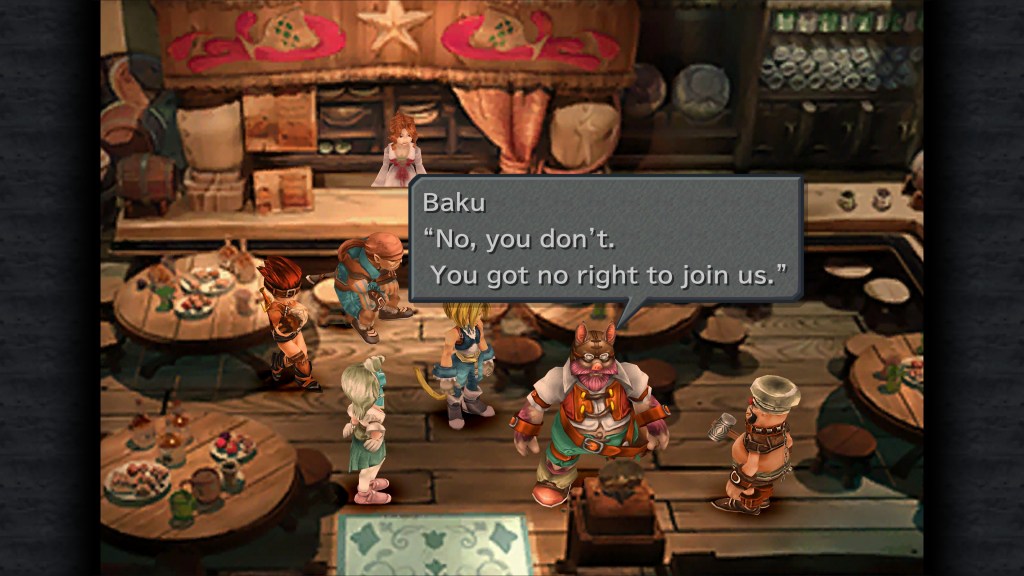
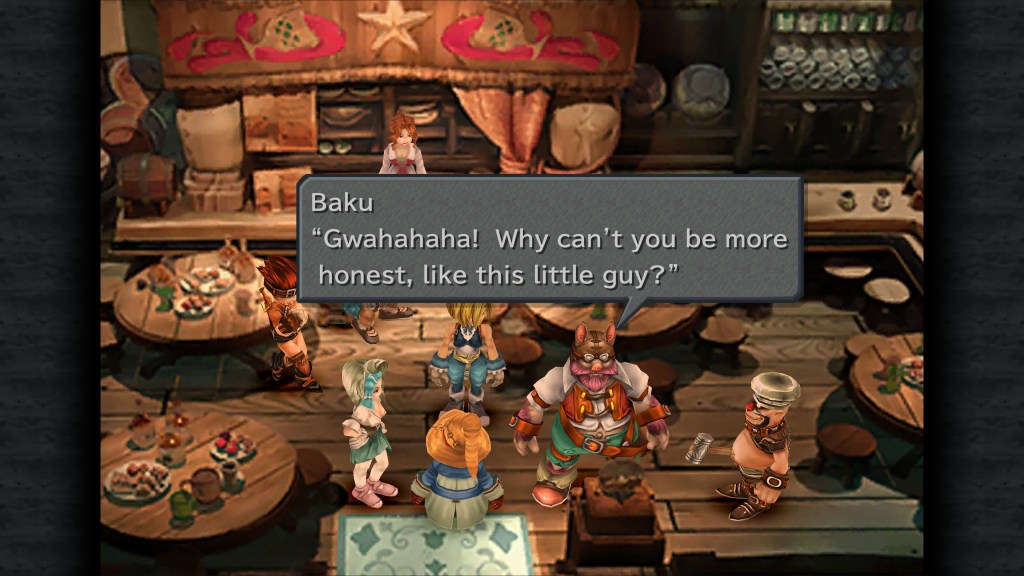
Baku is the leader of these guys and he’s portrayed as something of a poorly socialized brute. He doubles as the dad who stepped up for Zidane since he never had a real family. Zidane says he’s heavy handed, which is a very polite way of saying abusive, but it seems the protagonist doesn’t hold it against him and just views it as Baku raising a kid in the only way he knew how. You are introduced to him in a fake boss fight where he wears a dragon head. Isn’t that neat!?
He reminds me a lot of a very old fashioned father. The type of person who has seen the world change in so many ways around him but he doesn’t know what to make of it. He cares about his family, Tantalus in this case, but doesn’t know how to show them he cares in a modern sense. So he is a bit hard on them and can seem mean or even cruel, but when the chips are down, he will be there for the ones he cares about.
The next three guys I feel the need to mention are Marcus, Blank and Cinna. Blank plays a big role early on and helps the main case get out of a location called the forest of death, but gets turned to stone for his efforts. He stays there until around the middle of the game when the rest of Tantalus bail him out.
After he unfreezes, he never joins up with the crew like many probably thought he would, he just returns to the background with the rest of his Tantalus bros. When he chats with Zidane, it feels like a cool older brother giving advice to a younger brother.
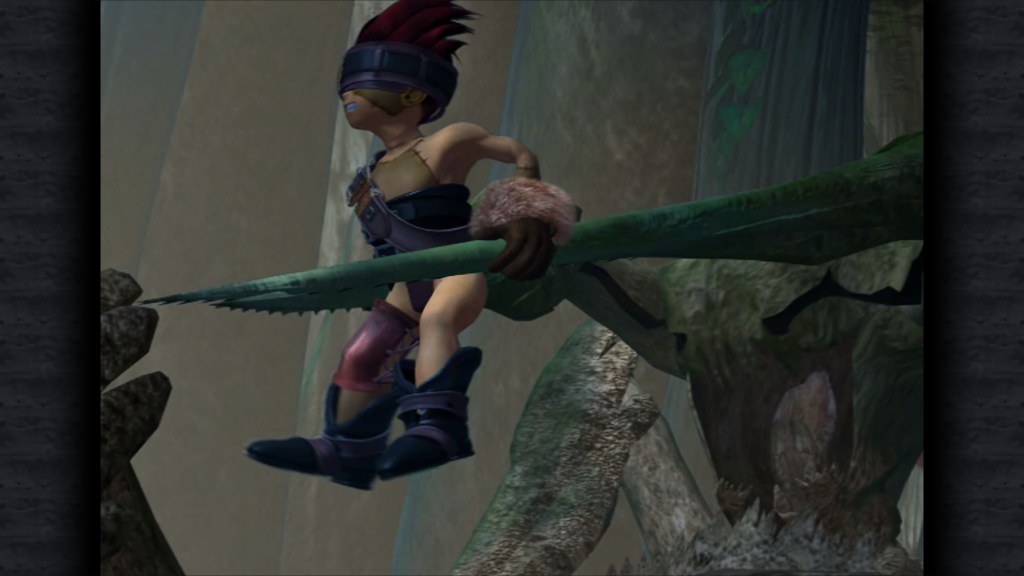
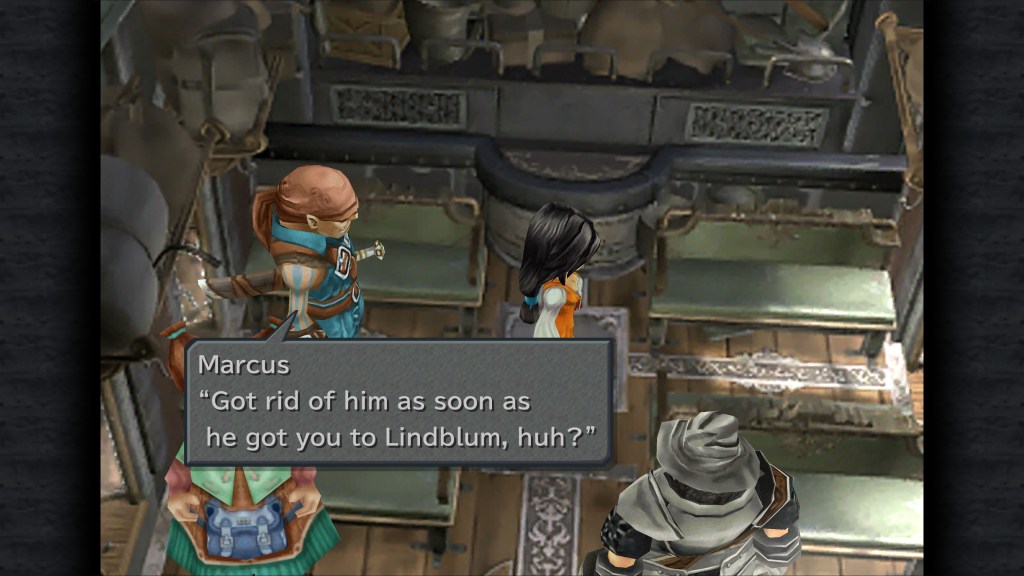
The brother theming is also there for Marcus. Early on in the story, Dagger ditches Zidane in order to retreat back to Alexandria to see what’s going on with her mother. When the princess says she doesn’t care about Zidane, Marcus immediately shuts his trap and acts like he’s going to refuse to help.
He has a very ‘bros before hos’ mentality, so to speak. His focus for the majority of the game is rescuing Blank and once that occurs, he’s mostly in the background. Also, I think he’s meant to be the lead actor of Tantalus?

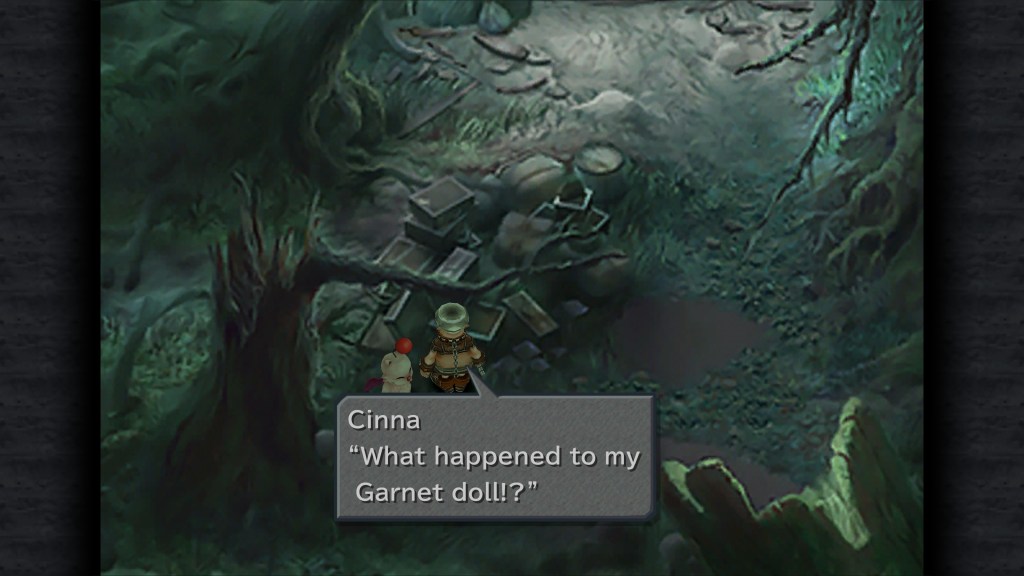
Next is Cinna, who is just a creepy weird guy with a protruding gut. Hey, every family needs that weird uncle, ya know? He’s mostly a comic relief character.
In the beginning of the game when they are discussing how to kidnap the princess, Baku uses a little doll to represent Garnet. Cinna eventually takes that doll as something of a personal plush, he likes his little toy. If bronies were a thing in the FFIX universe, Cinna might be one of those. He means well, he’s just a little odd. That’s why he has the strange potion!

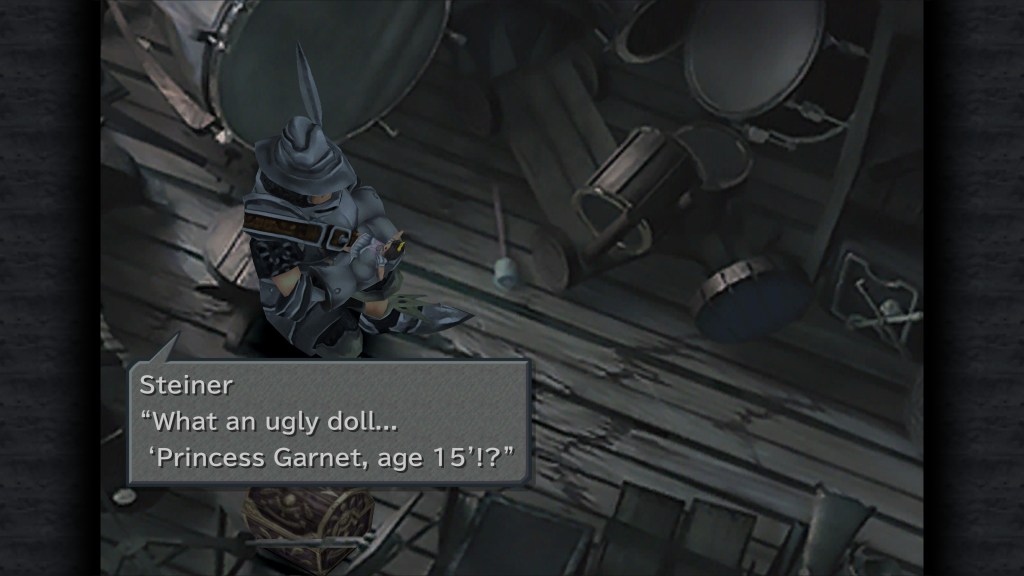
Next up is Ruby, the sole female of the troupe. Most of her in-game antics involve being left behind in Alexandria while the Tantalus fellas run off all over the world. She opens a little play in a bar there, so she’s doing fine. Her character is that of a sassy and headstrong tom boy in a traditionally men-led field. In any conversation with a male member of Tantalus, it becomes clear that they fear her wrath.
Me? I just like the goofy letters she sends to Zidane via the moogles.
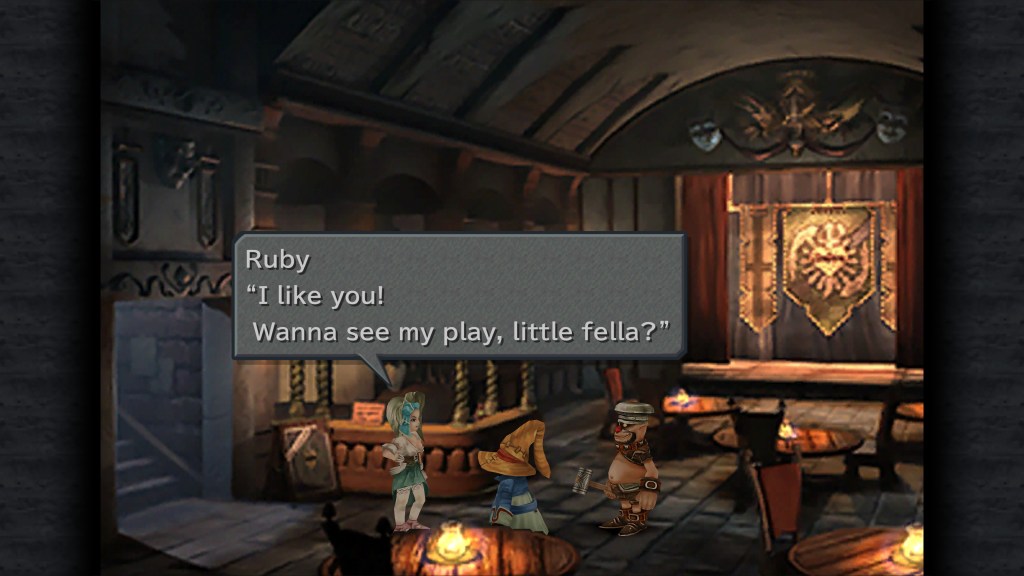
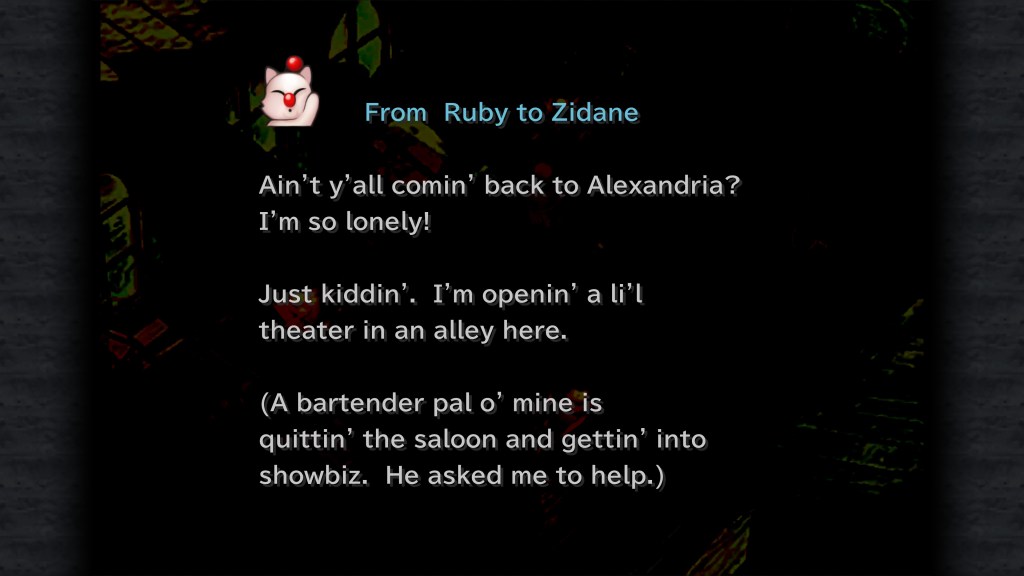
As for the Nero brothers…couldn’t tell ya about them. Their personalities seem to be moving their arms really intricately. I should have captured a gif of it, because it’s really over-the-top looking, but outside of those movements I can’t tell you much about them. I guess they are the stars of a minigame in IX that people couldn’t find for like a decade? It involves gathering all of the members of their family. Exciting.
Princess Garnet Til Alexandros XVII
AKA Dagger (Birth name: Sarah)

For the purposes of this entry, I’m gonna keep it simple and call her “Dagger” since she is called Dagger for a majority of the game.
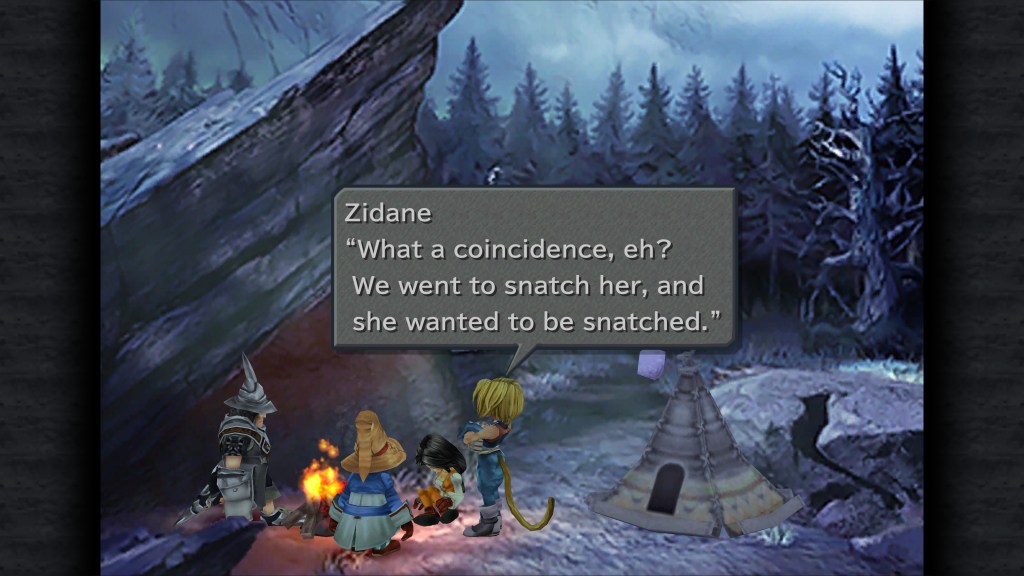
We meet the princess early in our adventure, as Tantalus aims to kidnap her and take her to Lindblum. In an early twist, it’s revealed that she actually wanted to be captured and have the theater troupe take her to Lindblum. Coincidentally, that’s where they were going anyway! So what starts as a kidnapping quickly warps into an escort mission.
Dagger’s main purpose in this becomes her focus for the first half of the adventure, she wants to find out what’s going on with Queen Brahne. Her adoptive mother had been a sweet and caring person until very recently, so the princess wants to leave the confines of her kingdom of Alexandria to get some answers.
This is her first long exposure to things outside of the castle and to commoners, so the adventure serves as a little bit of a culture shock for her.

Most of what Dagger knows of the world comes from books. She hasn’t gotten to see a lot of the world and she doesn’t know how normal people live. So the first parts of the adventure deal with her sort of realizing she’s a sheltered person and branching out a little bit.
The best scenes of this are extremely early on in a village called Dali. Dagger can’t help but to speak properly, but she doesn’t even know that girls are ‘supposed’ to be scared of bugs. Her attempts to fit in are very endearing and come across as very sincere. Dagger also gets her nickname just before this moment.
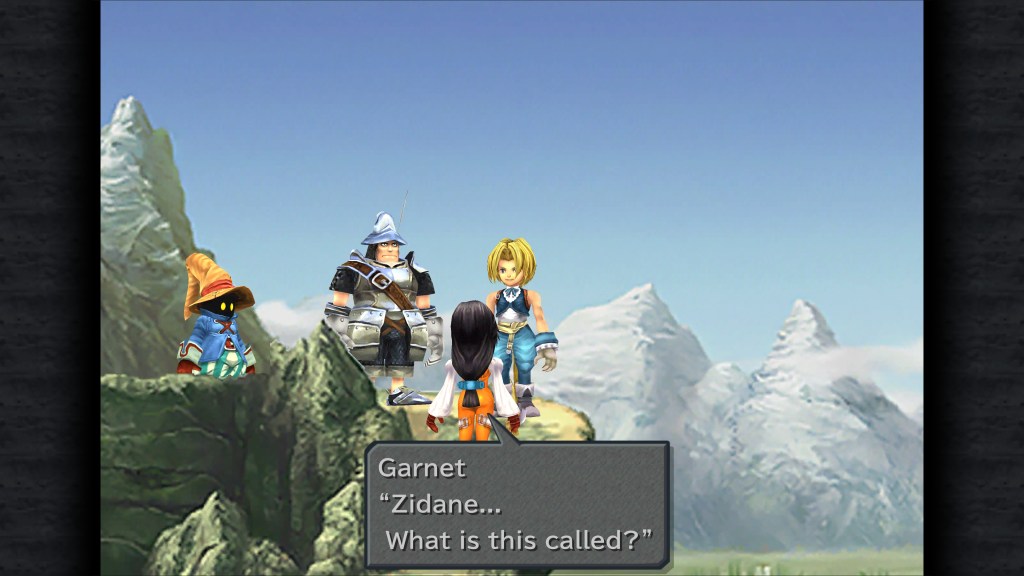
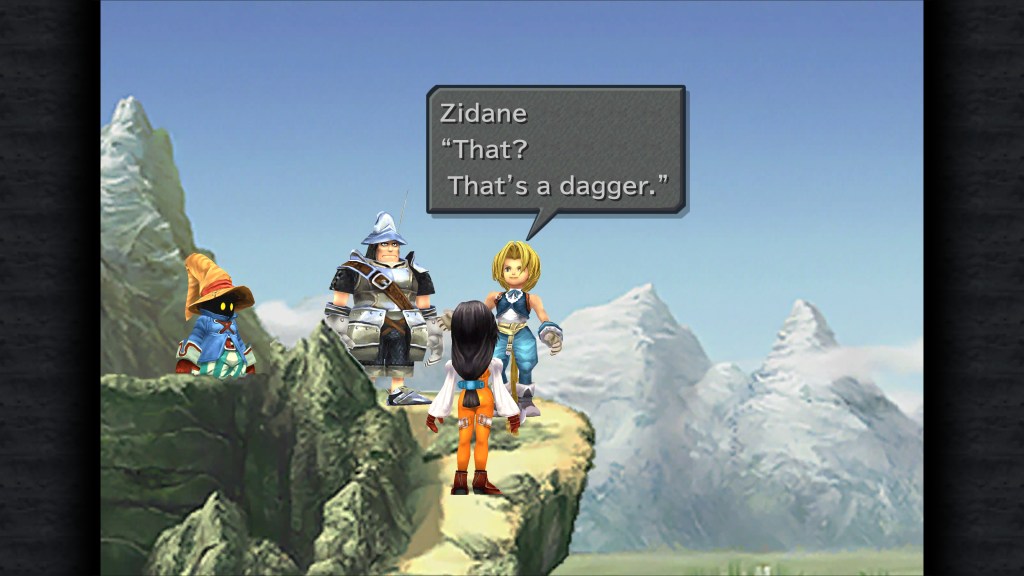

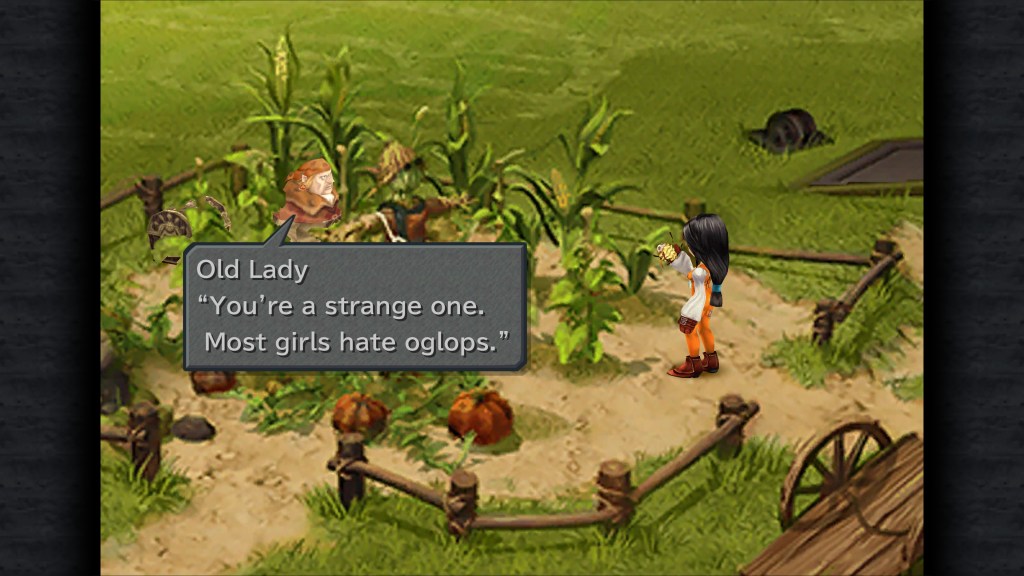
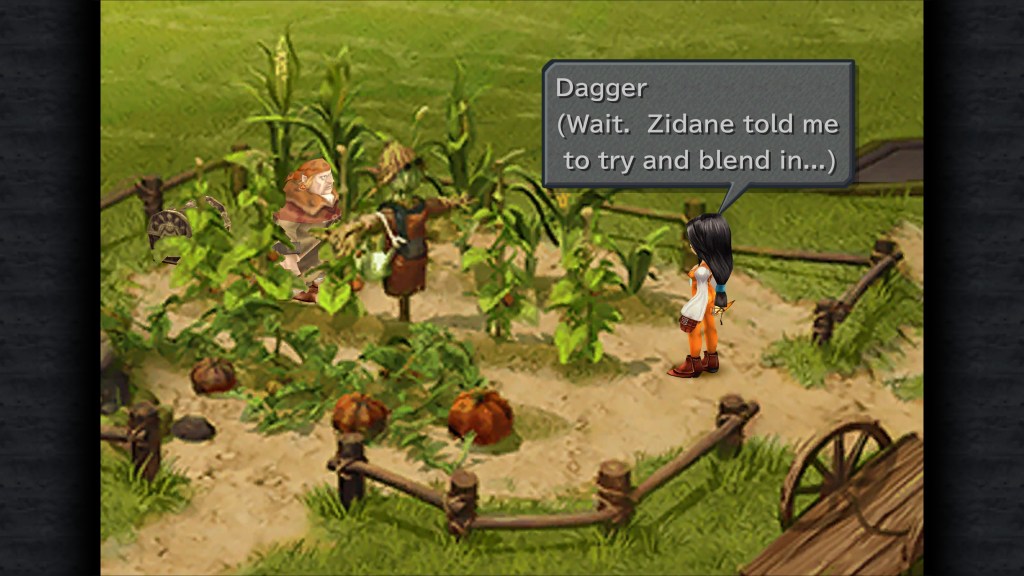
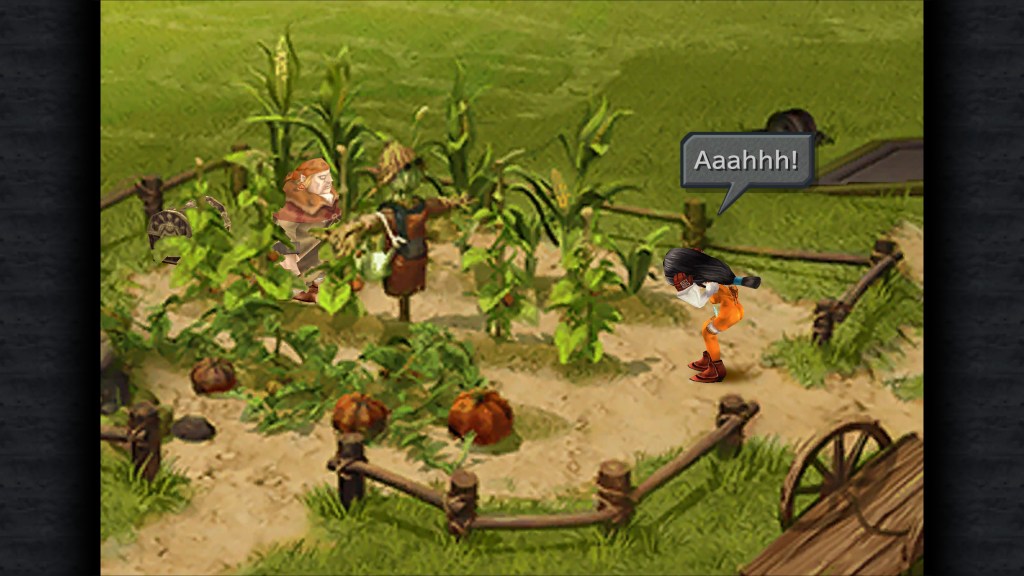
The unique thing about Dagger, at least at the beginning of the game, is that she can summon creatures known as Eidolons. Until the group encounters Eiko, Dagger seems to be the only character that can naturally summon these monsters. I’ll talk more about summoners later, but for the purposes of this character, know that the princess was born with a horn and her adoptive father ordered it removed.
Brahne extracts the eidolons from the princess relatively early in your adventure, and she states that it makes her feel like she has lost a part of herself. So in a way, you could figure her relearning summons starting in disc 2 is the first step on her way to becoming a fully fleshed out person.
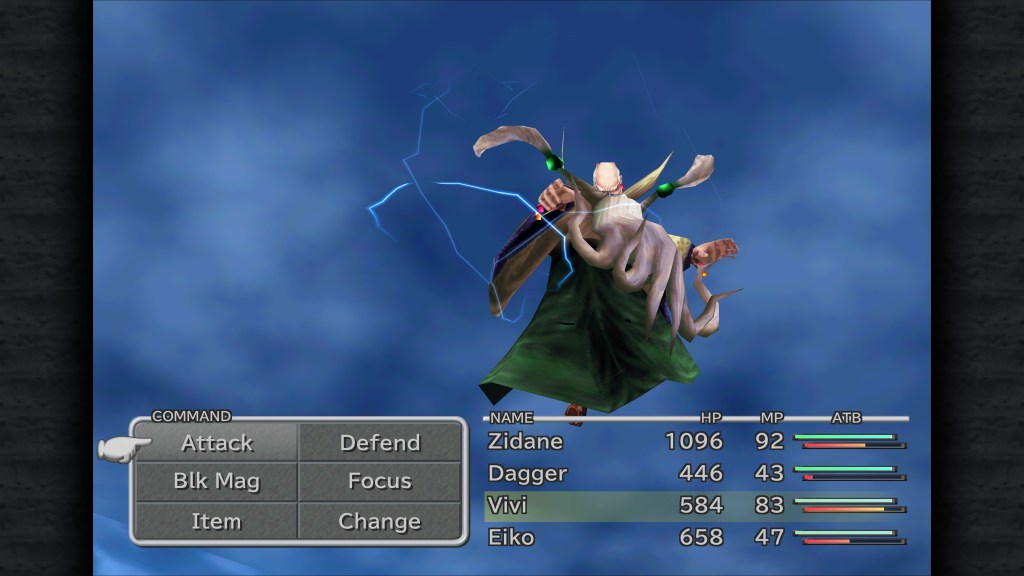
I love how the gameplay addresses early Dagger having access to these summons. Since the princess is inexperienced in combat and not really much of an adventurer, the MP cost for these summons is well beyond what she is capable of reaching.
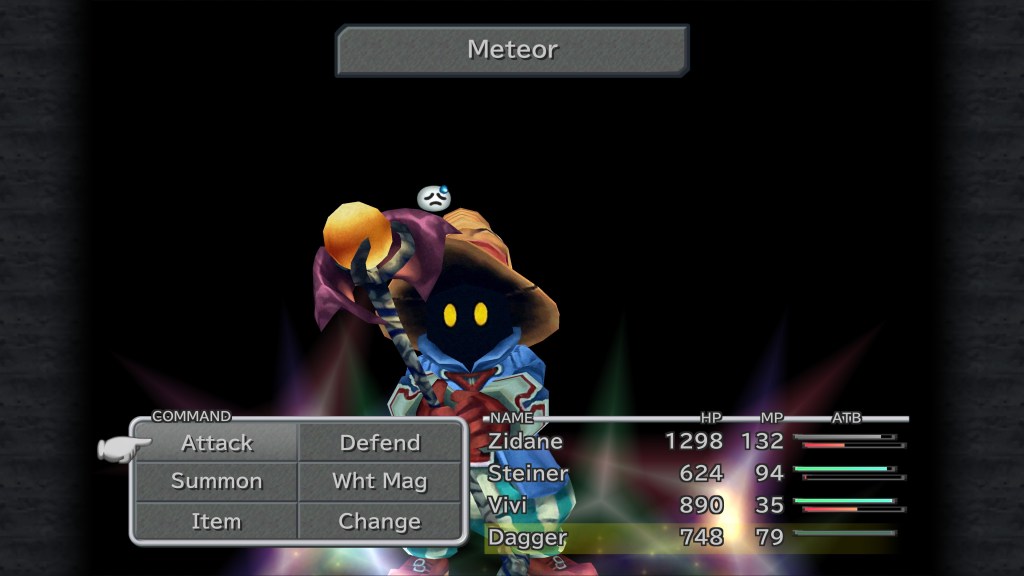
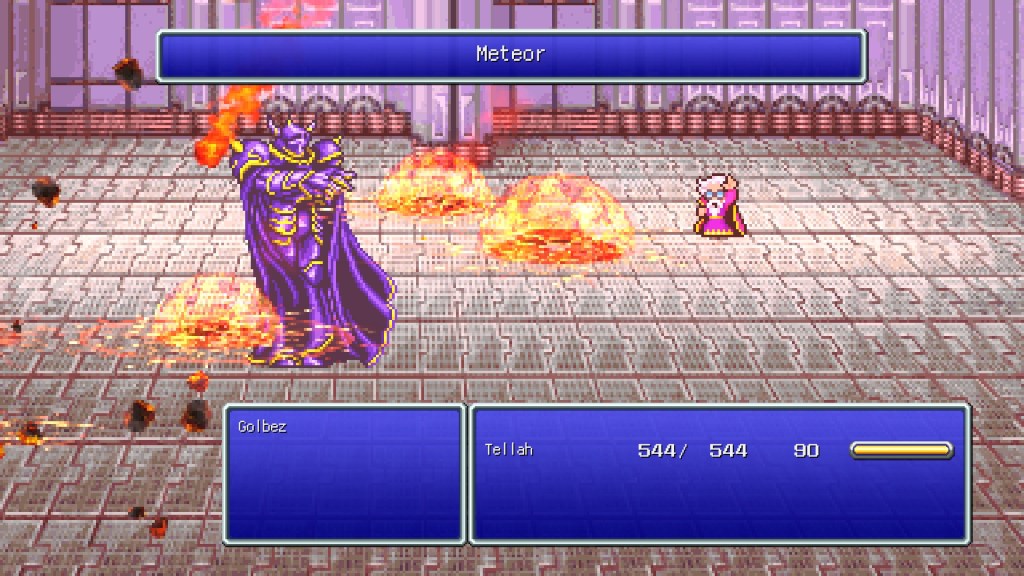
Under normal gameplay circumstances, a player wouldn’t be able to use an eidolon in combat because they are simply too expensive. This takes me back to Final Fantasy IV with Tellah and Meteor.
In that game, Tellah learns meteor but the MP cost is too high to effectively use it. However, a moment in the story pops up and in a moment of desperation, Tellah IS able to cast meteor. It kills him, he extends beyond his limits, but he is able to do it. I view Dagger’s gameplay as a bit of a non lethal evolution of that.
Her arc in this story revolves around her relationship with her mother, learning of her true heritage and her coming to terms with her lot in life. What does it take to be a good ruler? What does it take to be a good person? What lengths is she willing to go to get what she wants? As she spends more time with Zidane, she discovers more about who she is and how being prim and proper isn’t necessarily all there is to life.
They pull off Dagger’s character growth extremely well. Unlike Zidane, it feels like she really changes a whole lot as the game goes on. She starts the game as something of a naive and sheltered princess and by the end of this whole thing, she’s a bit more worldly. She feels like she would make a good queen, like she experienced enough in life over the course of the game to make her a fair ruler.

I say ‘queen’ because halfway through the game, Queen Brahne is killed which serves as something of a shock to the princess. Yes, this woman tried to kill Dagger multiple times throughout the game, but like with Zidane and Baku, this is the only mother she has ever known.
Even though their relationship was strained, she never wanted to see her die. So at this point, she goes through a bit of a phase of shell shock. What does she want out of the world? What does the world want out of her? Is she truly ready for all this?
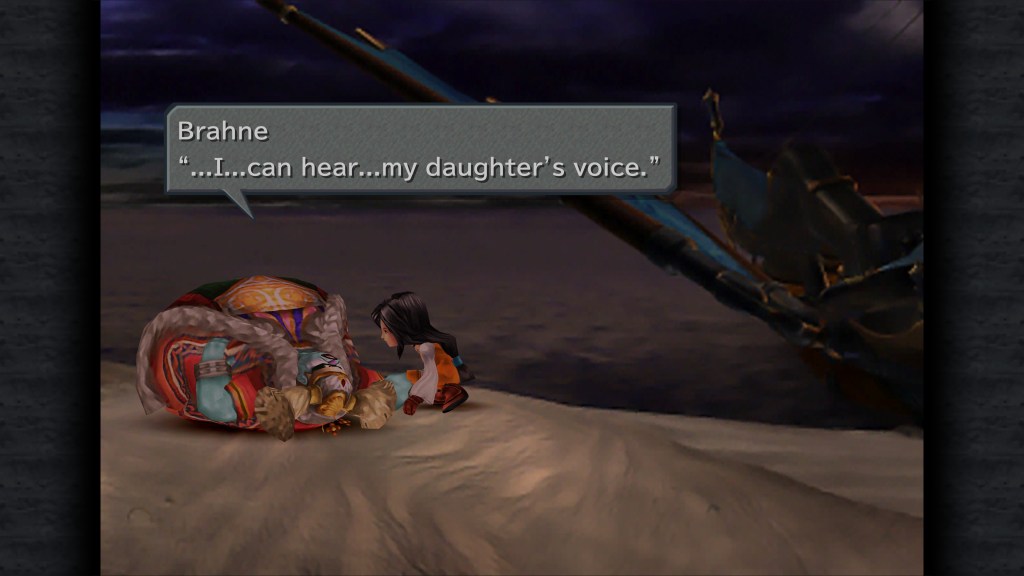
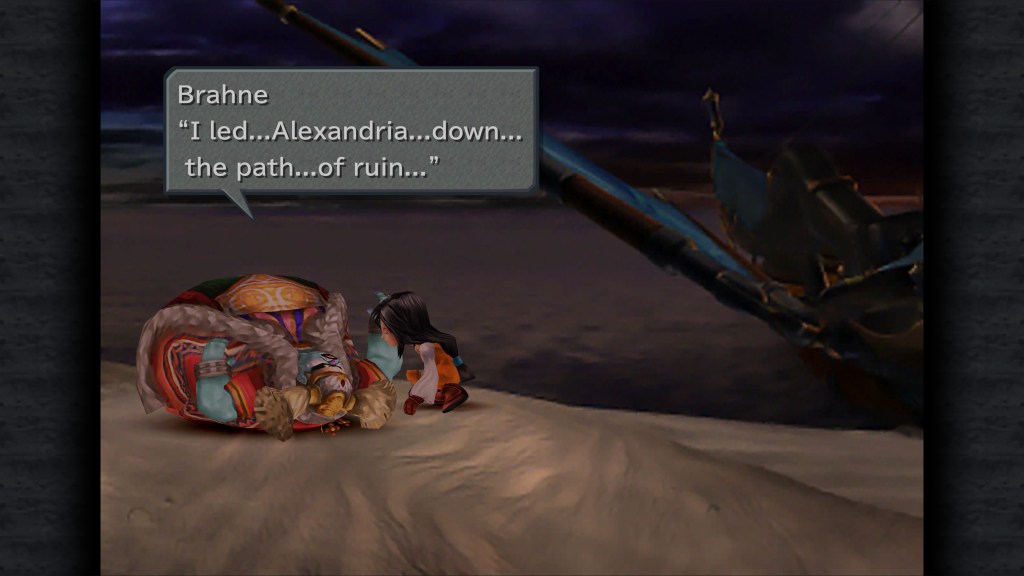
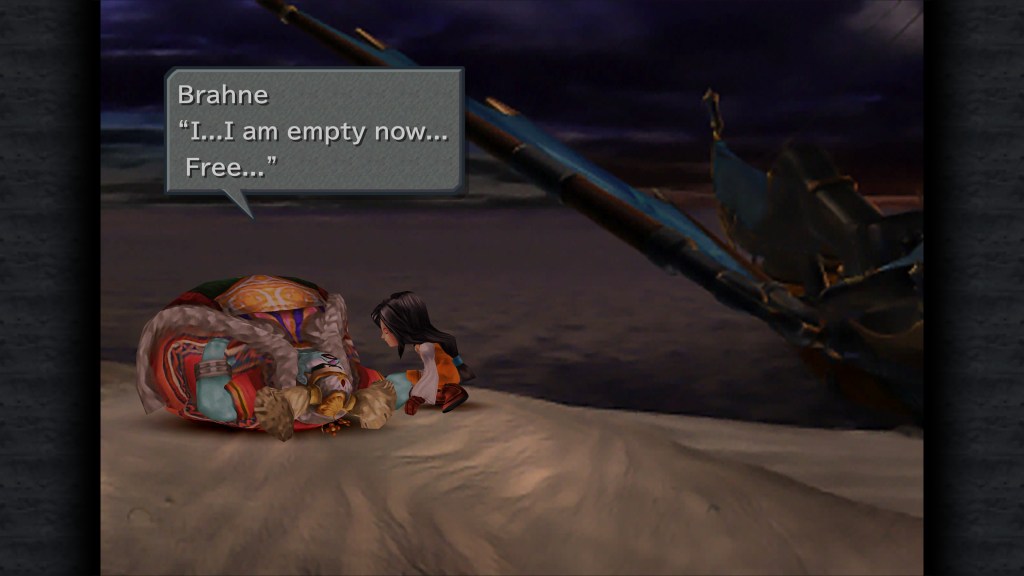
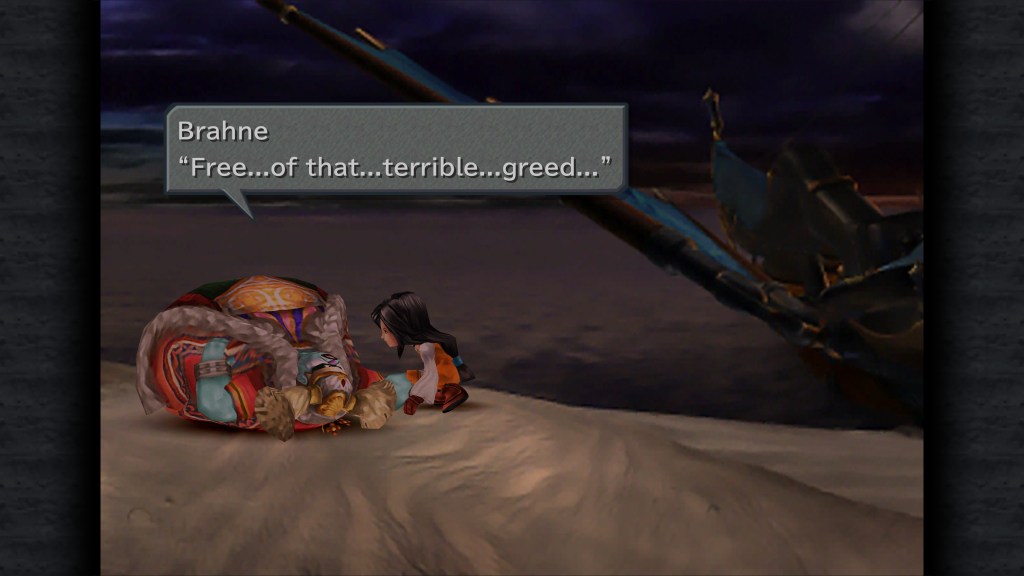

It brings about a long stretch of the game where Dagger can’t talk. She’s been shocked into silence. It’s an interesting approach because she can continue to be a party member through all of this.
Often times games have a bit of a disparity between cutscenes and gameplay. Think of something like Resident Evil. Characters who are crazy competent in gameplay are suddenly incompetent in cutscenes and characters who feel invulnerable succumb to simple gunshots.
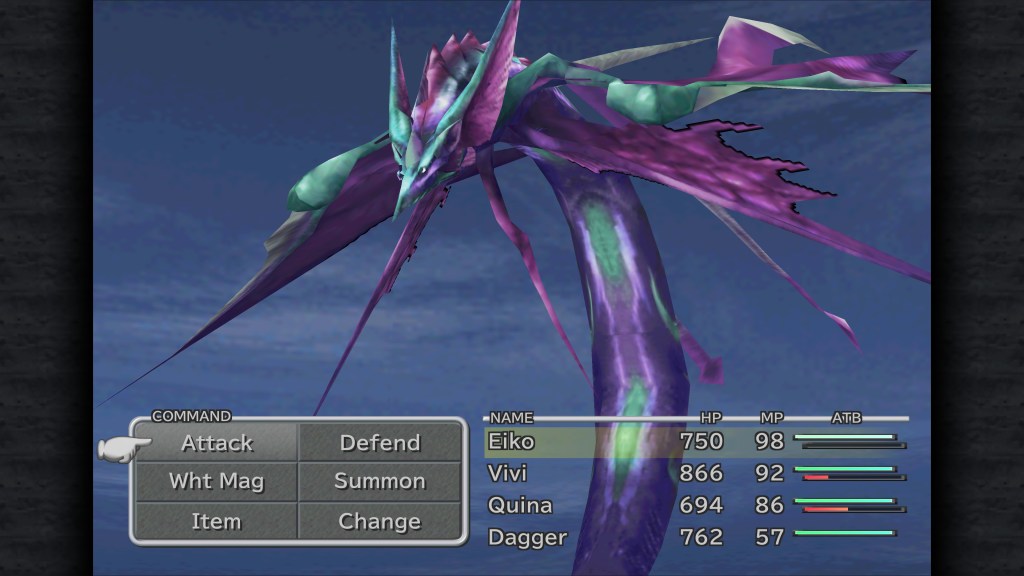
But in IX, the silence plays part in the gameplay. In the world of Final Fantasy, being able to speak is crucial to being able to cast magic. They are literally reciting spells. That’s why when a character gets inflicted with ‘silence,’ they can’t cast magic.
So the mute Dagger will occasionally fail to cast spells because she can’t concentrate. It makes her terribly frustrating to rely on in this stretch of gameplay, but it’s pretty nice that if you elect to use her, the storyline stuff happening isn’t ignored.
She eventually snaps to and realizes how critical things are in the world. This culminates in the slicing off of her hair, which I’ve seen multiple times in Japanese media as a bit of ‘coming of age’ moment, a shedding of immaturity.
Short hair Dagger comes across as very mature and capable of leading her kingdom, so it fits with that. Not much happens with her character after this, outside of key moments with Zidane – the last moments of Zidane’s post plot twist funk involve a boss fight with just the protagonist and the princess – but that’s okay.

When you summon in combat, there are two different things that can happen. A full animation can come out, which means that the attack is full powered. Or a shorter scene can happen, which means the move won’t hit as hard. When Dagger is in trance, she has an elevated chance of using an eidolon at full power.
In combat, Dagger FEELS like a heal-first character – her ultimate weapon even gives you the best curing spell in the game – but her trance seems to suggest that she should be used as a summoner.
It should be noted that her best summon, Ark, is pretty hidden away and only comes into play in the very final portions of the game. It can pretty easily cause 9,999 damage though. So at this point if you wanted to carry her in your team as a non healer, it might make sense.

Speaking of, as a healer, she gets outshined by the summoner-coded character Eiko. With how Final Fantasy works, you typically want at least one healer on the team. You can heal with items, but it’s a much slower process than just having a healer use Curaga on everyone.
However, you usually wouldn’t want two healers. You run into damage dealing issues. I feel Dagger and Eiko both work best as healers, so an ideal team probably wouldn’t have both of them in it. So the player needs to choose which they prefer. Eiko, in my experience, is more useful statistically.
However, I ignore that. I just use characters I like and I love Dagger. She’s one of my favorite characters in this game, so as a result, I almost always use her if I can.

Vivi Ornitier

Probably the most iconic and well known character in Final Fantasy IX. Part of this is because he’s based off of the traditional Final Fantasy black mage so he has an easily recognizable design and the other part of it is that he is probably the single best non-main character the franchise has ever had. More work has been put into making the player care about Vivi than has been put into any non-lead to this point and it makes this little guy really stick out.
Vivi is the primary ‘playable’ character for the very beginning of the game, serving as something of a guide through Alexandria. I think this is a solid choice because, unlike Final Fantasy VII and VIII, a lot of inhabitants you see in the world look a little strange. You have Hippo men just walking around.
Sure, FFVIII had weird races like the Shumi, but they weren’t in big cities just living life normally. Having a bunch of odd-looking characters feels less odd when you start out as a little weirdo yourself.

Vivi quickly cedes the main role to Zidane, but shortly after the plot kicks off the party finds themselves hounded by a character known Black Waltz 1. Oddly, this character looks a little like Vivi, which might raise some questions.
These would only increase when, in the next location the party visits, they discover an underground factory that is pumping out larger versions of Vivi and shipping them off to Alexandria. Right here is when we see Vivi is not a normal character in this world full of weirdos at all, he is an unnatural creation.
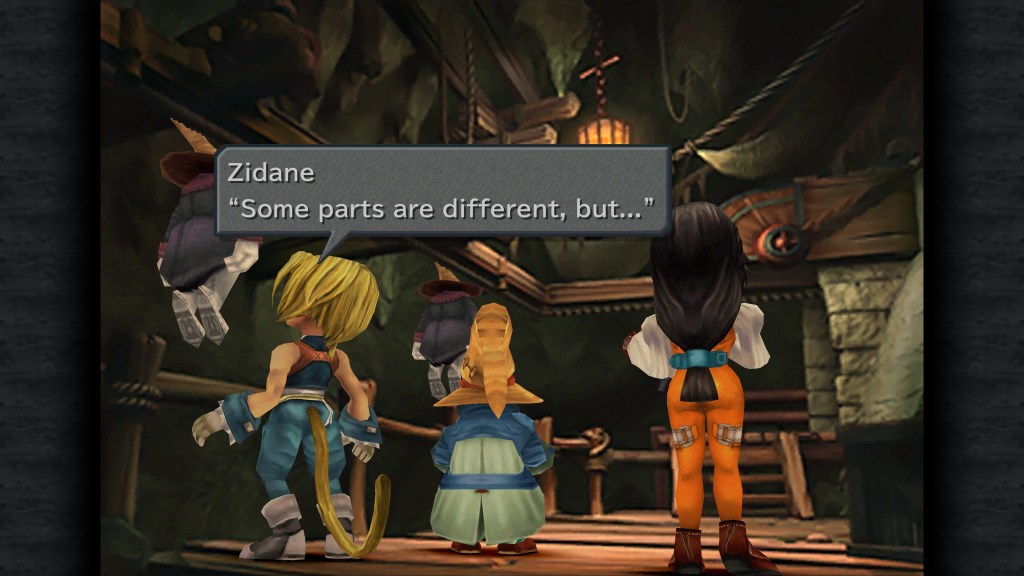
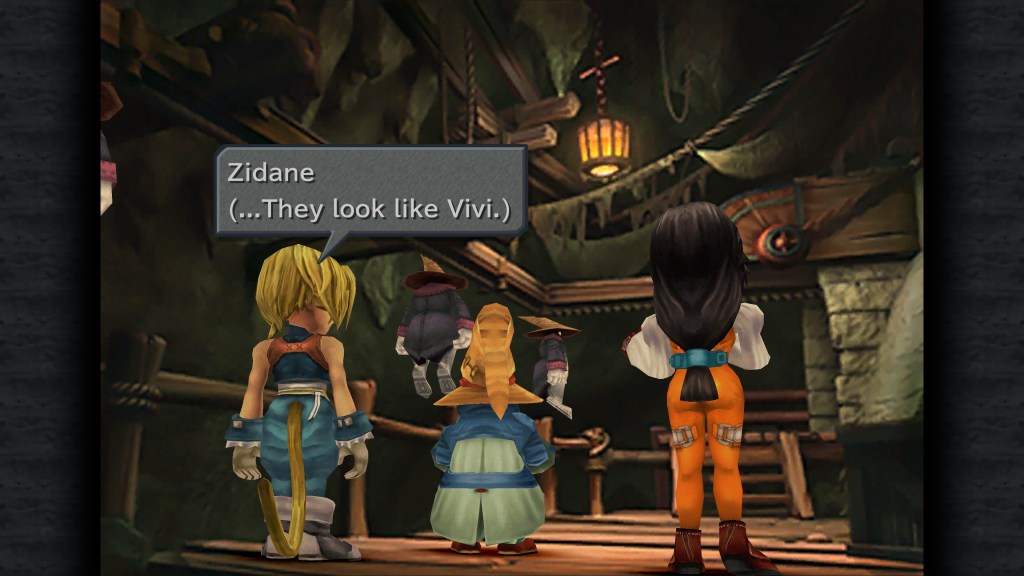
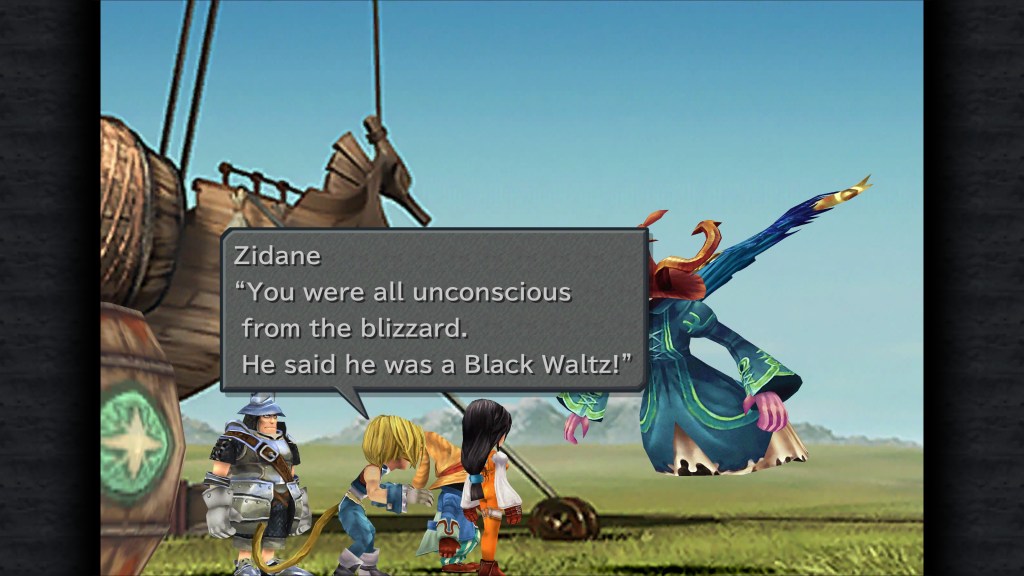
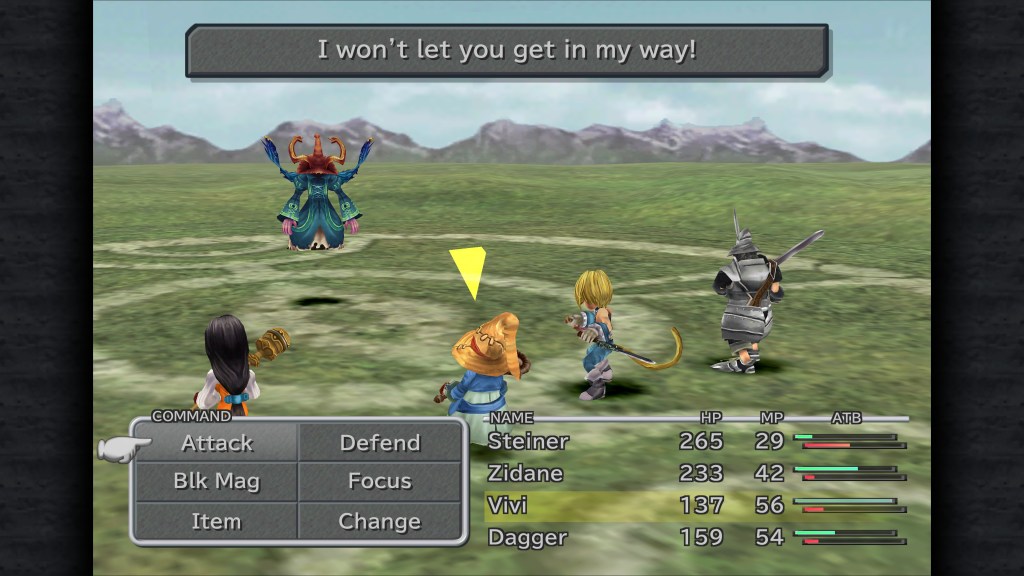
Vivi is portrayed as very child-like. His little intro screen up there even lists his age as ‘appears to be 9.’ He seems very bashful and unsure of himself in spots, so the player can’t help but feel bad for him when he learns that he is actually a little guy who was designed for warfare.
When he actually attempts to talk to these golems and they don’t speak back, you feel some heartbreak. These are the guys that can give him some clarity in life and they got nothing! Vivi just got hit with a giant bombshell about his origins and the only answers to his questions are held by beings who won’t talk.
And yet he feels a kinship towards these things. When a second black waltz shows up and kills a whole lot of these golems, it forces Vivi into trance for the first time and it’s honestly the most memorable trance moment in the game. T
he child-like and reserved Vivi suddenly lashes out, wanting revenge for his fallen brothers. This happens in disc 1 and the fact it’s a supremely memorable moment is a credit to the writing Vivi’s character received.


Most of the rest of Vivi’s adventure is spent learning about himself and his origins, as well as learning what it means to be ‘human.’ By tagging along with Zidane, the little black mage learns a lot about himself.
Perhaps because he never sees Zidane back away from hard-to-handle situations, he too never backs down. The tailed protagonist functions as sort of a big brother for him, distilling life advice. I once again must point out how relatable the ‘man-to-man peeing outside’ talk is.
Eventually the party stumbles into a village of black mages, which features basically every question Vivi has about himself. The creatures of this place snapped to sentience one day and have no idea why. They can talk but they have a child-like understanding of the world, even referring to death as someone not being able to move anymore.
They also have a very short lifespan, roughly a year after gaining sentience. So over the course of the first two discs of the game, Vivi discovers he is an artificial creation AND he’s living on borrowed time. Rough draw, eh?
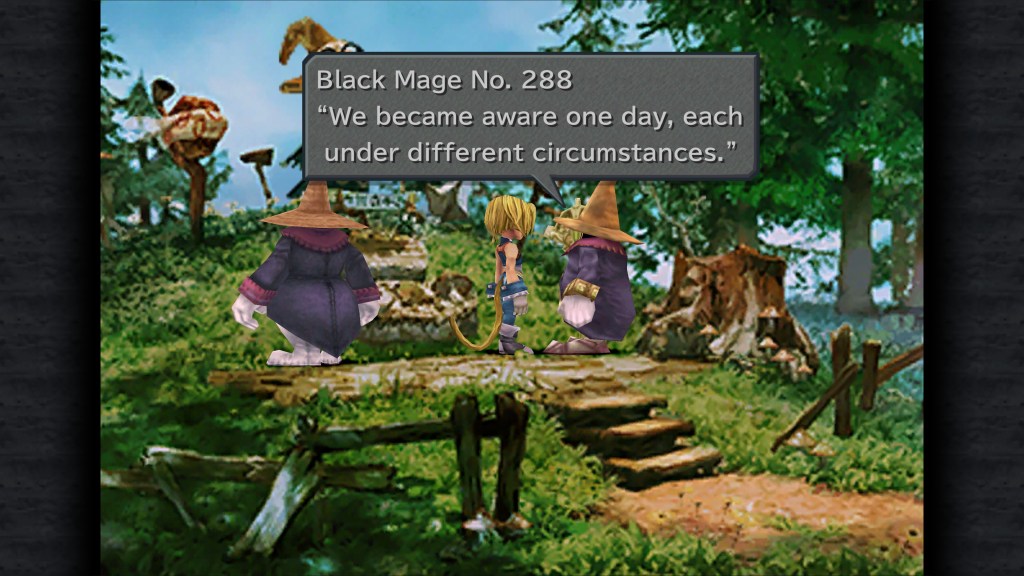
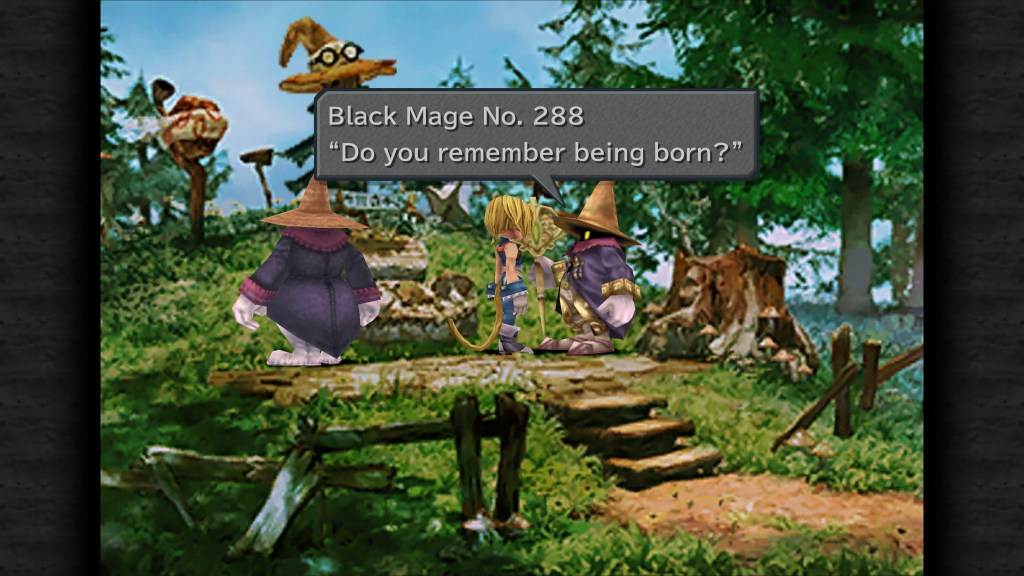

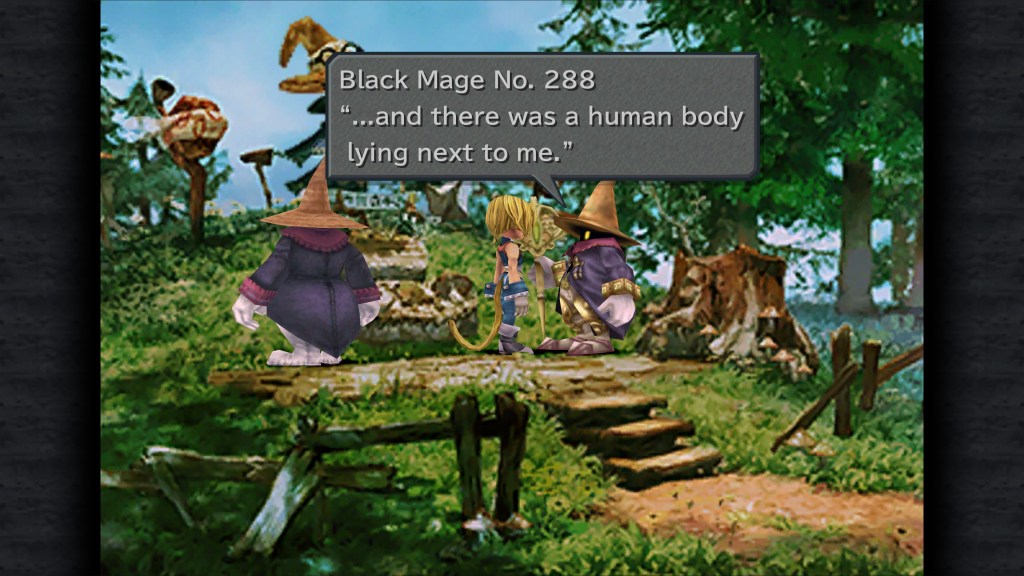
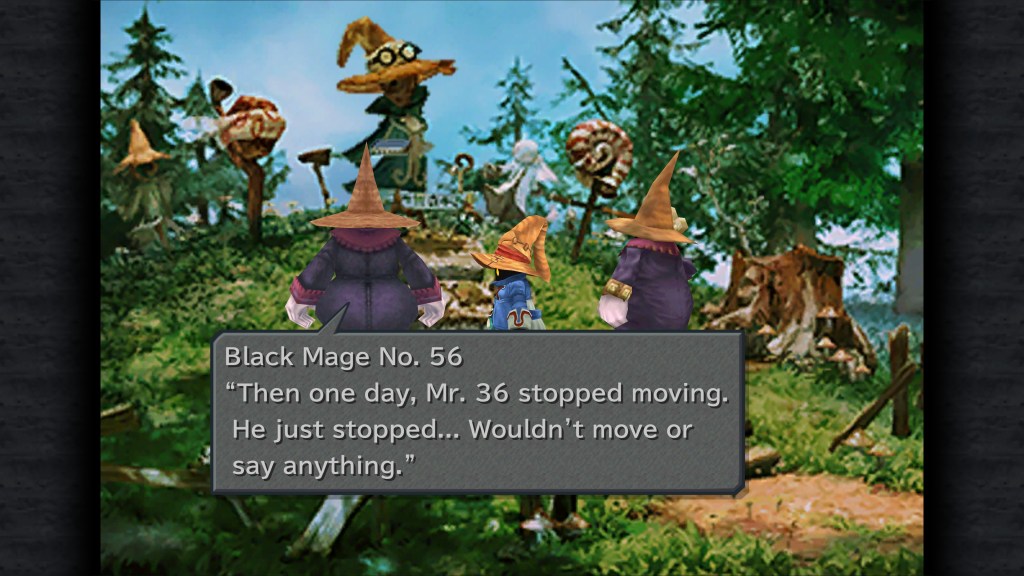
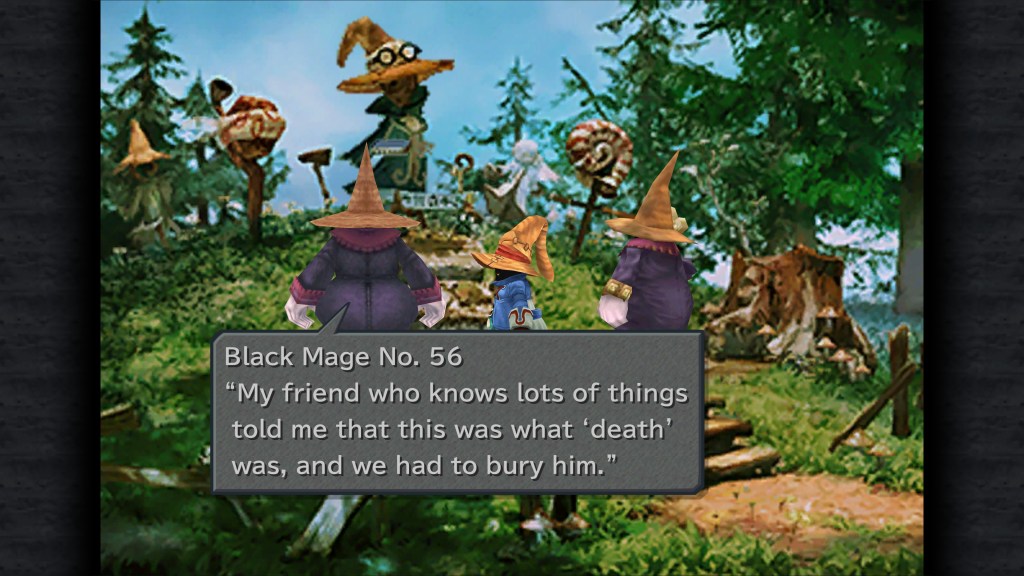
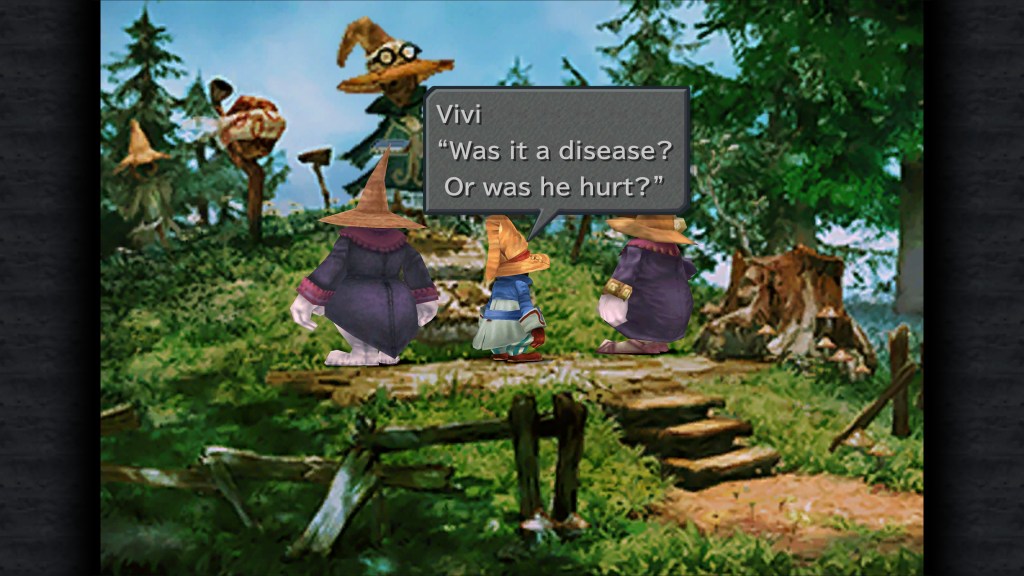
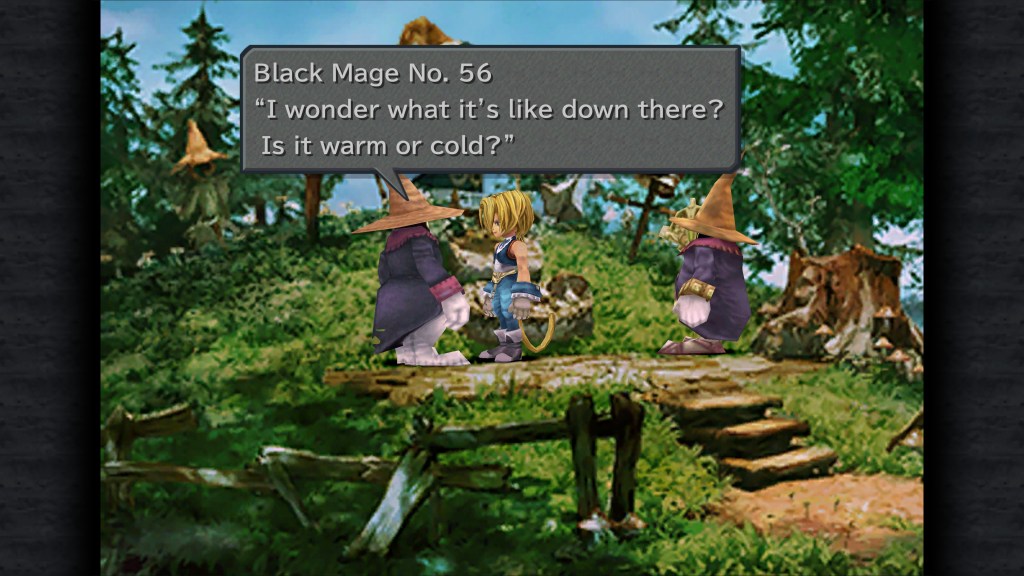
Vivi’s situation brings up a lot of the game’s main themes. What exactly is a home? What exactly is a family? What does it mean to be a human? Does it matter what you look like? Looking at Zidane and Dagger’s story throughout the game, these questions come up over-and-over again.
Getting this stuff brought up in a character that’s ostensibly a child is a different look at it. Zidane and Garnet are (more-or-less, ignore their actual ages) adults with fully formed personalities. Vivi is a blank slate, infinite potential.
After the black mage village, Vivi’s purpose becomes pretty focused. He is tired of seeing being like him created for war. He wants to see the creation of black mages stop and he wants the man responsible for making his brothers suffer punished.
These feelings intensify when Kuja hires some black mages from black mage village by promising them a secret to longer life. Kuja is clearly fibbing and the idea that these naive creatures could be so easily manipulated enrages the little fella.
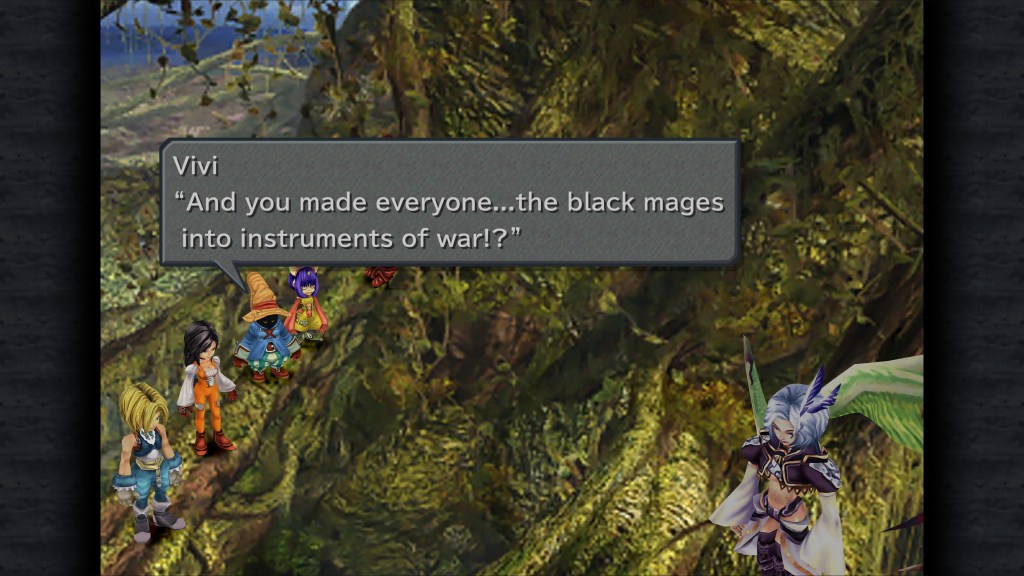
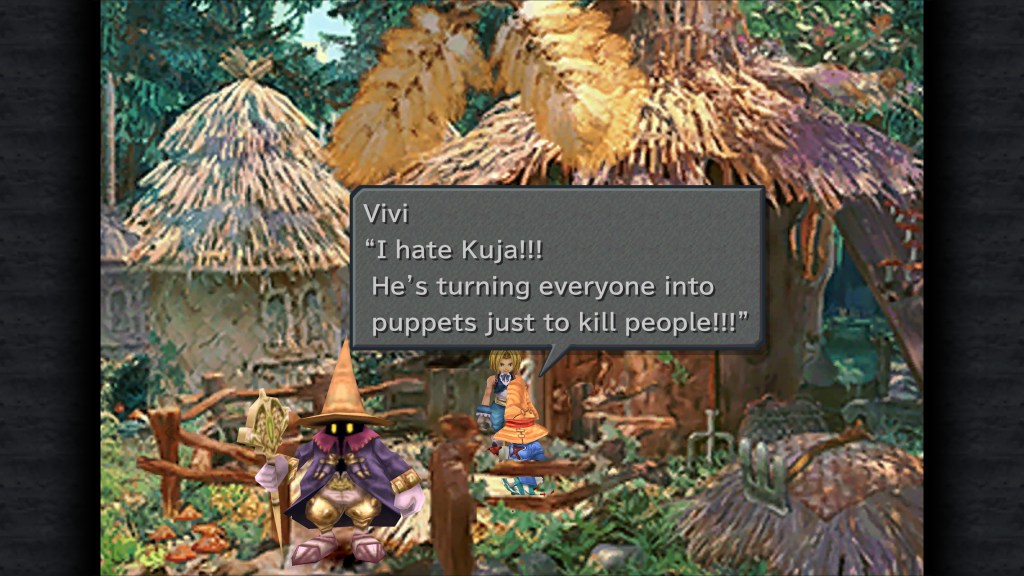
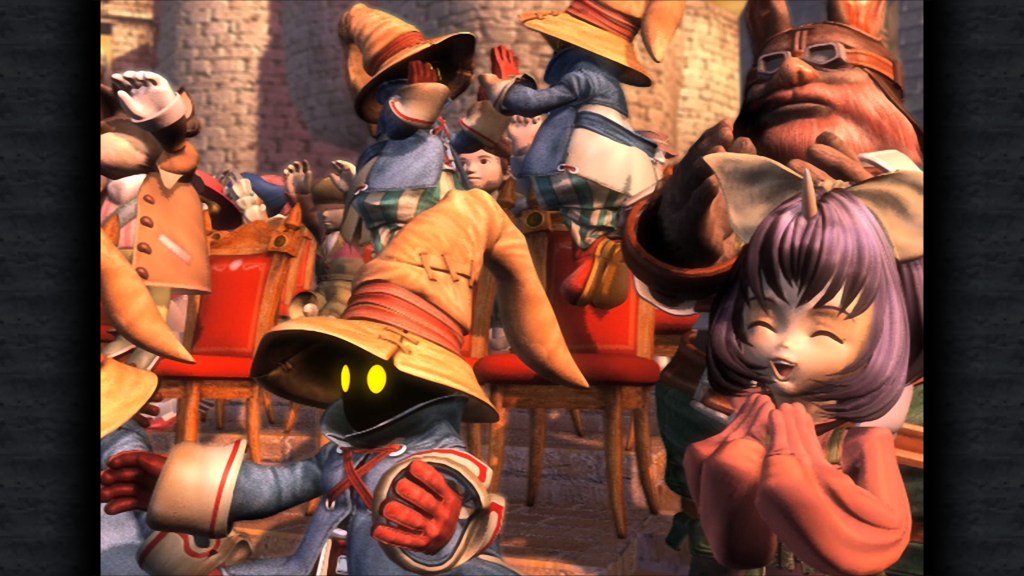
The ending for his character is bittersweet. Vivi’s lifespan comes to an end. It’s something the player is told over and over about, so it doesn’t exactly come as a surprise. Despite this, he managed to create several children. It’s nice to see all the little black mages running around, but man…the Vivster was too pure for this world.
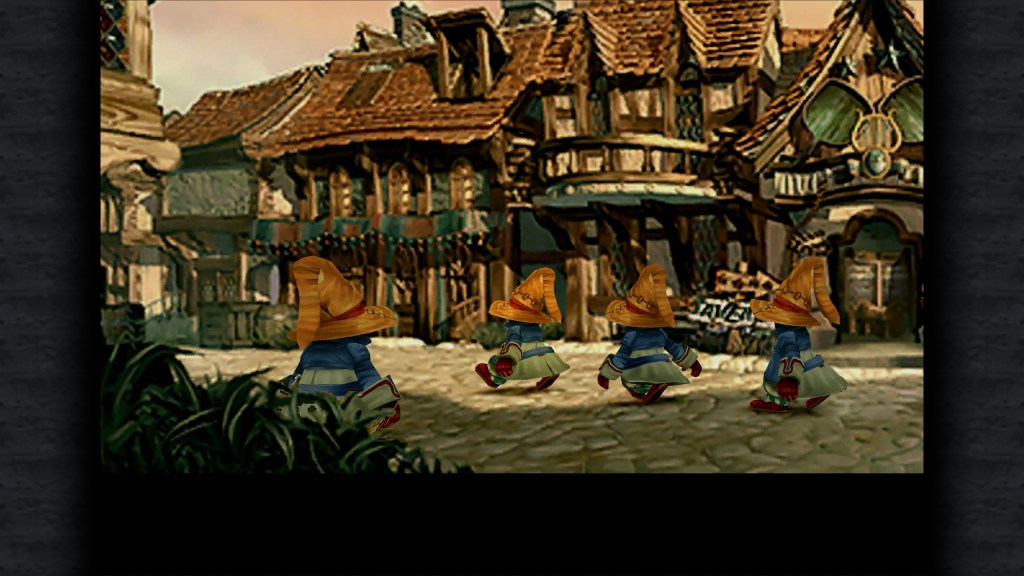
Vivi serves as a bit of a springboard for more fleshed out ancillary characters. Until this point, there wasn’t as much effort placed into fleshing out the side characters.
Like, Cid Highwind is one of my favorite characters in the franchise, but the amount of work that went into telling the player who he is as a person was a lot lower than what went into Vivi. I feel like in X, a lot of focus gets put into fleshing out the side cast and in XII, the side characters are all WAY more interesting than the lead.
From a combat standpoint, Vivi acts exactly as you’d think he would. He’s a magic first black mage. He can learn all of your favorite spells, including the franchise-critical meteor.

His trance is pretty simple and straight forward. He gets a bunch of starch to make his hat all ‘peinty’ and can double cast black magic. Boring but effective! Vivi is pretty routinely in my party and he’s fairly useful. The combat speed hinders him being a total war machine with reflect x2 active, but he still gets the job done.
This is a lot of text to say I love Vivi! One of my first Internet usernames is not one I’m completely embarrassed of. Hoorah!
Adelbert Steiner
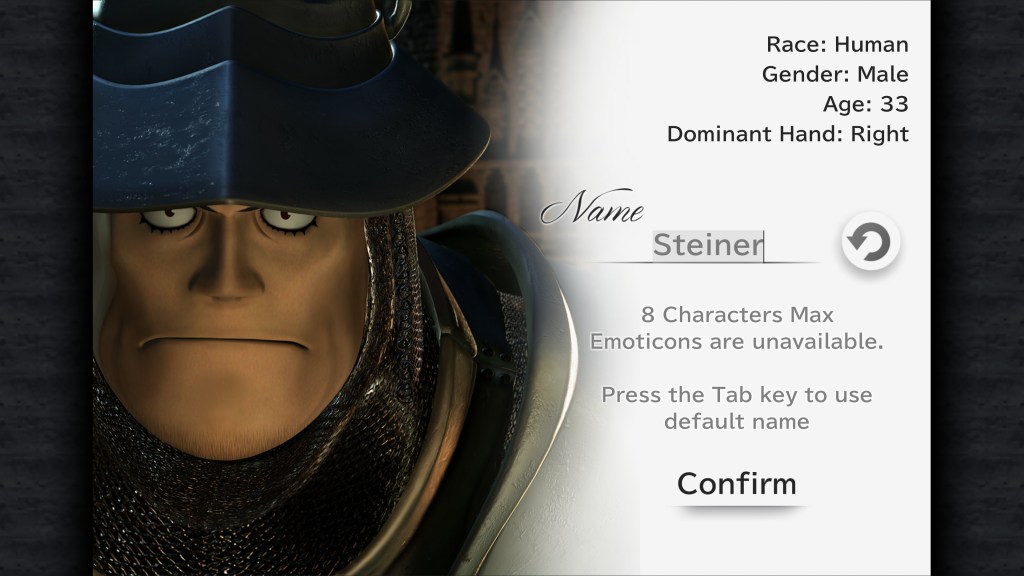
Steiner is a complete goofball, serving as the comic relief for a vast majority of the game’s running time. He constantly plays the fool – he falls for obvious tricks and is the straight man during a lot of ludicrous dialogue.
Characters will comment on how the full suit of armor he always wears is extremely rusty and will also make fun of how obedient he is. He reminds me of how Zell was kind of the butt of a lot of jokes in VIII, except Steiner has a little more depth.
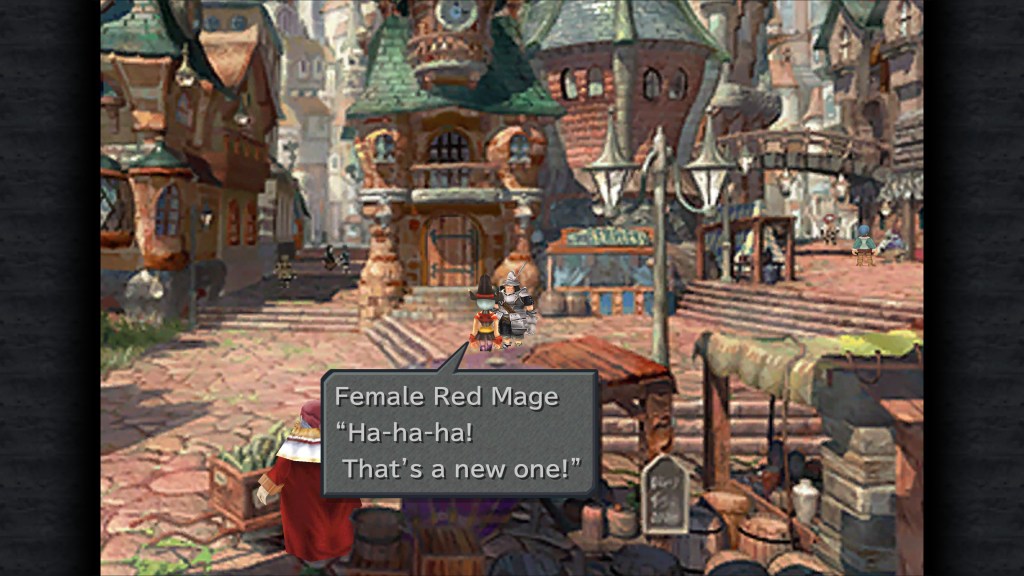
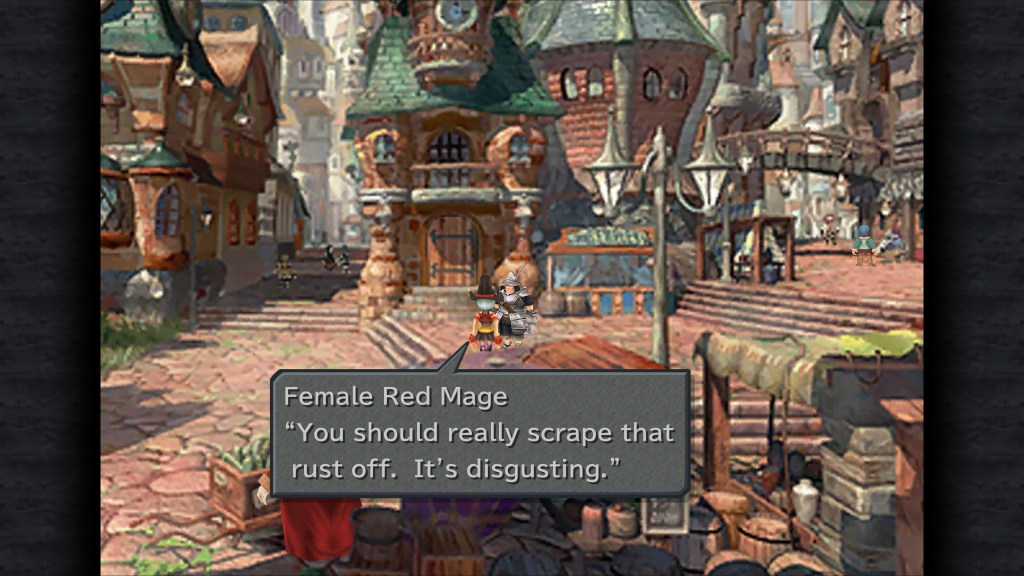
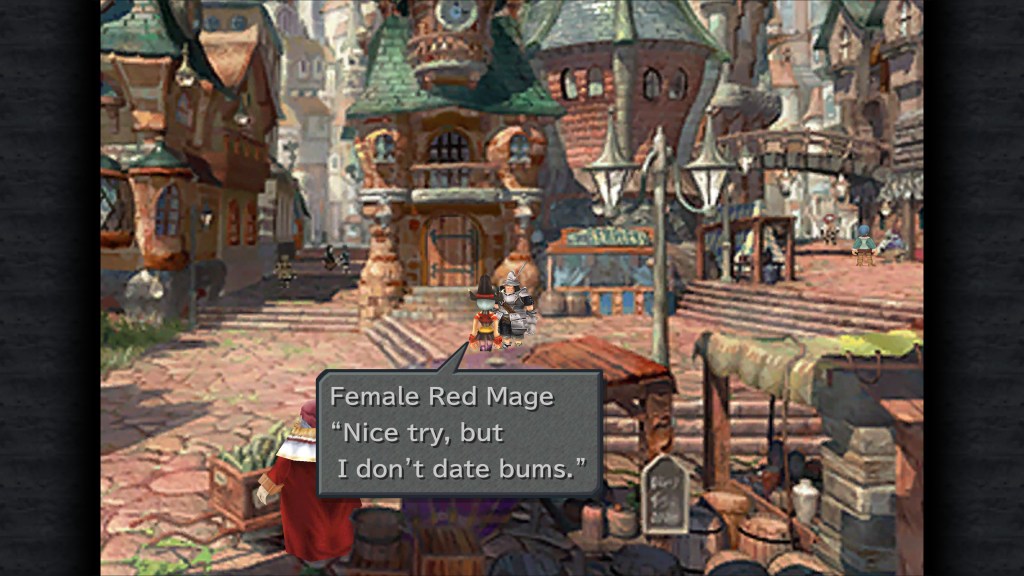
His job is to serve Queen Brahne and Princess Garnet. And he is unflinchingly loyal when doing so. Even though the game hurls ludicrous amounts of evidence at the party that Queen Brahne is evil, Steiner goes “well actually, you know, this is farfetched.”
While an unflattering view of this could paint him as the Gaia equivalent of a flat-earther, I prefer to think of it as Steiner being unflinchingly loyal.

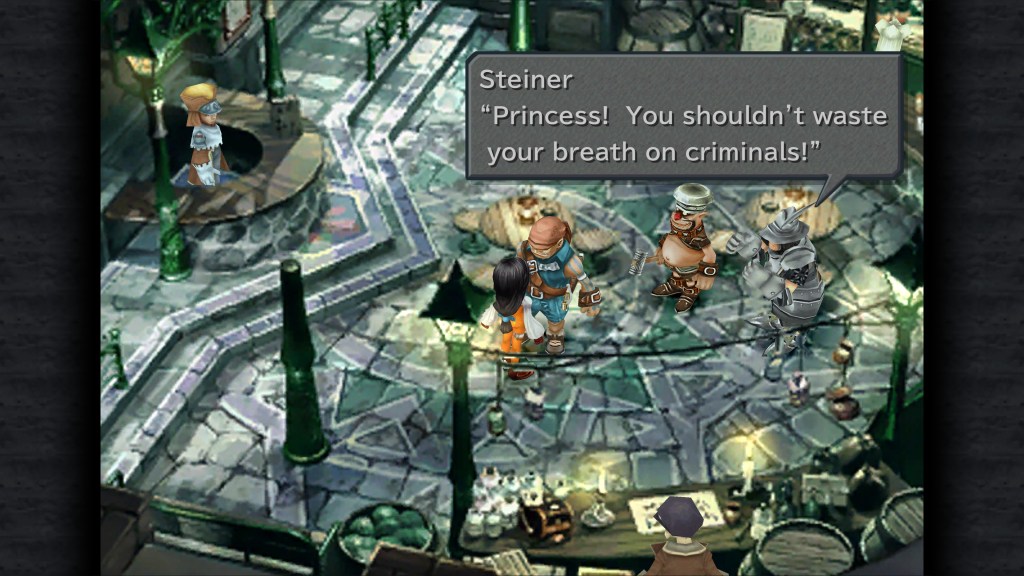
Steiner’s arc through the game is coming to a realization that a black-and-white morality isn’t always practical. The first impression he gets of Zidane is as a member of Tantalus trying to kidnap the princess and instead of looking at the situation or even listening to the princess who says she WANTED this to happen, he sticks to his guns “Thievery bad, kidnapping bad, Zidane is scum and must hang!”
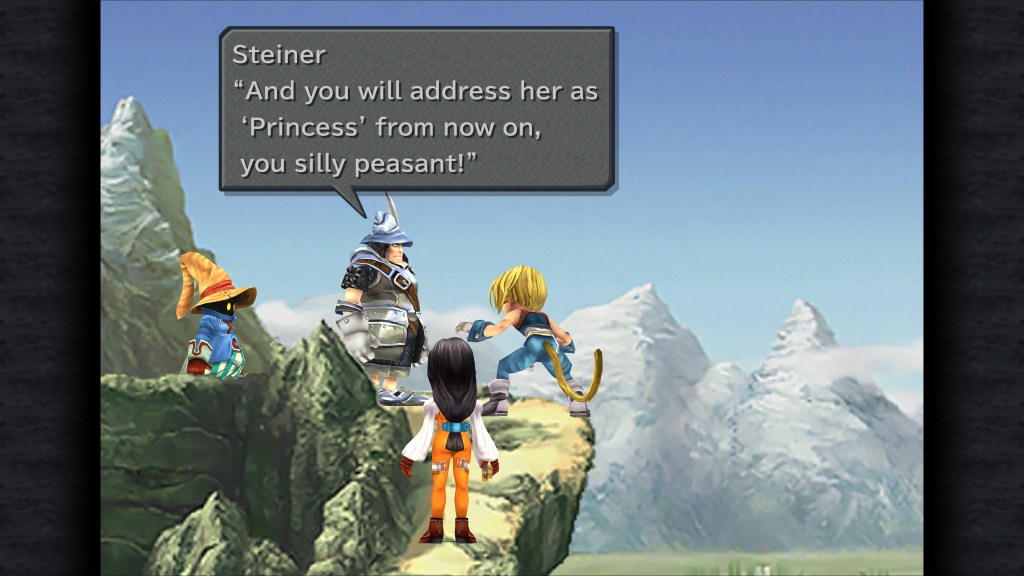
It takes him a long time to lose this mindset, only after adventuring with Zidane for a while does he see that people are multi-layered.
Ushering this along is a mid-disc 2 segment where the party has to fight through Alexandria. Steiner teams up with Brahne’s top general Beatrix and Burmecian party member Freya to try to buy time for the rest of the party to escape.

From this moment on, Steiner’s disposition changes. He starts to lighten up towards the party and you can see that his view on the world has shifted. He stops referring to Zidane as a scoundrel and seems open to the idea that this thief might be a permanent fixture in his life.
Instead of just seeing his job title and making assumptions, Steiner looks at the whole of Zidane to make a decision. He’s still kind of a dick towards Tantalus, but he’s definitely more open minded.
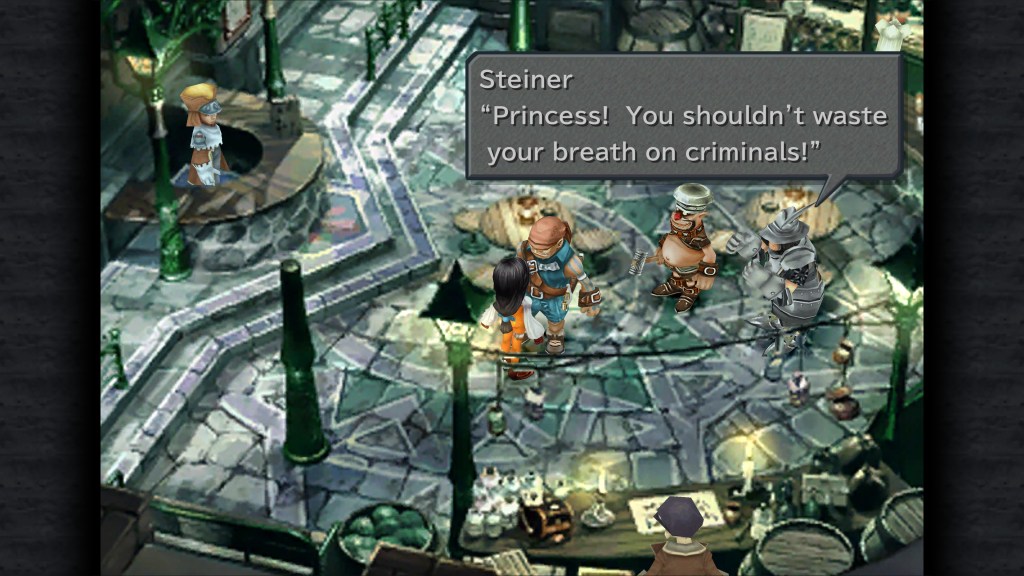
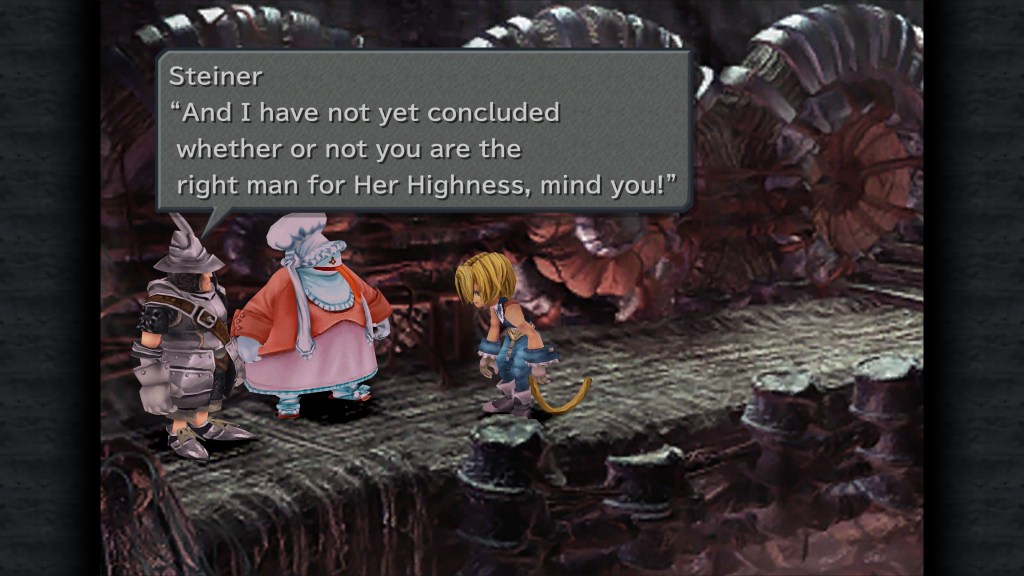
It also opens him up to a relationship with Beatrix. What starts out as a jokey scene featuring a love letter being received by the wrong party turns into a sweet little moment where the two most noble warriors in the queen’s guard realize maybe they have some stuff in common.
I am not gonna tell you that their relationship is particularly deep, but it’s very sweet to see the loyal and duty-bound Steiner act in a lovey-dovey sorta way.
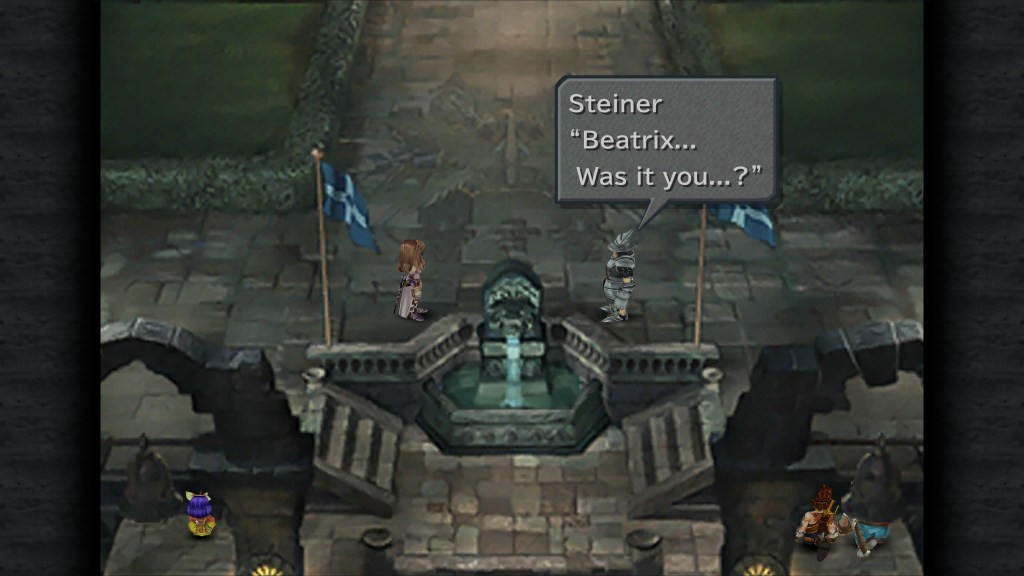
The ending sort of heavily leaning into their relationship is really sweet too. Though that’s not even my favorite bit of Steiner in the ending. When Zidane shows back up and demands that his Dagger get returned to him, the new queen wants to rush off to greet him, but big imposing Steiner blocks her path, putting his hand on the door out.
He (and Beatrix) then open the doors for her with a big grin plastered on his face. It’s a small touch but it gets me every time, I love it.
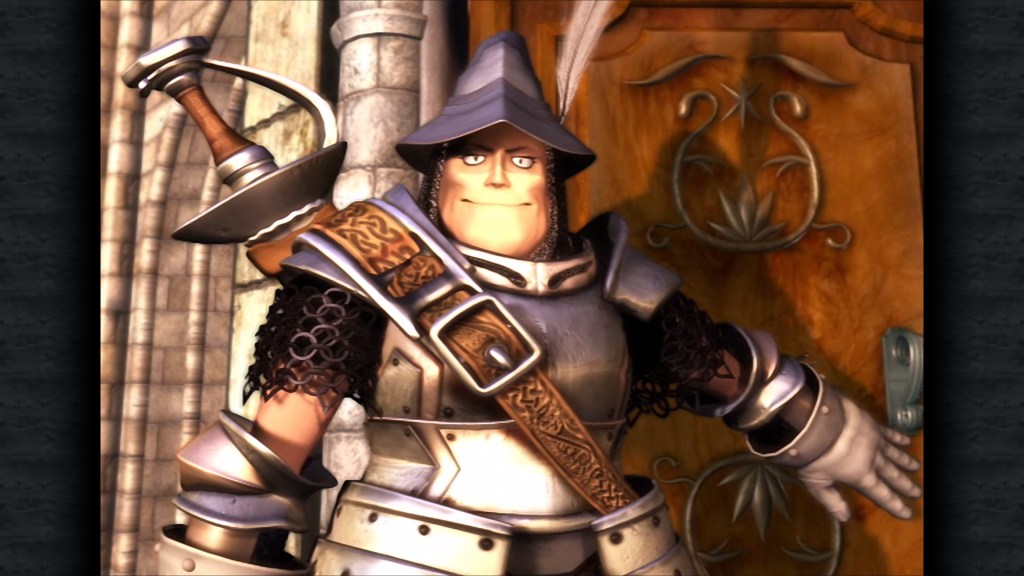
The other character relationship I’d like to point out is how he interacts with Vivi. While he is rude to the other main party members at first, he never acts that way with Vivi. At first I felt like he was trying to take advantage of the black mage’s power, but I think seeing such a young kid pull off such amazing tricks triggered a sense of respect in Steiner.
He legitimately wants to see this kid succeed, even dubbing him Master Vivi. His attitude towards Vivi never really shifts, he’s always a fan of the little guy.
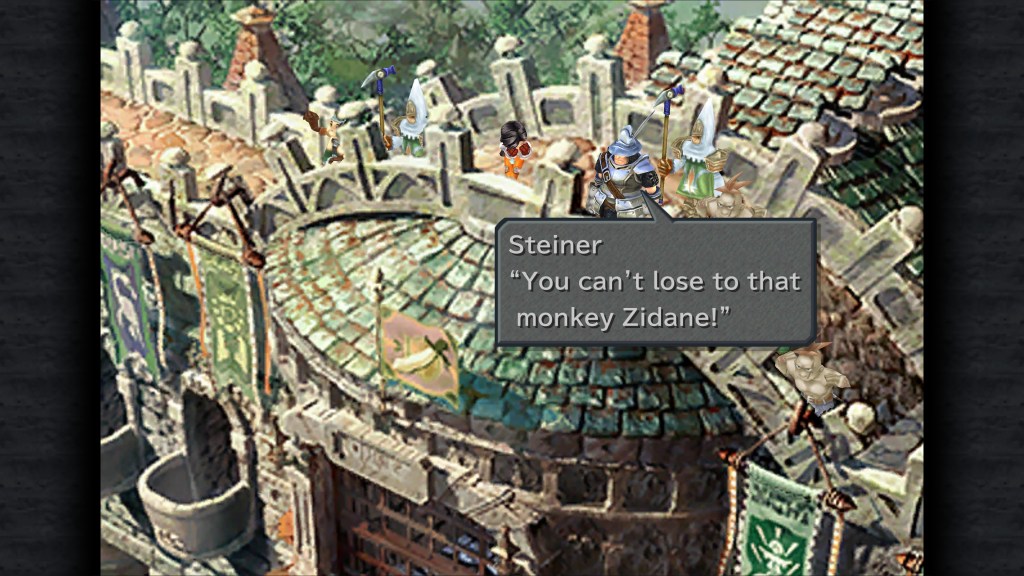
Vivi might also help his shifting attitude because it is Steiner of all people who points out to Vivi early on that just because the little fella might be a black mage, he’s still an individual. He’s not the same as every similar body that came before him, he’s a unique individual.
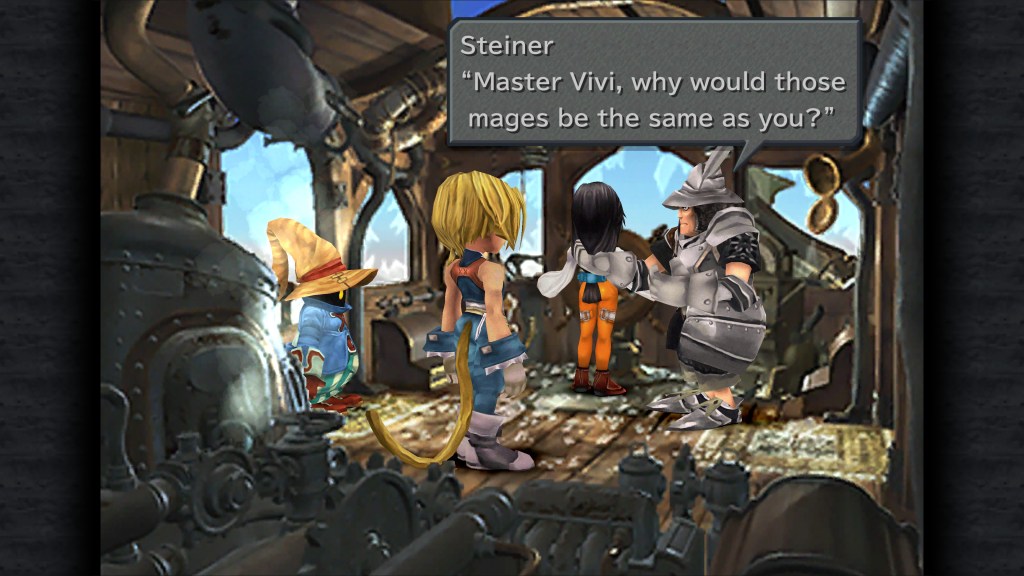
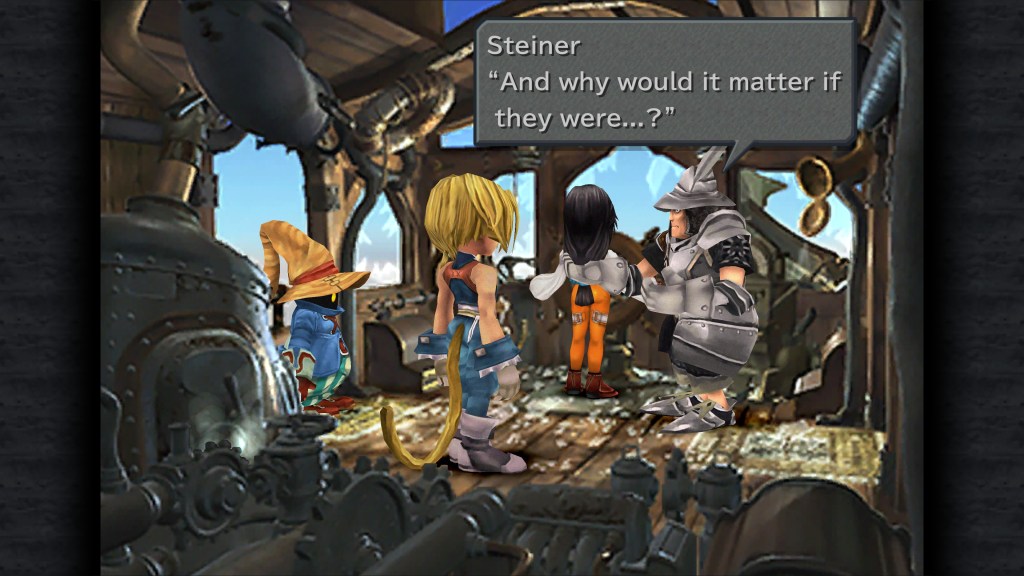
In combat, Steiner is great and simplistic. He hits hard and his trance makes him hit even harder. If Vivi is in the party, he can also use magic sword, which is a borrowed ability from the mystic knight in FFV.
Truthfully, Steiner’s normal abilities hit hard enough where it’s not necessary to bring both along. He learns shock, which I have never seen cause less than 9,999 damage (unless the opponent has protect).
Shock is the best move a knight can learn and automatically makes you a really cool character. Are you gonna tell me General Leo isn’t cool as hell? Of course not. So naturally, I love Steiner.
Freya Crescent
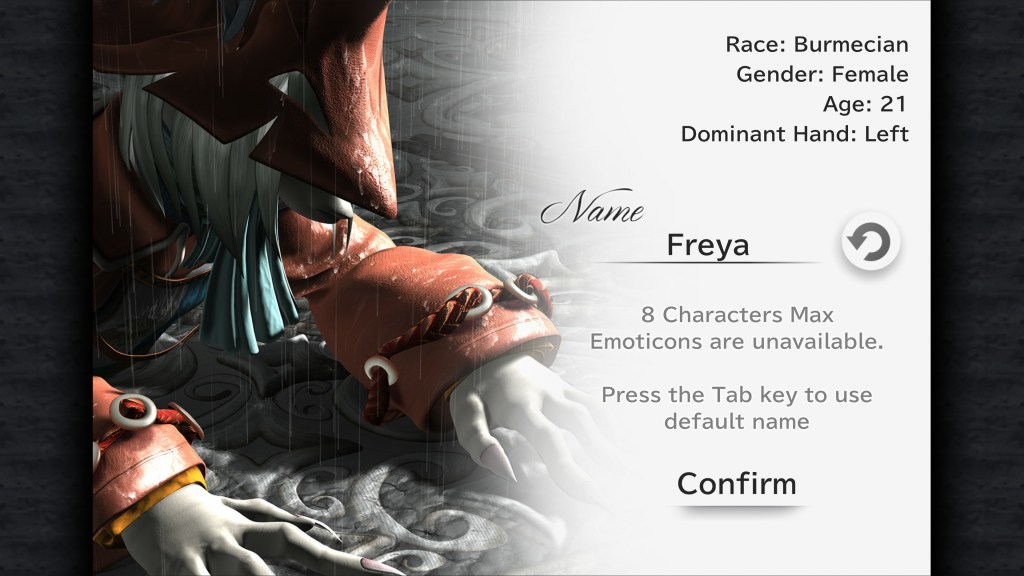
Freya fills the dragoon role in your party. She is Burmecian, which is a Final Fantasy IX way of saying ‘rat person’ and is presented as a warrior to be reckoned with. What we learn about her up front is that she is searching for a lost love, but hadn’t really heard much about him despite her best efforts.
Shortly after she joins the party, word breaks out that her homeland is being decimated by the Alexandrian army. Her plight dictates the flow of the remainder of the first disc of the game as well as the beginning points of the second one.
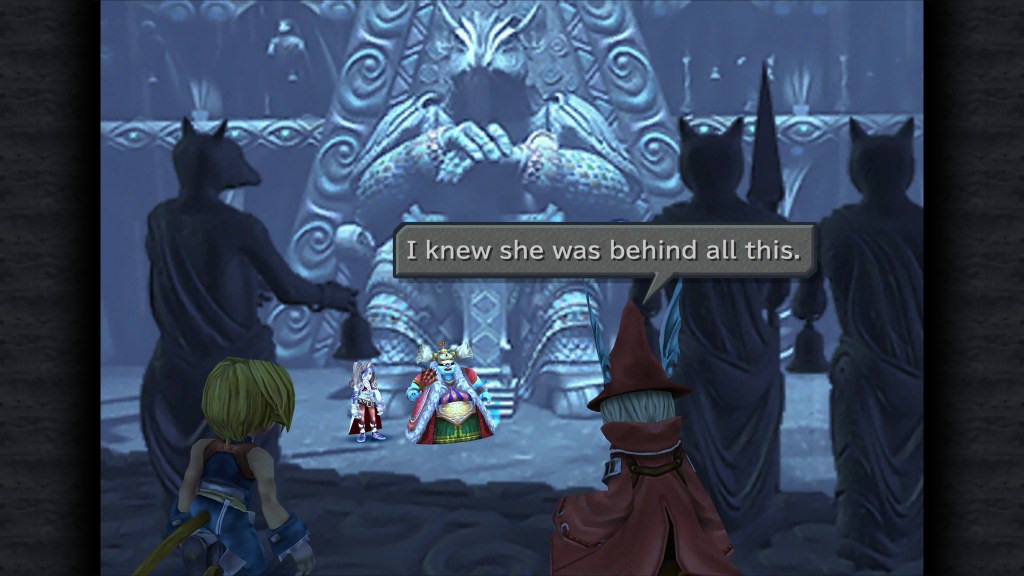
During this part of the quest, it’s pretty clear that her people respect and value her. She is viewed as almost the last hope of her people. But unfortunately, Burmecia falls and the rat-people scurry away to a place called Cleyra – a zone that is magically protected from intruders thanks to a giant sand tornado. Unfortunately the protection falls away during a ceremonial dance.
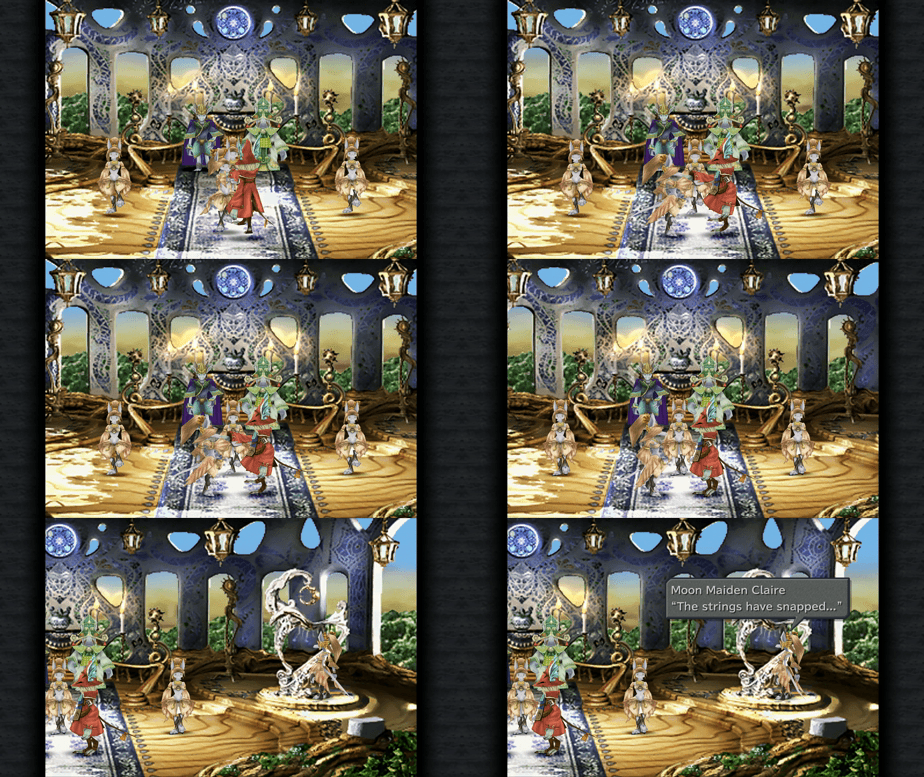
Alexandrians rush in to finish the job, complete the genocide, but the party manages to save a few of the citizens. Also, at the last moment, a mysterious figure pops up. Another dragoon warrior, Fratley, enters the scene and it becomes apparent that this is the person Freya has been searching for. Unfortunately, Fratley has forgotten all about her. And everything. He has amnesia. He has GOTTA stop using Guardian Forces.
Freya’s attitude around Fratley is cute. Around everyone else she’s very forthcoming and headstrong, she doesn’t come across as traditionally feminine. But when Fratley shows up, her dialogue changes entirely. She almost sounds poetic at times when talking about her feelings for him. She might be strong, but she still has needs!
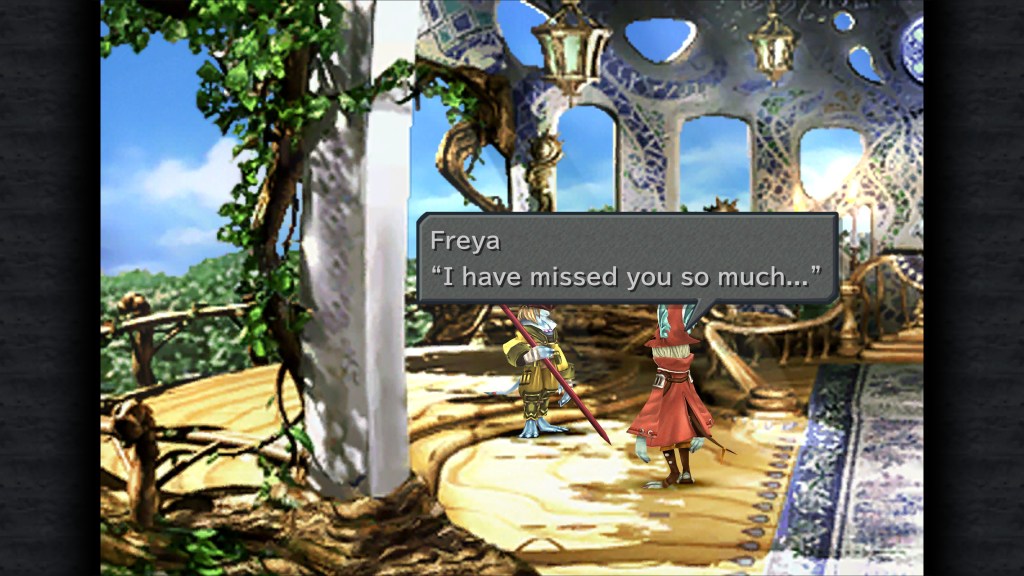
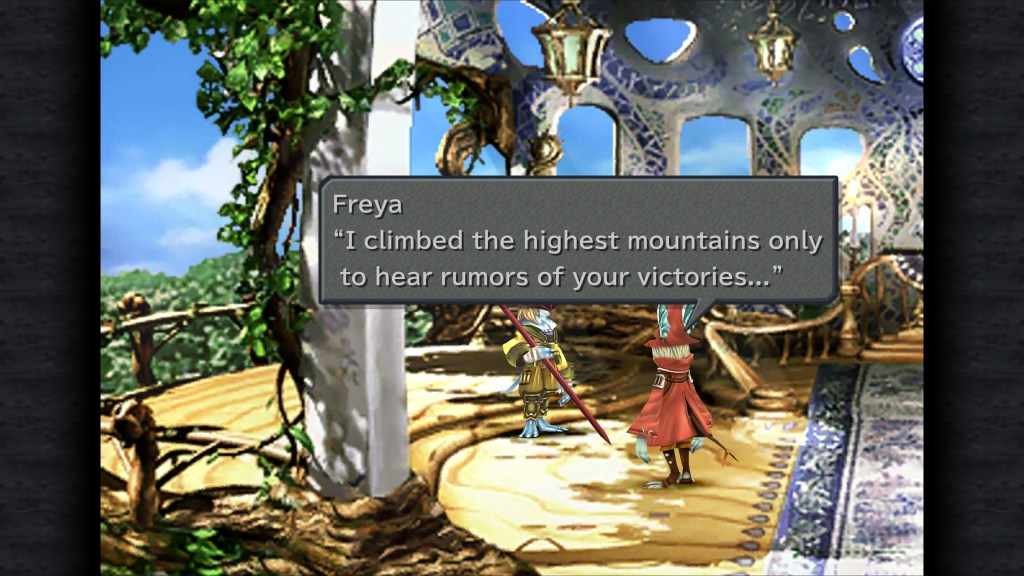
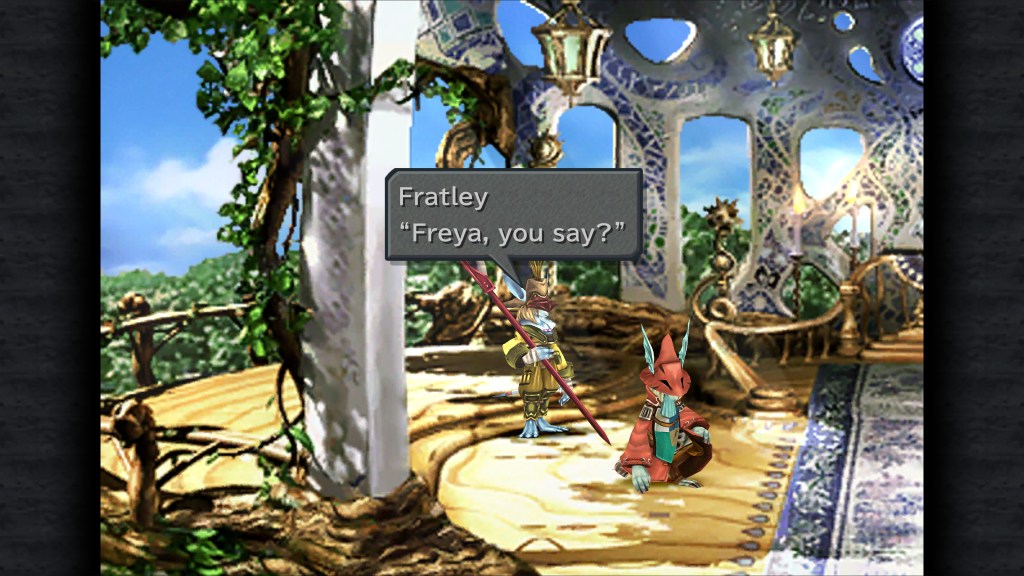
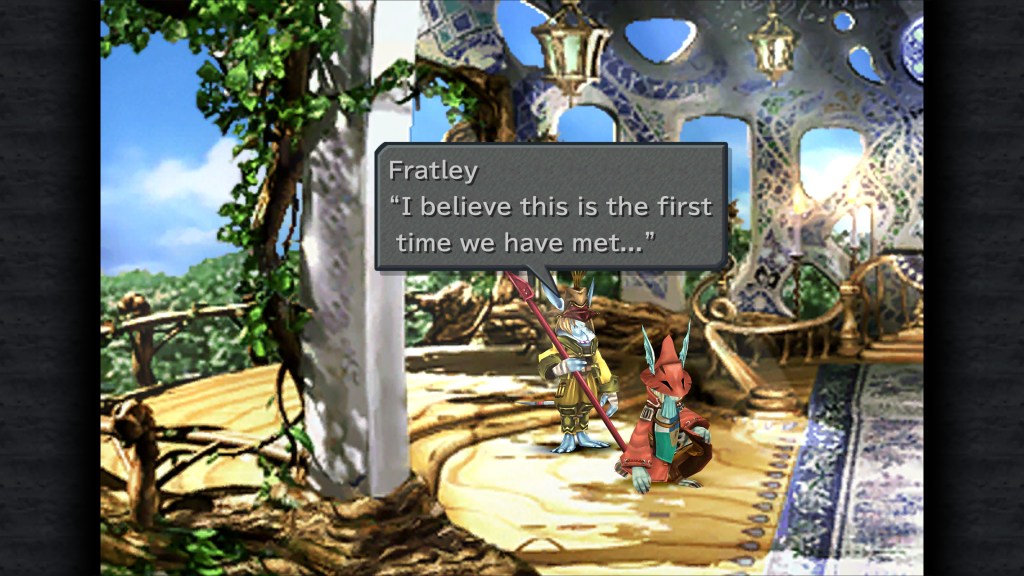
This is unfortunately the end for Freya’s involvement with the plot, she’s sort of just along for the ride the rest of the way. The ending shows that at least Fratley eventually falls back in love with Freya despite still having amnesia, so that’s nice.
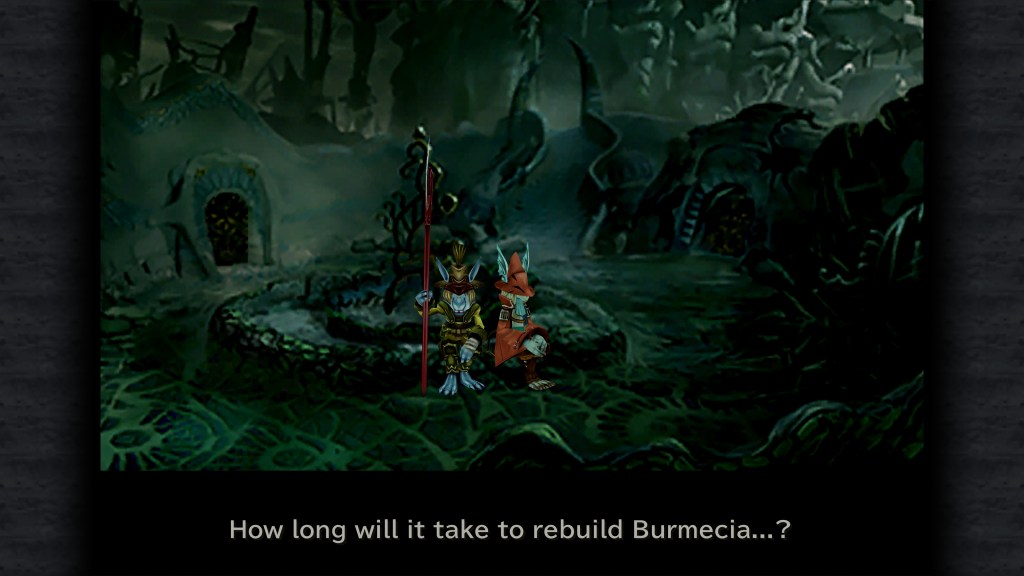

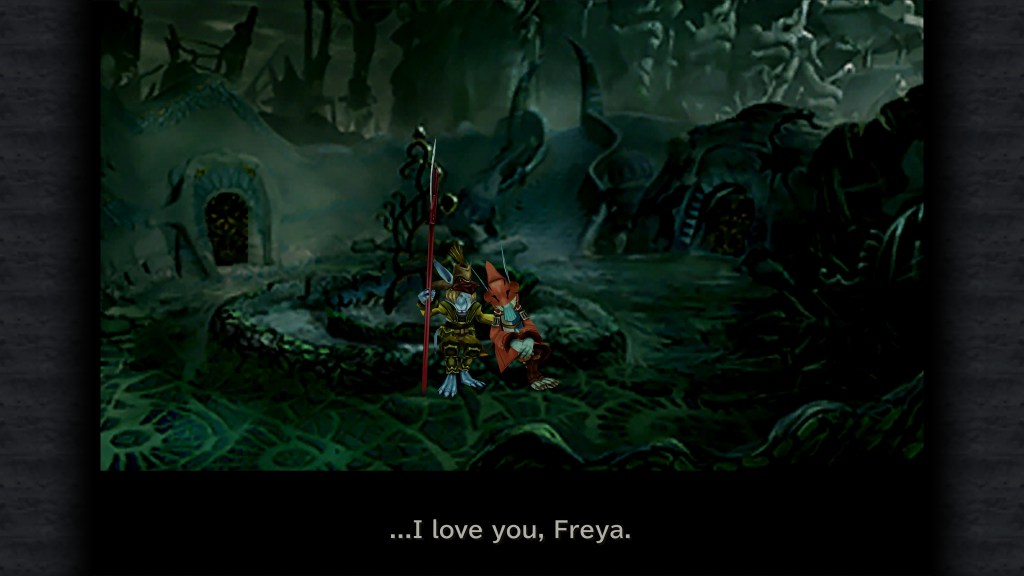
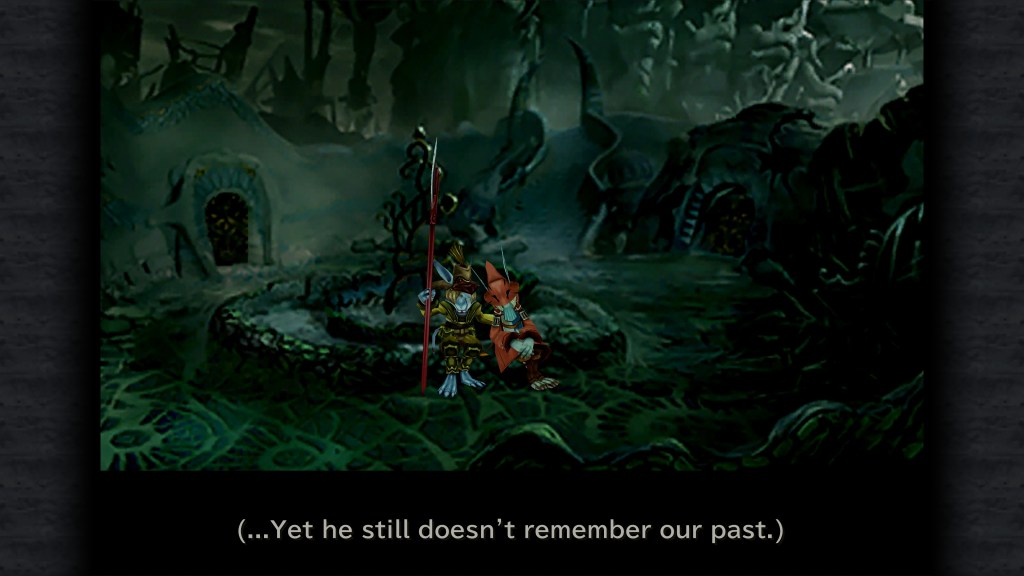

I think people always point out Freya as a weakness of IX’s storytelling and I see where they are coming from, but I think she gets as much characterization as most side characters have gotten to this point in time.
Thinking of FFVIII, I love Quistis, but if you cut her out of the plot after the first disc, does anything change? Did we learn anything about her after that? How about Red XIII? How does the game change if Red elects to stay in Cosmo Canyon? What does Agrias accomplish in Tactics after joining the party officially? And that’s just Playstation-era.
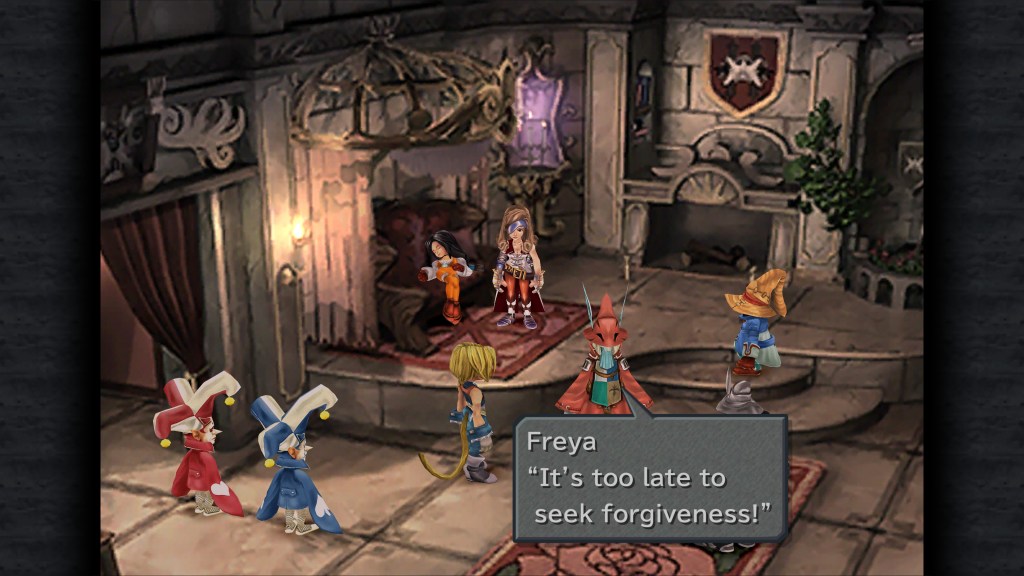
My theory is that Freya’s characterization gets its reputation just because most of the other cast members are handled pretty well. I would even argue Eiko’s treatment isn’t THAT different, except all of her scenes happen in the second half of the game so they linger in the player’s brain longer.
They absolutely could have done more with this character, but I don’t think she was done as dirty as some would have you believe.
Freya is a dragoon so she fights like a traditional member of everyone’s favorite job. She loves to jump! Her trance enhances this maneuver by letting her stay in the air and rain pain down on enemies.
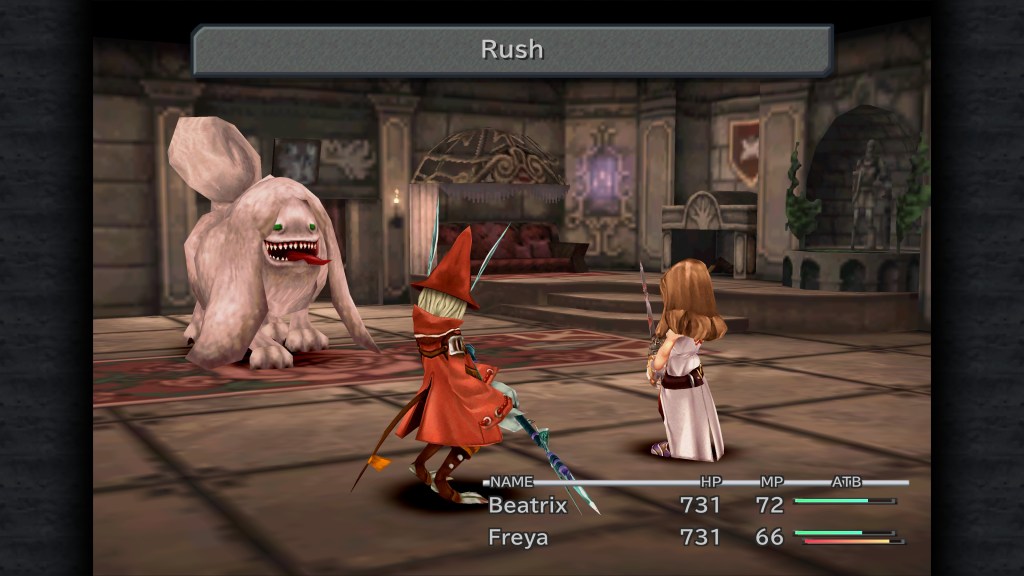
If you’re unfamiliar with jump, while the character is in the air, they are impervious to all attacks. So essentially this version of jump just combines the damage phase and the invulnerability phase into one great package.
Brahne Raza Alexandros XVI

The main villain for the first half of your adventure and the Queen of Alexandria, she is a woman who is determined to take over as much of the world as she possibly can. Allegedly she was a very sweet woman once upon a time and this behavior is very sudden and alarming, which forced Garnet to search for answers outside of her homeland.
Brahne doesn’t have a lot of layers to her, instead acting as a one-dimensional villain for most of her time in the game. Her motives are simple: she wants four sacred jewels because they allegedly house an intensely powerful eidolon and she wants to rule the world. The jewel was her motive behind the Burmecian genocide, for example.
If something or someone is useless to her, including her own daughter, they can die. If someone is in the way of something she wants, they should die. Heck, in the case of the Burmecians, the entire race should die. She views her subordinates as tools who should just obey, she doesn’t really want input. Brahne’s just nasty.
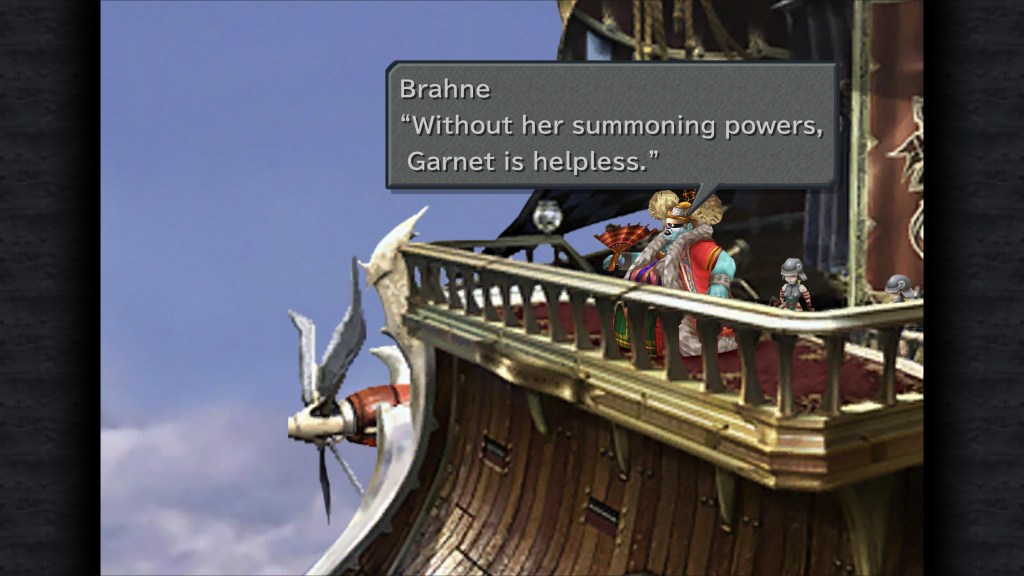
The company she keeps is pretty interesting. Zorn and Thorn are jesters who talk in a weird way where when one says something, the other will say basically the same thing but worded slightly differently.
These two are probably the most annoying characters in the game and most players will probably feel great relief smacking their brains in during the two boss encounters we get with them. We’ll talk about Beatrix later.
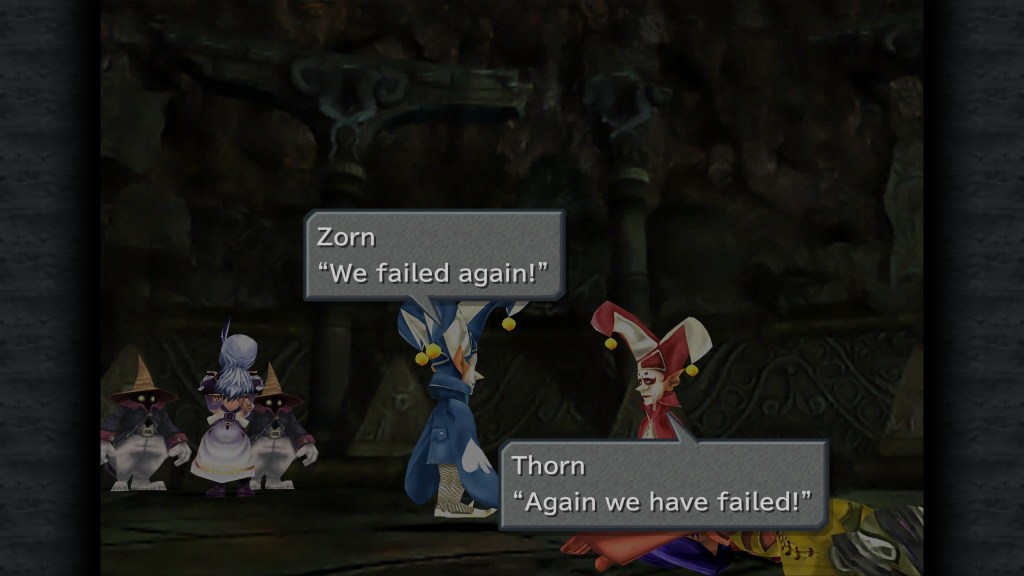

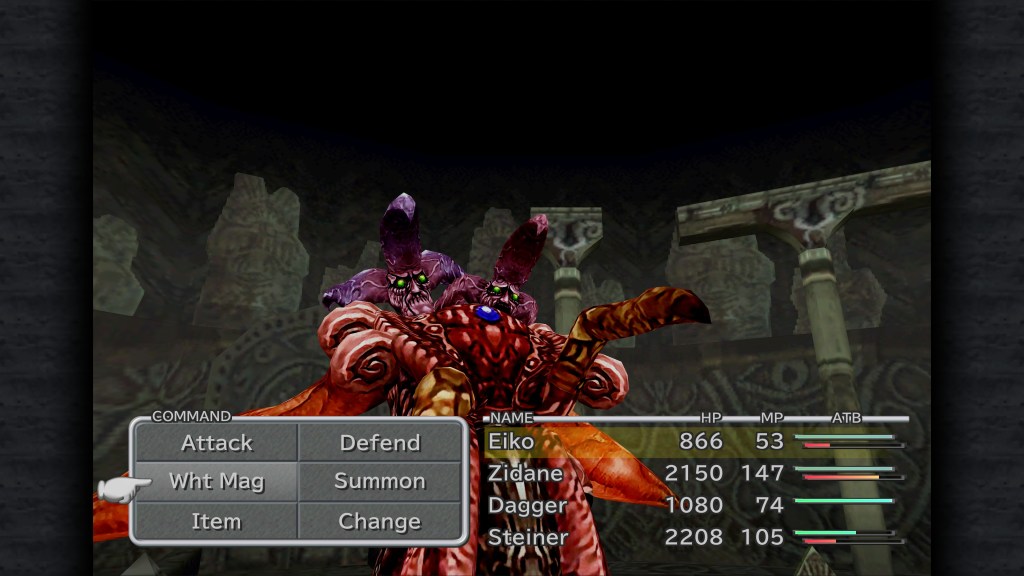
It’s revealed that a key to Brahne’s personality shift is in her dealings with a weapon, er, dealer named Kuja. In Brahne’s quest to rule the entire globe, she eventually betrays Kuja, which is what leads to her demise. Despite spending the game’s running time being a horrible, loathsome monster, Dagger still mourns her mother. It’s a surprisingly sweet scene for a one-dimensional evil character.
It’s not quite made clear what causes Brahne to shift personalities. Could it be that access to power unlocked some beast inside of her? The goal of Terra is to force Gaia into mass war, so was she being manipulated by forces beyond her comprehension like Garland or even Necron?
I like that it’s a bit ambiguous because it makes processing her death difficult. Do you feel bad for Dagger? Or do you feel a sense of relief that the Kingdom of Alexandria now might have a sensible person on the throne?
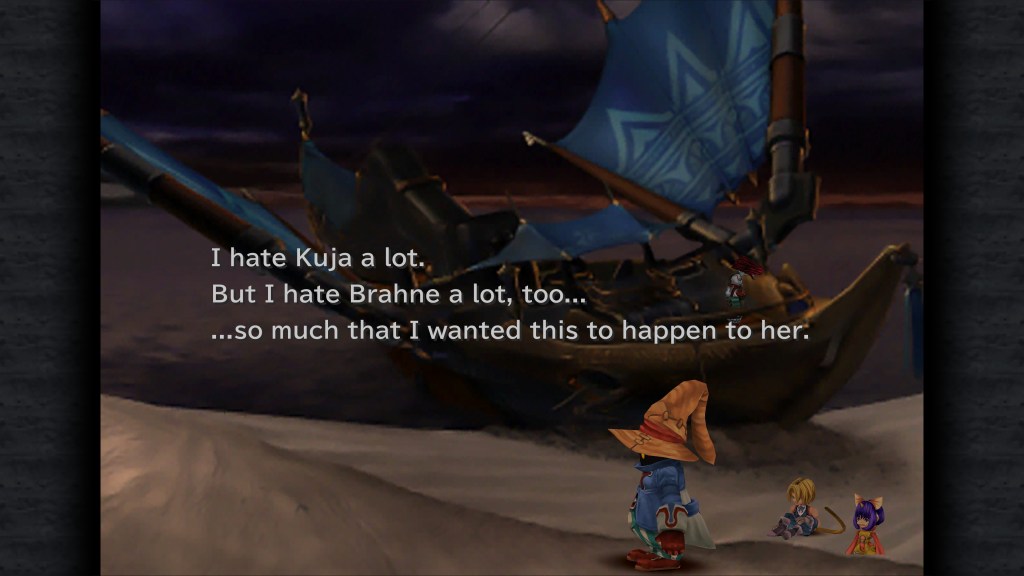
Beatrix
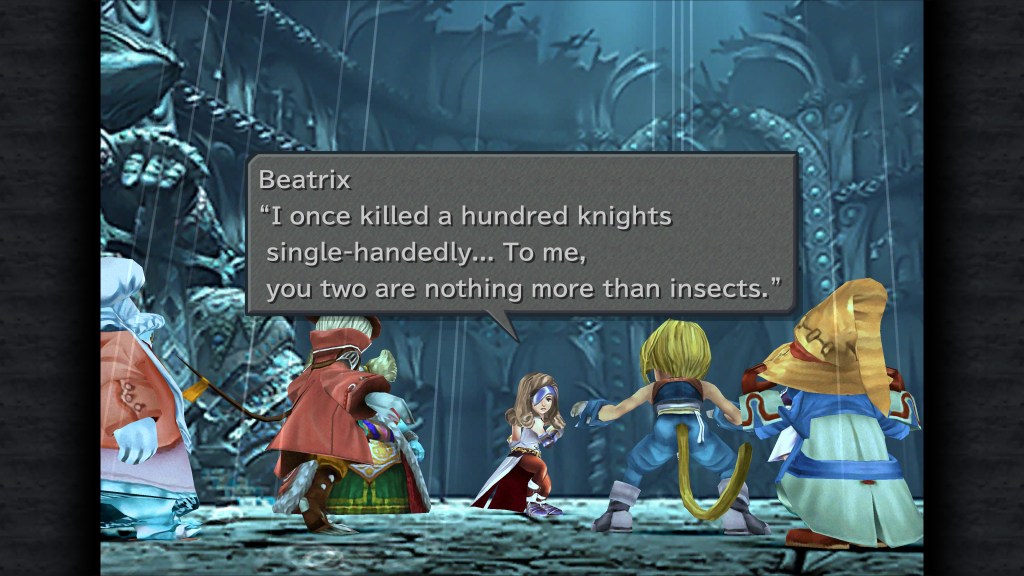
The queen’s most loyal knight and a fearsome warrior. She manages to solo the party on more than one occasion and poses as a constant thorn in the group’s side for the first half of the game. She is absolutely the most competent recurring boss in the franchise because even the narrative makes no bones about it: your party can’t measure up.
Just like Steiner, she is stubbornly loyal. However, she takes part in the genocide in Burmecia and doesn’t really seem to mind cutting down people threatening her queen. She seems more bothered by the fact Brahne seems ungrateful for all of her deeds. T
hen all of a sudden, she learns of the queen’s plan to kill Dagger off and her loyalties shift. Suddenly she isn’t just blindly following orders, she’s straight up defiant.
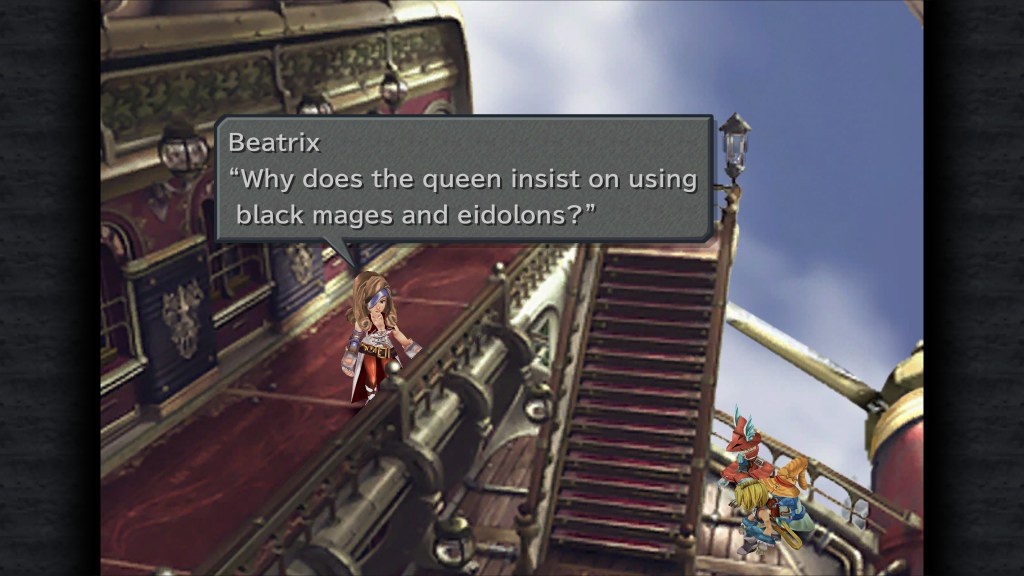

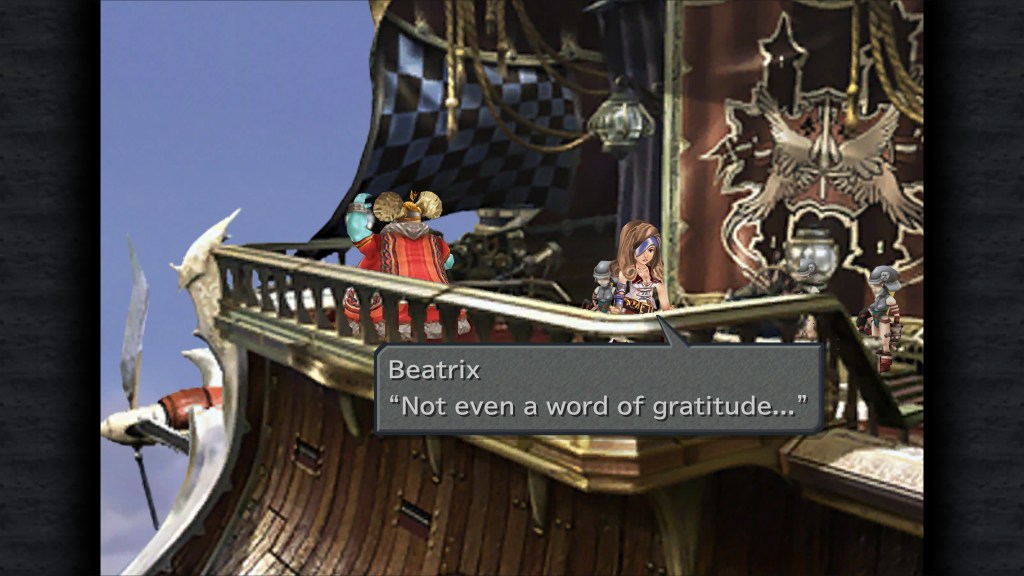
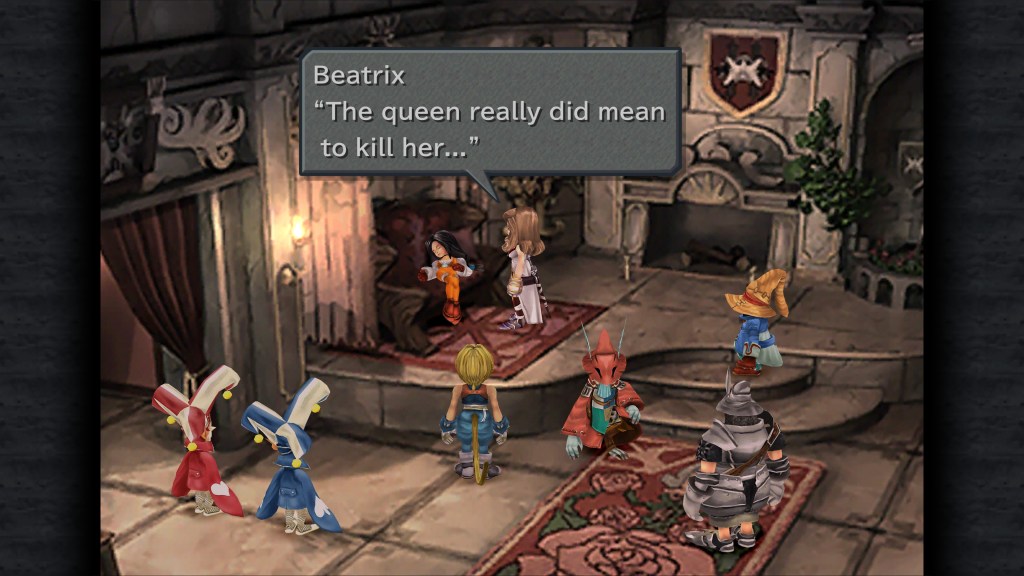
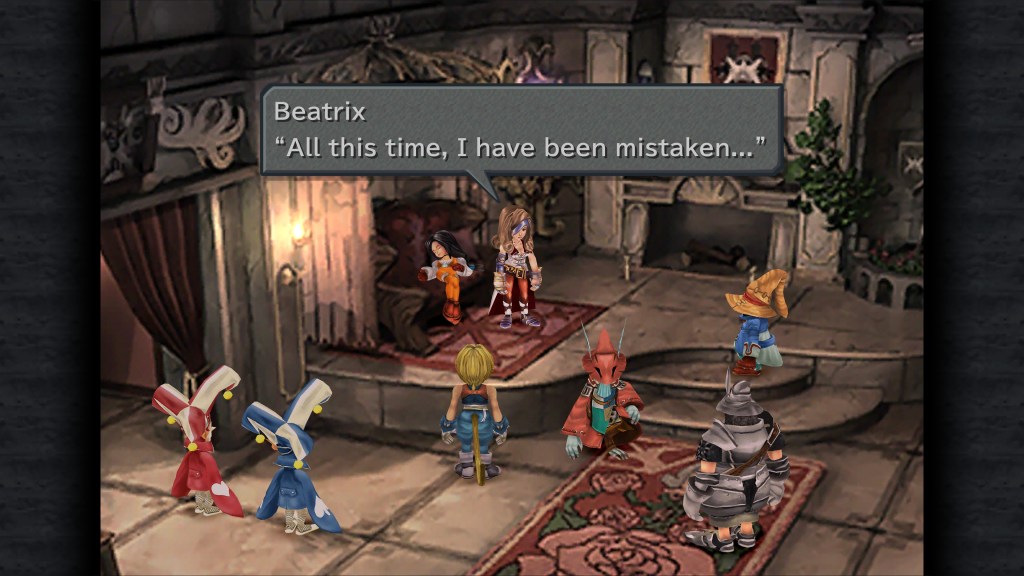
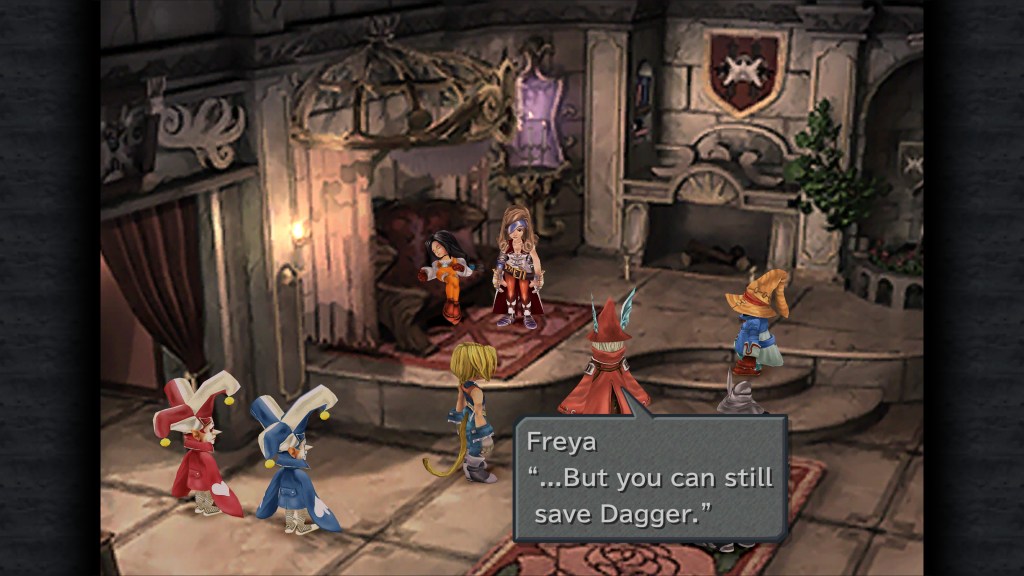
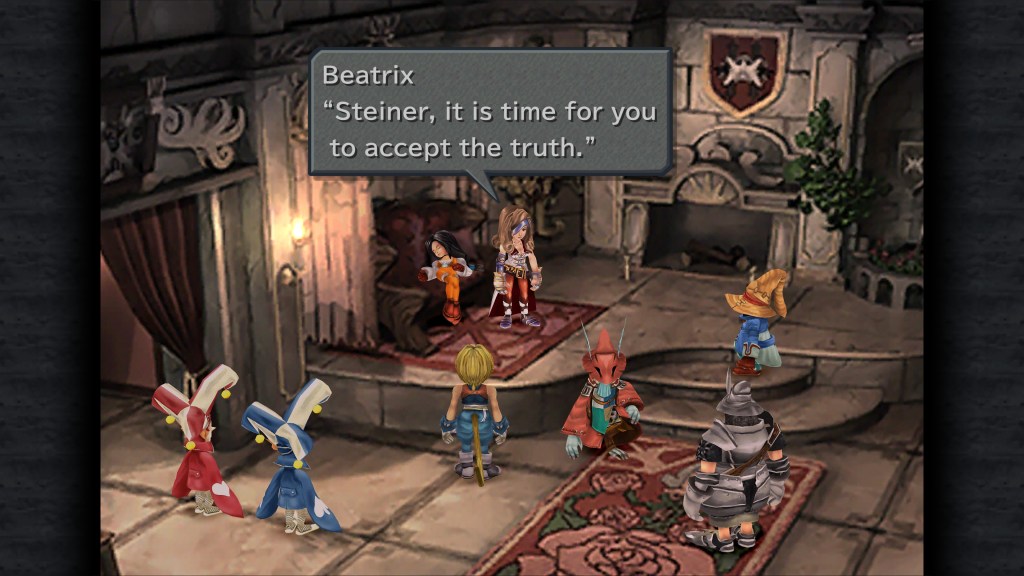
I think this sort of character is interesting. She clearly has blinders on and can’t see the forest for the trees regarding her orders. I think it’s very common for people to be caught up in bad situations and perform bad actions without necessarily processing that what they are doing is vile.
Granted, most of those people aren’t disillusioned enough to be complicit in genocide, but this is a video game so ya gotta be a little lenient here.
She just straight up feels like a reincarnation of General Leo. I go into this in more detail elsewhere in this writeup, but it warrants mentioning here too. Despite her higher ups being evil and despite her committing objectively evil deeds, Beatrix is portrayed as an honorable and valiant warrior. She is someone worthy of the party’s respect and just like Leo, you get to control her briefly and it rules.
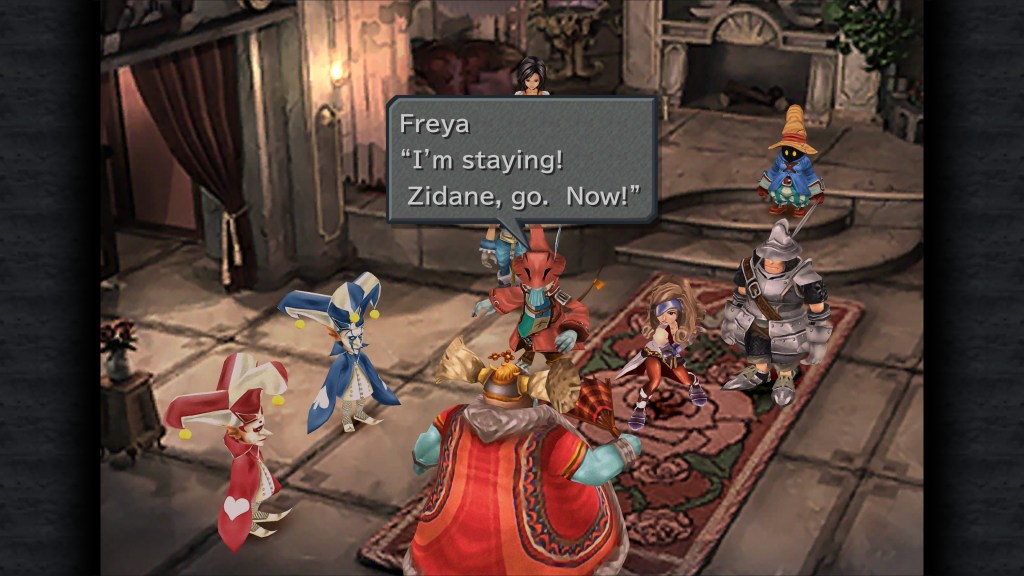
I think it would have been very interesting to have Beatrix become a permanent party member after she turns on the queen. I would have liked to have seen her come to a reckoning for her actions and maybe even try to atone for them.
For instance, when Beatrix first makes her turn against Brahne, she expresses immediate regret for the Burmecian genocide. She will be fighting alongside Freya, so she wants to make peace with her. One of the themes of this game is that it’s never quite too late to try to make atonement, so exploring that with Beatrix would have been cool. There are two party members she could have easily taken the spot of!
You’ll just have to settle for the cute little love story with Steiner. Or use a mod I guess…
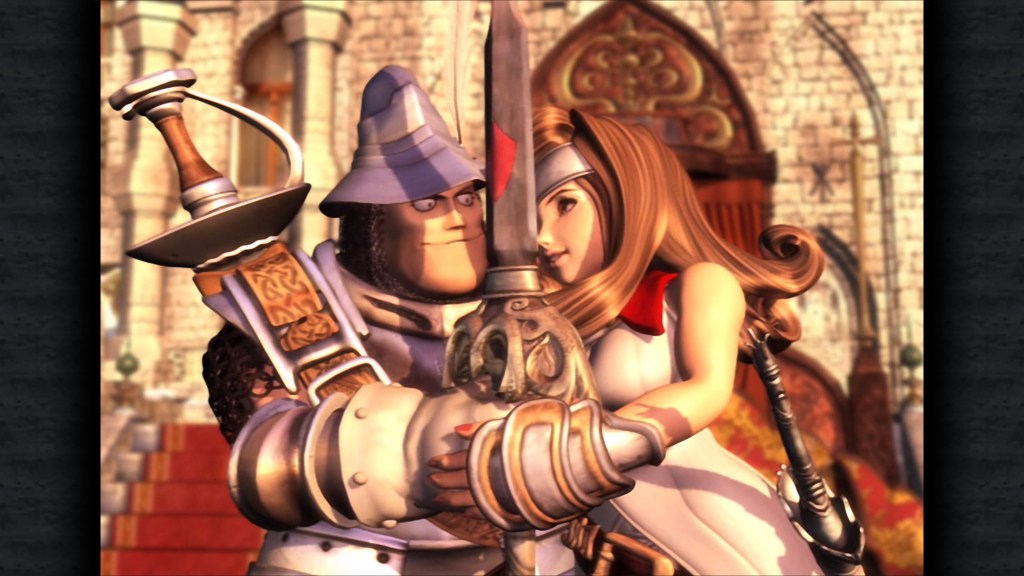
Quina Quen

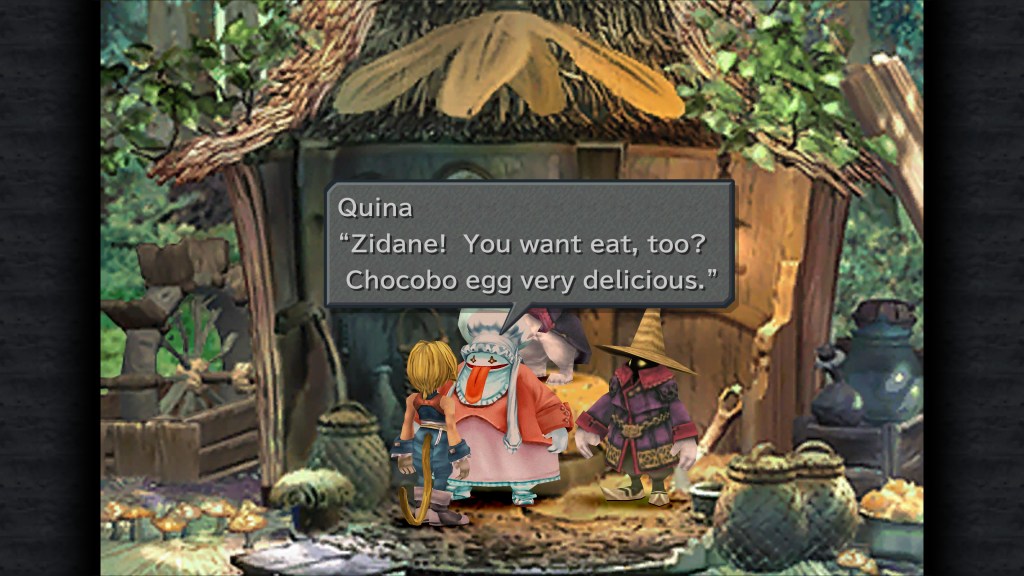
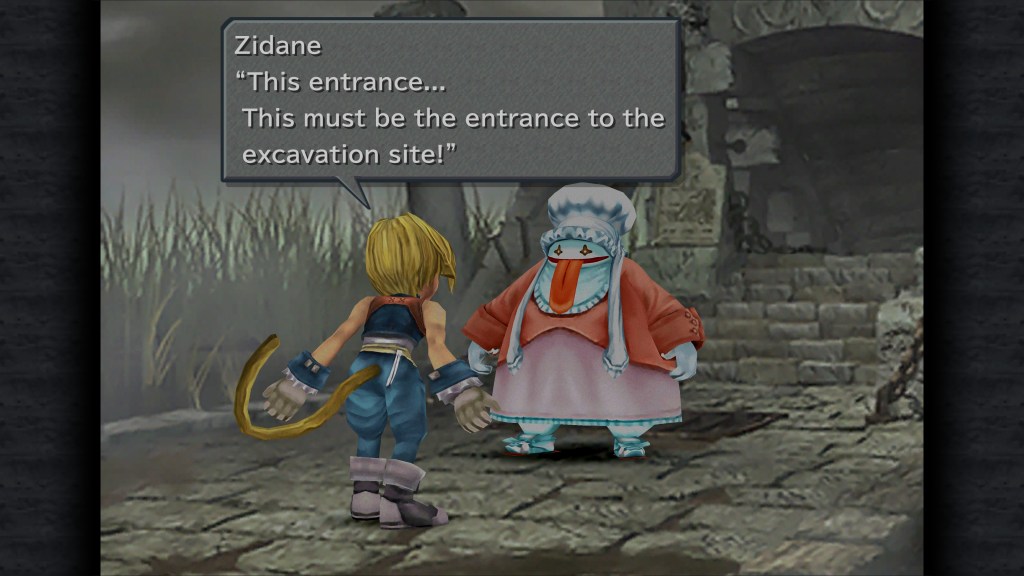
Hey speaking of party members that could be replaced by Beatrix, here is the first of two! Meet Quina of the Qu tribe. All Qu people look kind of like this and they are all gourmands. In fact, the one member of the Qu tribe who isn’t one – Vivi’s “””””grandfather””””” Qu, the person who just kinda found Vivi – is called a bigot because he doesn’t embrace the flavor rainbow. Very rude!
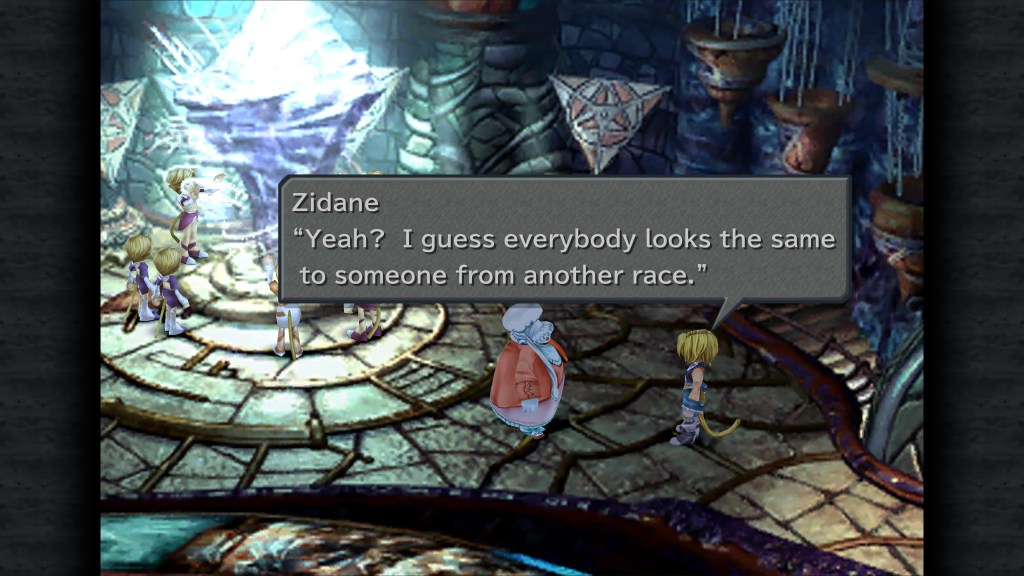
Quina’s whole gimmick is food. Food and being wacky. All of their dialogue feels like nonsequiturs, like a Family Guy episode broke out in the middle of the group. They contribute nothing to the story and don’t have much of an arc of their own. They are there to add to your party numbers.
There is a part of the game where the party has to split into four groups with each team getting two members. Quina asks why they are together and Zidane (PRE-character crisis) says that he got stuck with the leftovers, which delights Quina. Leftovers are FOOD you see and all FOOD is good. The insult escapes our Qu friend.
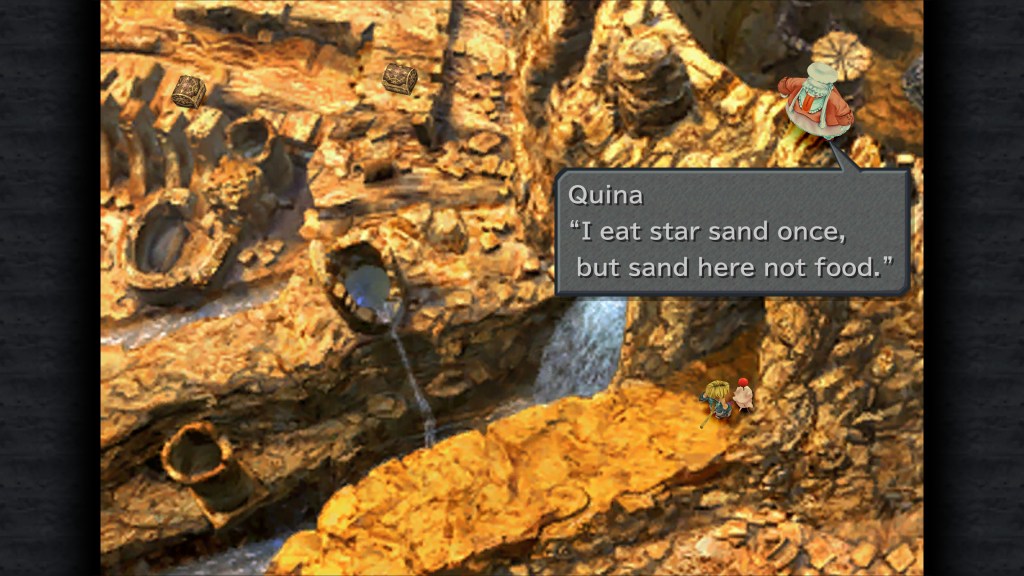
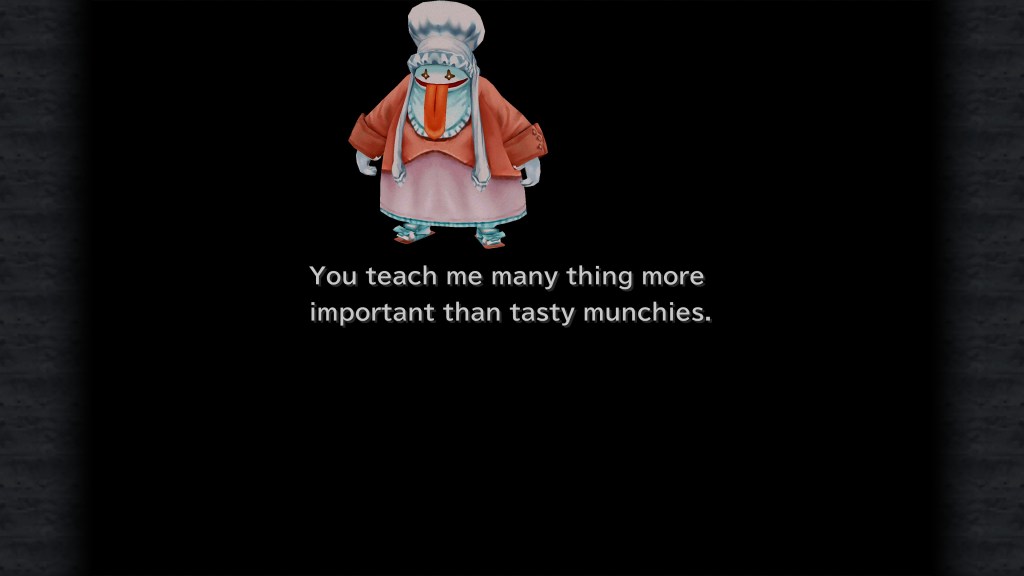
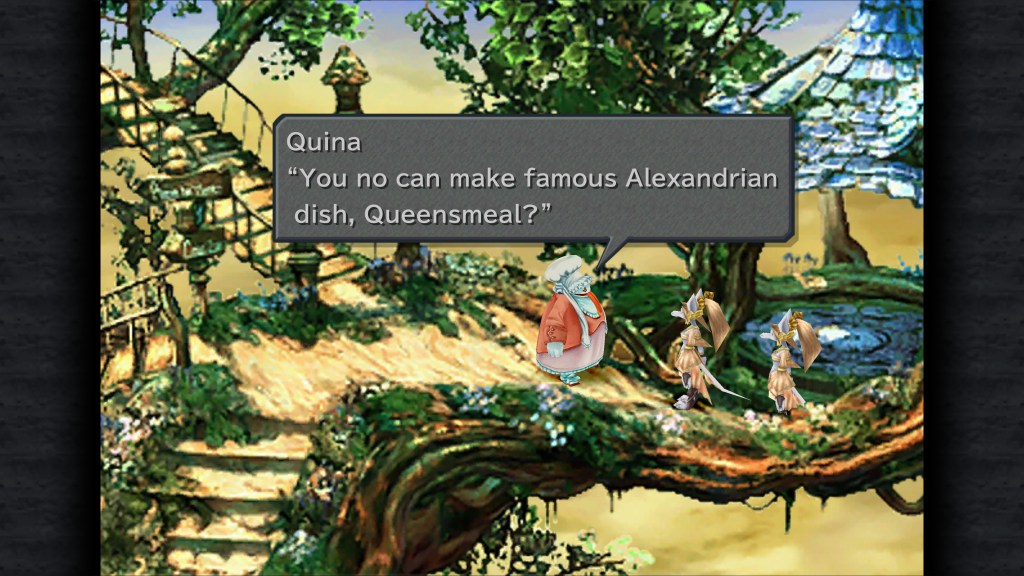
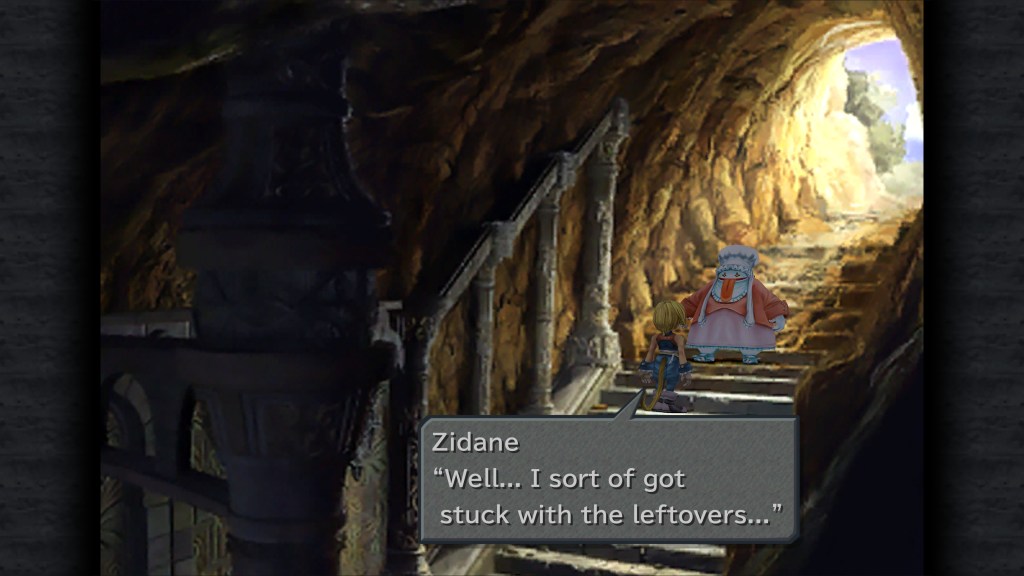
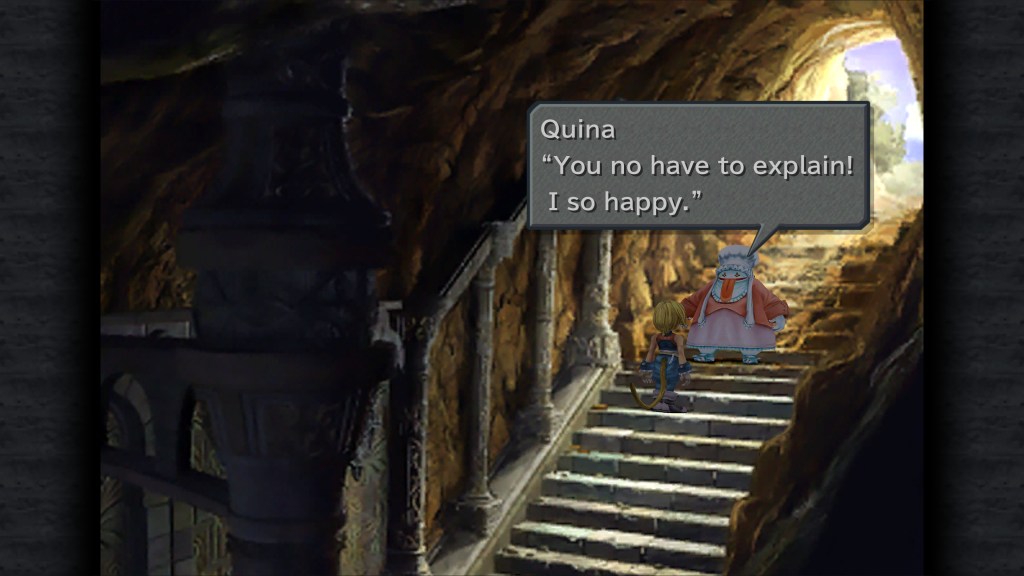
This character is only there to fill quotas. If the story dictates that only three of your main characters are going to a location – like in disc 2 when Zidane, Dagger and Vivi head to a new continent – Quina forces their way in. Same with the above two-man team scenarios. With SEVEN members, such a scenario is impossible. So Quina has to be there.
Quina is a blue mage meaning they take enemy magic and make it their own. In VIII, Quistis was the blue mage and her blue magic was limited to, er, limit breaks.
In IX, blue magic is available to you at all times. So if Quina is in your party, it behooves you to eat enemies in order to gain their spells. To eat them, you need to whittle their HP down to a relatively low number, otherwise you are greeted with a message that says “I NO CAN EAT UNTIL IT WEAKER”

And this message is infuriating because it’s very difficult to find the sweet spot of when to eat enemies. An inexperienced player will very frequently accidentally kill an enemy they are trying to eat, so this requires a lot of patience. In other words, this mechanic ain’t for me.
Quina’s attacks also seem to cause damage in a large range as opposed to a more tight range like you’d see out of a normal character, so using them is infuriating.
But hey. their trance allows for a much more merciful HP window of consumption, so it’s a little easier to earn magic if you’re tranced. Too bad you can’t carry it from battle-to-battle though. Quina is a permanent fixture on my bench. Common Qu tribe L.
Cid Fabool IX

Cid is the regent of Lindblum and the uncle of Dagger. He also happens to be an oglop, FFIX’s version of a cockroach, for the vast majority of the game. A bug leading the second biggest city in the world isn’t so bad, now is it?
He is portrayed as fiercely loyal to Dagger – to the point that he undertakes great personal risk to help her out when it becomes clear that Brahne has it out for her daughter. This is contrasted with his disloyalty to his wife Hildagarde. You see, Cid isn’t just some sorta wacky cockroach king, he was an adulterer who got caught and his witch wife punished him by makes him take the form of a lowly bug.
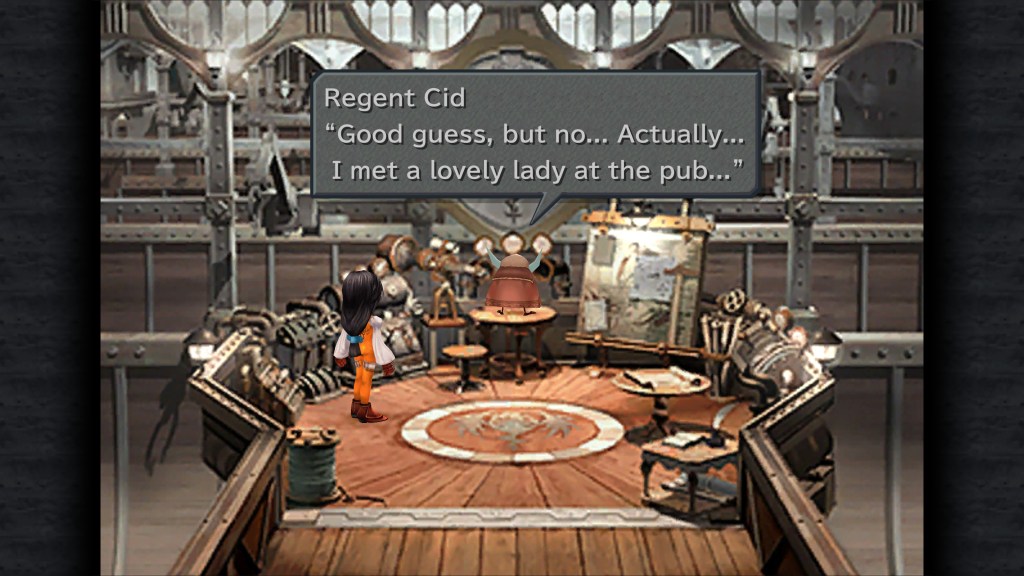

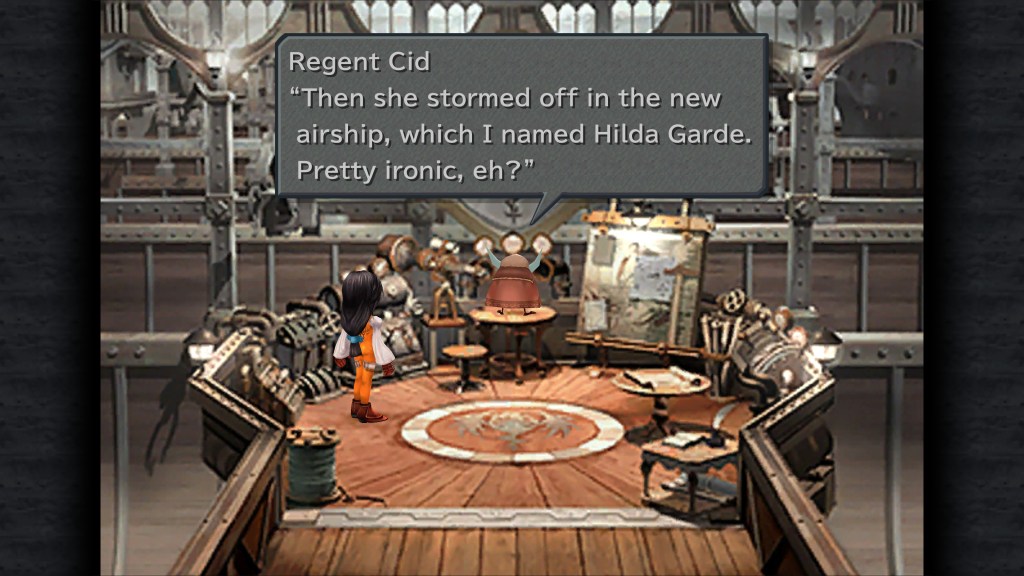
It turns out that Cid defaulting to Dagger’s side was the right call, as Brahne lays siege to Lindblum in the middle of the game’s second disc. Lindblum houses one of the jewels the evil queen is after, but it also houses newfangled airship technology. Vehicles in the world of FFIX used mist-engines and were only able to travel in areas heavy in mist, namely the mist continent.
Cid invented a steam powered engine, which allows for exploration of the entire world. The first version of the ship (named for his wife, called the Hilda Garde) is taken by his wife in the separation and the second version is the other thing the queen is after in Lindblum.
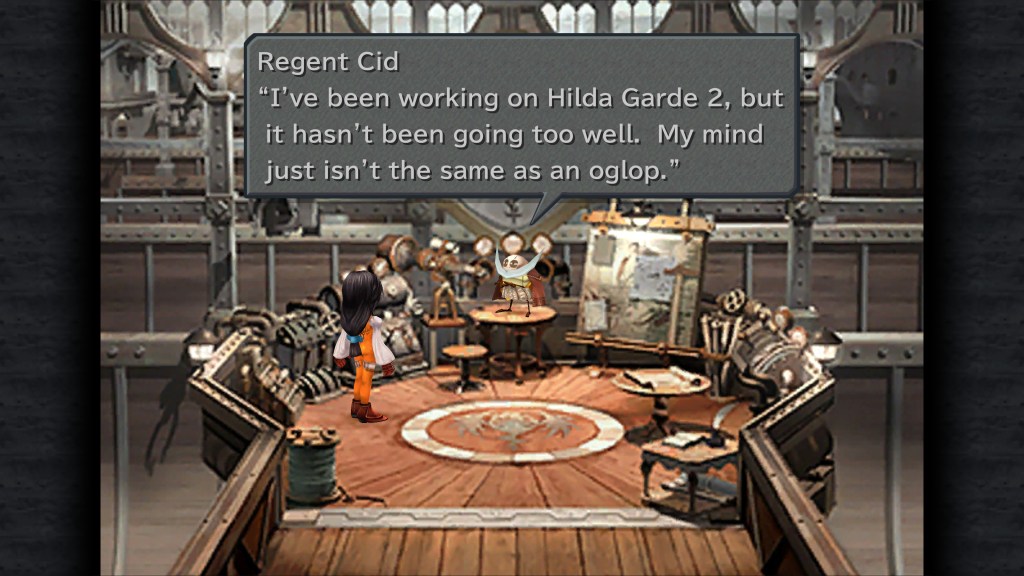
Like most of the other Cids from this franchise, the regent of Lindblum is an excellent engineer. Unfortunately, as an Oglop, his brain isn’t quite right so the second Hilda Garde is jokes about as some sort of death trap. So when it comes time to build the third one, a decision is made to find his wife and reverse this curse.
After a bit of a misadventure, where it’s revealed that Kuja now commands the original Hildagarde, the two lovers are reunited. You’d figure Hilda would be a little more slow to welcome her cheating husband, but the whole thing gets brushed over relatively quickly and the party gets treated to human Cid for the first time.
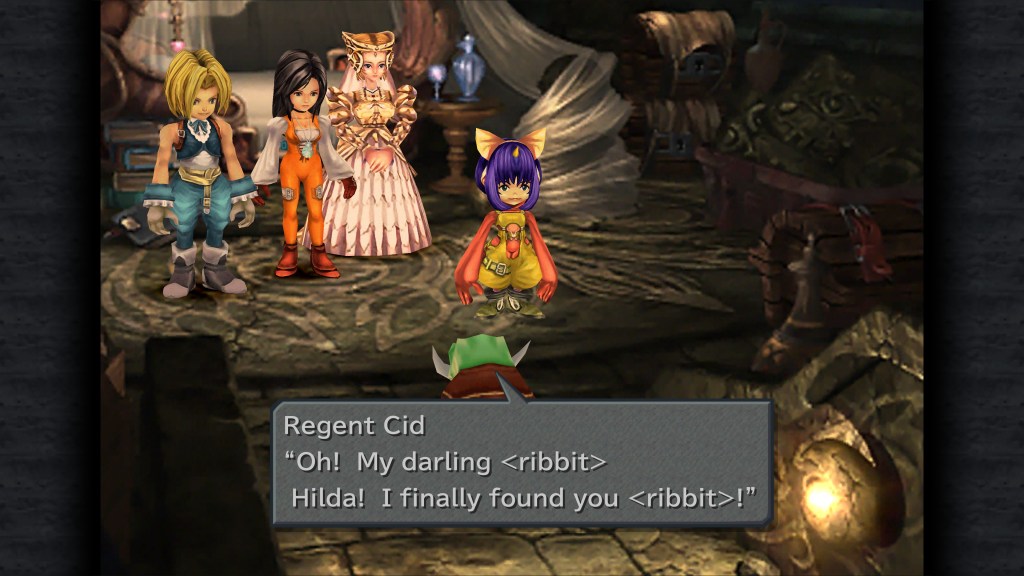
Cid is a lovable old coot. He may be a sleazy cheater, but he is always willing to lend a hand to your party. There’s a lot of humor in how he handles himself as an oglop, and very briefly a frog, because you can see the poor fella losing him mind. Cid even gets a little hide-n-seek minigame in the third disc as part of the main story! Not bad!
He may not be perfect, but his heart seems to be in (generally) the right place. Hey, at least he doesn’t give your party some evil magic lamp.

Eiko Carol
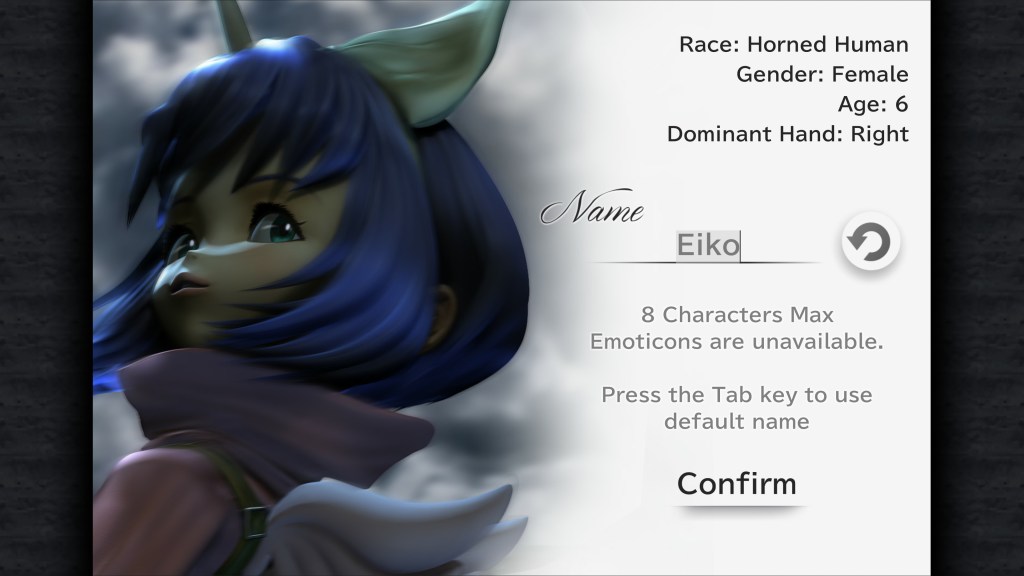
In the game’s second disc, the party leaves the mist continent for the first time. What they discover is a world totally foreign to what they’ve experienced. They see a village with oddly Scottish dwarves and another village with good black mages.
Later, they discover the ruins of an ancient summoner civilization, Madain Sarai, and at the heart of this place is little Eiko, the last remaining summoner.
Eiko is the only human in the region and has grown up with moogles as her only means of company. This has led to her being shockingly responsible and adult for a six-year-old, which leads to some intense and mature feelings for Zidane. After all, this is the first human male she has ever seen.
Hey, when I was six, I am pretty sure I had a gigantic crush on my babysitter, so I get it. Thankfully the game never even hints that the feelings might be mutual.


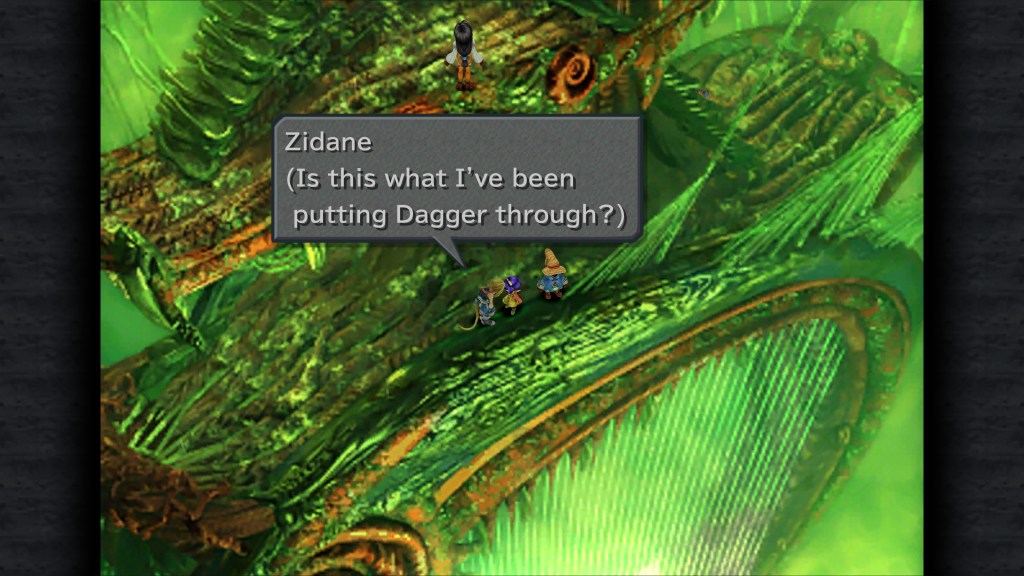
Eiko enters the fray in order to tell the player about the origins of summoners. To this point, Dagger has been the only character able to summon eidolons naturally. Brahne and Kuja are able to capture them and use them for their own purposes, but they aren’t summoners. They’re kinda like poachers.
Eiko shows up and can do it too, which brings all sorts of questions. She also has a horn prominently on her head, which serves as a throwback to FFIII and V summoners who also had horns on their head.
Summoners appear to almost worship these creatures, they hold them in high reverence, so the actions of Kuja and Brahne are highly offensive.
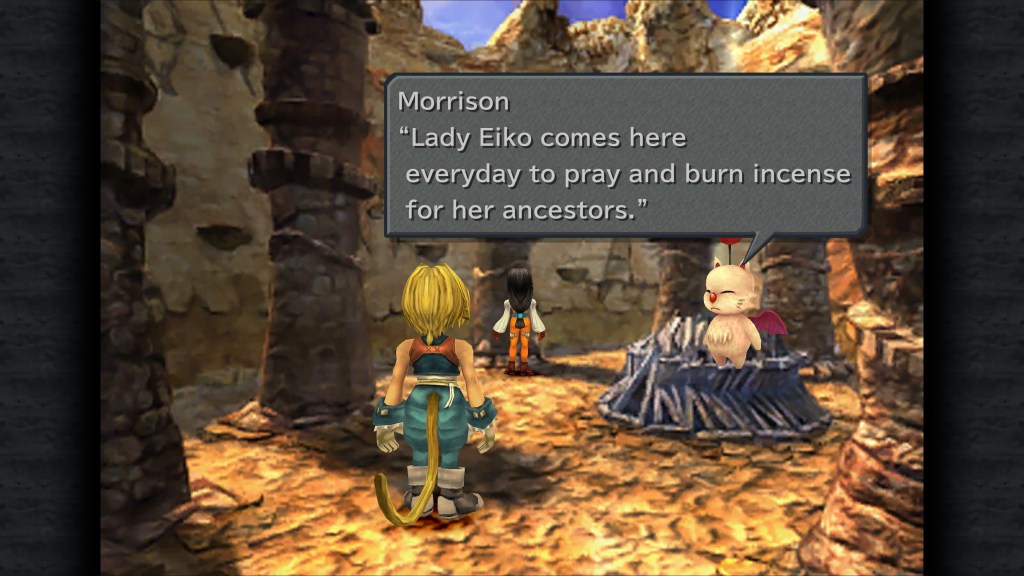
This ancient summoner race got wiped out by a mysterious force. More on what exactly that force is later, but just know that while the summoners were being killed, a very young Dagger was being ferried from this place. It just so happens that Dagger looked exactly like the deceased princess, so the King of Alexandria had Dagger’s horn removed. This also ties Dagger and Eiko together and makes them feel somewhat related.
Eiko is around to help Dagger discover more about herself, so she isn’t intended to have a super deep personality. Most of her dialogue is comedic or sassy, with her over-the-top hitting on Zidane almost serving as a reminder for Zidane to reel in his own over-the-top hitting on the princess.
She also has a very similar arc to some other characters in this game. She’s trying to find her place in this world, a place to call home. But hey, I usually hate children characters and I don’t hate Eiko, so I’ll take what I can get.
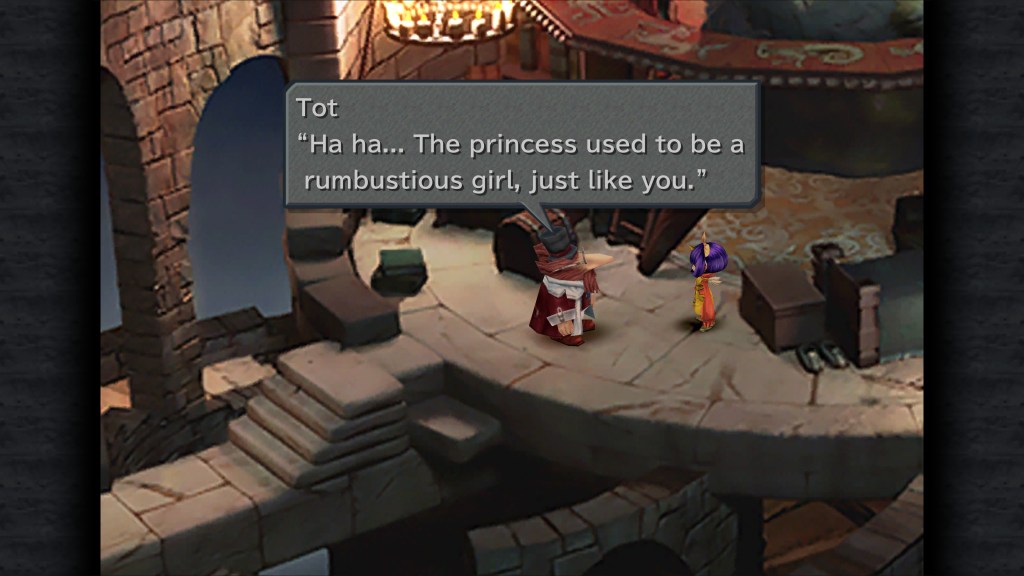


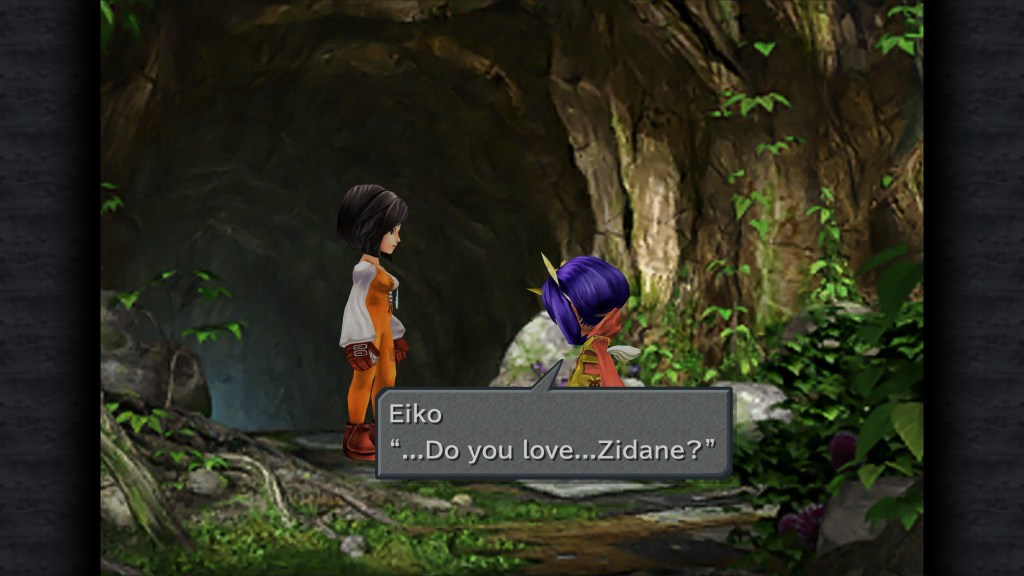
It’s also a really sweet moment that the orphan child of the summoner tribe finds adoptive parents during the ending. Cid and Hilda adopt Eiko and seem really thrilled when she refers to them as her parents. Have I mentioned yet how I love the character-focused ending?


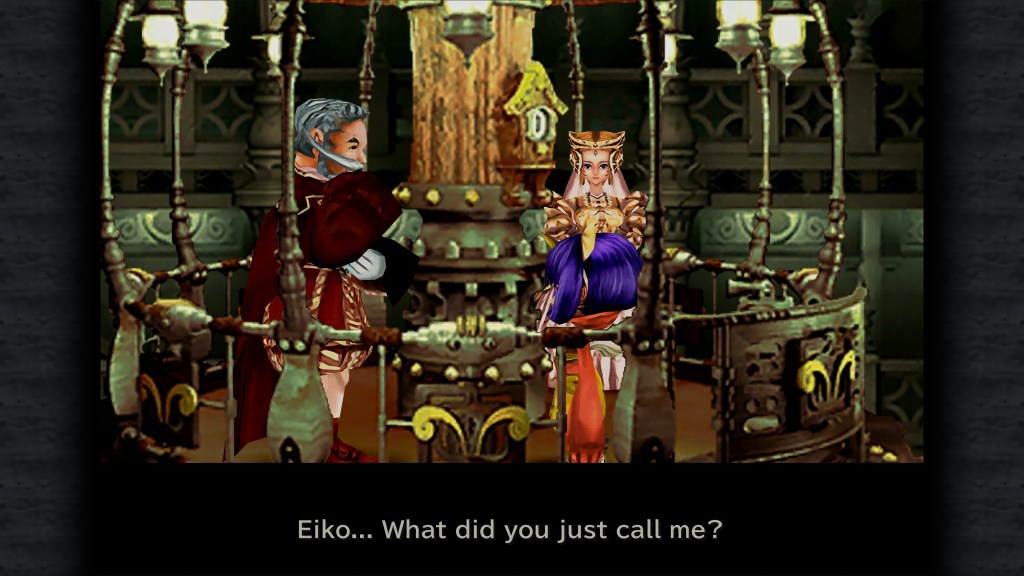
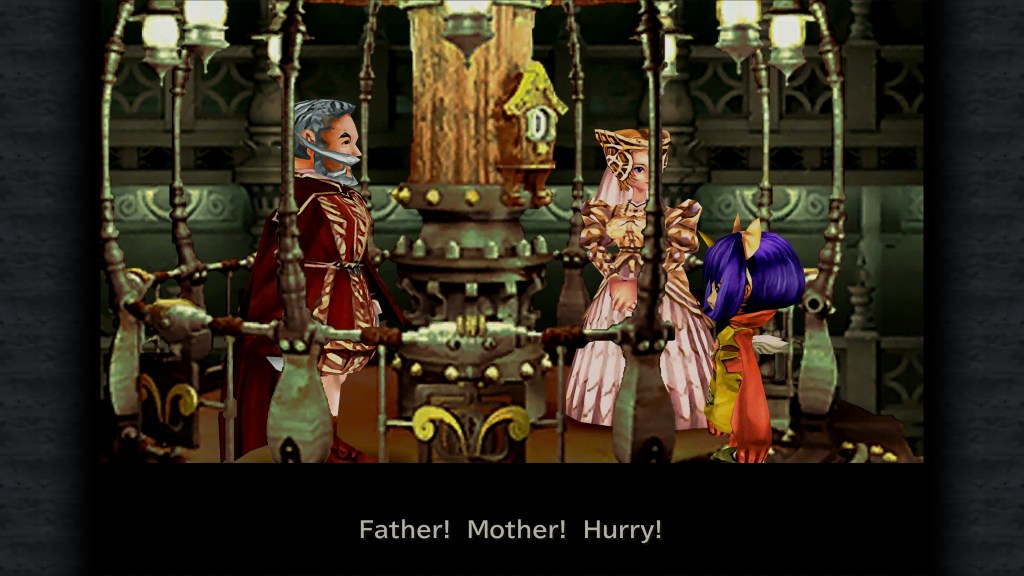
In combat, Eiko is the best healer in the game. Her trance ability lets her double cast white magic, which is the inverse of Vivi’s trance. It’s bizarre that the summon-first character ISN’T summon-first here, but that’s okay.
I do think it’s a strange choice because it makes it hard to include both ‘sister’ characters in your party, but most people probably don’t try to build parties based on who they like or who ‘fits in’ like I do, so this is a very shallow complaint.

Amarant Coral
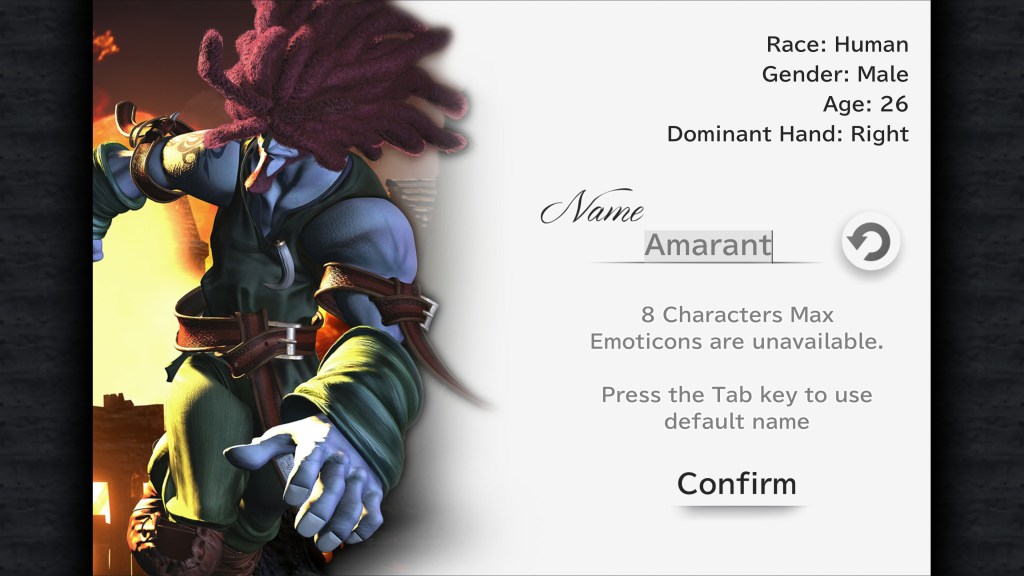
Useless party member 2. Amarant is a mercenary hired by Braun to bring Dagger’s jewel back to Alexandria. He is interested in this case because the princess is traveling with Zidane, a man he had met before.
Zidane stole something from a place Amarant was guarding and something about how he carried himself confused Amarant. Why does this guy act the way he does? So he set out to learn more about Zidane and to maybe learn about himself.

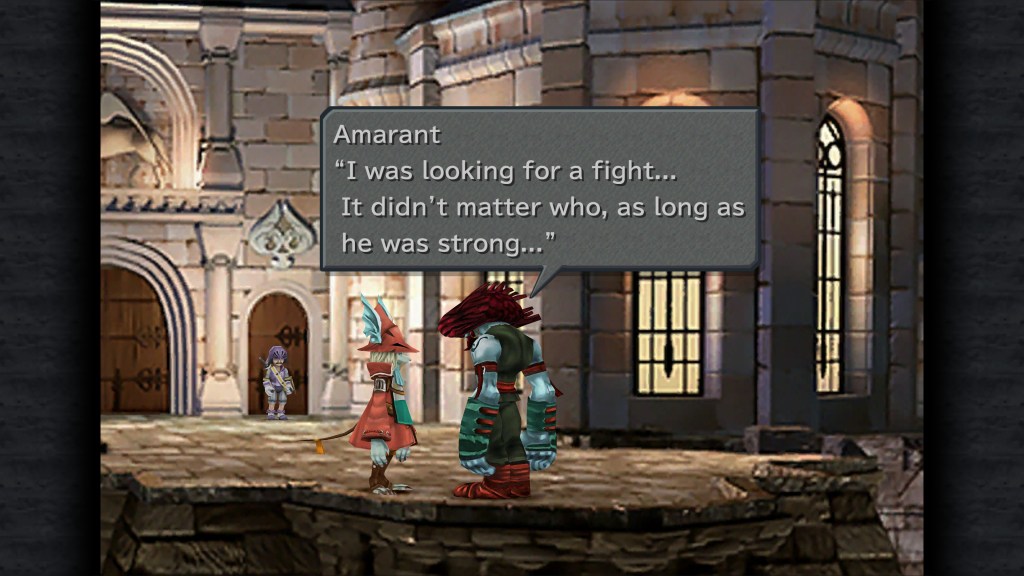
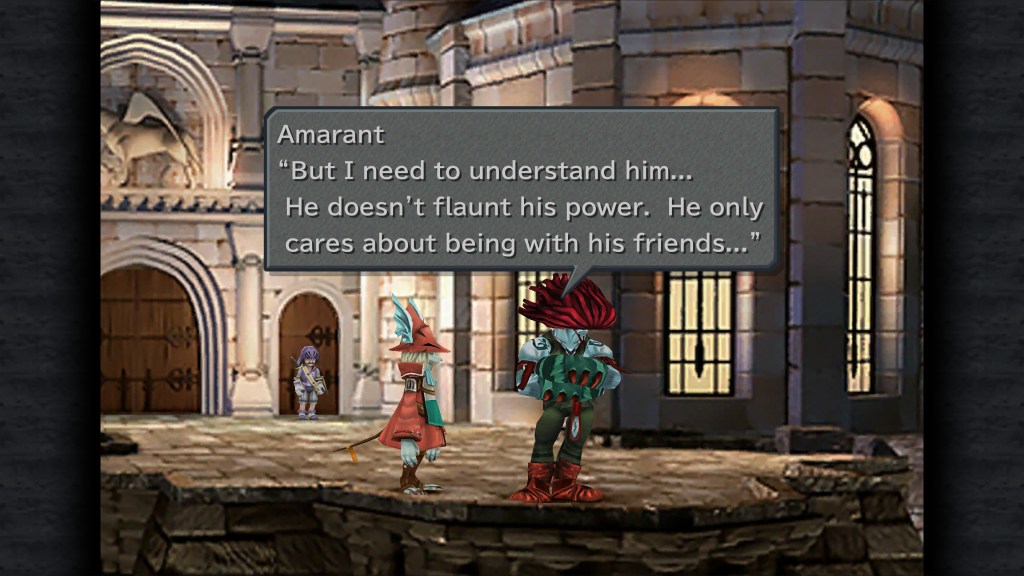
And that’s about it. Amarant just hangs around your party to complain about stuff, call other people idiots and say “hrrrm I’m starting to see why Zidane beat me back in the day.” He might as well not have a character.
In fact, his entire backstory is presented in a single A.T.E. scene where the player can elect to skip the entire thing. I’m sorry, but if I can just say ‘yeah I’m good’ to a main character’s entire backstory in one of these games, it means that it was just an afterthought.
Much like Quina, Amarant feels like he was put in there to fill out numbers. It feels like they went “oh shit, we have seven party members. We need an even number, better add one” and then they forgot about Beatrix as the obvious member number eight.
We are on the ninth one of these games and this fucker enters the fray with Final Fantasy II style writing. I think I know more about Guy than I know about this, uh, guy. He speaks beaver!
He gets one single dungeon developed to his characterization, Ipsen’s castle. In it, he decides to race Zidane and the party to the top of the castle and when he makes it there first, he decides that he has grown beyond the party and wants to bail.
When Zidane and crew leave the tower, they find that Amarant hasn’t emerged yet so our tailed hero goes back in to find him. There Amarant acts confused as to why Zidane came back but then kinda sees the appeal of things like friendship and whatever.
Awful. And this guy gets to be the party’s ninja! For people who have read these articles, you will know that ninjas are the most useful job in the franchise. Typically. Amarant gets access to abilities like chakra and ‘throw’, which ninja-codes him.
Throw hits really hard and makes him one of the more useful party members in the game. His trance lets throw hit multiple enemies, too! Not particularly exciting but pretty useful.
Too bad I never use him ever. This guy is like if Amaro or Gogo from VI were elevated to non-hidden cast members.
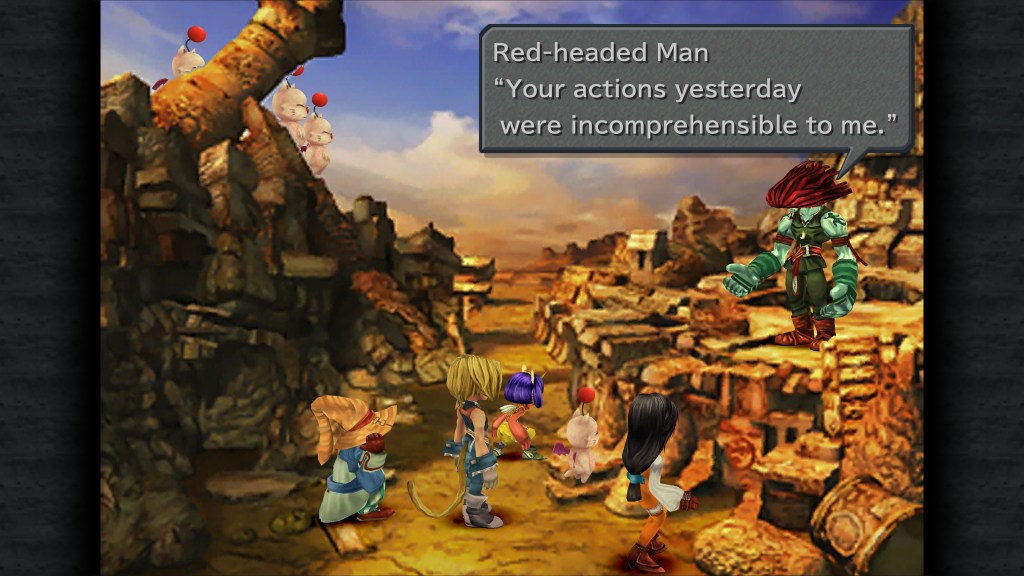
Garland and the Genomes
Get ready for a loredump, we always have a character like that in these things. Garland is the overseer of a different planet called Terra. He is in charge of disrupting the flow of souls on the home planet of IX, Gaia, so the souls of the denizens of Terra can overtake Gaia and have Terra replace the original planet.
To accomplish this, Garland wants the continent to be in a prolonged state of war. That way souls are constantly returning to the planet (hm…). While the souls are being moved around and doing their circle-of-life thing, Garland wants to suck them up and take them away from Gaia. Essentially, he wants Terra to skinwalk as Gaia.
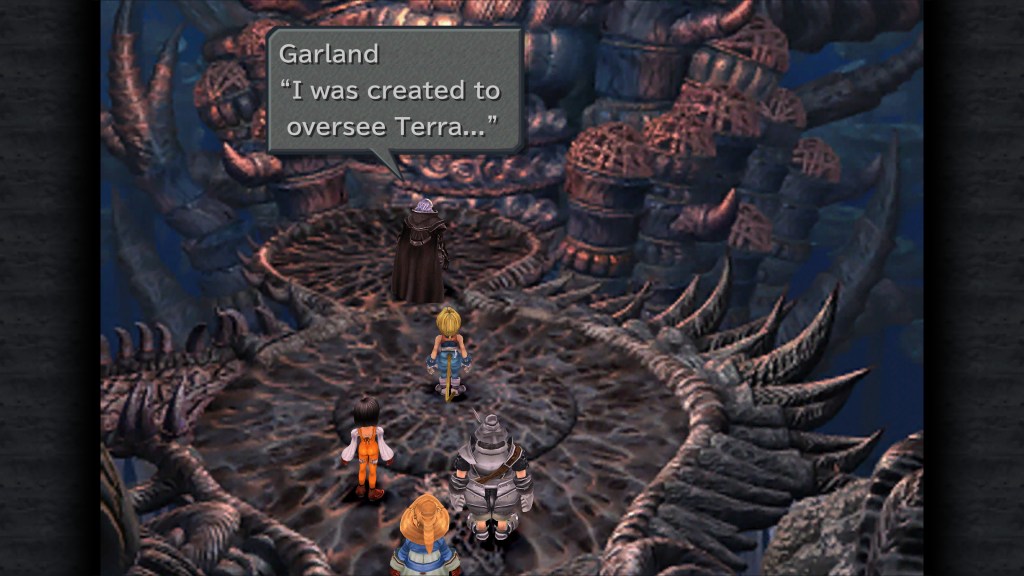
Garland is also the reason for the extinction of the summoner tribe. He saw the eidolons they could wield as the ultimate obstacle to his plans, so he had them eliminated – well, as much as he could. Dagger frequently dreams of a giant eye from the sky causing destruction on a mysterious land. It turns out that destruction is caused by Garland and his ship, the Invincible.

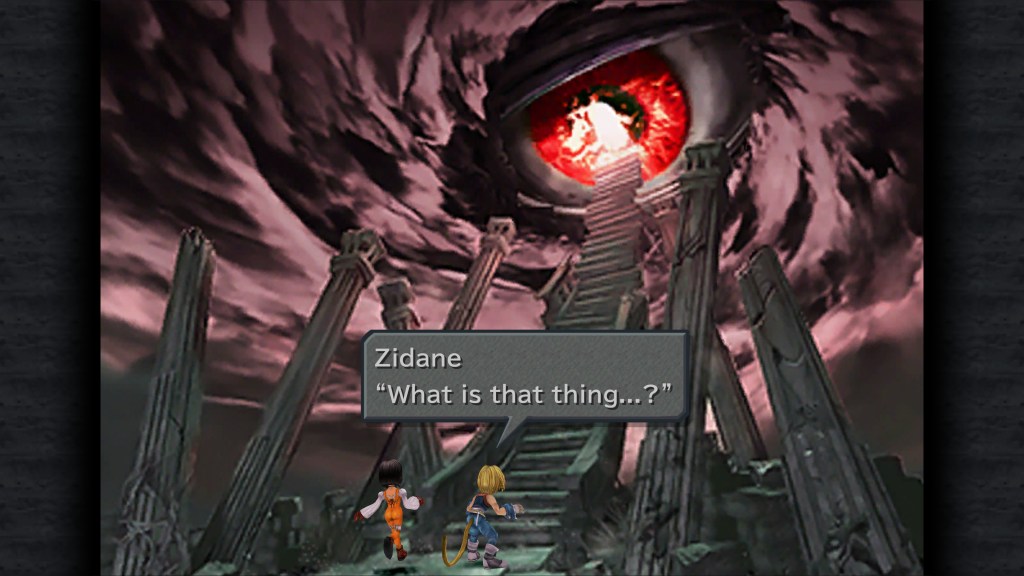
On Terra, Garland has a host of characters under his employ called genomes. These things are functionally much like black mages. They are empty and soulless vessels designed to follow orders and cause trouble. Eventually the souls of Terra would be implanted into these Genomes when it’s time to move over into Gaia. Slightly confusing and convoluted? You bet.
One of these genome guys was named Kuja. Kuja was meant to disrupt the flow of things on Gaia and plunge the continent into war, which he was able to do pretty effortlessly. However, Kuja was something of a wild child, so Garland had backup plans in place.
So this baddie created Zidane with the intention of having Kuja’s life end the second Zidane became more powerful than him. Unfortunately for Garland, Zidane ended up growing up in Gaia instead of Terra, so when the truth gets revealed to Zidane, he has no desire to claim his birthright.
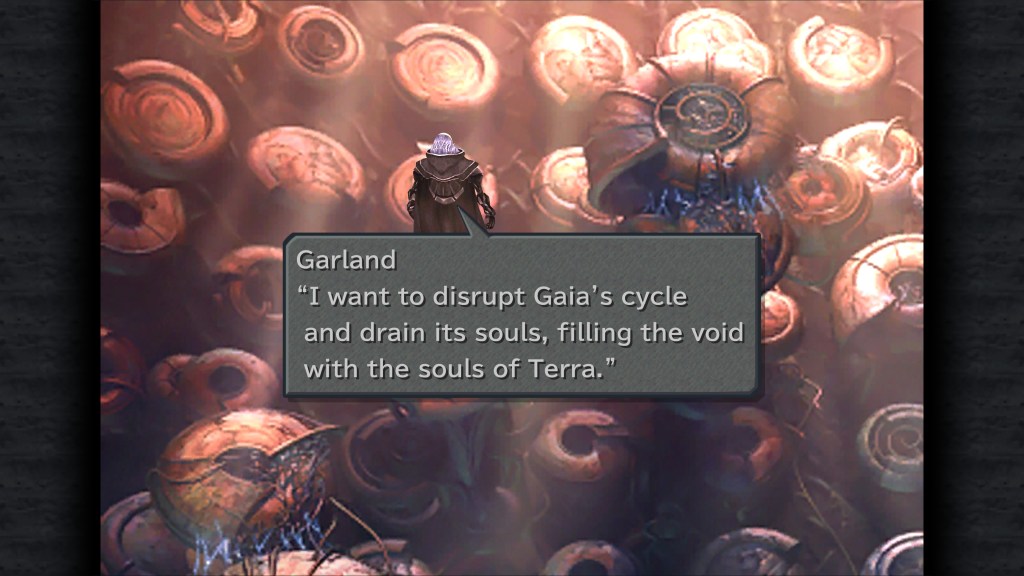
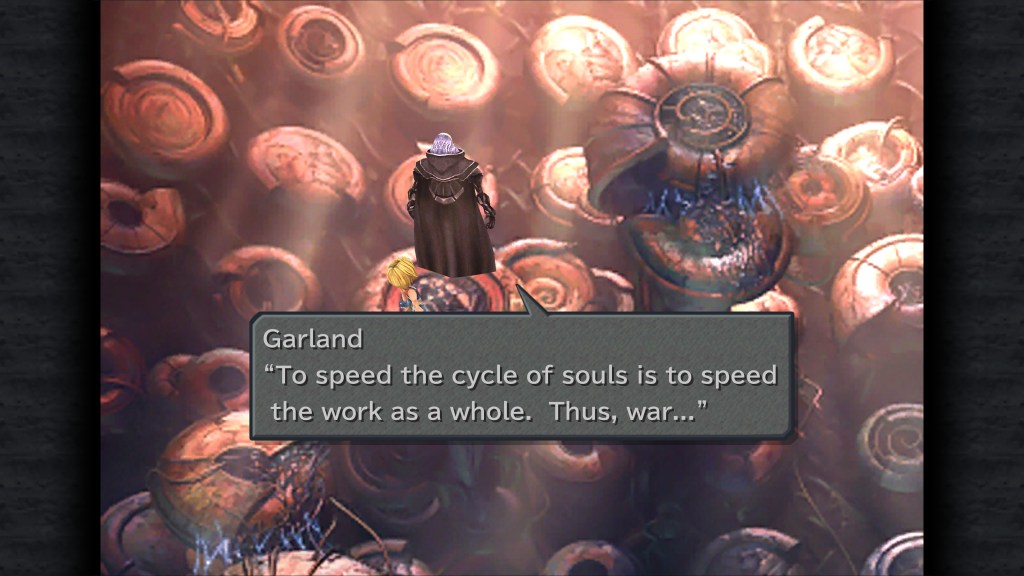
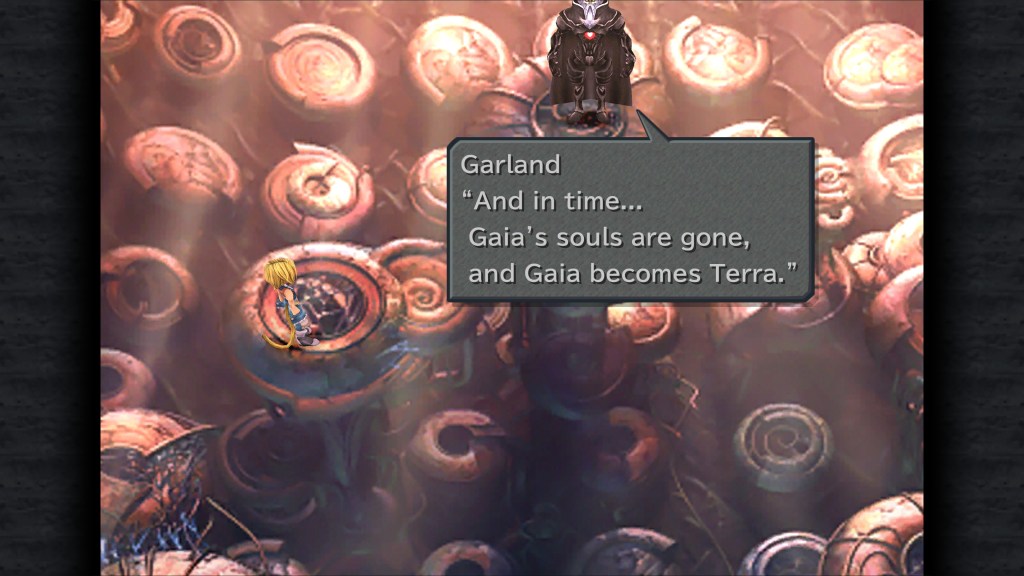
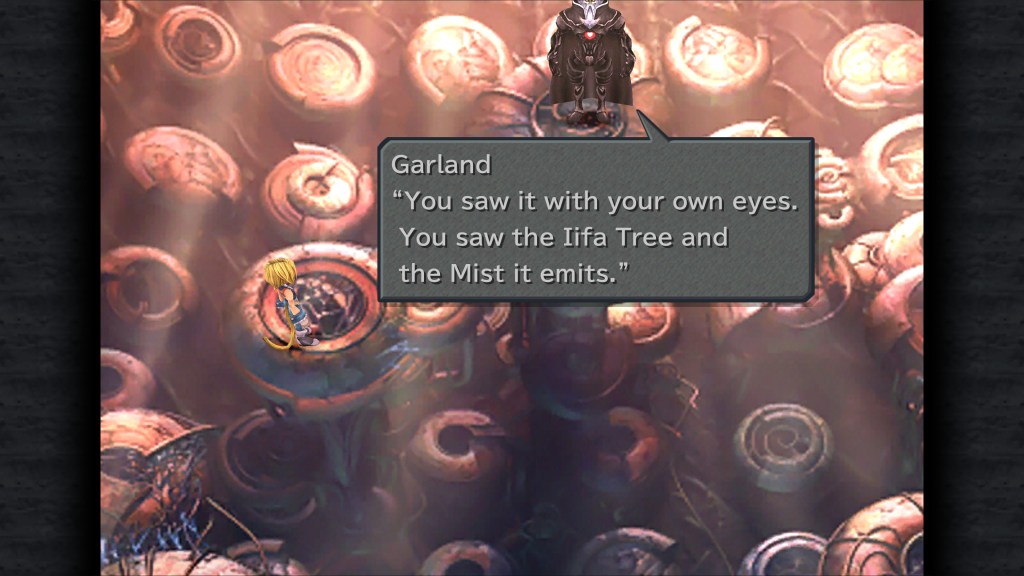
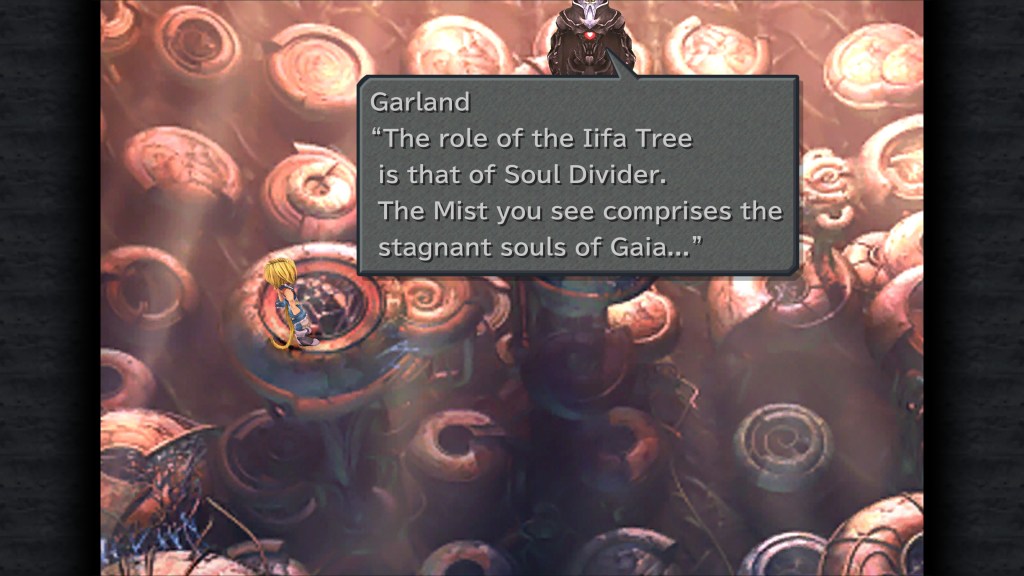

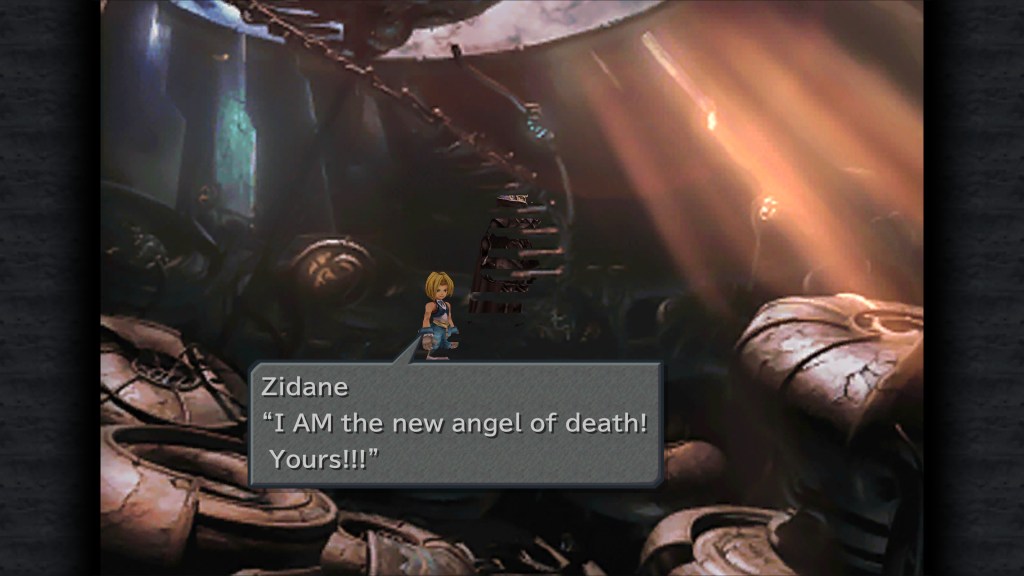
There’s also ANOTHER failsafe plan in female genome named Mikoto. Garland was a cautious fella, eh? The real reason she exists is just to exposition dump on Zidane because she’s the only one of these genomes on Terra with a soul. They try to make her as some sort of weird little sister to our protagonist, but she is introduced to you when there’s like an hour or two of plot stuff left so you can only care so deeply about her.

Kuja destroys Terra in a rage at the end of disc 3, forcing the genomes to relocate to Gaia.
The party finds all this Terra/Gaia stuff out towards the end of disc 3, which culminates in a boss fight against Garland that…isn’t particularly difficult. I actually found the harder story bosses to feel pretty samey. By the time I got to Garland, Steiner was already hitting 9,999 damage, so as long as he consistently got to act and I was able to prevent or cure status ailments, things went down pretty easy.
I find it difficult to care too much about Garland. They rush through a million different plot points upon his reveal, so his status as some sort of ‘real villain behind it all’ doesn’t really sink in because you’re trying to process a lot of other things. The two worlds thing and Zidane being part of a golem-like race aren’t even really hinted at.
To me, it feels like Garland was put in there as a ‘stop-gap’ villain. The main threat is very clearly Kuja, but they needed to flesh things out a bit longer so they slapped Garland in there.
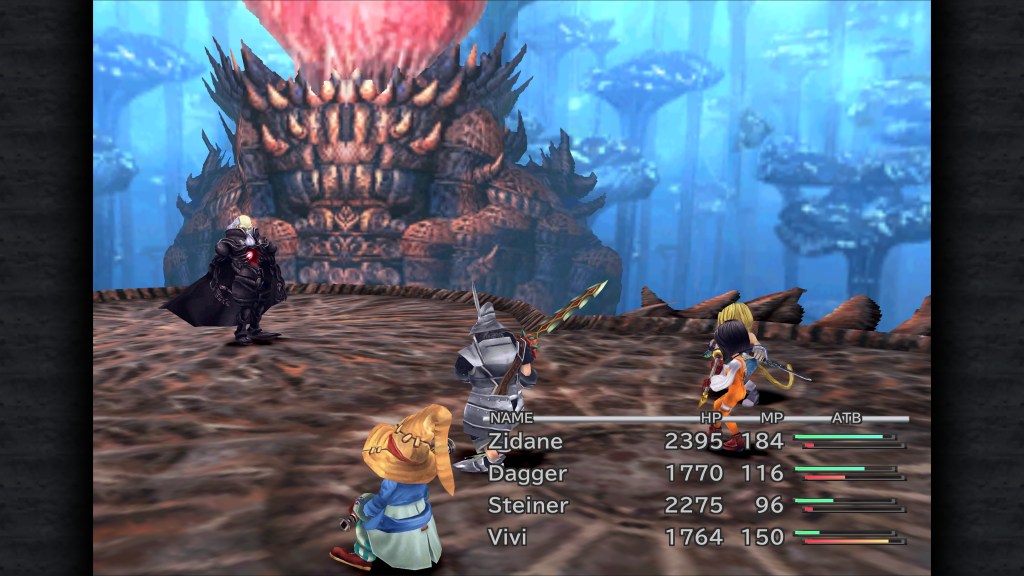
Kuja

Our angel of death from Terra and the main villain for most of the game. He serves as sort of this version’s equivalent to Seifer or Sephiroth from the previous two games, acting as a bit of a counter-balance to the lead. Hell, at the end of the game, Zidane even point blank says that he could have seen a scenario where he wound up like Kuja did.
I sort of just inferred that about Squall and Cloud, but here here they just flat out say it with Zidane.

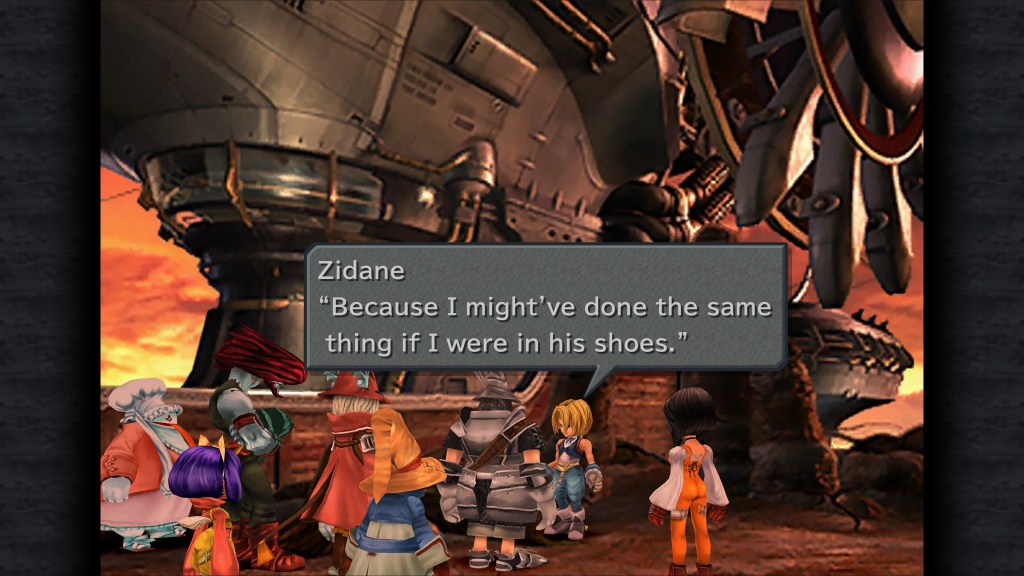
Kuja spends the first half of the game being an enigmatic figure behind the scenes. You are led to believe that he is the true force behind Queen Brahne’s rampage and as a result, you spend a lot of time hunting him down and learning about his motives. The game tries really hard to make you feel like he’s a cold-hearted and ruthless villain, but there’s a bit more to it than that.
The antagonist is well aware of what Garland wants out of him, but Kuja is rebellious and hard to count on. He generally wants the same thing for Terra that Garland wants, but Kuja fancies himself as the right man to do it. He is also aware of Zidane’s purpose as a replacement – though he’s unaware of his lifespan being cut short as result.
This gives Kuja a little bit of an inferiority complex, which might frame his more moustache-twirling moments – my favorite one is where he puts a timer up that would sink your party into lava like he’s some sort of James Bond villain – as ‘acting out’ as opposed to ‘pure evil.’
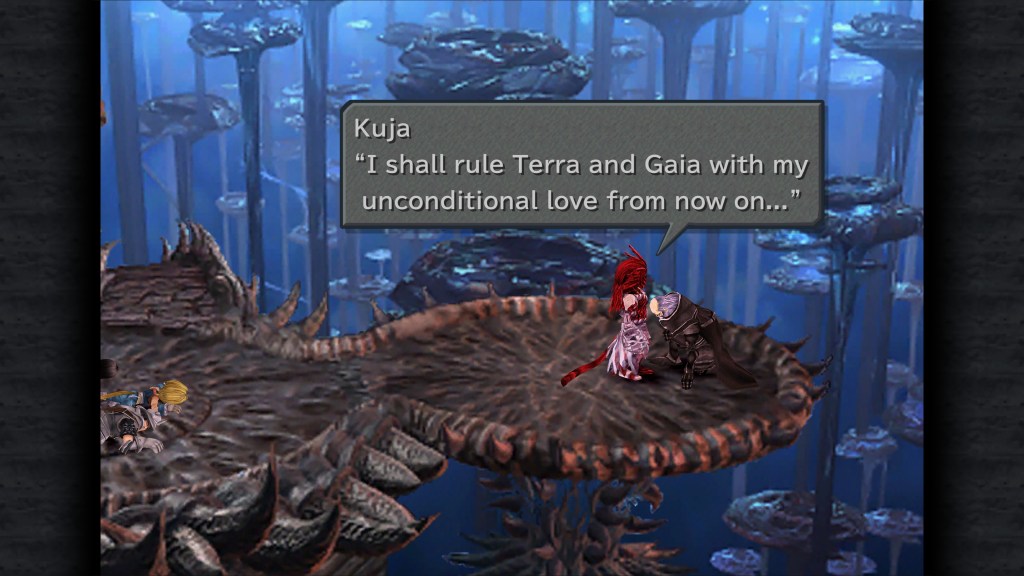
Despite the game tying Kuja and Zidane together, I find the antagonist’s arc has more in common with Vivi’s arc. When the little black mage is made aware of his relationship to the black mages, he takes on a bit of protective role over them. He does not want to see his fellow man – so to speak – taken advantage of and used for war.
Conversely, Kuja is always aware of how he’s tied to the Genome people. He sees how he has a soul and they don’t and rages against it, he does not want to be considered one of those things. He wants people to know he’s an individual with a soul and a brain.

More acting out and inferiority stuff, essentially. They’re like two sides of the same coin. Vivi took his heritage in one direction while Kuja takes his in a different one.
This might also be more commentary on what makes a home. Vivi comes into who he is with his new ‘family,’ your party. Zidane realizes who he is on Gaia and when he learns of the truth of the Genomes, it’s really too late to change who he is.
Kuja was born with this knowledge and grew up around it. So his attitude and behavior, despite being under similar circumstances to our protagonist, could be developed by what he grew up around. Garland would probably be a worse father figure than Baku.
At the end of the game, at the final moments, as everything is blowing up around him, Kuja elects to save the hero party even though he had been gung-ho about taking everyone and everything with him until that moment.


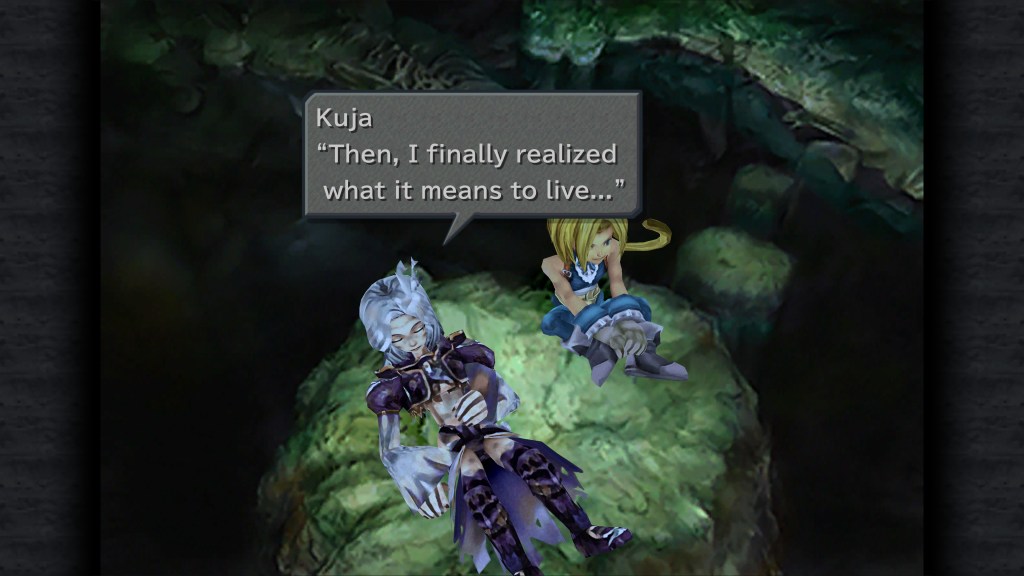
Something during the final battle awoke within Kuja and he decided he didn’t want to go down as a stereotypical bad guy, he wanted to make a change. Zidane reaches out to him during this moment and it’s a pretty touching scene. It’s never too late to turn back. It might be too late to earn forgiveness, but you can at least make some personal atonement.
You enter combat with Kuja expecting him to be the final boss. He has entered a trance state, which fittingly makes him look much like a trance Zidane.
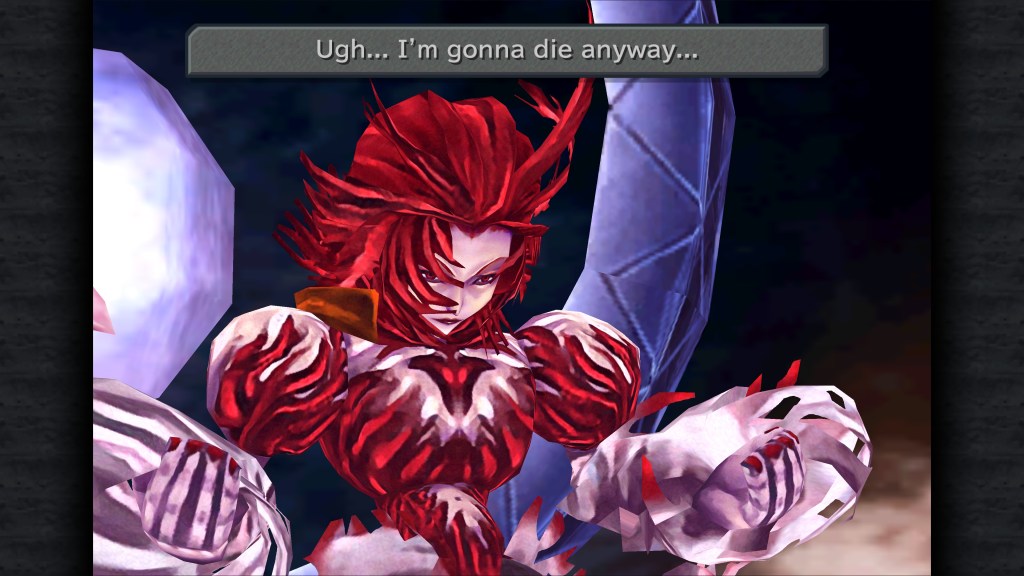
Everything in the game has led up to this point – you even have a fucking bullshit boss before this point that uses meteor, an attack that causes random damage. Good luck if your healer dies immediately! The fight against Kuja is nothing too crazy, it actually feels like a step back from the multi-phase madness that was Ultimecia. Well that’s because…

Necron
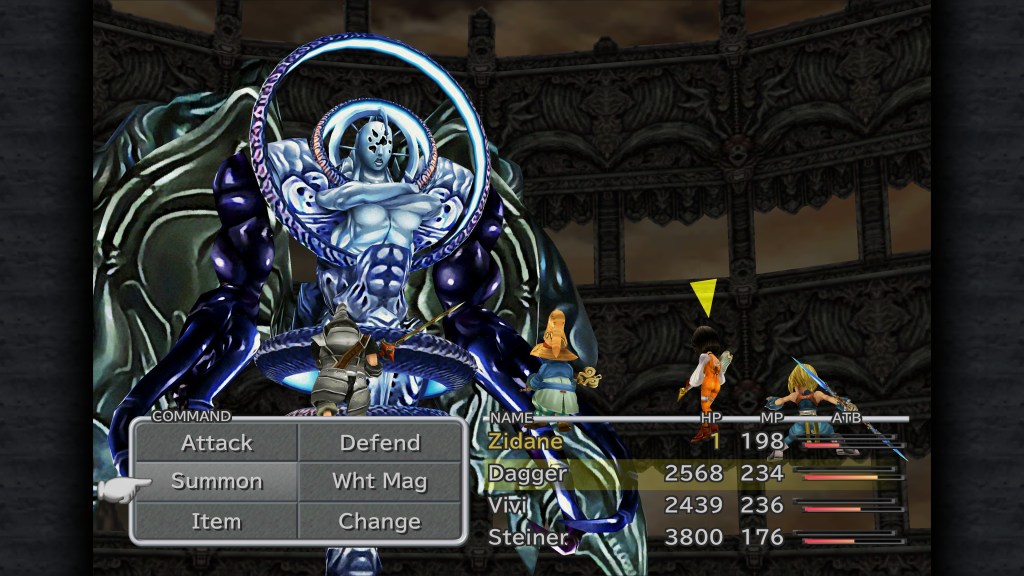
…this fucker hijacks the ending.
As Kuja lay defeated, a voice reaches out to Zidane that reveals Necron as the true force behind everything. A very alien entity in a very alien looking world. It comes out of nowhere and asks the player to just accept a lot of things at face value.
In video games, a lot of times events will happen that we aren’t supposed to take literally. Boss fights will happen and they serve more as a means to tell a tale of internal strife, they’re not meant to be taken as the party literally fighting this force of evil.
I’m going to take this fight at face value and just assume this is a case of ‘un-hinted badguy pops in at the last minute’ as opposed to ‘symbolism on the darkness inside of all of us.’ If someone wants to give Necron that out, I’m willing to listen to the argument.
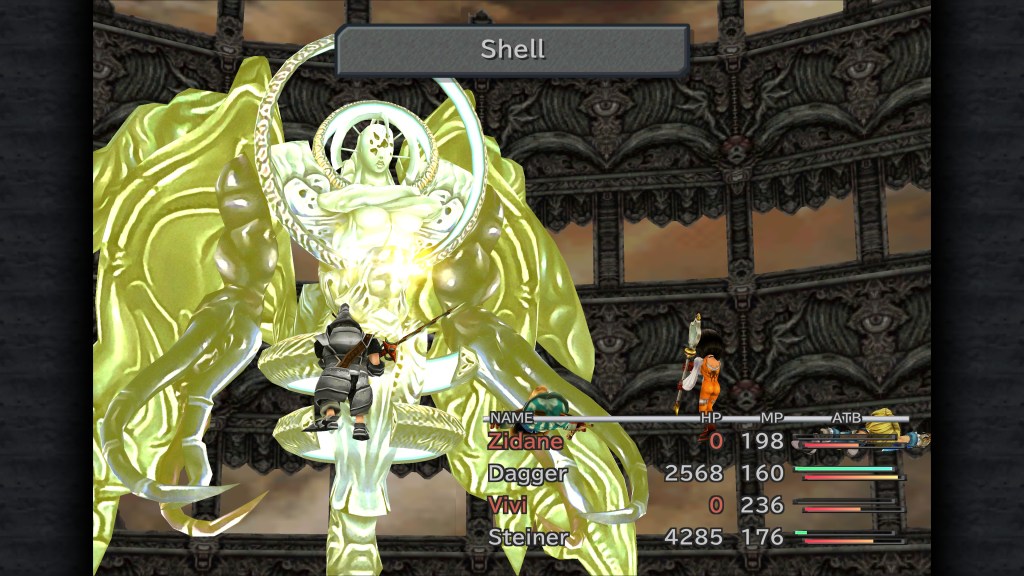
As a final boss, Necron can feel a little unfair if the party isn’t prepared for it. It hits hard, it can instantly kill members of your party if you don’t know what status effects it can utilize and it uses protect and shell magic, which ensures you can’t just mindlessly 9,999 damage your way to victory. In the original PS1 version, this fight serves as a throwback to the vicious multiphase battles of old.
The first phase in this case (Kuja) is pretty simple but once you defeat it, you are treated to a little cutscene and then tossed into pre-Necron-fight preparation. It’s time consuming and there’s no skipping it, so if you need multiple attempts to vanquish this guy – and you probably will, it’s more difficult than any non-hidden boss encounter – it’ll start to add up.
You’ll see Necron quote fucking Yoda for the eighth time and roll your eyes and just beg for the suffering to end.

The remaster version of the game, the easiest way to play in 2024, just lets you continue from after Kuja, which eases the suffering a little bit.
I said in my original Final Fantasy review that I think part of playing these games is at least attempting to engage with them as they were originally meant to be engaged with. So while I think adding a continue feature after Trance Kuja is an objectively good change, I do think you owe it to yourself to go a little bit out of your way to load save the first time you lose to Necron.
You need to experience what it feels like to be an old person, incapable of skipping text. Just mindlessly mashing X to get through dialogue just to get another shot at the boss. I own the original PlayOnline strategy guide, so I think I just like being annoyed.
Anyway. Necron sucks. Decent fight, terrible final encounter for your story. It isn’t mentioned again once you kill it.
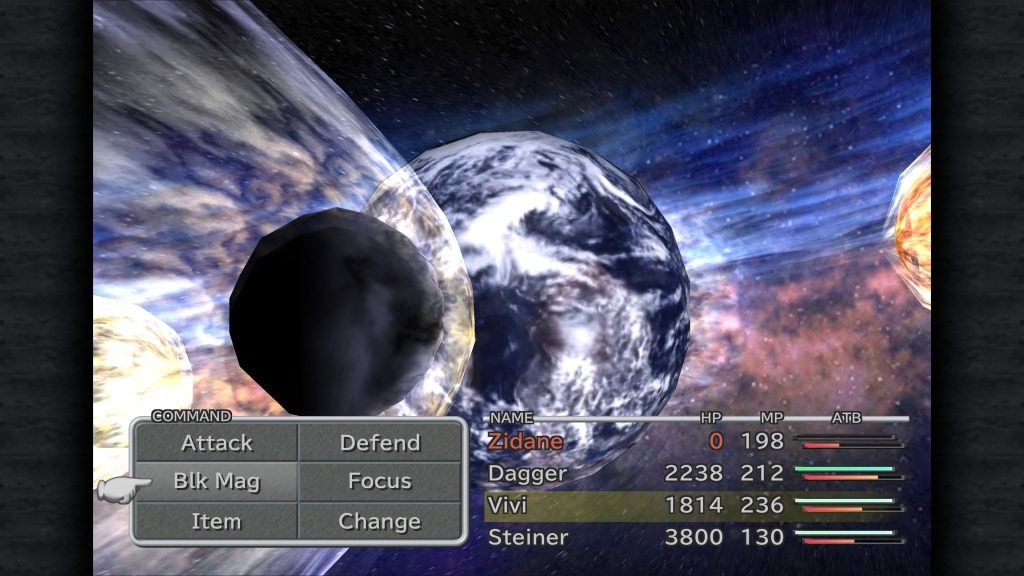
It continues here
- Final Fantasy I
- Final Fantasy II
- Final Fantasy III
- Final Fantasy IV
- Final Fantasy V
- Final Fantasy VI
- Final Fantasy VII
- Final Fantasy VIII
In my previous entries, I’ve tried to note when long-running franchise staples show up. This game acts as sort of a throwback title that celebrates the series as a whole, so for this retrospective I decided to look at areas of other Final Fantasy titles that IX might draw inspiration from. Let’s look at the DNA of Final Fantasy IX! Some of these are shallow and obvious, some of these are me looking at themes and some of these are just me reaching at straws and trying to be silly.
A couple of points that I won’t be going over since I mentioned them above: Some FFIV story structure similarities, the card game aspect of FFVIII and the main character breakdown of FFVII.
Final Fantasy I
Lots of names, lots of concepts
One of the main antagonists of the game is named Garland. Garland is the very first villain you fight in Final Fantasy I and goes on to be the game’s final boss, taking the form of Chaos. In FFIX, one of the main antagonists of the game is Garland. He is portrayed as far less of a bumbling fool than pre-chaos Garland is, but Zidane still sorta references Garland’s “I will knock you down!” greeting the first time they see each other face-to-face.

You also have Princess Sarah. Sarah was the first princess of the franchise. In IX, there is a short sidequest the player can take part in that reveals Garnett’s true name is Sarah.
In order to gain access to the world of Terra, the party must fight four guardians at the same time. The four guardians of Terra are named and based on the four fiends of the original Final Fantasy. On top of this, the player has rematches with them in the final dungeon that occur just like random battles would, with no hints that a boss is coming up, which serves as a reference to how your encounter the four fiends in the final dungeon of the original Final Fantasy.
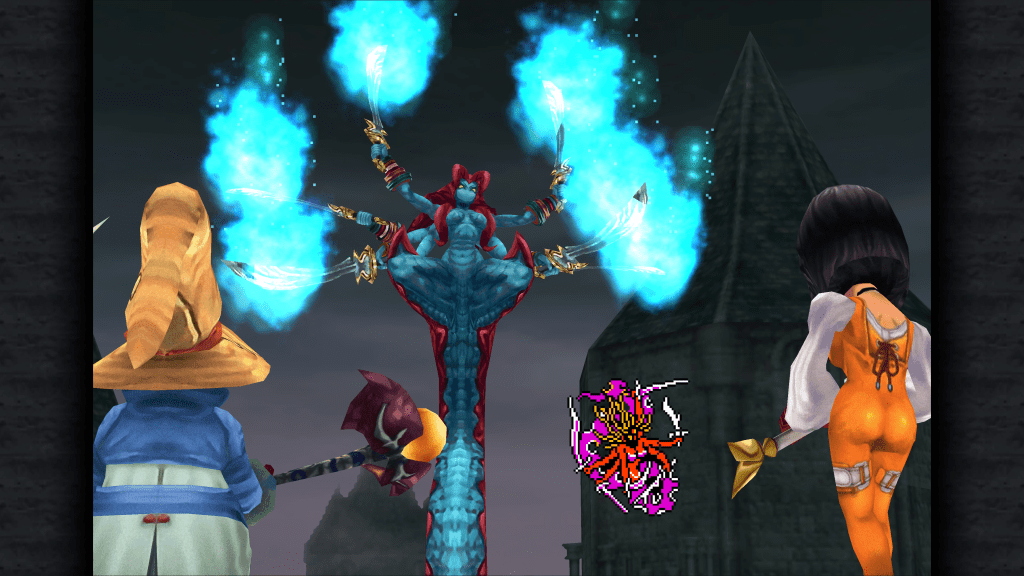

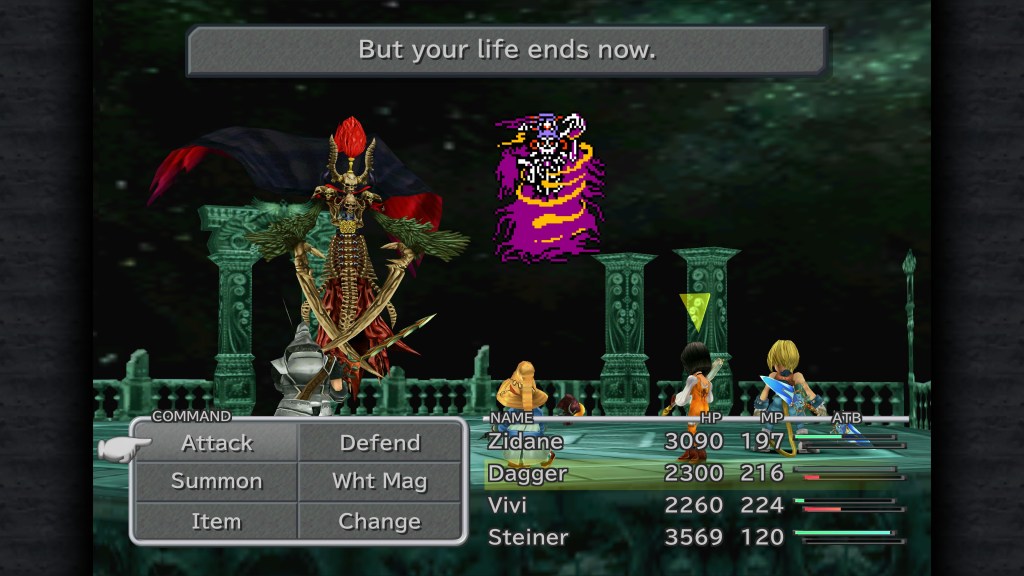
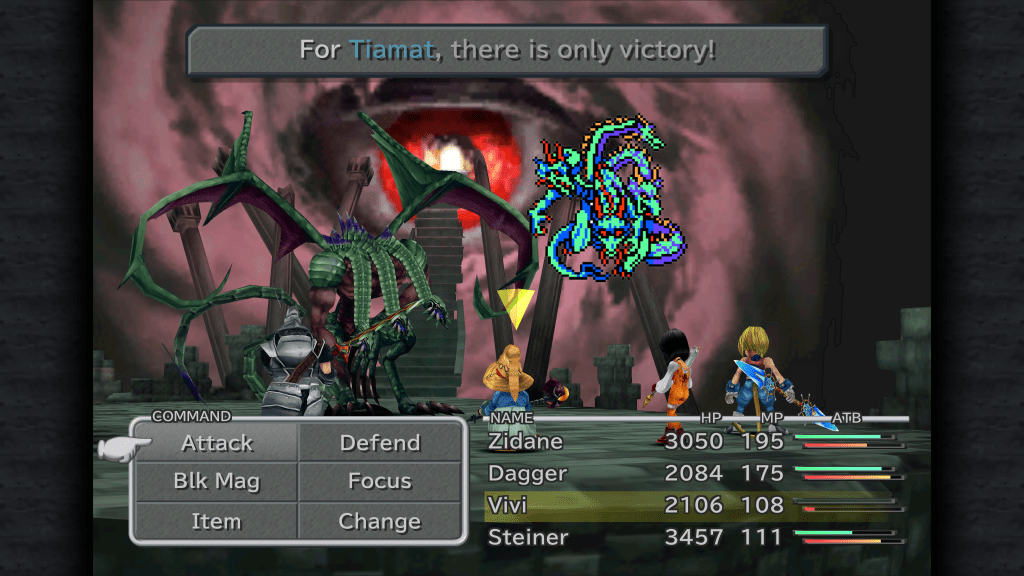
Four-man squads were the norm in the original Final Fantasy. So IX going with four party members instead of three is something of a return to form.
Finally, there is a crystal at the center of Terra and Gaia. It’s suggested that life flows from this crystal. This is in reference to the importance of crystals in the original Final Fantasy titles. Usually your journey would begin because a crystal would get fucked up in some way, throwing off the balance of the world. There’s usually four of them, but IX has one central crystal for each world. The ‘four crystals’ are more represented by the four jewels that Brahne wants to have for herself.
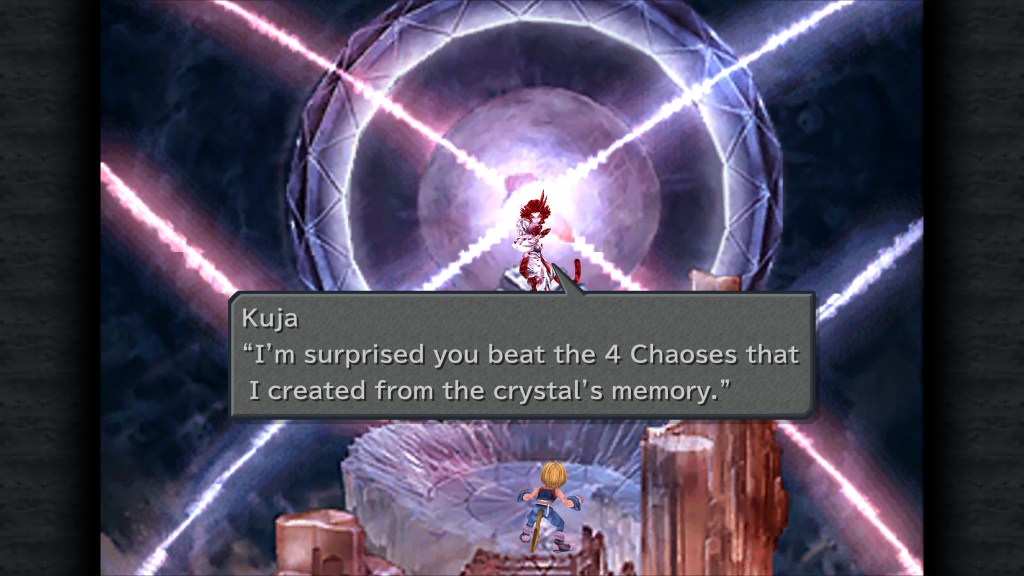
The importance of Bahamut
The only ‘summon’ type to appear since the beginning of the franchise is Bahamut. In Final Fantasy I, he is portrayed as the king of the dragons and is a key figure in allowing your characters to promote their jobs. Job promotion is a Final Fantasy I mechanic where you can gain access to super powered versions of your previous jobs. They sometimes have different names – like thief turns into ninja – but functionally they are just stronger versions of jobs you already have.
In IX, Bahamut showing up for the first time is seen as a big deal. He is treated as the most powerful eidolon in the world and when Brahne sicks him on Lindblum, the wreckage it causes is immense. Without accessing the secret boss Hades, which can lead to the player earning Ark as a summon, Bahamut is the most powerful summon you can acquire.
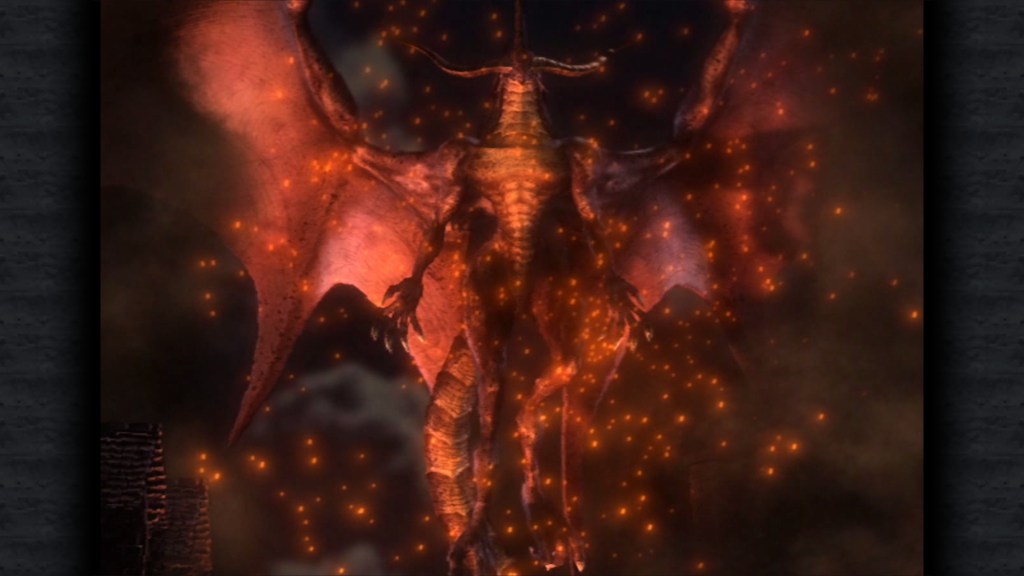
In the sprite picture: Left is NES original, middle is Pixel Remaster and right is PSP
Final Fantasy II
An empire of death
The main story of Final Fantasy II featured an evil empire that would go and destroy large swathes of civilization. A lot of the main narrative in II involves the player reacting to attacks on population centers by the main antagonists. Outside of Kefka single-handedly killing most of the world in VI, II’s empire is probably the most blood-soaked in the franchise to this point.
In IX, Queen Brahne kills large swathes of civilization in order to cement herself as the ruler of the world. The Alexandrian army almost wipes out the Burmecian rat people from the map. You probably see more on-screen deaths than any mainline entry to this point. During the first two discs of the games, a lot of the character decisions and destinations are in reaction to what Queen Brahne is doing.


Losable battles
In the beginning of II, your party is tossed into a battle that they are forced to lose in order to take one of the main party members, Leon, out of the equation until the very end of the game. This event also spurs your party to join the wild rose rebellion, which is the main ‘good guy’ faction of Final Fantasy II.
In IX, the player fights Queen Brahne’s most trusted knight, Beatrix, three times and each fight sees the player laid out and battered bloody. It is impossible to win these encounters and it helps establish Beatrix as one of the most capable characters in the franchise.
When the player gets a chance to control Beatrix for themselves, she feels every bit as strong as the boss your characters can’t quite beat. It’s a good touch and a nice way for the gameplay to inform you how strong this person is.
As an aside, one of the key figures of the wild rose rebellion is named Hilda. In IX, this iteration’s Cid’s wife is named Hilda. The two characters have exceptionally little in common, I guess both are royalty of some sort, but I doubt having the exact same name is any kind of coincidence.
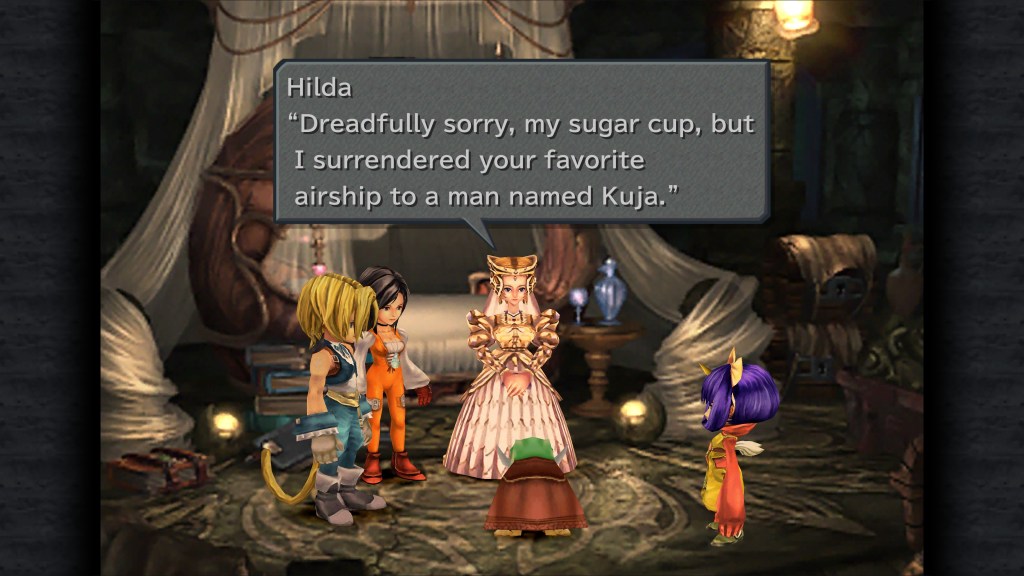
Final Fantasy III
Clear job distinctions and roles
While jobs were introduced in the original Final Fantasy, a lot of the characteristics we associate with these classes started to come into existence with Final Fantasy III. This is important because III is the ‘job’ game. If it doesn’t set the trend there, it doesn’t serve much of a purpose now does it?
In IX, your entire playable party has pretty easy-to-define jobs. They either dress like a stereotypical version of that class or the things they can do clearly echo traditional job types.
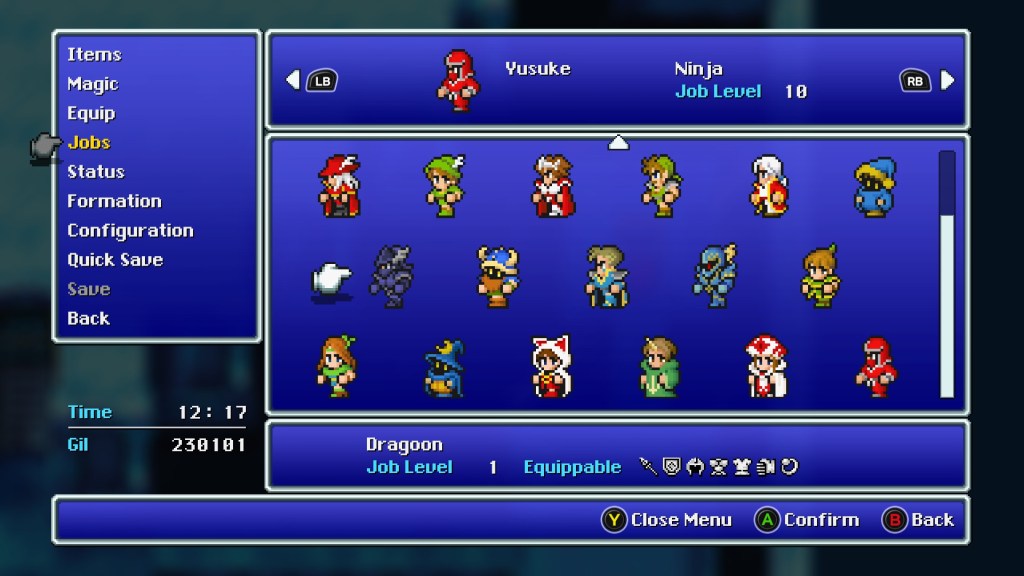
Zidane is a thief, Dagger is a white mage, Vivi is (and designed as) a black mage, Steiner is a knight, Freya is a dragoon, Amarant is a ninja (a really bad one, I don’t think he can dual wield), Eiko is a summoner and Quina is a blue mage. Most of these characters play pretty straight to those roles and are easily identifiable as long as the player is familiar with what those jobs are called.
For jobs that aren’t in your party, you occasionally see little peaks at stuff like sages or red mages just wandering around.
Lovable dwarves
Dwarves were not a Final Fantasy III invention, but I think that’s the first title where they were depicted as charming and almost whimsical creatures. The Dwarven greeting, lali-ho, has its origins in the Famicom version of Final Fantasy I! However, the English localization for this was “Hurray!” which uh…isn’t exactly a greeting.
In the English localization of IX, ‘lali-ho’ was turned into ‘rally-ho.’ Since Final Fantasy III didn’t get a localization until, well, kinda recently, I don’t think they had the official English-language terminology down yet. The katakana for the phrase is “ラリホー” or “rariho” and in translating directly, words with r’s and l’s are hard to figure out.
In case you forgot, Final Fantasy localization finally got some standardization starting with VIII, so a lot of the phrasing the series would use going forward was yet to be officially ironed out.
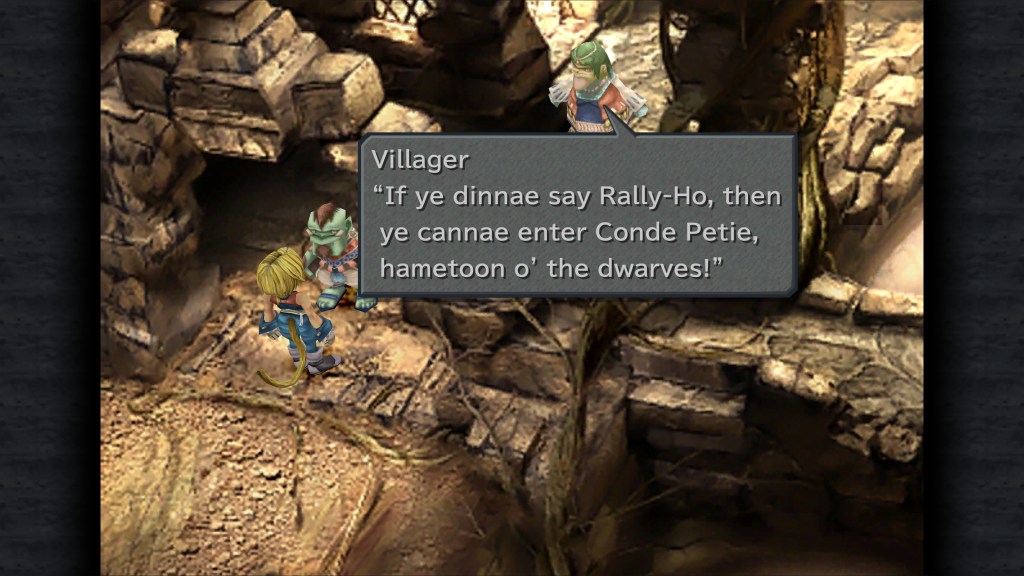
Necron
For those of you who haven’t played many of the older Final Fantasies, this might come as a surprise, but the ‘out-of-nowhere’ final boss isn’t an exclusive thing for Final Fantasy IX.
In III, the primary antagonist is an evil character named Xande for about 95% of the game. When you get to the final dungeon and defeat him, things start to go crazy and all of a sudden the Cloud of Darkness swoops in and claims to be behind everything and is the true final confrontation.

One of IX’s biggest criticisms is related to this. The game builds Kuja as the final antagonist only to yank the rug out from under him at the literal last minute and hand the reigns over to Necron. Necron seems to be an alien being who manipulates humanity into fighting.
It was odd in Final Fantasy III, a game with an NES-level narrative, but in IX it just sticks out like a sore thumb.

Final Fantasy IV
The relationship between Kuja/Zidane and Golbez/Cecil
You spend a large portion of Final Fantasy IV fighting against a man named Golbez. Golbez’s true identity is that of a half-Lunarian (moon people) who is being manipulated behind the scenes to wipe out humanity so the slumbering Lunarians can move to earth.
It is revealed late in the game that the main character of IV, Cecil, is not only half-Lunarian himself but also the brother of Golbez. The two clash but at the end, Golbez ultimately sides of Cecil and humanity against the forces of evil. The two depart forever with some bad blood, but with an understanding of each other.

In IX, you find out in disc 3 about the world of Terra. Kuja is a being sent from Terra designed to wipe out Gaia. Once Gaia has been taken care of, the souls of the people from Terra will infiltrate that world and make it their own. Zidane was constructed to replace Kuja and is something of a long-lost sibling for the antagonist.
While Kuja goes far longer as a bad guy than Golbez does – the big bad of IX basically waits until five minutes before the credits roll to have a change of heart – I think the similarities are pretty obvious. Whether Necron was manipulating Kuja like Golbez was being manipulated is up to you.

Random callouts and similarities
In Final Fantasy IV, the only way you could rename your character was by speaking to an NPC named Namingway. In IX, you can name your party right off the bat – as was the case in VII and for the GFs in VIII – but there are also a couple of Namingway cards laying around for some reason.
I guess this is for the player that went with the name “Dagger” during the renaming scene and regretted it for three discs. “Damn, I want her to be Garnet still, can I go back?”

If you’ve unlocked the golden chocobo in IX, you might feel annoyed that it can only take flight when Zidane is standing in a forest on the world map. This chocobo flight decision is rooted in Final Fantasy IV, where they establish that certain types of chocobos (black) are able to fly from forests.
Black chocobos in VII are able to cross most types of terrain but notably cannot fly. The color of the flying chocobo in IX is gold. Long story short, one thing the series REFUSES to be consistent on is what Chocobo coloring means.

Finally, Rydia and Eiko are pretty similar. Both are young children with connections to summonable creatures and I think Eiko’s hometown of Madain Sarai worships summons in a similar way to the way summons are looked at in Final Fantasy IV.
Eiko notably doesn’t age up like Rydia does, but she does often (tries to at least) carry herself in a way that adults would. She tries to have very grown up relationships despite being 6!

Final Fantasy V
Light heartednesss
Tonally, Final Fantasy V is the least serious game in the franchise. It feels like an episode of 30 Rock at times with jokes being lobbed at the player left-and-right. Even the main villain, Exdeath, comes off as something of a buffoon.

IX is probably the most light hearted game after this. Don’t get me wrong, there are a lot of very serious moments in IX, but goofiness is more apparent than in VII or VIII.
The sideplot where Zidane accidentally turns Cid from an Oglop into a frog feels like it was directly lifted from V. Hell, when Cid becomes human and immediately says GWOK…I could see like half of V’s cast pulling that line off.
Gilgamesh and a second world
If you manage to collect enough of the hidden treasures in Final Fantasy IX, you can learn the name of the mysterious four-armed guy that you spot in Treno, Daguero and the very beginning of the game as Alleyway Jack. It’s Gilgamesh!
In case you forgot, Gilgamesh is the name of a dimension hopping bad guy from Final Fantasy V. He pops up again in VIII as a hidden summon and he has a cameo here too. Granted, this Gilgamesh looks nothing like V’s Gilgamesh, but apparently it’s the same guy!
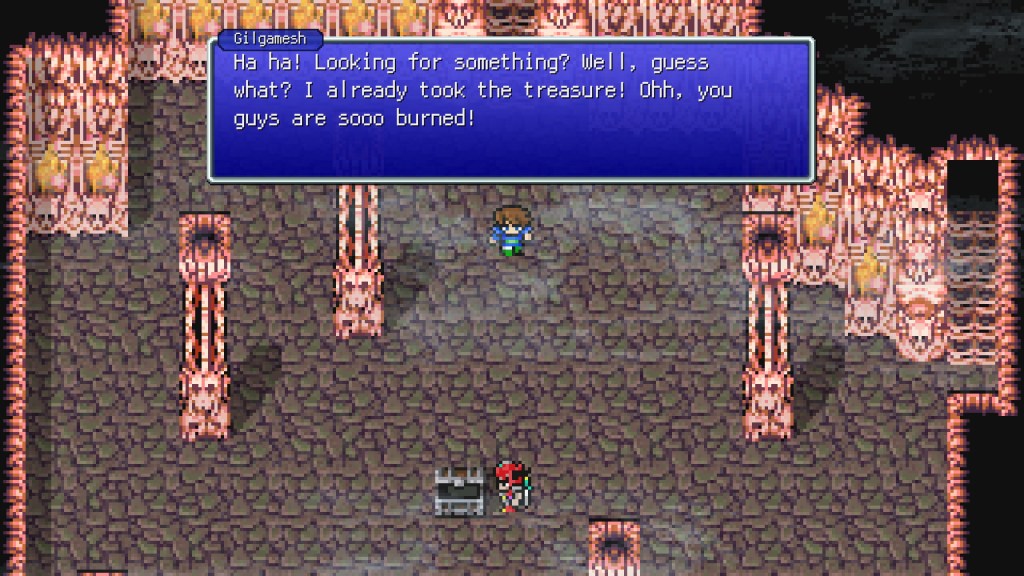
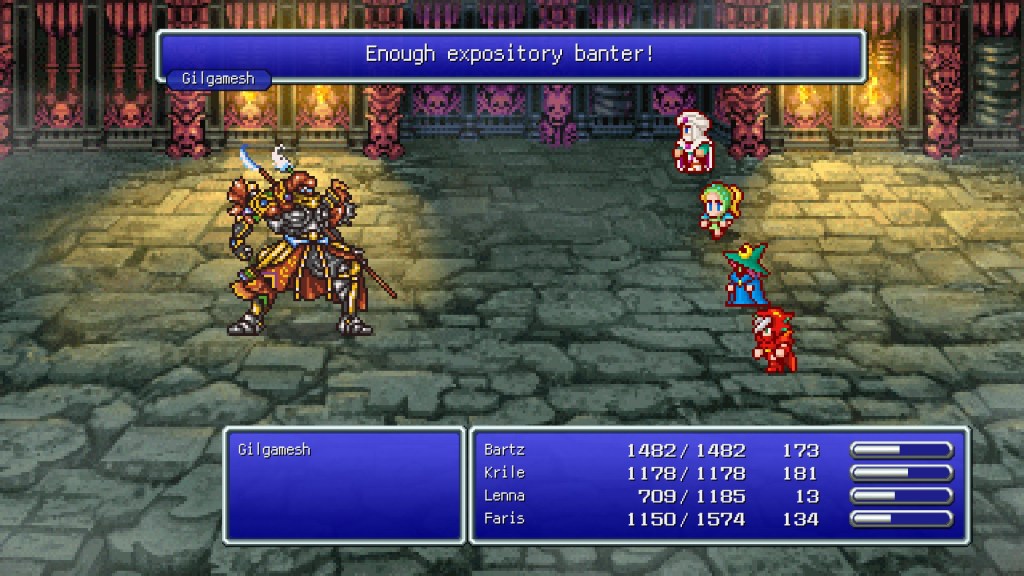
The second half of V took place on a separate but identical world to the main world of that game. One of the main characters from your party is a guy from that second world who was stricken with amnesia. Wouldn’t you know it, Zidane is from a second world and he also doesn’t remember anything about it!
Honestly, if Kuja had turned himself into a splinter and had Dagger carry him around for half of the game, I might have been okay with all the Gaia and Terra shenanigans.
Final Fantasy VI
Ending
Final Fantasy VI’s calling card was its diverse and deep cast. There was no true main character in that game, so while there was an easy-to-follow main narrative, a lot of the best plot moments of that game came from individual character moments as most of the main party members had arcs and storylines to follow.
The ending of the game highlights this, as instead of a big sendoff to the world of FFVI, the player is treated to little character moments. You see some storylines end, some romances hinted at or just some silly moments with the people you spent a lot of time with.
Looking at the ending of the next two titles, the ending is mostly spent on wrapping up the main plot. You don’t really get a 30 second scene dedicated to what Cid is gonna do after meteor hits Midgar. You get a couple goofy scenes during the actual credits of VIII, but no real closure to the side characters. Unless you think Zell FINALLY getting to eat hot dogs is a gigantic moment for him.
IX goes back to this character approach, with each of your main characters getting a little moment touching on what they’ve been doing since the conclusion of the fight with Necron.
Even Amarant and Quina, who feel underbaked compared to the rest of the cast, get some closure during the closing moments. I love this because it serves as a proper goodbye to your party. You know how rare it is for a person’s favorite character to be the main character? So the player has a greater chance of seeing some payoff for their favorites!
I would say it’s unfortunate that this ending style is dropped going forward, but would you believe this is the last single player Final Fantasy title where the game is just over after the main credits end? Going forward, you can see what those side characters are up to with an actual follow up game! With X you have a sequel. XII has a DS spin-off sequel. XIII has TWO sequels. XV and XVI have DLC.
Thematic and character similarities
The best scene in VI is the opera scene. As I mentioned in my writeup of that game, it’s one of the most important moments in the franchise and helped revolutionize storytelling in console video games. The thing going on during the opera scene is a plan to kidnap the lead performer during the play.
In IX, the game starts with a play, though the goal of the play isn’t to delight the queen (even if 100 nobles leave feeling pretty impressed), but is instead to kidnap the princess of the kingdom.
You also have the main noble general characters. In VI, General Leo is a loyal man of the empire. He does terrible things under the order of Emperor Gestahl, but the player is constantly told how noble and upstanding he is.
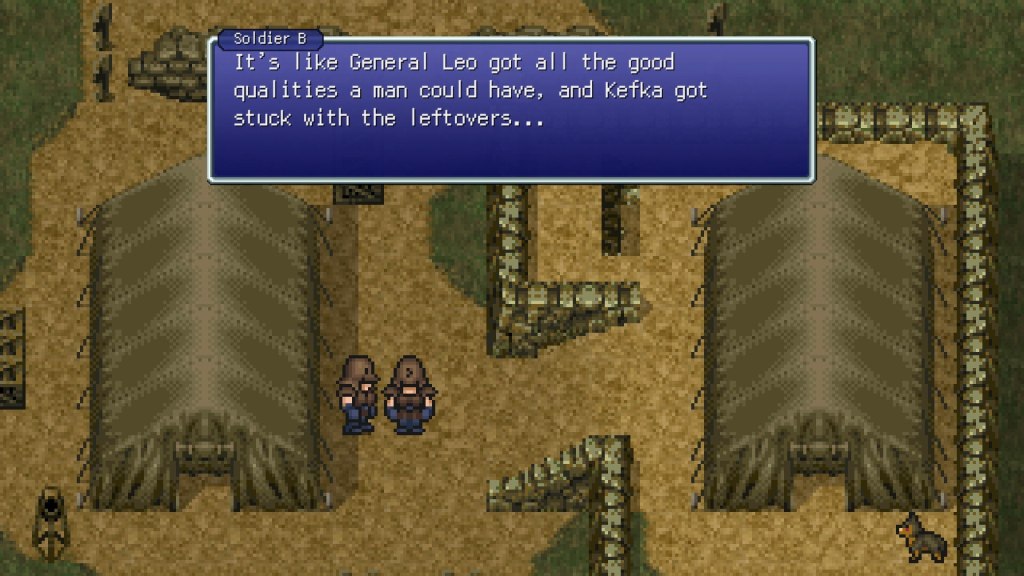
Ultimately, Leo turns against Kefka and the empire when he sees they are too far gone. Beatrix is much the same. She is portrayed as far more noble than the rank-and-file of the Alexandrian military, but she is very loyal to her queen…until it’s revealed the queen is too far gone. Leo can use Shock and wouldn’t you know it, Beatrix can too!
…So can Steiner but shhh, he gets it really late. Shock is the best knight ability to I gotta pump up any knight who gets to use it.
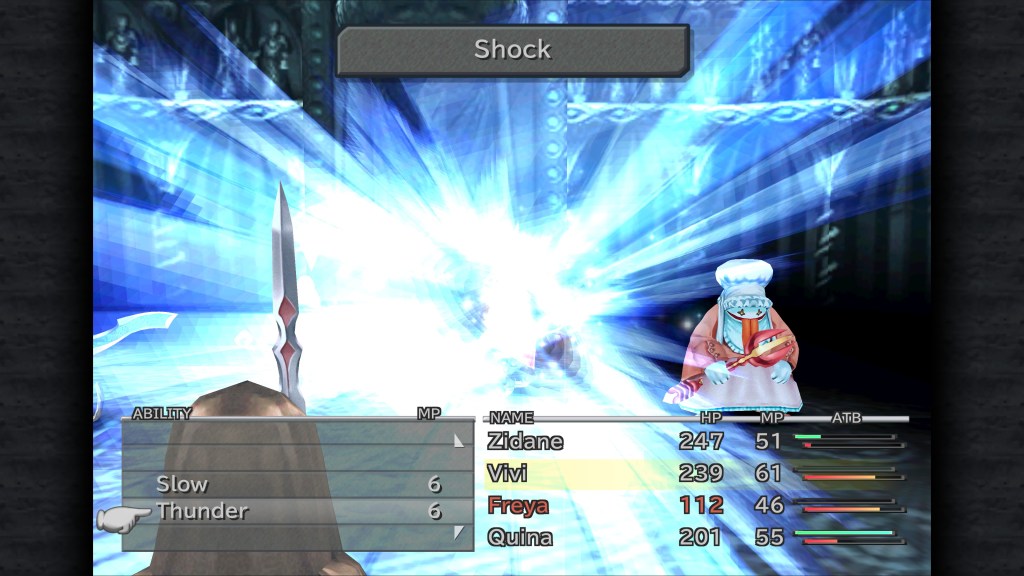
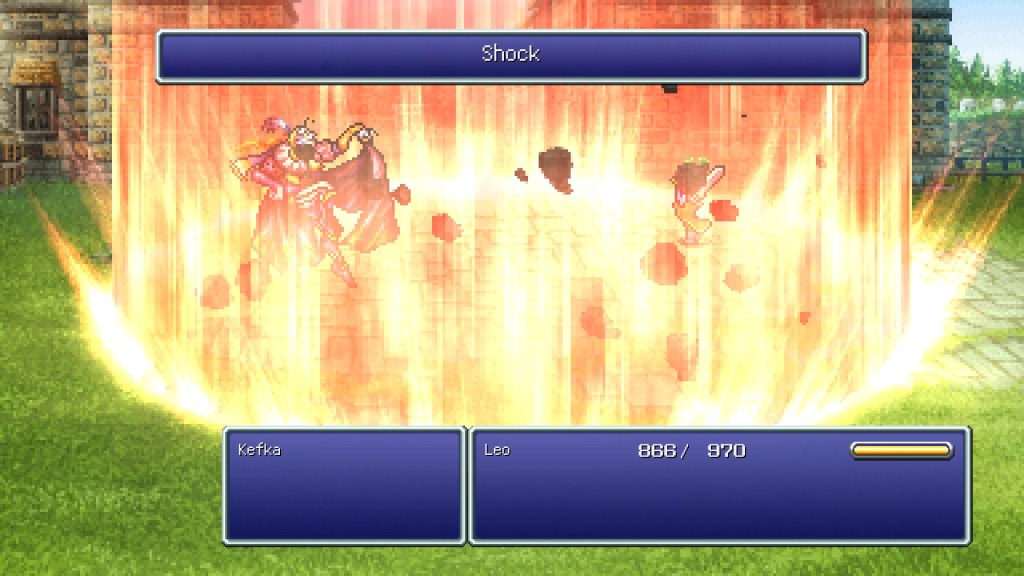
Final Fantasy VII
Limit break system
I didn’t mention it above when talking about the game’s combat, but the memorable limit break system is back again and further tinkered. VIII’s limit system functioned like VI’s equivalent, while IX acts as sort of an evolution of the system.
In VII, when the character’s limit break meter would fill, their attack command would be replaced with a limit command. Until the player selects to use the limit break or the character dies, the ability will stay around to use at your convenience.
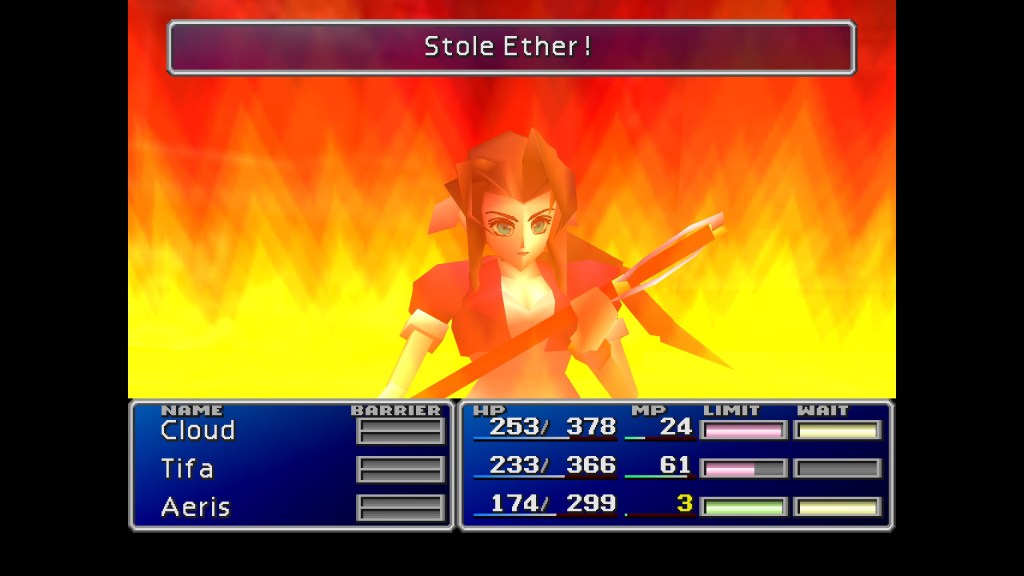
In IX, this system is called trance. The meter returns from VII but it functions entirely differently. Once trance activates, the character has two or three actions they can complete with enhanced powers and a spiffy new form.
Usually these are just evolutions of their typical job skills – Vivi gets to double cast black magic, Dagger gets better summons – but the point is that they are powered up.
Unlike with VII, it’s a use it or lose it sort of thing. If trance activates in a battle, that’s it, you gotta start over after the battle. So if you’re trying to save your trance abilities for a boss, you need to get your characters RIGHT UP to the trance meter being full before the encounter.
It makes centering around trance as a strategy for boss fights pointless – especially if you don’t know a boss is coming – and makes the ability feel like more of a random power boost.
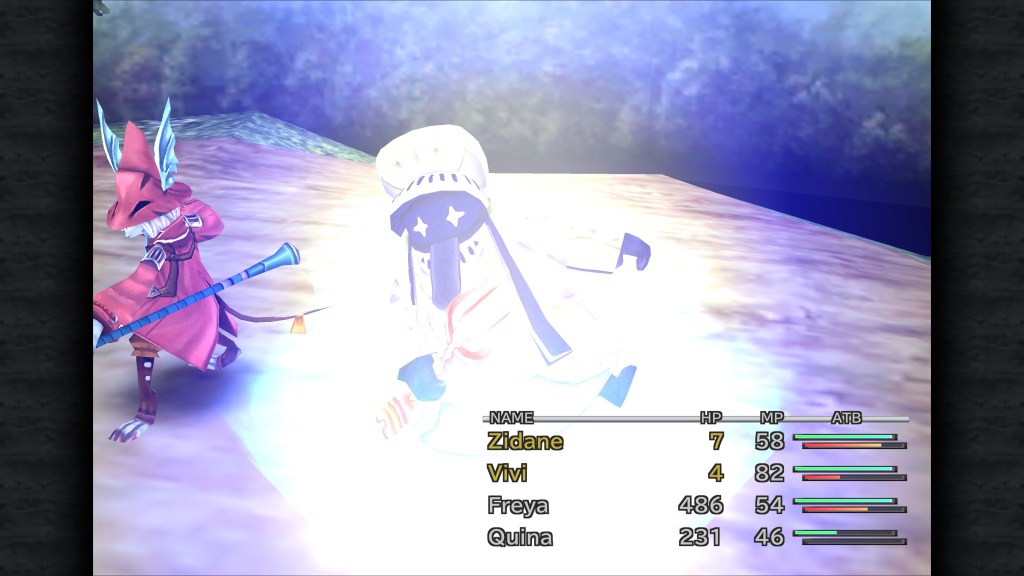
Not my favorite change. X ditches this method of limits and carries over a style that’s pretty similar to what VII uses instead. The form changes that come with trance look cool but it’s not enough to make up for how you can’t really plan on when you utilize these maneuvers.
In storyline it makes sense, the trance form is supposed to represent a surge of emotion so carrying over intense emotions between battle seems silly, but in gameplay I just don’t find it satisfying.
Obvious callouts
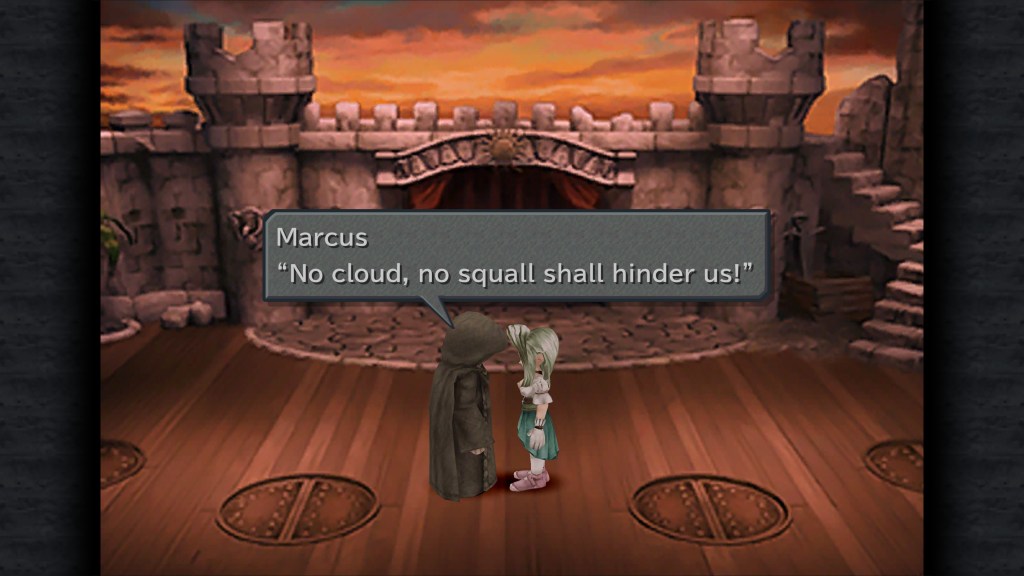
I didn’t list every single reference to old Final Fantasy games above because a lot of them are just names you find in item descriptions. But for VII (and VIII for one of these), it feels like they didn’t want to be as subtle with the callbacks and they just put some stuff out there. You have the “No cloud, no Squall” line during the ending as well as a reference to a spikey headed swordsman while browsing Lindblum’s weapon shop.
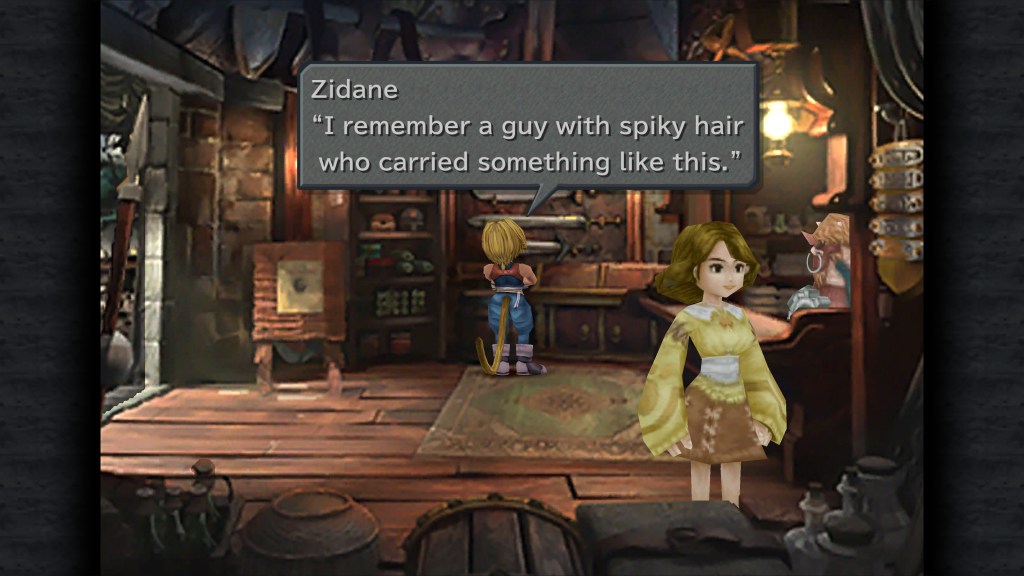
The theme for Junon Harbor also blatantly plays during an A.T.E.
IX also re-uses VII’s lifestream mechanic. The way life works on Gaia is that when a person dies they return back to the planet and then eventually come back as something else. It’s a cycle of life with human souls being a sort of energy source for the planet.
Garland’s plan is to tap into this system and claim the souls for himself. Sephiroth wanted to do the exact same thing, except his plan was to be all alone on the planet that he felt was rightfully his. Garland wants to move the people of Terra over to GAIA. So different goals using the same methods.
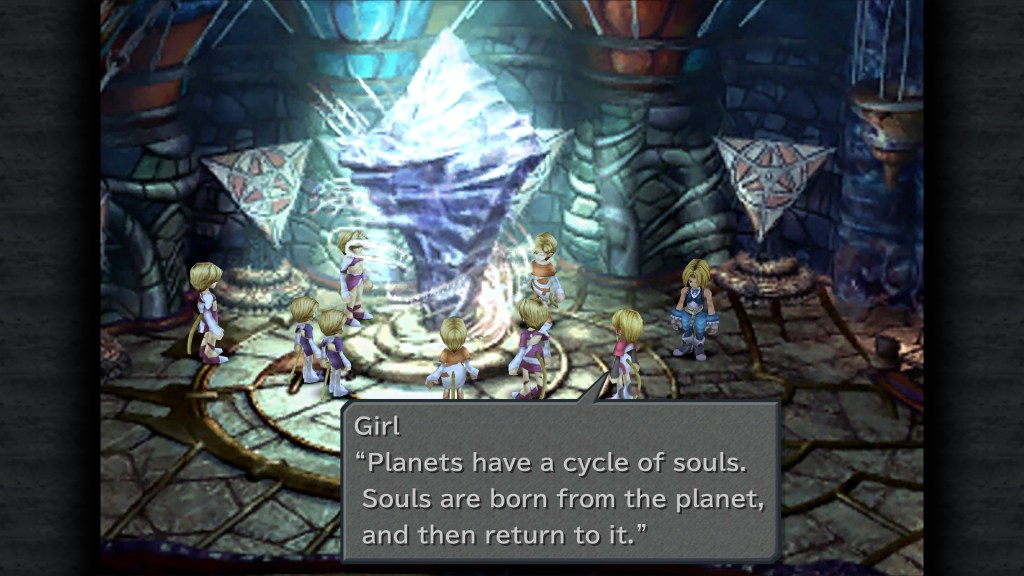
Disc 2 is kinda like VII’s Disc 1
A lot of the early plot of FFVII involves the main party chasing around (what they think is) Sephiroth around the world, trying to figure out what exactly he is up to. Your next destination will often be based on rumor or hearsay on where someone heard he was going. This approach of following Sephiroth around allows the party to be introduced to the world at large.
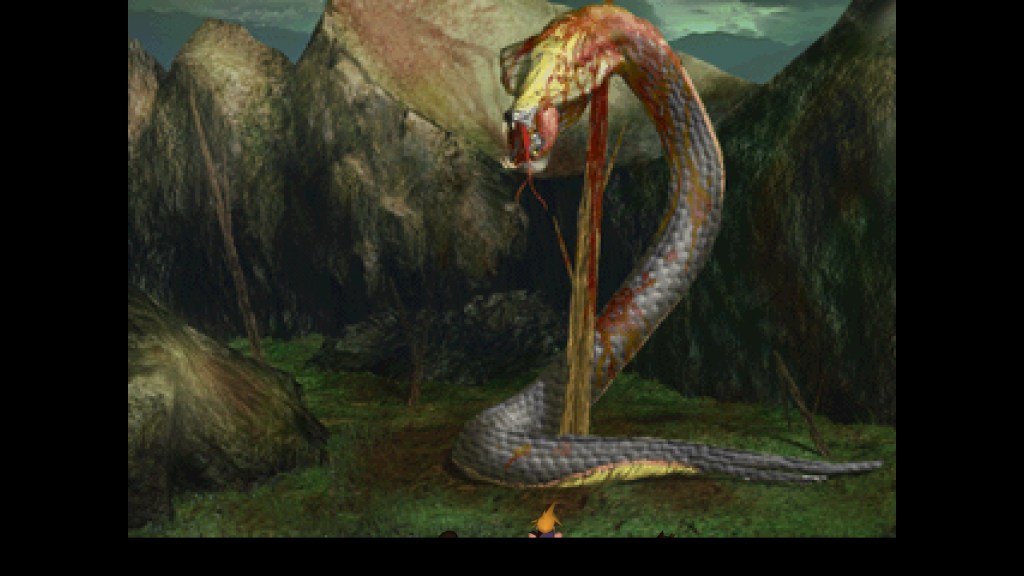
In disc 2 of IX, the party decides that Kuja is the guy behind all of Brahne’s evil deeds. So they follow rumors of a silver haired man across the world in order to find him. Their journey to new continents and places like the black mage village are centered around tracking this guy down and discovering what he’s got planned.
Final Fantasy VIII
Love story
Love existed in Final Fantasy before VIII, but the romance between Squall and Rinoa was unquestionably the focus of that game’s tale. IX also has a love story to tell, with the big moment of the ending centering around the feelings of the two leads.
It’s not the centerpiece of the game’s story and I don’t think investment in Dagger and Zidane’s happiness is what will determine whether the player likes FFIX or not, but it’s still a far bigger part of IX than it is in 7 other Final Fantasy titles at least!
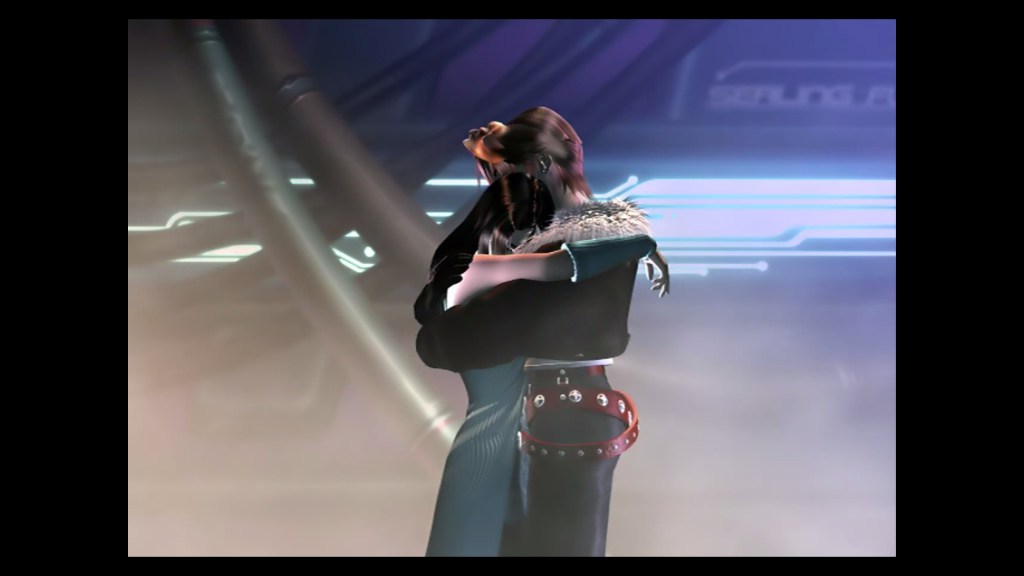
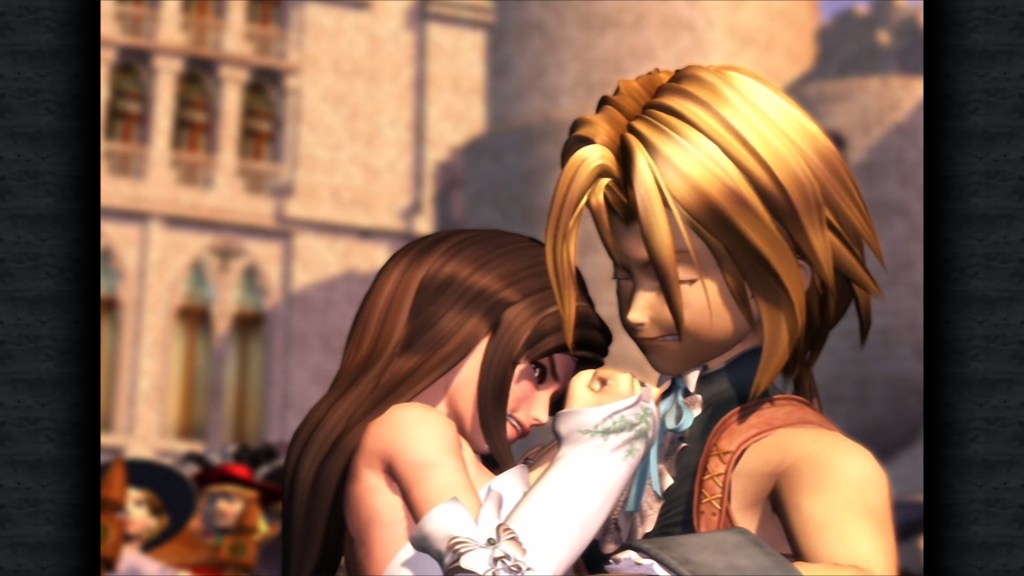
The falling-in-love portion of the story is a little flipped from what it was in VIII. In that game, Rinoa was the primary aggressor. It was clear she caught feelings first. The ‘relationship’ really started to get going once Squall matured a little bit as a character and realized how he felt.
In this title, Zidane pretty immediately falls for Dagger. A lot of it is just his flirty character, but it becomes pretty clear that what he feels for Dagger goes a little deeper than a one-night-stand sort of thing.
The relationship drama more centers around Dagger. Her arc in the game involves changing from a sheltered princess whose familiarity with the world comes from books into a worldly woman with a lot of experience, someone who is fit to lead people.
As she learns more about the world and her life, her attitudes toward Zidane shift and you sort of see her emotions flare up. It eventually turns into one of those things where ‘everyone can see it BUT the person impacted’ with characters like Eiko and Steiner making little comments about Zidane and Dagger’s relationship.
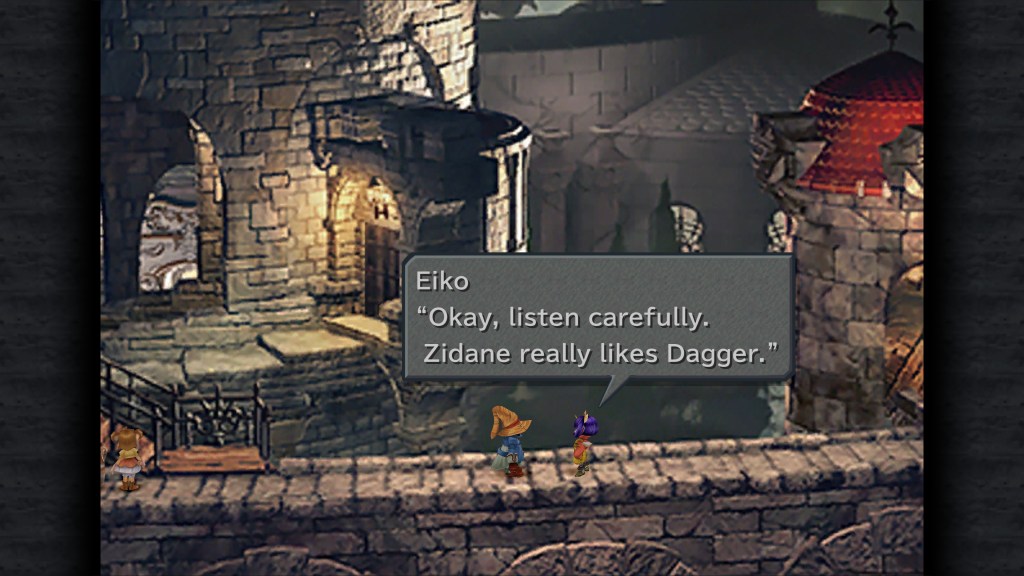
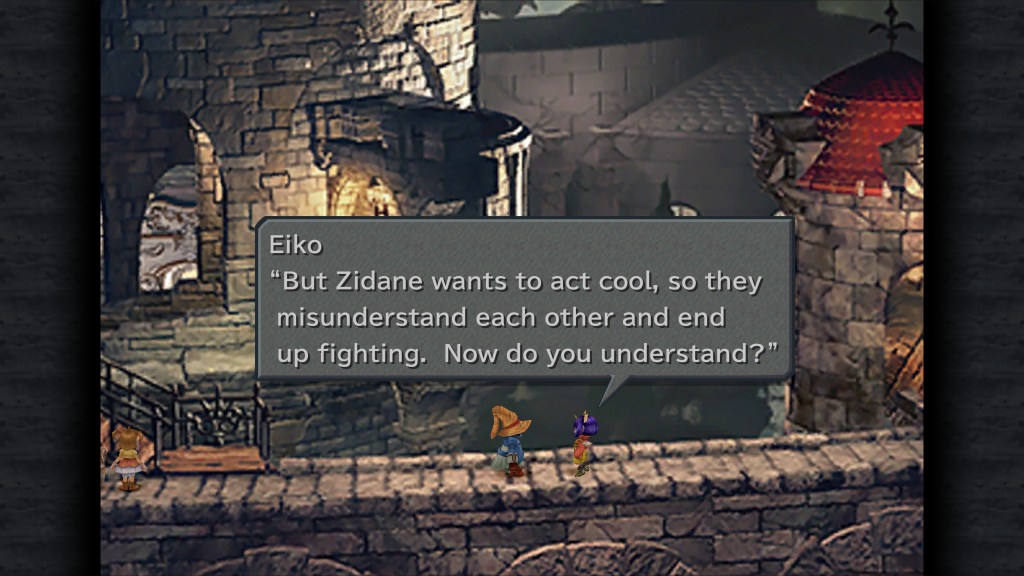
Hell, just like Squall and Rinoa have “Eyes on Me,” Zidane and Dagger have their own song in “Melodies of Life.” During the course of the adventure, Zidane will very frequently hear Dagger singing a song, though it’s just instrumental for the player.
This is brought up over and over again and then finally in the credits they put lyrics in. It’s a SLIGHTLY more subtle way of doing this sort of thing, remember VIII literally had scenes talking about how the song was made, and I feel they pull it off well. I love the ‘Hollywood blockbuster ballad’ era of Final Fantasy.
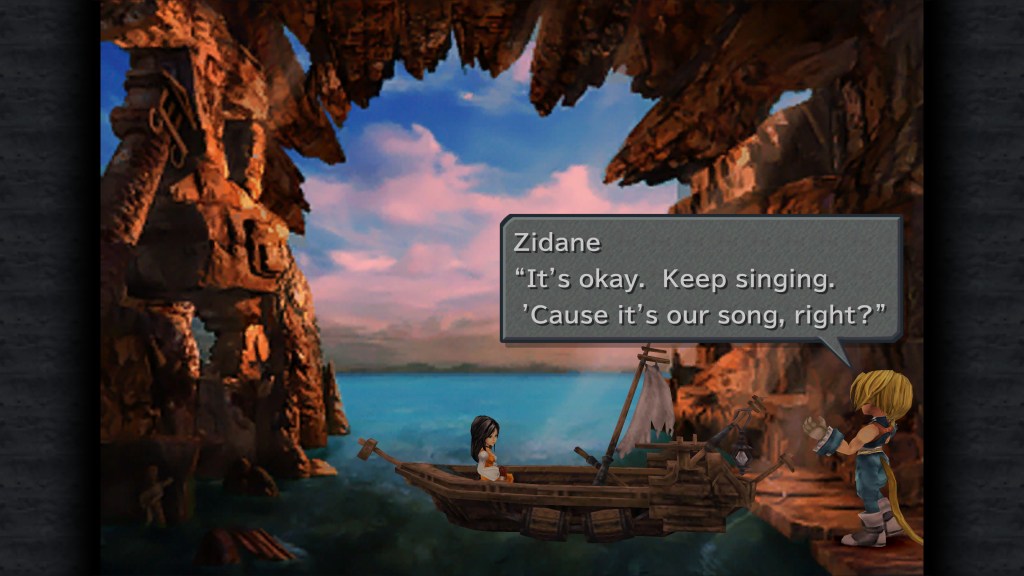
It may not have been the main goal of IX to make you want to see these two characters get together, but I think this title does a damn good job of getting the player invested in this romance.
There’s a scene at the end of the game where Zidane, who everyone thinks is dead, returns for Dagger and it’s one of the single most satisfying moments of any ending of any game I’ve ever played. I wrote a few paragraphs above about how the third and fourth discs of FFIX don’t really do it for me and yet this part of the ending gets me choked up every time I see it. They nailed it.
Given how I feel about Yuna and Tidus in the following game, I think VIII set a good blueprint for the franchise for the next couple of games when it comes to your leads hooking up.
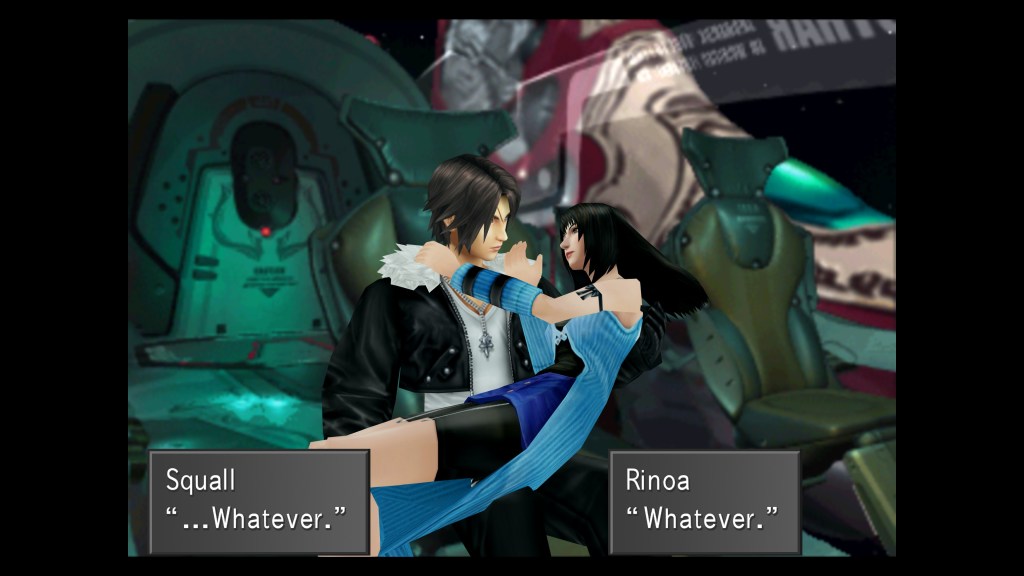
Weird end of game stuff
Final Fantasy VIII was a four disc game that might as well have been a three disc game because that fourth disc is mostly a single dungeon with most big cities and locations in the overworld closed off due to a mechanic called time compression.
In IX, parts of the overworld are inaccessible due to the Iifa tree’s roots spreading and sending mist all over the world. It’s nowhere near as prohibitive as the final disc of VIII’s adventure, but it still doesn’t feel as wide open as VII’s third disc where you could just go anywhere you wanted.
I think there was a decision to make the end of these games be more open going forward after this. For instance, Final Fantasy X and XIII are both fairly linear until the very end when the player can finally go explore and do a bunch of side content.
In Conclusion
Final Fantasy IX has an interesting history. For half of the game’s life, it feels like it was overlooked and underappreciated. It came out as a Playstation game at just about the worst time for a Playstation game to come out. In recent years, it has found a bit of redemption, with a sizable portion of people claiming that it’s the actual best entry in the franchise.
There’s even an argument to be made that it’s the second most popular mainline Final Fantasy title behind VII. In the year 2000, this would have seemed absolutely impossible. But here we are.

I’m happy that the game got a second chance, redemption doesn’t come for every forgotten gem. However, I do think the praise is overblown. While I love a lot of what IX does with its cast of characters, the overarching narrative turns into a bit of a mess after the second disc and the combat is probably the least interesting since the NES-era. It’s slow, plodding and at times, boring.
As a game that serves as a farewell to an era of Final Fantasy, I think it serves its purpose very well. It’s a return to more traditional fantasy roots after the more futuristic/cyberpunk style fantasy of the last two games. However, I think some of the shortcomings on the gameplay side prevent it from being as memorable or as important as VII and VIII were.
I look forward to seeing what the remake for this will look like.
My score: 4/5
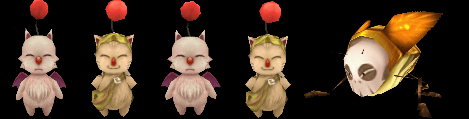
Game rankings to this point:
1: Tactics
2: VII
3: V
4: VI
5: VIII
6: IV
7: IX
8: III
9: I
10: II
11: Mystic Quest
Up next
 Vidya Thoughts
Leave a comment