
- Background info
- Graphics, romance and general plot focused discussion
- Gameplay and Triple Triad focused discussion
- Notable characters
- It started here
- In conclusion
Moving up in the world
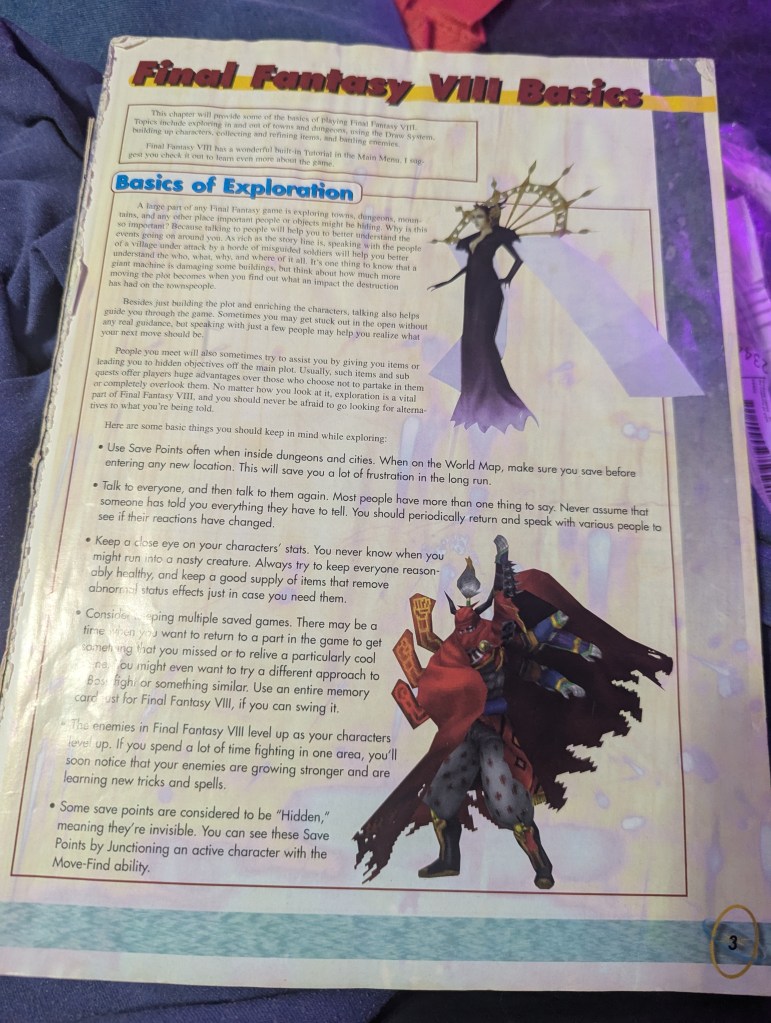
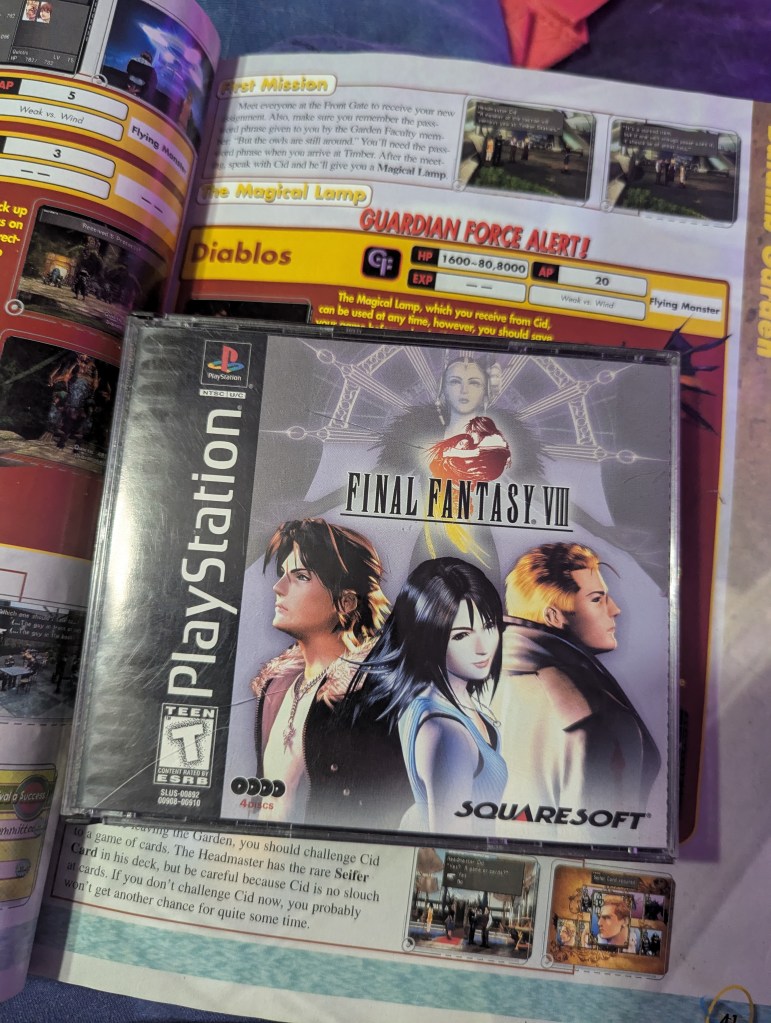
Final Fantasy VIII was the first Final Fantasy game that I could call my own. I got it in the year 2000, mere months before the release of Final Fantasy IX. It’ll always feel like a new and mysterious game to me despite being old enough to drink. There was something to discover around every corner, so a strategy guide was needed to see what all was out there.
And since my purchase of Final Fantasy VIII, alongside my shiny new birthday Playstation – a console that was going to be obsolete in that very same year I got it in – I haven’t missed an opening month for a mainline release. Typically I’ve been there day one, for better or worse.
Over the years, I’ve had to get rid of several gaming things I’ve owned. And yet I still own my original copy of Final Fantasy VIII and I also still have that strategy guide. It’s torn to pieces, it looks like an ancient tome from a time long before the year 2000, but I still have it.
So this must be a good game, right?
Moving on, moving up
For everyone else, Final Fantasy VIII came out in 1999 for the Sony Playstation and 2000 for Windows. No console drama this go around, it was always gonna be on Sony’s 32 bit device. And just like with VII, North America, Japan and PAL territories all received the game in the same calendar year. The days of Final Fantasy V-like situations were gone for this franchise.
And with the expanded focus on a uniform release year came a new approach to localization. Final Fantasy VII had an infamously lousy translation. Allegedly, the head translator only had a month to work on it. Tactics had translation issues as well, which led to a full re-localization a decade later.
With VIII, this changed dramatically. Translators would work on the text while editors went over each line and made sure the dialogue and names were consistent. VIII is where spells like “Fire 2” got renamed into Fira, which would be the style for the series from this point onward.
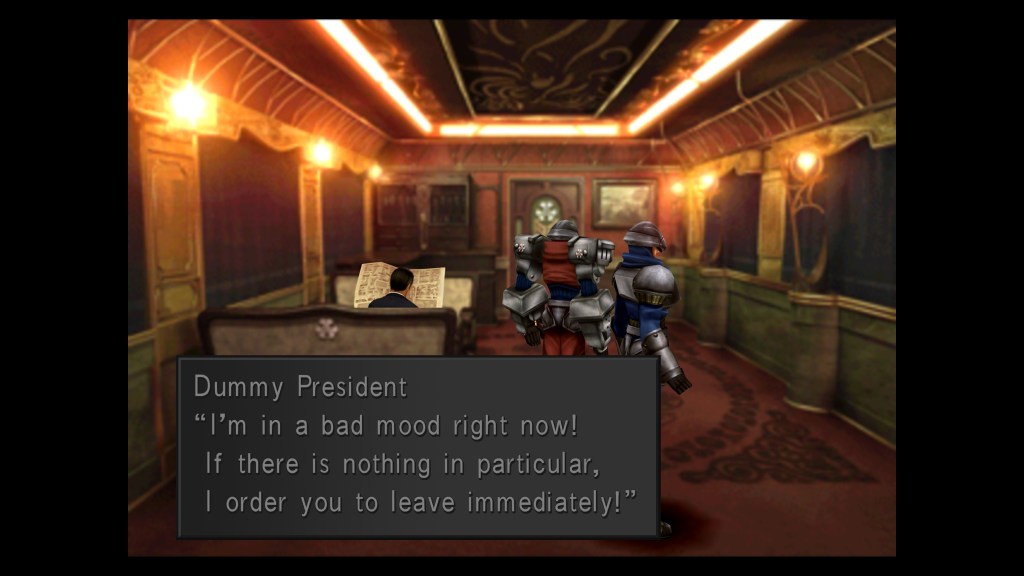
Though communication with the development team was still kind of rocky. Alexander O. Smith, one of the localizers for the game, said this era of translation still had some chaos.
“In my first two years at Square, much of my time was spent creating some semblance of order in the chaos and making sure development knew what we needed,” O.. Smith said. “Up until that point it was a free-for-all. We would get a copy of the game, and we would say, ‘Well, what about files?’ And they would say, ‘Oh, I don’t think you need those.’ So we all bought Game Sharks. Literally on Final Fantasy VIII we were playing our own game and hacking it with Game Sharks for the translation. It was very sad.”

Next gen? Same gen.
Having a story conveyed in English that wouldn’t have your middle school teacher blush was important because going alongside this narrative were enhanced graphics. While Final Fantasy VII was a looker for the time of its release, VIII took things to a whole different level.
Gone were the chibi overworld designs, characters generally look the same in and out of combat. Gone were the really blocky looking Popeye arms of old. Realistic proportions and character movements were now in vogue. VIII looked like a next gen game compared to VII, so the localization needed to match that. You don’t want a Ferrari in a trailer park situation.
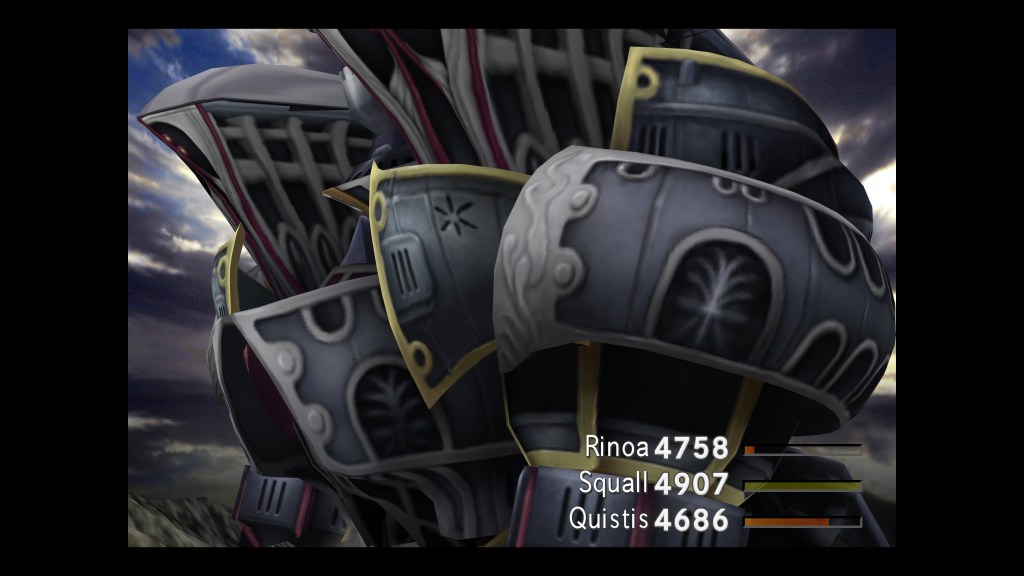
I know I went into crazy detail about how impressive FFVII was graphically for the time, so I won’t go into it as much here, but just know this game is a whole different beast.
FFVII had a couple of scenes that tinkered with CG scenes playing while the player had control of the characters. The one that pops immediately to mind is an elevator in Junon. You press a button and all of a sudden a little scene plays that shows an elevator move – it’s clearly a video – but you can move Cloud and co. around naturally.
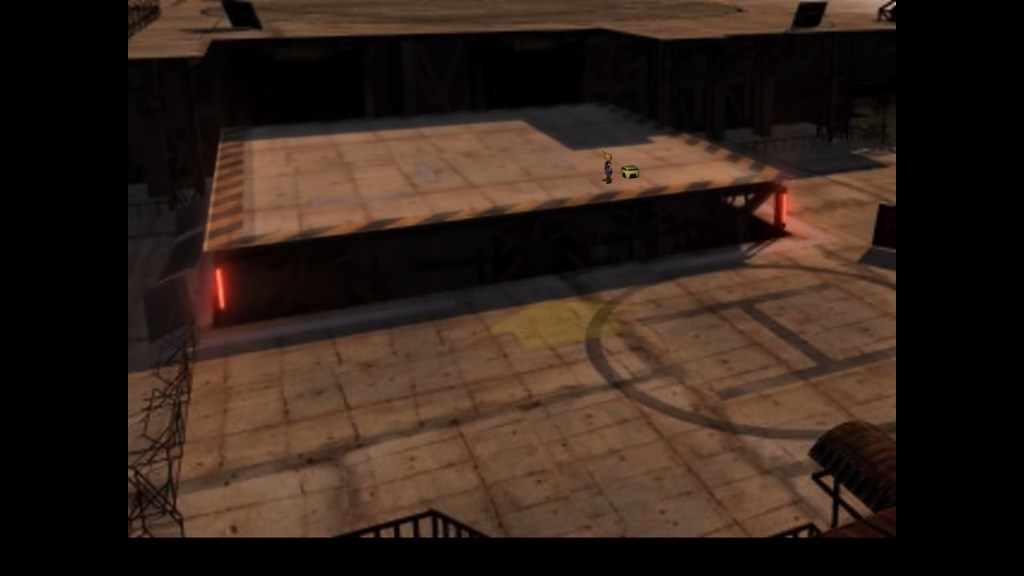
I’d like to think this was a little bit of tech experimentation. Square was trying to figure out if something like this would be feasible on Playstation hardware. Well, the experiment must have been a success because it’s all over the place in FFVIII. You will constantly see bits of the environment move around your character. It helps make the gorgeous cutscenes feel less separated from everything else happening.
The most prominent example of this is during the second of the game’s four discs. There is a long senquence that starts out with your lead character, Squall Leonhart, engaged in a fight with a random NPC soldier. As you two are fighting, the background shifts to a gigantic skirmish between your allies and enemies. After the fight, Squall and the leading lady of the game, Rinoa Heartilly, land in the middle of the battle and have to run through these CG soldiers fighting.
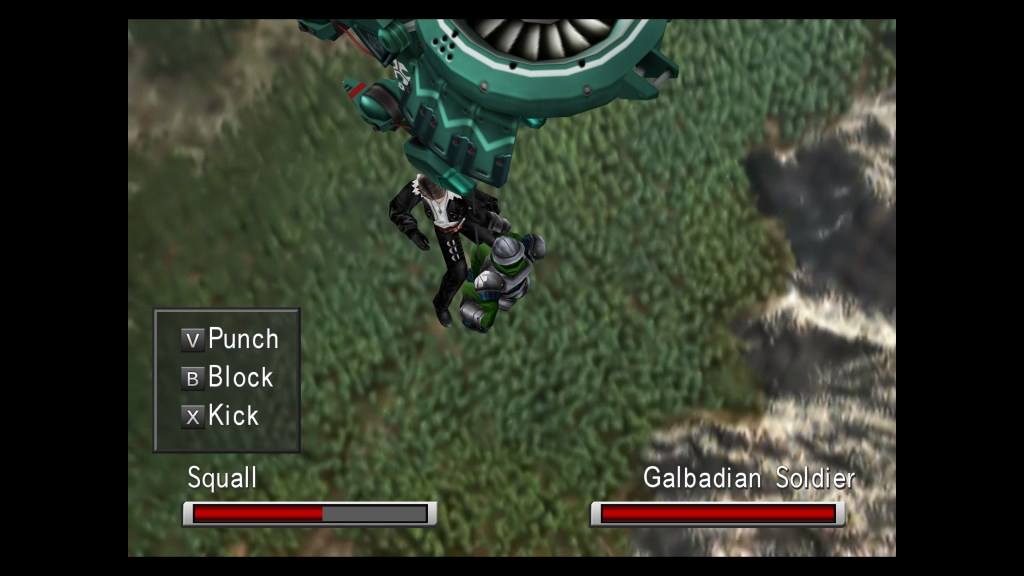
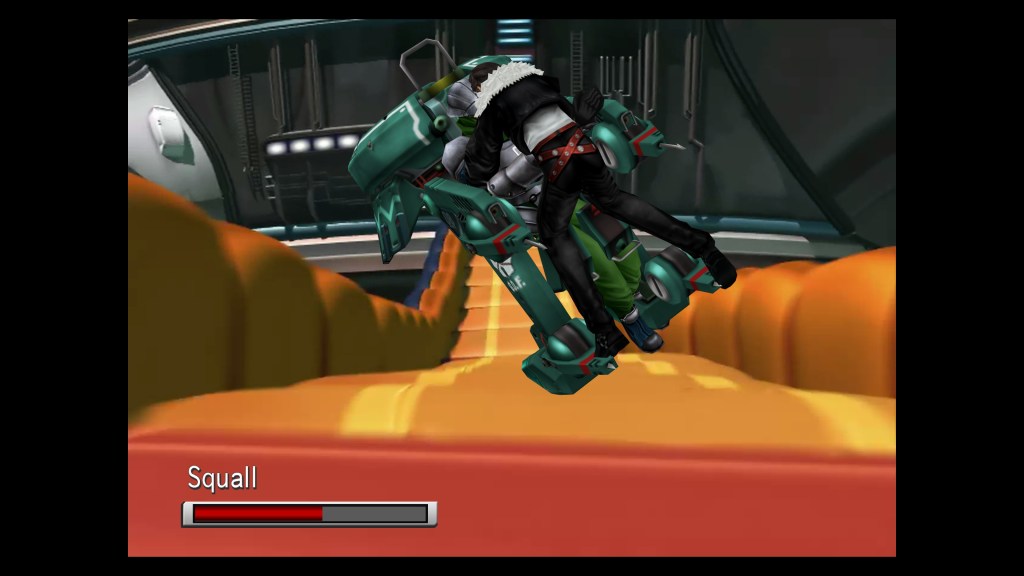
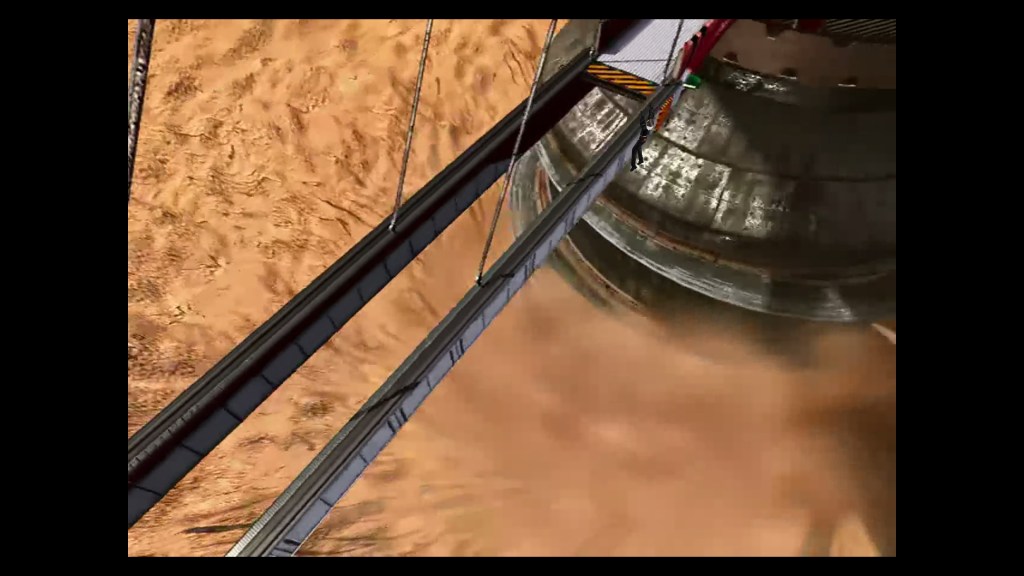

Really you’re just running in one direction, but it’s incredibly immersive and it’s amazing that this sort of thing happened on a PlayStation. This is definitely best expressed in video form, so here is footage captured from Youtube user MikeBettencourt from the PS1 version of the game. Source video is here.
Cheating the system
Another bit of technical wizardy I want to point out is something that gets VIII routinely mocked today. In the remaster, the backgrounds don’t get the same ‘punch-up’ that the player models do. They were created for SD television sets that display in an extremely low resolution.

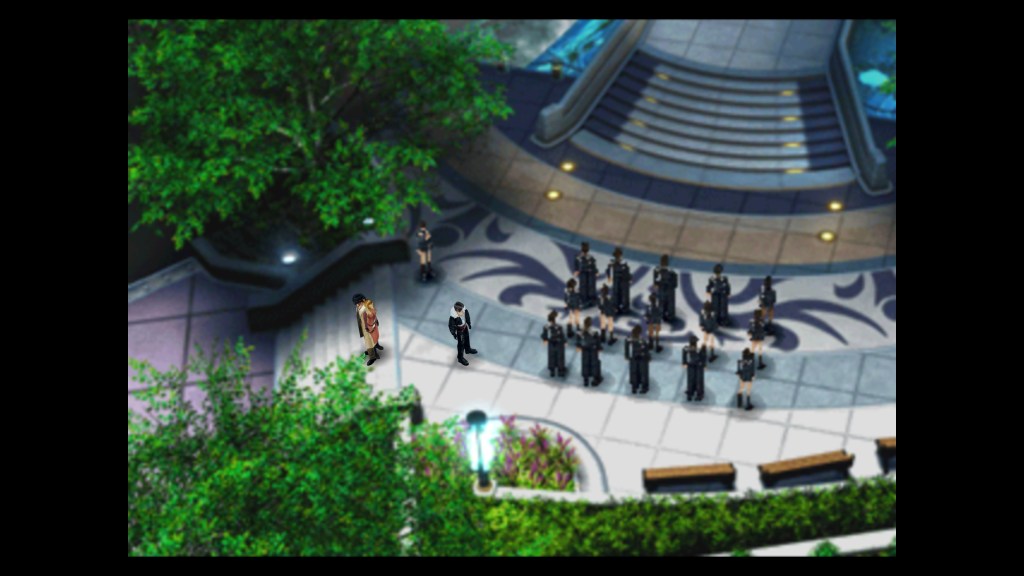
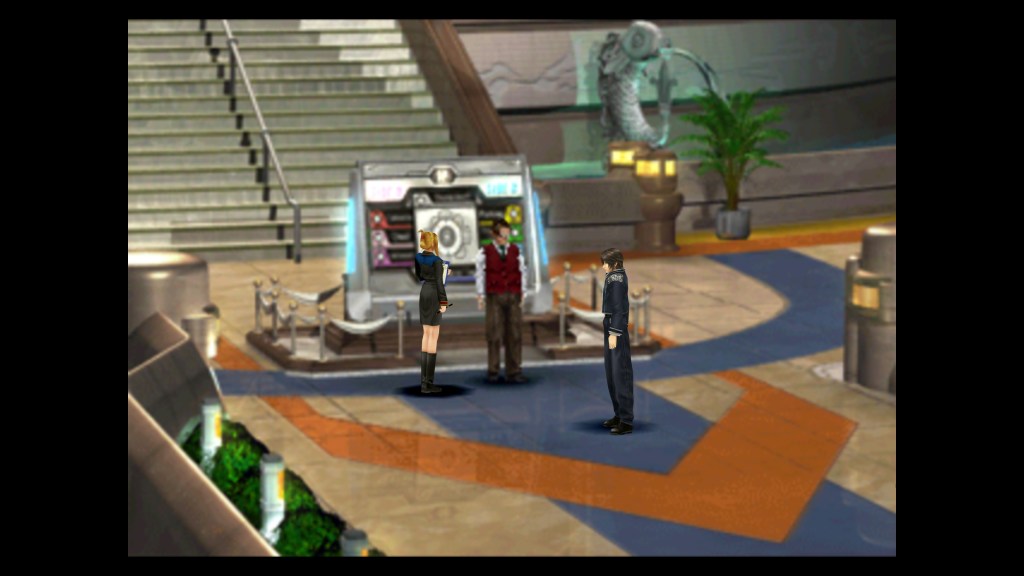
A side effect of this is that certain elements of the background look very strange. In order to cheat hardware limitations, in scenes that would require lots of NPCs, Final Fantasy VIII would place those characters in the background. This way you could have a horde of characters on screen at one time without actually having them mess with the game’s performance.
When put on modern hardware and using modern screens, these result in really awful looking characters. The most prominent example of this is this game’s take on Cid being placed in the background of Balamb Garden. It’s a weird usage of this technique because there are like three characters on screen, but I’m sure there was a reason for it.
I don’t think VIII should be punished because the future didn’t keep in line with its vision though. I find this to be a neat little bit of art through adversity and back in the day, having a horde of NPCs on screen helped create immersion in what’s going on.
I mean, it’s weird to be ‘at war’ and only see like three or four guys on screen while the war is happening, ya know?

Poetry in motion
The graphics manage to find other ways to suck you in. In the Final Fantasy VII writeup, I mentioned how Aerith’s death hit harder because the characters on screen had more means to convey emotion. They were little chibi guys with blocky arms, but they were far more expressive than the sprites we were used to up until now.
Well, VIII no longer uses those little models and instead focuses on characters with realistic proportions in all aspects of gameplay.
“In VII, the characters in the field were deformed. But we were wondering whether we should use deformed characters. See, as the technique of FMVs improved, there could be better visual presentation,” FFVIII’s director Yoshinori Kitase said in an interview with Famitsu Weekly. “When there was deformed characters in the field but not in FMVs, there was a feeling of inconsistency. So this time, we wanted to make real-sized characters in FMV, field and battle.”
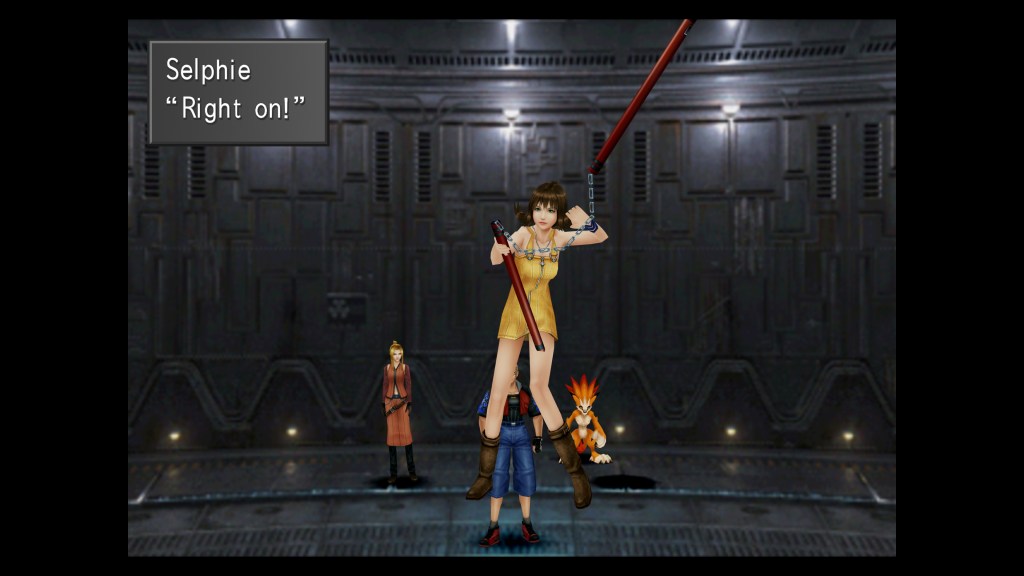
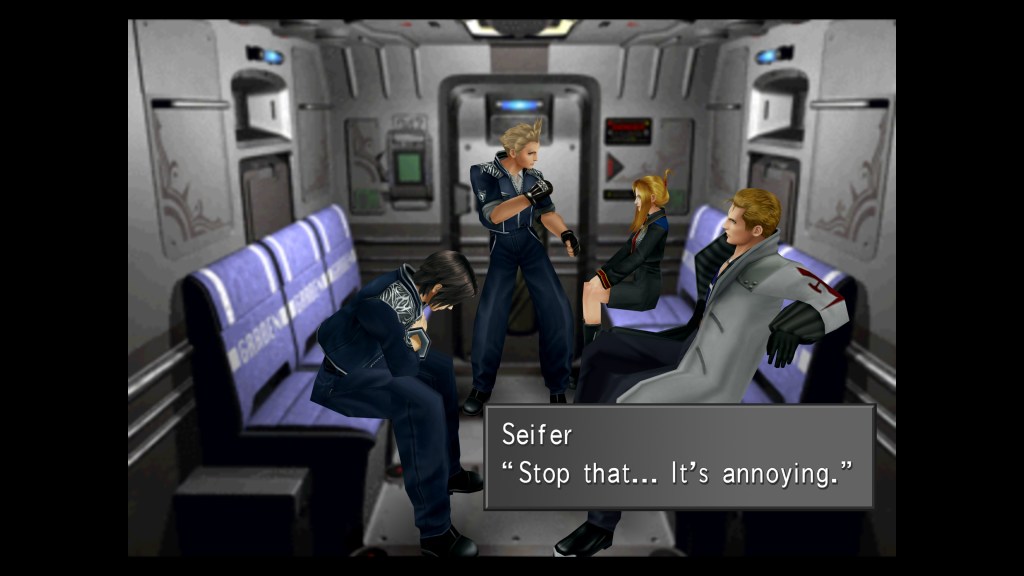
This leads to more personality shown through how these characters move. For instance, one of the main party members, Zell, will frequently start boxing at the air and jump around when he’s excited. Invariably, someone will insult him and he’ll put his head down immediately after and act dejected. It makes him look incredibly dorky, which is an important aspect of his character. This dude is a dweeb and this slight little touch is a way to convey this.
Another example of this is shown at the end of the game’s first disc when another cast member, Irvine, is tasked with assassinating the main villain of the game (up to this point) Sorceress Edea. Irvine crouches into a corner and starts shuddering. He pretty clearly conveys that he is nervous and uneasy. A cutscene from VII could have shown this off, but the standard of VII’s overworld couldn’t have conveyed this. Blocky Irvine would have just shrugged his shoulders and said “I’m scared” or something like that.
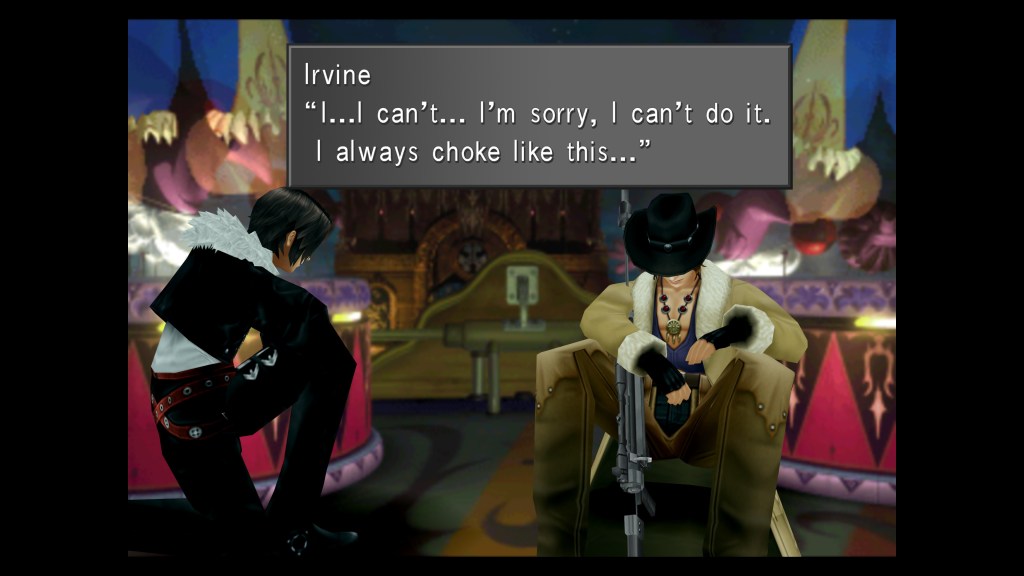
Most of these things are little touches, but these little touches go a long way to making the characters pop off the screen. During a gigantic plot reveal in the second disc, Irvine tries to shoot some hoops. Despite the obvious questions this brings up (basketball exists in this world?), it just adds a little bit of personality to the scene. Often times when people are pouring out their hearts, they do little things unconsciously to take the pressure off of what they’re saying.
It reminds me of uncomfortable conversations I would have with my brother. I would insist we start playing a game and then mid-game I’d start speaking my mind. Having my hands on the controller and doing something, anything, else made it easier to speak.

While I do say most of these character movements are minor, I don’t mean to imply they all are. Final Fantasy VIII is a game that is focused on telling a love story. Through the span of this game’s adventure, the end goal is to make the player invested in seeing the two main characters, Squall and Rinoa, fall in love and be happy. You spend far more time with Squall than you do Rinoa and FFVIII also gives you a lot of his internal monologues to sort through. So by the time you finish the game, you have a pretty good idea of who Squall is.
Romances take two sides though. So what’s she thinking? This is where the character movements come in. I feel like Rinoa gets so many little unique animations that help make her feel alive. She does really exaggerated walks, she very matter-of-factly hands documents over and she stretches her legs out while feeling uncomfortable. They are real minor movements, but it makes Rinoa feel more ‘alive’ than any other party member you have. Even if you don’t know much about her character, you can guess basic things about her personality based on how she carries herself.
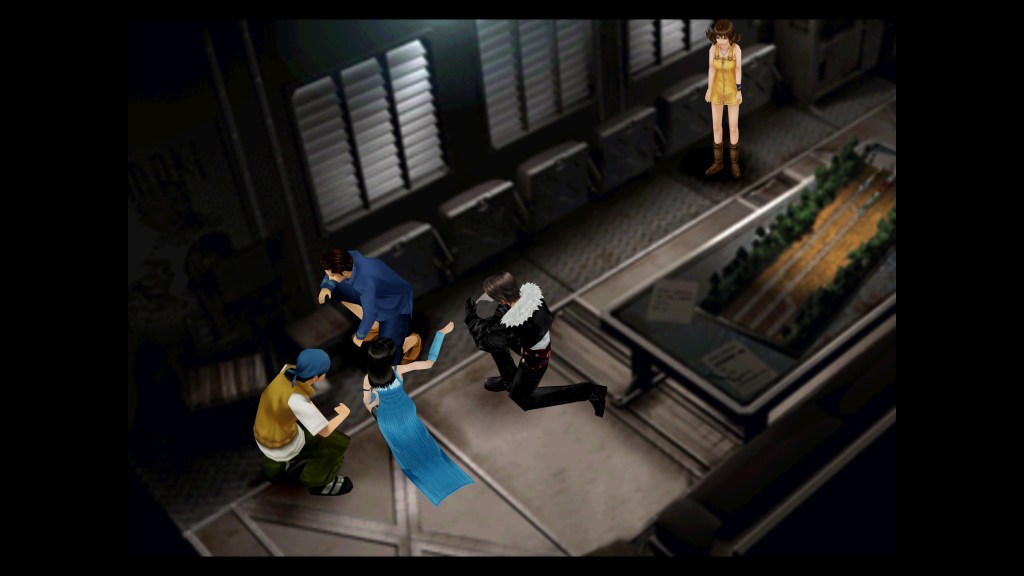
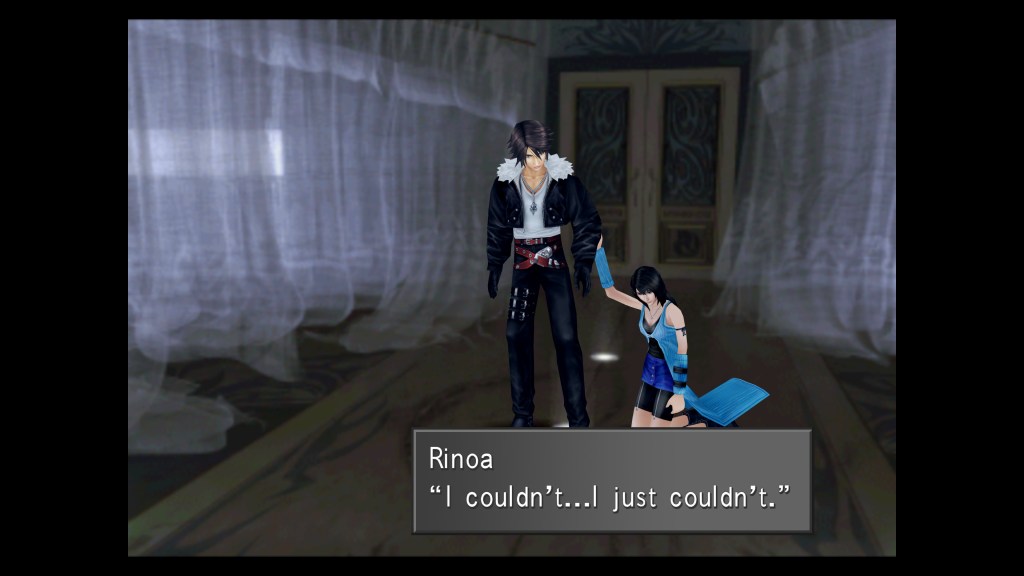
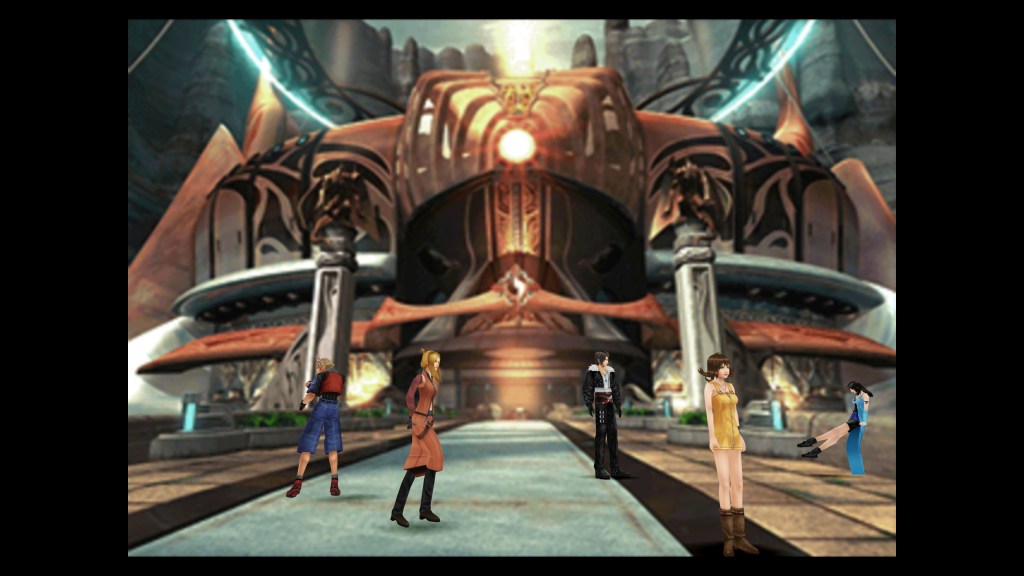
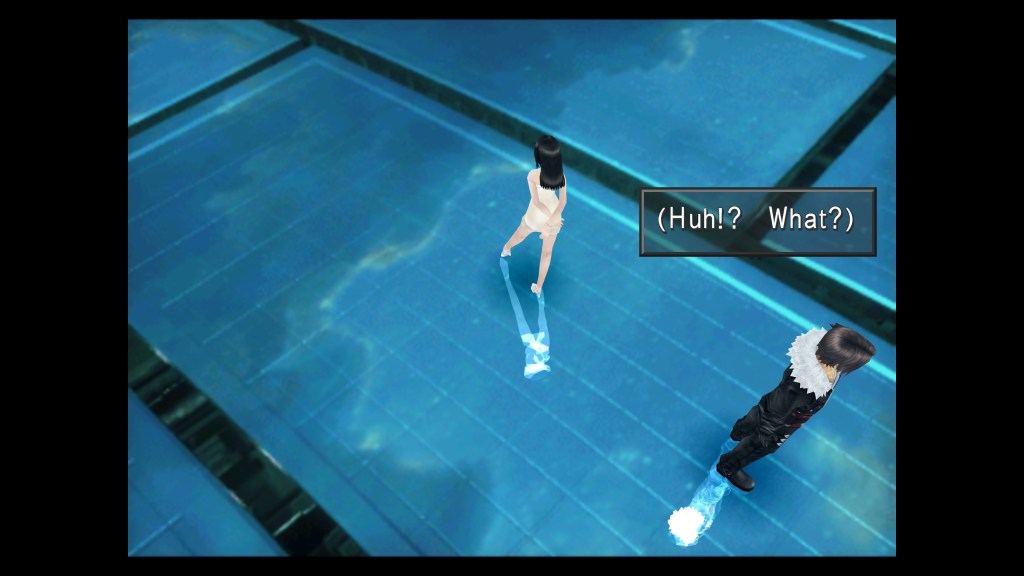
During Disc 3, something happens where Rinoa goes unconscious for a while. It’s a memorable part of the game that is crucial to the romance story that Square is trying to tell. So when Squall is saying things about how he misses how full of life Rinoa was, the player might flash back to little things she does during her idle moments. She’s not just full of life because her gums were flapping, there’s more to it than that.
Darling, so share with me;
your love if you have enough
Let’s delve a little bit more into the love story aspect of this game. “Love” isn’t something that’s new to the franchise by any means. Characters were very clearly in love with Cloud Strife in Final Fantasy VII, there was something going on with Celes and Locke in VI and IV featured a married couple as part of the main crew. But these are all background things, none of this really mattered to the main narrative of the title.

In VIII, the most important thing about the game’s story is the relationship of the two leads. This is communicated in a number of ways, but most primarily is the game’s logo.
The Final Fantasy logo is often a subtle reminder of some of the more important elements of things from that game. For example, Final Fantasy VII’s logo heavily incorporates meteor, the prevailing threat to the world in that game. The next title in the franchise, Final Fantasy IX, uses a crystal because THE CRYSTALS ARE BACK. VIII’s logo is Squall and Rinoa embracing.
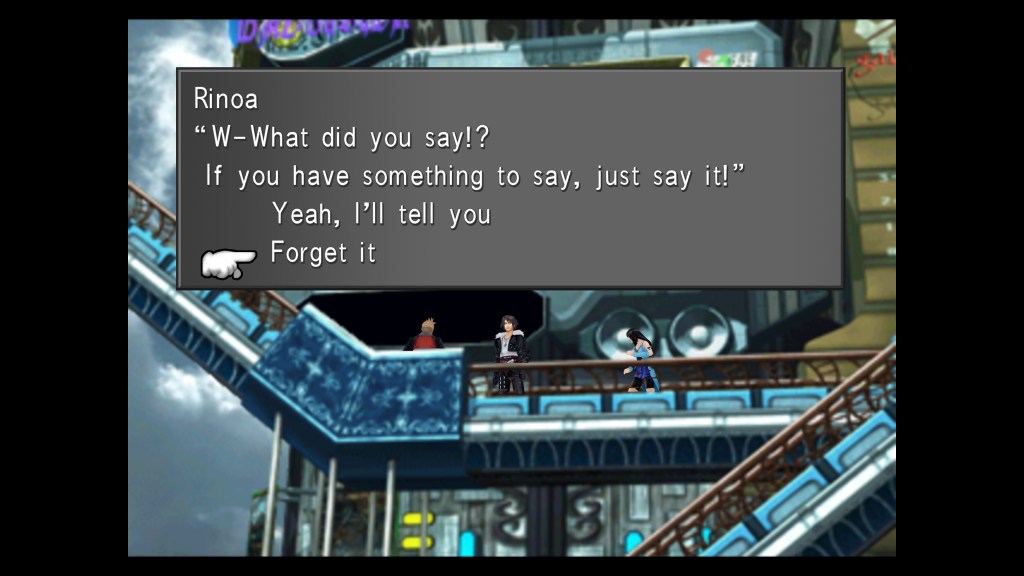
I think advertising also hit this point home. One of the first conversations I had about FFVIII was with a friend who had won a copy of the game from PSM, an unofficial Playstation magazine. He made it to a point in Disc 1 where Squall and Rinoa have a bit of a tiff and it makes Rinoa storm away from the main group. He actually started his entire game over because he was convinced that if the two didn’t end up together that it meant the game was unbeatable.
Insanity, absolutely, but even this young guy understood how important the relationship between the two leads was. Before the player even turns on their Playstation (or Playstation 5, it’s 2024 now), they have an understanding that this relationship is key to the plot of the game. Whether through osmosis or just using their eyes, it’s understood that there is something of a red string of fate binding these two together.

And I think they knock it out of the park. The relationship between Squall and Rinoa is really compelling and I think they do a great job of making you want to see these two characters get together. They accomplish this by making these characters act their age. Squall and Rinoa are teenagers and they damn sure act like it.
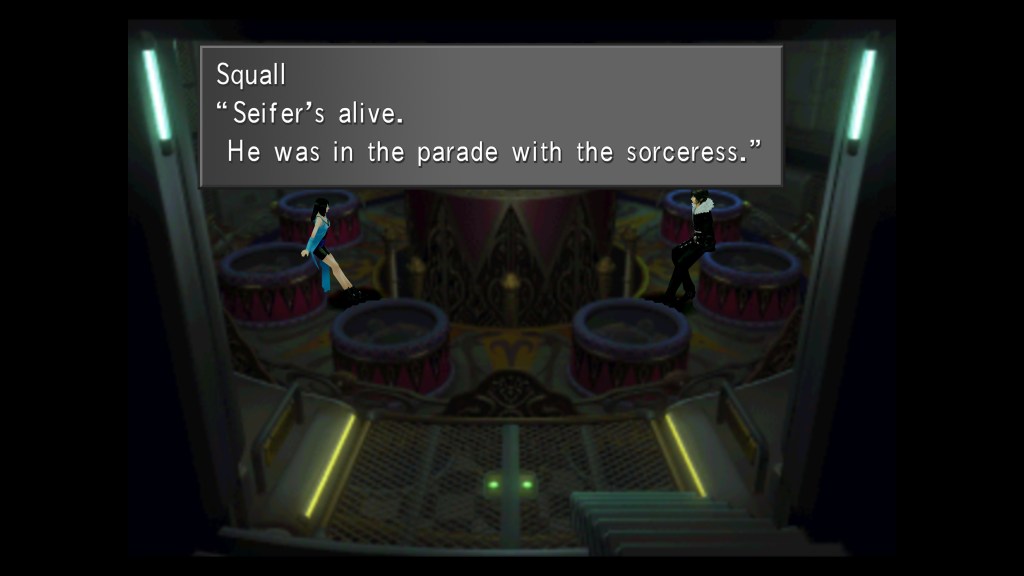
My favorite example of this is in Disc 1 where it’s thought that Squall’s main rival, Seifer, is dead. Everybody gives their thoughts on his passing and Squall suddenly lashes out and exclaims that he never wants to just be a memory. For the longest time, he doesn’t say a whole lot – when people talk about his character online, they typically just use his unofficial catchphrase ‘whatever’ – but here he bursts out and flees from everyone.
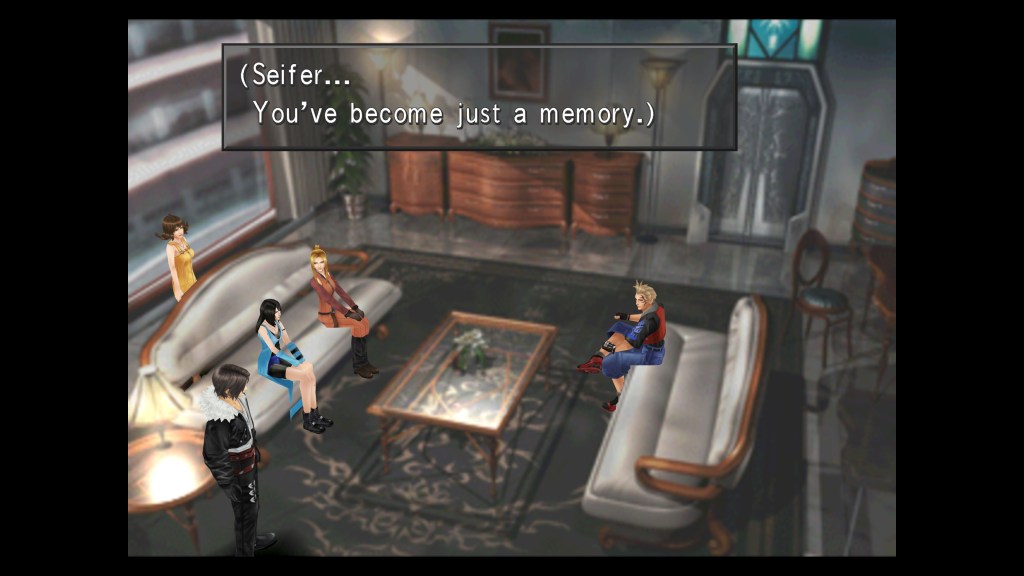
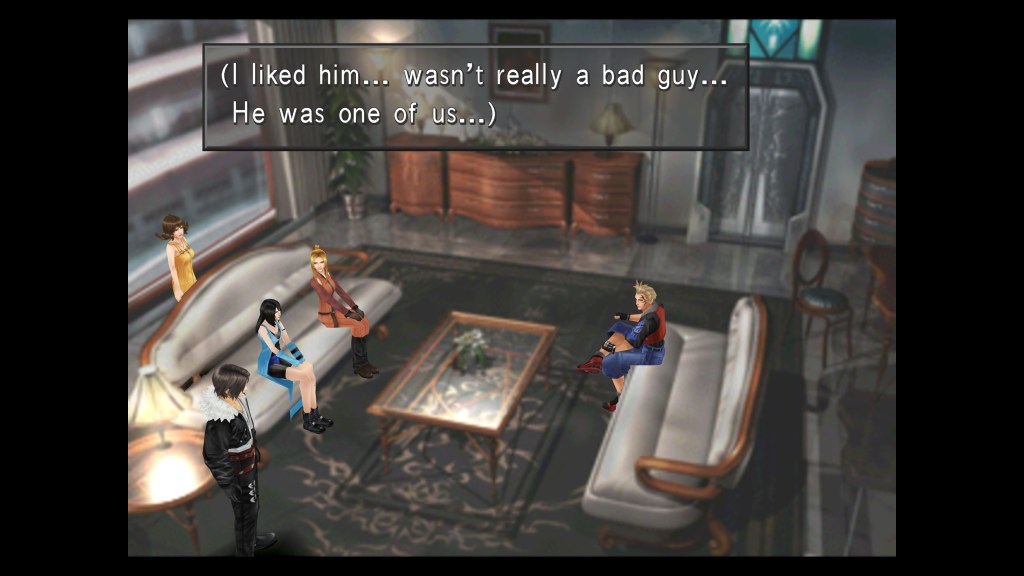


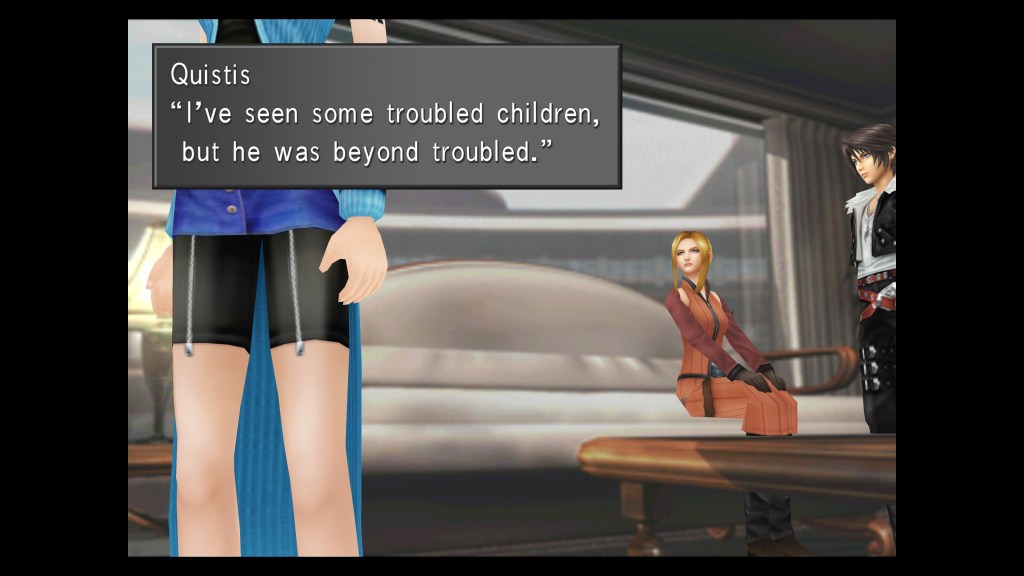
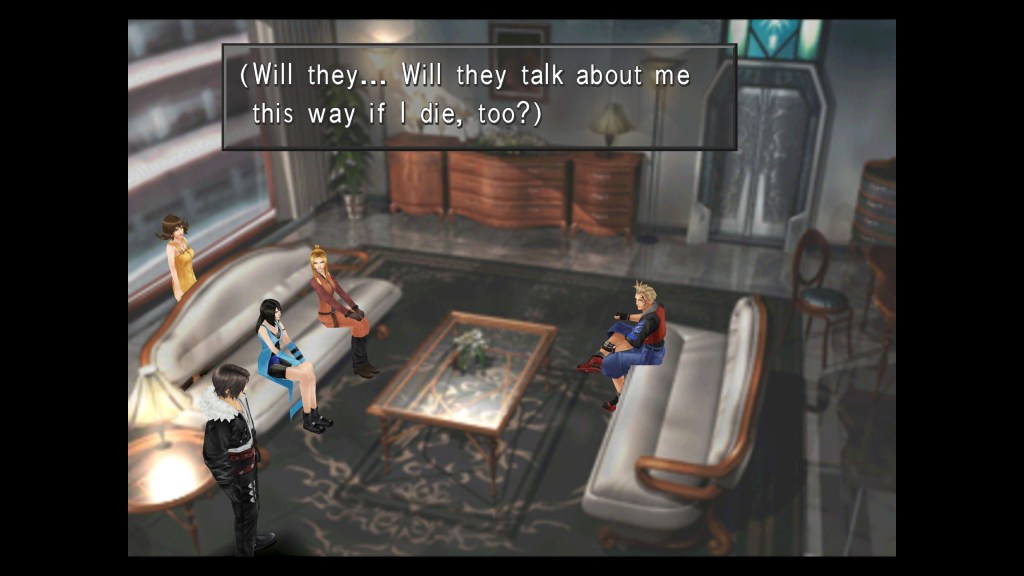
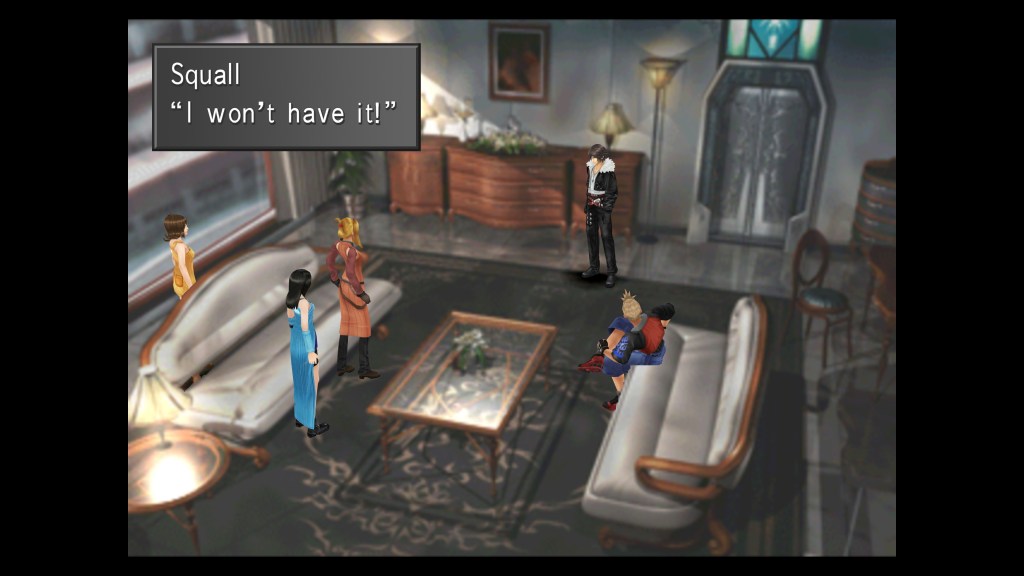
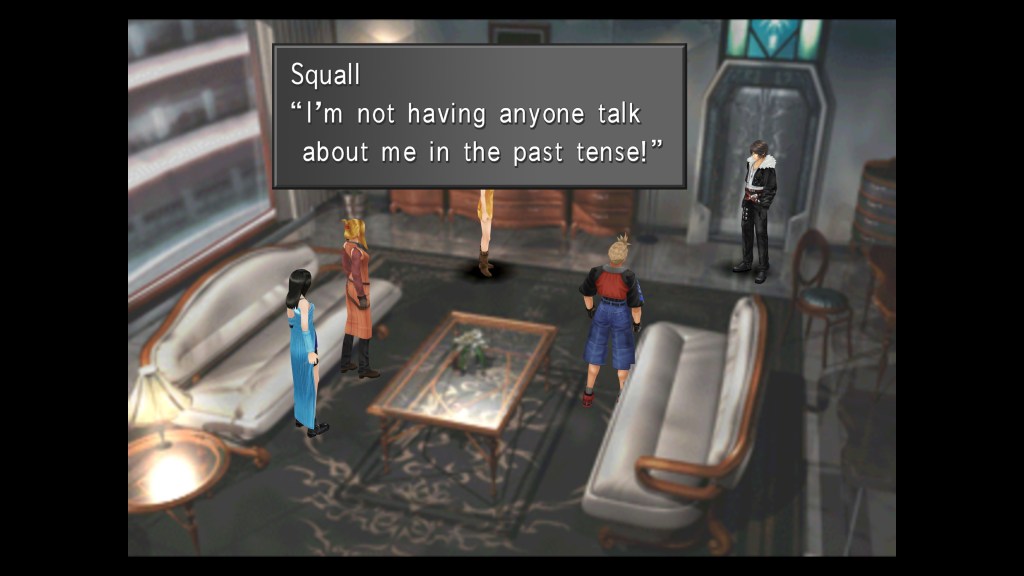
He tries to act so cool but really on the inside he has the same insecurities that everyone else does. I feel like this is a very ‘teenager’ type of personality, so it helps Squall feel very authentic. Adding to this are Squall’s inner thoughts. He will often say what he feels he is supposed to say, but you will get a thought in parenthesis that shows his true feelings on something.
This inner monologue stuff comes in handy when the relationship drama starts to boil to the surface. Your party members see there’s a spark between Rinoa and Squall well before the two of them notice it and are clearly trying to hook up the two. I totally knew highschool couples like this. Their friends could all see it, but the actual people? Nah, don’t get it.

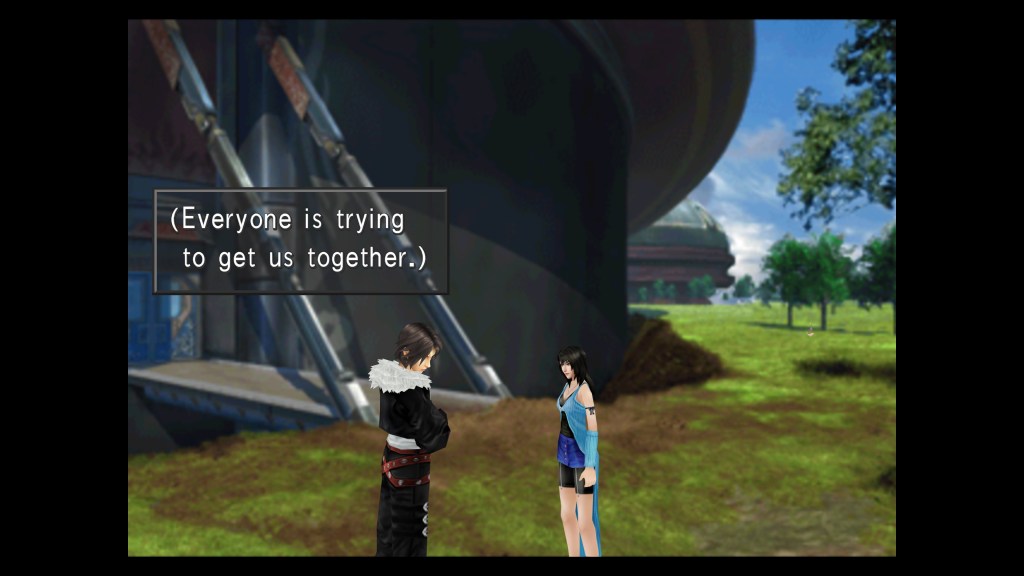
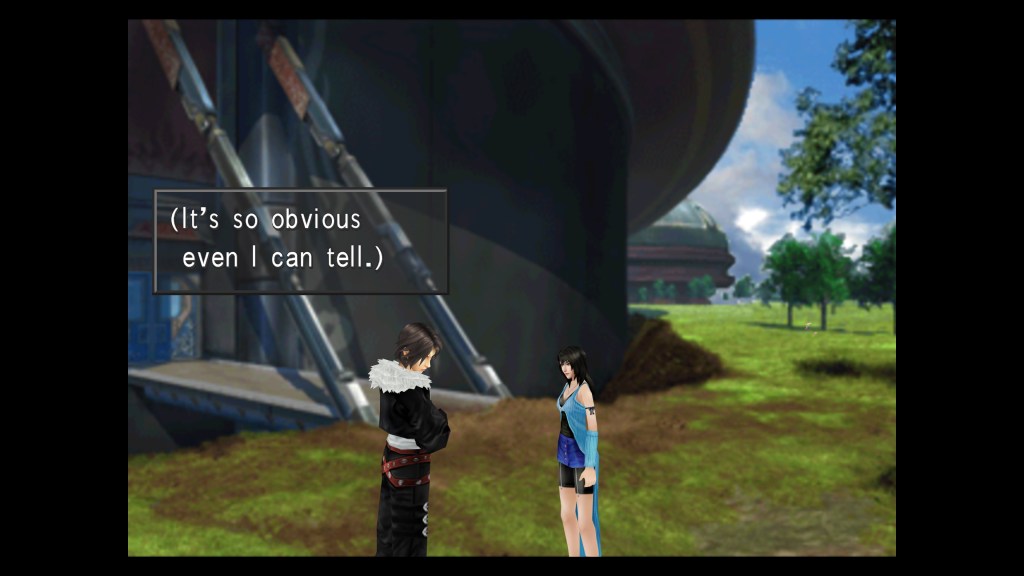
But when you’re a teen – and even as an adult I regret to inform you – emotions are complex beasts. You often can’t quite put your finger on how you feel or why you do. It seems clear to the player that Rinoa probably feels a little something because of things she says or does. There’s a little side plot about her being interested in a ring Squall carries, for instance, but she isn’t the main character here. We don’t see her inner thoughts.
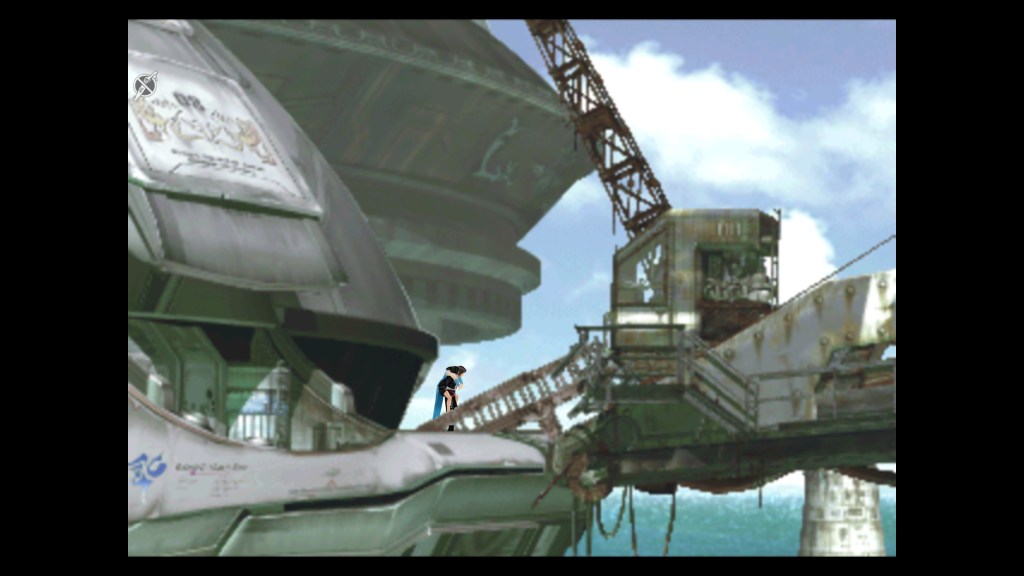
When Rinoa goes out of commission at the end of disc 2, Squall’s feelings come to an immediate forefront. It goes from a guy being confused about his state in the world to a guy who is singularly focused and borderline obsessed about the person he cares about most in the world. Some people might think he goes from 0-to-60 a little too quickly, but I find this depiction of teenage romantic feelings to be very realistic. You don’t love this person until you do, and then when you do it’s an obsession.
Introspection
And boy howdy is it an obsession for Squall. He becomes singularly focused on bringing Rinoa back and holding and talking to her again during this segment of the game. Everything takes a back seat to healing Rinoa. The best example of this is during the introduction of a main plot element called time compression.
I’ll talk about the ‘overarching’ plot soon enough, but for now just know that time compression is a really big deal. Squall is being told about the true main villain of the game and her motivations and instead of focusing on that, his mind is elsewhere.
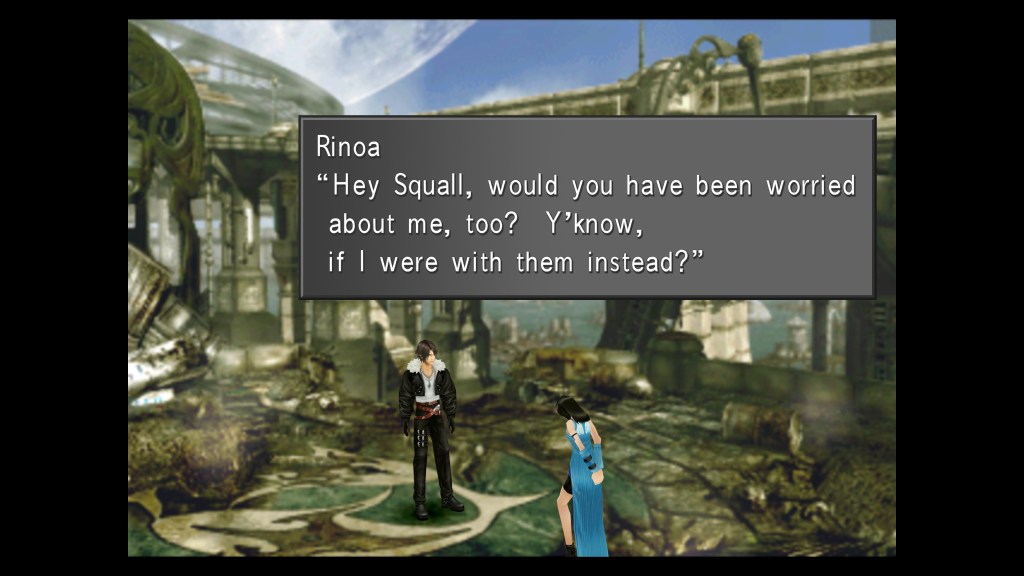
Going back to Final Fantasy VII, I’m sure Cloud had other things on his mind while Sephiroth was talking about reclaiming the planet for his mother, but it’s never brought up. The focus is solely on the main narrative.
In this sequence of events, the party is finding out about the game’s main antagonist for the first time.
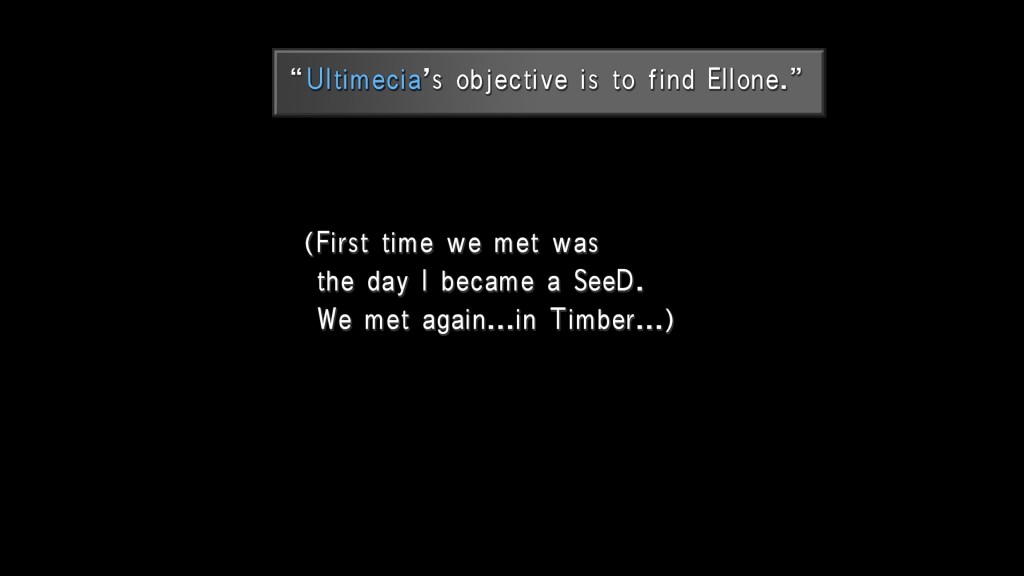
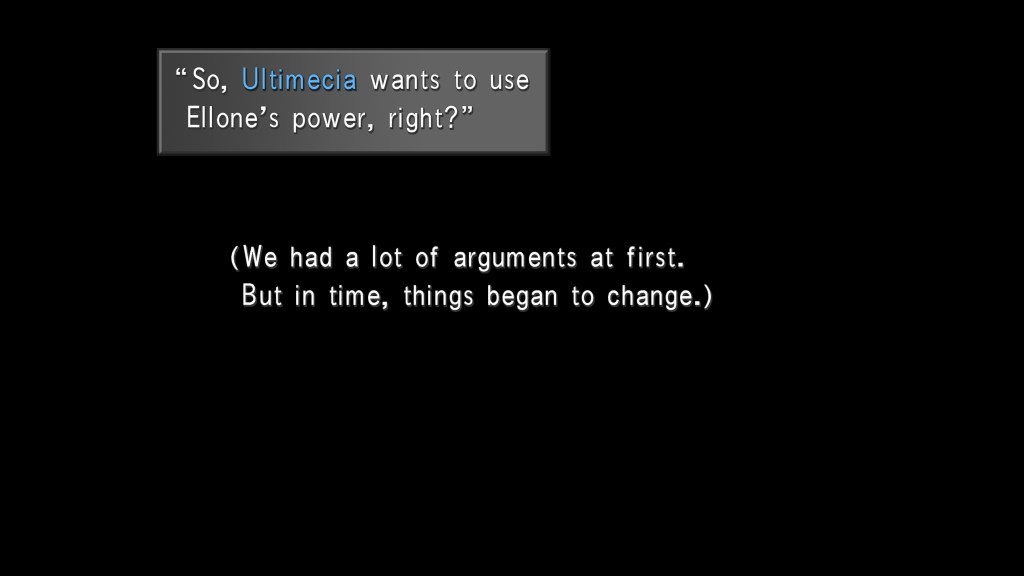
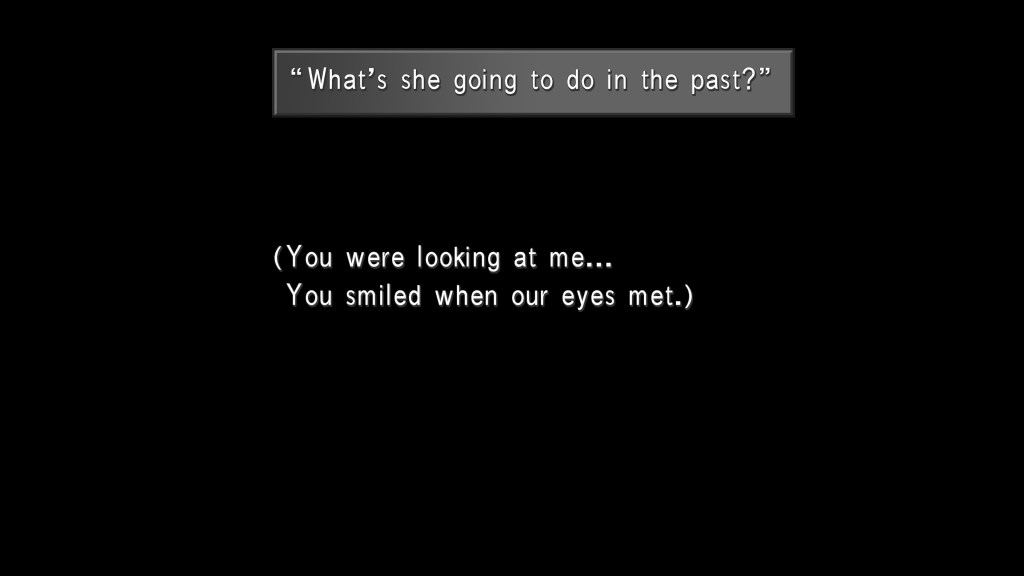
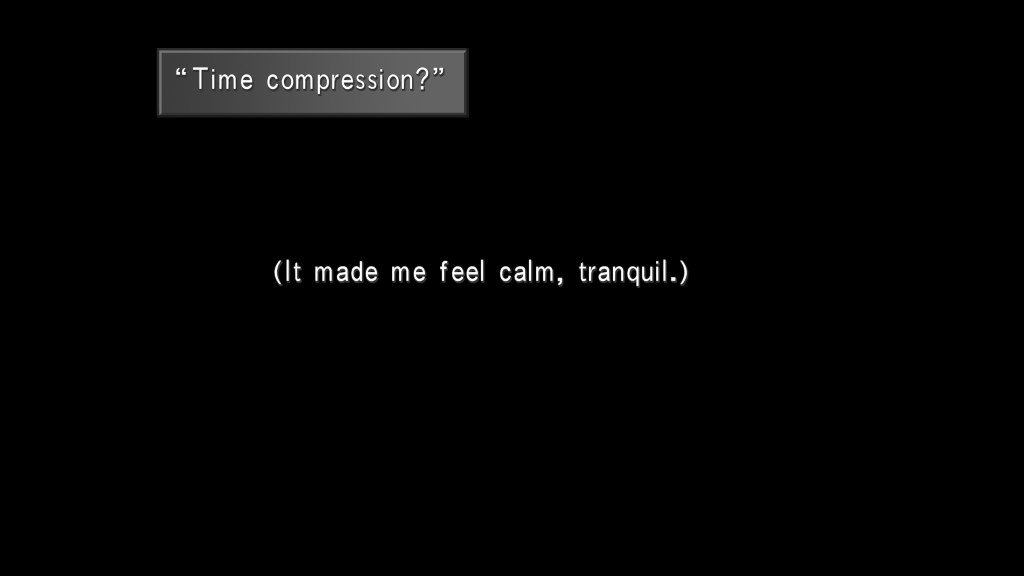
The text in parenthesis are Squall’s thoughts and as you can see, he’s in an entirely different world. You have this main plot dump going on and the main character simply doesn’t care. The game conveys this by going to a black background while characters are talking. Squall is essentially closing his eyes to the world and is worried about this woman he’s suddenly obsessed over. Thinking back to my teenage years, this is exactly how I acted.
It won’t shock you, but I wasn’t exactly a Casanova. I had mostly Internet girlfriends. I would occasionally do something that would get me in trouble and get my Internet taken away. So while my access to this mystery e-lady was gone, she was my singular focus. My parents would be talking about something that would be happening in a week and I’d say “uh huh and yeah” but my thoughts were all tied up in what my personal Rinoa was doing.
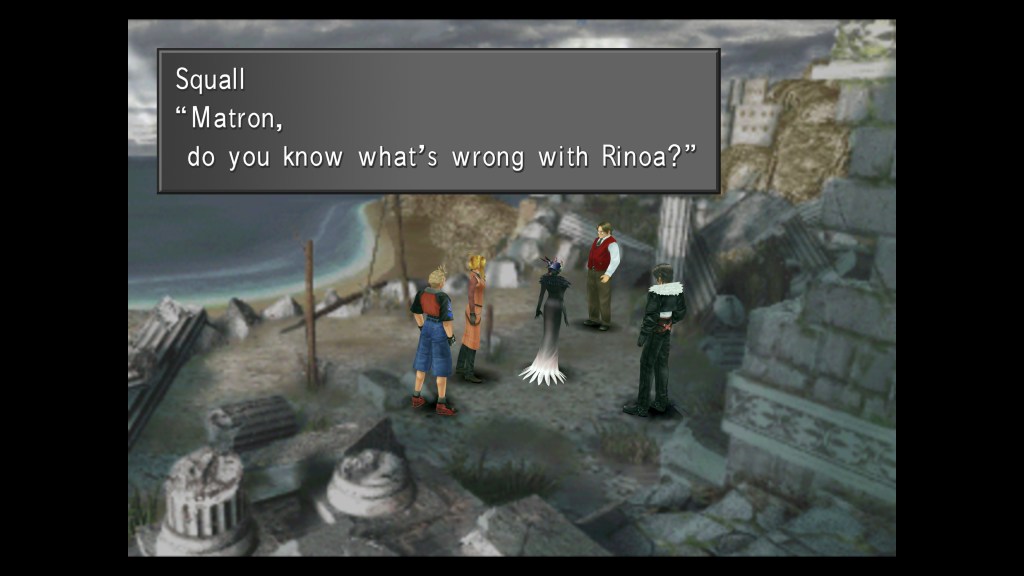
So while it might make the main plot of the game feel like a secondary thing, it does an amazing job of making the romance between the two leads feel important. It was effective on me because I wanted to see these two characters reunite. Squall was no longer (as) confused about his emotions, these two can finally be together and be happy. We just gotta clean up some messes to get there!
And when you finally get to the end of the game and the two characters embrace, it feels earned. Will the two of them always be together? Who can say. It’s a teenage romance. It’s a lot of intense emotions wrapped together and put out over an insanely short amount of time. But when you’re young, a week or two might feel like a year. Even though the future is uncertain, the present is exactly what we want it to be. The romance portion of the plot was a success.
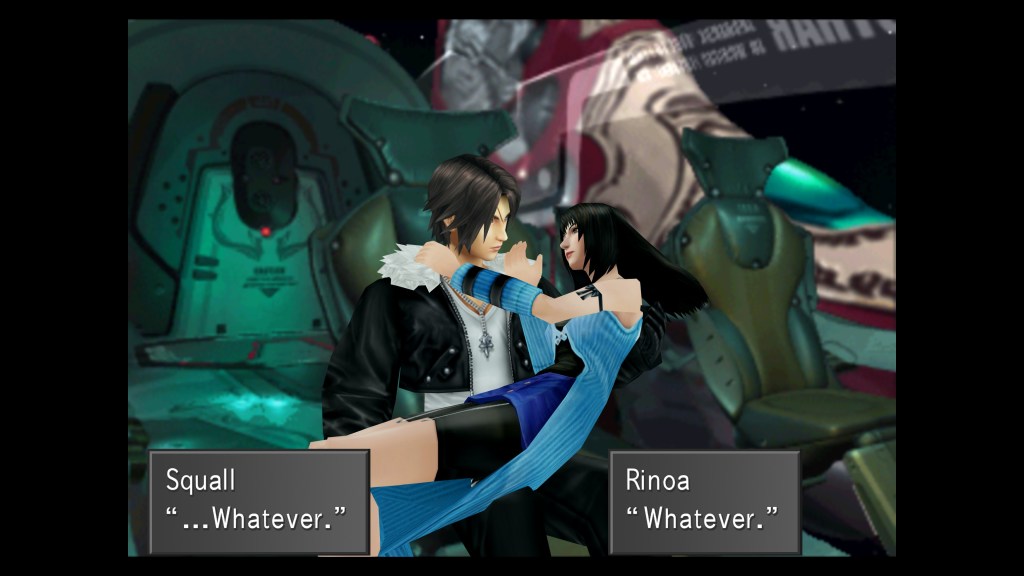
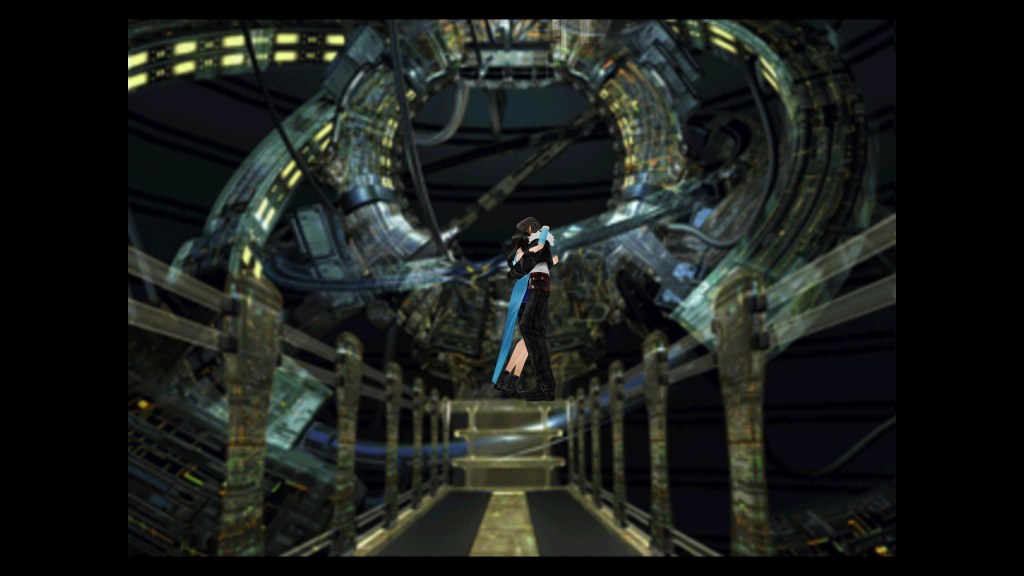
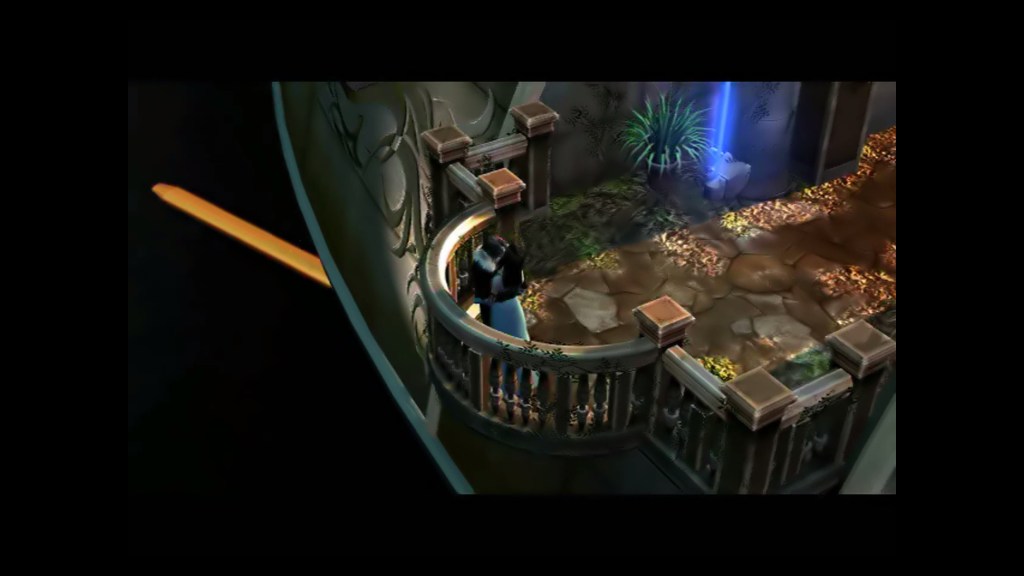
The side effect of this is that I feel the main narrative is a bit messy at points. It tries to tie a lot of things together that I don’t necessarily feel works out all that well.
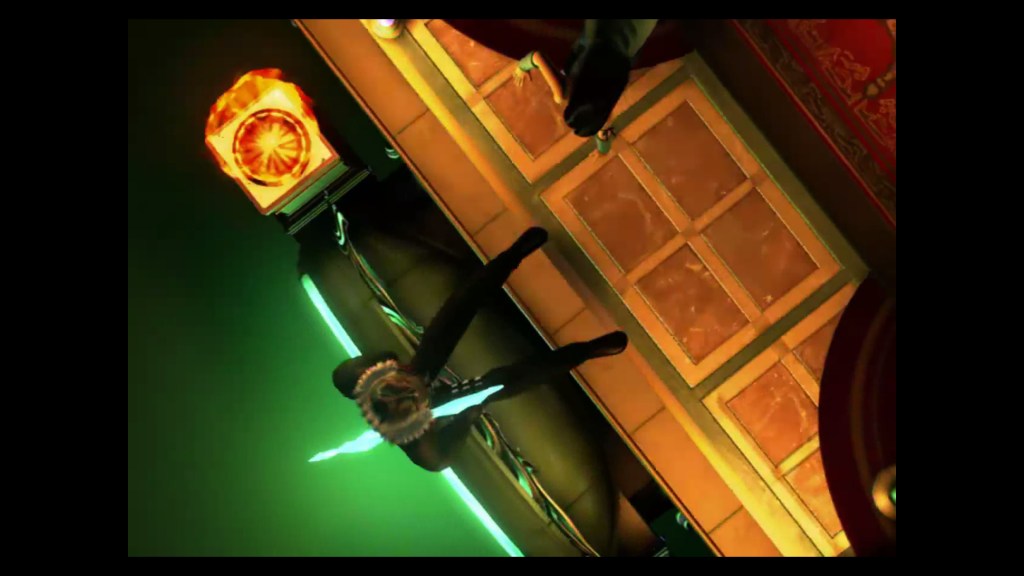
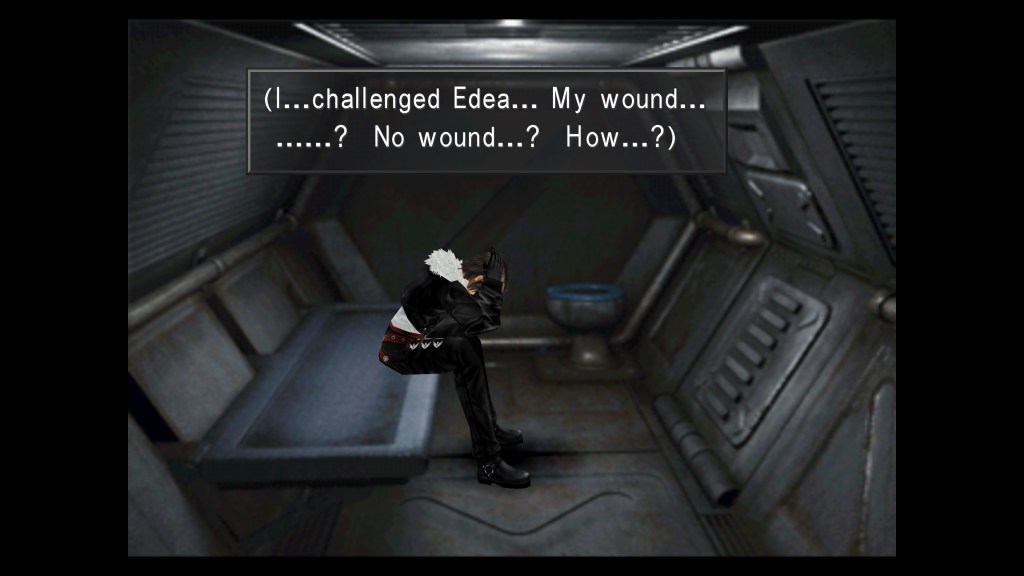
This also leads to some things getting brushed aside. The first disc concludes with Squall being stabbed by a giant icicle near his chest. The screen fades as his eyes close. This is barely addressed again. There’s a whole subplot about who really owns Balamb Garden that gets glossed over.
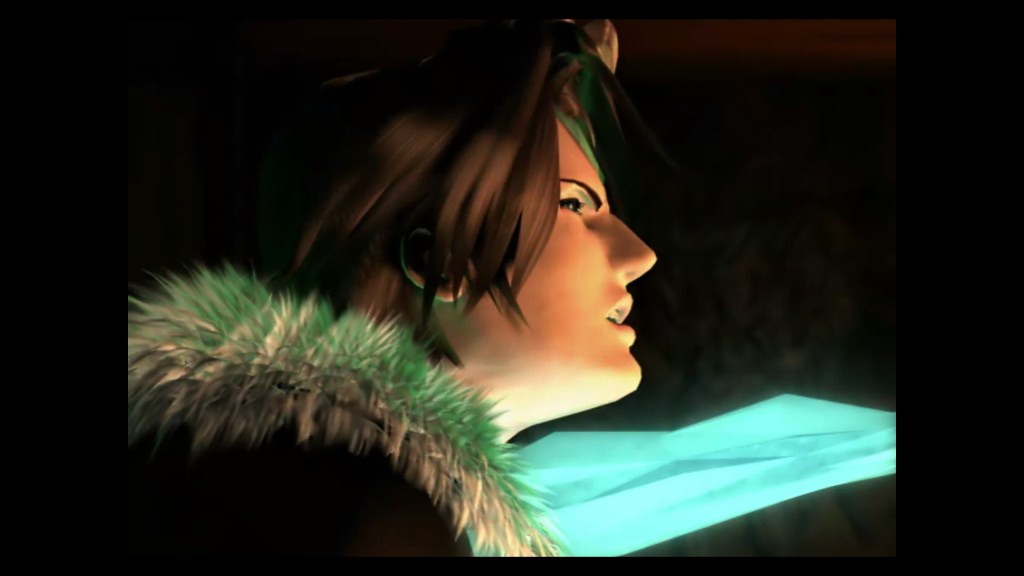
tfw no GF
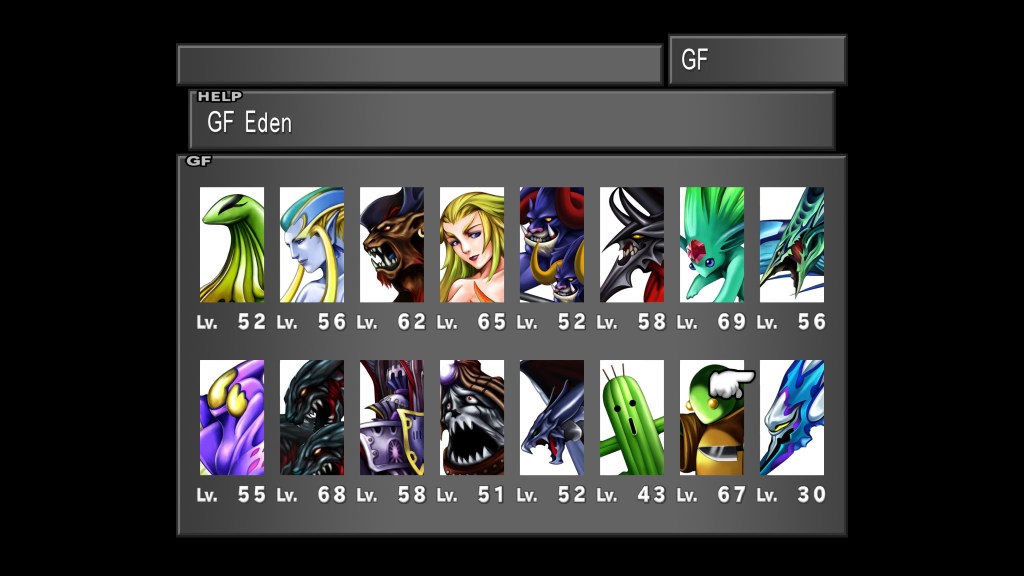
The game tries to put a lot of ideas out there. The main establishment of the game is a facility that trains young students for warfare against an evil sorceress. It does this by equipping summons – in this game called Guardian Forces or GFs – to the youth and putting them through rigorous combat scenarios. This is portrayed as a militaristic unit, so a lot of the game involves your crew following orders and not asking many questions.
About midway through, you learn that the GFs have an impact on your memory. In a gigantic plot dump plot twist, it’s revealed that five of your six party members all grew up in an orphanage together but because of how the GFs are allocated into your brain, they all forgot it. One of your party members, Irvine, never forgot this, but everyone else did.


Some people find the use of amnesia here a little convoluted, I’ve heard a lot of ‘what are the odds’ stuff going on. But that’s not the issue I have. The orphanage these people grew up in worked as something of a feeder system for the militaristic facility – gardens, there are multiple of these – so it makes sense that the orphans would all wind up in the same place down the road. At least that’s what I tell myself.
My issue is that the plot twist comes out of nowhere and the main cast immediately brushes it off. A big gimmick from here on out could be the crew debating whether using these GFs is worth the longterm memory losses. The main characters forgot their entire childhoods, what else could they be forgetting? They ask that question exactly one time and then Squall says something like “well we need the GFs to keep fighting so it is what it is” and it’s never brought up again. Your crew growing up together doesn’t feel like it’s given the weight it deserves.
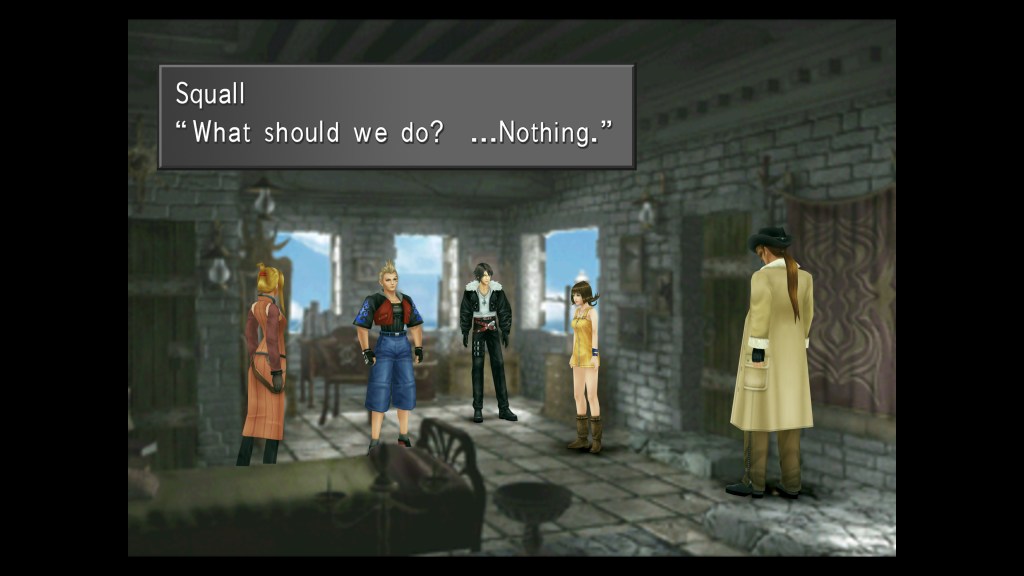
This revelation comes after you a missile attack smacks into one of the garden facilities and right before a gigantic conflict pitting multiple gardens against each other. It feels like you’re running from plot point to plot point without enough time for things to sink in. The overall narrative seems like something that needed around 80 hours to tell in full and they truncated it down to like 30. And that 30 isn’t even all focused on the main story.
About time
One of the main plot gimmicks this game pulls is that occasionally your party will ‘faint’ and be taken to a ‘dream world’ where they play as three different characters: Laguna, Kiros and Ward. It’s later revealed that these events take place in the past and the purpose of you reliving these scenes is to introduce the player to the aspect of time travel.
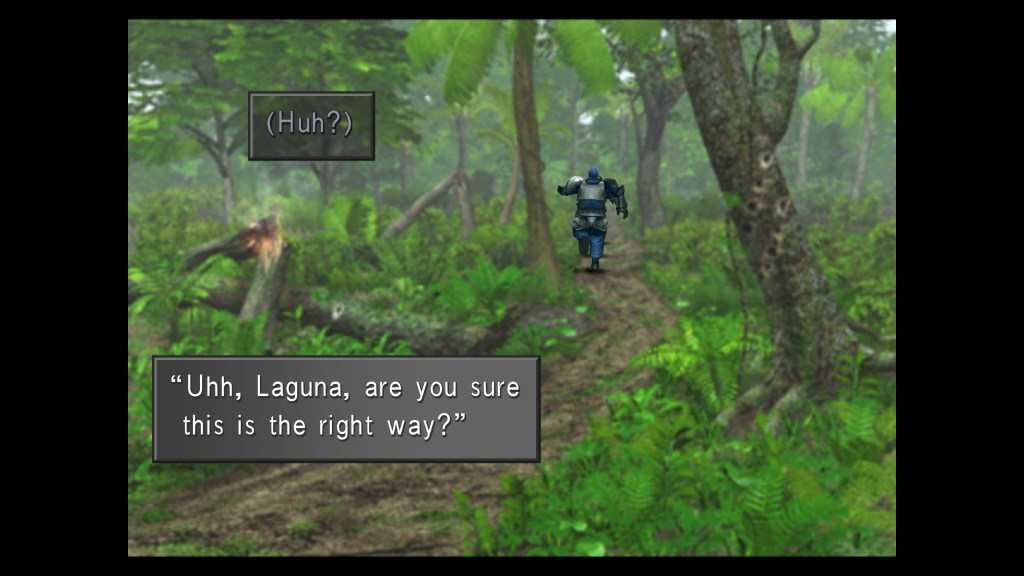

Playing these scenes gives further introspection into the personalities and themes of the main romance plot. Personally I think they are really interesting to go through, but the purpose of having them be related to time travel really complicates things more than they need to be.
And the antagonist who uses time travel isn’t mentioned by name until Disc 3, which is nearing the end of your adventure. It all sort of gets plopped on you in a plot dump by a character who had been acting as the main antagonist of the game up until this point.
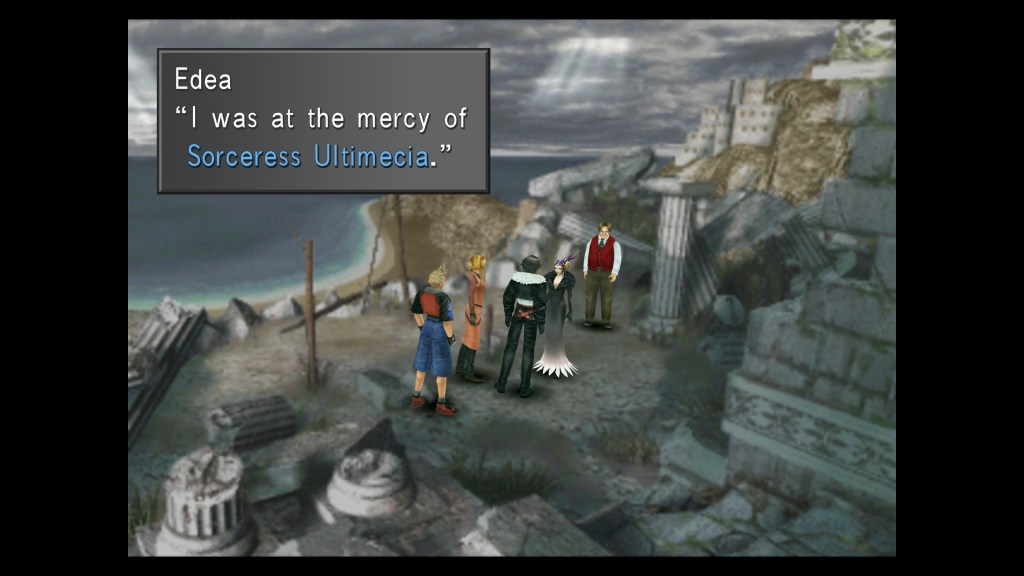
You don’t actually learn anything about her or her personality either. You just know she’s from the future and desires to be the only being alive and she means to accomplish this by combining the future, past and present into one single entity. Time compression.
This aspect of the game feels like a mess. We never get to find out why she feels this way. The ‘how’ she is able to pull this off is mentioned in like four or five text boxes about an hour before the player has to actually reckon with it. It makes the main antagonist and all of her plot devices feel like villain-of-the-week fluff. It feels like going back in time to FFV and seeing Exdeath turn himself into a splinter. It’s cartoonish.
From a characterization standpoint, this story feels like a big step up in a lot of ways. But ultimately, it feels like there is too much going on in the grand scheme of things. Like this game introduces the moon and about 10 minutes later you’re out in space. There’s no build up, you’re just there! Some of the most important character moments happen in space, so it’s so strange that getting there feels like such an afterthought.
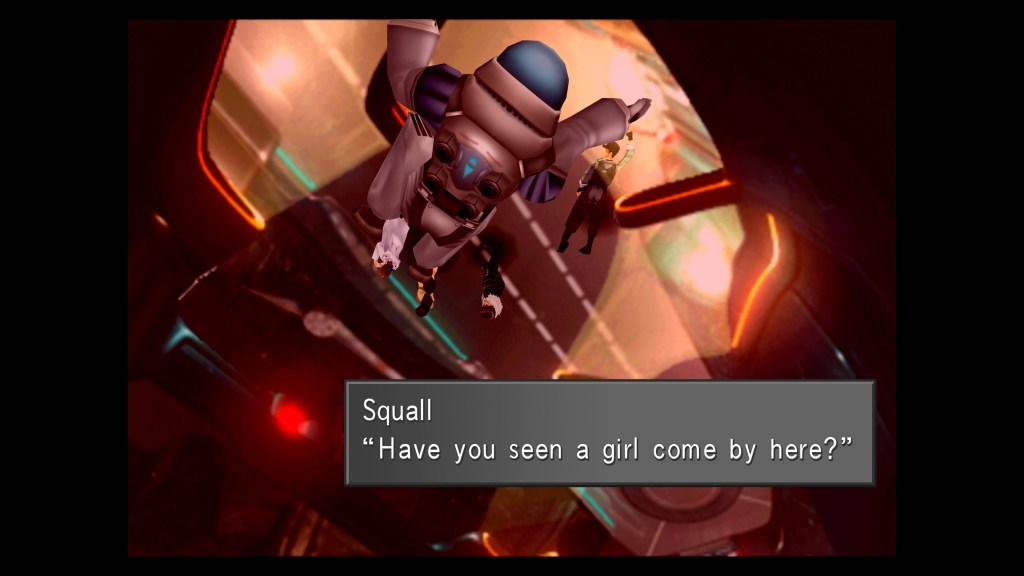
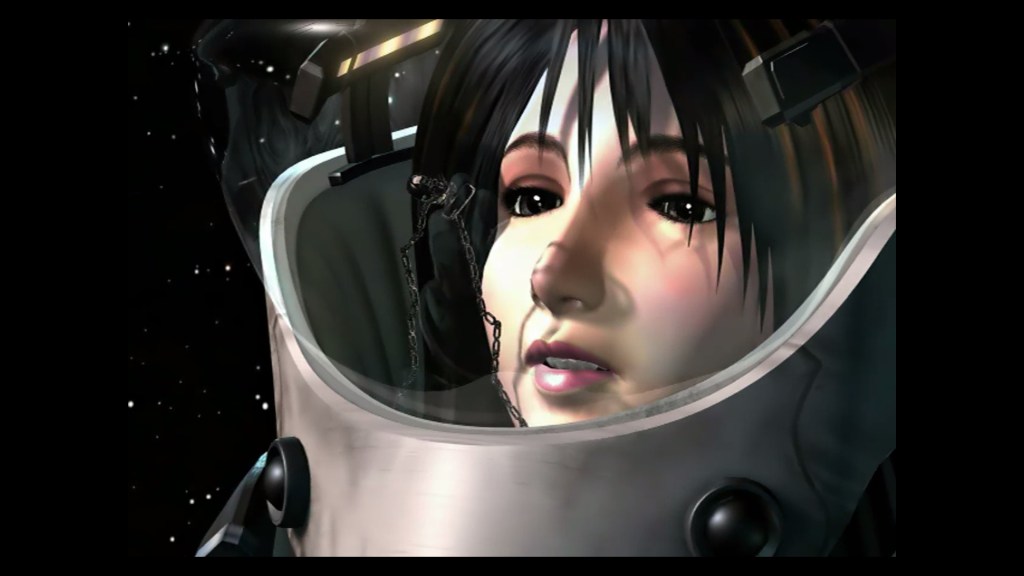
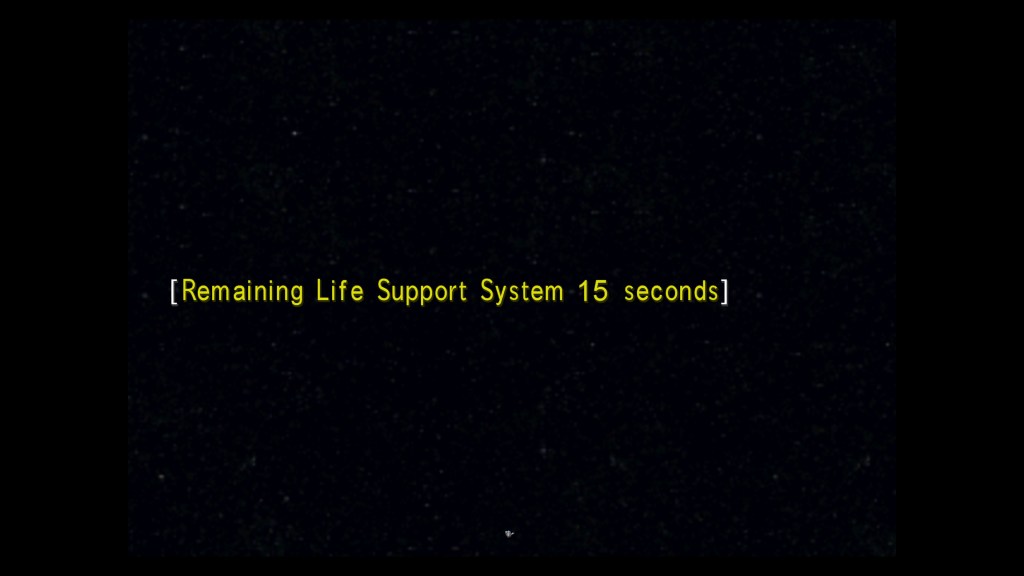

It feels like the love story is the main plot while the actual world saving and monster fighting is ancillary. I don’t know if that was the intention, but I feel like if the player isn’t biting onto the romance angle they probably won’t come out of FFVIII feeling super positive about it. It’s a much more cluttered experience than VII was.
A hard pivot
Final Fantasy has been a series that defines itself on changing the game with every new entry. No narrative has been connected up until this point, every world is treated as its own unique thing. The gameplay can often feel like a through-line, but each entry has just enough tweaks to make it feel distinct.
The most stark difference in entries to this point has been between Final Fantasy I and II. Those games played similarly on the surface but went about player progression completely differently.
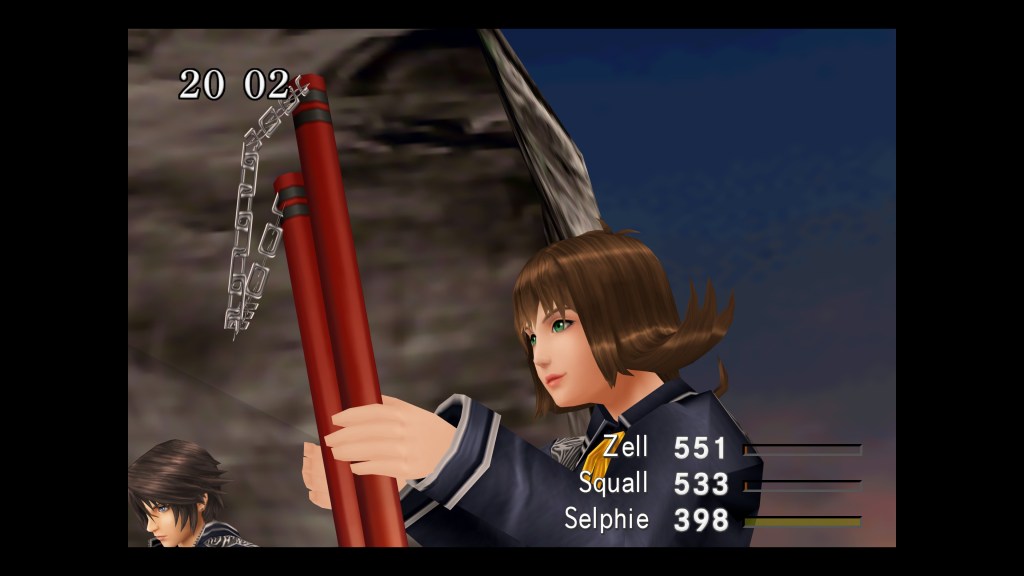
As a result, II was an important entry in the franchise because it set the tone for how the rest of the series would go. If “III” was the real “II” – and in how the game plays, it feels more like FF II than the actual II does – the series may not have the same reputation of reinventing itself.
Final Fantasy VII could be seen as a new start for the franchise. It was the first one released the same year worldwide as it was in Japan – it could be viewed as the first entry in the franchise with a worldwide audience in mind. As a result, it was hands down the most successful game the series had seen to this point. Many people dubbed VII as the greatest game of all time, so how the hell do you follow up on that?
Square could have easily just had VIII be VII-2. I don’t necessarily mean “Cloud and his crew go off on an adventure…AGAIN” but they could have taken gameplay elements like the materia system and just used them again and nobody would have complained.
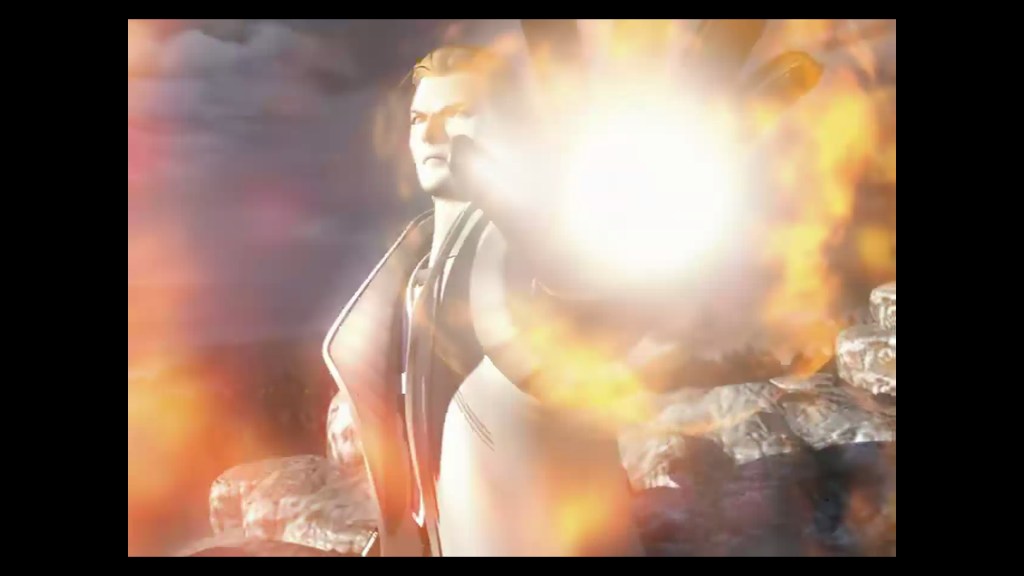
Instead, from a gameplay perspective, we have the most different feeling Final Fantasy title yet. In essence, VIII acts as a II-2 instead of a VII-2. If VII is a new start to the franchise, VIII is a statement that the series won’t just be static.
And I respect the hell out of VIII for that alone. Let’s look at a modern lens here. Legend of Zelda: Breath of the Wild came out in 2017 and took the world by storm. It was something of a new start for the long stale-feeling Zelda franchise. The sequel title, Tears of the Kingdom, feels very derivative. It takes a lot of the ideas that BotW had and expands on them, but it doesn’t feel very original. Still a great game, but not unique. There is a universe where FFVIII takes this approach and I think the Final Fantasy franchise as a whole would be poorer for it.
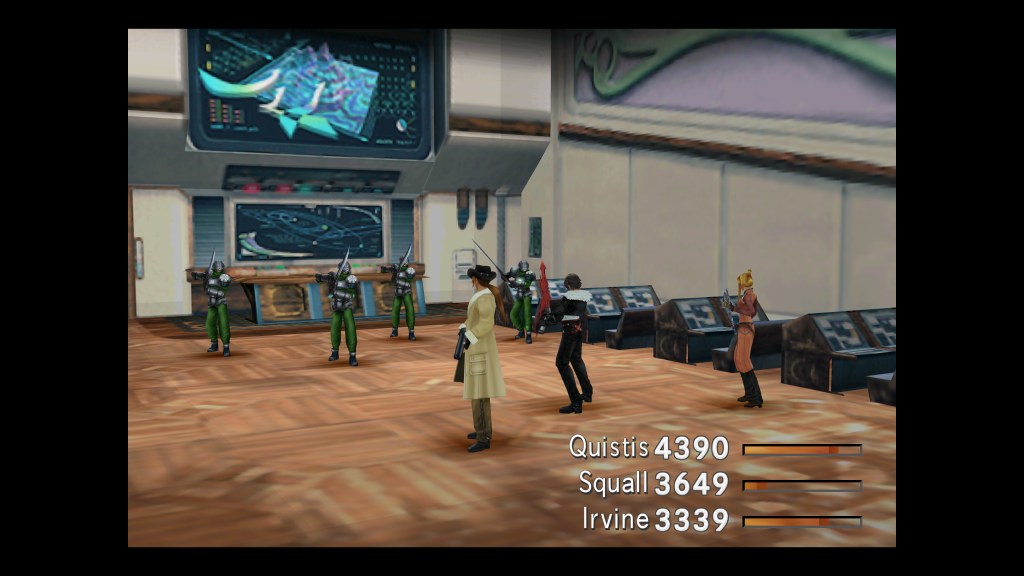
So let’s start at the ground level here. Combat still uses a version of the ATB system that was introduced in Final Fantasy IV and you still work in three-man units. You can still buff your friends and nerf your foes. Magic spells still work as you expect them to – fire will still cast some fire. If you shut your brain off, the average fight in VIII will feel like your average fight in VII. But that’s where a lot of the similarities end, FFVIII becomes its own unique beast from this point forward.
Treasure chests? Gone, you have various magazines laying around that give you access to new skills and items, but you’re not really running around and collecting loot. Money? Enemies don’t drop that anymore. Why would a rat have 200 gil? Instead you are paid a salary. Don’t like what you’re paid? Apply for a promotion!

Weapon upgrades? A new town doesn’t mean a new weapon, loser. If you want something better, find the ingredients for it and a shopkeep will upgrade your stuff for you. Targeting multiple enemies at once? Sorry, there’s no all materia and pressing select doesn’t help either. You need to cast special magic (double, triple) in order to get the ability to hit everything in a single turn.
Spelling it out
Speaking of Magic, it has been an interesting endeavor through the series to this point. In FFI, magic was used based on a Dungeons & Dragons-esque charge system. You had a set amount of times you could use a spell in between inn stays. III used this system as well. The rest of the games use a a magic points system, where you can use spells as frequently as you want to as long as you have the MP for it. VIII on the other hand treats magic as a resource to be mined.


You gain magic by either extracting – drawing – it from the overworld or taking it from enemies. There is no MP cost to using magic. If you have it you can use it instantly and for free. So think of “Firaga” as more of an item than a spell. I think of this process as ‘mining’.
You mine for resources until they’re depleted. In battle, this means you chip away at an enemy’s spells until you max it out or the enemy puts you in a position where you need to run away or kill it.
This can lead to some really long battles if you find a creature with some useful magic to pull. Realistically, I don’t think they intended for the player to siphon 100 units of magic out of every enemy they find, but in practice that’s how I feel most people will approach the combat. You find an enemy with a spell you don’t have, you get the most out of it that you can, and then you kill it.
It’s more exciting when a boss has a really useful spell. That way you’re constantly asking yourself if it’s safe to ‘mine’ or whether you should focus on something else.
I think ‘capping’ the amount of magic some enemies have might have led to a more exciting system. If you can only draw 9 units of Fire out of a bad guy, you’ll mine them once and move on. I’m sure this might encourage players to go out and grind on more foes but conversely it could have players look into other ways to acquire magic.
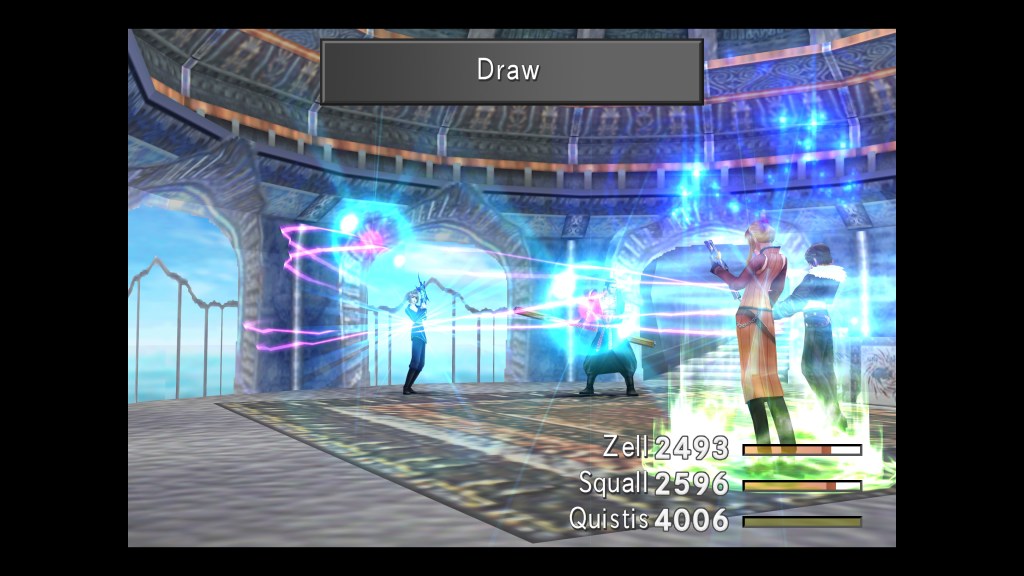
How progression works in VIII is by equipping – or junctioning – magic to stats. So if you junction ‘Firaga’ to your attack stat, it’s going to be a higher than your default attack stat. However, if you use Firaga in combat, it will impact the stat you have the spell junctioned to. Essentially, you’re sacrificing your own power each time you use a spell that you have equipped.
It sounds really cool. It reminds me of the end of the first arc of my favorite anime Yu Yu Hakusho. In the final fight against the main antagonist of that part of the story, the main character – Yusuke – intends to sacrifice their life energy in order to win the day. Placing this mechanic into a game is cool because the idea of the player having to sacrifice themselves in order to defeat a big threat is very compelling. “My permanent HP might go down but at least the Tonberry King will be no more!”

In execution, I feel like the system encourages players to use only magic that they don’t have equipped. Truthfully, it might tell the player not to use magic at all. Most encounters don’t need it, so why would you lower your stats when you can accomplish the same thing just by using normal attacks? I know in this playthrough I prioritized making my attack stat as high as I could and really only used magic a handful of times and I had no problem with the game’s difficulty. So it’s an idea I like, but one that I don’t think was used to its full potential.
The junctioning of magic to stats makes leveling up pretty inconsequential. Levels have been an extremely important part of character progression in this franchise up until this point, obviously a level 90 character is going to be stronger than a level 9 character. But since increasing your level also increases the level of enemies you encounter, having strong magic placed on your stats and sticking to a low level actually makes the game easier. A ‘low-level’ run of Final Fantasy VIII might be easier than a ‘high-level’ run as a result of this.

Effectively using your tools
In order to even junction magic to stats, you need to have a GF equipped. And you get more stats to junction stuff to as you level them up. This is some ‘gameplay and story’ intertwining stuff because it’s told to you over-and-over again that the GFs are vital to your ability to fight. So, in order to do anything beyond basic attacks, you need to have a GF equipped. That’s why the price of memory loss is acceptable because these characters can’t do anything without a GF eating away at their brains.
And these abilities are where character customization comes in. GFs can learn a variety of skills that can be equipped, from the basic stuff like items and magic usage to more unique abilities like a free resurrection, automatically casting haste on a character or the defend command. Your characters still feel like empty shells that don’t feel too different in combat (outside of the returning limit break feature), so any diversity in skill comes down to what GFs and abilities you have on your person.
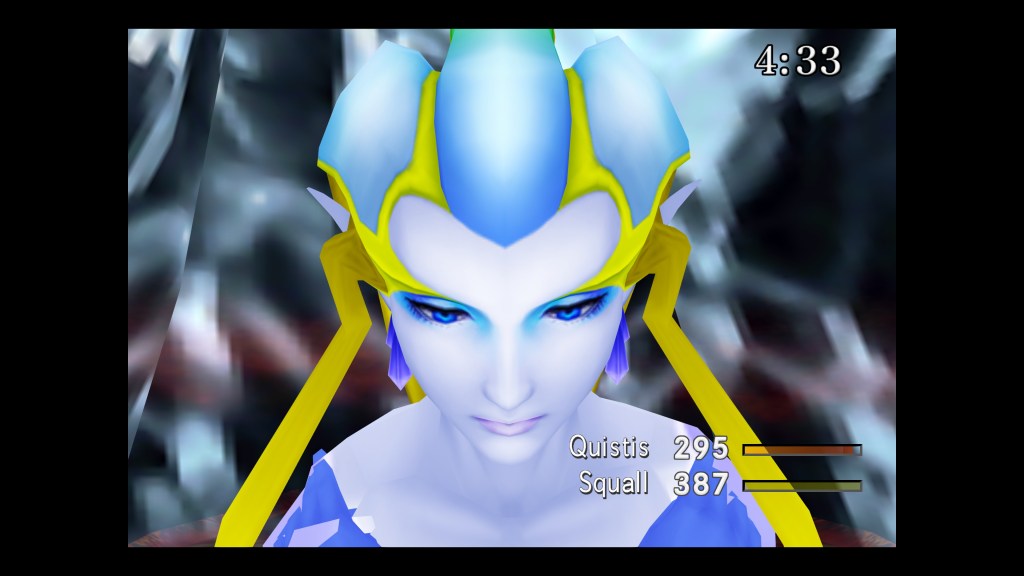
I guess word got out that “summons” and their animations were really popular, so they made summons more important than ever in VIII. Everything you do in the game is tied to these creatures and the abilities you learn by equipping them. The experience a player can have with VIII vastly differs depending on their usage of these things.
When mentioning about how to get magic above, I really only mentioned two ways to go about it. But through GF abilities, you gain more ways to earn magic and give yourself stat buffs. Usually this comes through turning items you already have into various spells. Most GFs learn abilities that let you turn an item into a spell.

For instance, Ifrit learns Fire Magic-RF, which lets you turn (refine) various items into different versions of fire spells. So a savvy player can grind for a specific item early and have Ifrit refine that item into high level magic, giving you better stuff than you can find off enemies early in the game.
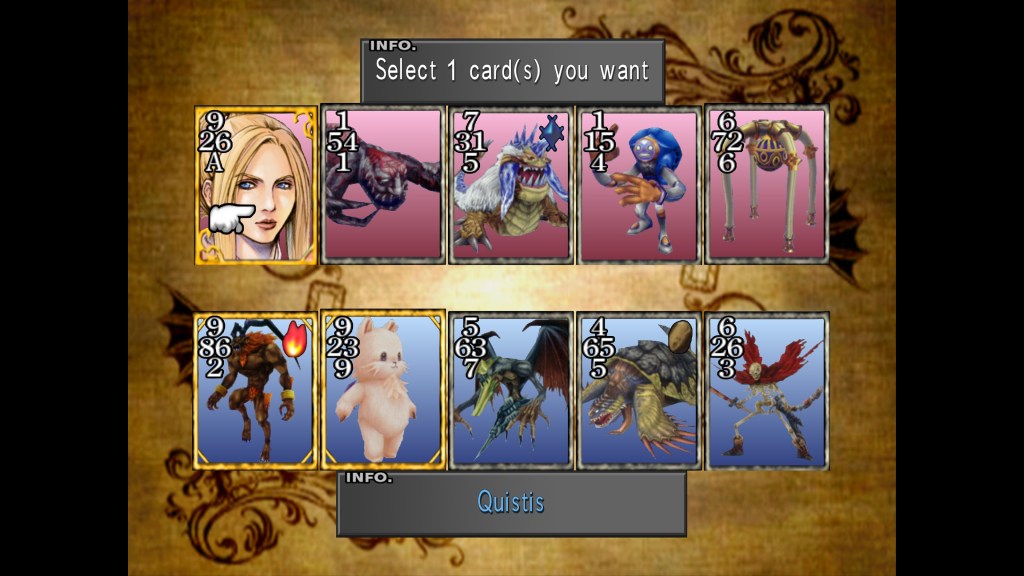
Through clever usage of these abilities, a player can totally break the game wide open. The most useful of which is card mode, learned by the GF Quetzalcoatl, which lets you take cards from the game’s primary minigame, Triple Triad, and turn them into useful items. You can then turn those items into useful magic which can then turn into useful stats!
If a player decides to throw themselves deep into the card game while focusing on GF refine magic abilities, they can get endgame spells and top tier equipment in the first disc.
The heart of the cards
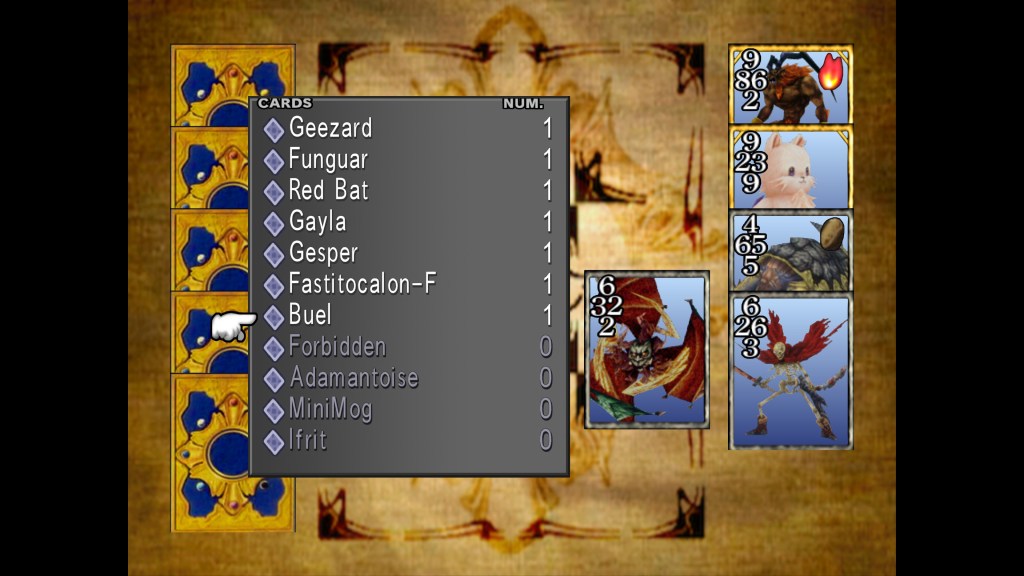
Yeah that’s right, it’s time to talk about the card game. Final Fantasy VII introduced us to the ‘game-spanning sidequest’ in Chocobo breeding, but truthfully it was hard to do much with that until about midway through the game. VIII brings the gimmick back but immediately introduces it to you. This time, the sidequest is the above mentioned card game.
As a standalone game, Triple Triad is a lot of fun. You are working on a 3×3 grid. Each card has four numbers, one for each direction a card can be placed next to it. At its simplest level, when placing a card next to another card, whichever has the highest number in that particular slot wins the battle. You just need to have more cards attributed to you (blue for player, red for opponent) at the end of the game in order to be declared the victor.
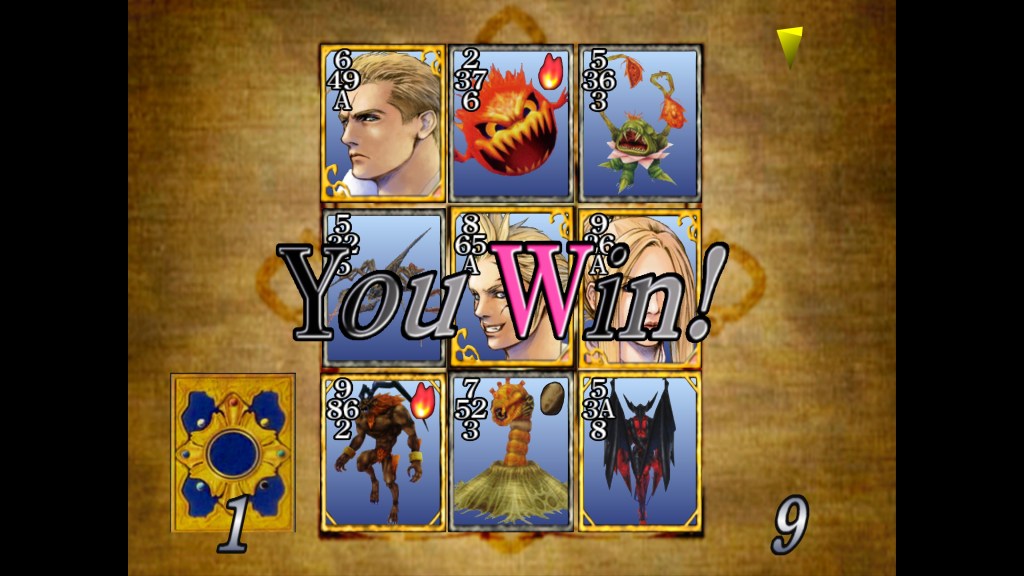
It can get more complex than that, with each region of the game getting its own unique rules. I’m not going to get into heavy triple triad details here, but just know that “bigger number = better” isn’t always the key to victory. One of the more common rules involves placing a card in between two cards and having all of their touching numbers be the same. By doing this, you can win all cards impacted.
The game never explicitly tells you what rule means what, there is an NPC that tells you some of the rules but it’s best to learn by playing, so the key to success in Triple Triad is to pay attention to what your opponent is doing and formulate strategies based on that. The downside of not telling you how to play with these rules is that they don’t efficiently communicate how rules spread, so a player could accidentally spread rules they don’t like around the entire world and render Triple Triad essentially unplayable.
This applies mostly to the random rule. Random is just as it sounds. It picks the cards you use in a match at random. The AI is allegedly random during this process too, but not having access to cards that you personally choose takes a lot of strategy out of the game. And if you don’t know what you’re doing, you could spread random around the entire world and make Triple Triad the least enjoyable game of all time. Not ideal!
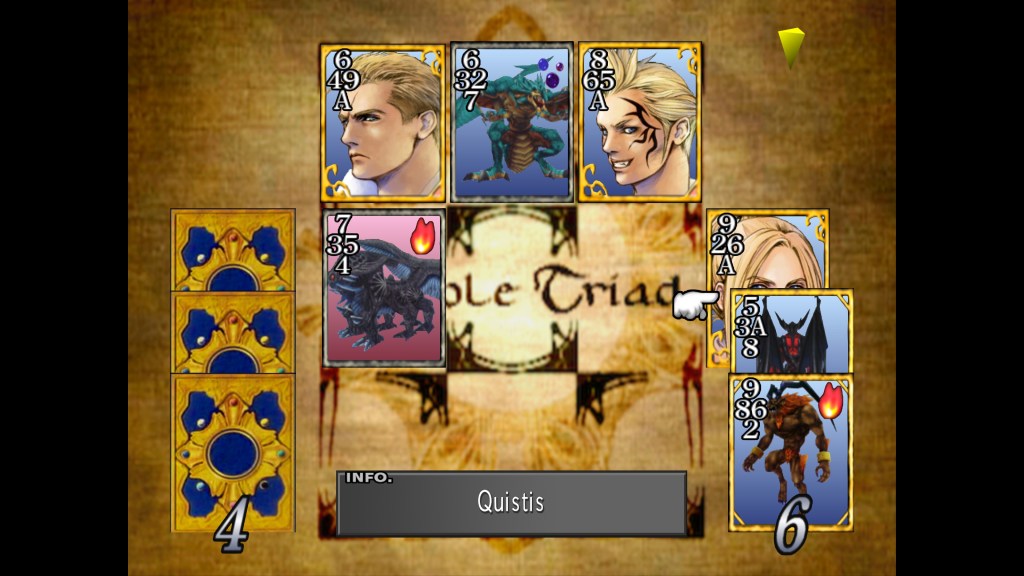
Despite some of its eccentricities, Triple Triad is probably my favorite minigame in the entire franchise. It’s generally really fun and since you can refine the best cards into some amazing items, it also gives you the best rewards. People calling FFVII Rebirth’s card game ‘better’ than Triple Triad are missing part of what makes this game so good. It’s not only fun to play as a standalone thing, it also gives you great rewards that incentivizes your continued play.
If someone truly wants to, you can play FFVIII as a mostly card battle RPG. You can use a GF to nullify random encounters and then you can just use refining abilities on your cards and various items around the world and you’ll have all the magic you need for the best stats. You only need to face the bosses!
I don’t care how good you get at FFVII Rebirth’s card game, such a thing is not possible there. You can’t mainline FFIX’s Tetra Master or FFX’s Blitzball and just ignore basic battles. The ability to completely transform your FFVIII experience makes Triple Triad the best.
Skill issue
As a first time player in an age with a very different Internet, the various systems in this game baffled me in the year 2000. I didn’t know leveling up was useless, so I’d go grind. I didn’t understand how important junctioning every stat was, so I was curious why my grinding didn’t help a whole lot. I played the card game, but I didn’t understand there was more to it than just a fun little diversion.
When I beat the final boss, I was convinced it was the hardest encounter of all time and that I would never finish the fight again. I wonder how many people play VIII without understanding its systems? As a returning player, just abusing the ability system feels rewarding. It’s a great feeling having like 3,000 HP in the middle of the game’s second disc.
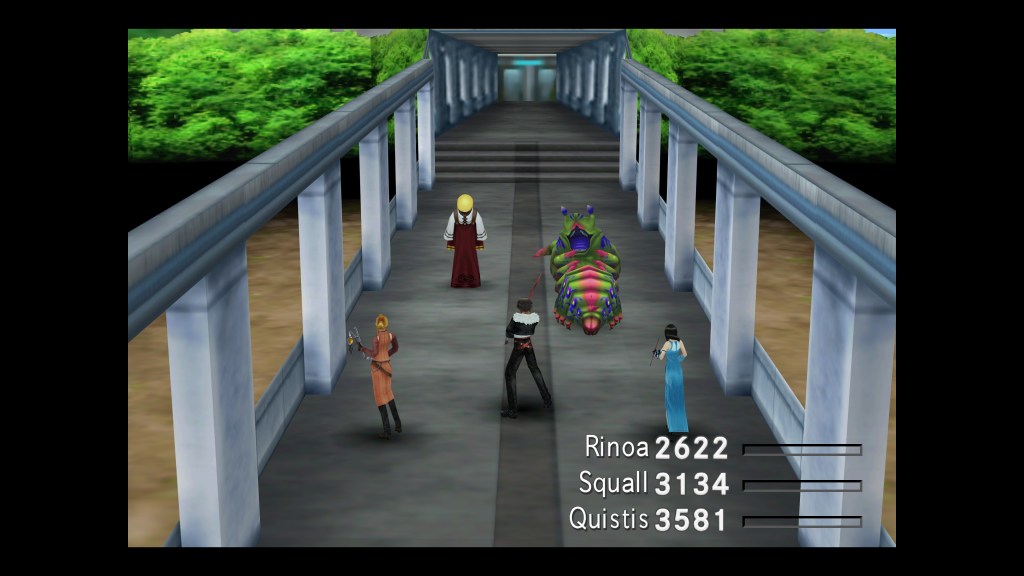
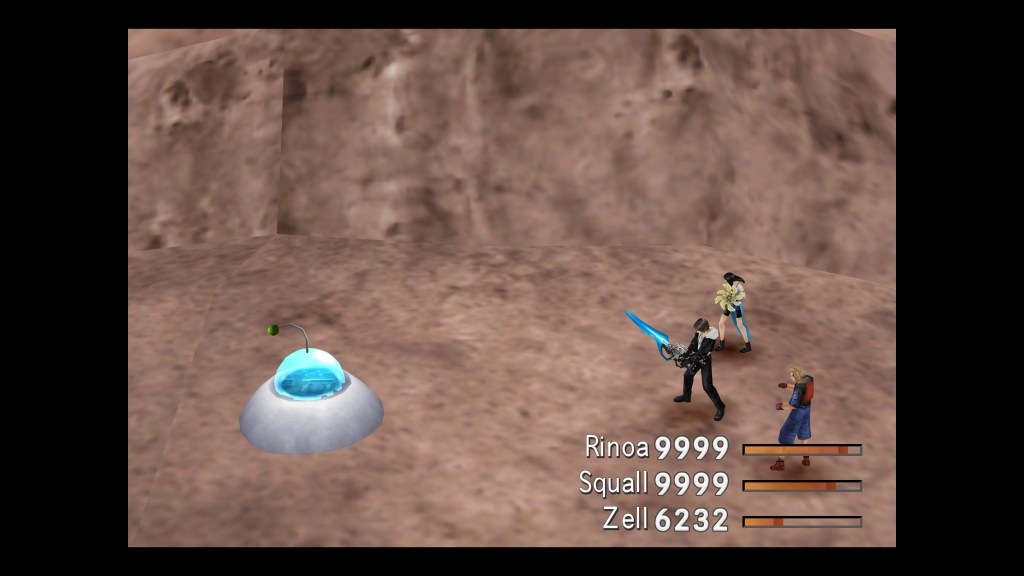
The battle-to-battle combat is nothing special. In this playthrough, I gotta be honest, it felt like a flashback to the NES Final Fantasies with how often I would just spam the attack button. After I was done mining for resources, it was attack time! But I still got so much joy out of futzing with the game’s systems that it almost didn’t matter. FFVIII may be the ultimate case of “big number good”
So I wonder how many people just ran their heads against the wall trying to play this game? They came off of Final Fantasy VII and expect something a little more straightforward. I think you gain more appreciation for how VIII is as a game the more you interact with VIII’s systems, the more you try to understand your GF abilities and the more you mess around with things outside of combat. VIII is a game that rewards you for experimenting.
Opinions, who needs ’em
VII was a game designed for mass market appeal. VIII certainly has the same market, but it has so many different things to grapple with that it just feels like it’s from a different planet. It’s a fascinating experience. It’s a game I love and respect the hell out of, but I also understand why it’s so divisive.
Essentially, it’s important to play it for yourself. I feel this way about most games, but I especially fell this way about VIII. It seems like the sentiment online over Final Fantasy VIII has been muddied for years. I harken back to when the Internet was a much smaller place, where people who were really into ‘nerdy’ things all watched the same sort of content and regurgitated those opinions as their own and created a sort of cultural osmosis out of it.

I feel like this game’s reputation started to heal a little bit in recent memory with the remaster’s release. I’m not saying the game is perfect, it absolutely isn’t, but I’m glad there are multiple sides to this conversation now. I think what makes this game special is how divisive it is.
Notable characters
- Squall Leonhart
- Rinoa Heartilly
- Quistis Trepe
- Zell Dincht
- Seifer Almasy
- Fujin and Raijin
- Selphie Tilmitt
- Irvine Kinneas
- Ellone
- Laguna Loire
- Edea Kramer
- Cid Kramer
- Ultimecia
I was unable to find any full models of the remastered VIII characters online, so unfortunately the intro picture for important NPCs like Ellone and Cid Kramer won’t be quite as ‘special’ as they were for Final Fantasy VII. However, every playable character and the final boss gets the normal treatment. Poking around, FFIX will probably be less of an issue. I might have to rethink how I approach this section for Final Fantasy X. But uh, that’s like a month and a half away, so I’ll let that be a problem for future Derek.
In comparison shots, in case it isn’t obvious, remaster models are on the right while original models are on the left. These obviously aren’t in PS1 resolution because you can make out what the faces look like.
Garden, SeeD and limit breaks
A quick bit of explanatory text before we talk about actual characters. Five of the six main party members are part of an institution called ‘Garden,’ which is a sort of military boarding school.
The elite students of Garden go on to become SeeDs, which is a sort of mercenary force. To become a SeeD, one must pass a special field exam. One of the first main missions of the game puts some of the main cast in the SeeD exam.
The stated purpose of Garden and SeeD is to defeat the sorceress, who at the start of the game is a woman by the name of Edea Kramer. There are multiple gardens throughout the world, though the player gets most intimately familiar with Balamb Garden.
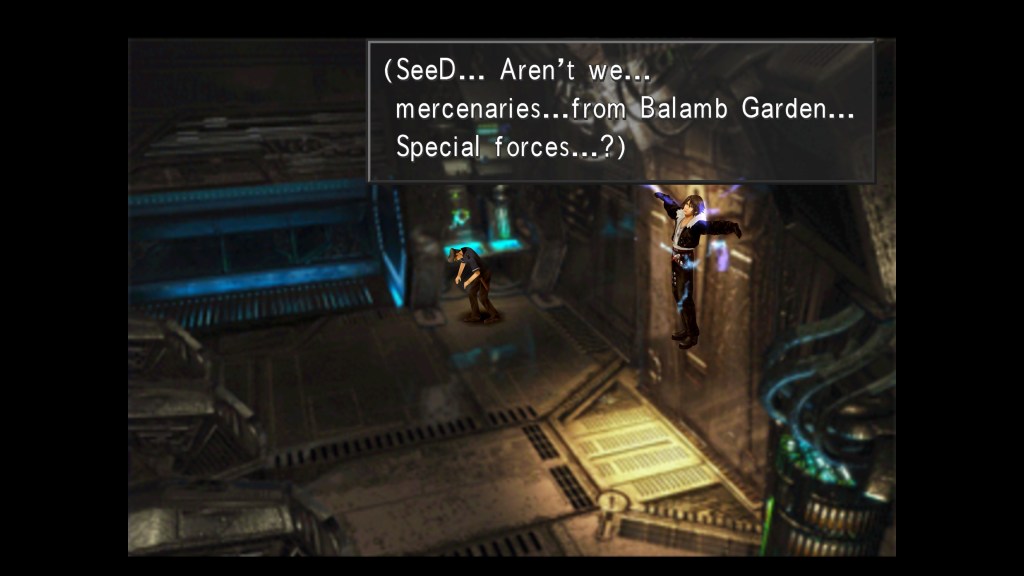
Each Garden has a special focus. Balamb seems to be where people go to become SeeDs and wield GFs. The purpose of the others isn’t explicitly stated in the game.
As for limit breaks, they are the only real difference for how characters behave in combat In FFVIII. When your HP gets to a critical point, there is a chance for your character to gain access to this special skill – there is no longer a meter for it. This works much like it did in Final Fantasy VI. Usually this is an attack against the enemy, though there are exceptions to this.
The sorceress
When I talk about fighting the sorceress, I am referring to Ultimecia, who is the true final protagonist. However, because of how Ultimecia operates, she often is possessing the body of another character. This is commonly a woman named Edea Kramer. I use ‘sorceress’ instead of ‘Edea’ when talking about this character because Edea is not in control of her actions and is instead being possessed. But I also don’t want to talk about Ultimecia’s character before she enters the plot.
How is the player to know she’s who you’re really fighting in disc 1? You’re led to believe it’s just Edea. So in an effort to make things less confusing, I just refer to the boss and major antagonist of the first two discs of FFVIII as ‘the sorceress.’
Squall Leonhart
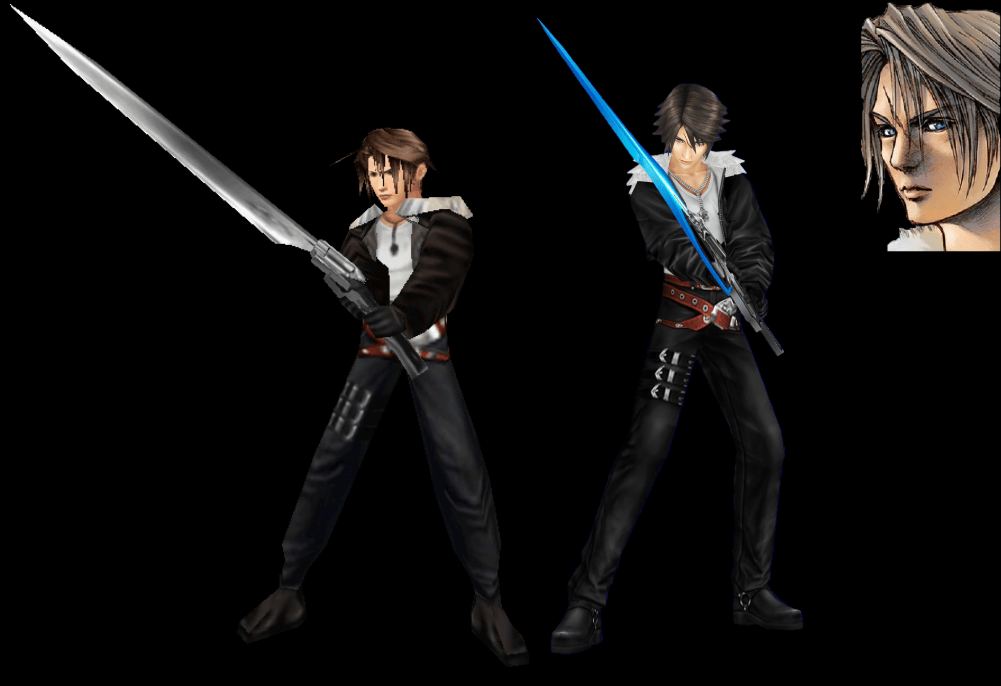
Here’s your leading man! Tetsuya Nomura was once again the character designer for this game and he has said these characters are much more ‘in his style’ than the character designs he made for FFVII. When I think of the role Squall plays in the Nomura-led Kingdom Hearts franchise, it suddenly makes sense why he has so much of a bigger part than Cloud despite being nowhere near as popular.
The aim here is to have a more realistic looking group of main characters and, yeah, they achieve that. They all look like teenagers and you don’t have a mountain of a man with a machine gun arm as a main party members. Mission accomplished!
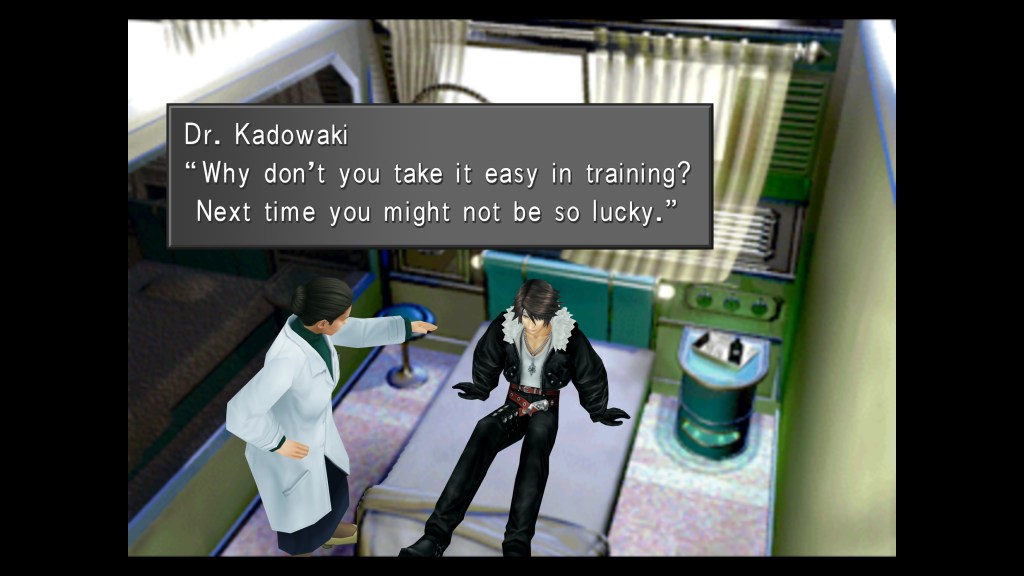
When we enter Squall’s life, he’s something of a loner. He has a fierce rivalry with another student by the name of Seifer, which is probably also the closest thing he has to a friendship at this point of the adventure. He seems kind of resigned to a life of student military activity and doesn’t have a lot of personal goals or desires. Essentially, your average teen trying to figure out his identity.
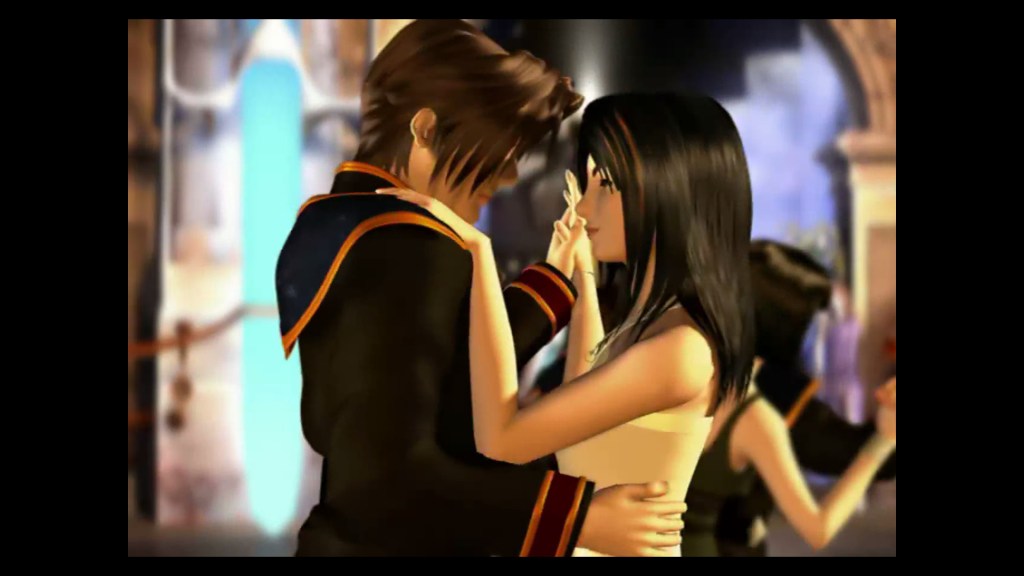
Things start to change after Squall formally becomes a SeeD. He meets his future love interest at a celebratory ball and appears to let his hair down slightly to dance – though he claims it’s part of the job, as expected of a guy who is too cool for school. From this point on, we see him develop and open up. He eventually decides that maybe having friends and people he can rely on isn’t such a bad thing.
You get a lot more introspection into Squall’s change as a character thanks to the constant glances into his thoughts. There are very frequently text boxes that detail what he thinks on a situation beyond his orders, though what he actually says is always direct and to the point.
Through this you learn about his morality, some of his insecurities and discover that he isn’t just a stoic fella, he has a sense of humor too.
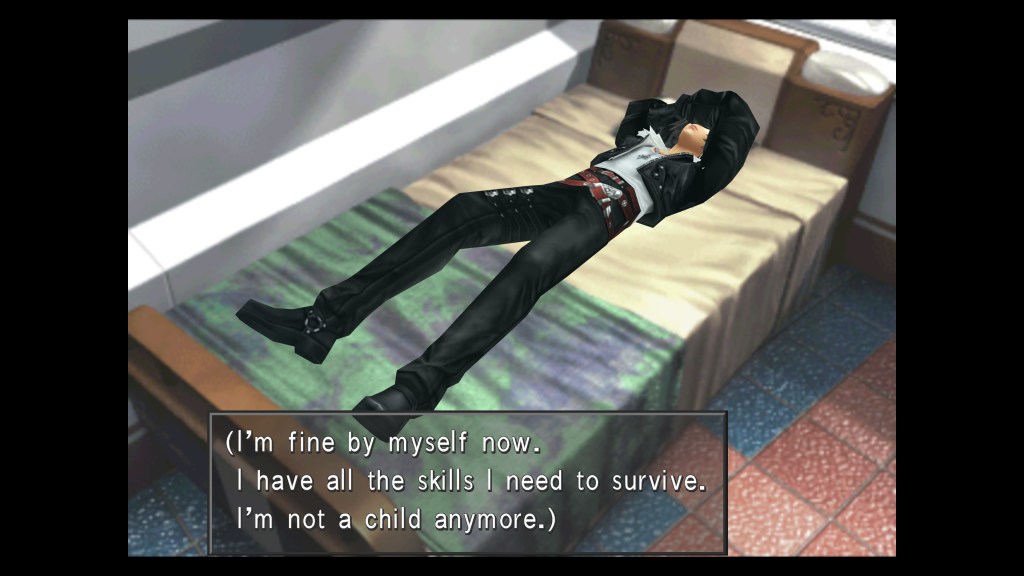
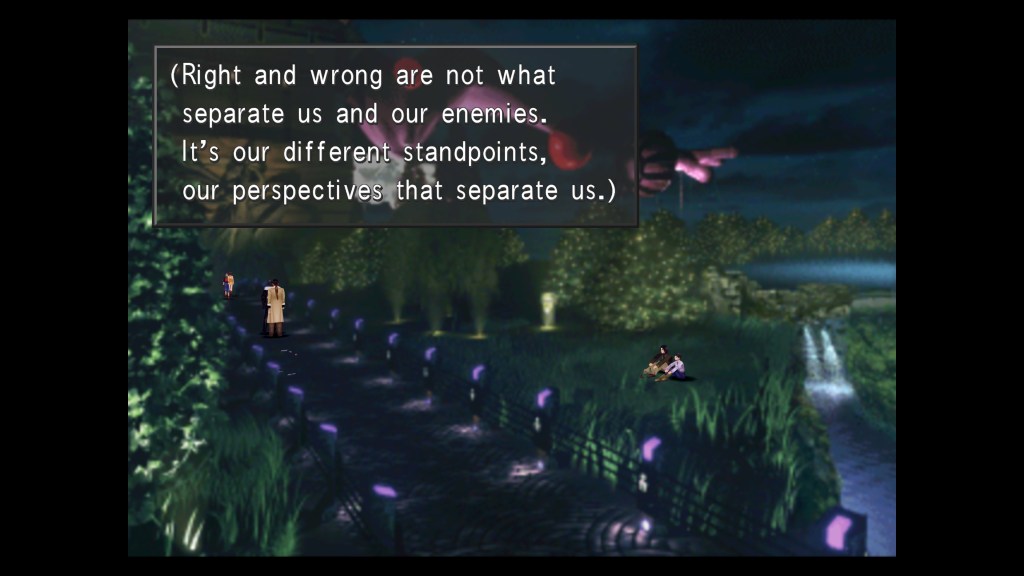

I really think the choice to go so deep into Squall’s thought process was great. This type of stoic and unflappable character isn’t exactly uncommon in fiction, but they rarely make for an excellent leading man. But to a certain age group, this sort of character is relatable. So getting a glimpse into his personality and seeing that a lot of how he acts outwardly is an act feels pretty authentic to me.
It also helps the mentioned-above-in-detail romantic plot feel more realistic. You can see in his thought process where he falls for Rinoa. Yes, he literally admits it to himself at one point, but you go from seeing him act annoyed at this lady to seeing him becomes somewhat obsessed. This aspect of his character is really well done and I can’t compliment it enough.

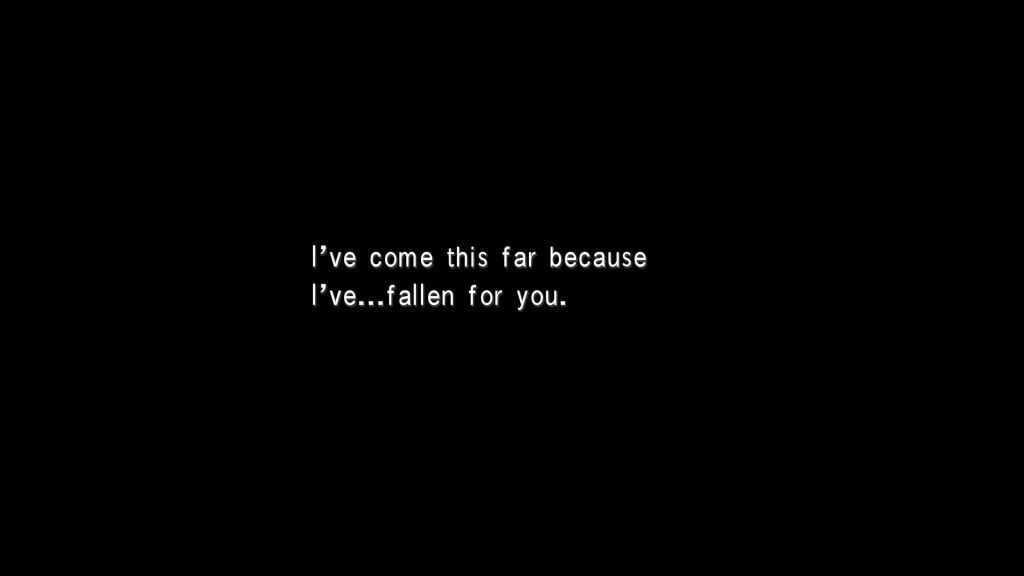
Squall’s involvement with the main plot of the game, which ends up being a time-jumping affair to fight an evil sorceress who wants to essentially be the only living being in the world, isn’t as intricate as the previous main character.
His only tie to the true main villain is that he knows she wants to take over his love interest’s body which he’s not a fan of. She also possesses his mother figure, but it seems like he doesn’t care as much about that. Otherwise, he’s just here to save the world. It really feels like Squall isn’t overly concerned about the main narrative and is just along for the ride.
Squall is even made the leader of Balamb Garden and SeeD in general at some point in the story and he neither seems overly happy or sad about it. Anxious? Sure. But he just seems like he’s along for the ride. It’s his destiny as this weird orphan mercenary child.
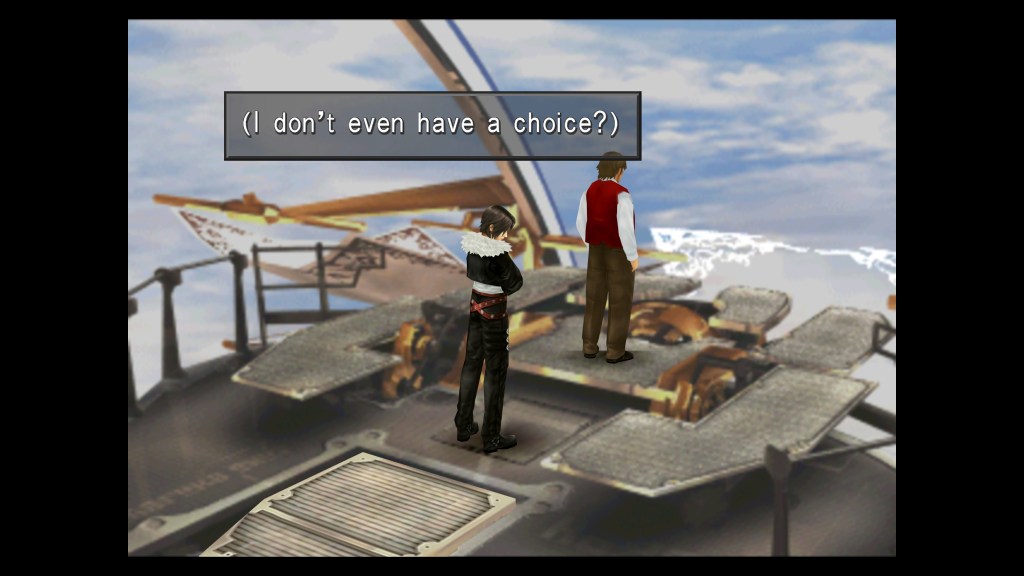
And to me, that makes sense for the kind of character Squall is. The mercenary stuff and SeeD work is just a job, he’s not overly dedicated to that. He doesn’t really even know what he wants to do, he just knows that he has to do this.
It’s how I felt as a teenager in school a lot of times. Didn’t know what my future would hold, didn’t have much of a direction, but knew I had to sit there and deal with it. So while some people may not like that Squall isn’t mortal enemies with anyone like Cloud is with Sephiroth, Zidane is with Kuja or Tidus is with Seymour, I kinda think this approach works here.
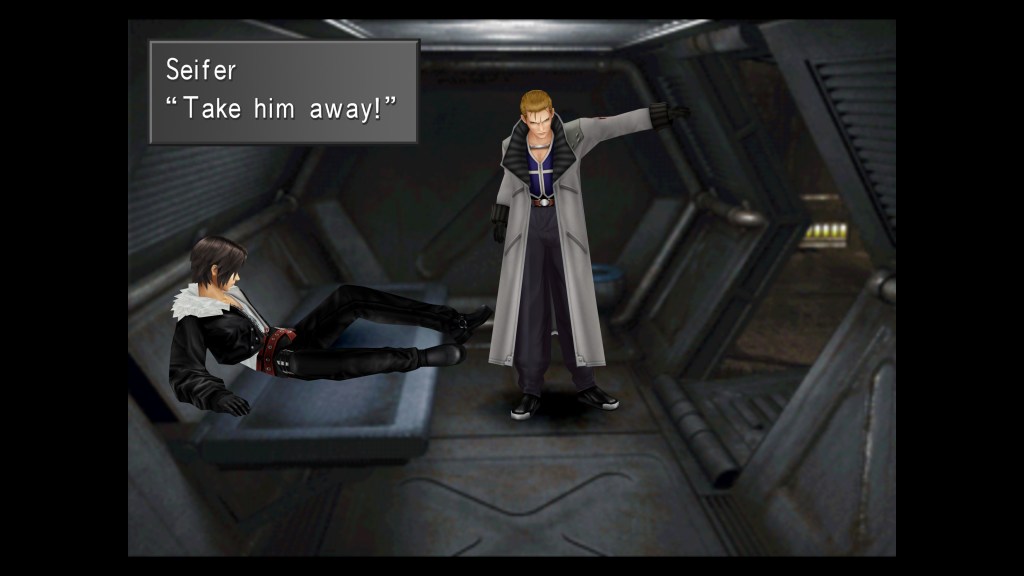
That’s not to say Squall doesn’t have a rival. Squall’s relationship with this style of character, Seifer, is a little complicated. I always got a feeling of mutual respect between the two moreso than an outright hatred. Seifer gets seduced by the sorceress and becomes a major antagonist for the majority of the game, but the fights with Seifer feel more out of obligation than out of some sort of grudge.
It feels to me like two people who just don’t know how to communicate. It’s an interesting dynamic.
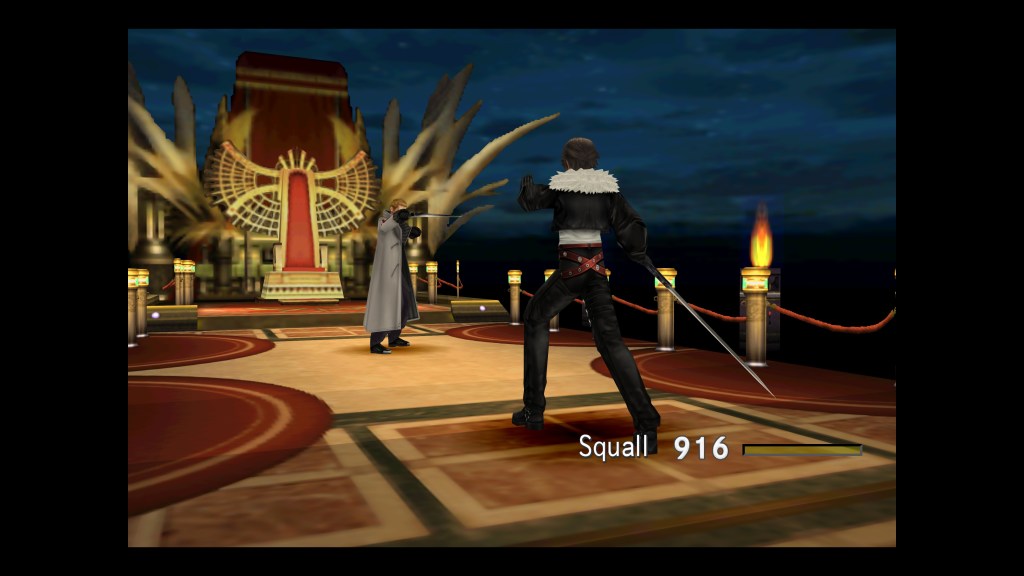
I have always been a fan of Squall as a protagonist. On first impression, he’s not someone you would want to bring home to your folks like the chivalrous Locke from FFVI or the charismatic Zidane from FFIX, but as you get to know him, you start to see what makes him special. I think a lot of people get hung up on all of his “whatevers,” but that’s just part of the charm. It’s all a put-on!
As the lead character, Squall is almost always a mandatory party member. His limit break, Renzokuken, also happens to be the best one in the game, so he’s always pretty handy to have around. At its base level, it hits the enemy multiple times. Multiple hit special moves are always a great thing in Final Fantasy because it’s a way to work around the hard damage limit of 9,999. Games like Final Fantasy X let you break that limit, but not every title lets you do something like that.
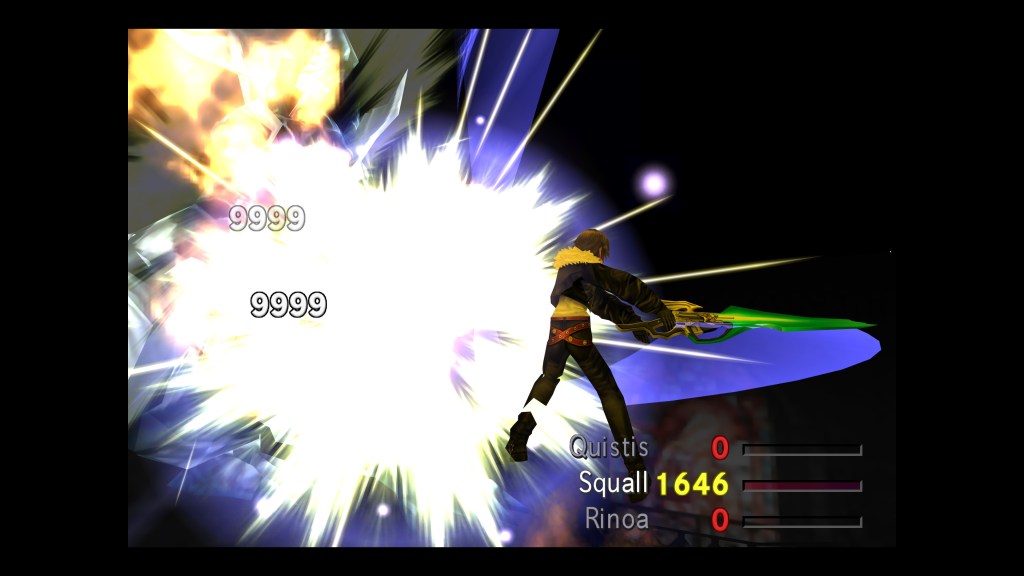
As you upgrade Squall’s weapons, you have access to various finishing moves. Most of them just add one extra strong hit, however unlocking Squall’s ultimate weapon – the lion heart – gives him a 25% chance to end his multi hit combo with ANOTHER multi hit combo. When I got it, this was a guaranteed string of hits for 9,999 damage. Essentially, Squall was outdamaging VII’s Knights of the Round every time he got a limit if this thing popped up.
It’s nice when the character that you use the most is also the most useful!
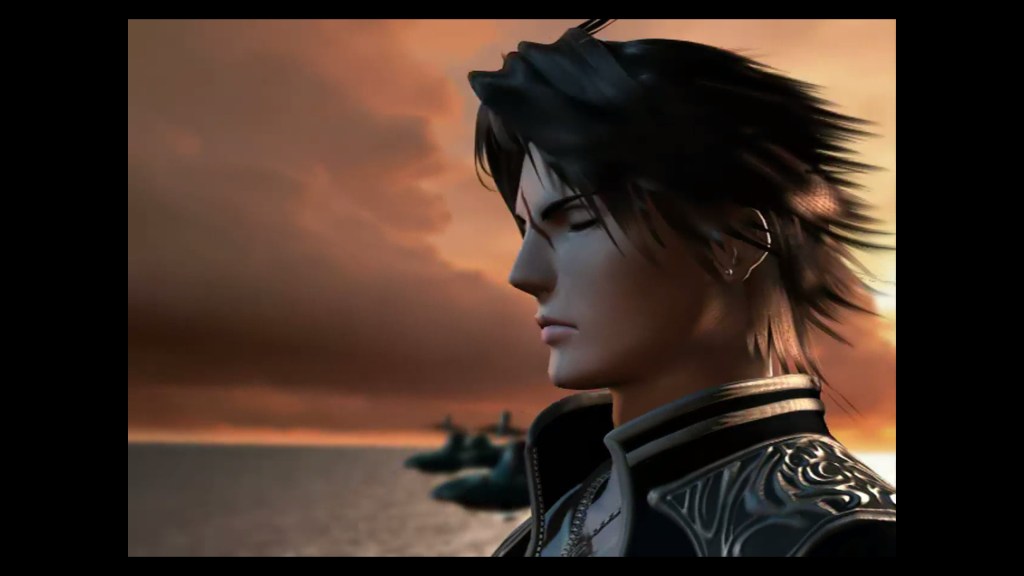
Rinoa Heartilly

Here’s our much talked about co-lead! As mentioned, SeeD often acts as a mercenary group, and your group is introduced to Rinoa because her faction hired SeeD in order to free the town of Timber from the Galbadian Military.
Of course, this isn’t the first time we see her as a character in the game. During the SeeD banquet, she approaches Squall for a dance and as we all know, something about that little encounter implanted into our hero’s brain.
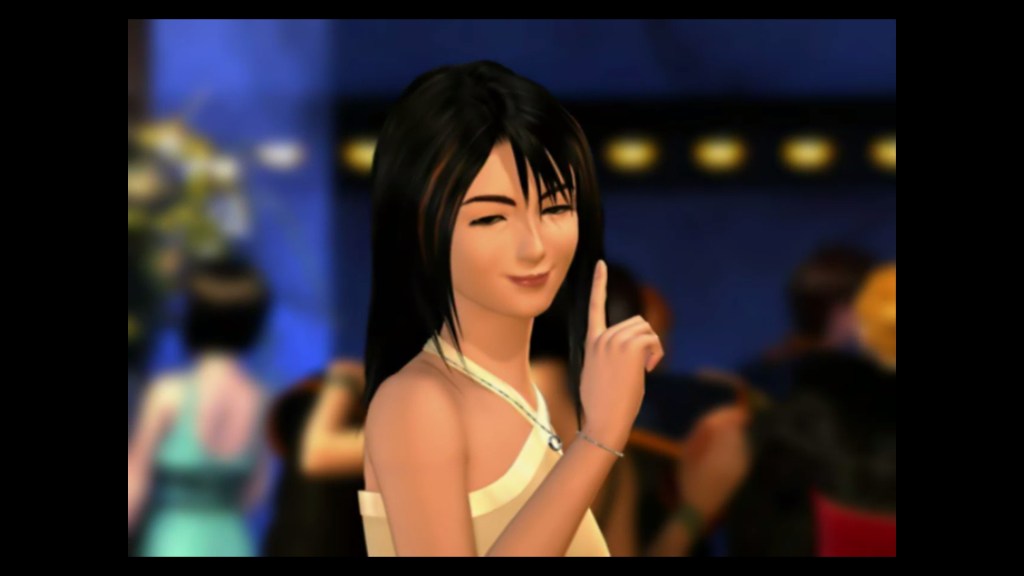
Rinoa is the daughter of a Galbadian military official and, in a very highschool like maneuver, spends a lot of time rebelling against her father. Even when her dad’s interests align with hers, she picks apart his motivations and really doesn’t want much to do with him.
This stems from losing her mother, a singer by the name of Julia, at a very young age. She even refers to her father as ‘that man’ from time-to-time. She is far from the last character to have daddy issues in this franchise, so get used to it.
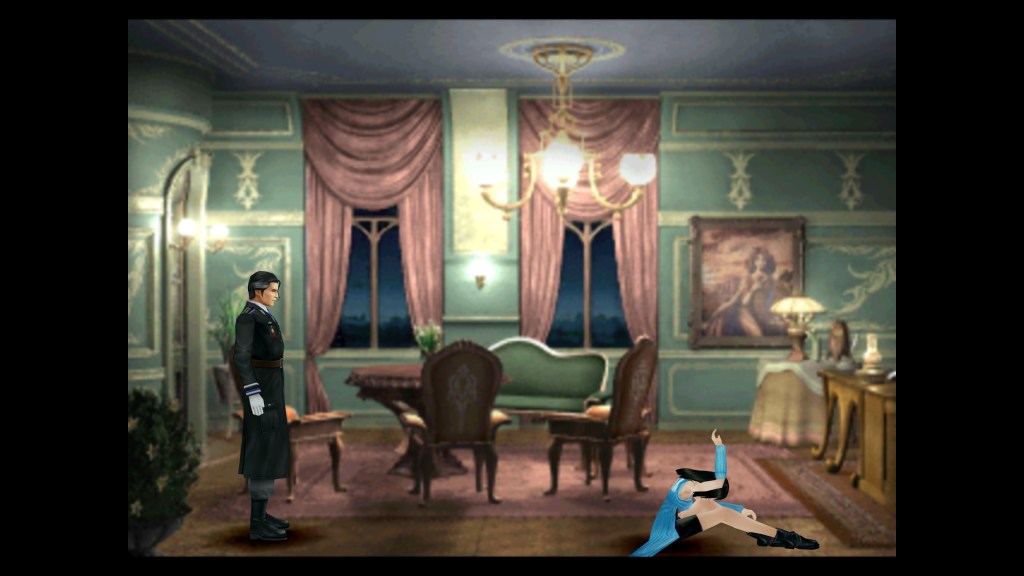
In the early game, I think they portray Rinoa as a bit of a spoiled brat who is rebelling without much of a plan. Rebelling just to rebel. Makes perfect sense for a teenager, so it’s not something that bothers me. A lot of her early actions make her seem immature, such as a long diatribe about how she purposefully made a model train look really bad to represent her hatred for the government or her trying to pass along her own ideas during the plot to assassinate the sorceress.
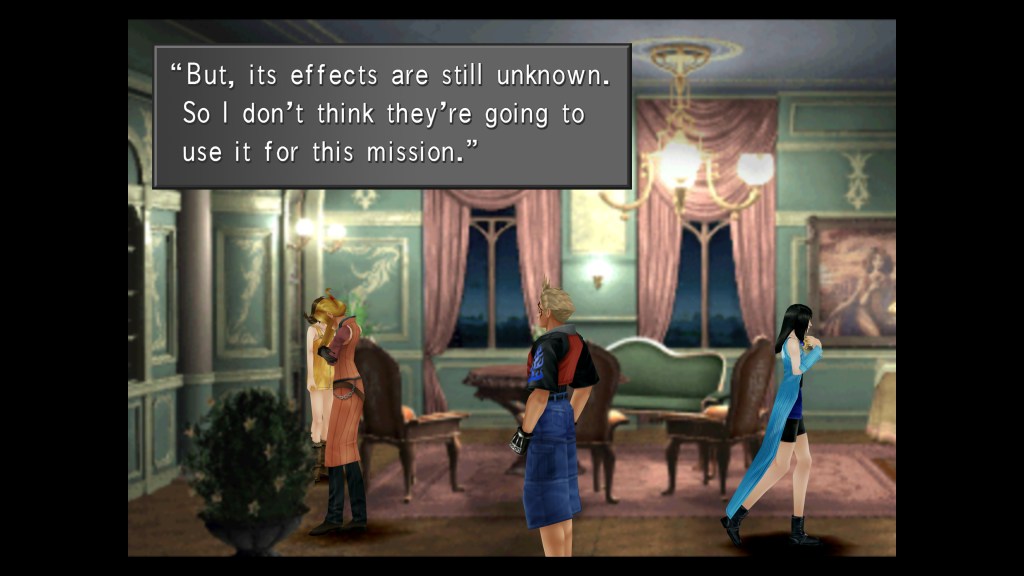
Despite this, I don’t think she’s unlikable during these early portions of the game. The character model stuff I talked about above help flesh out her character and make her seem pretty charming even when acting immature. She’s the kind of girl that would annoy you outwardly but inwardly you find yourself thinking about her more than you’d like to. It’s so easy to see how Squall could flip so suddenly on her. She’s immature and entitled and impulsive until she isn’t.
A lot of Rinoa’s character moments come from the often-discussed romance between her and Squall, so I’ll only touch on that briefly. With Squall, they tell you he’s falling for Rinoa through his various thoughts. With Rinoa, they try to be as blunt as possible with it. She often says little sweet things about Squall’s personality that make our main character blush a little and later, she takes Zell aside and asks him to make a copy of a ring Squall wears for her because ‘she thinks it’s cool.’ Uh huh.
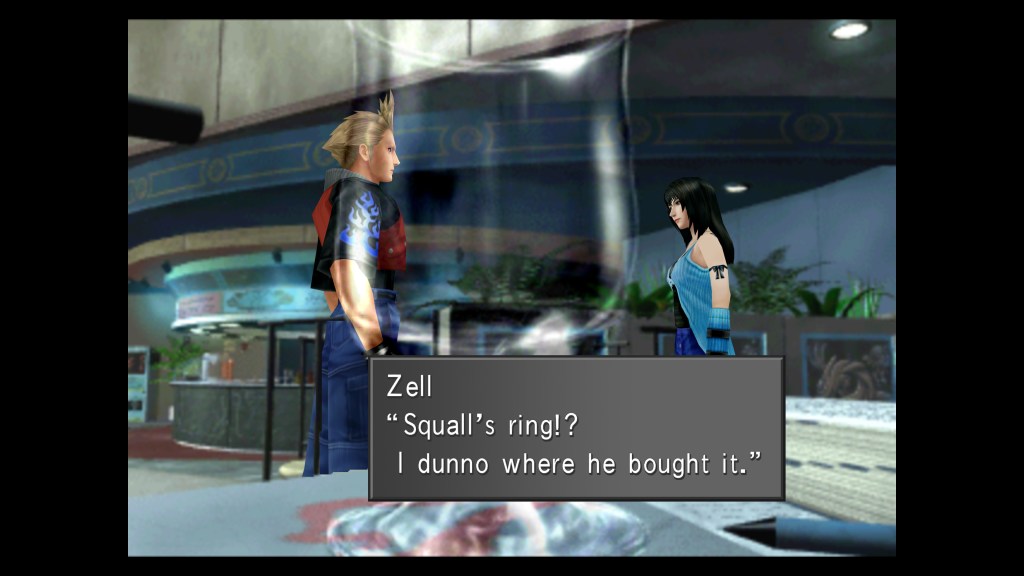
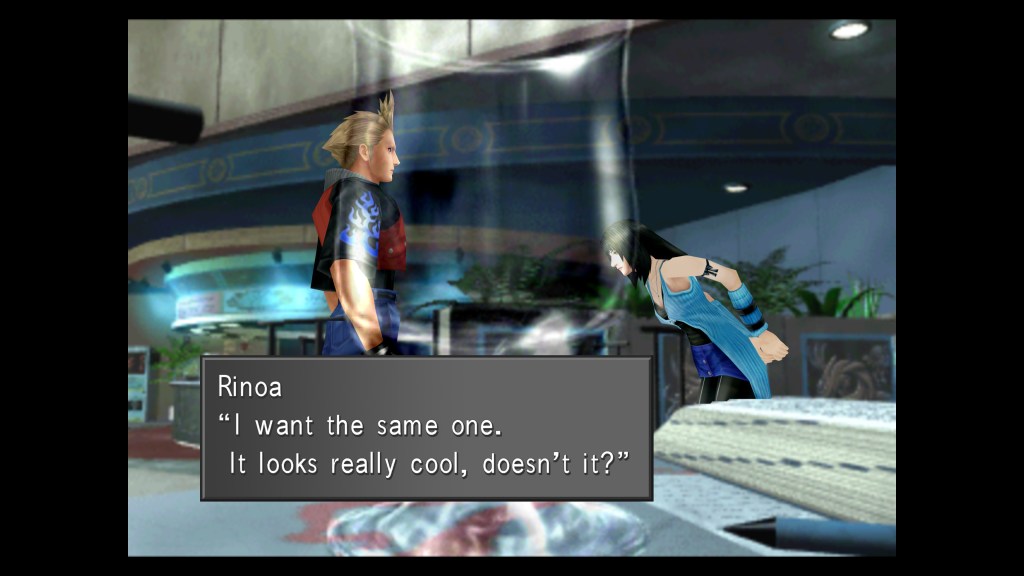
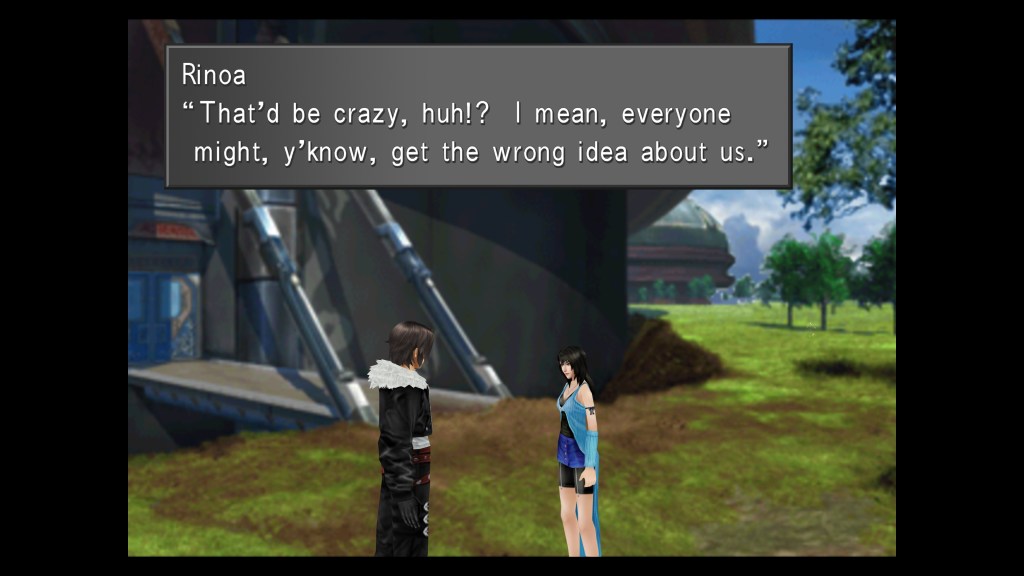
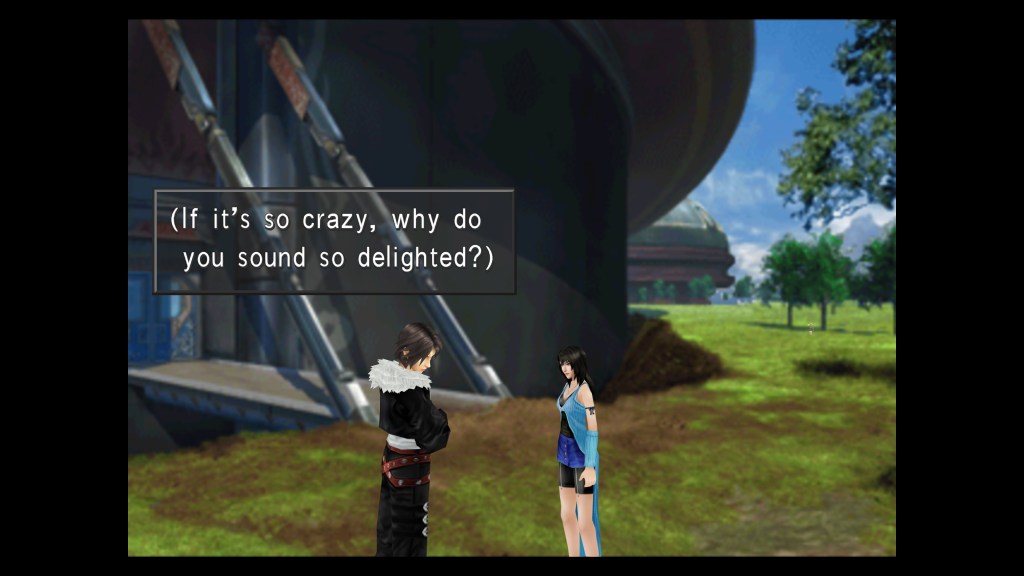
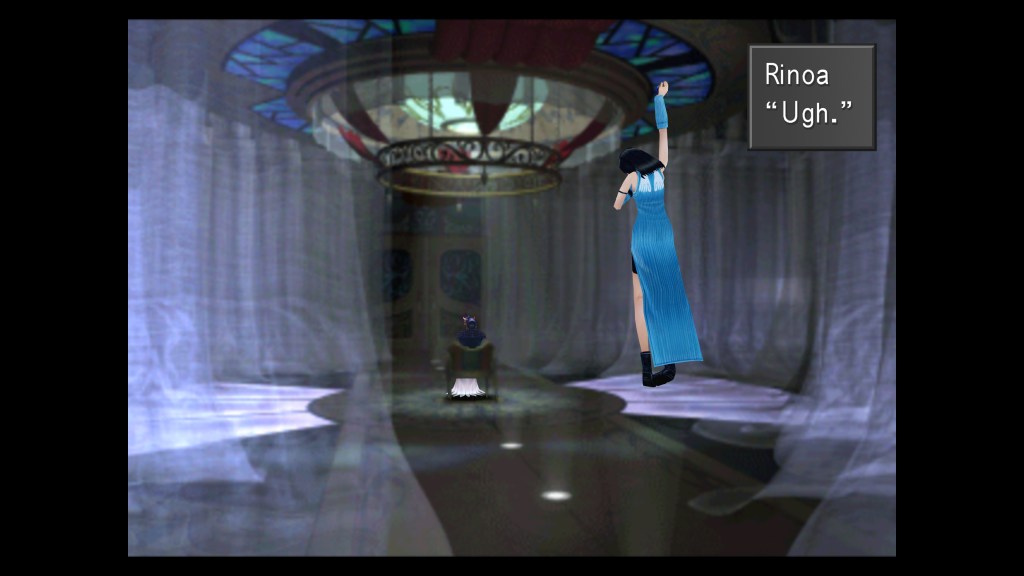
Rinoa spends a lot of the later parts of VIII being something of a damsel in distress. In one of the most insane feats of strength witnessed in the franchise to this point, she is seen literally hanging for her life for minutes during a clash between Balamb Garden and Galbadia Garden at the end of the second disc. She holds steady for an ungodly amount of time while nobody saves her and instead say “SQUALL! IT MUST BE YOU WHO SAVES RINOA!”
I feel like she’s there for an hour, it’s crazy. That doesn’t have anything to do with her as a character, I just wanted an excuse to talk about that scene.
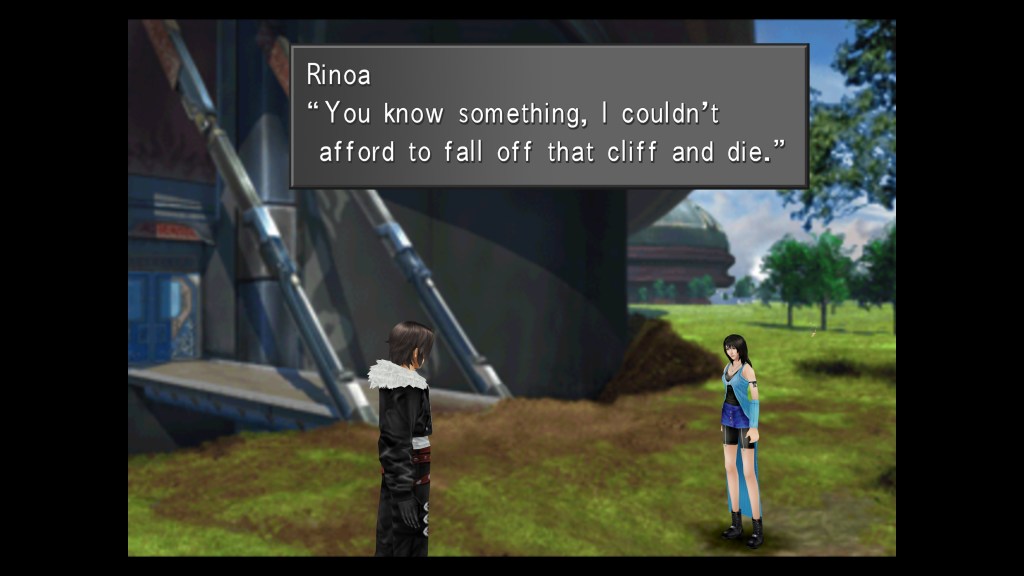
At the end of this conflict, which sees the party defeat the sorceress momentarily, Rinoa collapses and is out of commission for much of disc 3. This is when we discover just how deeply Squall has fallen for her – he literally carries her on his back across a continent – but the passing out has multiple purposes. It leads to Squall opening up about himself and his feelings.
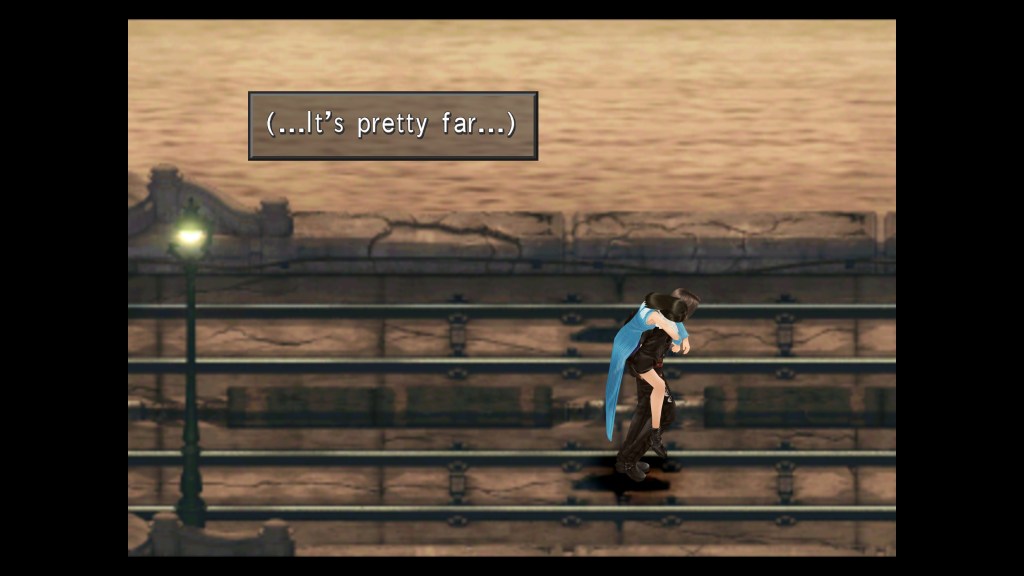
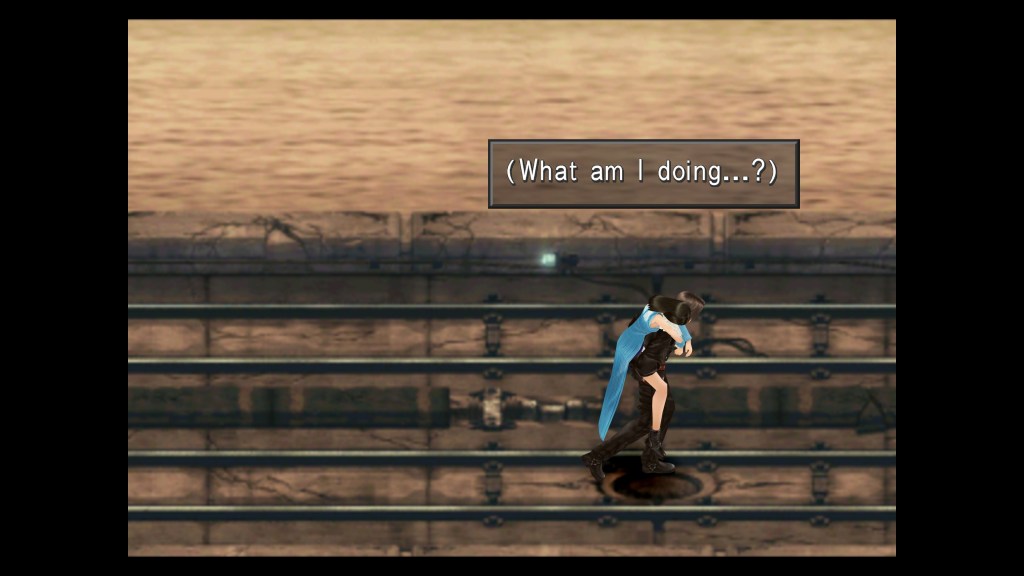
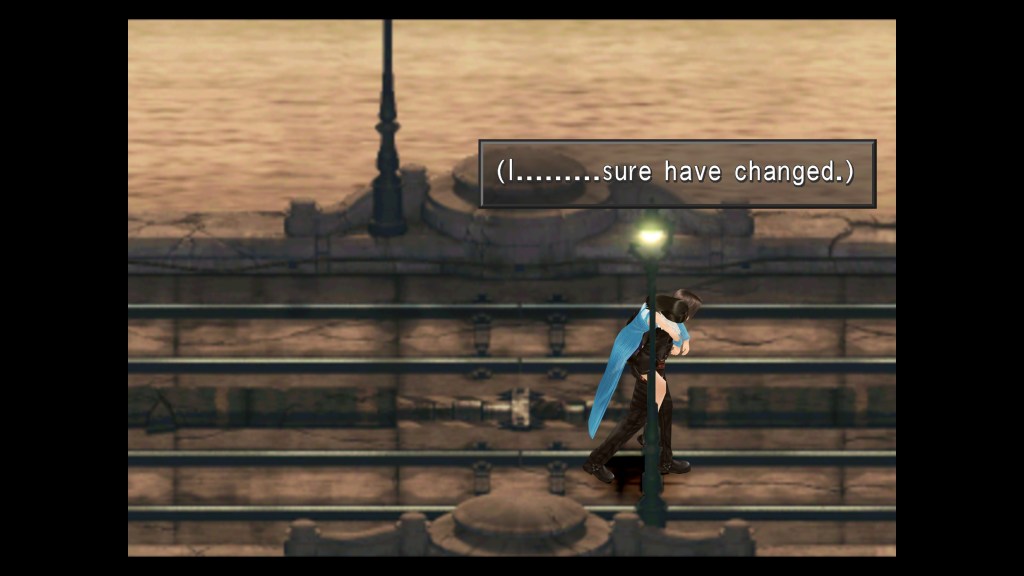
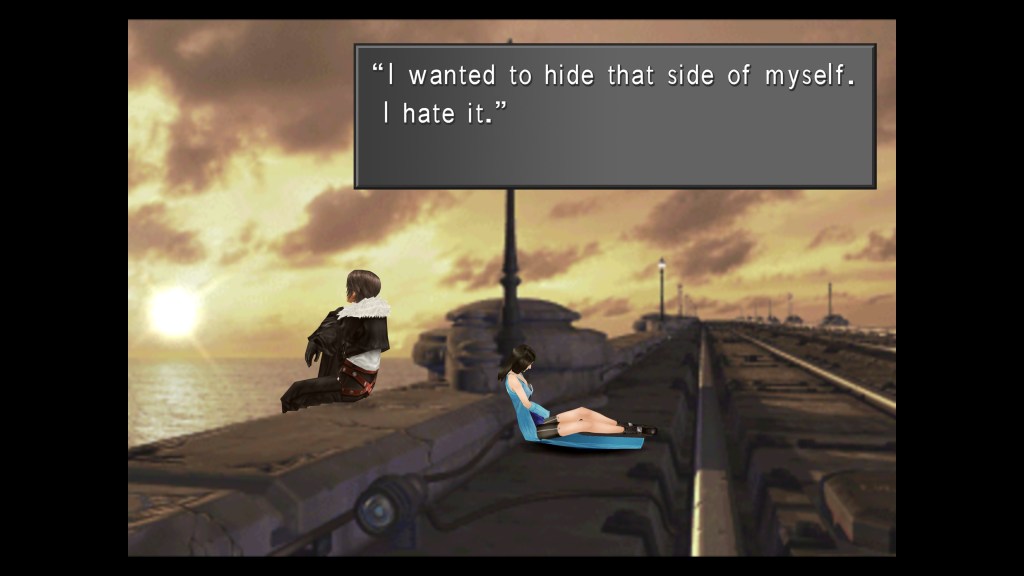
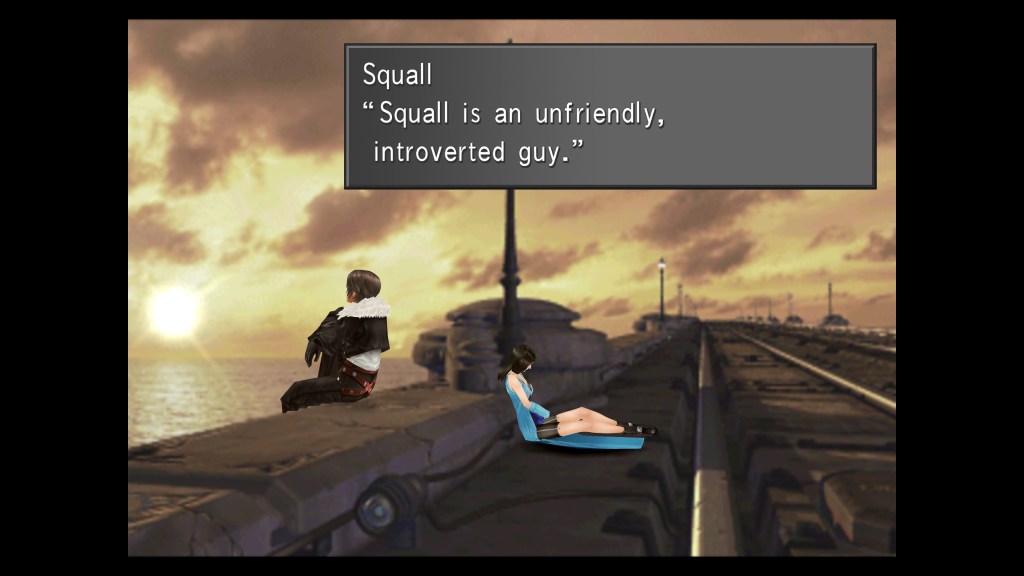

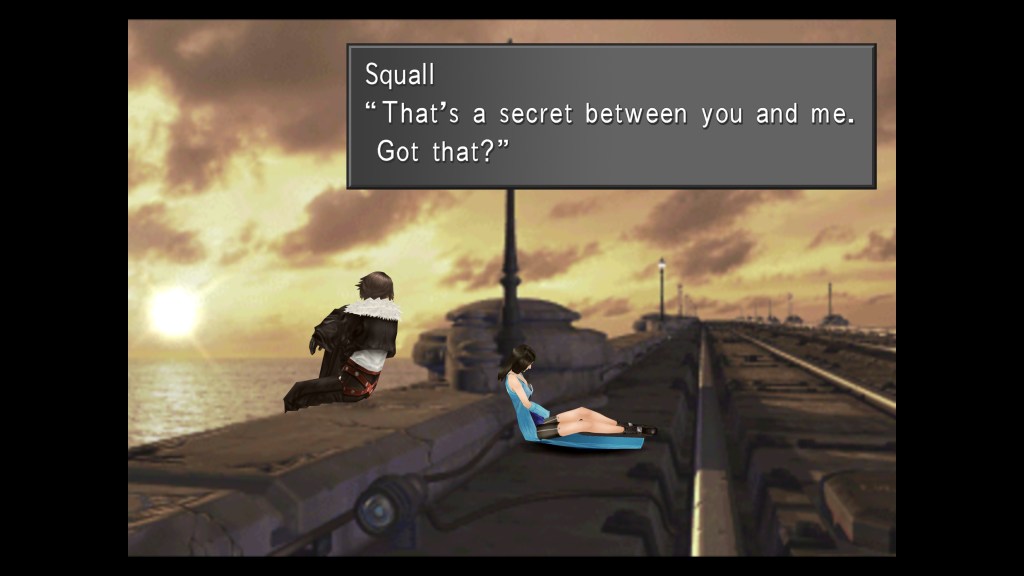
When the sorceress loses to the party at the end of the game’s second disc, she hops into Rinoa’s body. So from that point on, Rinoa is harboring a very dangerous entity inside of her. I’ll get into it later, but for now just know this leads to Rinoa expressing fear and doubt in herself for the first time we get to see in game. The government of Esthar, the biggest city in the world, wants to lock her up because of this.
She understands that it’s for the best that humanity locks her away because the being inside of her as the potential to destroy, well, everything but she is still scared. It leads to the first embrace of our leading two characters while the game’s theme ‘Eyes on Me’ plays and it’s a very sweet moment. Rinoa is a very solid romantic lead for the story this game is trying to tell.

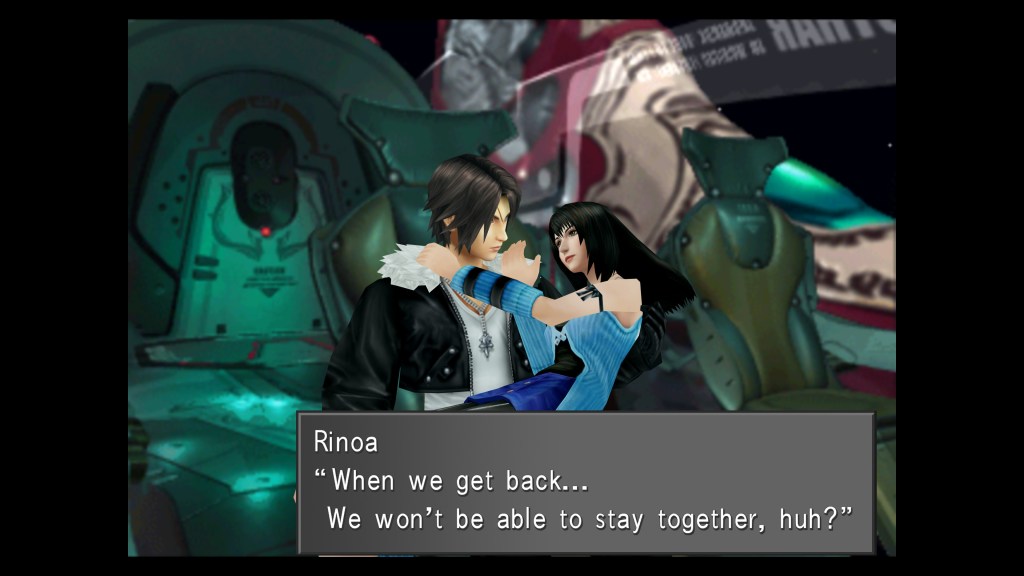
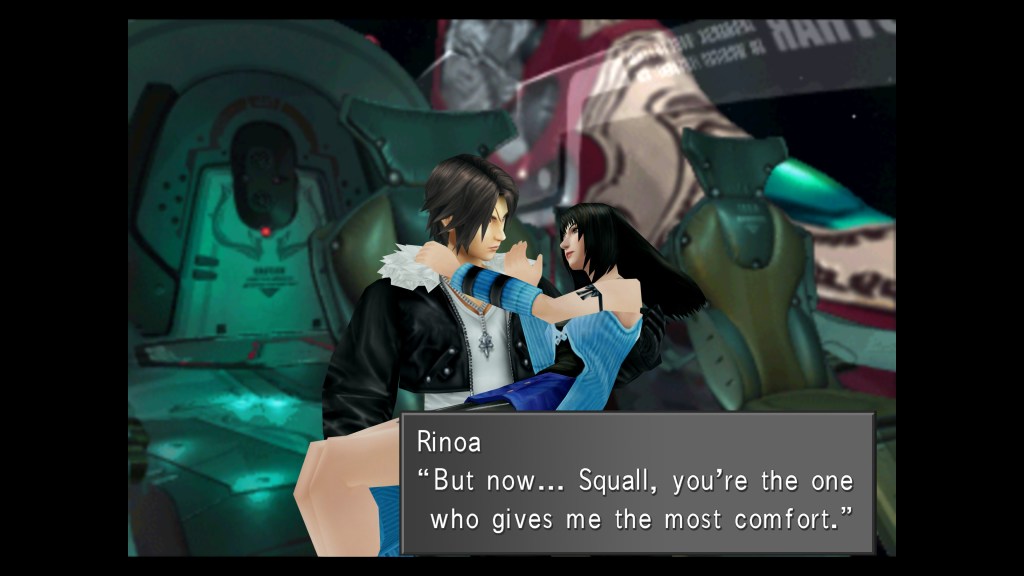
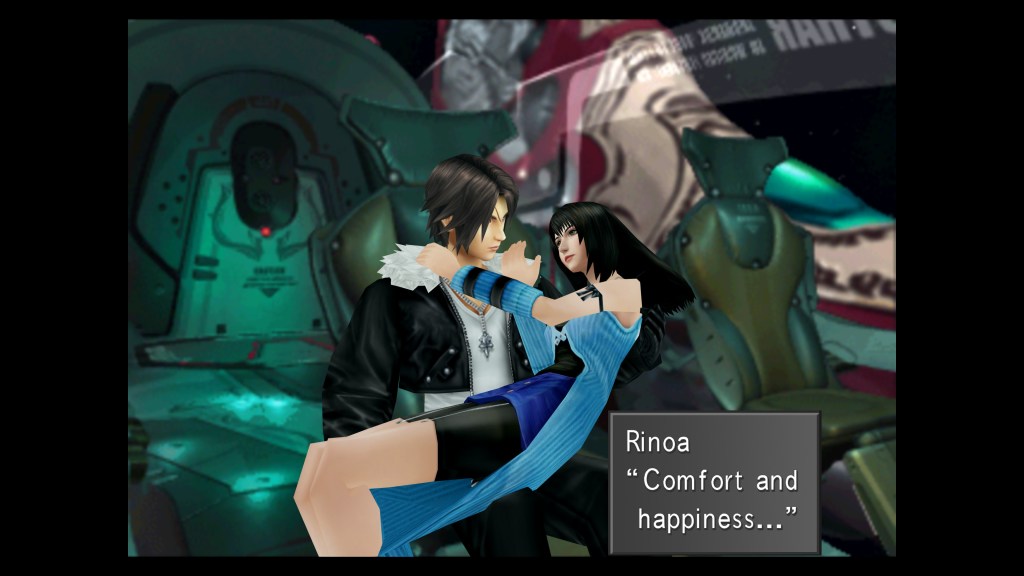

Let me speak very briefly on Eyes on Me. With VIII having such a heavy focus on a love plot, they decided to give the game a Hollywood-esque love ballad to go along with it. When a song in a game that mostly uses intrumentals starts using vocals, you pay attention to it. Think about how much the Sephiroth theme for FFVII stands out. That wasn’t even intended to be the main theme!
The same cannot be said for “Eyes on Me.” You hear it as an instrumental from time-to-time before it plays in full, but when it DOES come on it’s unmistakably the big relationship moment that the game has been building towards. Rinoa is in full self doubt mode and sits on Squall’s lap while they talk about life and their respective situations.

It’s an unmistakably powerful moment and is one of the highlights of the game and the song absolutely makes it. There’s a lore reason for the song that I will discuss in Laguna’s section, but just know for now that the execution is perfect.
‘Eyes on Me’ is exceptionally cheesy. It’s sung by a Chinese woman (Faye Wong) in English and at times it sounds like very broken English. This is the version all territories got. I feel like if you put it on for someone who doesn’t know the context, they probably would either ask you to skip it or they would just tune it out until the song concluded.
Knowing the context has made this song an absolute favorite of mine. I understand there’s a reason future signature tracks have both an English and Japanese version and I get the faults, but every time I hear the song, I just think of the entire romance plot of VIII and smile. It does exactly what it is supposed to do and I love it.
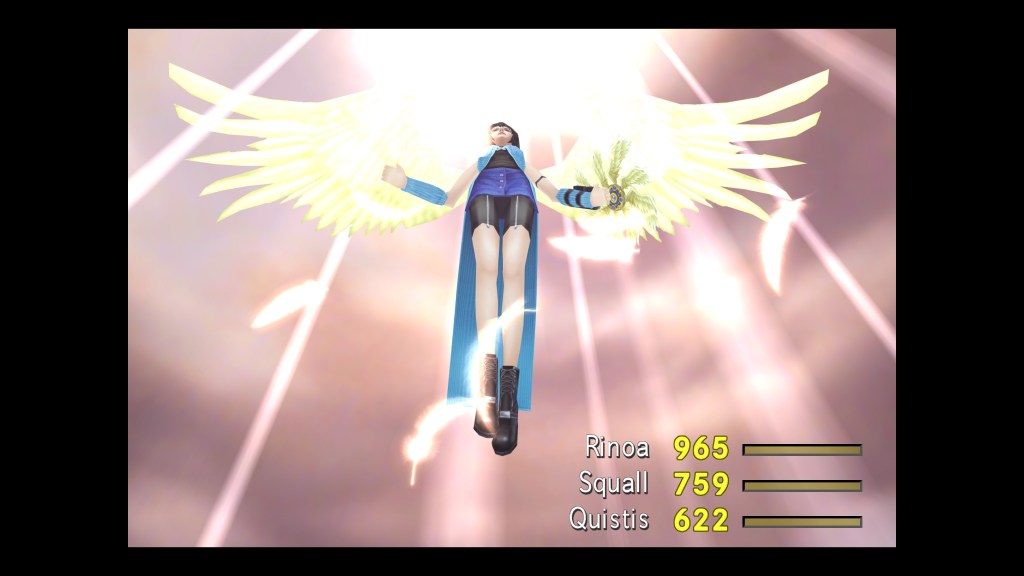
Rinoa’s limits kind of suck. She teams up with her dog Angelo to do a variety of skills, but you can’t actually choose what she uses. So while there are some handy abilities, like one that renders your entire party invulnerable for a short period of time, it’s impossible to get it to come out when you want it to.
When Rinoa becomes a sorceress, she gets an additional ability where the game’s AI puts in commands for you and turns her into something of a super character. If you’ve read my other entries, you know how infrequently I use these abilities. I like having control.
Despite having the least useful limits in the game, I still have Rinoa in my party. It just feels important to have Squall and her together as much as possible. I tend to make my main party characters I enjoy as opposed to characters who are useful, so I guess the fact that the co-lead is usually in my party shows how successful they were in making their romance story work.
Quistis Trepe

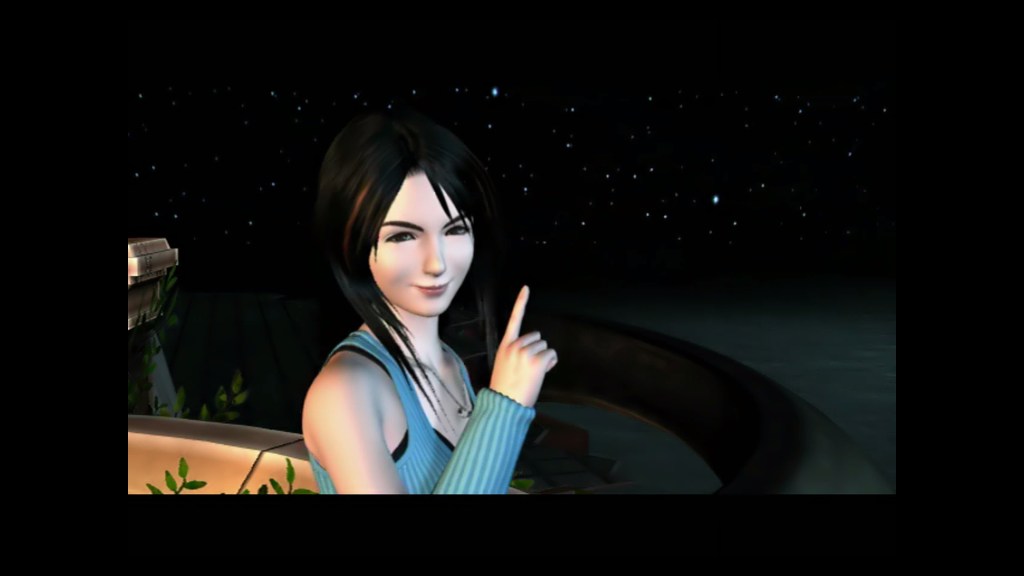
That cat down there marks one of two animals I have named after Final Fantasy characters! She’s between 10 and 12 and a real sweetheart. She acts kinda aloof towards everyone that isn’t me. That’s the kind of loyalty I want out of an animal! You’ll have to wait a couple entries to meet my other Final Fantasy named pet. Please be excited!
Quistis Trepe starts out the game as Squall’s instructor. Her goal is to guide the youth of the Garden into becoming SeeDs. She is stated to be very popular among the student body, even having a group of, uh, groupie students known as Trepies.

Each playable character has a dedicated Triple Triad card and you can win the first one by beating one of these Trepies at cards. When combined with GF Diablos’ Time Magic refine ability, you can get a horde of the excellent spell ‘triple’ early on and make large chunks of the game really easy. So what’s not to love there?
Quistis starts your adventure by acting strangely flirty towards her student Squall. She will complete his sentences and say weird things about how male students can’t really focus when they’re on missions with her. This culminates in a scene where Quistis takes Squall to the in-Garden equivalent of makeout point to talk about how she isn’t gonna be a teacher anymore, her insecurities and that she doesn’t know what to do with her life.
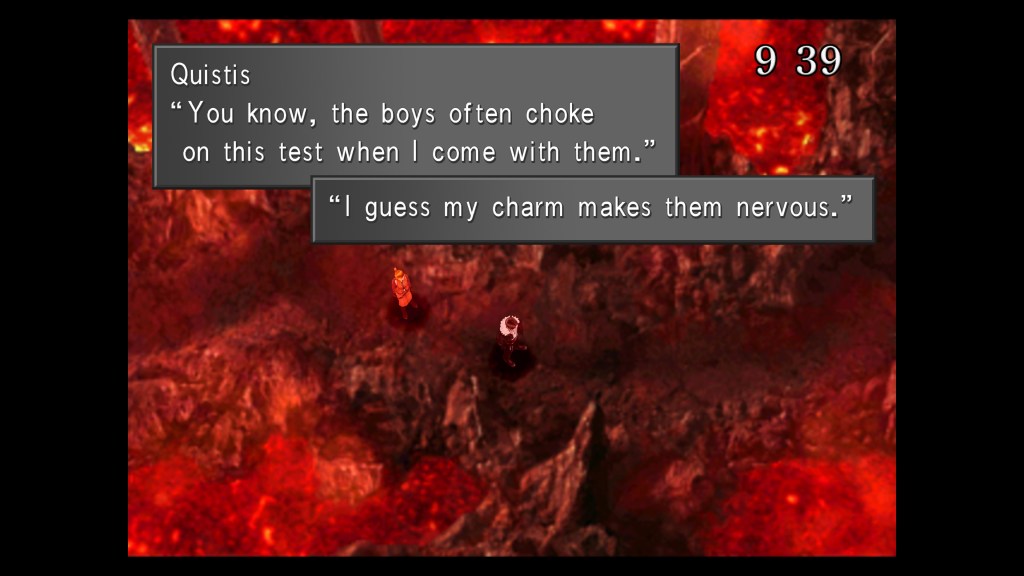
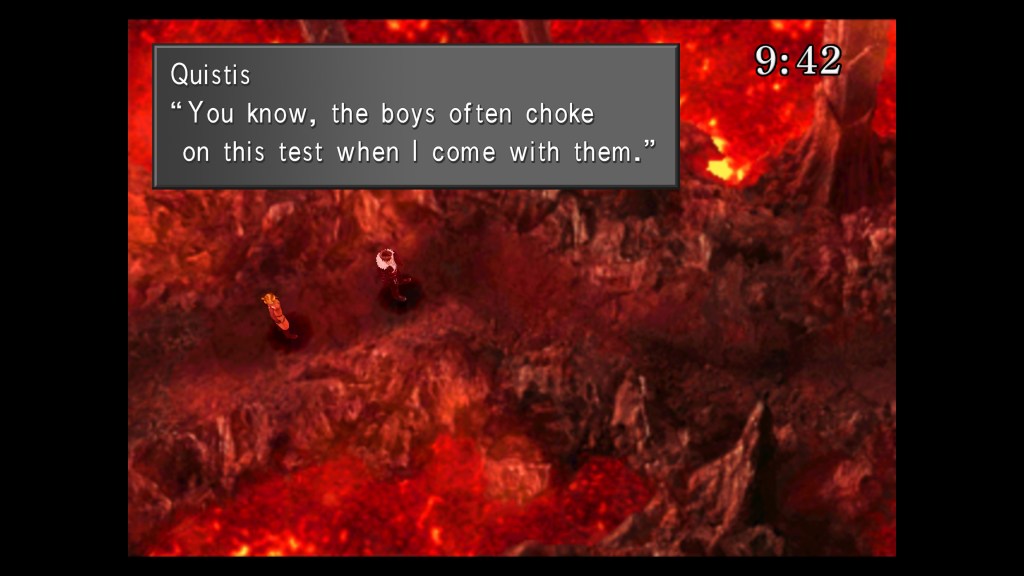
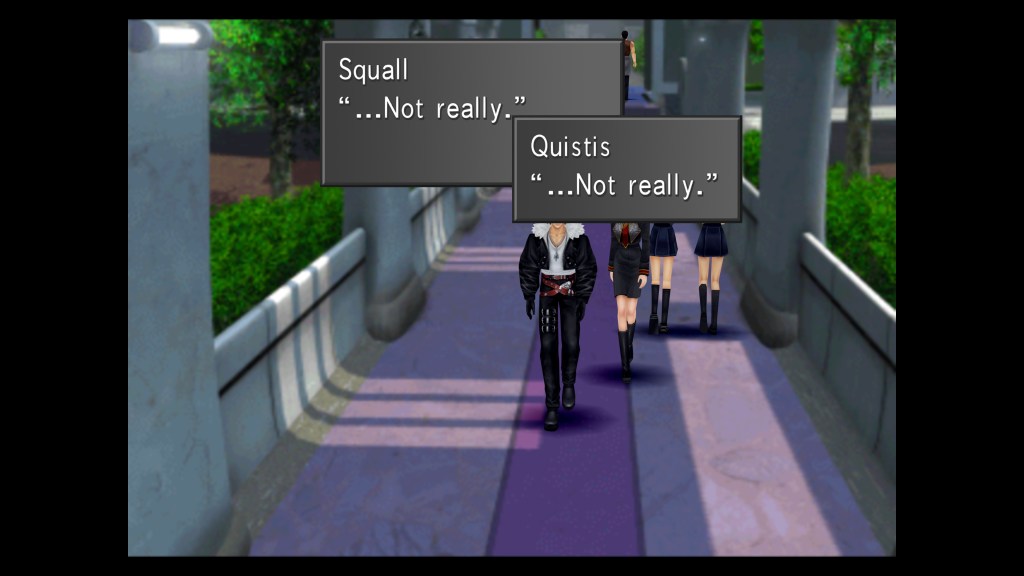
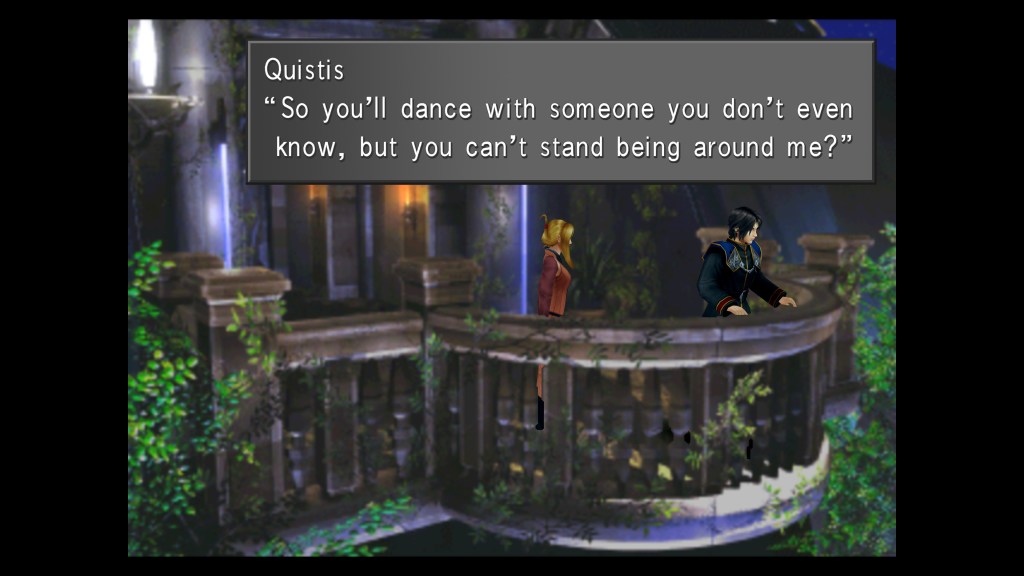

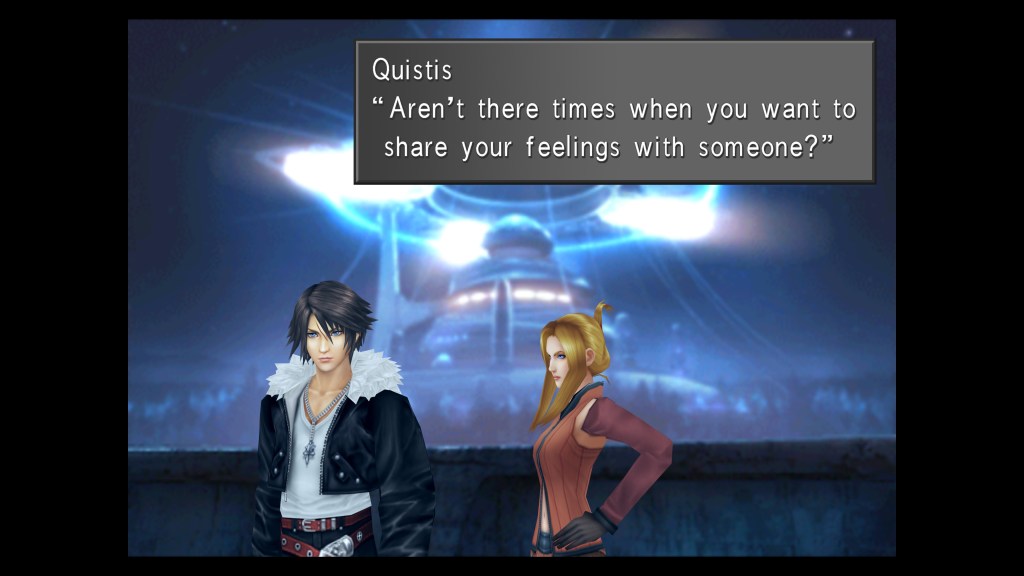
Squall, who is still in his ‘I don’t need anybody’ arc brushes this off and that’s pretty much that.
When it’s revealed to the player that your party actually all knew each other from the same orphanage, Quistis is portrayed as something of a doting older sister. This works into her status as an instructor at the garden as she’s guiding along the youths that she might think of as younger siblings.
It also works with her general demeanor. There’s a moment towards the end of disc one where she reprimands Rinoa for acting childish and running into a situation without a plan. She abandons her duty during this time, as leader of a team in a mission to assassinate the sorceress, in order to go apologize to her.
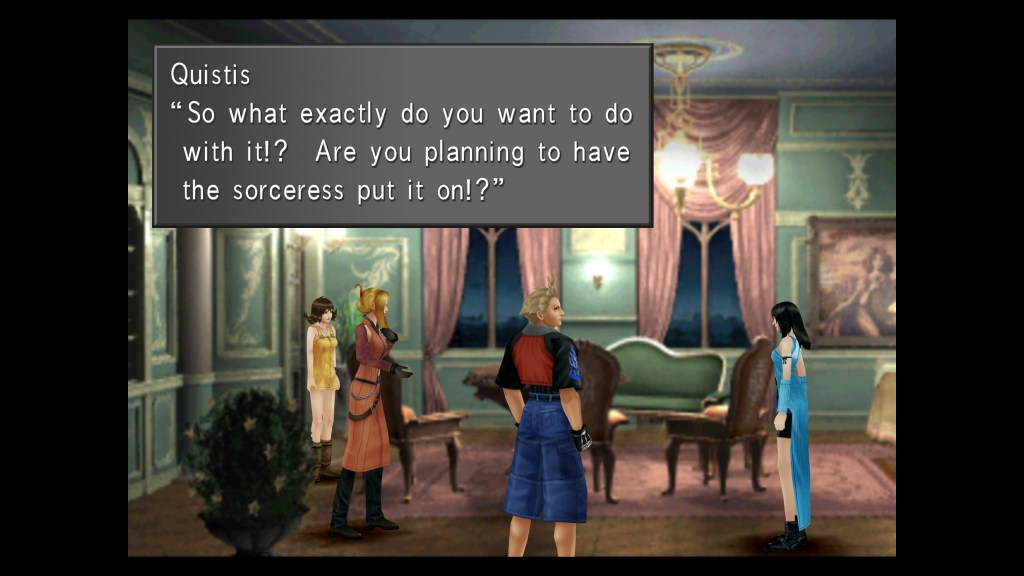
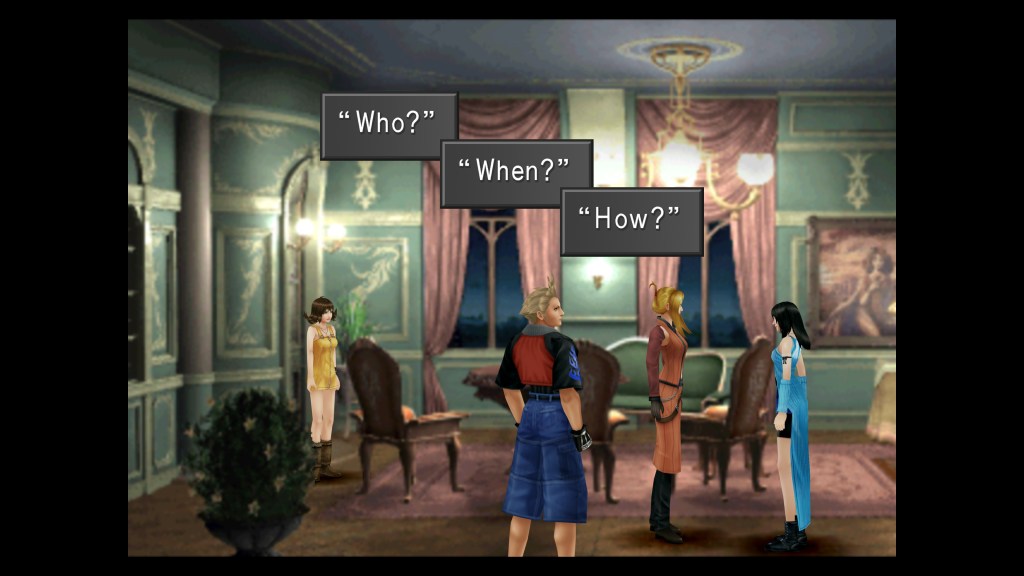
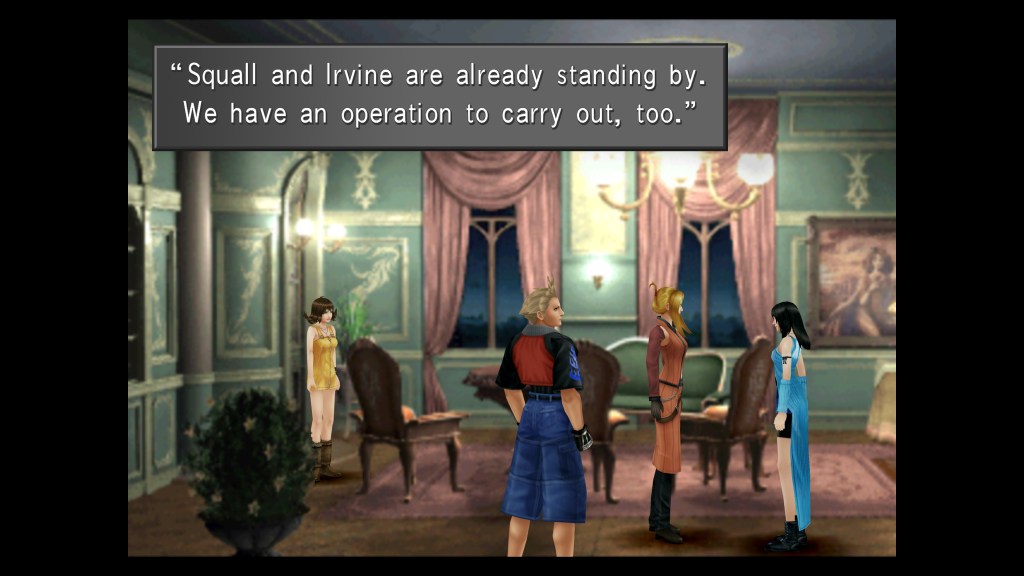
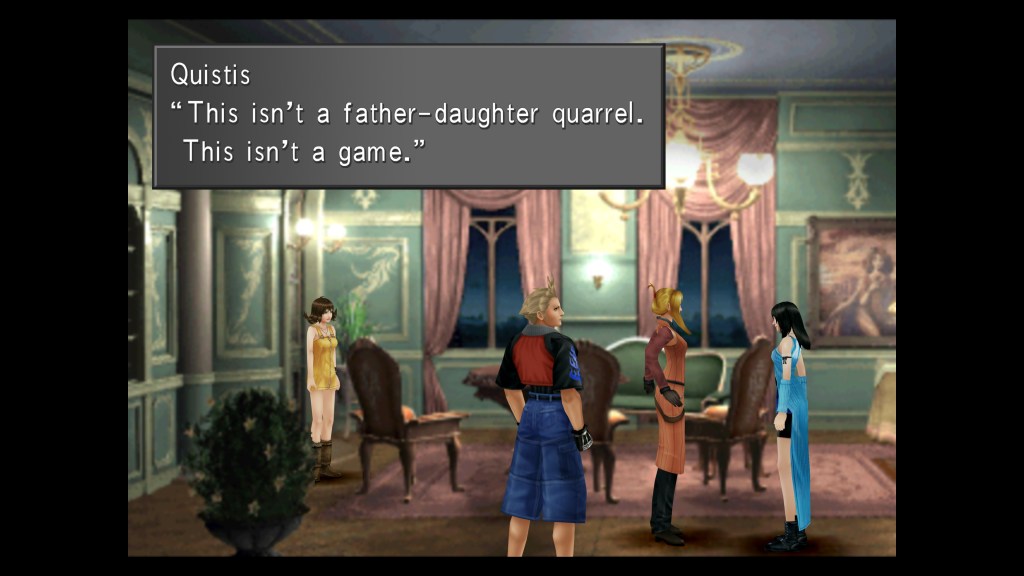
She was so concerned about the mental well being of her friend that she was willing to put the world at risk just to make her feel a little better. A bit shortsighted, sure, but fitting of a doting ‘big sister.’
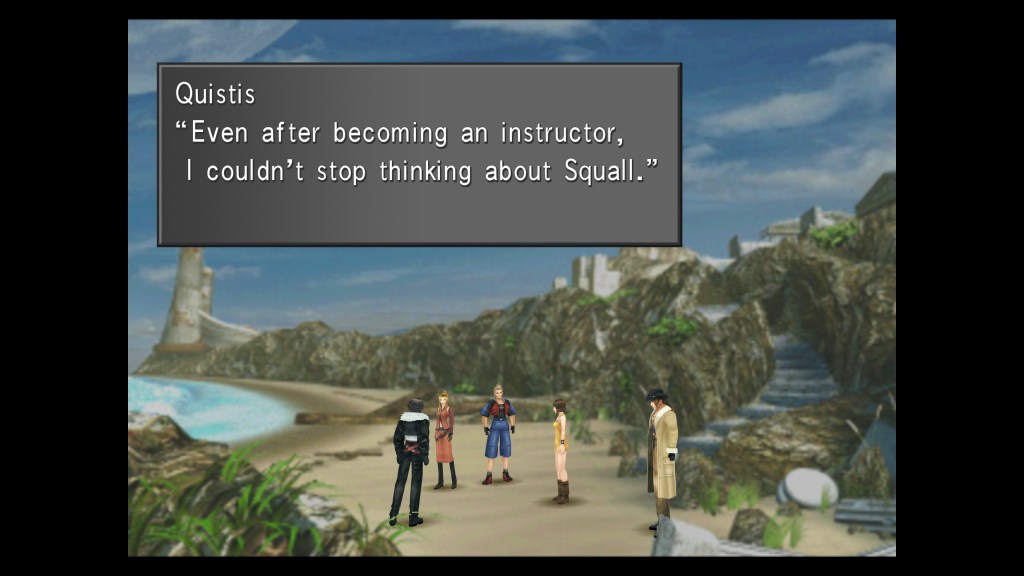
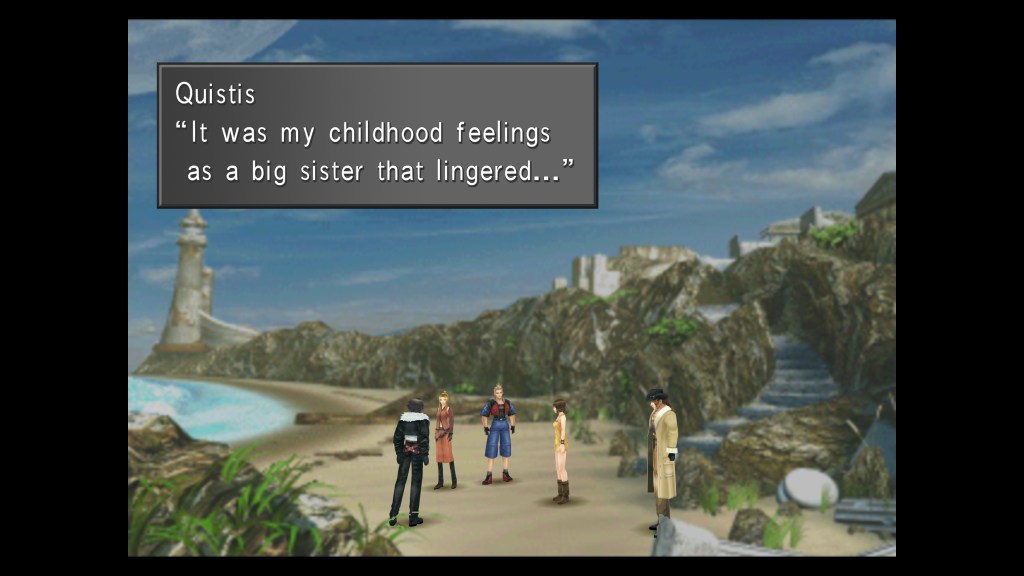
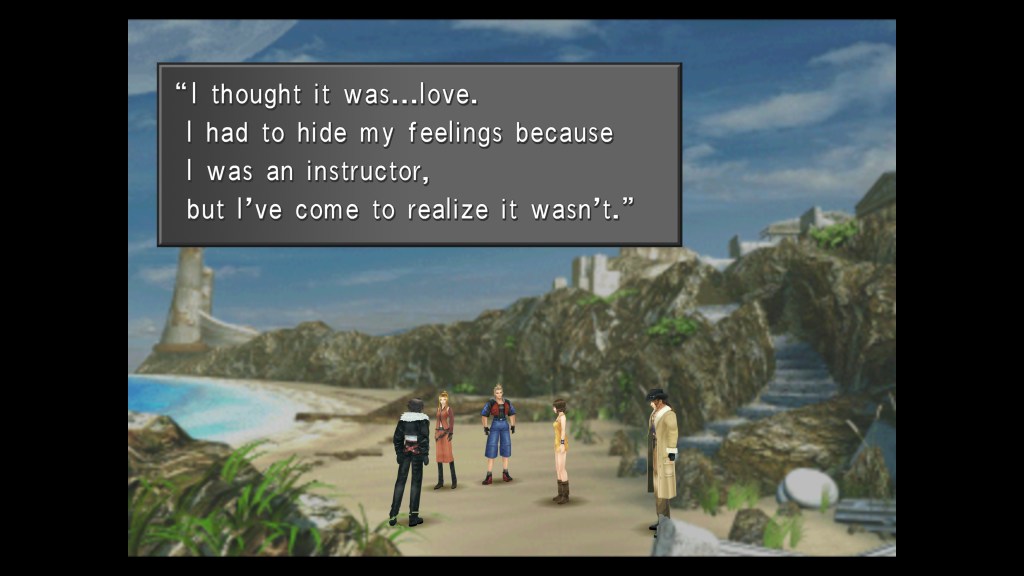
She later uses these big sister tendencies to suggest she never felt ‘romantic’ love for Squall but was more of a ‘sisterly’ feeling. I always took this as a total cope but hey. You do you!

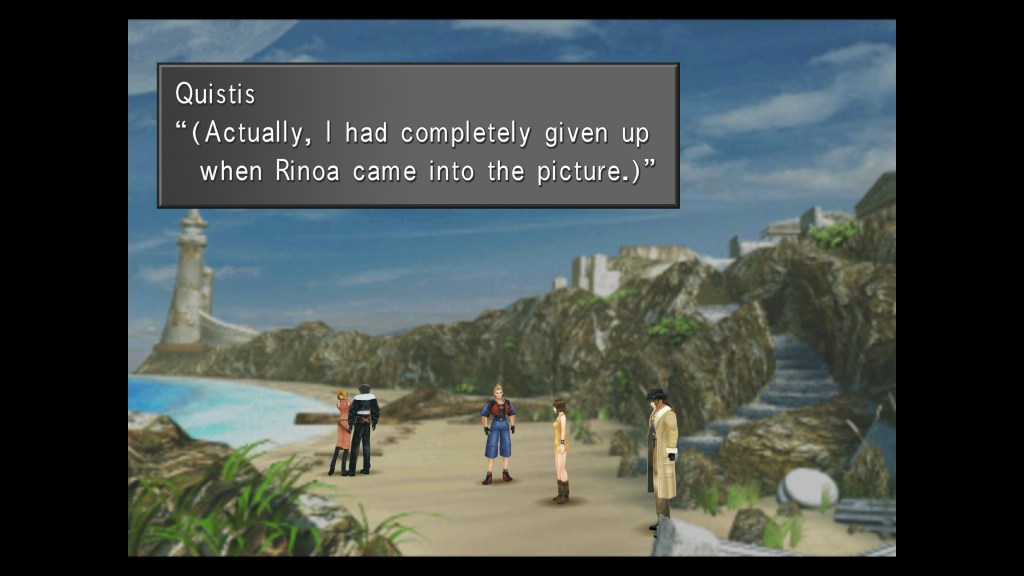
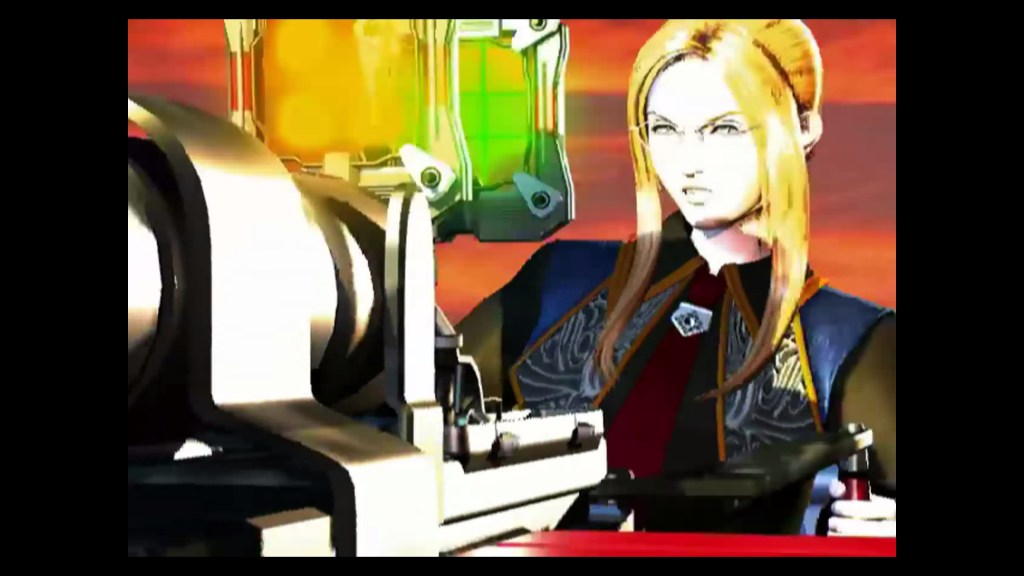
Quistis gets blue magic as her limit break. You give her items that certain bad guys drop and she can learn a new spell. Since you are unable to cast magic on every single party member without casting the spell triple, I found the blue magic spell mighty guard – which casts protect, shell, regan and float at the same time on your entire party – to be pretty handy.
Her other moves are single strong hits. Handy early game, not-so-much later on when one hit at 9,999 isn’t all that impressive.
I named my cat Quistis, so obviously I’ve always liked her. That said, this playthrough of the game left me feeling she doesn’t have a lot of characterization overall. If she got chopped out of the plot after disc 1 and was just a friendly teacher in the garden, it wouldn’t really have an impact on anything. She’s just sort of there.
Maybe I just liked her because she’s a cute teacher with a whip. Teenage boys, I swear.
Zell Dincht
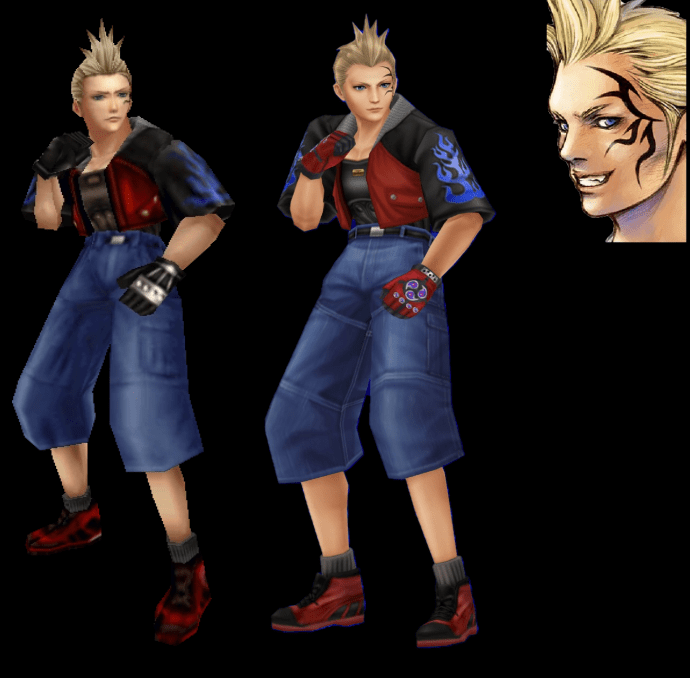
Zell tags along with Squall for the SeeD examination at the very start of the game and sort of just sticks around with him for the game’s entire runtime. Lots of characters leave the party for long stretches of time for one reason or another, but I can’t really remember a time where Zell just isn’t available. For better or worse, he’s something of a right-hand man for Squall.
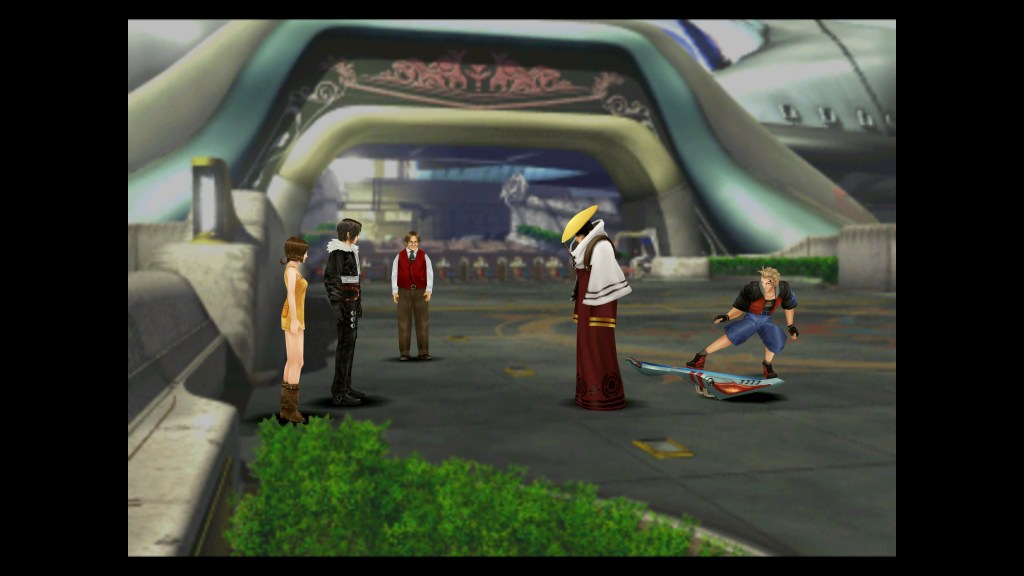
Zell is sort of a comic relief character. His whole schtick is trying to act really cool, think a 17-year-old trying to emulate 8-year-old Bart Simpson for some reason. He even won’t let anyone into his room because it’s his sanctuary zone!
In reality he’s a total nerd. This is presented in game by him being ruthlessly bullied by Seifer. This Seifer bullying extends even to the much-mentioned orphanage flashback as Zell was still getting shit on by him there. I guess he just has that sort of personality.
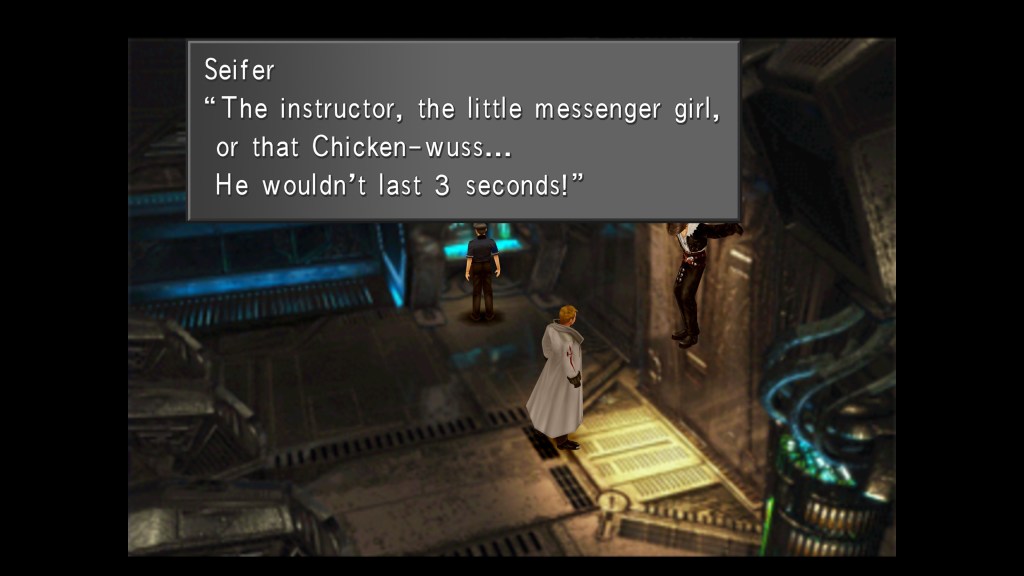
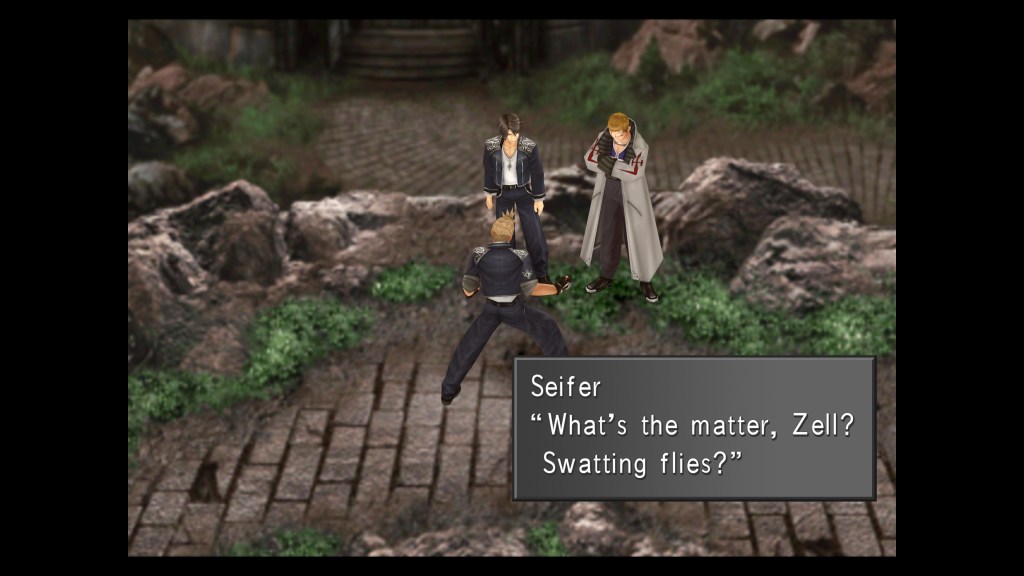
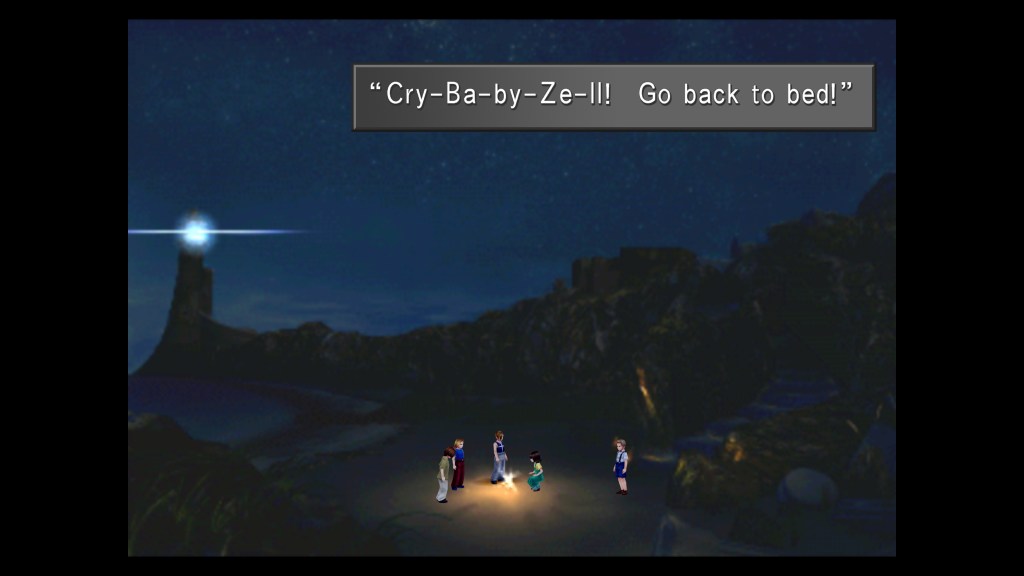
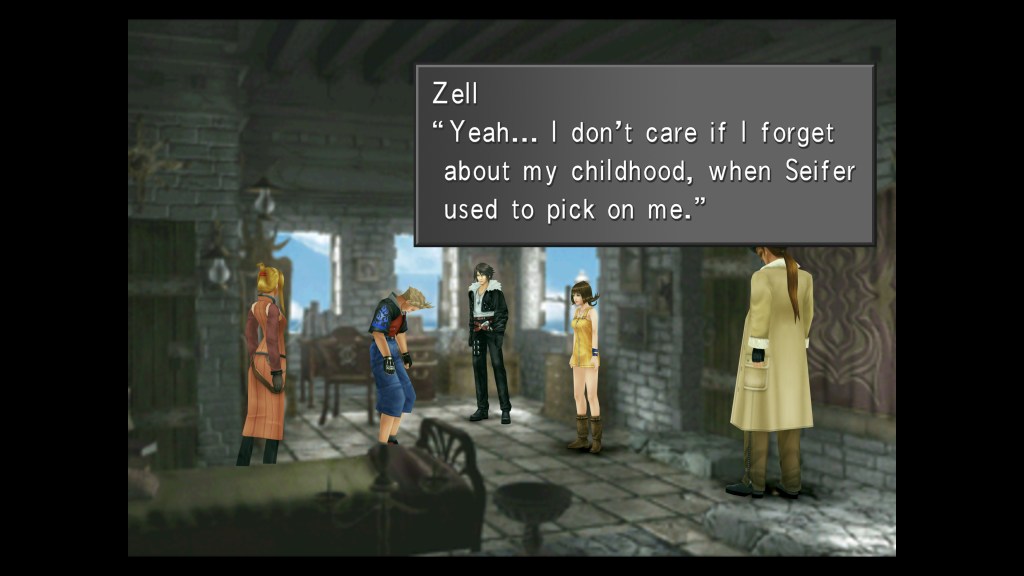
Despite all of this, Zell really has no shortage of self-confidence. Whenever Squall needs someone to do something important, Zell always believes he is the man for the job.
During the mission to assassinate the sorceress at the end of Disc 1, the one mentioned above that Quistis endangers by feeling bad for Rinoa, Squall divides the team into two units. One team is there to take a sniper shot at the sorceress while the other is meant to keep her in place.
Zell naturally assumed Squall is gonna make him the leader of the “keep her in place” crew but nope, honor goes to senior SeeD Quistis. Zell mopes and many laughs were had. There’s a scene where Rinoa’s group that hires the SeeDs won’t shake Zells hands. He mopes. And many laughs were had!
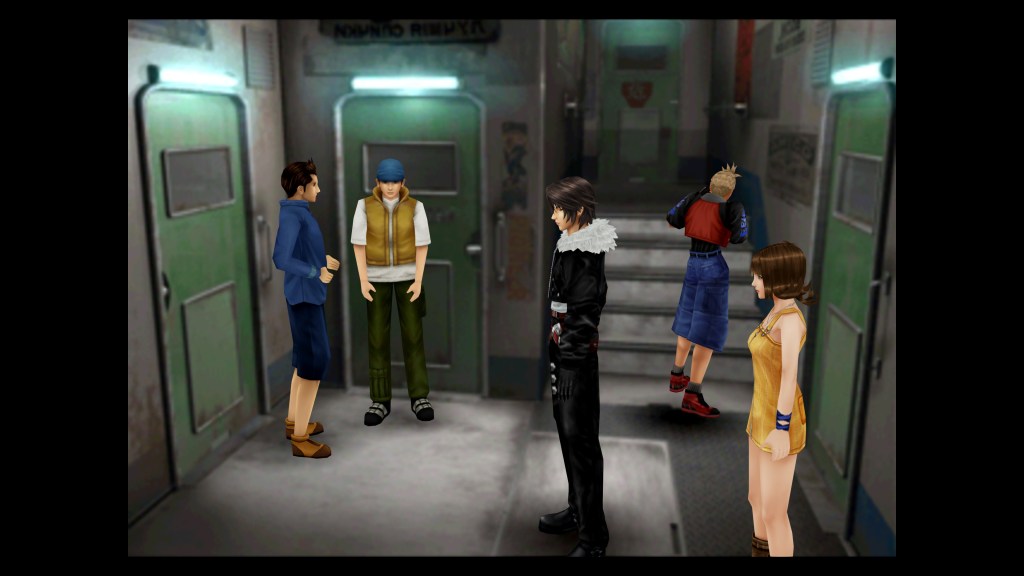
It’s pretty endearing, Zell comes off as a sort of dorky little brother character. The “MOM SAYS IT’S MY TURN TO PLAY X-BOX” character. He does a couple of little things to annoy you, but ultimately you know he means well and his heart is in the right place.
His big time to shine is during the beginning of Disc 2 when the crew is in prison for the failed assassination of the sorceress. The guards of the prison confiscate everyone’s weapons but ol Zell doesn’t USE weapons, he uses his fists! So he is able to bust up the guards and break his fellow SeeDs out of the clink. You almost feel proud of him!

After this moment, much like Quistis, he sort of just is there. He’s part of the orphan sideplot, but if he hadn’t been involved it wouldn’t have made any difference. His orphanage life seemed a lot like his Garden life. His main personality traits become ‘goofy little bro,’ ‘really likes hot dogs’ and ‘is good with machines.’ That last one is important because it makes it a little easier to get the best GF in the game, Eden, if he’s in your party. Hey, I’ll take it!
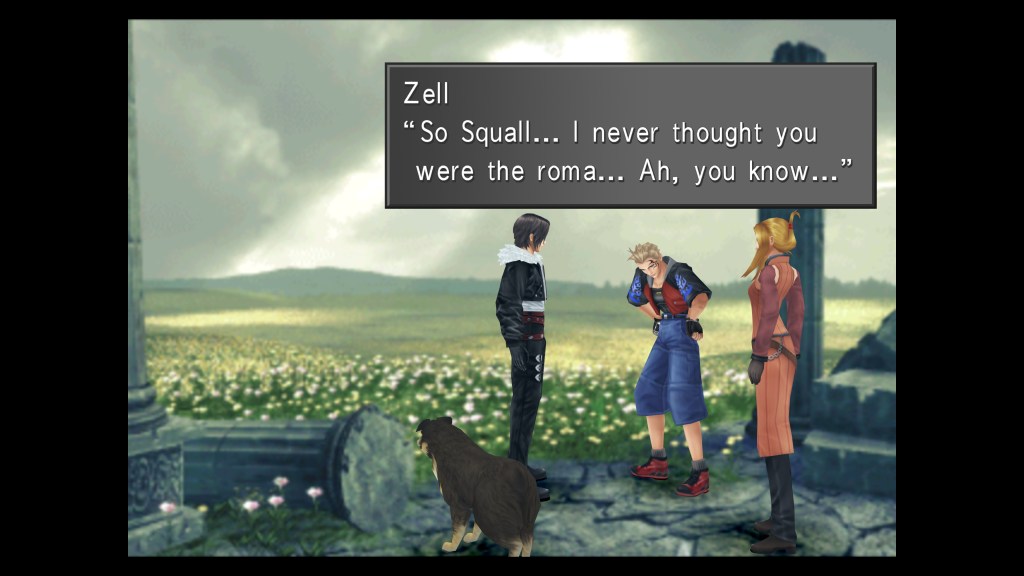
In combat, Zell’s limit break is awesome. You have to put in various button inputs during a short period of time. As long as there is time on the clock, you’re able to pull out a new hit.
If you know the inputs well, this can lead to thousands of hitpoints in damage. I don’t think I ever got Zell to hit Lionheart numbers, but it was closer than you would think. You can get new combinations by finding various fighting magazines, but I don’t think that’s necessary.
Also, bonus points for his ultimate weapon being gloves called Ehrgeiz. That’s right, I’m an Ehrgeiz respecter. GOD BLESS THE RING.

Seifer Almasy
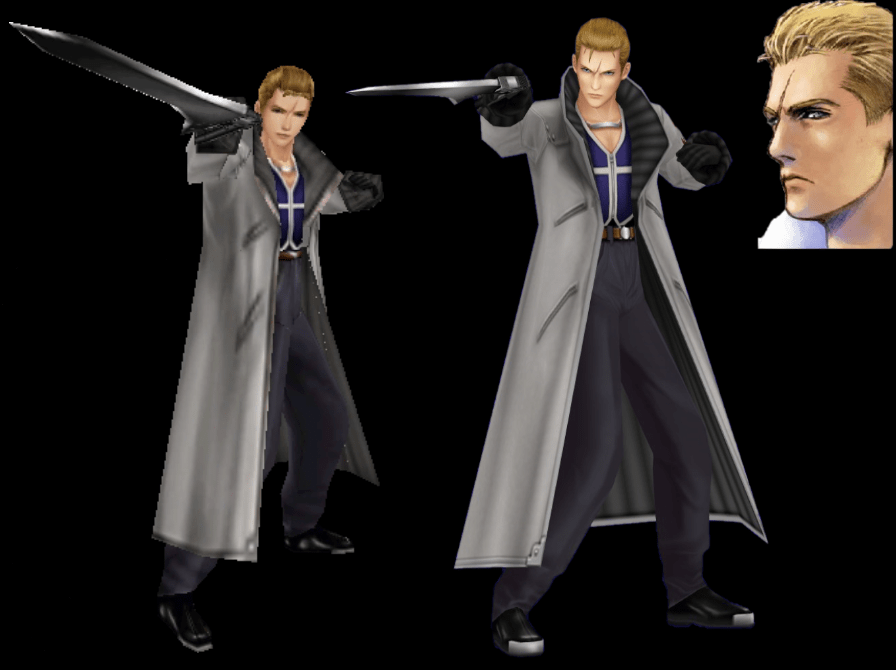
Squall’s rival and another member of the orphanage crew. Seifer starts out the game seeming overly antagonistic towards our leading man, but as stated above, their rivalry never felt super heated to me. It was more a factor of two guys who don’t know how to use their words.
He’s shown as a very headstrong young man that doesn’t quite play by the rules – he has failed the SeeD exam multiple times for example. Despite being stuck in something of a rut, he seems idealistic as he has a ‘romantic dream’ that he mentions.
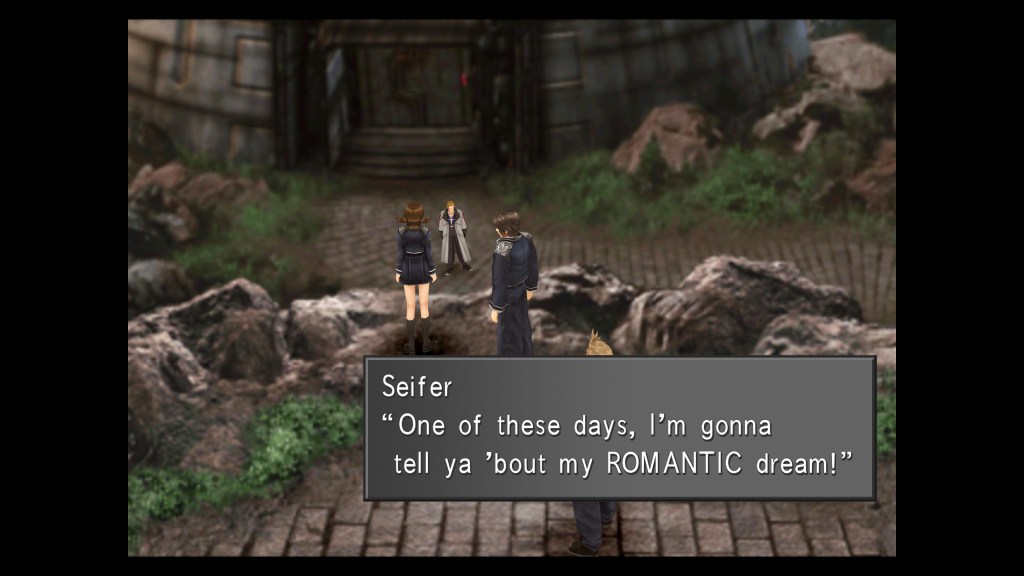
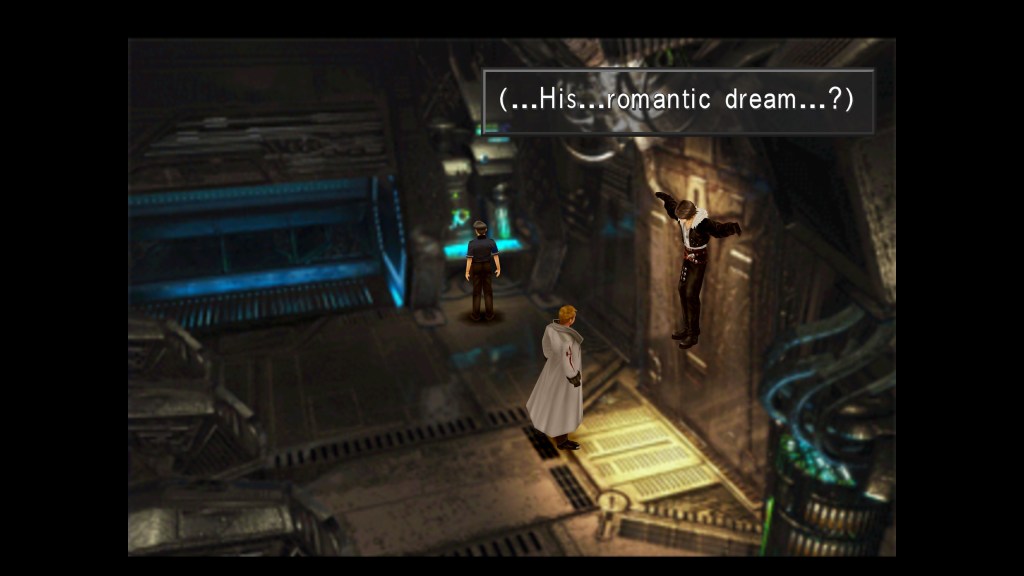
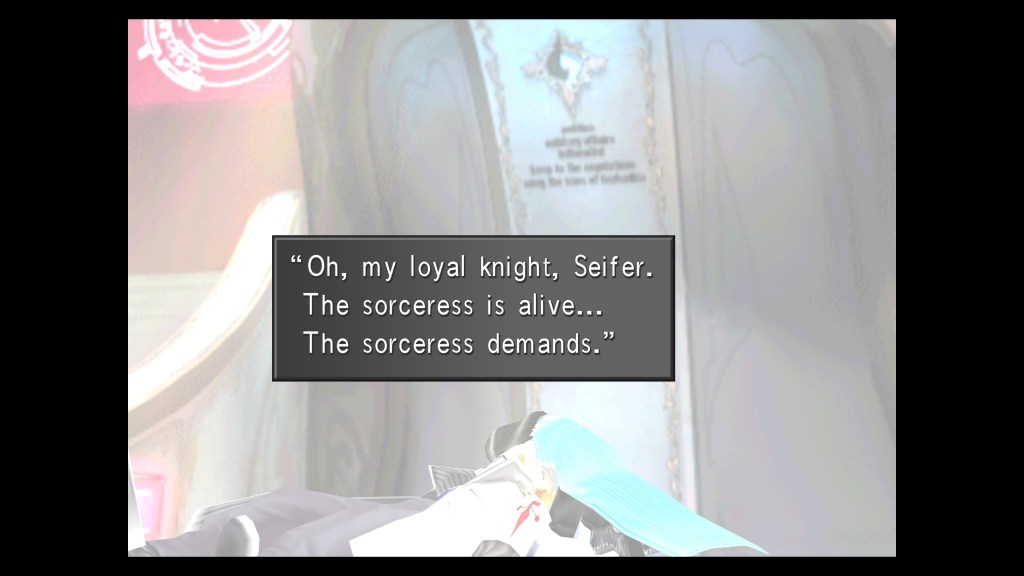
We learn more about this when the sorceress appears in the middle of disc one and, for lack of a better term, seduces him. From this point on, Seifer abandons Garden and SeeD entirely. He dubs himself the sorceress’s knight and dedicates herself to her ideals and beliefs. It’s never outright stated what his ‘romantic dream’ is, so I just assume it’s to be relied on by somebody important to him.
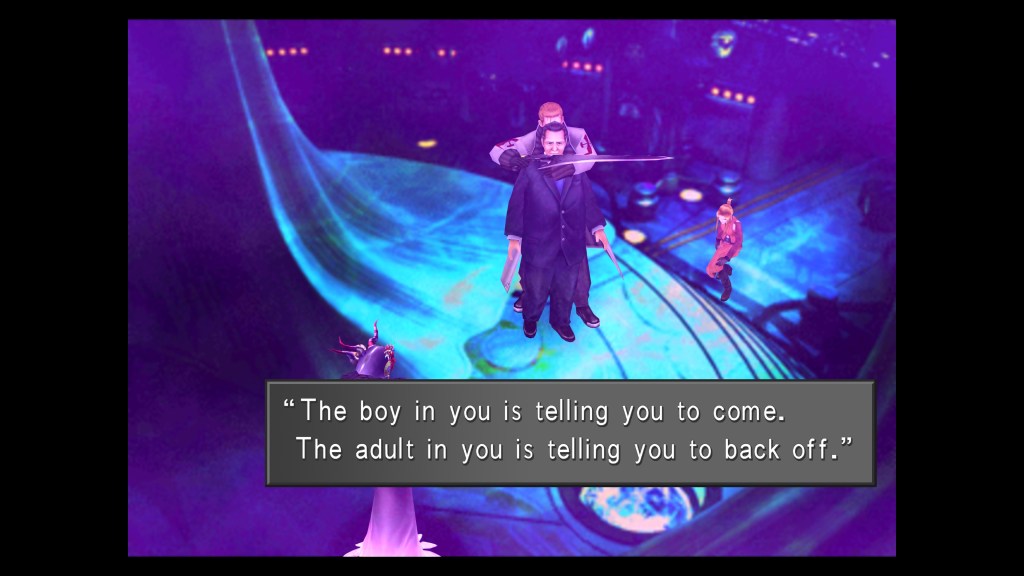
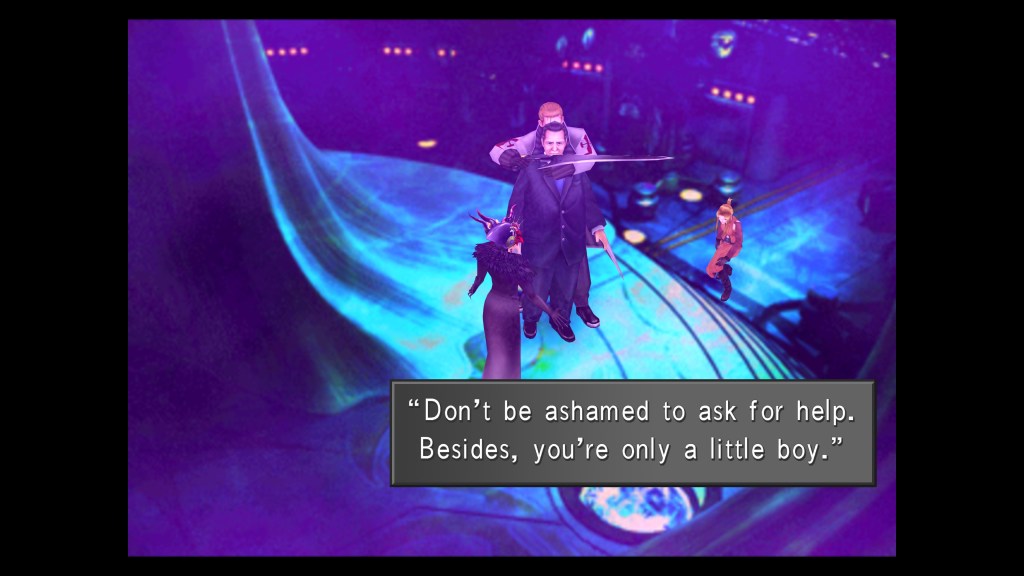
He also has a posse, Fujin and Raijin. I find the relationship between the three of them to be pretty sweet, but I will save the majority of that conversation for the Fujin and Raijin section.
Seifer acts as something of a parallel for Squall. They constantly bicker because they are a whole lot alike. This is echoed in the character design by his facial scar, which matches one he gave Squall during the opening cutscene of the game. I view Seifer as what Squall could have become if he never opened his heart up and let others in.
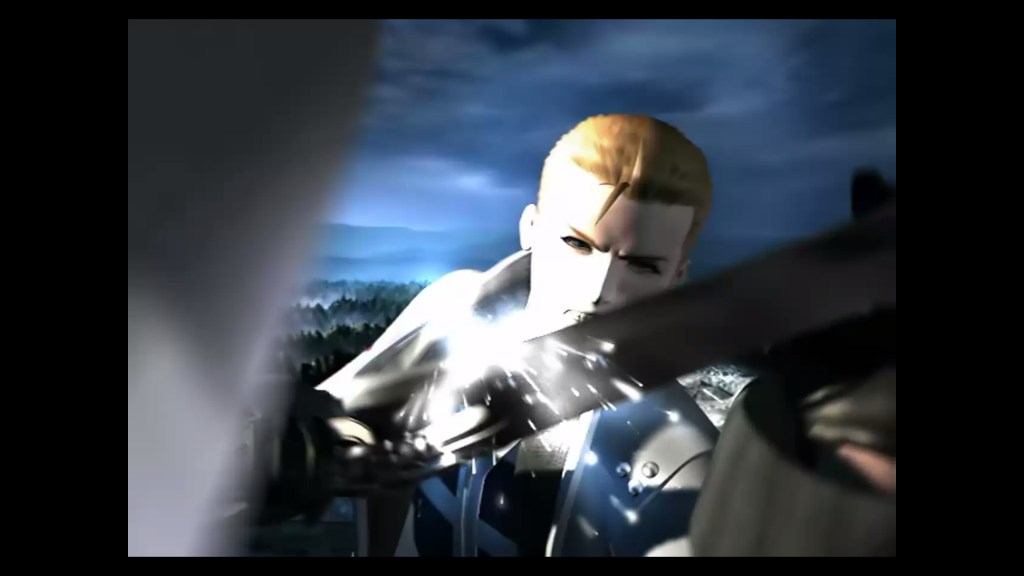
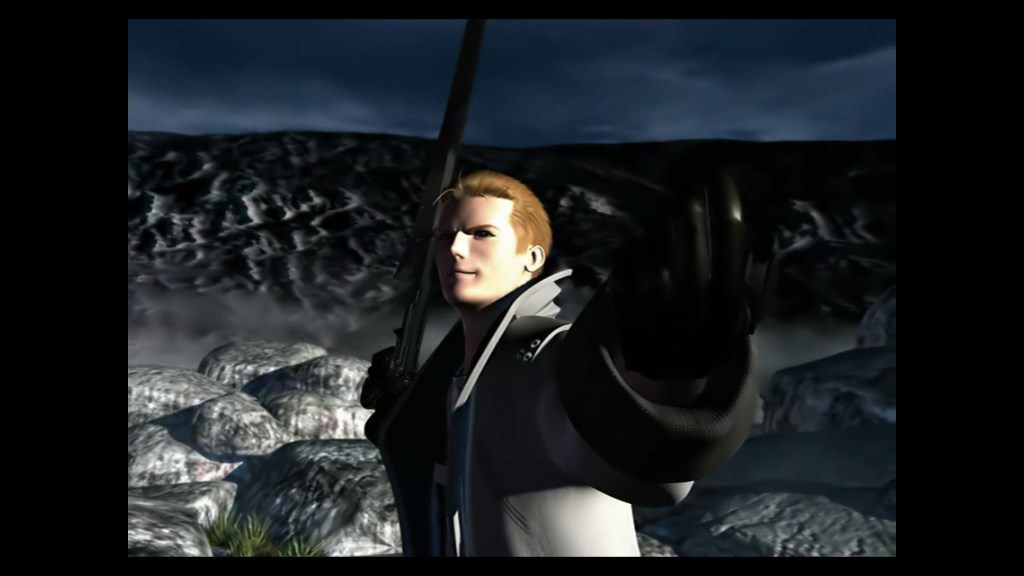
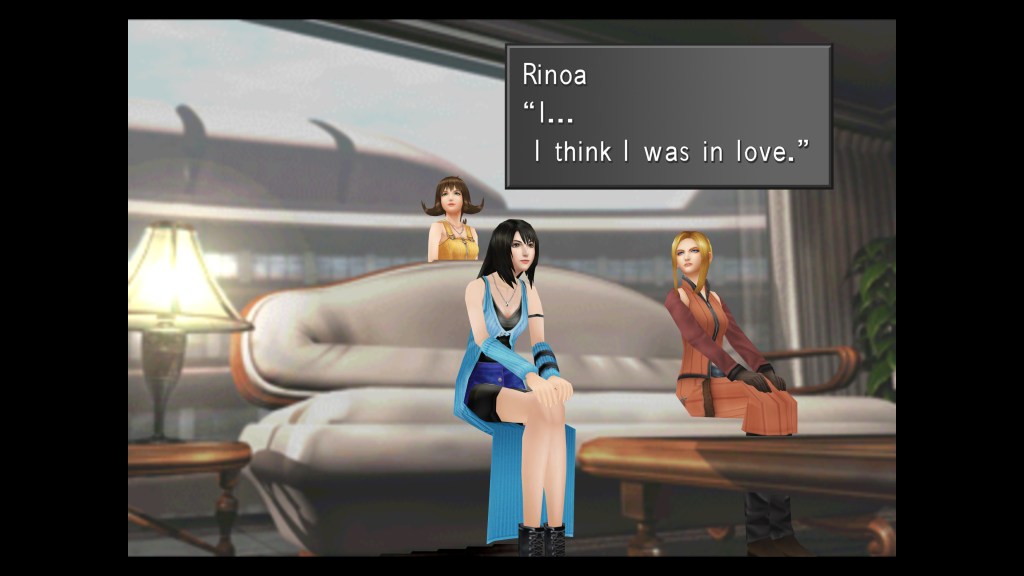
My reasoning for this is that, before the events of Final Fantasy VIII, he had something of a relationship with Rinoa. It’s never stated how serious it is on Seifer’s end, he flaunts it a bit during a fight with Squall in disc 3 but to me that just read as trash talk, though Rinoa states that thinks she might have been in love.
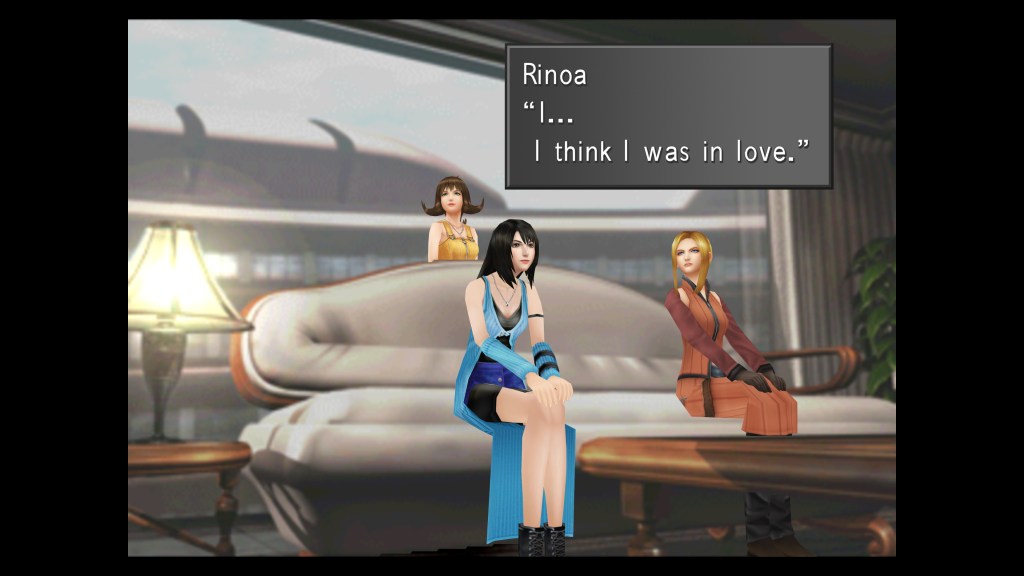
See?
Since Seifer and Squall seem so much alike, it’s safe to say Rinoa has a type. Perhaps that is why Squall had that little outburst when he briefly thought Seifer died? If Seifer is merely a memory after death, perhaps he will be too?
You fight Seifer several times throughout the game and he is always guarding the sorceress. He’s never a particularly difficult boss, but you know it’s always an event when it’s time to fight him. Of the four discs in Final Fantasy VIII, Seifer is a big part of the ending of the first three of those discs. So every fight feels intense, even if he goes down without too much of a fight.
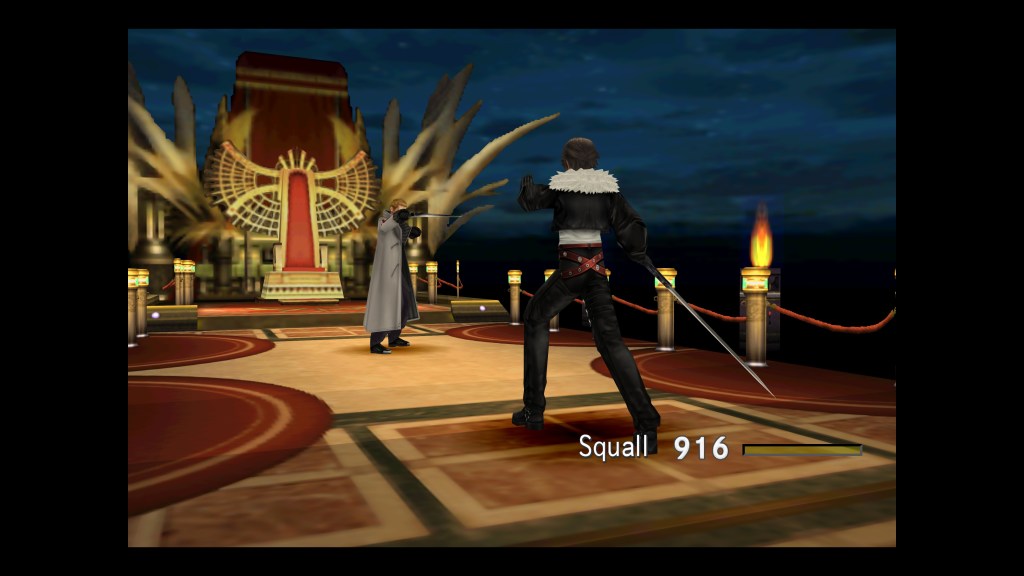
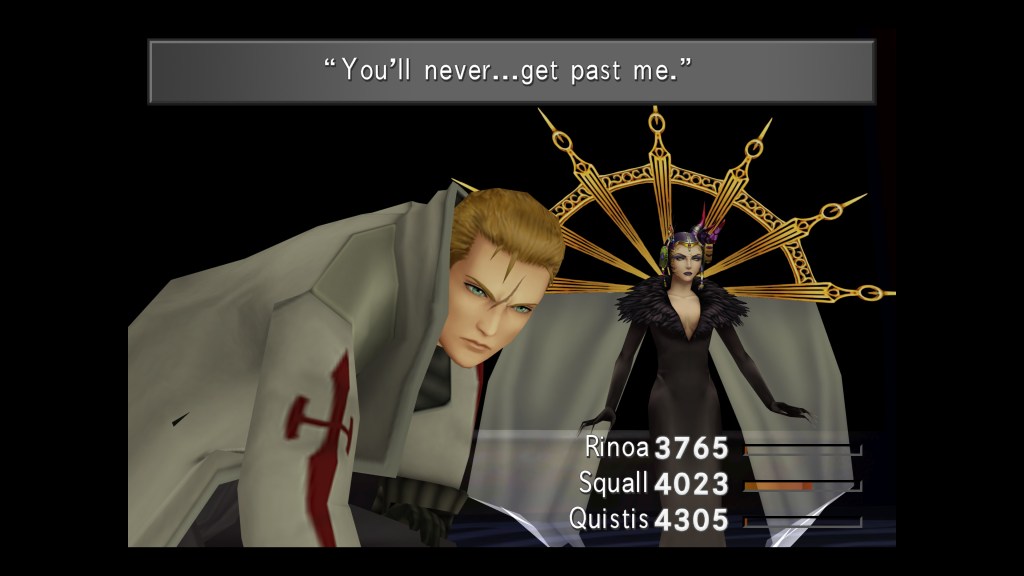

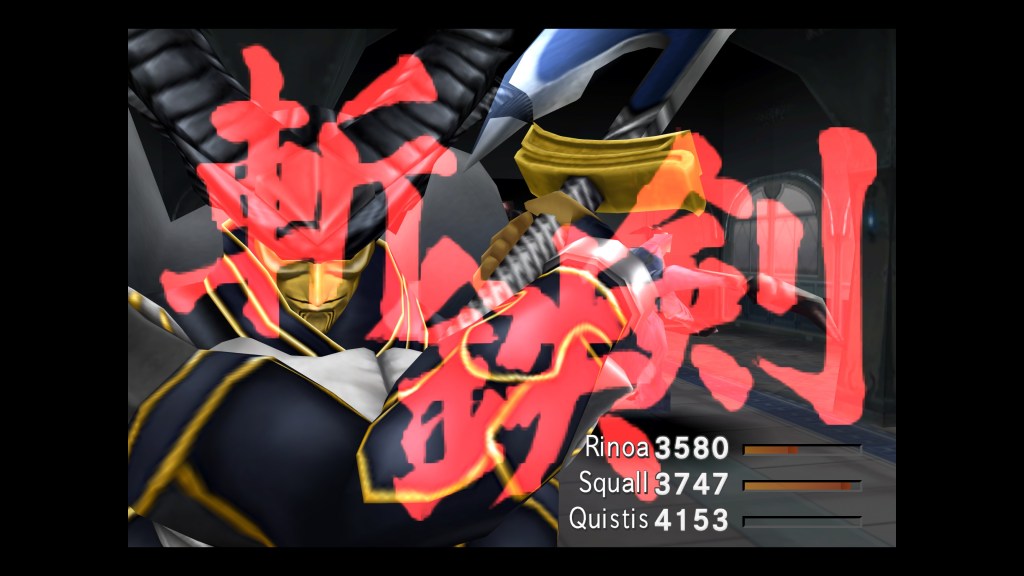
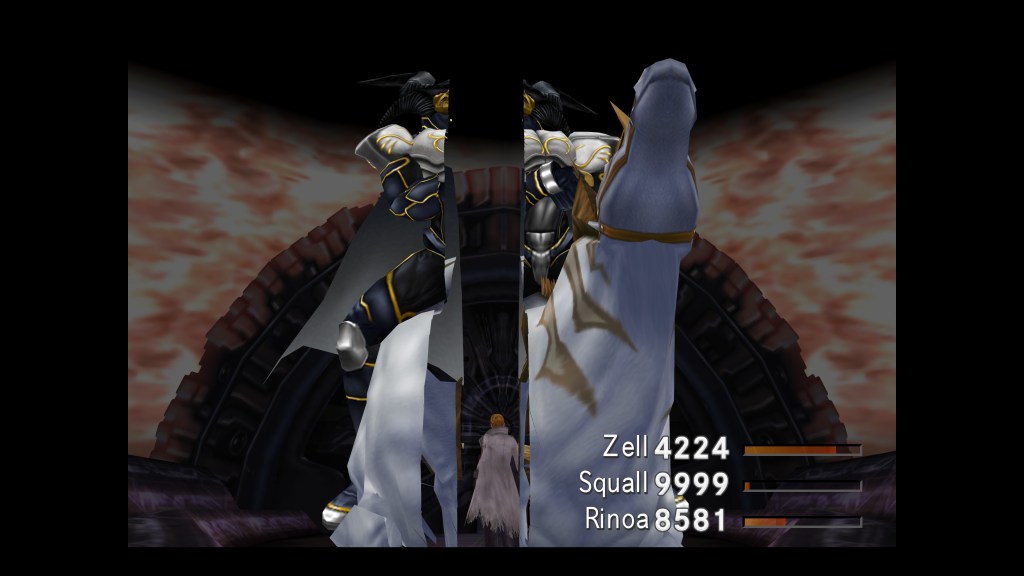
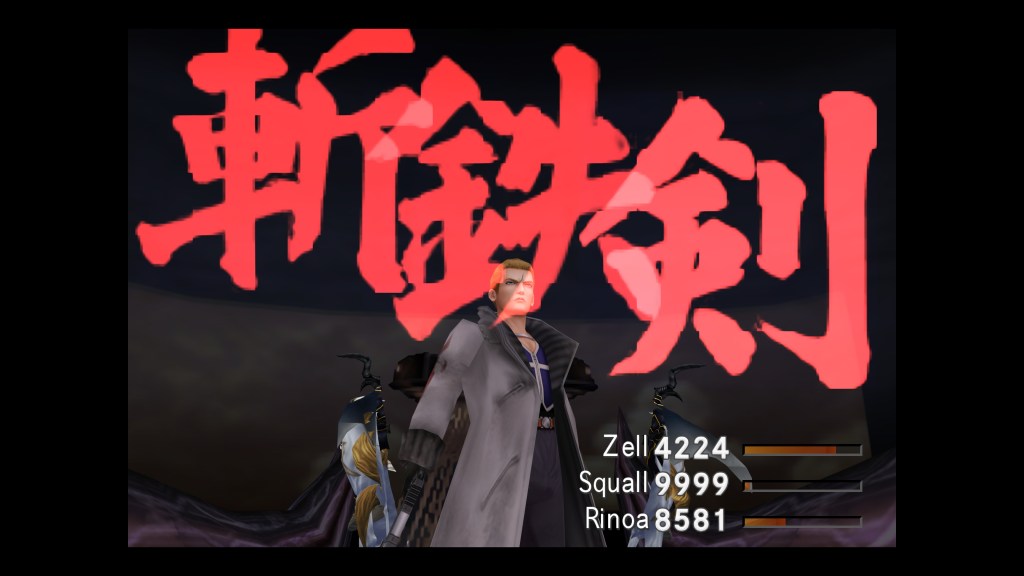
One of these boss battles features one of my favorite moments in the game. If you have the secret GF Odin, he will occasionally open battles up by using his signature ability Zanketsuken to kill everything on the field in a single hit. This encounter with Seifer surprisingly starts with Odin coming onto the field, which tells the player this is fixing to be a real short fight.
Instead, Seifer cuts Odin in half and gets his own special Zanketsuken screen. In the entire franchise, I don’t think any other boss pulls out a move anywhere near this cool during battle.
The battle ends with FFV main henchman Gilgamesh showing up out of nowhere to finish off Seifer. Gilgamesh is not a reincarnated Odin, Odin is really dead, he’s just a cameo from Final Fantasy V. He even talks about other dimensions for some reason. Keep in mind, at the time of Final Fantasy VIII’s release, V had not received an official North American release. It would be released one month AFTER VIII’s release.
So this is an absurd cameo moment in one of the game’s most important battles. It could even be considered a preview for an OLDER game in the franchise since a group of players would soon be playing FFV for the first time ever soon.
It’s so strange and as such, fitting for Gilgamesh. He’s supposed to replace Odin over the remainder of the game, but I never saw him a single time in the game’s final dungeon so him showing up here almost felt like a Family Guy joke. Random.

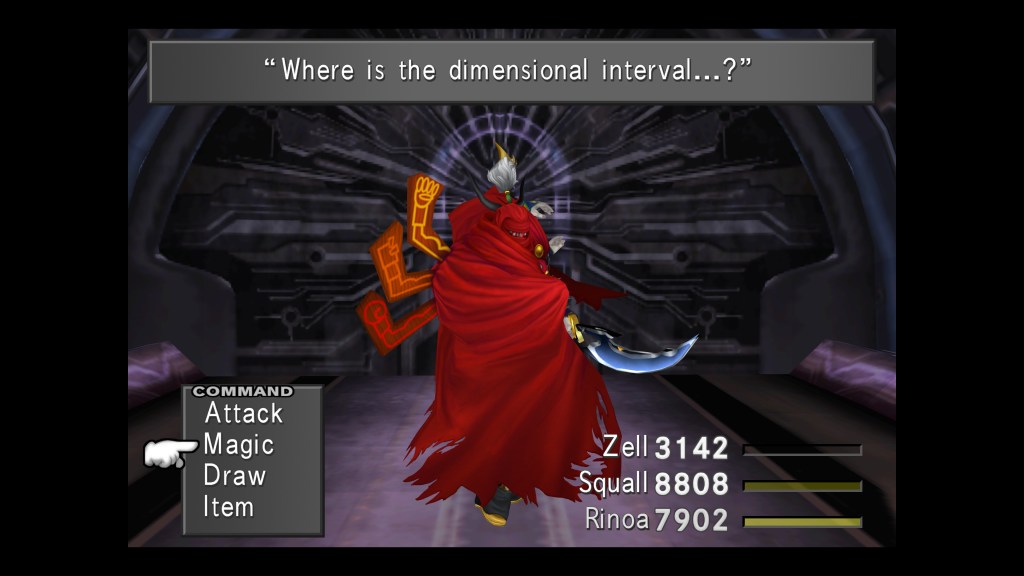
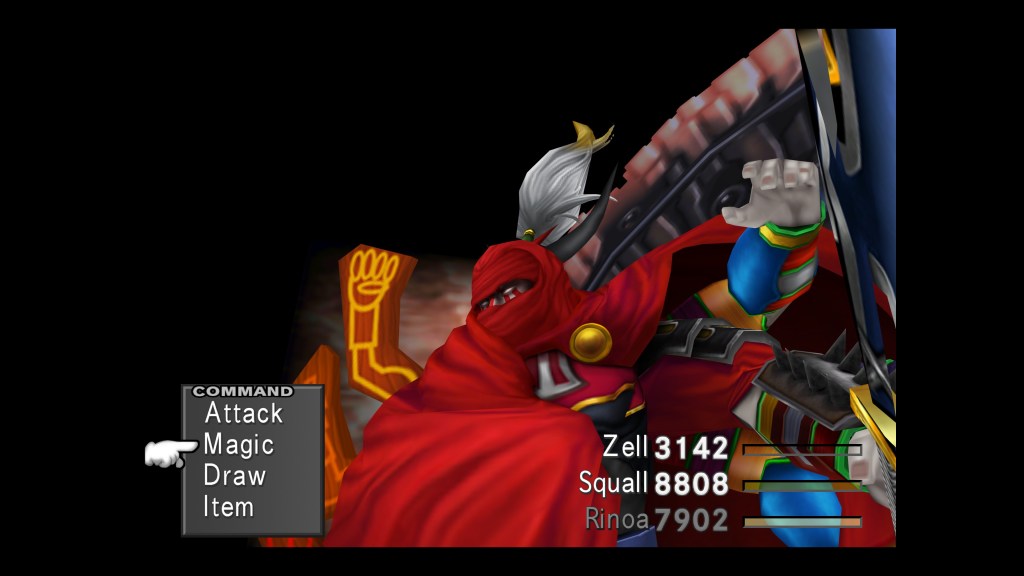
I think Seifer’s character is interesting. He starts out the game very brash and confident and as your party continually beats him and the sorceress, you can see his confidence shatter. In his later encounters, his overcoat even is a little tattered. You witness his fall from grace. Since I never got the impression that the game wanted me to hate Seifer, it was an interesting position having a main villain who you pity more than anything.
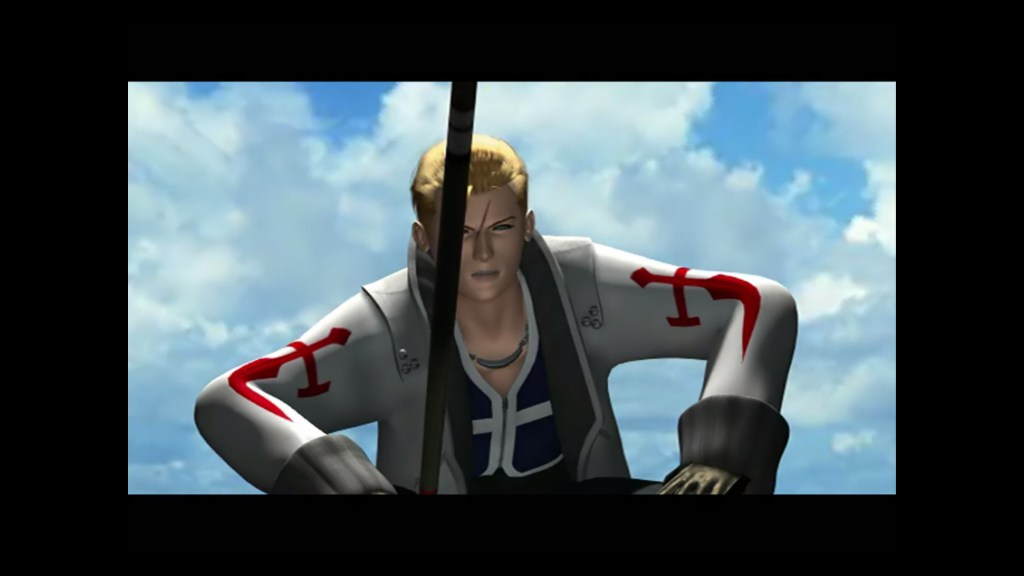
He gets one little scene during the ending. He’s fishing with his posse and he seems genuinely happy. It’s a good little scene and it’s nice to see his story end on something of a positive note. He was never a bad guy, just something of a misguided one.
Fujin and Raijin

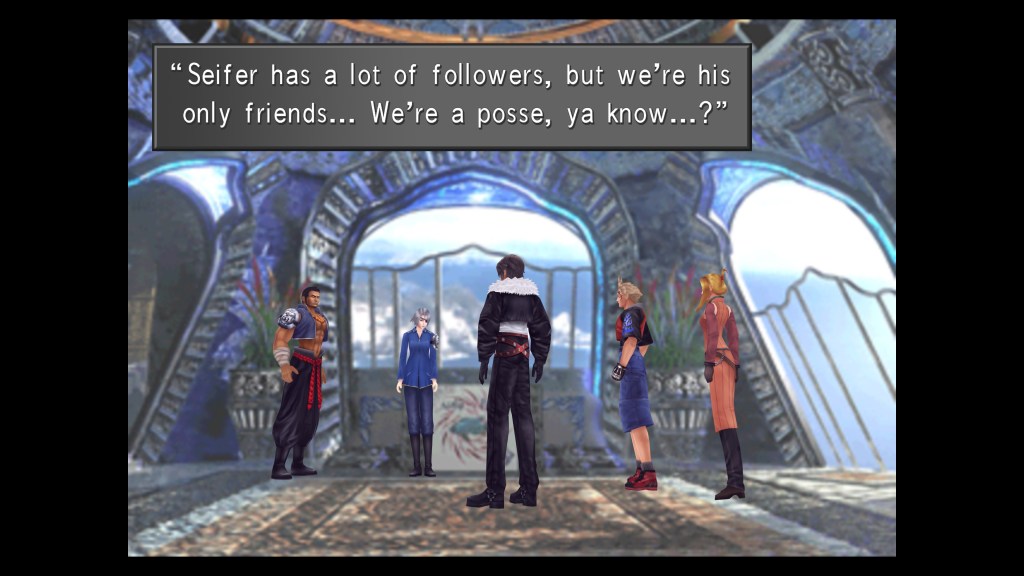
Fujin is on the right, Raijin is on the left. Meet Seifer’s posse! These two are about as ride or die as you can get. When Seifer decides to align with the sorceress, these two go along with it and barely even question it. Seifer might be dead? Yeah fucking right, Seifer wouldn’t just die like that without saying anything. Seifer might be trying to end the world? Well…he must have a good reason.
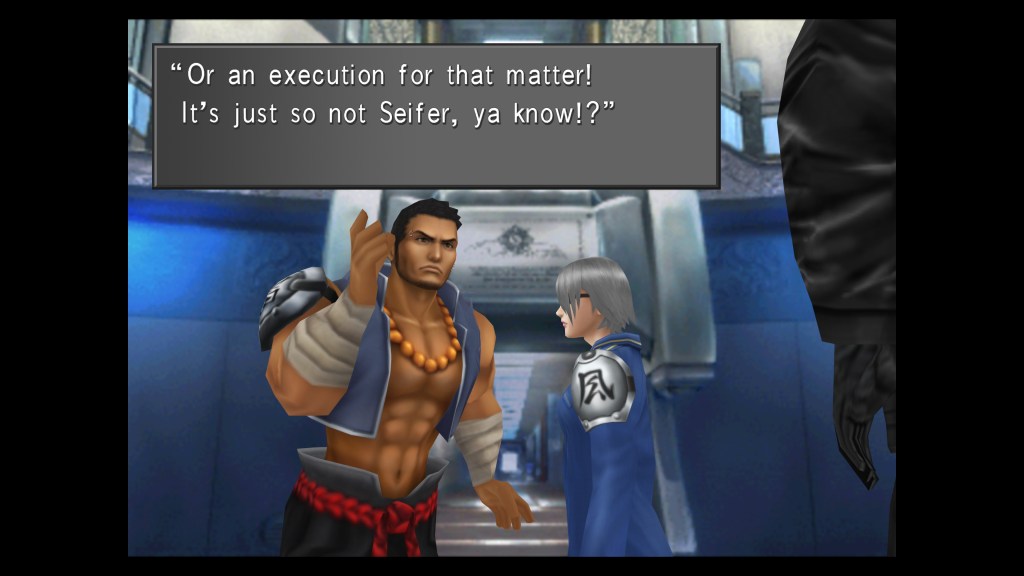
At one point, Fujin and Raijin become officers in the Galbadian army – a faction under the sorceress’s control – just because it would help Seifer out. If you’re willing to suffer military recruitment to help one friend, you’re probably the most insanely loyal person in the world. And Squall’s rival has two people like that!
For the majority of the game’s run-time, these two are treated as joke characters. Raijin’s gimmick is that he ends every sentence with “ya know?” I would like to think they decided to base the entire character of Wakka from FFX around this vocal tic. I am afraid to ask Raijin about how he feels on race relations.
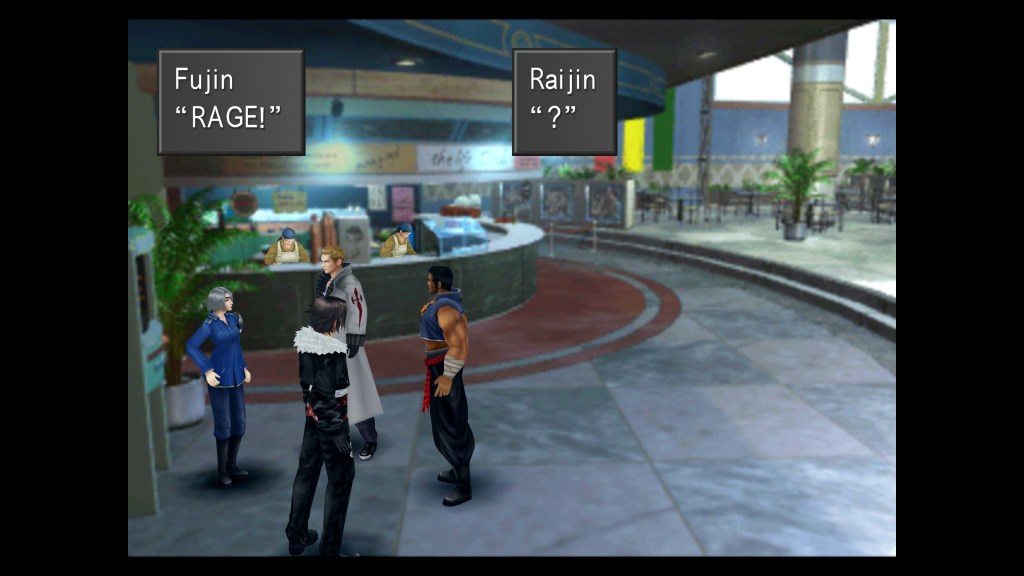
Fujin’s gimmick is that she speaks in all caps and only says one word at a time. It makes her sound very domineering. If Fujin was a character created in 2024, there’s a good chance social media would be very annoying about her.
The gimmick does break at one point. If you’re familiar with the movie Clerks, you know the character Silent Bob. His whole gimmick is that he never talks. Except there’s one extended monologue he goes on at a critical point for one of the main characters. Fujin does this exact thing. At the end of the third disc, she goes on a long diatribe against what Seifer is doing and who he is becoming as a person. Even the extremely loyal posse has their limits and they don’t want to see this guy die.


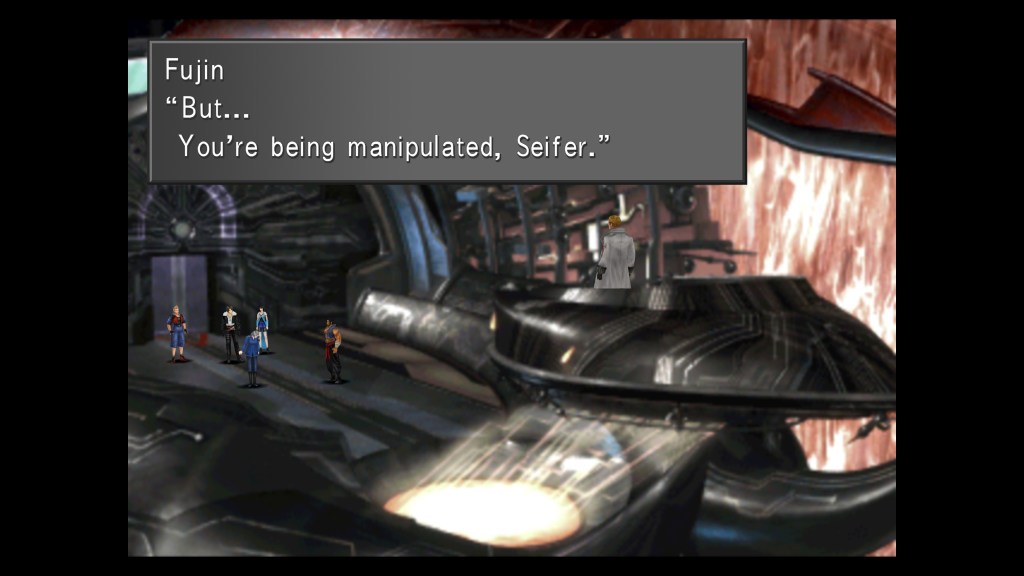
A real friend will see when you’re too far gone and try to reel you in, so I like that Seifer’s posse have their limits. The “Silent Bob” moment here is just extremely well done and it makes you want to see the three characters get a happy ending.
Ultimately, Seifer is being played by forces beyond his comprehension. He’s just a confused youth trying to find his place in the world after repeatedly failing a different dream (becoming a SeeD), he really doesn’t deserve to be a part of this world ending nonsense.
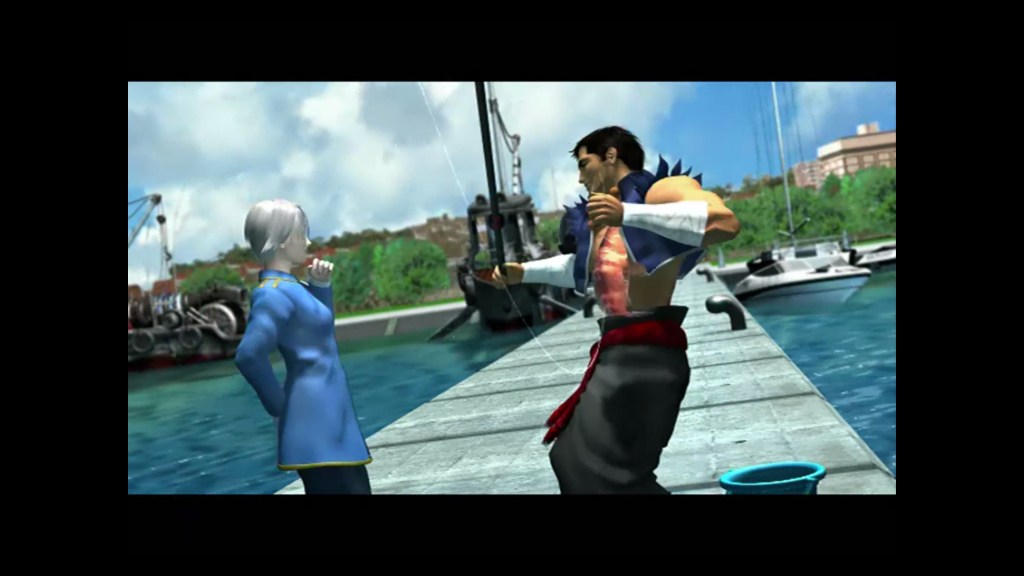
As mentioned in the above Seifer section, the trio get a brief moment in the ending cutscene that just shows them hanging out. They’re fishing and having a grand ol time. Raijin catches a fish, Seifer is kinda jealous that he doesn’t catch a fish so Fujin pushes Raijin into the water which causes Seifer to bust out laughing.
It’s really sweet and a good way to close the book on these characters. I very much enjoy the disciplinary committee and I am glad the three of them, not just Seifer, got to cameo in Kingdom Hearts 2.
Selphie Tilmitt

Selphie is a transfer student at Balamb Garden. She originally comes from Trabia Garden but transfers over to partake in the SeeD exam. She’s the type of student that goes out of her way to be a part of lots of extra curricular activities.
This is evidenced by her being part of the Garden’s festival committee despite being at the Garden for like all of a day at the start of the game. If you’ve ever seen a single anime about high school, think of it like a school festival in one of those
Selphie is portrayed as a little bubbly and clumsy. Someone who acts without thinking. You get a lot of this in her formal introduction to the party during the SeeD exam when she quite literally stumbles during her first CG scene. She then jumps off a cliff to deliver a message.
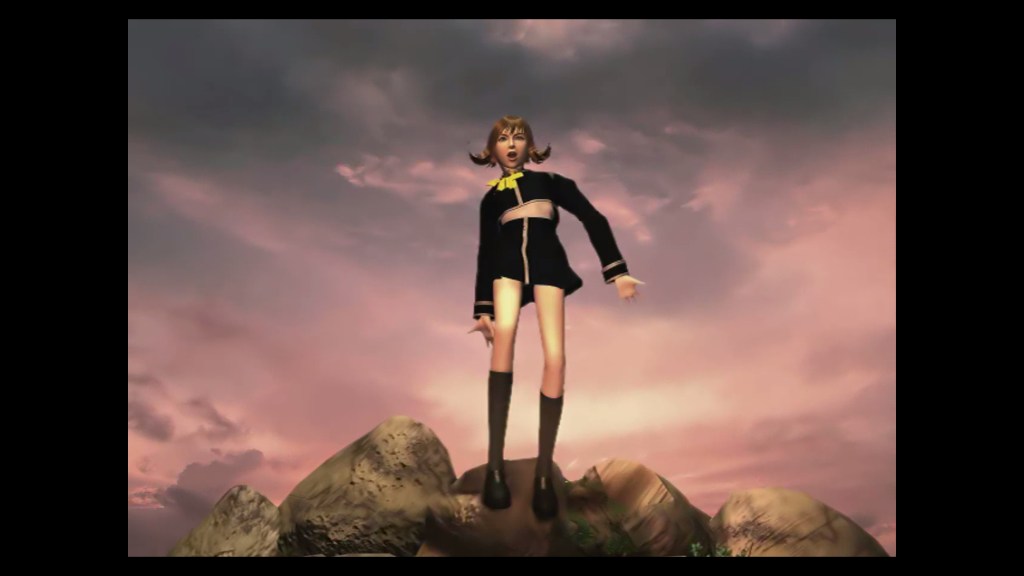

The SeeD exam gives you points at the end of it based on how you conduct yourself and if the party elects to jump off of a cliff too, you get points deducted. So the game agrees with me that this was a very rash course of action!
You get her bubbly side whenever the crew hops on a train. She insists on going to a very specific part of the vehicle and staring out the window and singing a goofy little song about trains. It’s an endearing touch.

Her main moment in the game comes during the second disc when it’s revealed that the sorceress led Galbadian army plans to launch missiles at Trabia and Balamb Gardens. Selphie, being from Trabia, elects to be part of a team that goes off to take care of these missiles while the other team goes off to warn Balamb Garden of this stuff. A lot of this mission involves messing with technology and Selphie, being a bubbly character, often defaults to hitting the computer til it does what she wants. I’ve always been fond of this trope.
At the end of the mission, Selphie and whoever you assigned to her party are locked in the missile base as it’s set to explode. The other characters ask themselves if maybe they were put on this crew because Squall didn’t like them, but Selphie as the team’s ray of sunshine never lets herself think like this. They’re there because Squall had faith in them to pull this off, nothing more and nothing less! It does a good job of showing her more upbeat nature.
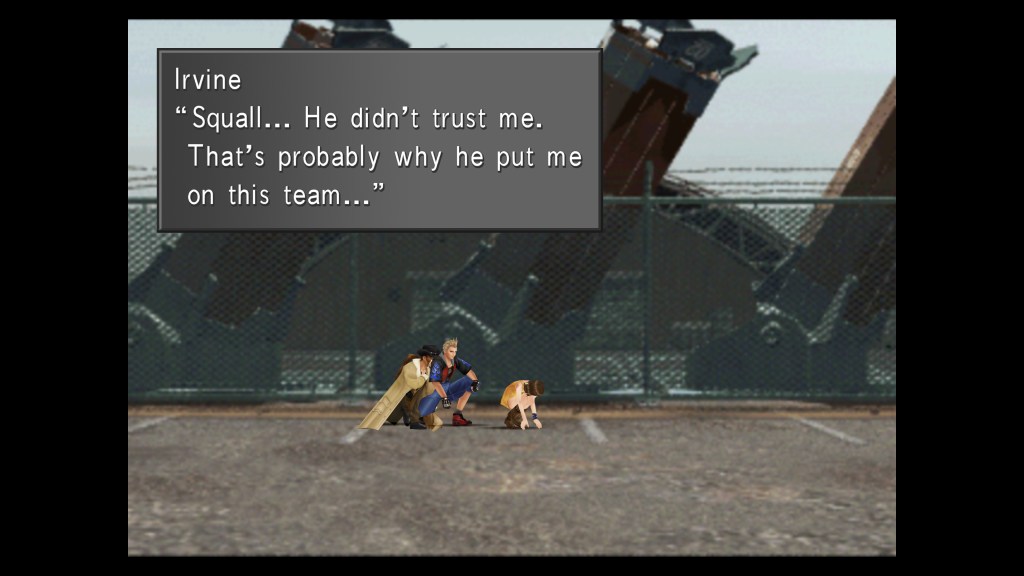
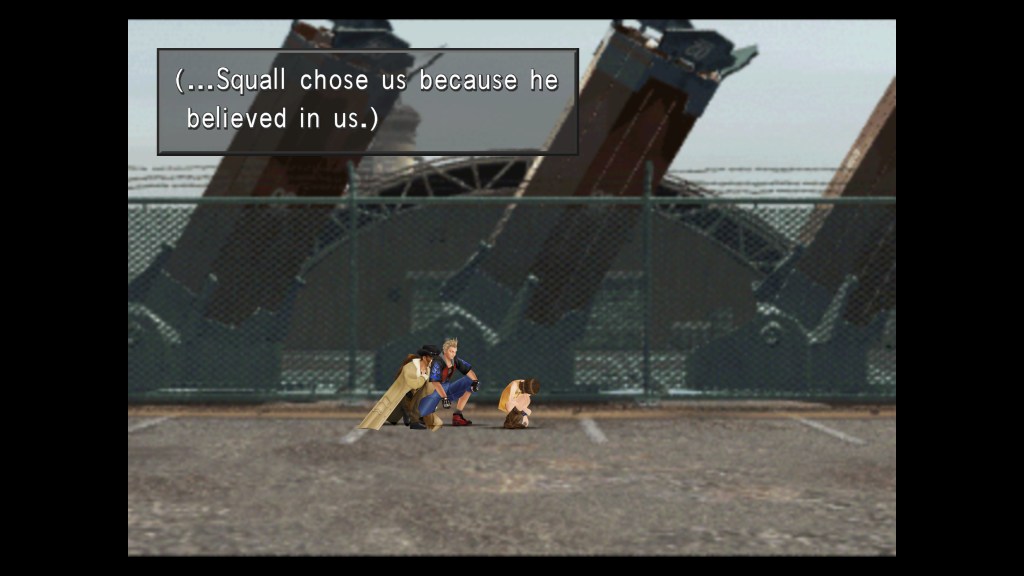
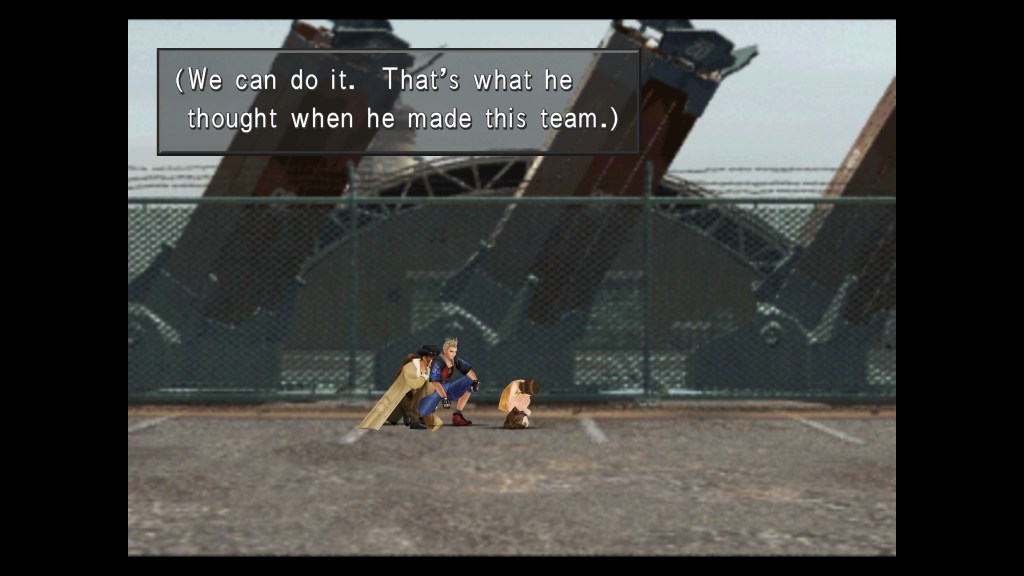
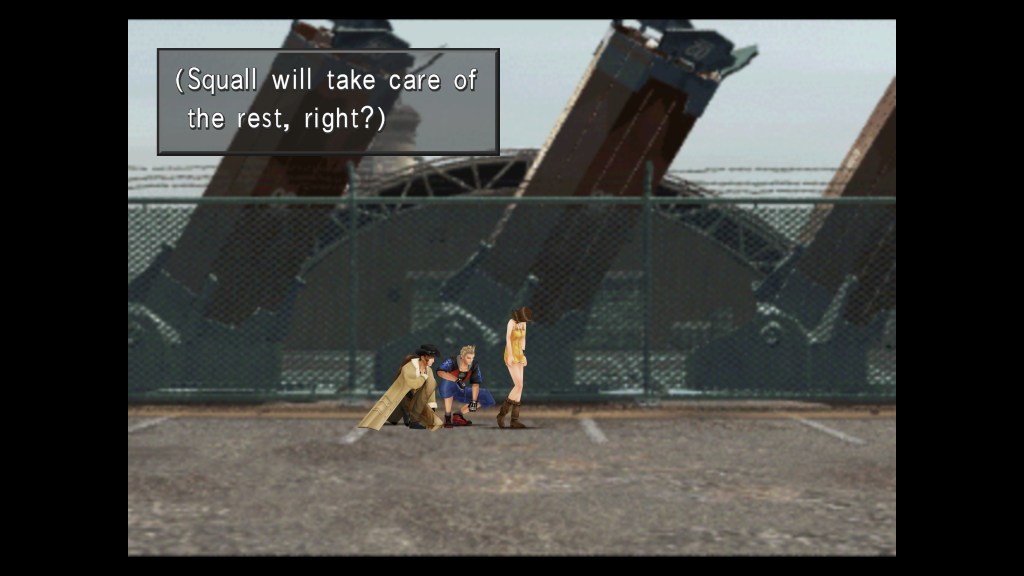
After surviving the missile base exploding, Selphie shifts focus to the Garden festival and that’s pretty much all her character has to do for the rest of the game. This festival also mostly seemed aimed at getting Squall and Rinoa together so you can put Selphie at the center of the Squanoa shipping movement.
And that’s about it! Otherwise, she’s just the party’s ray of sunshine. She does have a moment where she’s randomly mean about a character’s looks which I think is hilarious, but otherwise, sunny!
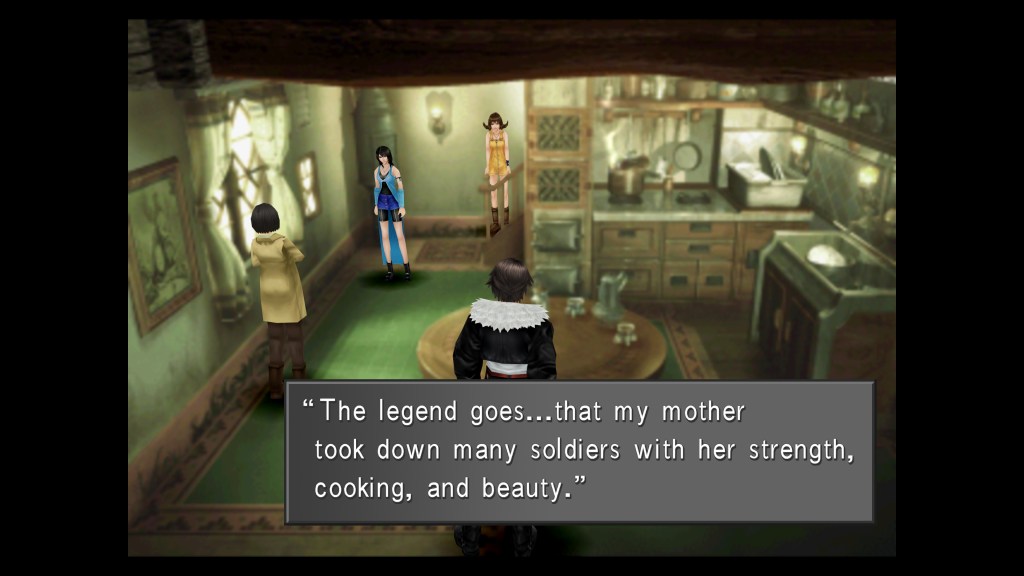
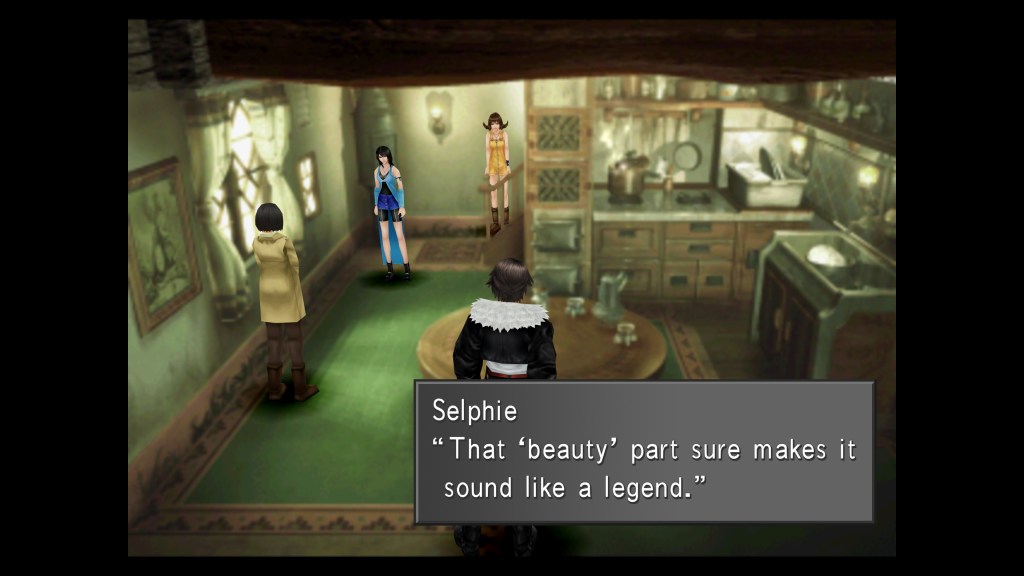
I feel like Selphie’s mostly around to bolster your party’s ranks. Truthfully, this can be said about every non-Squall and Rinoa party member, but I guess I just think Zell and her fill a lot of the same check boxes when it comes to party makeup. And if I have to choose one ‘slightly ditzy comedy character,’ I’m gonna choose Zell. He likes hot dogs!
In combat, Selphie’s limit break is to cast a random spell. You can re-roll however many times you want in order to get a desirable spell and there are some useful little gems hidden in there. There are two in particular I want to point out. Full cure pops up fairly regularly from my experience and does exactly as it states – max health recovery for the entire party. This is one of the few ‘defensive’ limit breaks in the game, so it’s appreciated.
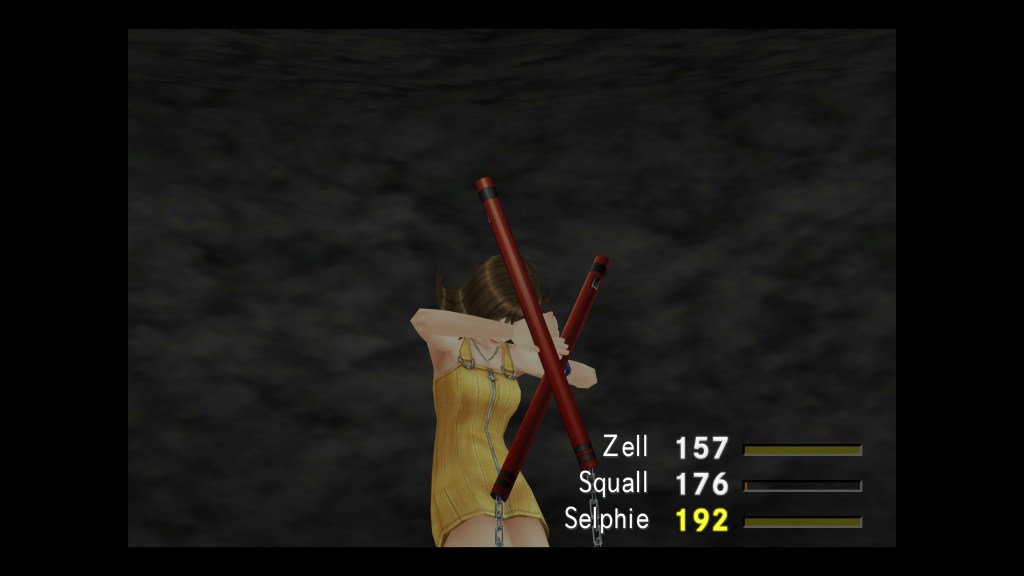
The other is ‘The End.’ If you remember slot abilities from FFVI and VII, you’ll know that one of the best things you can get is an ability that instantly wins the battle. The End is that. It can kill everything in the game save for undead enemies. This includes every boss and super boss. It’s extremely rare to get, so relying on it during normal gameplay isn’t going to get you anywhere (there are methods to cheese for it, at least in the PS1 version), but it does make her worth carrying around in case your group runs into a wall.
This is probably my least used party member in the game. I can’t think of a single FFVIII playthrough I’ve had where Selphie is one of my main three. Sorry Selphie bros for failing you.

Irvine Kinneas
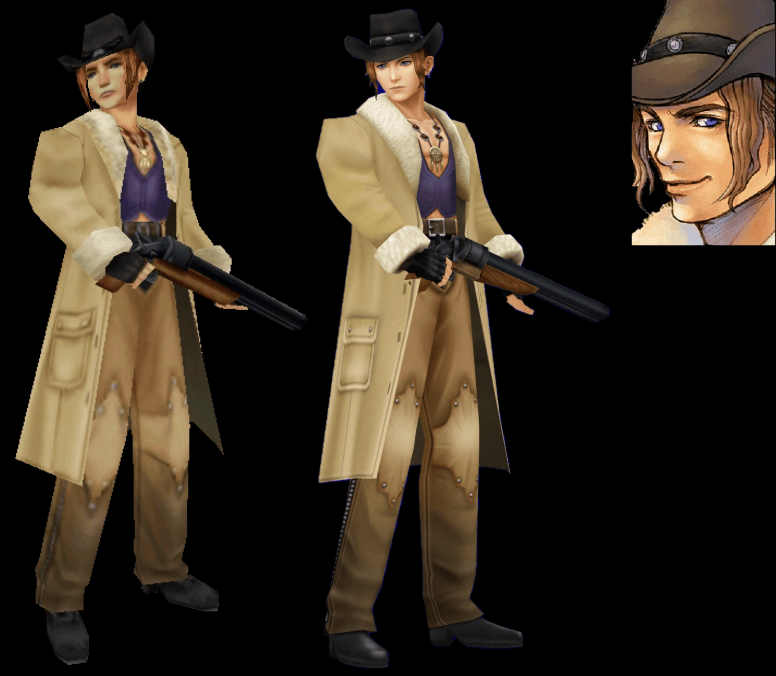
Irvine is another Garden student. He comes from Galbadia Garden, so he’s not a SeeD and crucially he has never used GFs before the start of this game. He is also key to the assassination plot on the sorceress in Disc 1. The goal is to take her out via sniper rifle.
He is introduced to the party as brash and arrogant. He is constantly trying to hit on the female party members (particularly Selphie) and seems to brush off every concern anybody has. He never misses his target, you see!
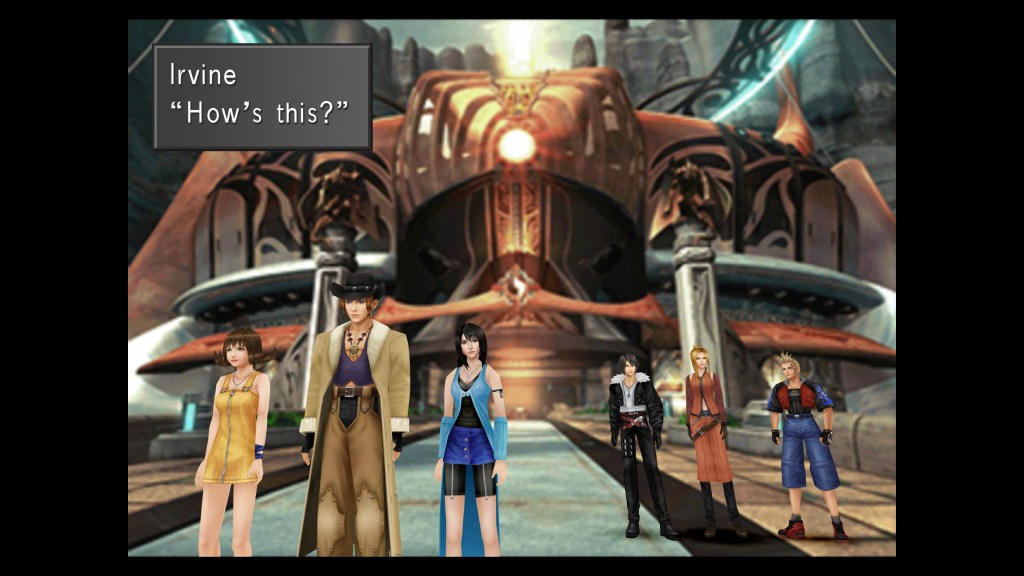
So naturally, Irvine freaks out when it’s time to take the shot. And when he ultimately makes it, the sorceress blocks it anyway because it’s just a standard bullet and she’s a magical entity who would never be felled by such simple things. Oh well.
And for a while, it seemed like that’s all he was brought in for. When the other students are imprisoned for their actions on the sorceress, Irvine is given orders to get Rinoa out (and just Rinoa). He seems ready to just leave everyone to their fate, which doesn’t exactly endear him to the player. So you’ve got a chauvinistic jerk who wilts under pressure. That surely can’t be it, can it?

The orphanage plot twist is brought up by Irvine. It’s the true reason he is brought into this game’s narrative. He reveals that five-of-the-six main party members (everybody except Rinoa) grew up in the same orphanage together but had somehow all forgotten about it. Except for Irvine. Squall posits that using GF causes this memory loss and Irvine gives backing to this claim by saying he never used GFs at Galbadia Garden.
Irvine is the part of the orphan twist that I don’t like. He is fully aware that your entire party knows each other but he keeps his mouth shut because nobody seems to say anything. Sorry, you see all of these people that you were close with like a decade ago and the first thing you do when you see them isn’t act excited about it? There’s no scene where he goes like “Squall! Long time no see!” which would feature Squall responding with a “Have we met?” It’s a tiny thing they coulda shoved in there to explain WHY Irvine was quiet, but they didn’t.
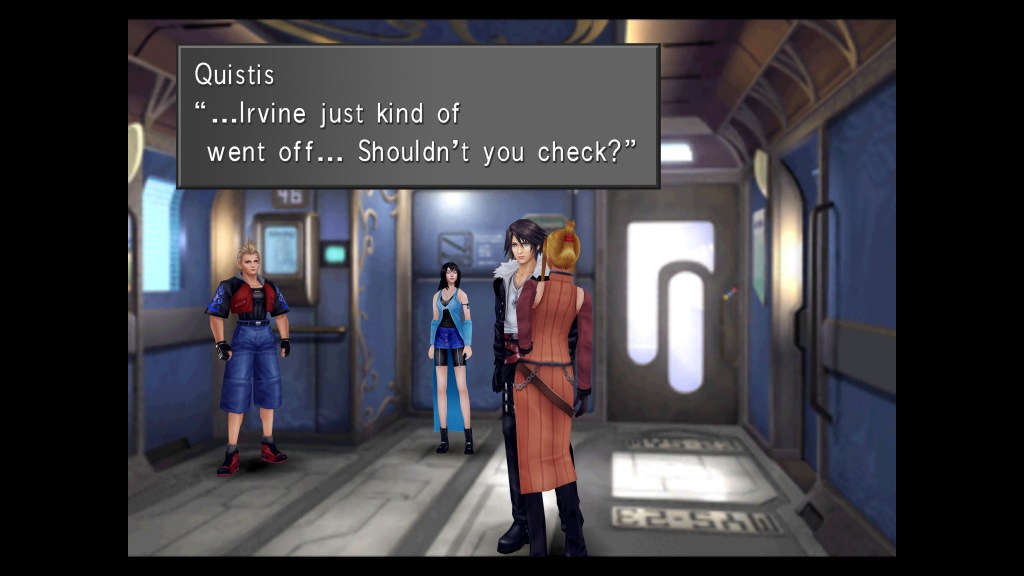

So it just looks like Irvine sees the party, instantly recognizes them and just goes ‘oh Selphie didn’t give me a big ol smoocherino immediately I guess they don’t remember me at all’ and pocketed it the whole time.
Irvine has a sweeter and more gentle side that he shows to Selphie but the first bits we get of him are just him acting like a cocky asshole. So why does his personality ‘revert’ to what it was once the plot twist was revealed? Shouldn’t he try to act like himself to help jog everybody’s memories?
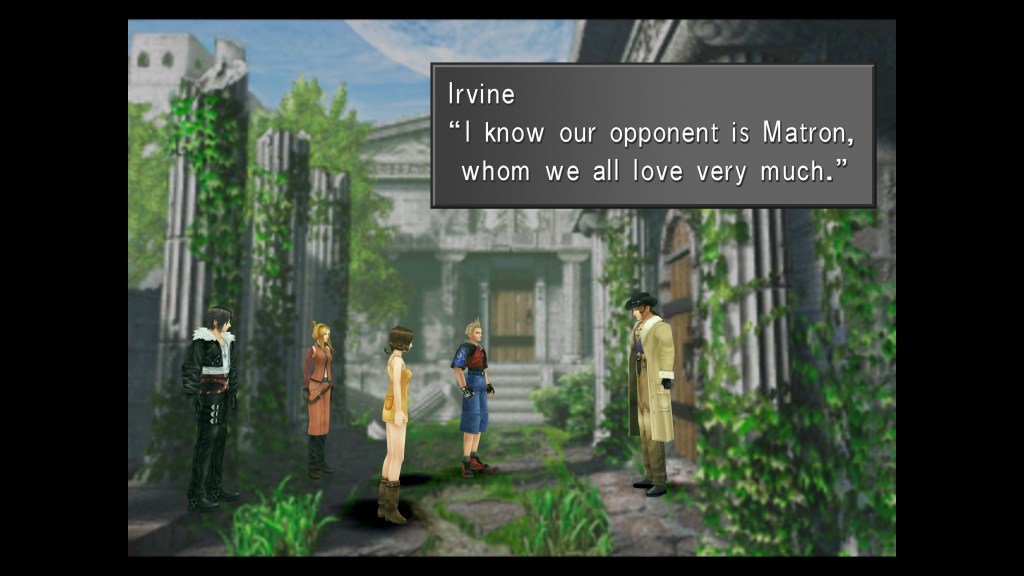
Hilariously, when Squall is recalling the orphanage, he specifically states that he doesn’t remember Irvine. Harsh. Maybe acting like an asshole was actually his way of trying to make Squall remember!
This reframes the sorceress assassination failure as a case of nerves brought on by WHO he is shooting. You see, the version of the sorceress you encounter at the end of Disc 1 is lurking in Edea, the woman who raised the orphans. So it makes sense that he would be a bundle of nerves, though the game portrays this as “Irvine being nervous about changing the course of history” at the time of it.
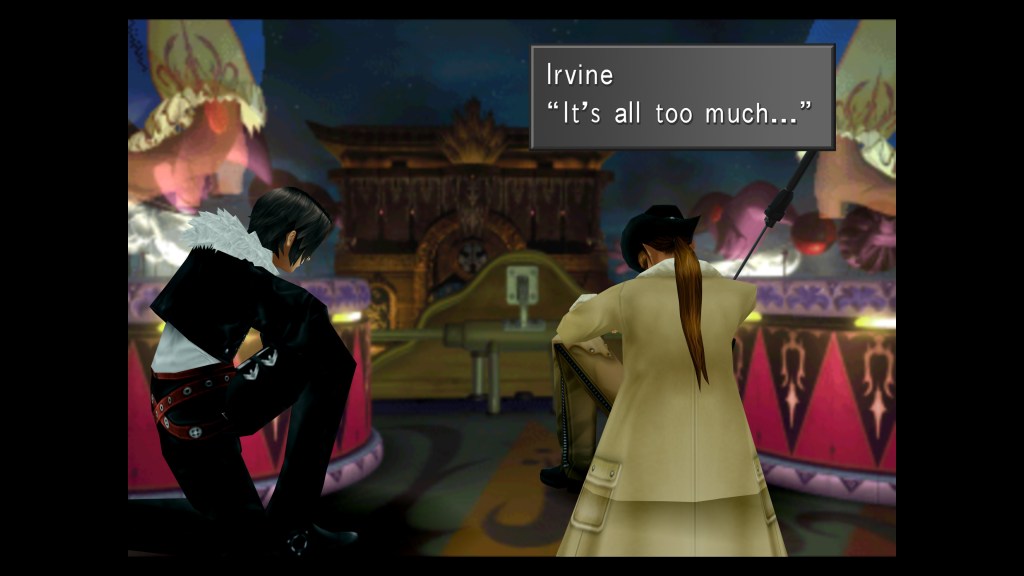
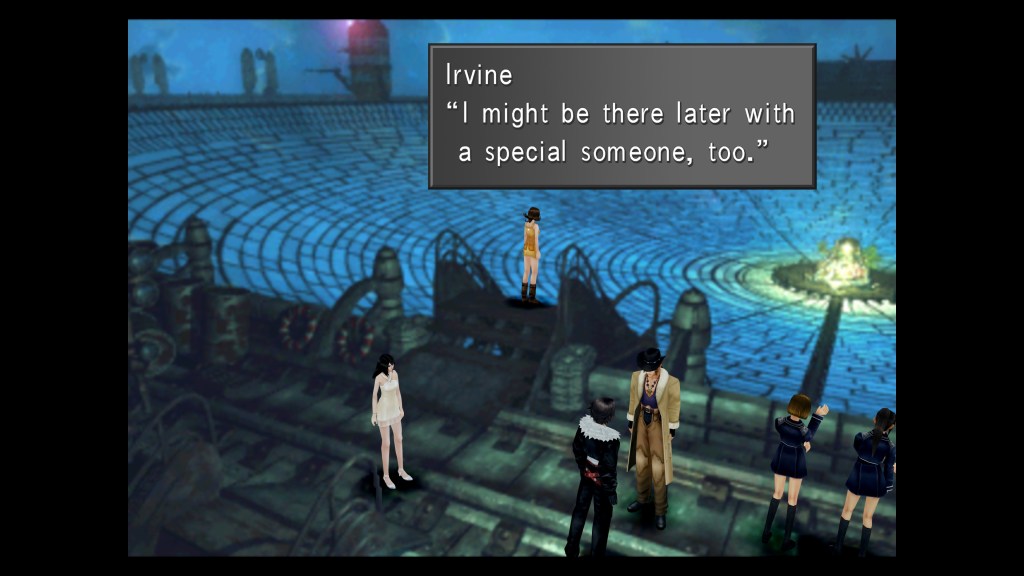
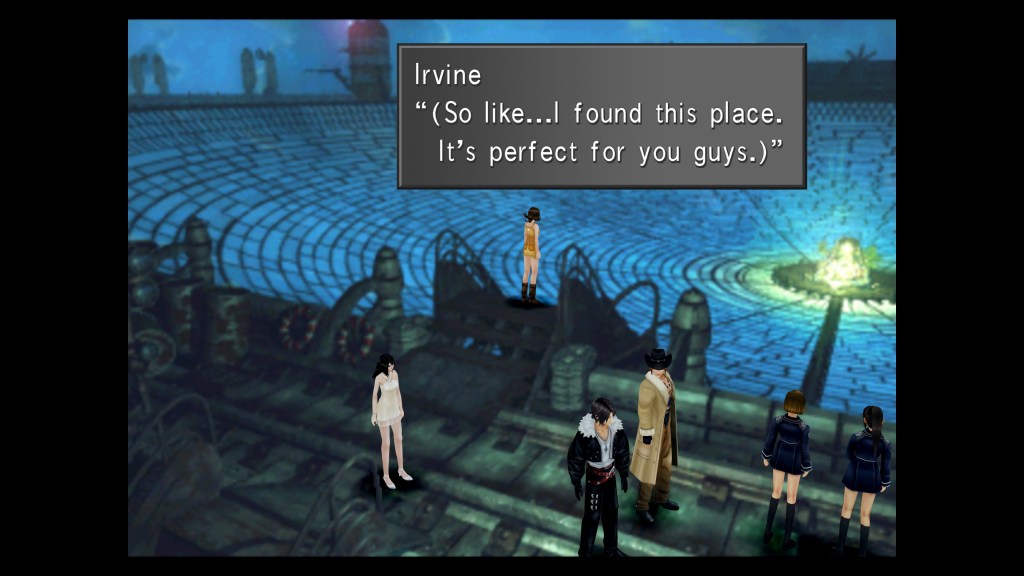
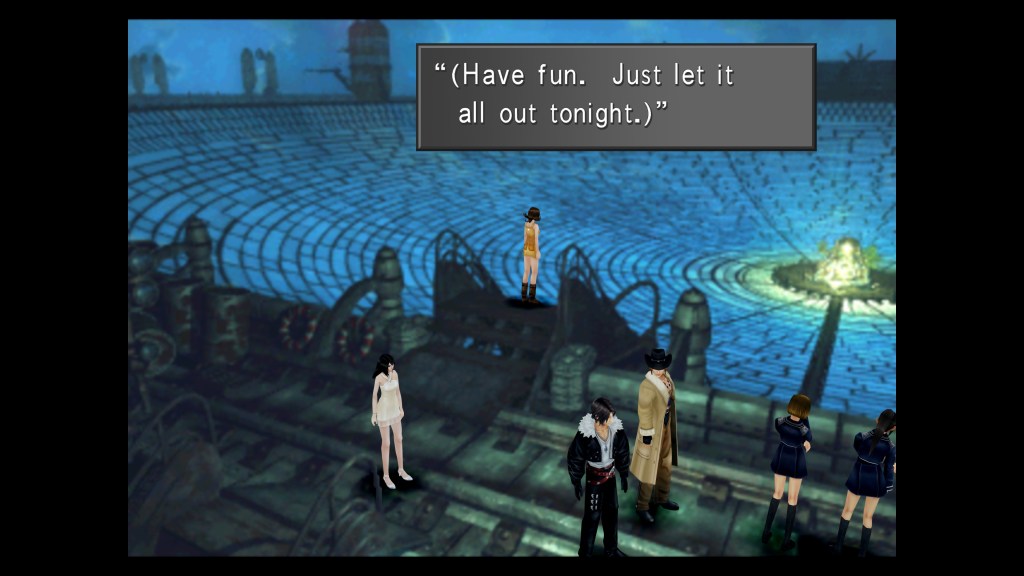
Irvine is probably my least favorite party member. He apparently has had a lifelong love for Selphie that feels like it’s just mentioned to explain why he stops hitting on Rinoa and every other woman. I do think it’s funny that he’s a little bit of a sleazeball – he makes a little makeout spot for Squall and Rinoa that includes a dirty magazine – but that’s not enough for me to get behind me. So I rarely use him if I can help it.


That said, his limit break is excellent. Irvine uses a gun and so fittingly, his special technique is firing the gun rapidly. You basically jam on a button over and over again until time runs out. The most powerful ammo, when I got it anyway, causes max damage.
So you’re able to cause a lot of damage in short bursts, which makes it more reliable than Squall’s lionheart when it comes to causing misery on your opponents.

Hilariously this is a picture of him causing zero damage. I ASSURE you that’s because the previous shot killed Krysta at 9,999 damage. But alas. I didn’t get the first shot.
Since I don’t really like Irvine, this is the only time I used this move on this playthrough. Oh well!
Ellone
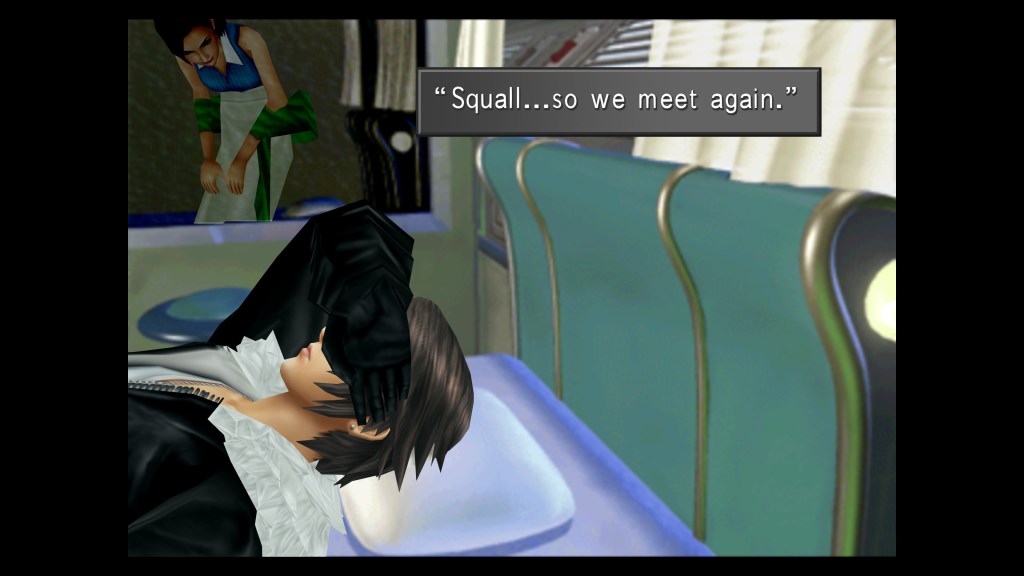
Ellone, no last name given, spends a lot of the game as a mysterious figure. She’s always around and yet somehow feels very elusive. In fact, before you even get a single line of dialogue from Squall in the game, she shows up in the background watching over him. It happens briefly and the player will likely forget about it, but she’s there. You see her again during an early mission with Quistis.
She’s a very important character that you’re witnessing before you realize her importance. It’s an interesting approach and one you really notice on replays.

Ellone is the key to a lot of plot elements. She has the ability to transfer the consciousness of people into the past of people she knows personally. There are constant flashbacks to a guy named Laguna and his friends Kiros and Ward that the player is subject to. These flashbacks are brought on by Ellone. She is using Squall and company to inhabit the bodies of these men in order to save her adoptive mother, Raine, from death. It doesn’t work.
So why did she choose Squall and company in particular? Turns out, Ellone was also part of the orphanage crew. Squall was particularly clingy towards a young Ellone and would refer to her as “Big Sis.” Interestingly, the nickname turns out to be a little accurate when you get to learn more about Squall’s heritage.
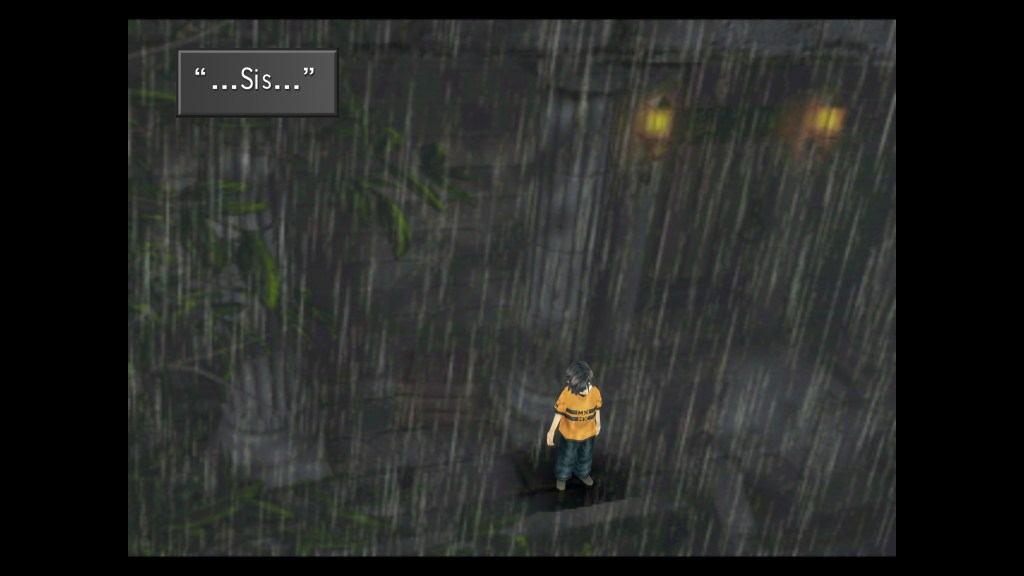
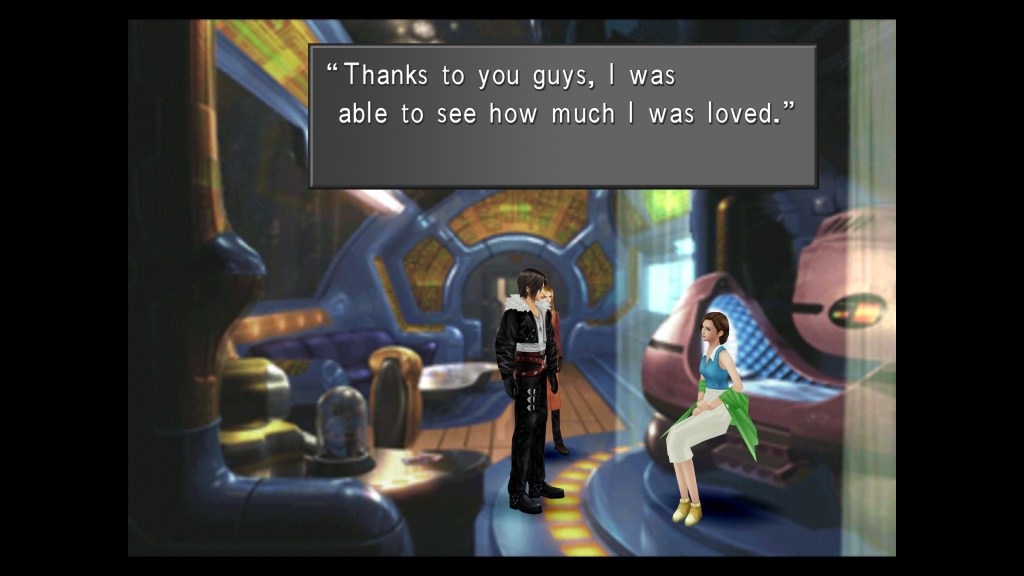
Ellone’s power is not exactly a secret. People all over the world are well aware of it, particularly the technological capital of Esthar. The head scientist there, Dr. Odine, makes a machine based off of Ellone’s powers that can send people back into the past. In the distant future, Ultimecia gains access to this machine and uses it in order to further her goals. So this mysterious time travel power is handy both to the good and the bad.
Sane Edea and Cid are aware of how coveted she is and attempt to hide her away and provide her with plenty of protection, but she is the most hounded woman in the world at one point in this game so there’s only so much she can do.
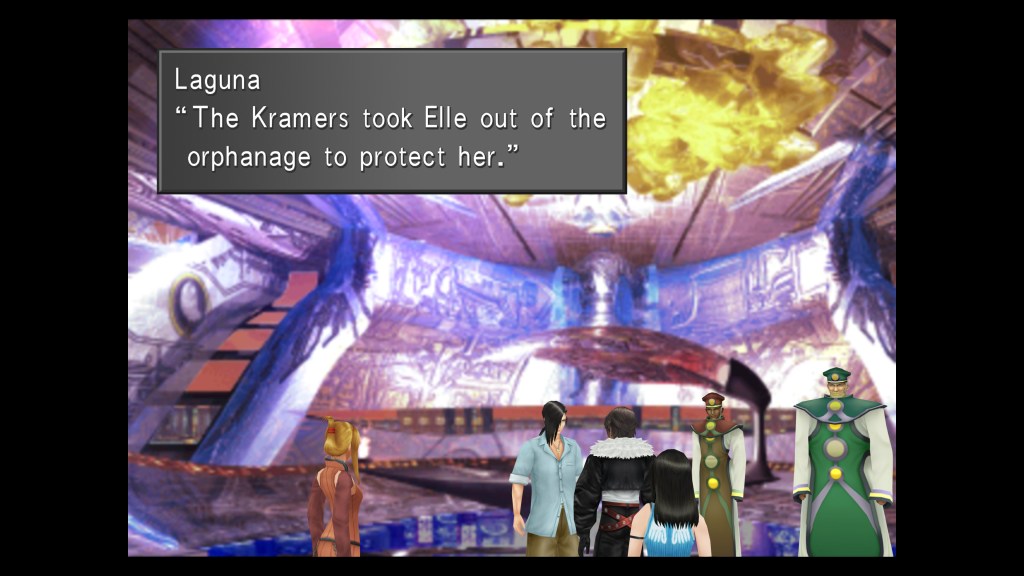
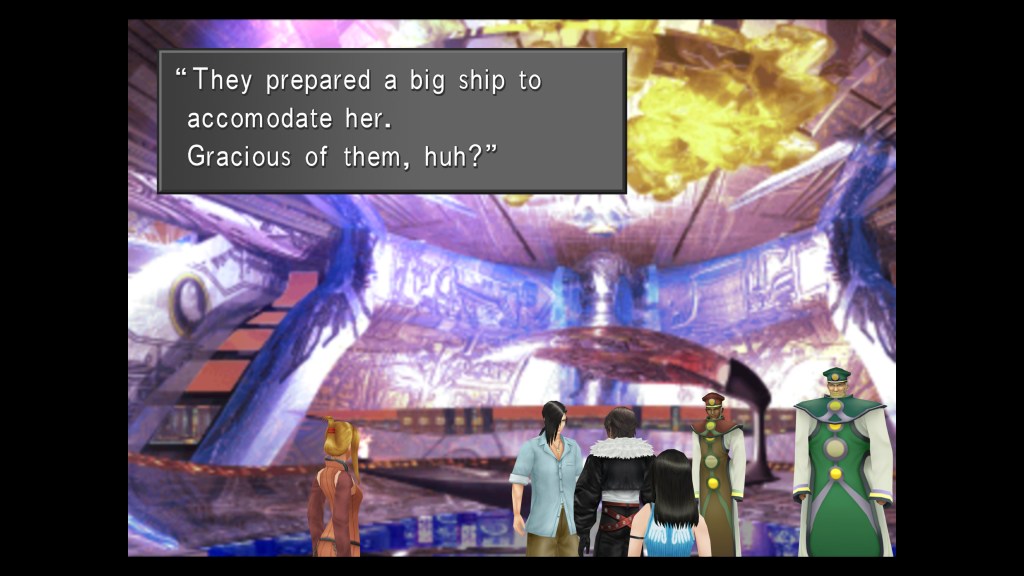
It’s hard to form much of an opinion on Ellone as an individual. You spend half of the time getting to know her as a young child. She’s a cute kid, but I think most of what she does is meant to endear you to Laguna.
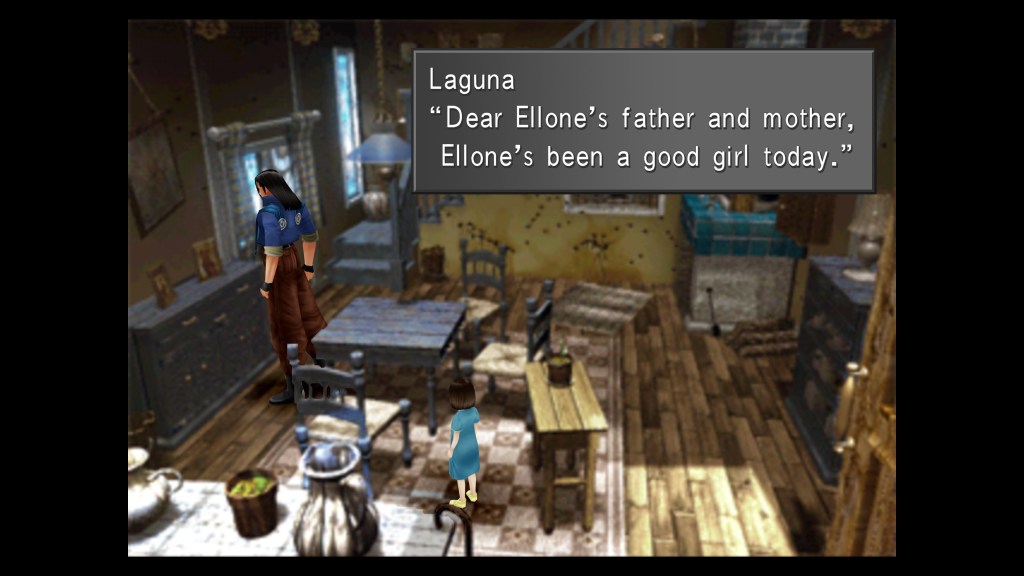

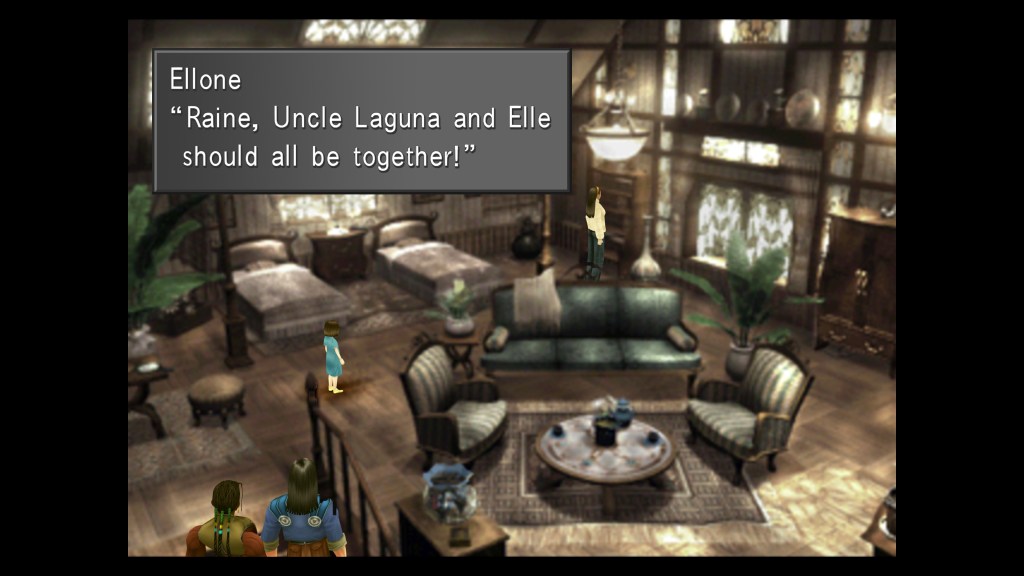

The other half of the time you see her as more of a plot device than a character. The game’s story can’t progress without her powers, but as a personality, she doesn’t add a lot to the equation. Her ‘big sister’ character is already occupied by Quistis. So to me she’s just ‘Quistis with less personality and more magic powers and plot relevance.’
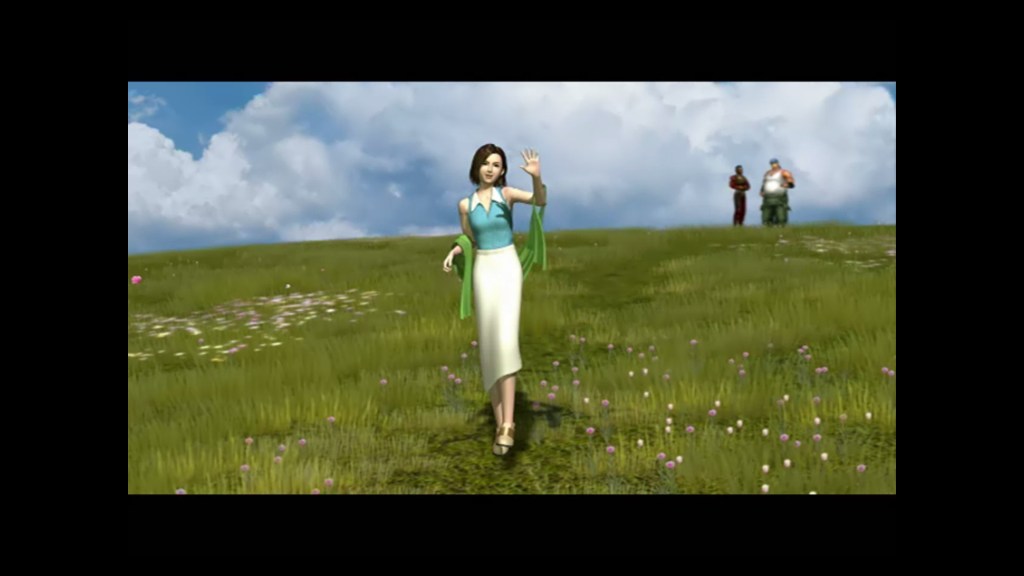
Laguna Loire
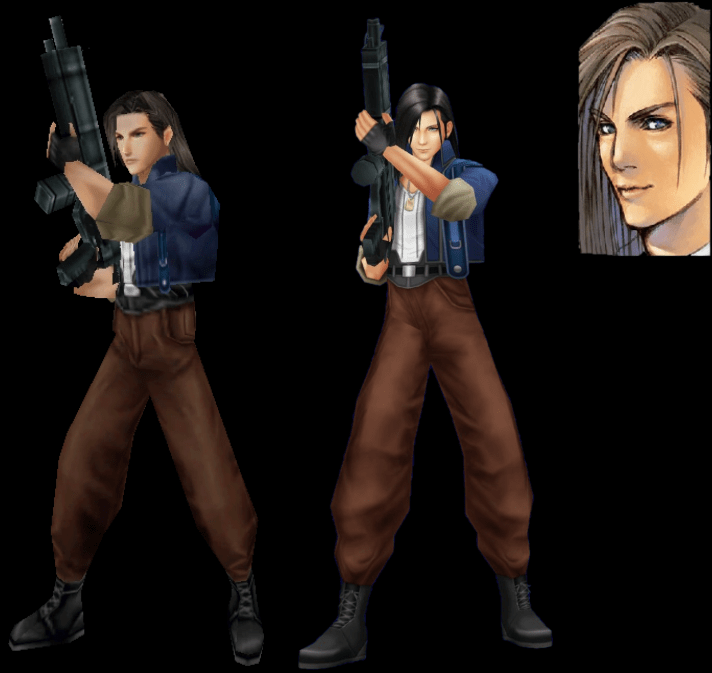
Laguna and his buddies are introduced to the player in the game’s first disc. When in the middle of a train ride the entire party passes out and has a ‘dream’ that entails Laguna’s adventures that took place prior to the events of Final Fantasy VIII. Mr. Loire is portrayed as a bit of a bumbling but charming goober. He has dreams of being a writer, but life never quite settles down enough for him to do that.

You are first introduced to him at the very end of a mission he takes part in as a member of the Galbadian armed forced. He and his friends, Kiros Seagill and Ward Zabac, decide to kick back at a hotel bar where Laguna happens to have the hots for the female lounge singer named Julia. Julia…why does that name sound familiar? Why, that’s Rinoa’s mom’s name!
And it turns out that the song ‘Eyes on Me’ was written about Laguna. She noticed him always smiling and looking at her from across the bar and went along with it. So the romantic song that plays during the love scene was written by one of the participants mom’s. Is that where the connection ends?

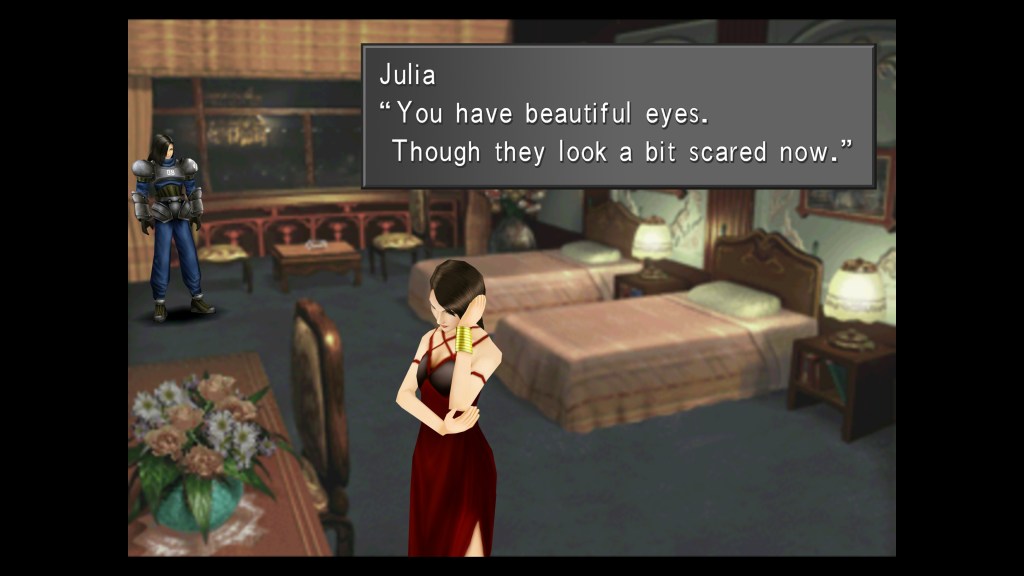
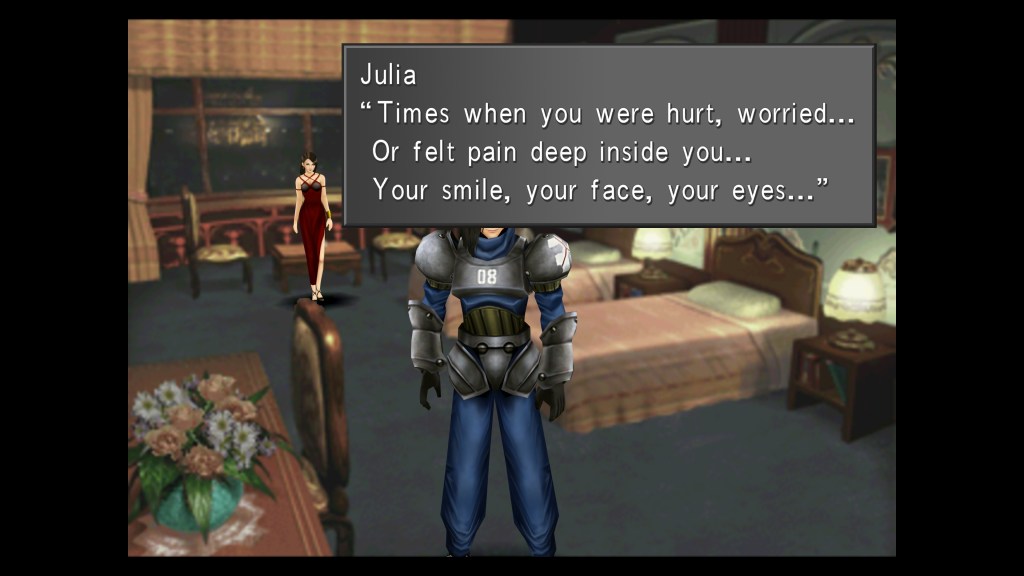
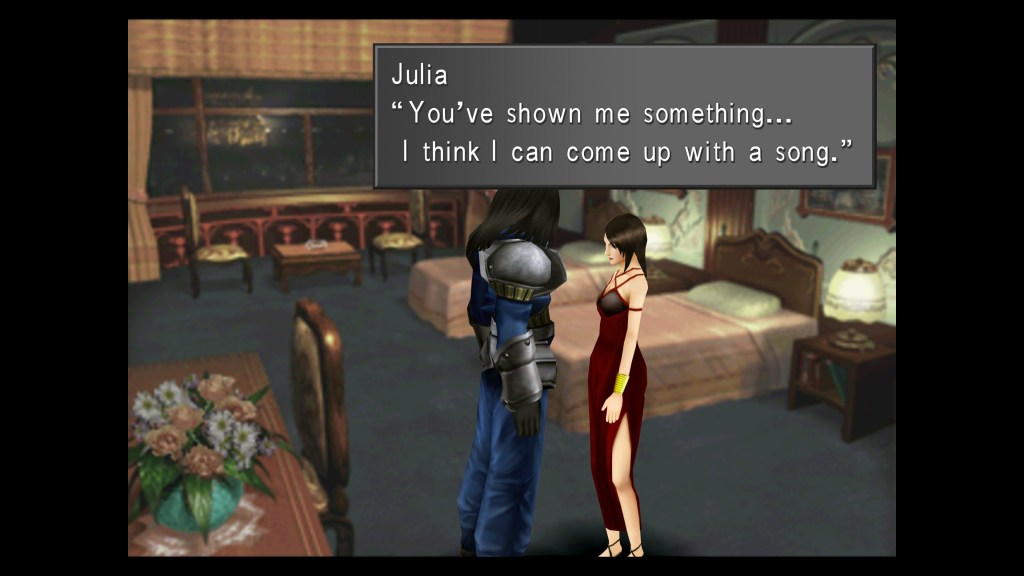

We flash forward to various points in Laguna’s life. He gets separated from Kiros and Ward after a mission goes particularly haywire and ends up back in a village with a woman named Raine and her adopted daughter Ellone.
It’s revealed that, much like Julia, Raine has the hots for Laguna. They form something of a relationship but unfortunately, while Laguna is away on business, Raine dies. This forms the motivation for Ellone to send Squall and company back to the past. She is searching for a means to save Raine.
Of course, changing the past is impossible. Instead, Ellone discovers just how loved she is as a result of her time manipulation shenanigans. Ain’t that sweet.
One little tidbit that the player learns regarding the death of Raine is that it occurred shortly after giving birth to a baby boy. Laguna could not make it back to Raine’s village in time to get to his son and as a result, the boy and Ellone are sent to to an orphanage. Edea’s orphanage. That’s right, the son of Raine and Laguna is Squall Leonhart.
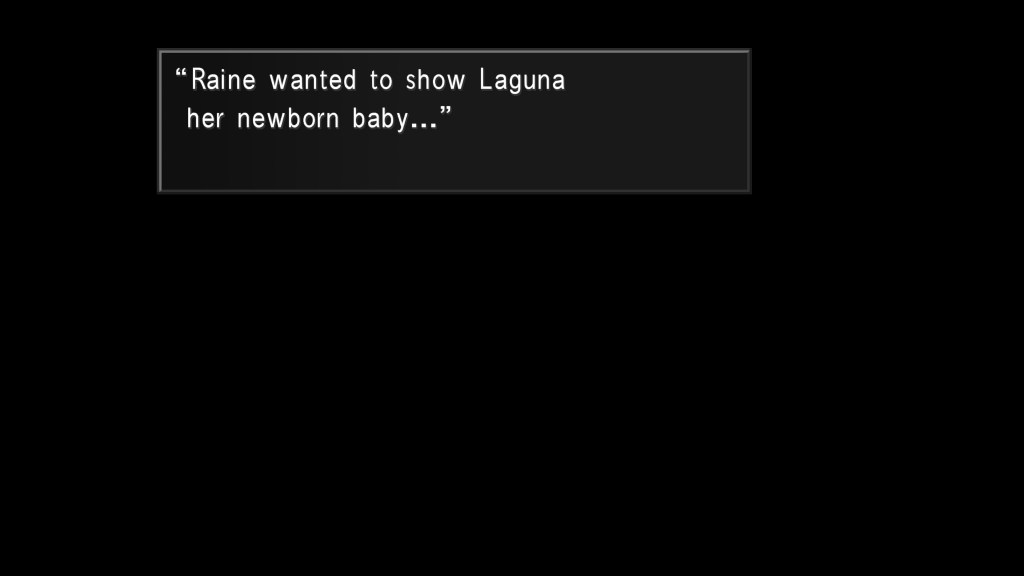
So let’s flash back to ‘Eyes on Me’ real quick. The song plays out while the daughter of the song’s writher is getting close with the son of the song’s subject. Like poetry, it rhymes! This gives the romance between Squall and Rinoa an extra touch, like it was destiny for them to end up together. They are living the love life that their parents had wanted for themselves. Will it go better than the doomed yearning that Julia and Laguna went through? Well, maybe, who can say.
Later Laguna has to bust into a facility in the technologically advanced city of Esthar in order to save Ellone – another parallel to Squall as he has to do the same for Rinoa – and while doing so is placed in charge of a group aimed to take down Sorceress Adel.
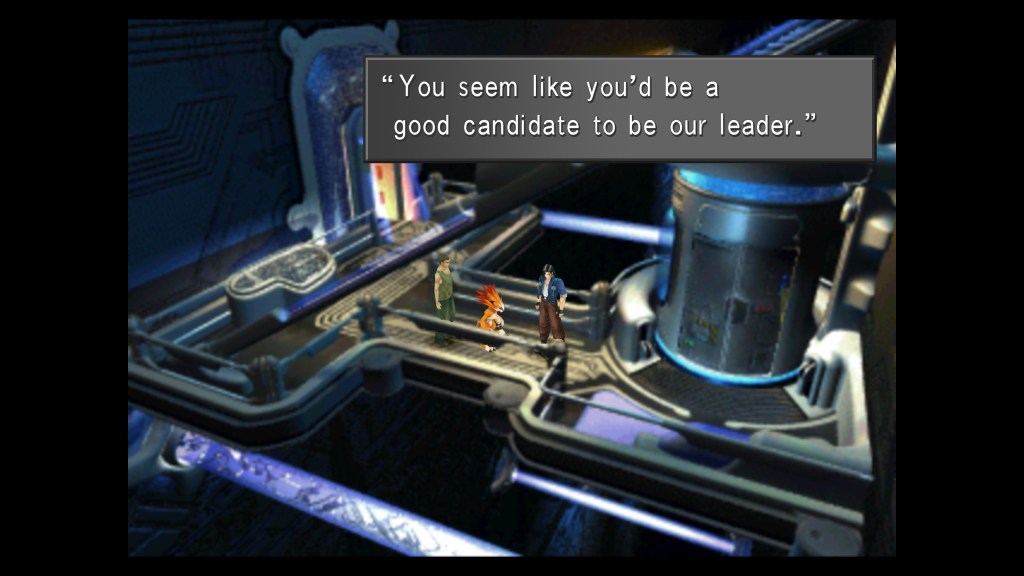
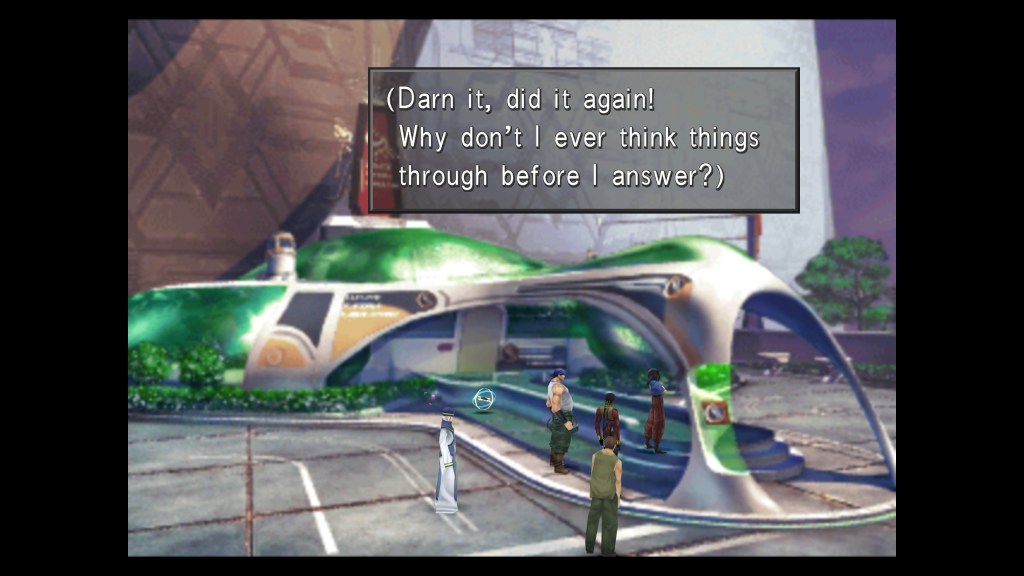
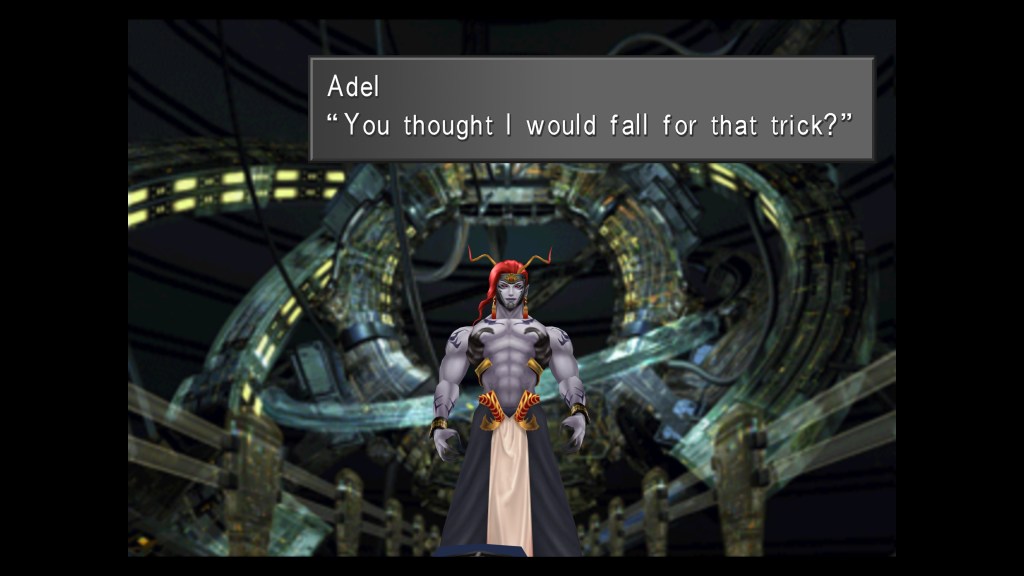
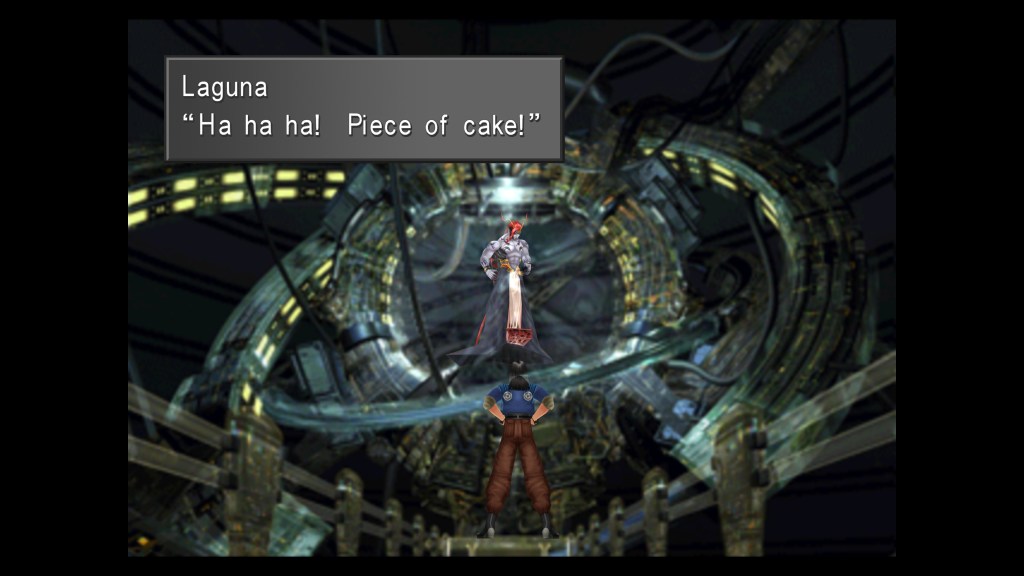
Adel is a powerful woman who is ruling over the world with an iron fist and part of why the title ‘sorceress’ is so feared in the current era. Laguna tricks Adel and gets her locked in space for the majority of FFVIII’s run-time. This action has the people praising Laguna as some sort of war hero and sees him elected president of Esthar. His presidential duties are what keeps him from returning to Squall and Ellone. Allegedly. Laguna is kind of an oaf, he might have just forgotten about his children.
The main purpose of these story moments is to introduce the time travel element of the plot, but I really enjoy these scenes because they often act as a preview of areas to come or give you some perspective into the main characters by showing how someone else acted in situations similar to what they’ve been through.
Plus, I just like Laguna. He’s goofy and charming. The dumb little stunt he pulls where he cramps up when tasked with talking to a woman he crushes on is pretty relatable. Who doesn’t get nervous when talking to someone like that?
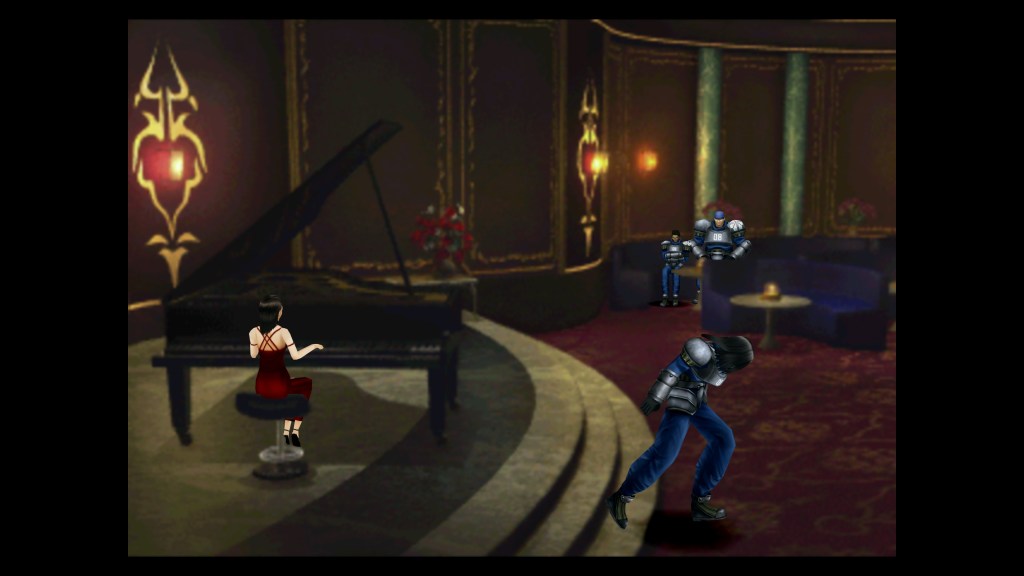
It’s nice seeing portions of his life played out across the duration of the game. The flashbacks often happen during intense plot moments, so the player might often be champing at the bit to get back to the action. I feel like Laguna segments hit harder on replays than they do on your first time through.
It’s also sweet that the ending shows us the moment he proposes to Raine. Sure, it comes right before snapping back to the present where he’s staring at her grave, but it’s a nice little bookend to his chapter. He never had the time to go back and reflect on life, so once the world is saved, it’s cool that he finally gets to do that. Plus, it’s revealed that he very recently got reunited with Ellone, so maybe he can actually put in some dad (The game refers to her as ‘niece’ but I disagree) time there.
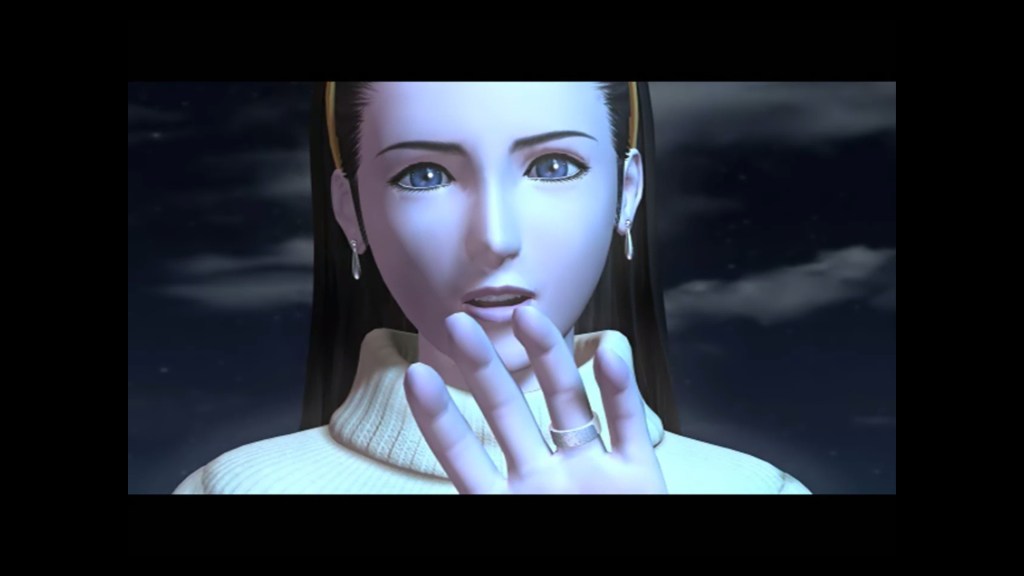
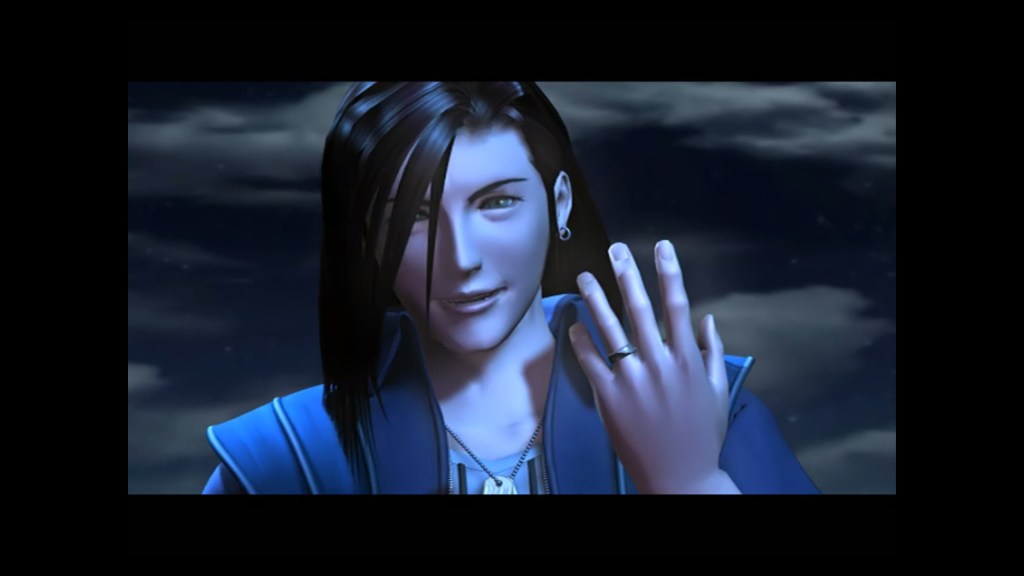
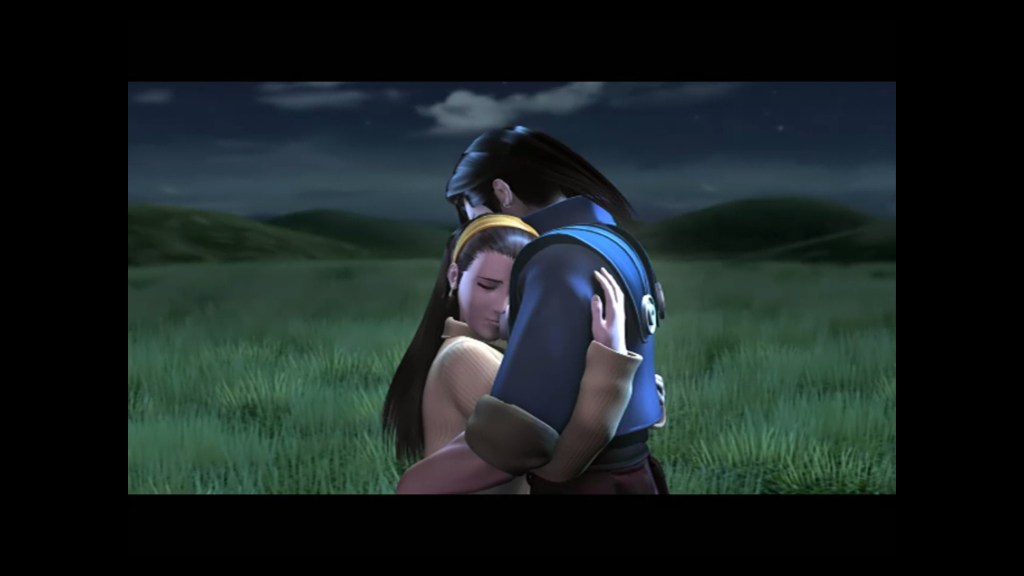

Originally, I was going to have a section for Kiros and Ward. I don’t think there’s enough to say about them as characters though. So instead, here’s their little character comparison graphics.
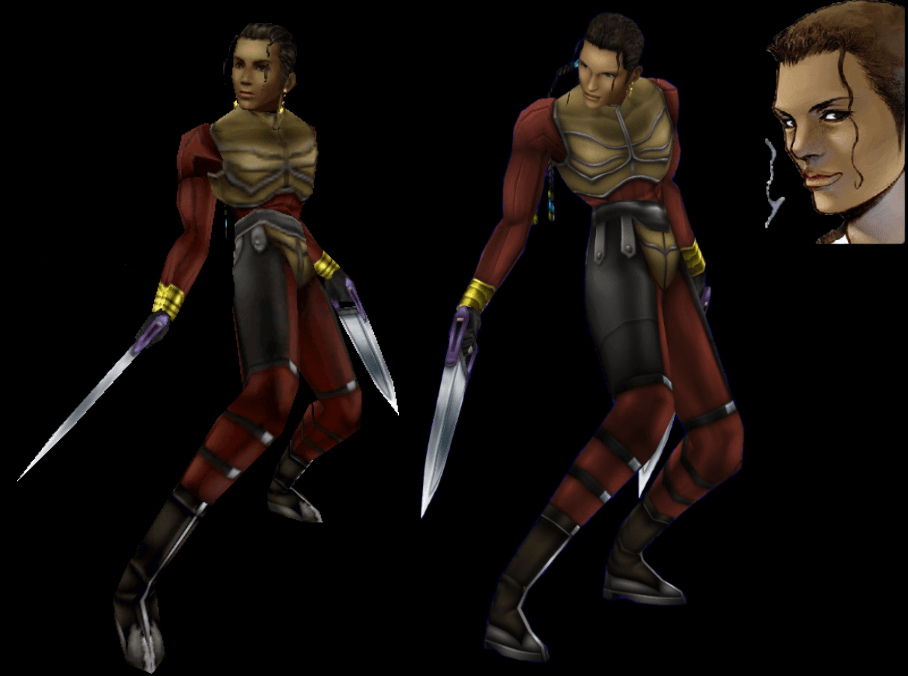

Ward (big guy with spear) loses his ability to speak after the second flashback of the game. He gets shot in the throat. He works as a janitor in a Galbadian prison after that but longs to get back with his war buddies. You meet him in the present as a member of Laguna’s cabinet (an adviser? I have no idea what he does), so it’s nice that he got back together with his boys.
Kiros pals around with Laguna a little longer than Ward does. He discovers Laguna living peacefully with Raine and Ellone and comments on how much he’s changed since the three guys got separated. He has a good sense of humor and constantly ribs Laguna about his disposition and his relationships, but if you’ve had male friends before, you know this kind of guy is really common and he means well. A true bro.
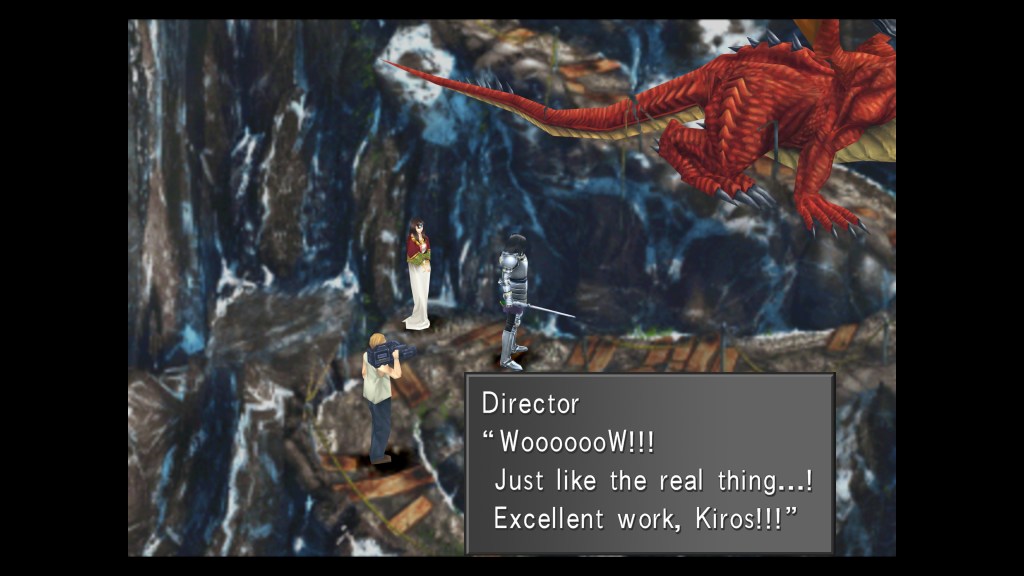
My favorite Kiros bit during the flashbacks is when he is tasked with dressing up as a dragon to play a bit part in a movie Laguna is acting in. Laguna leads a complicated life, he does lots of things. Instead of Kiros, a REAL dragon comes out and hilariously everyone on set just thinks Kiros is a really good actor at first. It’s a very silly moment but I enjoy it all the same.
Long story short, I like these guys. I like that we get to spend so much time with Squall’s dad. It’s interesting to draw comparisons between the two. They seem like polar opposites at first glance, but when you delve more into the characters and their relationships, you sort of see the similarities. The apple doesn’t fall so far from the tree.
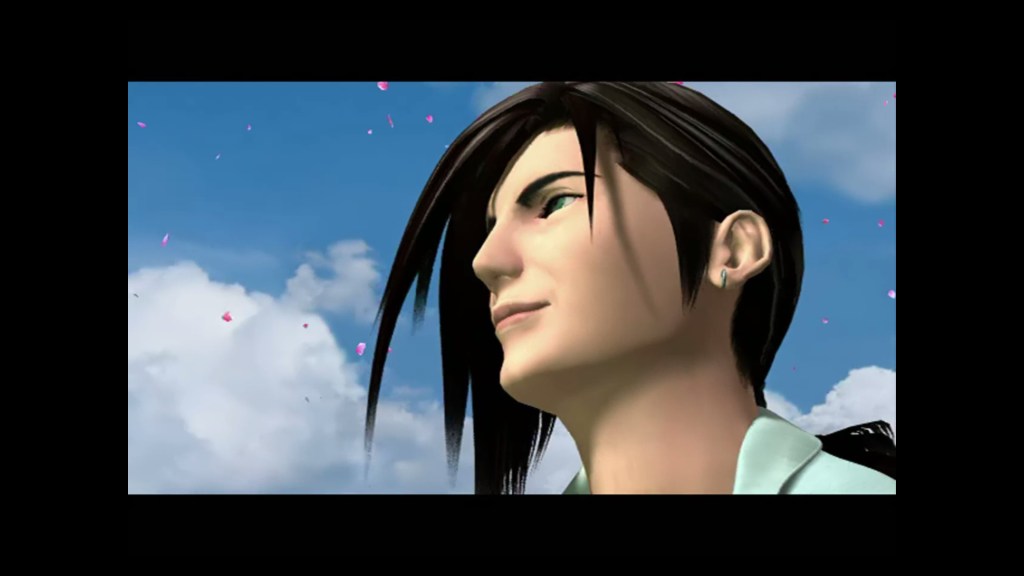
Edea Kramer

Excuse Remaster Edea’s weird purple scanlines. I captured the remaster models by using scan on the characters. Her cloth is supposed to be transparent, so as a result, you see some scan residue. Apologies!
Edea serves as the primary antagonist for the first two discs of Final Fantasy VIII. As mentioned at the start of this section, it isn’t really Edea you are fighting, but a sorceress who has taken control of her body. Everything you think you know about this character should get thrown out at the conclusion of the game’s second disc, because that is the first time the party ever gets to really interact with her.
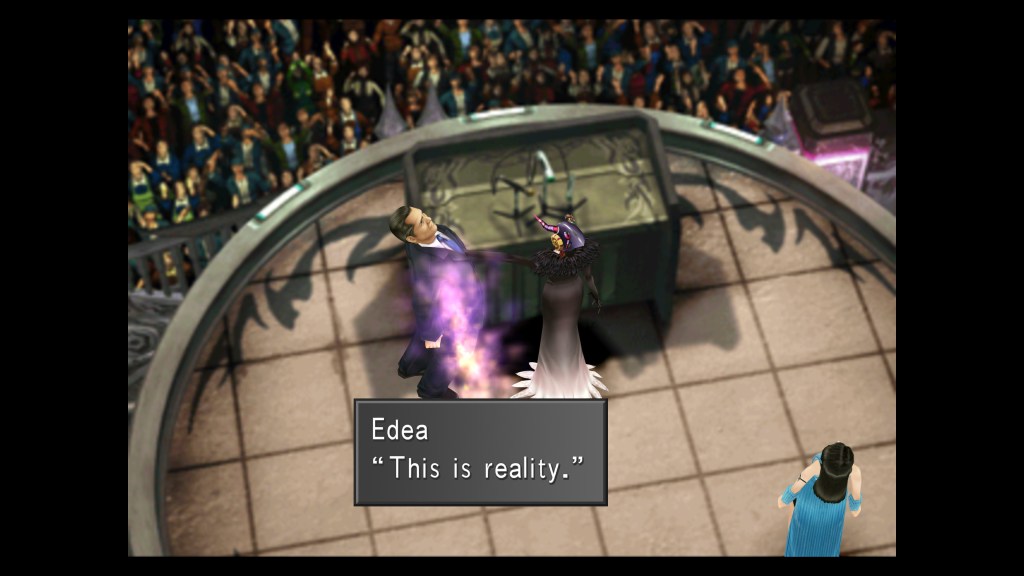
Before the events of Final Fantasy VIII, Edea was the matron of an orphanage. The very orphanage Seifer and five of our playable characters came from! One day a dying sorceress, Ultimecia, encounters Edea and transfers her power unto her. How does Ultimecia, a sorceress far from the future, even meet Edea? Time compression shenanigans!
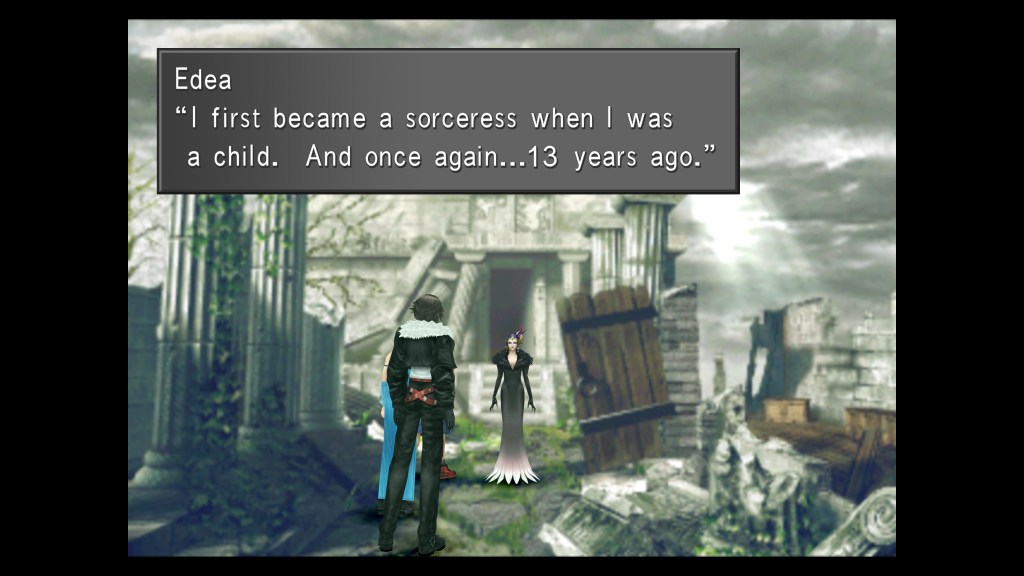
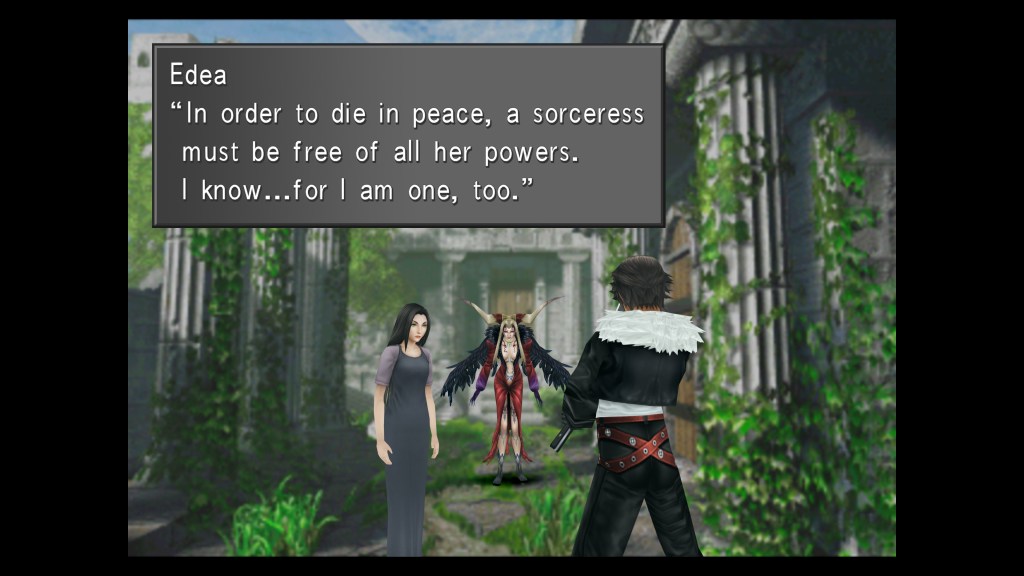
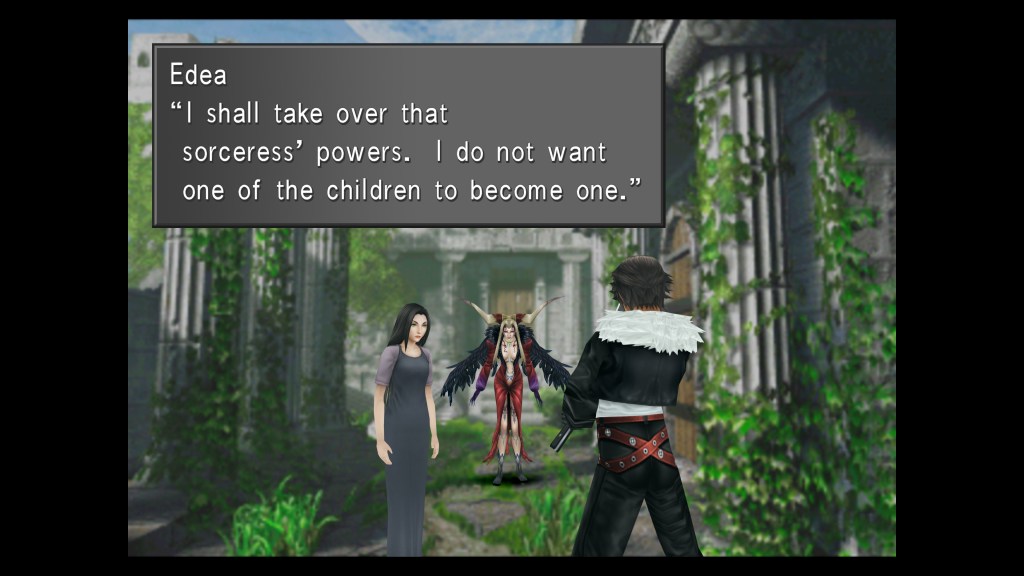
At this time, she still has control of herself, but she realizes that this won’t always be the case. So she and her husband Cid create the Garden and SeeD with the intention of taking Edea out once she loses control of herself.
While she is in control of her faculties, Edea is a very soft-spoken a kindly woman who seems intently focused on bettering the life of disadvantaged children. She seems very happy to see how far the SeeDs have come since leaving her care. She also seems to take comfort in the fact that, if she goes out of control again, that one of her former orphans will do what needs to be done and take her out.
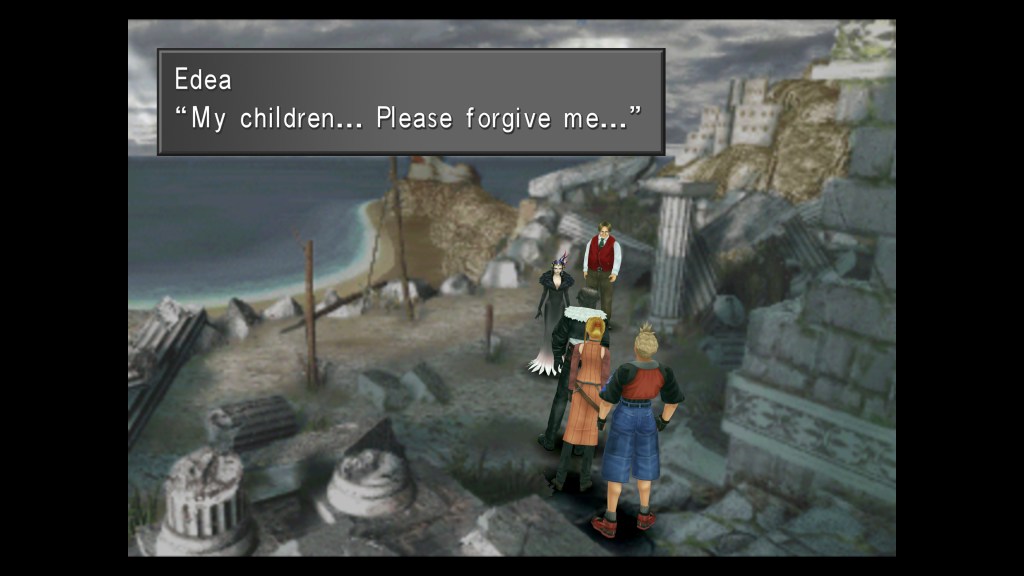
The main cast treat her as a mother-figure, referring to her primarily as matron once they learn about her not being such a bad guy. It’s interesting seeing such a tonal shift from the cast because they go from doing everything they can to kill this lady to borderline doting on her. It makes sense, but it is jarring.
Edea joins the party very briefly in the game’s third disc. She is trying to get the sorceress taken out of her body once-and-for-all and guides your group to the futuristic city of Esthar.
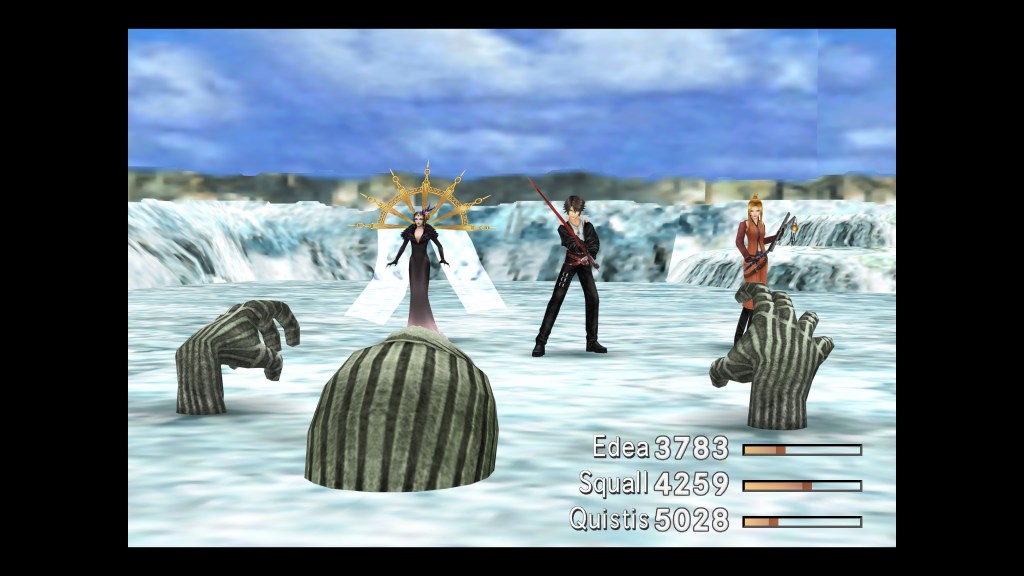
It’s very odd that they go out of their way to give you control of this character for such a short time, but I think it’s to communicate to the player that she is no longer a threat. She has fully shed the skin of Ultimecia at this point. There’s basically no reason to use her – all characters play just like each other, just as before and Edea is no exception – but it’s cool to be able to control what had been a big villain.
As a whole, I like Edea. I like how drastically different she is as a person than the version of her character that we are introduced to. However, most of her involvement with the plot involves her being used as a tool. Most of her major contributions to the narrative take place before the narrative actually starts.
I think she would have made a really interesting permanent party member, but it wasn’t in the cards.
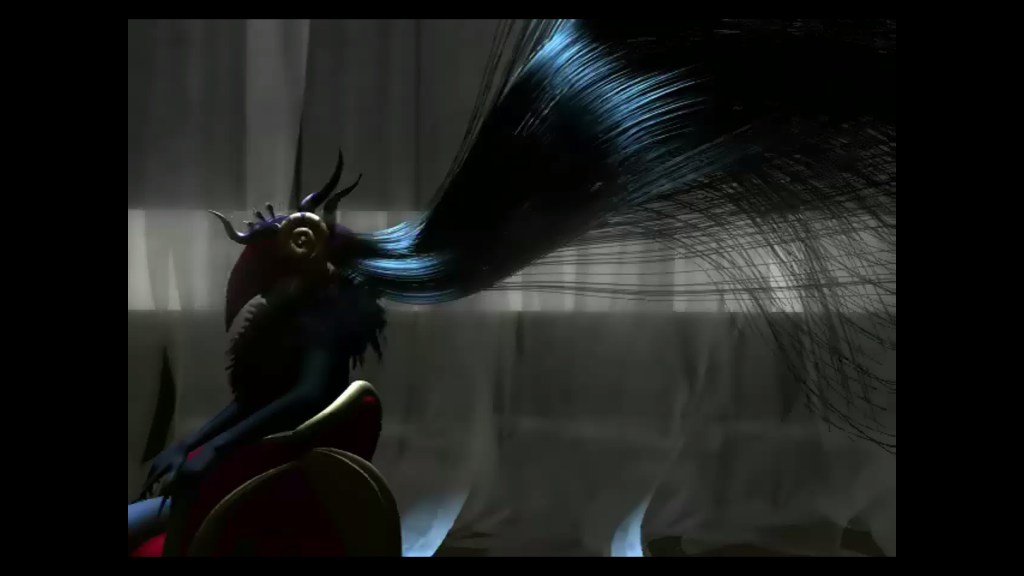
Cid Kramer

Edea’s husband and co-founder of the Garden. His main purpose in the game is to assign jobs to you and the party. He signs a contract that gives Rinoa’s freedom fighters absolute control of your party until they achieve their goal, which is what sets a lot of this game’s events into motion. He oversees the SeeD students and tries to nurture them into good little mercenaries.
FFVIII’s Cid is quite a bit different than the other Cids we have encountered to this point. He doesn’t seem to know anything about engineering or science. In fact, Balamb Garden becomes a mobile facility at some point and Cid has no idea how or why this is happening and isn’t even the guy to figure out how to get it to steer properly. He appears to just be an administrative person.

His big moment in the game is a plot beat that could probably be removed without causing any harm to the narrative. It’s revealed that Balamb Garden is actually owned by an alien-like entity named NORG. NORG is a member of a group of characters called the Shumi tribe and he fronted the money for garden to Cid in order to, uh, make even more money via mercenary work and such.
There’s a big scene in the second disc where there’s a power struggle between NORG and Cid for control of the garden, but I gotta be honest, while it’s an exciting bit of gameplay in the moment, it does nothing but convolute the plot.
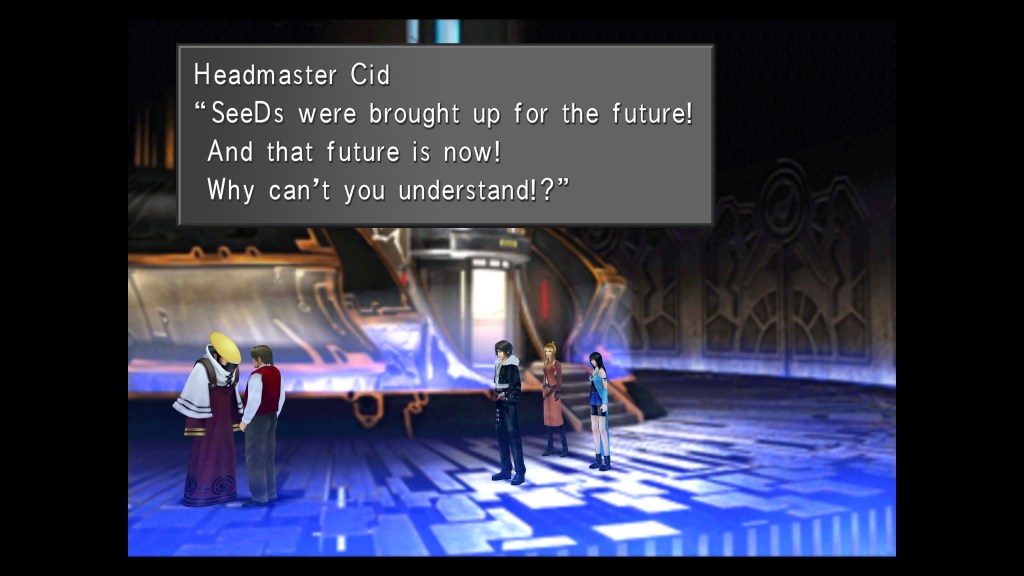
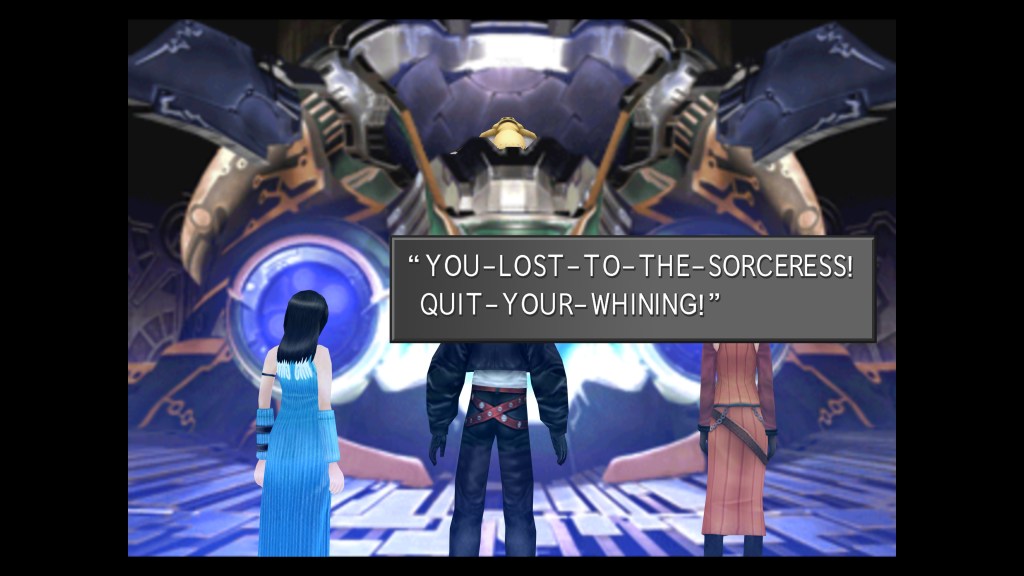
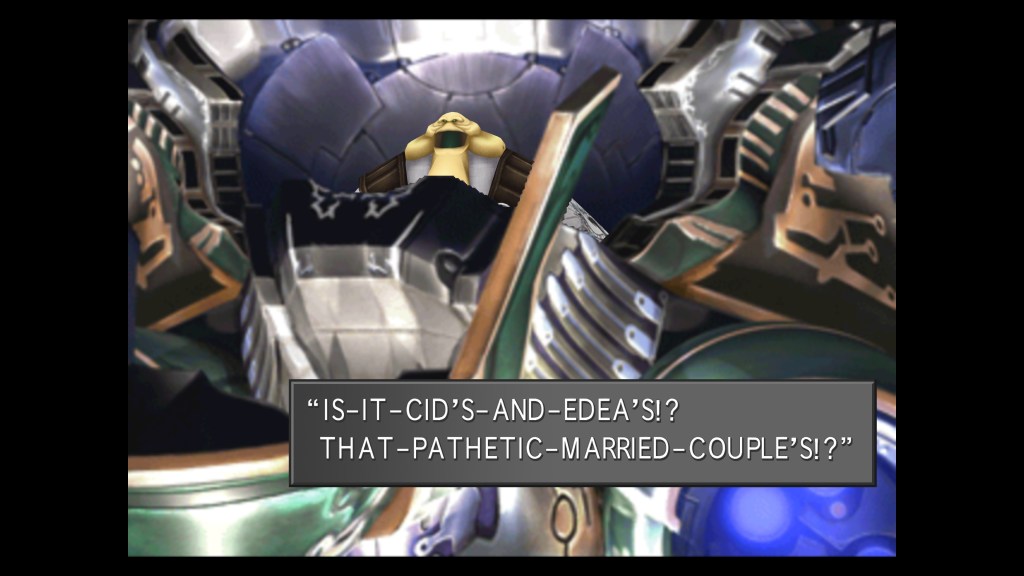
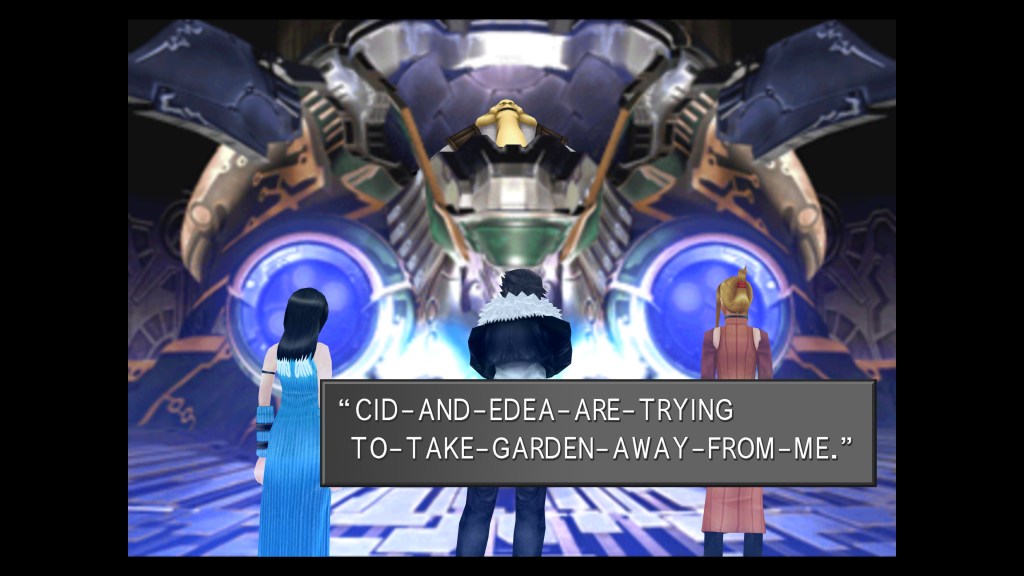
The scenario throws unnecessary details to the forefront that distracts from the Edea conflict and throws additional questions onto Cid, a guy who has pretty straightforward and easy-to-understand motives. He just wants to save his wife from suffering.
I like that details about NORG are present from even disc 1, but I think this part of the story could just be left on the cutting room floor because after it concludes, it’s never relevant again. Cid doesn’t suddenly go “oh yeah about NORG…” when he’s reunited with Edea.
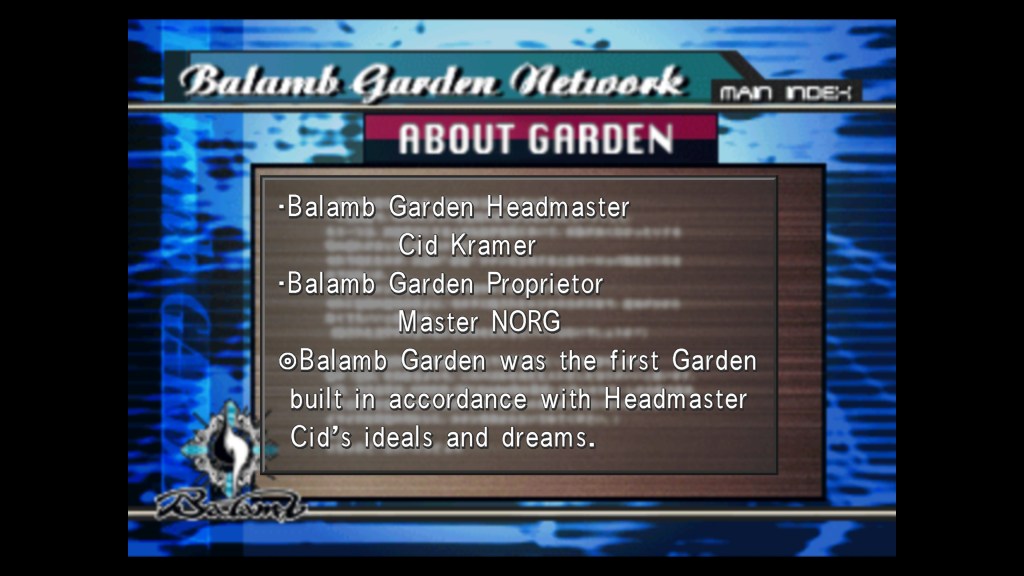
Might just be me, I dunno. That whole bit of the game feels like it was put together just to reveal that Cid and Edea were a married couple. It’s a big twist because, to this point in the game, the player is led to believe Edea ISN’T being mind controlled and she’s just an evil lady.
The headmaster of the garden being married to his archnemesis is a gigantic reveal, but I think there are probably other ways they could have conveyed this information.
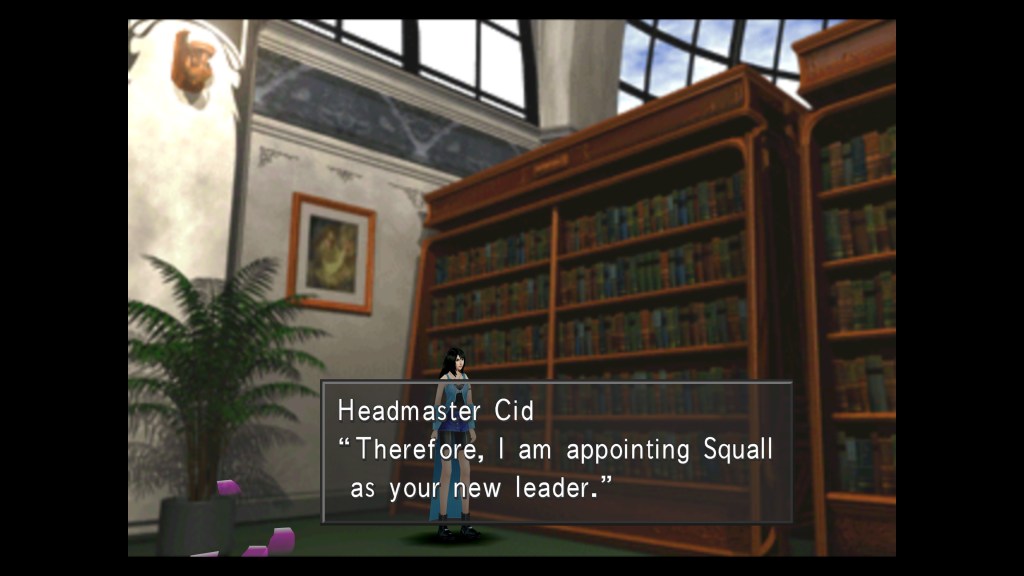
One of the most bizarre moments of the game is right after this NORG reveal. Cid mysteriously decides to step down as the leader of Garden and appoints an unwitting Squall as the new head. Cid had been working on SeeD and Garden for years at the point of doing this and he just makes Squall the leader of the group out of nowhere, with no buildup or preparation. He just goes “you’re the man now, dog” and that’s that. He even chides Squall when he makes decisions not fit of a leader!
As a result of this nonsense, as well as the NORG plot, I find this version of Cid to be my least favorite FF Cid. Well…maybe XII. We’ll see. Not only is he not a mechanic, but he shirks his main duties when he’s needed the most. The Garden is at full-blown war with the sorceress when he steps down. This is the moment everything was established for! You’re gonna bow out NOW and hand the reigns over to a teenager who just learned how to express himself for the first time ever? Ridiculous.
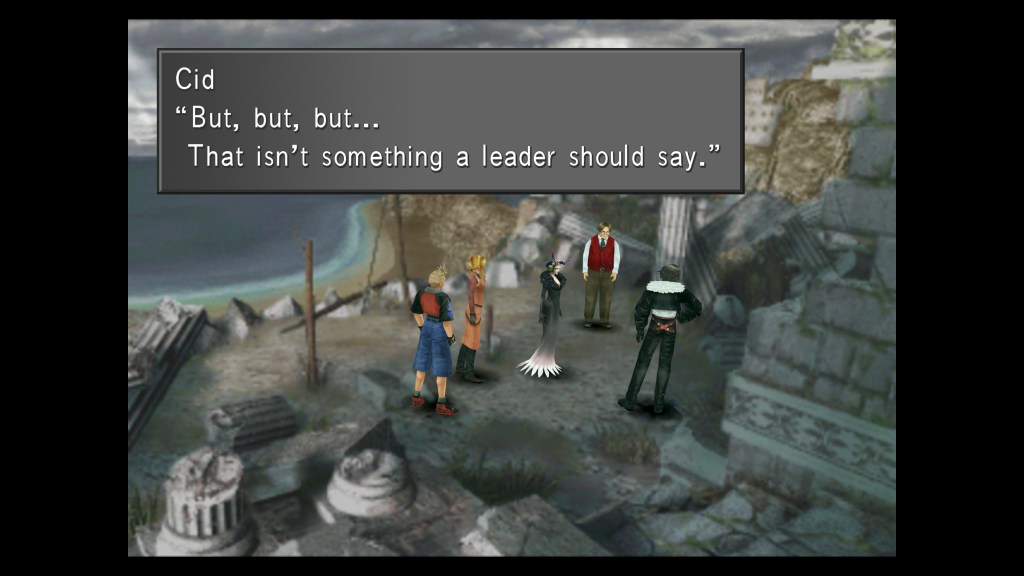
One final little tidbit about Cid I’ll talk about is just something that has amused me over the years, it has very little to do with his character. When the SeeDs go off in the world to meet with Rinoa and her forces, Cid gives you a magic lamp. He says the lamp ‘is cursed’ but doesn’t expound on it.
If the player goes into their inventory and selects the lamp, a boss battle with the GF Diablos instantly start. It’s pretty close to the start of the game when you can do this and Diablos is no slouch, so first time players might just get their shit kicked in and lose save progress.
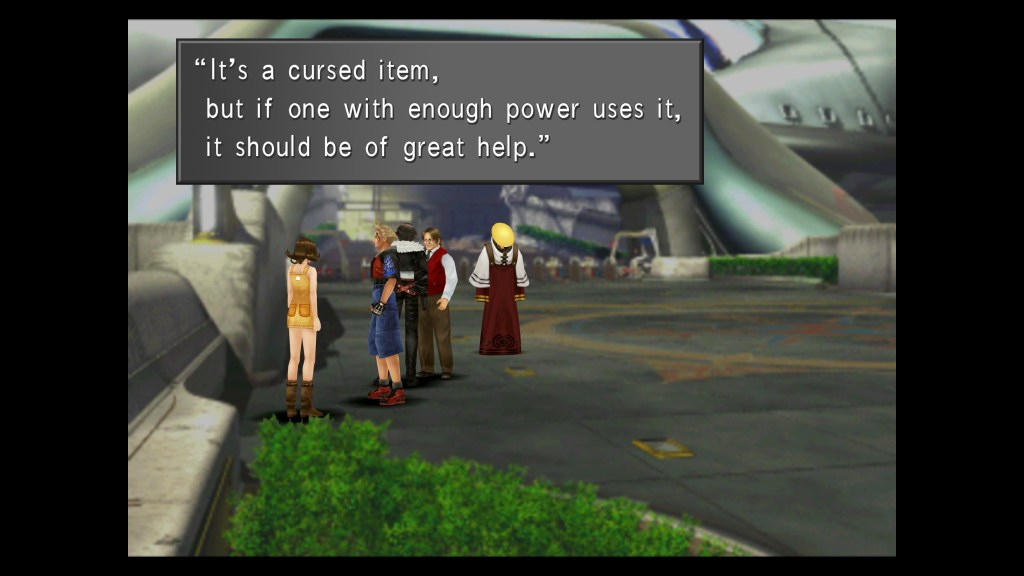
It’s easy once you know you can blind him and draw his own signature spell, demi, to use it against him to cause big damage, but a new player might not know this. What a dick move. You couldn’t have warned me about the god of death hanging out in this lamp? I thought you wanted SeeDs to succeed!
Diablos can give characters the ability to mug and turn off all random encounters though, so I guess it evens out…
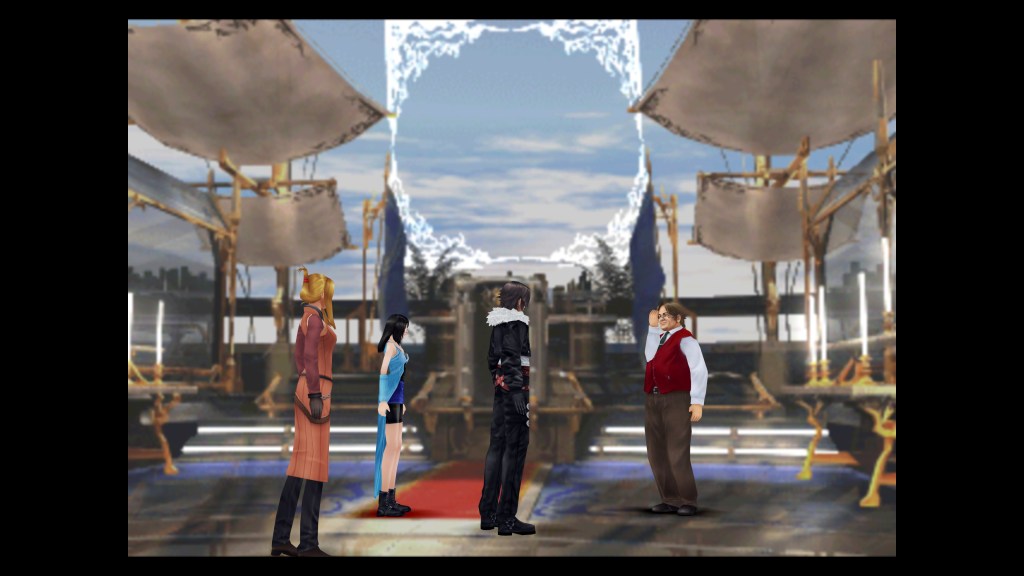
Ultimecia
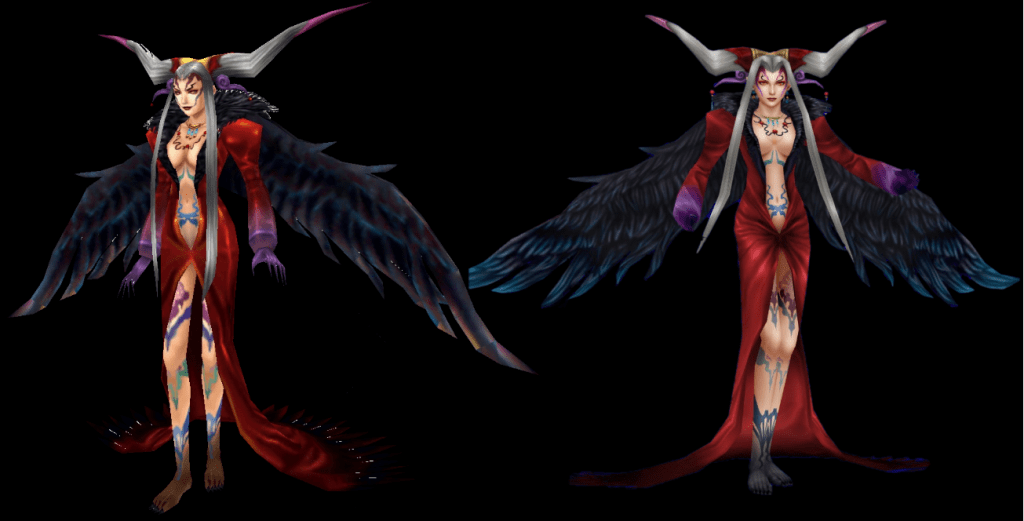
Here’s your main villain, the oft-mentioned sorceress. While being the antagonist for the majority of the game, Ultimecia is only mentioned by name in the third disc. This is a four disc game and disc four is just a final dungeon!
It’s revealed that she is an entity from the distant future who is using a device that is based off of the magic abilities of Ellone in order to go back into the past to possess Edea.

The machine based off of Ellone’s powers only takes Ultimecia so far, so her aim of using Edea is to find Ellone of current day in order to use her abilities to send Ultimecia even further into the past. Then once in the past, Ultimecia wants to cast a big spell (both in the present and in the distant future) that will mush the past, present and future into one state called Time Compression. Only Ultimecia would be able to function in this time.
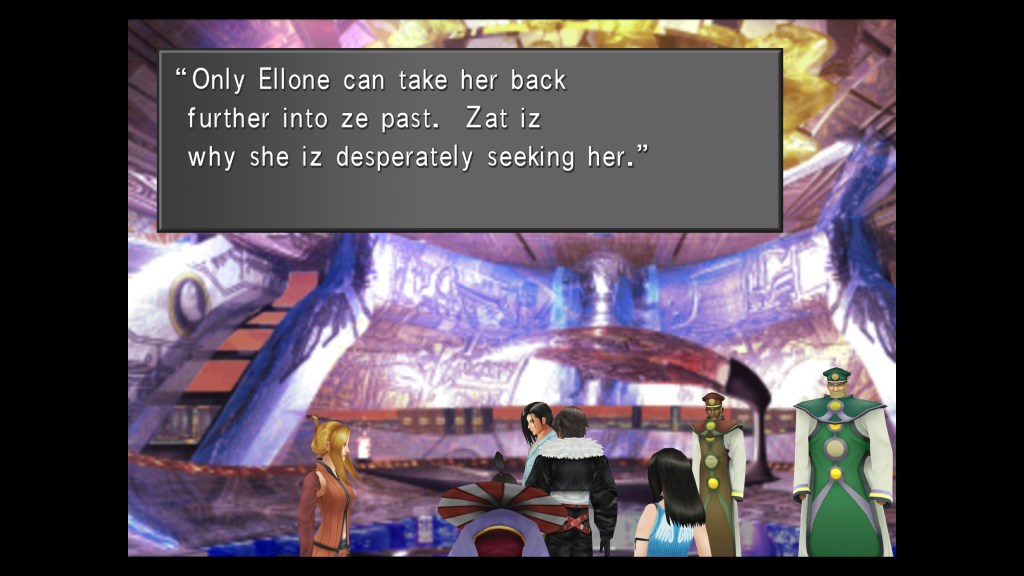
Confusing? You better believe it. Complicating this is Ultimecia jumping into other bodies. She starts the game inhabiting Edea but then moves to Rinoa at the end of the second disc. It’s later revealed that there’s an even more powerful sorceress out there named Adel who Ultimecia would rather inhabit than Rinoa. Adel had been sealed away thanks to some trickery by Laguna, but Ultimecia-Rinoa unseals Adel, which leads to Adel trying to absorb Ultimecia-Rinoa.

I don’t understand why Ultimecia even needs Adel for her plan. As long as she has Ellone, isn’t her plan of time compression good to go? The time compression element being fed to the player at the 11th hour is confusing enough, but now you’re talking about insanely powerful beings only to kill them off shortly after introducing them? I feel like Adel just exists to explain how the hell Laguna became president. It seems like a lot of ideas were thrown at a dart board and just haphazardly mixed together.
Your resistance forces hatch a plan to beat time compression. This is very convoluted, but essentially the idea is to let Ultimecia do it. You are told that the key to not losing yourself is to focus on your friends and loved ones, to fixate on one particular location. So your entire party survives the merging of time through the power of love and meet up in front of Ultimecia’s lair with only one thing to do. Finish the fight!
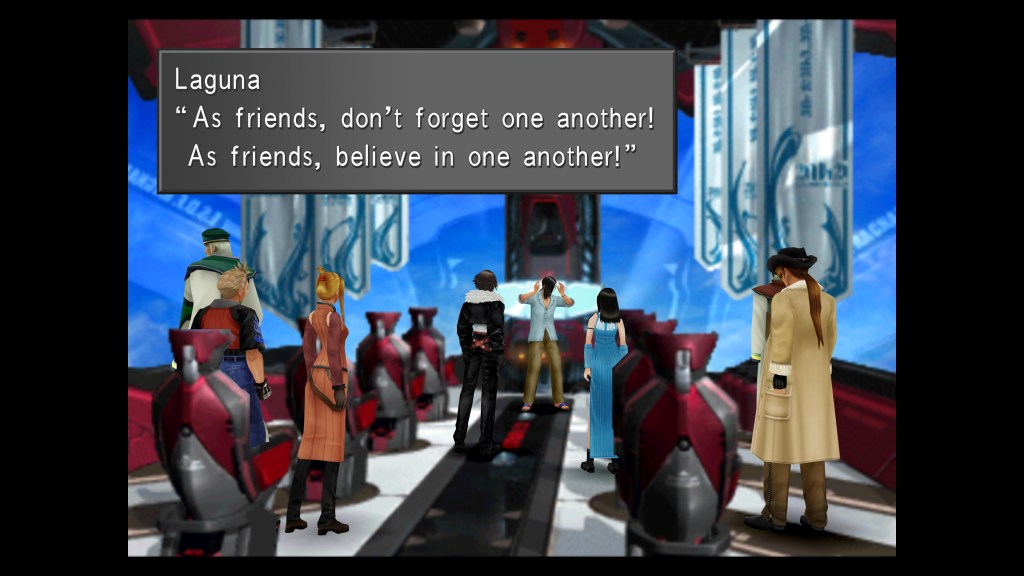
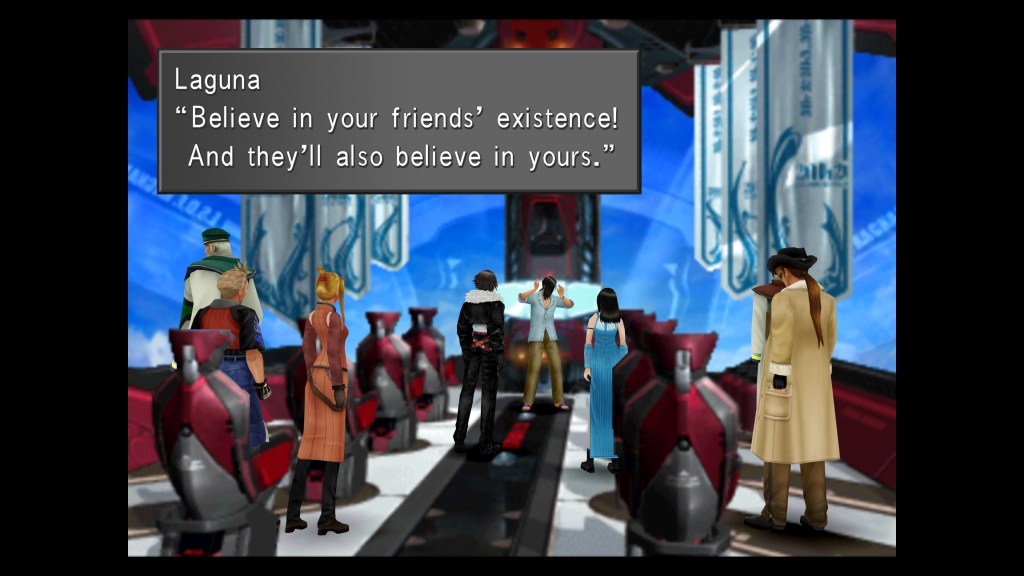

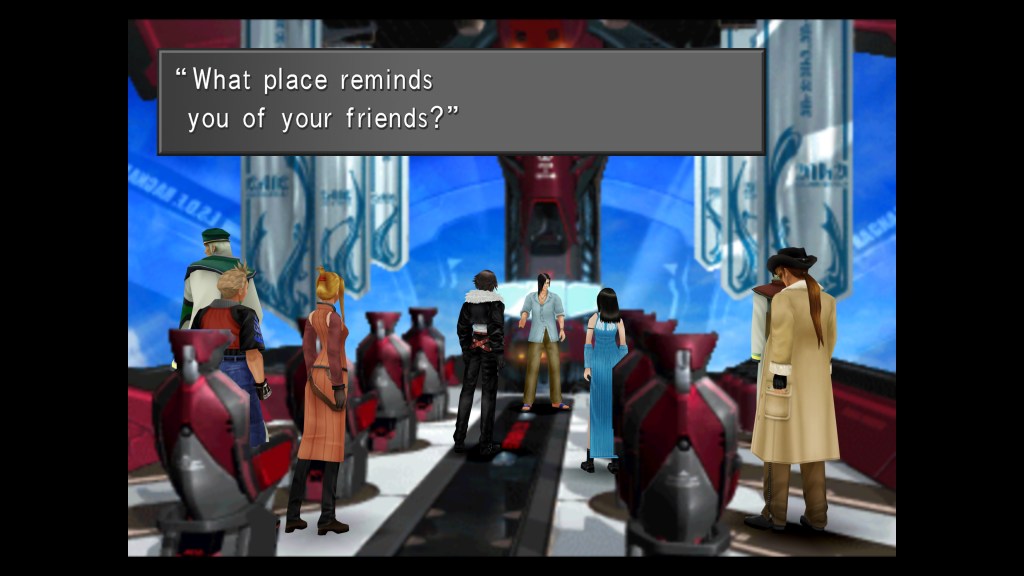
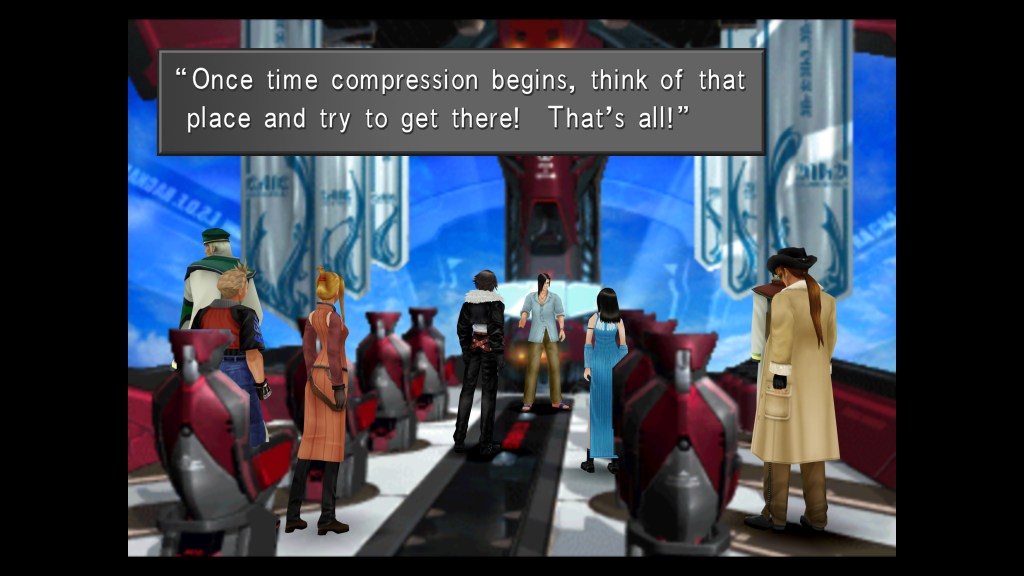
Let’s talk briefly about this state of the game. Time compression takes place solely during the fourth and final disc of the game. Because of story implications, your party can’t just stroll willy nilly into any town. Most places in the world map are locked off, you even have to go on a bit of a sidequest in order to find your aircraft.
I don’t mind this at all since it fits in with the story, but it’s bizarre for the game to give you a pretty clear point of no return before even the final disc. Usually that comes before the final boss encounter, not before even the final dungeon.
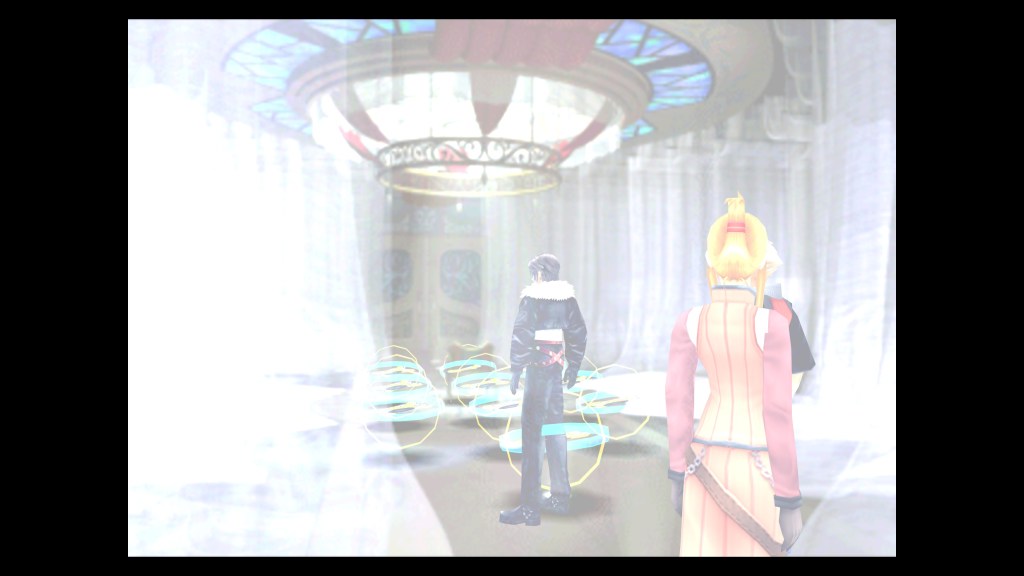
Time compression also leads to a very bizarre ending. It’s a memorable, bordering on interpretative, sequence that features Squall trying to cling to his memories and return to his friends. It’s confusing in spots, which I think helped perpetuate fan theories like Squall being dead the whole time, but I think they make the bizarre visuals work.
It reminds me of the last two episodes of Neon Genesis Evangelion. Strange, but it makes sense when you think about it.
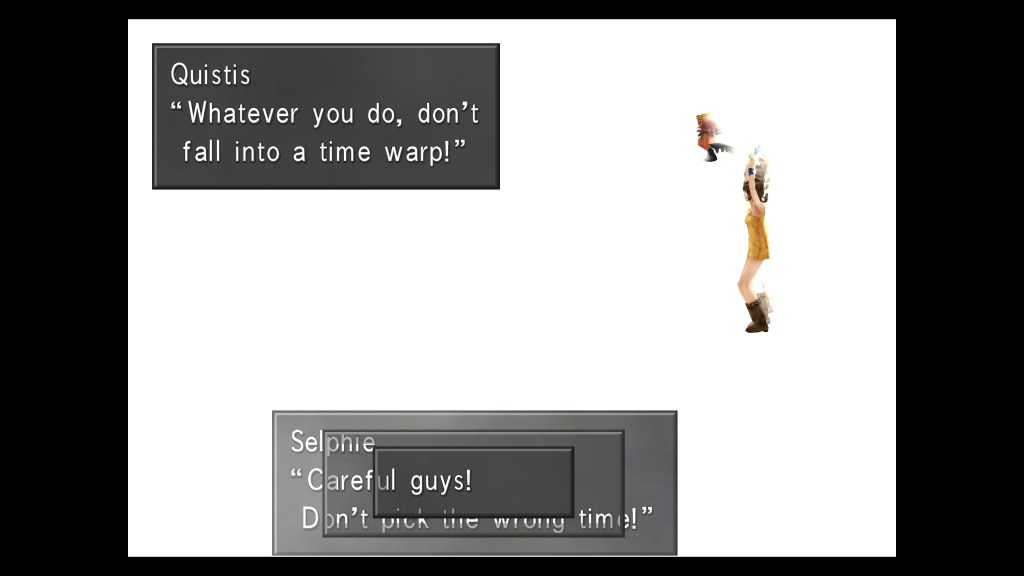

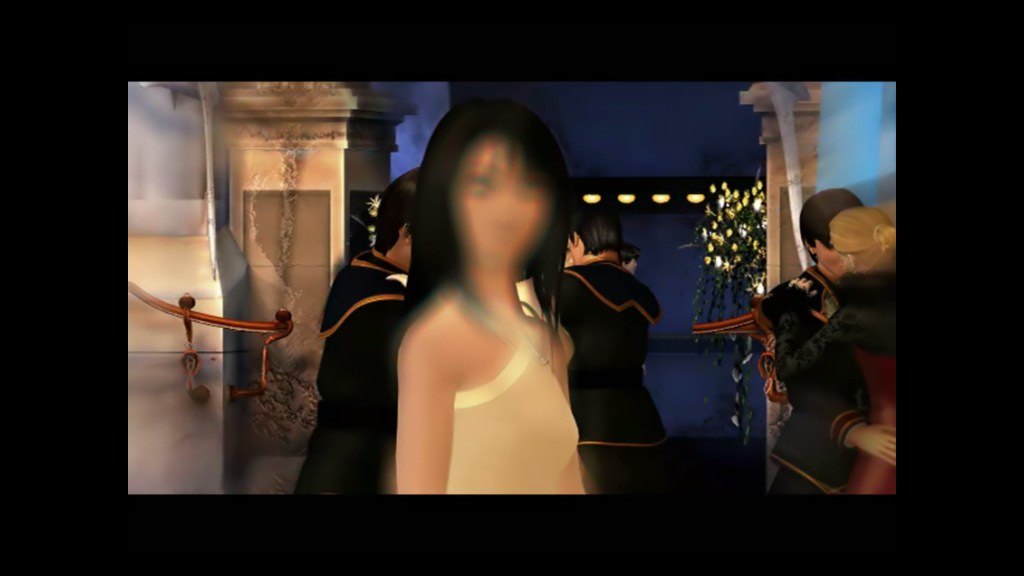
As for the final dungeon, it’s excellent. Final Fantasy VII’s final dungeon is pretty weak by comparison, it’s just a crater on the northern portion of the world. You could take it, refine the graphics, and place it into any JRPG ever and it would not feel out of place. It’s generic. VIII’s final dungeon on the other hand is very unique to the experience of VIII. Your special powers and abilities get locked and in order to restore them, you need to explore the mansion thoroughly and beat all of the bosses.
Not only is it a very impressive looking estate, but asking the player to adjust to not using abilities they’ve been leaning on for the game’s entire run time is a pretty unique experience. For this playthrough, my attack stats were so jacked up that I didn’t really bother using many abilities outside of draw, item and magic but if someone had really been leaning on GF summons or abilities like revive, this shift would cause some major adjustments to playstyle.
It makes the final area feel oppressive in a different way than usual. Instead of being assaulted by high level monsters, you’re challenged by having to find new ways to adapt to the game’s mechanics. Until you unlock your key abilities, and this includes basic things like reviving your characters and saving the game, you feel very disadvantaged.
You can even challenge the final boss herself while under these handicaps. I know for a fact the first time I finished involved missing some abilities because I couldn’t find all of the bosses to unlock everything. It made the last bits of the game uncomfortable but memorable.
This dungeon also borrows the multiple party mechanic of Final Fantasy VI. You will occasionally come across a puzzle that requires a group to stand in place while a different group goes and does something to unlock a path forward for them.
Granted, you can switch your magic and junctions between characters at will, so it never feels as disadvantaged as FFVI did when using an under leveled character. Still, it does a good job of ensuring EVERYONE is involved in the game’s most important and final moments.
You also fight the game’s super boss, Omega Weapon here. I prefer Omega Weapon to the secret bosses of VII just because I feel this creature doesn’t require the same absurd grinding. Just by knowing the game’s mechanics and trying to attain the best magics and abilities, I was able to figure out a path to victory on my own.
Omega Weapon is the one enemy in the game that doesn’t level scale based on your party, but as long as you junction your magic wisely, it’s no big deal. Just fight it until you formulate a strategy that works and go from there. Took me four tries but I found this fight both challenging and fair. A good test of abilities.
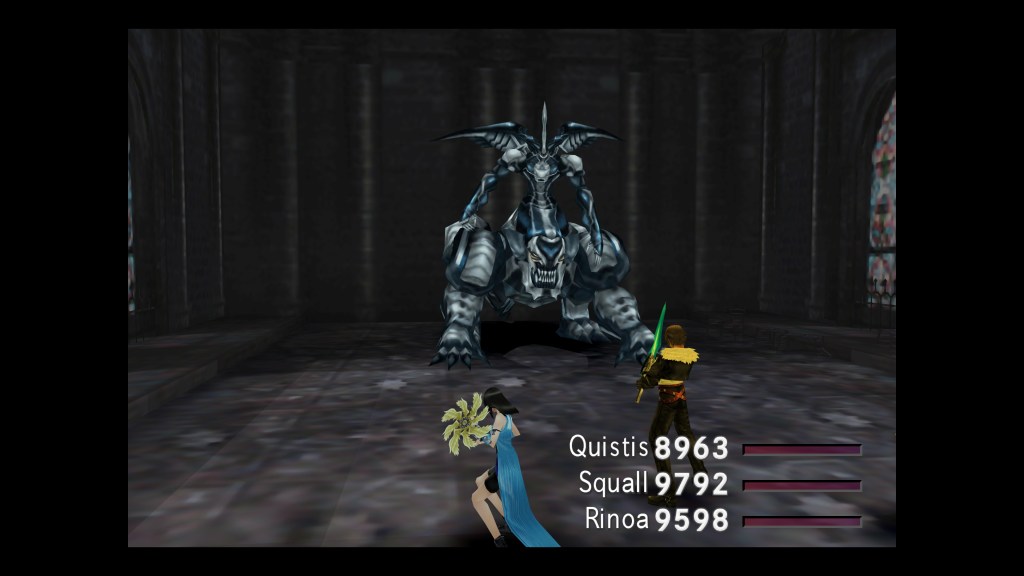
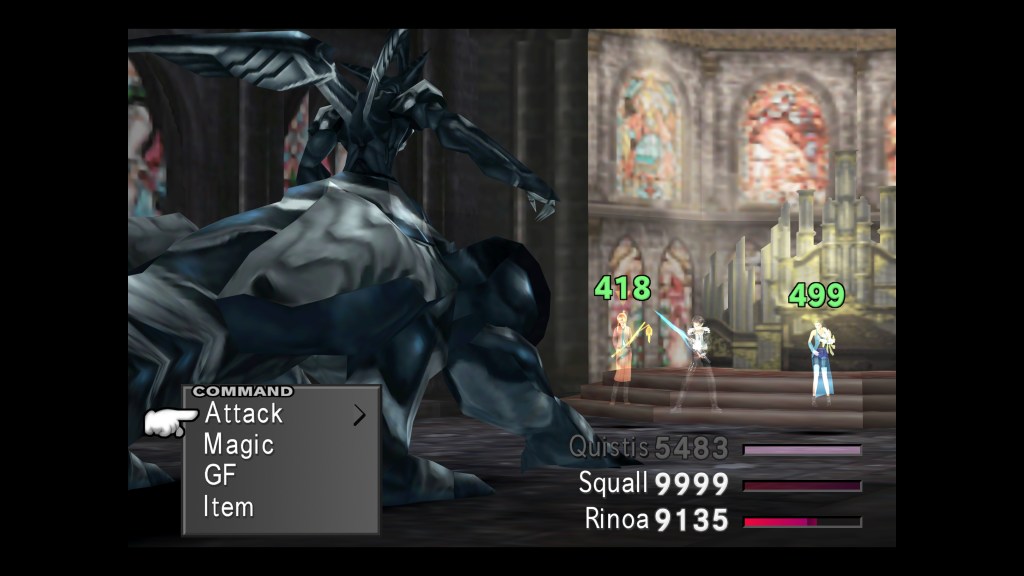
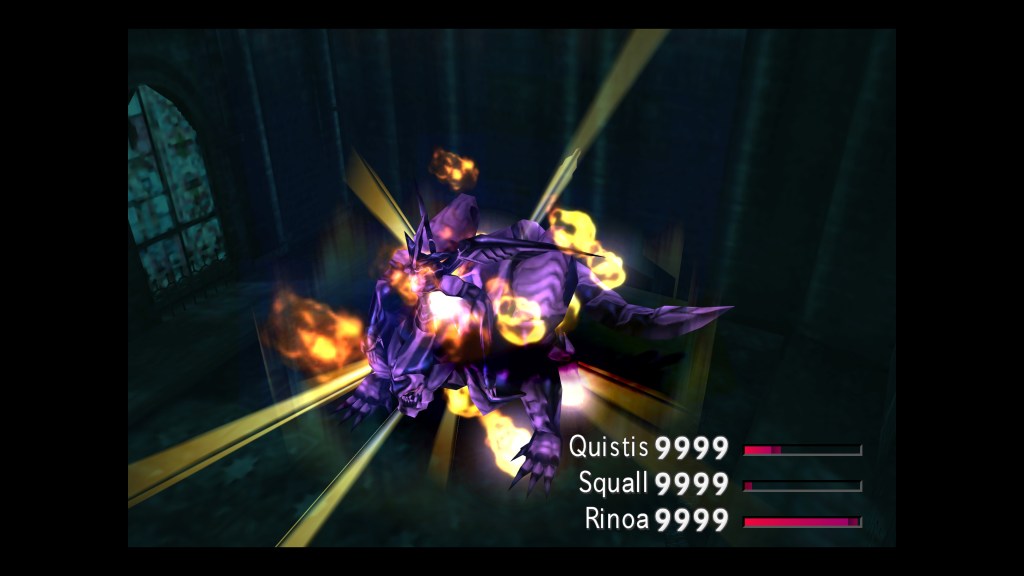
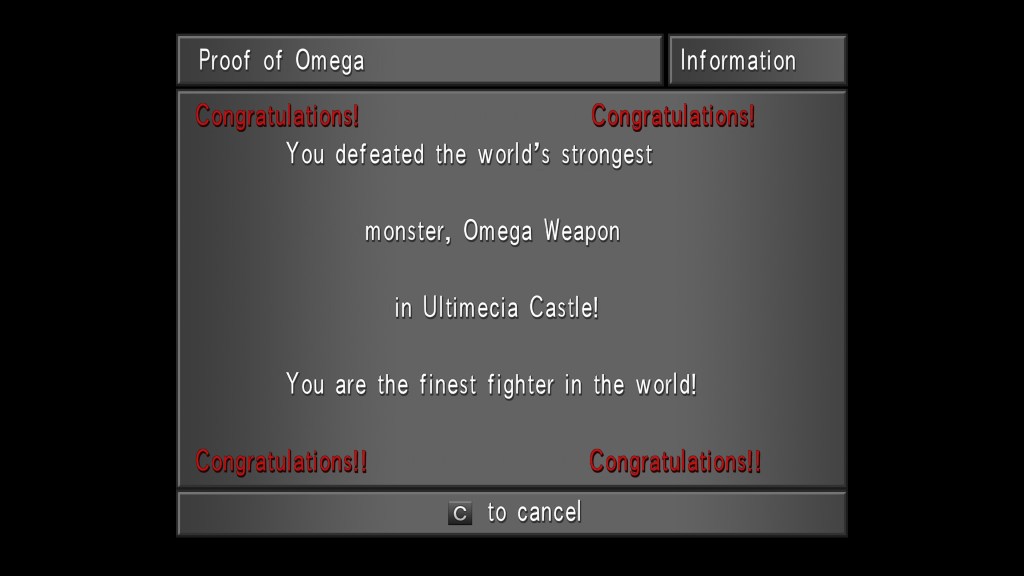
As for the final boss herself? Well, you fight her in multiple forms. She starts off by choosing three random party members to fight against her, which can be scary because if you play this game like I do, all the good magic and GFs and junctions will be on exactly three characters. The other three will be totally barren.
This fight for me started with Quistis, Selphie and Zell. Quistis was properly geared while the other two were not. Luckily, just like with FFVI, if someone dies and is left dead for a while they will be replaced by another party member.

Each form the boss takes has thousands of HP and can hit your party with abilities that inflict status effects and takes your HP down to 1. That said, if you’ve got your stats up, this fight isn’t difficult. I still had GF abilities equipped for my encounter with Omega Weapon – which included things like automatically casting haste and shell on my fighters – so the final encounter felt suitably epic in length but a bit anticlimactic in difficulty.
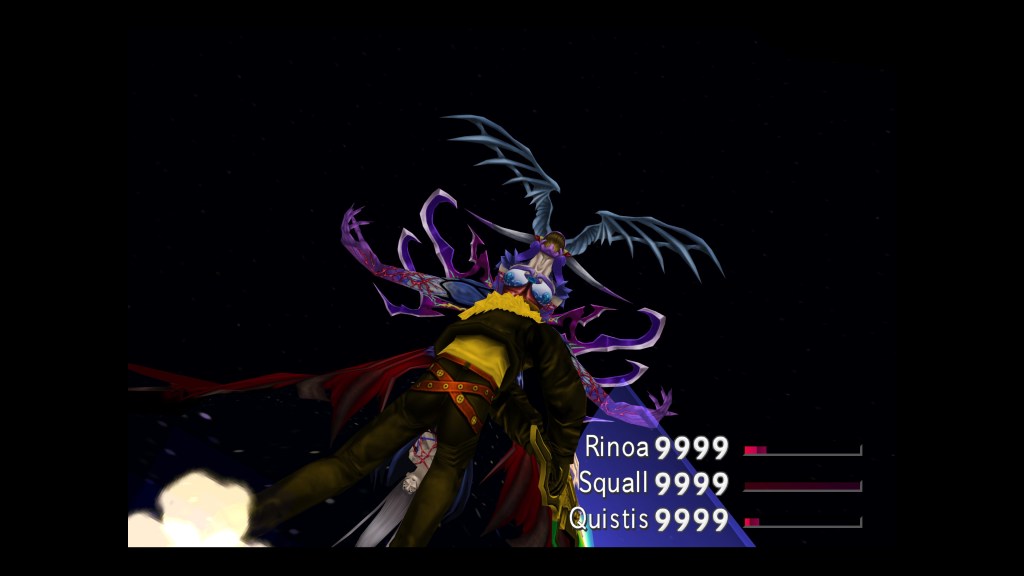

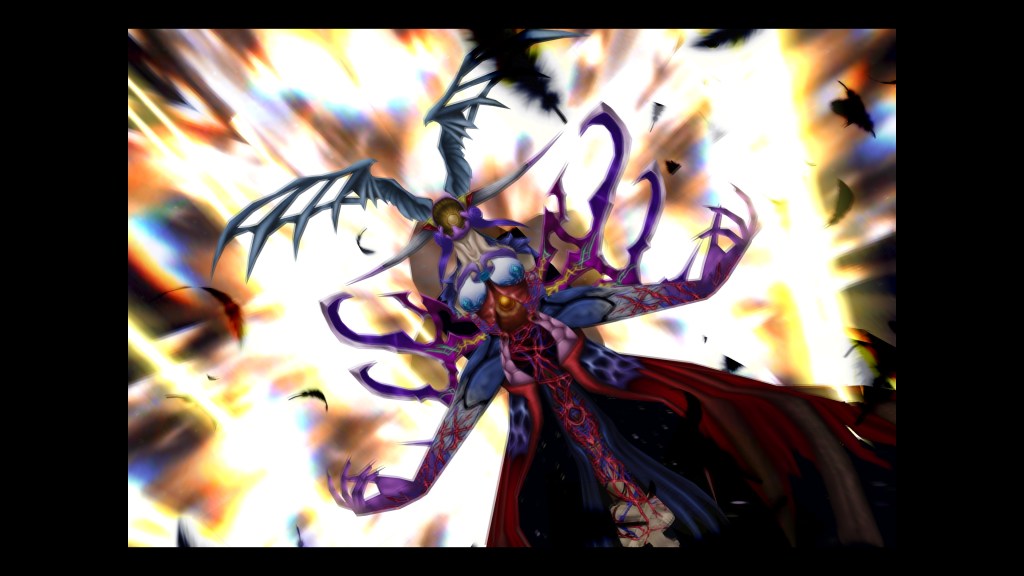
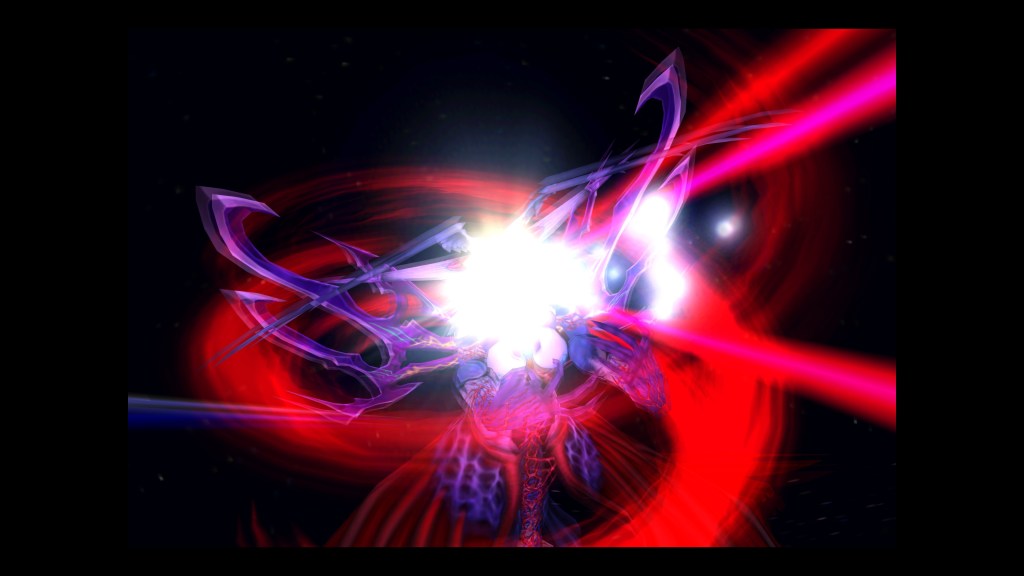
Also want to compliment one story-bit that this fight does. During the second disc, you are asked to name the ring Squall has. It’s a moment that the player will likely forget, but the point of it is that it’s something Squall sees as a powerful entity. The ultimate sign of courage. Ultimecia uses this bit of Squall lore in the final battle and uses that creature as a GF.
I’m not sure how literally we’re supposed to take this boss fight, but it reminds me of the ‘player name’ twist Earthbound does. That game asks the player to input his or her name about midway through. It seems very inconsequential, but during the final boss, when all hope is lost, the party will pray to the player and ask them for the strength to finish the game. I think this is a pretty neat twist on that idea.
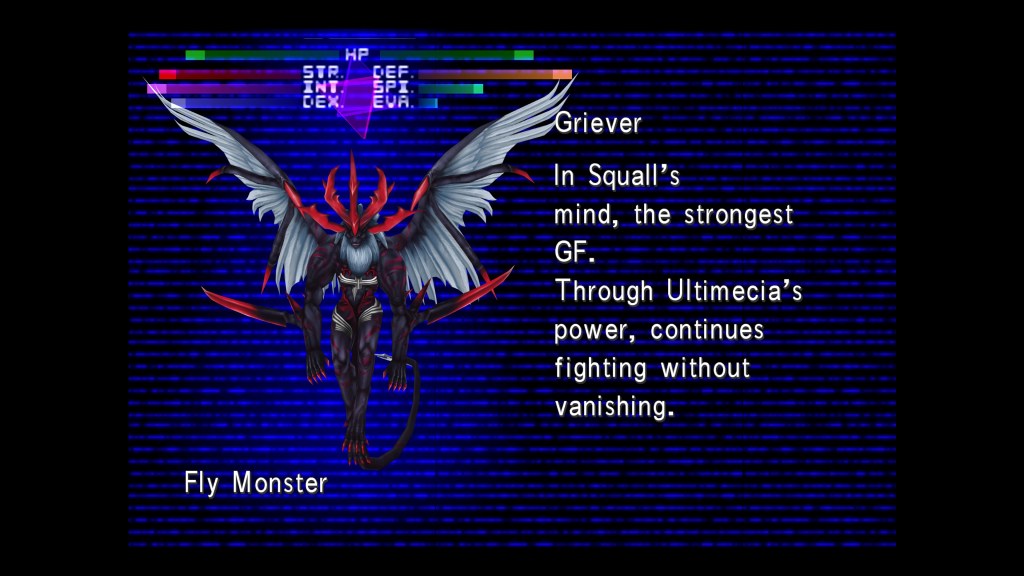
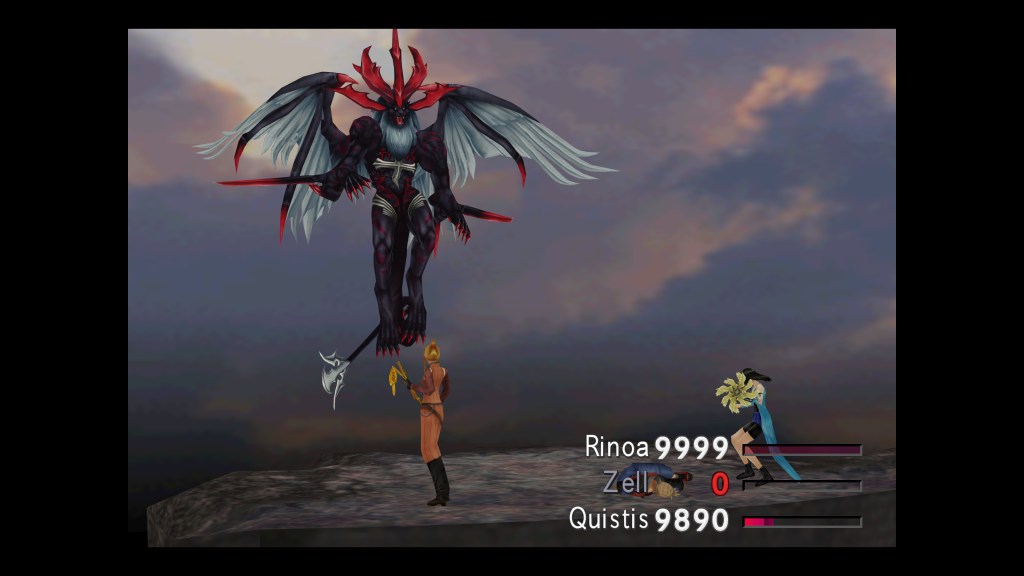
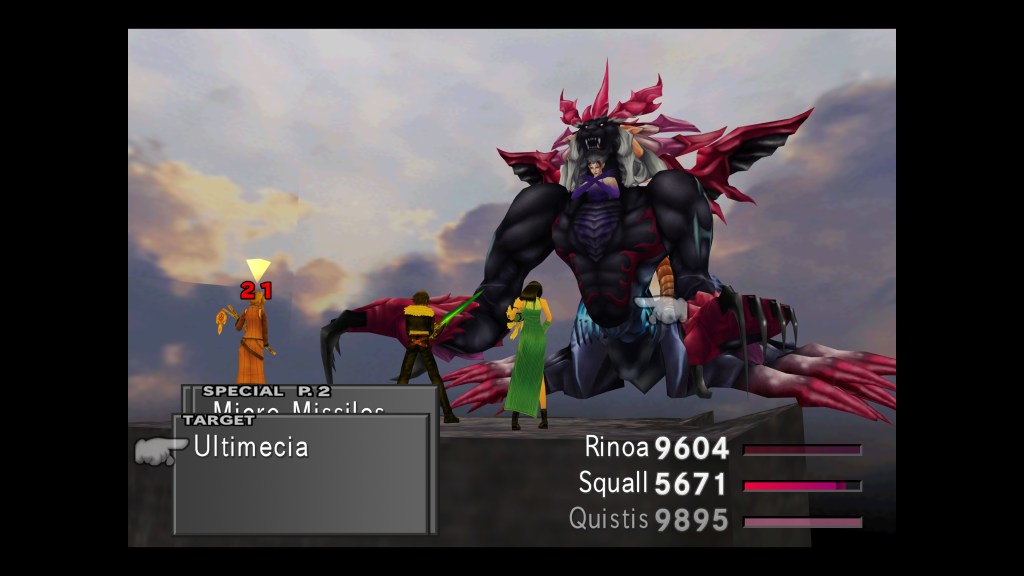
I remember the first time I beat VIII. I talked about it briefly above, but let’s go over it again here. I didn’t understand the game’s mechanics as well as I should have. I remember thinking this final boss was not only maddeningly long but also maddeningly difficult. I don’t know how I won, but I did. I swore that I’d never finish VIII again because I could not see a path to beating Ultimecia again, I felt I had lucked out.
I guess this is one of the many reasons a replay of VIII feels so much more gratifying than a first playthrough. By immediately understanding the mechanics and interacting with them, I was able to take a lot more enjoyment out of the game. The junction system is very complex, so coming into the game with an understanding of it goes a long way. That includes making the final boss feel manageable.
As a character, Ultimecia is nothing. She’s a moustache twirling villain who is infinitely cruel and merciless. Her first spoken words directly at the character come right before your fight with her. I think the SNES games, even V, all had villains with more interesting motives than her.
I don’t think anyone will leave Final Fantasy VIII thinking Ultimecia is their favorite villain in the franchise’s history.
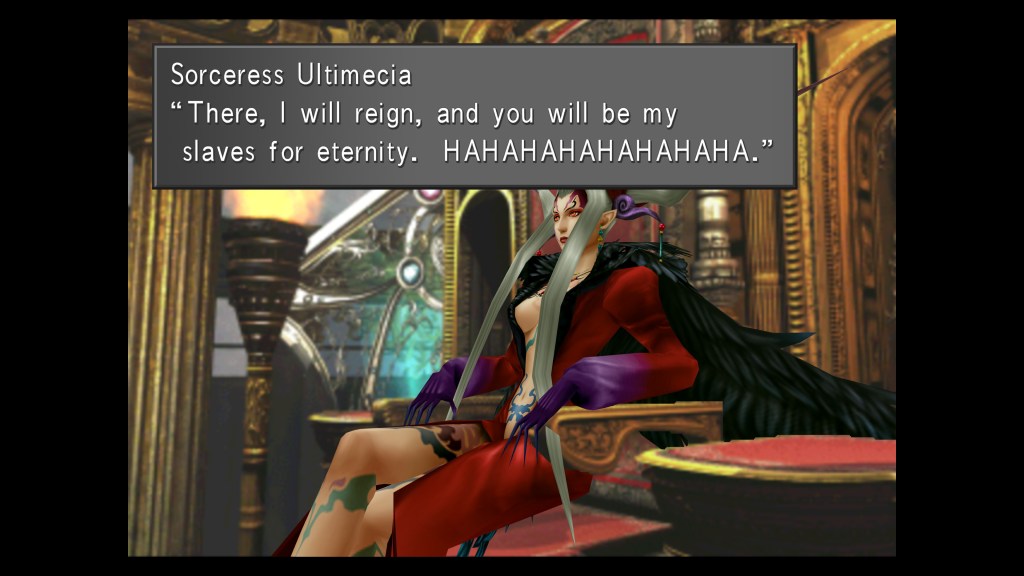
It started here
Theme songs
Really short section this time because we’ve really established most of our franchise norms to this point. However, this one is a major aspect of the later games of the series.
Much has been said about “Eyes on Me” and how effective I feel it is. I think the desire to give each game a more, for a lack of a better word, cinematic song kept going. Looking at movies from around that time period, you could take “My Heart Will Go On” by Celine Dion from 1997’s “Titanic” as a possible inspiration for the usage of Eyes on Me.
Like FFVIII, Titanic focuses heavily on romance while telling its tale. And let me tell you, that song was eveeeerywhere in 1997. If you heard that song, you’d think of the movie. And you heard it a lot.

So I think it’s reasonable to assume that Square wanted something similar out of “Eyes on Me.” They wanted to create a song that captures the spirit of their art. They wanted a song someone could throw on and make the listener think of Squall and Rinoa.
Maybe it brings a tear to your eye, maybe it reminds you of Laguna getting cramps in a bar, who can say. But you tie that sound with this game. Hey, it works on me at least!
Several mainline Final Fantasy games from this point on have their own themes with vocals. They don’t always have a plot beat to describe why someone is singing like VIII does, but they are great little pieces of music that help these games feel more…I don’t know, ‘grand’? IX brought us Melodies of Life, X has Suteki da ne (Isn’t it Wonderful), X-2 has 1,000 Words and Real Emotion. Kingdom Hearts has Simple and Clean.
In conclusion
Final Fantasy VIII is a fascinating game. Despite being the eighth entry in the mainline franchise, it also acts as the first title after the biggest success the series has seen to this point. And as such, it helps further establish the long running identity of Final Fantasy as a brand.
Instead of reusing the elements that made Final Fantasy VII special and making a functionally very similar game, director Yoshinori Kitase and SquareSoft elected to make a game about as different from the astronomically successful VII as possible.
The results of it are a lot of interesting ideas cobbled together and put out there with mixed execution. Experienced players can exploit these systems and break the game wide open at the very start of the adventure but rookies might find it difficult to parse all the tutorial screens and put out a team worthy of success.
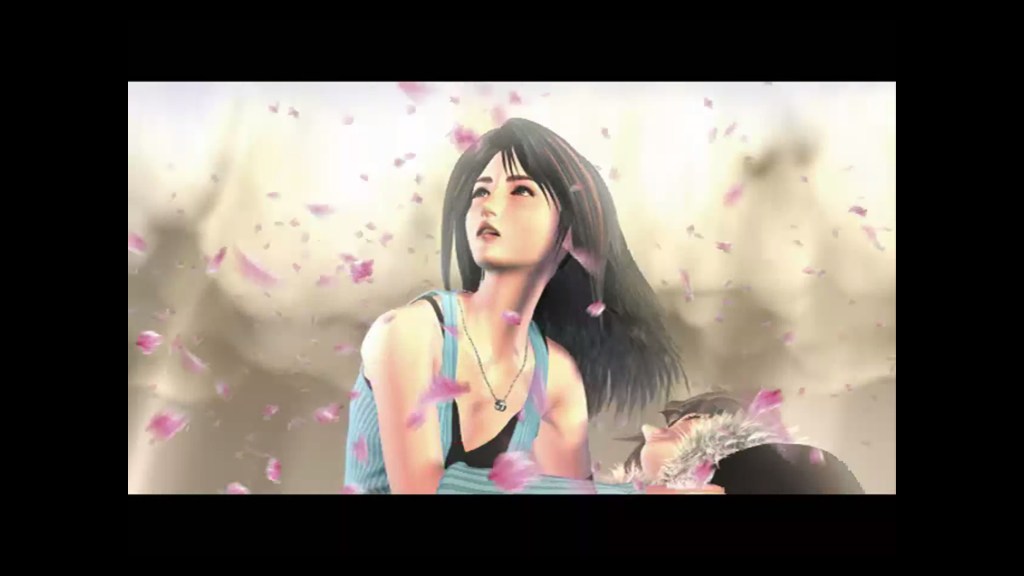
From a story standpoint, the game puts a love story front-and-center and does a really good job of making the player invested in seeing it play out. From a character relations standpoint, it’s one of the more well executed bits of storytelling the franchise has done to this point.
However, the overarching narrative rushes from point A to point B a little too quickly at times and a lot of really complicated ideas and themes do not get the time they deserve to play out in full. The last few hours can feel overwhelming and confusing.
It’s a game I like a great deal but I also understand how someone might take issues with it. It’s an interesting title because it has a lot of flaws while also executing a lot of things very well.
I hope that even people who don’t like this game can at least respect it. VIII being as different as it is led the way for other wildly different entries into the franchise. Final Fantasy is at its most interesting when it’s not playing it safe and boy howdy, VIII does not play it safe.
My score: 4.25/5
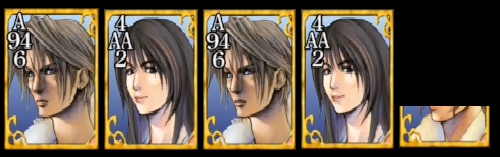
Game rankings to this point
1: Tactics
2: VII
3: V
4: VI
5: VIII
6: IV
7: III
8: I
9: II
10: Mystic Quest
Up next

 Vidya Thoughts
Leave a comment