

New Hardware
It’s difficult to stress how important the Famicom was to the video game industry. The North American version of it, the Nintendo Entertainment System, is often credited with saving console video games in the west after Atari caused the whole industry to come crashing down in the early 80s. It was important for Nintendo to nail the Super Famicom to prove that they weren’t just a flash-in-the pan. This Mario guy was for real.
So on November 23, 1990, the Super Famicom came out. With modern lenses, we can see that this console (Super Nintendo in America) is considered a part of one of the best console generations of all time. The video games from this period of time were often the gateway drug for getting more into the medium as a whole. You only need to take a cursory glance at the independent RPGs that populate the steam store to see how much of a role Earthbound played as an inspiration.
While the graphics and sound design might seem cute and archaic by modern senses, the upgrade from the Nintendo to the Super Nintendo felt pretty overwhelming. I remember seeing advertisements for things like Donkey Kong Country and being floored that such things were even possible. How could video games possibly look this good? The next batch of consoles would surely bring us closer to realism! The Super Duper Nintendo will probably be so close to reality that you can’t even tell the difference!
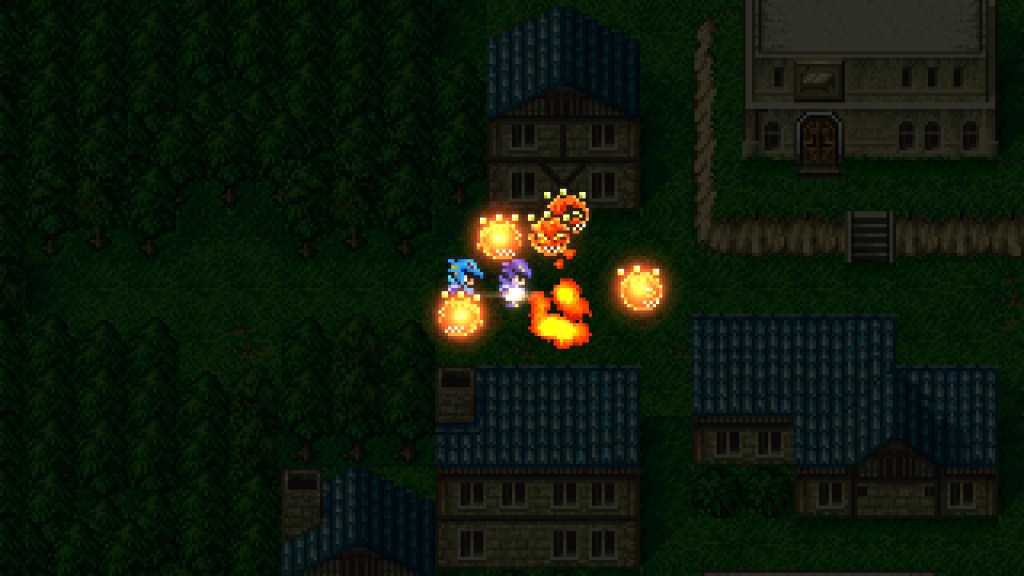
So naturally, for a young franchise like Final Fantasy, it was important to hit this new console generation running. Dragon Quest from rival Enix ruled the Famicom, perhaps a new console generation could change the power structure in the RPG genre?
The game plan started out slightly absurd. Final Fantasy IV was going to be a Famicom game and Final Fantasy V was going to be a Super Famicom game. The idea behind this is that a Japanese family might get a new console for their oldest child while the younger child gets stuck with the old console. So why shouldn’t the younger child get cool new games as well? Final Fantasy IV was going to lean more into the wacky job system of Final Fantasy III while Final Fantasy V was going to try to cobble together the best parts of the first three titles and make a mega game.
It may sound strange, but this strategy was not completely unheard of. Capcom developed Mega Man 6 and Mega Man X simultaneously with this thought process in mind and those two games launched within a month of each other. Of course, Mega Man was a bigger franchise worldwide than Final Fantasy was at this point so this strategy was probably significantly less risky for Capcom than it would have been for SquareSoft.
Former publicist and translator for Squaresoft Kaoru Moriyama said this idea didn’t last terribly long and that no actual coding for the game was done. “It was only paperwork,” Moriyama said. And indeed, the game that was going to be Final Fantasy V was rebranded into Final Fantasy IV.
Elsewhere
Months ahead of the Japanese Super Famicom launch, North America got the release of the original Final Fantasy. While the NES would continue to get big titles in North America after the launch of the SNES, the timing of this release allowed the original title to serve as a bit of an appetizer before the SNES-themed main event. Final Fantasy I sold well enough to bring Final Fantasy II over to the United States, but that was also a Famicom game. Heck, Final Fantasy III was as well. So would this brand new franchise that just debuted linger on this dead platform?
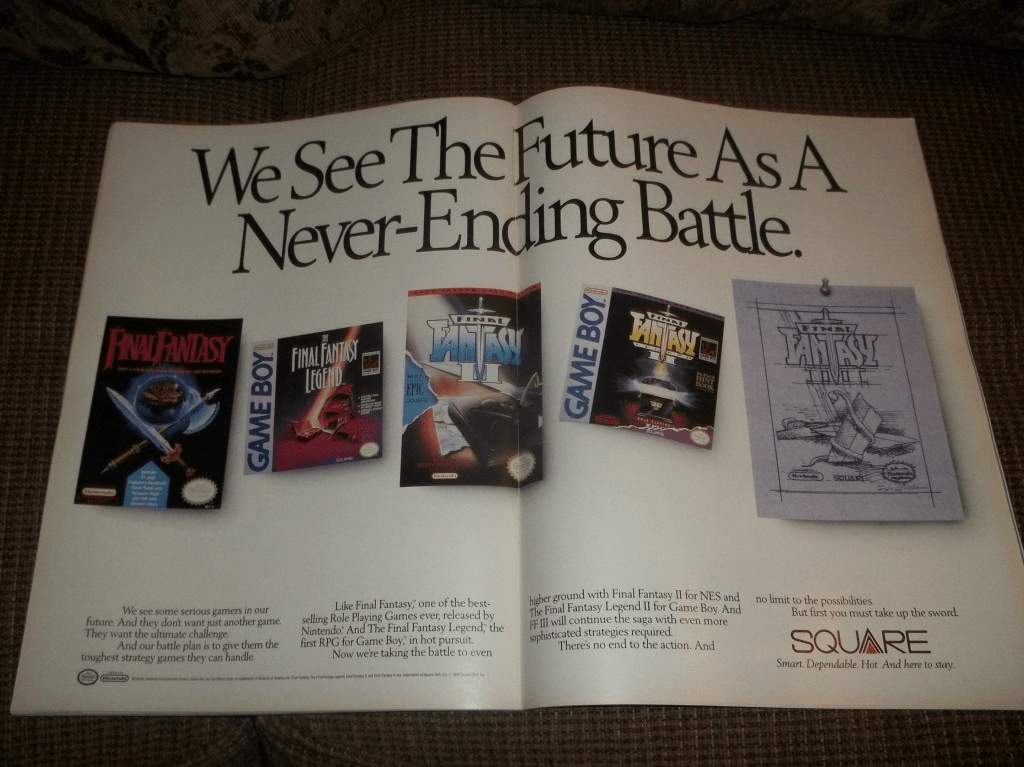
Marketing materials suggest that there were indeed plans to bring over both Final Fantasy II and III at some point. The mocked up box art for III looks really cool but I’ll be damned if I could tell you how that relates to the story of FF III.
The Super Nintendo released on August 23, 1991, and Final Fantasy IV released in North America on November 23, 1991 under the title “Final Fantasy II.” Square did not want a bunch of parents bothering them with questions about where II and III were, so they just made IV the new II. This would only get more confusing when Final Fantasy V was skipped for localization and Final Fantasy VI became Final Fantasy III. The numbering would not be fixed overseas until the release of Final Fantasy VII, which should show you how much of a hit Final Fantasy VII was.
This is fairly common knowledge now, I know. I’m sure people reading this also rolled their eyes back in my FF II writeup where I noted that Super Mario Bros. 2 (U.S.) started life as Doki Doki Panic, but the average person in the 90s had no access to this knowledge. It even made talking about the Final Fantasy franchise online in 1999 very difficult for a young Derek who just discovered the Internet for the first time. I’m glad we got this stuff sorted out! There’s an alternate dimension where Cloud Strife is the hero of the ever popular Final Fantasy IV in the United States and that just feels wrong.

IV did have some changes when it came over. They toned down religious references, as was the style at the time, and it was made slightly easier for North American audiences.
“I guess the biggest change is that they made it a little bit easier for the U.S. market, but that was because we already had Final Fantasy I, II, and III in Japan, whereas Final Fantasy I was the only one released in the states,” lead designer Takashi Tokita said in a 2007 interview with 1up. “Final Fantasy II and III had some experimental elements to them, and so for U.S. users to suddenly dive into IV… it just seemed a little bit difficult. So we balanced it out to present it as a follow-up to Final Fantasy I. And, you know, the NES platform had a very wide range of users where the bottom end was very young, and we took that into account as well”
This ‘easy mode’ stuff is pretty common for the era, so don’t think of Final Fantasy IV as some sort of outlier. Mega Man 2, for instance, gained an easy mode for the North American release. The Japanese version was just considered the hard version of games for a long time. This would later go on to bite players of Devil May Cry 3 in the ass.
I’m super, thanks for asking
Early Super Nintendo games for big franchises all have this feeling of “super charged NES game” to me. This is an oversimplified approach, but I look at Super Castlevania and it feels like a really graphically stunning version of the original Castlevania. I look at Super Mario World and on the surface I see a really pretty version of Super Mario Bros. 3. Link to the Past? It’s like the original Zelda but it looks better. Similarly, I feel like Final Fantasy IV takes the NES games and supercharges them.
“Well to me, Final Fantasy IV is a great compilation that took all the best parts of Final Fantasy I, II and III. The characters are portrayed with the jobs from III and the story element is drawn from II… In Final Fantasy I there was the 4 Chaos but in Final Fantasy IV there’s the Four Kings (Editor note: Archfiends for our purposes). With such enemies in the game, it really adds to the story and mood, acting as symbols for the game. It’s what we had in mind when we made the original version,” Tokita said in a 2007 interview with Famitsu (Translated by gamebrink).
Let’s start with the narrative bit. Previously Final Fantasy II was the most ‘story heavy’ Final Fantasy title to date. It was the only game in the franchise to feature named protagonists, which led to it having the most focused narrative of the three Famicom games. Firion could be considered the face of the franchise at this point, as absurd as that may seem.
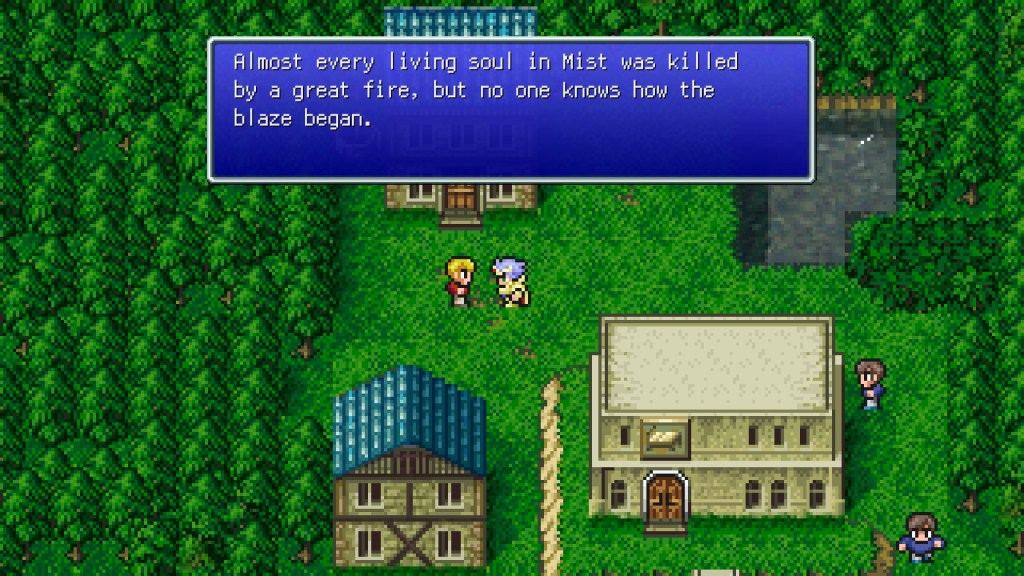
Final Fantasy IV takes storytelling and runs with it. The game stars Cecil Harvey and within the first few minutes of FFIV’s runtime, it is established that he is working for the King of Baron and doesn’t like it one bit. The king is having Cecil kill innocent people in his search for the crystals (they’re back!) and Cecil will carry out his orders, but he does so with a heavy heart. This doesn’t seem like much and a soldier disillusioned by the actions of his commander is hardly innovative, but compared to Final Fantasy II’s “YOU ARE NOW IN THE WILD ROSE REBELLION NOW GO FETCH SOME MYTHRIL, FIRION” it’s pretty complex.
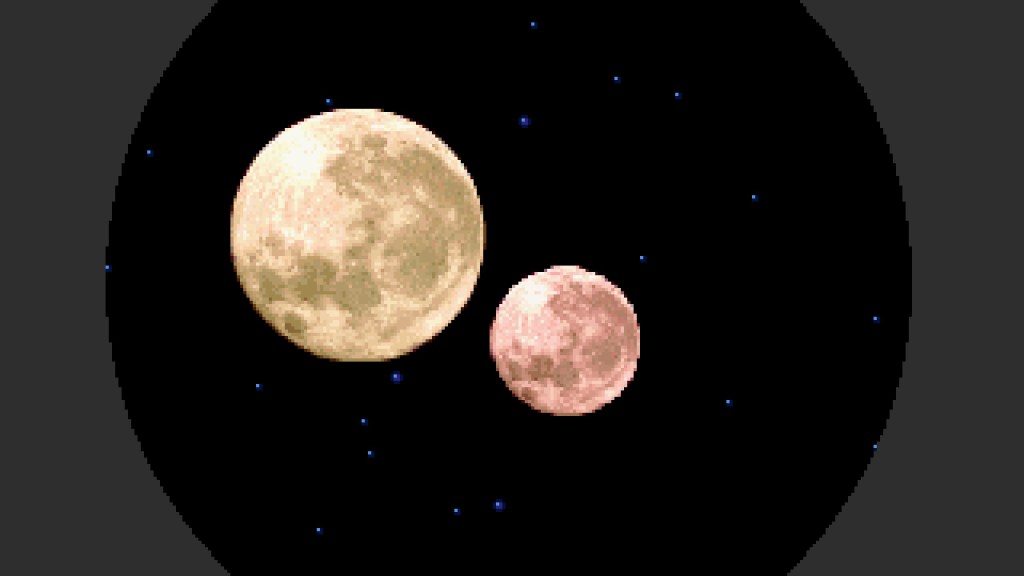
There’s also little bits of foreshadowing in the game. You have early glimpses of the moon for seemingly no reason and a prophecy that comes up throughout the game a few times. It’s neat!

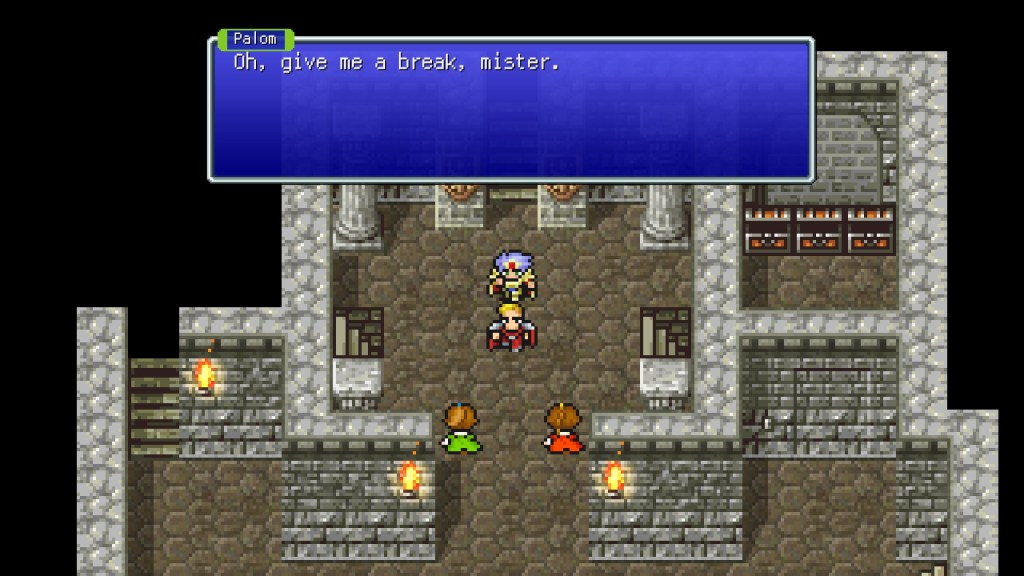
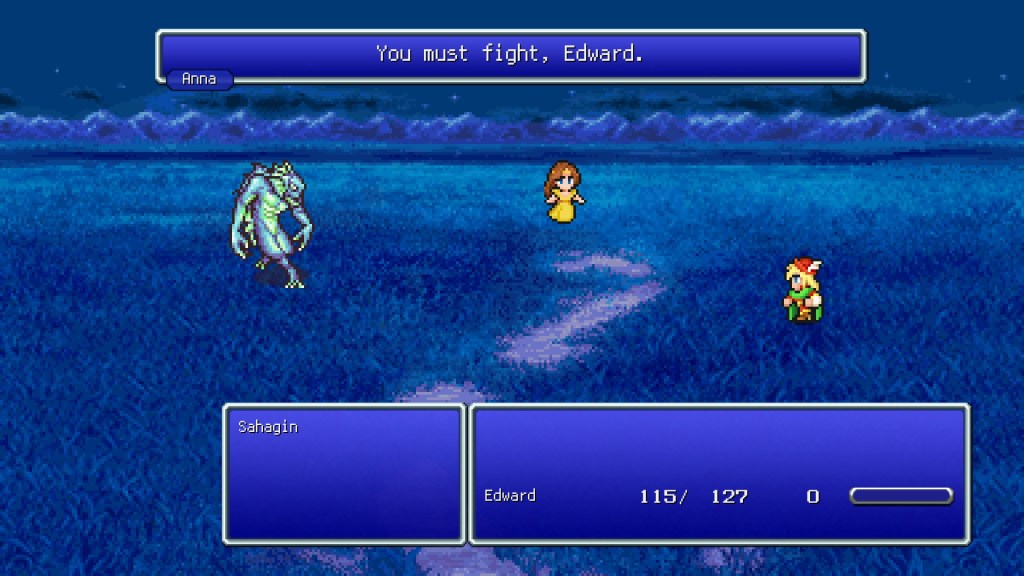
Your other party members also get lots of opportunity to shine. If you remember the surrounding cast of Final Fantasy II, there were two people who were always with Firion: Guy and Maria. Neither of these two people have any personality. Guy’s defining character trait is that he is something of a savage whereas Maria exists just to lust after Firion and be the sister of your missing fourth party member. She has like five lines of dialogue. Meanwhile, one of the least important playable characters in IV, Edward, has a battle sequence where his dead girlfriend tries to cheer him up. I am pretty sure Edward gets more dialogue during this little event than Guy had during all of II.
The Famicom trio of Final Fantasy games felt pretty free form. They were linear, but the plot didn’t really push you from point A to point B. In Final Fantasy III the environment often dictated your path and in Final Fantasy I you often had to figure out where to go from NPCs. In IV, there is no guesswork about where you’re supposed to go or how you’re supposed to get there. The dialogue and story will always point you in the right direction. There are a couple of spots where it isn’t super clear where to go, but for the most part, as long as the player pays attention they won’t get lost. So unfortunately for those of us who need a GPS to get around, you’re probably not going to be getting any grinding done while desperately searching for where to go next.
As a result of this, the actions you take in Final Fantasy IV feel like they have weight. Cecil feels like he is actually having an impact on the world around him. II’s story often felt very reactive to me. You would find out where to go next because the main villain dropped a bomb on some poor town. This plot feels like your party has an actual plan to save the world.
I think Final Fantasy IV is when you start to see the series morph from a gameplay first franchise into one that places equal importance on narrative and gameplay. Final Fantasy IV is not a game where the plot is set dressing for the gameplay like the first three are, the plot is supposed to be a big part of the appeal. There are still people who talk about how awesome Kain is, so I think they did a really good job for their first attempt at something like this.
Turn-based twist
Next, let’s look at gameplay. In Tokita’s quote above, he mentions that elements of the job system return for Final Fantasy IV. This isn’t to say that you’re flipping jobs left and right like you did in the third game, but instead your cast of characters all fight like a specific job from III. For some examples, you have Kain the dragoon, Rosa the white mage, Rydia the summoner/black mage, Yang the monk, Tellah the sage and Edge the ninja. These characters play a little like the jobs from Final Fantasy III, but really fleshes them out and gives them even more of an identity. The way these classes get portrayed in the future and what abilities they learn feel heavily based on this title. Hell, most dragoons going forward feel like a tweaked version of Kain to me.
So they supercharged how jobs function, but what about turn based combat itself? In the early stages of Final Fantasy IV, Hiromichi Tanaka (lead designer of FF III) was at the helm and he dreamed of something more action oriented. He leaned too far away from turn based combat though and wound up leaving Final Fantasy to work on another Square property: Secret of Mana. FF II gave us Kawazu and the SaGa franchise. FF III gave us Tanaka and the Mana franchise. Thanks?
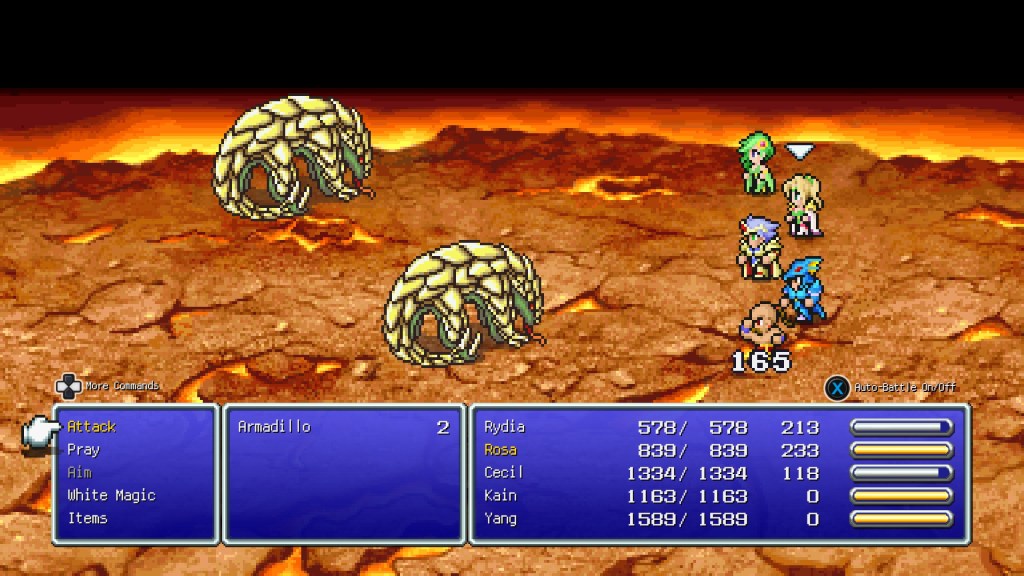
The desire to make the combat more active wasn’t just abandoned. Instead, they took the turn based combat of the first three entries and tweaked it so each individual character has a speed stat that determines how quickly they act. No longer does the party all input a command at the same time, instead characters act as their turn comes up. This would be dubbed the Active Time Battle system (ATB) and would define Square RPGs for quite a while to come. Basically every mainline Final Fantasy until X uses a version of the ATB system. Freaking Chrono Trigger uses the ATB system. It was a game changer.
The ATB system made it so combat feels a little more tense. It feels like a super charged version of the old turn based model in practice. So let’s say a character’s ATB bar fills up. If you just let the menu idle, you will lose because enemies will keep attacking you. So on the downside you can’t input your commands and run off to the bathroom real quick like you could in the first three games but on the upside, each encounter demands more from the player. I said in my recaps for the first three games that I felt like I was jamming on the attack button over and over for most of the game, whereas in IV that happened a whole lot less. Sure, there were still areas where I just blindly told people to attack, but those were the exception and not the rule.
Most ATB games include two different modes. “Wait” and “Active.” The main difference between these is that time will freeze while you’re browsing spells or items in wait mode. So in active mode, while you’re trying to remember where the hell the ether in your inventory is because you didn’t automatically sort them, you have to deal with enemy attacks pounding you while you hunt. This adds a lot of tension to fights. There were times in Final Fantasy IV where I felt a sense of panic while looking for white magic spells because the enemy barrage would not stop. The original release of Final Fantasy IV (in the U.S. at least) did not have a wait mode, so it’s nice that the difficulty was lowered a little bit for that international release, eh? Once again, I’m using the pixel remaster for this recap, and that version does indeed contain both modes. So when you’re browsing Tellah’s massive spell catalogue early on, take your time!
As a fun aside, the ATB system was thought of by Hiroyuki Ito. Ito, as you might remember, is one of the architects behind the original Final Fantasy combat system. He was watching F1 races and took inspiration for what would become the ATB by noticing faster cars lapping slower cars. So if you’re ever pissed that a little shrimp is attacking three times before you can ever attack once in one of these ATB games, you can blame racing for getting us here.
Final Fantasy is a franchise known for altering things significantly between each title. This is the first time where the combat actually feels noticeably different. It is very jarring going from the first three turn-based games to the frantic action of the ATB. As a result, despite FFIV not being known for its difficulty, I feel like I struggled a fair bit more in battles than I did in the previous three games. There are certain battles, like against the Dark Elf, where I would get completely obliterated the first couple of times I tried it before coming back with a new strategy and winning the day.
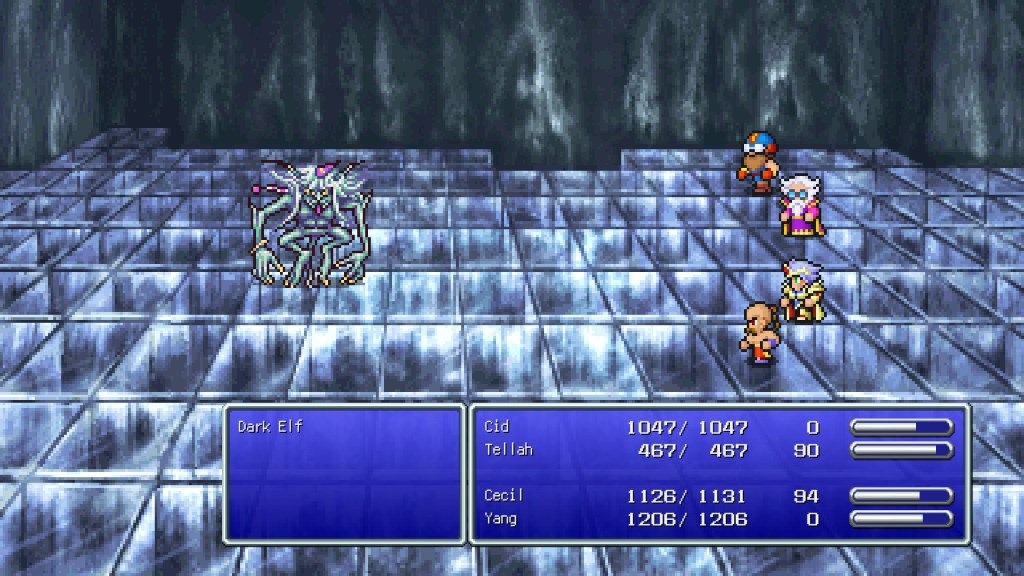
I remember saying that the job system in III felt like adding a world of strategy to combat and the ATB system takes it a step further. I wonder if a game will combine the ATB and job systems? Hm.
The ATB isn’t all there is to combat in Final Fantasy IV. Given that this is a super charged entry into the franchise, the party size has been increased. Up until now, your party was always four members. FFIV increases that to five. Three party members in one row and two in the other, which usually means your mages hang in the back row while your more physical party members hang out in the front. This adds a little bit of strategy because early on I felt like placing Cecil in the back row aided in his ability to guard weaker party members. Very helpful when you’ve got a bunch of mages hanging around you.
Like with II, your party members often come in and out of your crew. There isn’t a rotating fourth this time though, you will frequently have characters enter and exit your party. Really the only character that sticks around forever once recruited is Edge and by the time you have Edge you also have two other permanent party members. Since characters learn magic as they level now as opposed to having it assigned to them via scrolls, your temporary party members feel less useless than they did in II. The added benefit to learning magic skills is a sense of progression. When I learned my aga level black magic, I knew the end couldn’t be THAT far off.
A touch of magic
MP is also back again. The charge system gets retired at this point. I think that particular method of magic is very effective when combined with early Final Fantasy’s emphasis on conservation, but as the franchise moved away from that it feels like MP is a better fit. To go away slightly from conservation as a mechanic, they added locations to heal up your party and save right before major encounters. In Final Fantasy I, I went into a dungeon knowing I needed to save my high level spells for the final encounter. In Final Fantasy IV I can just use whatever magic I want knowing that I will most likely have a chance to heal up and use it again later.
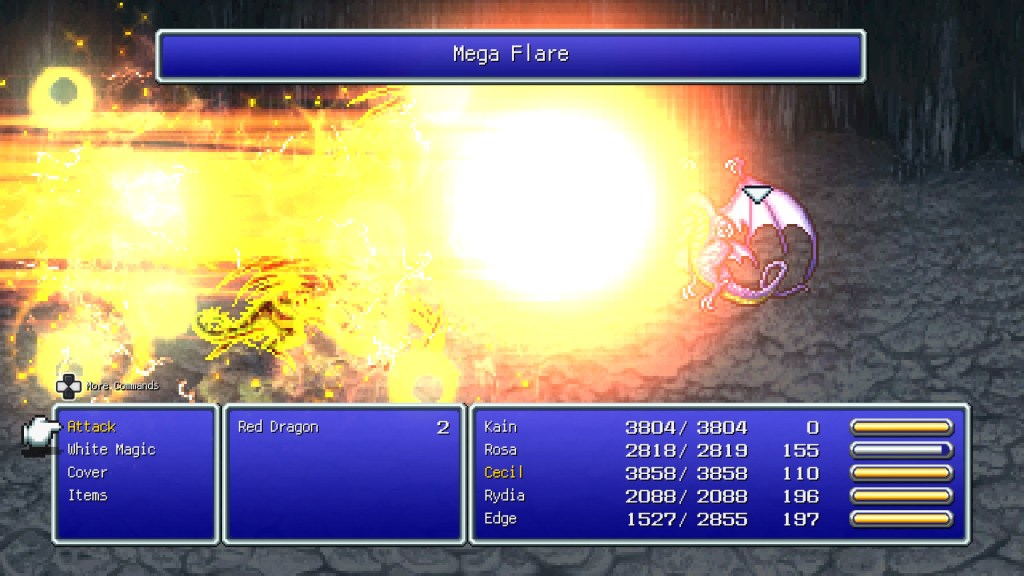
It may sound silly to say, but having all this cool magic and not being able to use it all that much is kind of prohibitive. It makes playing a mage feel less cool. Yes, it inserts some strategy into things, but IV was the first Final Fantasy title where I found magic to be as useful (if not more so) as physically attacking. Maybe I’m just not enough of a D&D player to hang with the way I and III did things.
So while you may think ease of access to healing and magic might make things a little easy, I found the experience of FF IV to be a little more balanced than the other three games. In Final Fantasy I and III, the entire adventure (in the pixel remaster) was relatively easy up until the very final parts of the game. Then they were like “training wheels are off, it’s go time.” In II, it’s pretty easy throughout with most of the difficulty I experienced coming from walking slightly off the main path. In IV, things felt the same level of ‘difficult but manageable’ the whole way through. I had to think more in my random battles and I found boss battles required more strategy. I did think the beginning of the game was a little challenging with how the party is composed (Cecil and squishy mages), but part of that could have been me using the active ATB meter instead of wait.
I’ll be honest, it was just nice having a final area that felt like a natural step up in difficulty from the rest of the game. The final dungeon should be the most harrowing part of your adventure, absolutely, but I think making it such a gigantic step up throws things off a bit.
In this world
Another element of the franchise that receives a bit of a supercharge is the concept of multiple world maps from Final Fantasy III. As you might remember, that game had a floating continent and then a separate world map below that as well as a couple of deep sea locations you could take a submarine to. In IV, you have the overworld and the under world as your two main locations and the moon as your rough equivalent to the deep-sea map of III. In III, there really wasn’t all that much difference between the two main world maps on a location-by-location basis. Your flooded world NPCs could easily be swapped with floating continent NPCs and you wouldn’t bat an eye.
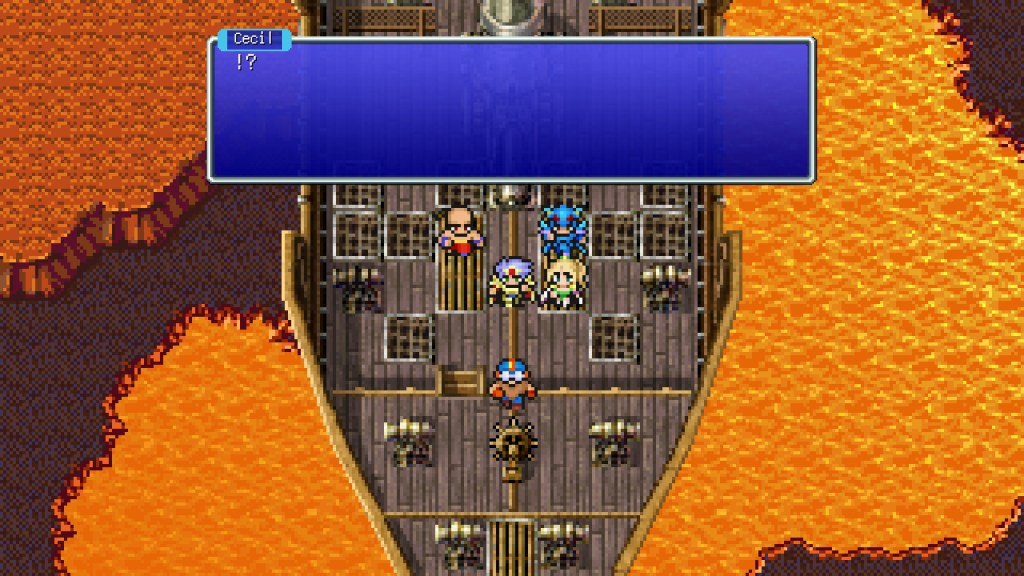
Here, the difference between the overworld and underworld are pretty stark. All of the underworld NPCs are dwarves (they look like little Vivis) and all of the water has been replaced by lava. In fact, the III progression system of ‘we will block off part of the world with obstacles your airship can’t mess with’ comes back here as your initial airship can’t fly over lava. It may not seem like a super innovative thing to have a region of specific NPCs, but it does help you feel like you’re in an entirely new region. It’s a bit of world building that requires no additional text to portray. Your mind cobbles together a little bit of explanation and that’s it. “Dwarves live here, I’ve never seen them in the overworld. Do they prefer hot environments? Is there some sort of anti-dwarf racism going on?”
This stuff is simple, but it adds up. Final Fantasy IV is not a game overflowing with text like its Playstation brethren, but little touches like this go a long way into making you feel like you’re in a real world filled with real people.
Notable Characters
For the Pixel Remaster of IV, I feel like a lot of the sprites between the Super Famicom/SNES version and the Pixel Remaster version are pretty similar. Still, I included comparisons for the Famicom games so I thought it was wise to keep consistency going. The main difference between the original release and pixel remaster seems to be that the Super Famicom sprites have a much darker skin tone. If a more jarring change pops up I will make note of it. My ordering for most character comparisons goes “PR portrait followed by original portrait followed by PR battle sprite and then the original battle sprite.” The exception for this would be Cecil, Rydia and Palom/Porom. For those it’s two PR portraits, two PR sprites followed by two original sprites and two PR portraits.
Since this is a more plot heavy game than what came before it, I will also attempt to summarize a bit of the plot through these character explanations.
Cecil Harvey

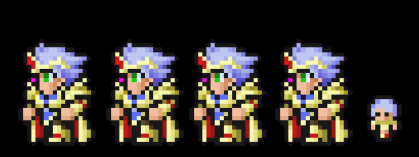
Cecil is the main character of Final Fantasy IV. He is from the Kingdom of Baron and starts the game as a Dark Knight working for Baron’s military force ‘The Red Wings.’ The Red Wings have been tasked with retrieving crystals for the King of Baron by any means possible. The adventure starts with the Red Wings attacking the town of Mysidia (a reference to Final Fantasy II, which was temporary party member Minwu’s hometown) to kill its people and rob them of their crystal. Cecil is wracked with guilt over this and ends up abandoning the Red Wings and separating himself from the Kingdom of Baron. Of course, this comes after the King hands him a bomb ring which unleashes a horde of bombs into the town of Mist and killing countless innocent people. All this murder? Yeah baby, this is the true sequel to FF II!
As Cecil turns on Baron and the king, his mission becomes to secure the crystals in the overworld and later the underworld. He acquires a large party and during the course of the adventure, the party gets attacked by the eidolon Leviathan and separated. During this separation Cecil decides to ditch the dark blade of the Dark Knight forever and embrace the light by becoming a Paladin. The class promotion from the original Final Fantasy comes storming back in to play in a very satisfying way.
He’s also brothers with the main antagonist for most of the game, Golbez. We’ll get into that character later. Just know he is the the guy trying to gather the crystals to uh…open a path to the moon.
Cecil is by far the most fleshed out character the franchise has seen to this point. He has meaningful interactions with everybody in your party and is the first character to really feel like a leading man to me (Sorry Firion). He also gets the first on-screen confirmed kiss and romance. Firion tried macking on Hilda, but he didn’t get anywhere with it.
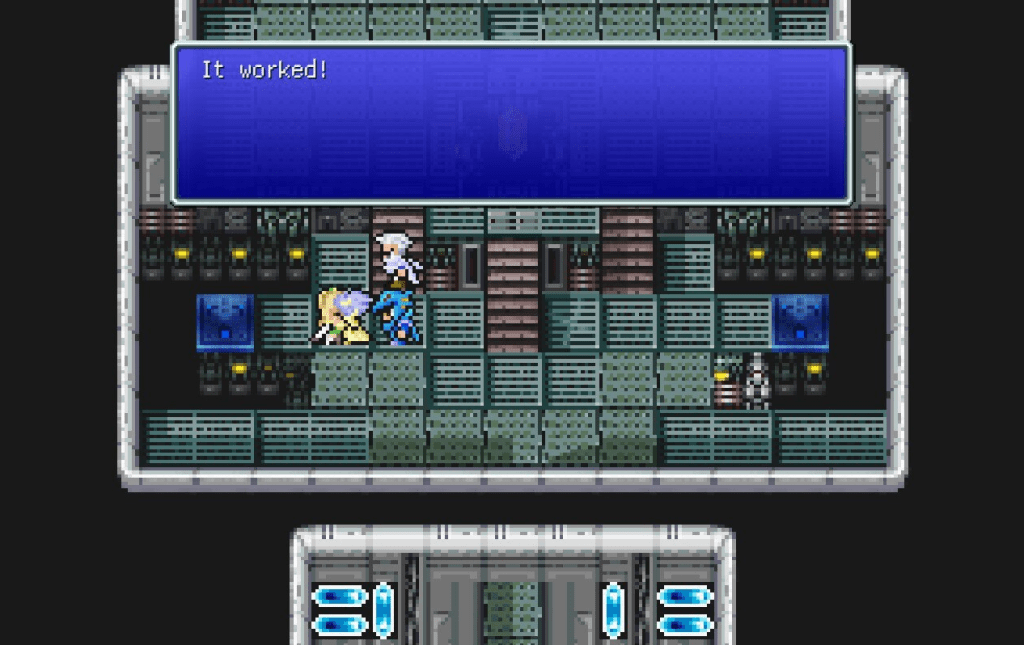
One little gameplay touch I enjoy is that Cecil starts fresh from level 1 when he becomes a paladin. It’s a nice little way for the game to say he’s ‘turning over a new leaf’ by showing it in the gameplay too.
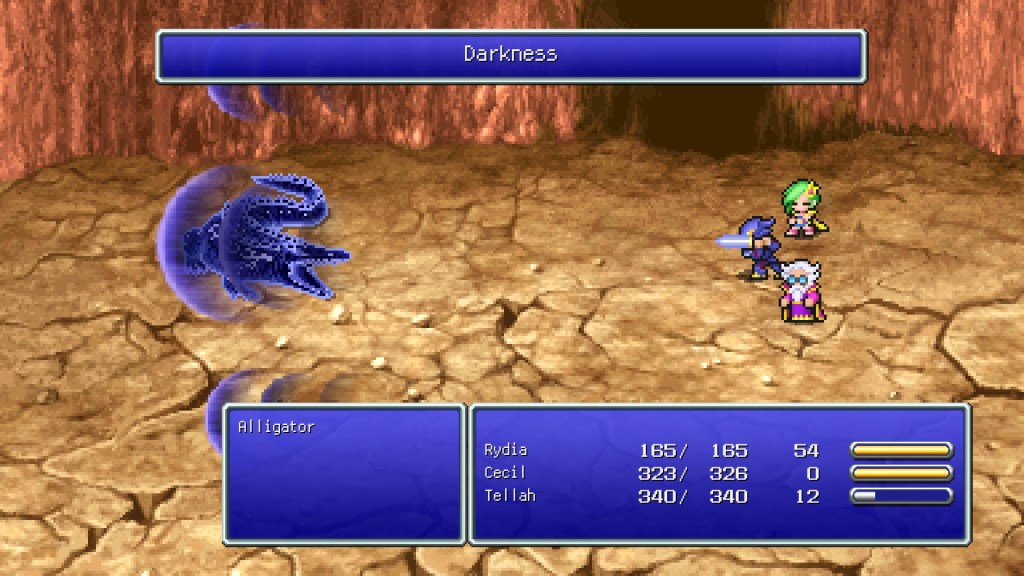
As far as usefulness is concerned, I felt Cecil routinely hit the hardest but his peripherals were a little disappointing. Paladins have access to white magic but the healing is so limited that it’s never particularly useful outside of using a quick Esuna on someone. The guarding of party members at low HP is pretty helpful and actually did save me a couple of times, but it doesn’t always activate which can be frustrating. As a Dark Knight, Cecil had access to Darkness which allowed him to sacrifice a portion of his health to attack all enemies. Not gonna lie, there were times in this game I wish Cecil could get that power back.
If you come in expecting a character with the depth of Cloud Strife, I think you’ll be disappointed. If you come in knowing about the first three Final Fantasies, I think you will see Cecil as a really solid protagonist and a nice step forward for the story telling of this franchise.
Rosa Farrell
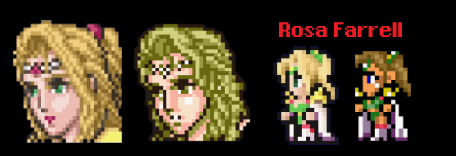
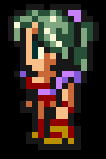
For whatever reason, the Pixel Remaster version of Final Fantasy IV really pretties Rosa up by giving her makeup and adding a little hair accessory. She also becomes more of a blonde, especially when looking at the battle sprite. I think Rosa’s battle sprite is the one that differentiates the most from the original release to the point where it kinda just looks like a different character. To me, Pixel Remaster Rosa looks like a blonde Terra from Final Fantasy VI (see below). Now they would never turn Terra blonde, right?
Rosa’s character isn’t overly complex. She mostly exists to be a love interest for Cecil. A lot of the game is spent rescuing her from various things. For instance, when Cecil disappears from Baron, she goes searching for him and becomes stricken with a desert based illness which sends the party off looking for a cure in the form of the Sand Ruby. She later goes on to get kidnapped. She does provide him with love and support, but she doesn’t have a lot of depth to her character. Though compared to Maria, she’s the most well developed character in the history of fiction. So I’ll take what I can get.
In combat, Rosa is your white mage and thus the most important member of your crew. IV utilizes a rotating party a lot of the time, but Rosa is pretty frequently part of your team and I am thankful for that. I found that if Rosa were to be killed in combat I needed to drop everything to get her back on her feet and healed up. If she isn’t tossing out curajas, there’s a good chance we are gonna die.
Kain Highwind
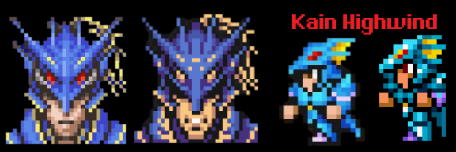
Kain is a longtime friend of Cecil and Rosa’s. He has sort of a friendly rivalry with Cecil going on and is apparently quite fond of Rosa. He is also a member of Baron’s armed forces and similarly sees issues with how the king is acting. Kain and Cecil get separated early on in the story and when Kain comes back, he is being controlled by Golbez. During his time as an evildoer, he kidnaps Rosa and forces Cecil to grab the last crystal (well, that’s what Cecil thinks, there are also ones in the underworld) in exchange for the life of his beloved. Eventually the party makes Kain come to his senses and he joins back with the good guys and vows to atone for all the harm he has done while under Golbez’s control. He gets mind controlled once more but we all know it’s not his fault at that point and just kinda let him be.
Kain is a dragoon AKA the best and most beloved job in the series. I firmly believe that if Kain joined the franchise in the 3D era he would be even more beloved by the fanbase than he already is. Just like in III, the dragoon job functions pretty simplistically. He jumps and is immune to all damage while in the air and then he comes crashing down and hits the enemies hard. I think that brief window of invulnerability just makes people love this class a whole lot. It means that even if your party gets wiped out, as long as he’s in the air, you still got a fighting chance.
You never get to see his actual face, but at the end of the game you catch a glimpse of him with his helmet off and you can see the back of his (blonde) hair. It’s a really cool touch and helps Kain keep his, for lack of a better word, badass aura. I imagine if someone made a Final Fantasy IV live action show, you would see an unmasked Kain in the first episode.
Also, because I am a moron, I learned Kain was left handed later on in the game because I asked myself ‘why the hell are his weapons in his left hand when everyone else has theirs in the right hand?’ It’s right there on the screen, idiot.

Rydia

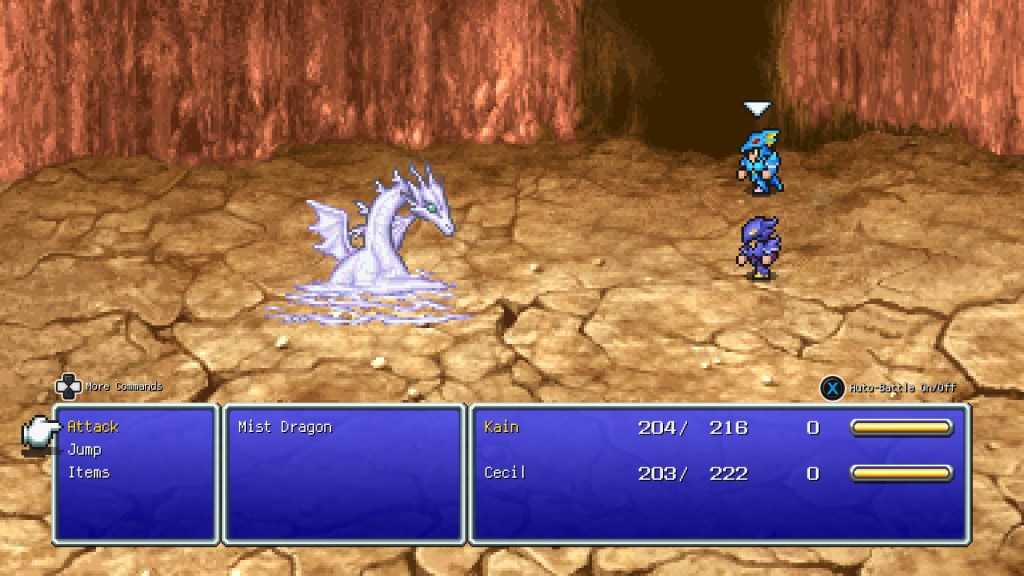
When Cecil and Kain visit the town of Mist with the bomb ring, they are also tasked with killing a mist dragon. It turns out that the mist dragon was an eidolon belonging to Rydia’s mother and when an eidolon dies, the summoner along with it also dies. So Rydia is an orphan. Defying orders, Cecil decides to take Rydia under his care and scampers away from Baron with the little one in tow. You get a neat little bit of gameplay telling you some story elements because if you pay attention to the magic Rydia learns, she never learns fire. This is because fire reminds her of the bomb ring Cecil delivered and the destruction it gave to her home town. Only after Rosa encourages her does she decide to learn fire and then she just has it. It’s a neat touch that makes Rydia feel ike a fleshed out character.
Rydia gets separated from Cecil and crew after they are attacked Leviathan. Rydia just vanishes and is assumed dead but later comes back aged up several years. Leviathan had actually spirited her away to the land of summons in the underworld. Time flows differently there, so this young girl returns to you as an adult despite chronologically being like eight years old. Don’t think about it too much. As an adult, Rydia is an extremely powerful black mage and summoner and is a lot less ‘timid’ than her childhood self. There isn’t much for her character to do after returning, but she definitely is the most compelling female character the franchise has seen to date.
In combat, Rydia is excellent. Her black magic hits pretty hard, she has a ton of MP and when she returns to the party as an adult. There were many situations where I found using one of her summoning abilities was the most efficient solution to my problems. Like in Final Fantasy III, there are hidden summons that you can unlock by fighting them. These are some of the most difficult yet rewarding battles in the game. Sure, the solution to victory against Bahamut might be “cast reflect and don’t worry” but before you figure that out, it’s constantly trying to figure out how to cause a teensy bit more damage before he wipes your party with mega flare.
There are also hidden summons that drop from random encounters. There are four in total and I only got one (cockatrice) on this playthrough. I briefly thought of trying to get every single one so I could do a gigantic summon collage again but then I realized I don’t hate myself enough to farm goblins and bombs to get summons. So I dropped the idea. Sorry!
Tellah

During your quest to save Rosa by fetching her the Sand Ruby, the party runs into Tellah struggling to defeat a monster. He accompanies the party to Damcyan, a location everybody needs to go to due to the kingdom harboring one of the crystals the King of Baron is looking for. As you arrive in Damcyan, the Red Wings attack, killing most everyone in the city including Tellah’s daughter, Anna. His daughter was in town because she fell in love with the prince of Damcyan, a spoony bard by the name of Edward. Initially he blames Edward for the death of Anna, but later turns his fury towards Golbez and Baron and swears vengeance. He then goes to hunt down the spell meteor and helps accompany Cecil in his attempts to become a paladin.
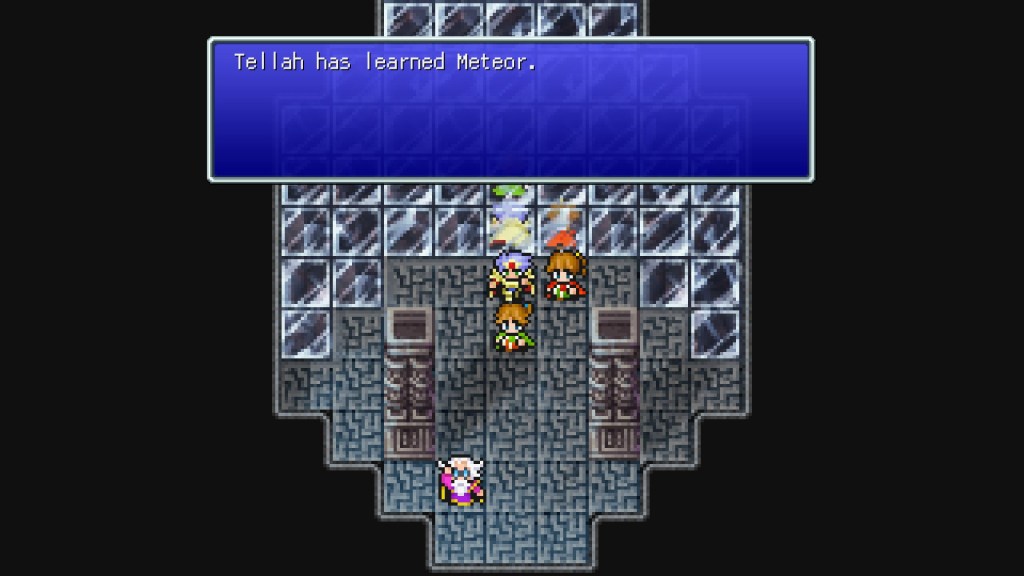
As a party member, Tellah has so much promise but delivers so little. The player opens up his spell catalogue and is just flabbergasted at all the options he has available at such a low level. For players of Final Fantasy III, Tellah’s class is sage, which means he has access to both white and black magics. So it’s really weird seeing something like Curaja and Flare in a party member’s spell book well before anybody else has access to such spells. Regardless, he has a very limited MP pool – it caps out at 90 – so his ability to actually use those spells is pretty limited. It makes sense given how early in the game you have access to him, but it does feel like something of a tease.
One of my favorite bits of gameplay servicing the story involves Tellah. As mentioned, the sage wants to earn the spell meteor because it is seen as the ultimate magic in this world (suck it Ultima). Once he learns it, you’ll notice that its MP cost is 99, which means in regular gameplay Tellah can never ever cast it. In story, he says he is saving it for Golbez. When he finally uses the ability to get vengeance on his daughter, it’s a significant story moment that results in his death. I think limiting Tellah’s MP to 90 really emphasizes how old and out of sorts he is and having him cast a spell normally beyond his abilities helps and having it kill him really pushes that point home. It’s a good touch.

Edward Chris von Muir
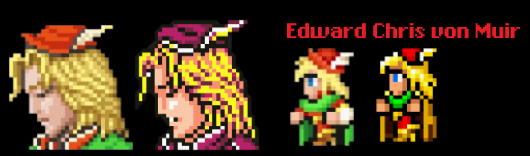
Hey speaking of Edward, here he is! The crown prince of Damcyan who doesn’t much care for politics so he just goofs around the world as a bard. Why, he kind of sounds like a character from a franchise called Kiseki now that I think about it. He falls in love with Tellah’s daughter Anna but as the Red Wings come and kill a large portion of his kingdom, along with his beloved, the bard falls into a depression. How could you not when you’re hit with wicked barbs such as this?
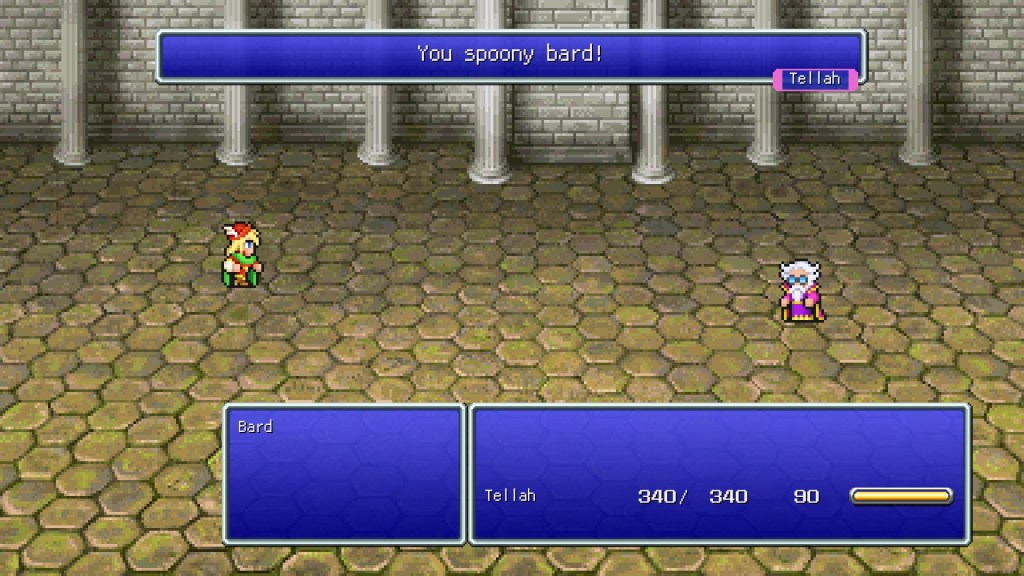
Cecil and co. talk him out of his feelings and he eventually helps with the mission to cure Rosa. He permanently leaves the party when Leviathan attacks.
As a party member, Edward is pretty useless. He hits for basically nothing and has a mechanic where he hides himself from getting hit. It’s not like Kain’s jump where he comes back and does something useful, he just hides for a bit and pops back up. Handy for a quick dodge I suppose. In this playthrough, I didn’t worry about him too much if he died before the end of a battle. It was a waste of resources to keep a glorified meat shield walking.
That said, I only dislike Edward from a battling perspective. After the party returns the sand ruby to restore Rosa, Edward is visited by a vision of his dead lover who gives him the purpose to stick with the party in order to help stop Baron from getting all of the crystals. This was more character development than any single character got in the first three Final Fantasy titles and Edward isn’t even one of the most important characters. It’s a great moment and absolutely justifies his presence in the party.
Yang Fang Leiden

Yang is another guy that has a battle sprite in the Pixel Remaster that just makes him look like a totally different character. I think the PR version brings him closer to what the portrait looks like, but I still prefer his old look a little more.
While the party – at this point Cecil, child Rydia, Rosa and Edward – is on their way to hunt down a crystal in the kingdom of Fabul, they encounter Yang and a group of monks being attacked by monsters. The party saves Yang and the monk agrees to join them in order to prevent Fabul’s crystal from falling into the hands of the enemy. There is a big defense held in Fabul for this, but ultimately a newly mind controlled Kain wins the day for Golbez and Baron. Enroute to their next destination, Leviathan attacks (boy I bet you’ve read that a time-or-two by now) and separates the party. During this time, Yang catches a convenient case of amnesia and becomes an officer for the Baron military, who is trying to hunt down Cecil the disgraced dark knight. He gets better though.
Much later, Yang saves the group from a horde of cannons that are prepped to destroy them and is assumed dead. He is not and this is one of several fakeout deaths FFII tosses in your direction. It’s the opposite of II where people just die. Unless I missed something, the only main party member to fully die is Tellah. I remember as a teen being stunned at the body count of IV while playing the PS1 version, but I guess I quit playing before they told the player ‘just kidding!’
In combat, Yang is…I dunno, I didn’t think he was very useful. In the Super Famicom version of the game, the monk’s charge can apparently be stacked but in the Pixel Remaster it cannot be. He was a little squishy, he didn’t have any restorative magic and he didn’t hit that hard…can’t say I was sad to see him replaced as a permanent party member by Kain. Yang shows how much more vital magic is in this game than it was in past entries because I think in FF II, Yang probably would have been an upper tier party member. Here I feel he really gets lost in the shuffle when Rydia can go out there and blow the face off of most enemies.
My favorite sprite, the antlion
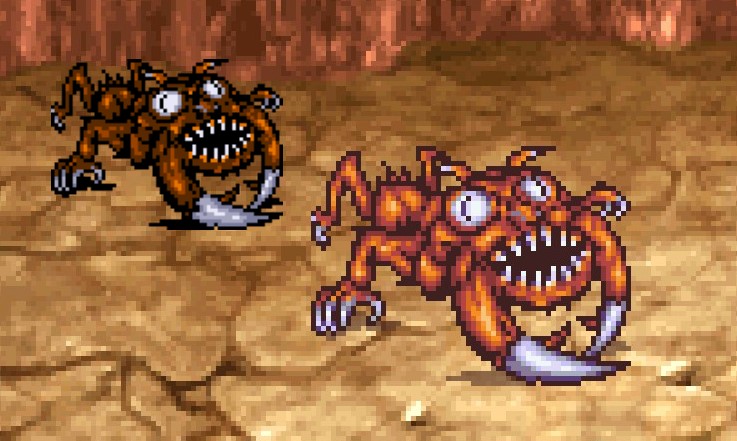
Look at this fucker. I suppose you know I have a type of pixel monster I really like by now – it’s the ones who look like they are screaming in agony. You are told the antlion is a peaceful creature that would never attack humans, but I think if the party could see what this creature actually looked like before battling it, they would have seen that line is some bullshit. Does he LOOK peaceful to you? No way.
Palom and Porom

In all instances, Palom is on the left. Porom is on the right. So the one making a stink face is Palom. Good? Good.
When Cecil and company are attacked by Leviathan and separated, the main character wakes up near the village of Mysidia. Mysidia, as you might remember, is the very first town in the game Cecil visits as the leader of the Red Wings. As a result, the town’s people are not too fond of Cecil. I mean, he murdered their fellow men and stole their crystal so it makes sense to me. Cecil wishes to atone for his mistakes and become a Paladin and in order to gauge his sincerity, Palom and Porom are tasked with spying on him during his journey by the elder of Mysidia. They eventually see he means what he says and vow to help him in his quest.
The quest leads them back to Baron, where Cecil learns that the King is actually one of Golbez’s minions, an archfiend by the name of Cagnazzo. We’ll get more into them later. Baron is no longer the bad guys! Golbez is a rogue agent! However, after a trap gets sprung by Cagnazzo in his death throes, Palom and Porom sacrifice themselves in order to save the crew. This involves voluntarily turning themselves into stone in order to stop some walls from caving in and crushing the party. You can interact with these stone statues which leads me to believe perhaps you were intended to fetch the SUPERSOFT at some point to heal them up, but you never actually get to heal them. Instead they come back after being healed up by the elder of Mysidia offscreen. The first fakeout death since I believe Yang’s comes later chronologically.
In battle, Palom and Porom are decent enough mages. Palom acts as a black mage while his sister Porom acts as a white mage. Their gimmick is that when both of their ATB bars are full, you can have them team up to cast double magic. This gives them access to far more useful spells and at the point of the game where you first get them it’s very much appreciated. It allows them to carry a party of Tellah, Cecil and later Yang through some really annoying encounters. They ‘die’ before they ever become truly useless, but by the time they come back your party is so strong that there would really be no place for them. Poor fellas.
I elected to keep them together in the character writeup section because there isn’t much to their personalities as individuals. They always appear together and I often confuse them for each other. They are essentially FFIV’s version of Phil and Lil from Rugrats.
King of Baron

I like how angry the Super Famicom sprite looks. He kind of reminds me of Cartman.
You are led to believe the King of Baron is the guy hunting down the crystals for a large portion of the game, but it turns out he was disposed of a while ago and a puppet ruler (Cagnazzo) is installed to rule in his place. Despite being dead, the king gains power in death and becomes the eidolon Odin. Once you beat him in battle, you can summon him! Odin is more like the Odin we know and love from later games in this entry because when summoned, he can one-shot enemies with zanketsuken.
While he may not seem like an important character, him being long gone is foreshadowed in that everyone has noticed the king acting weird lately. I also like that they give some closure to his character by giving you an optional boss battle. As I mentioned above, all the optional eidolon battles in this game are a lot of fun and Odin is no exception. It’s a pure DPS race – think of the battle against Sin’s head in Final Fantasy X.
Cid Pollendina
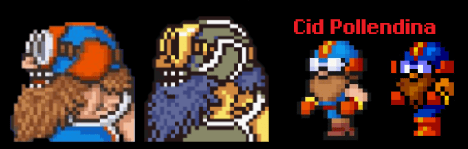
Final Fantasy IV’s Cid is the third Cid in the franchise to this point, no we do not count revisionist history in Final Fantasy I remakes, and the first playable one. Wouldn’t you know it, but this guy is also really into engineering and airships! What are the odds? He joins up with the crew almost immediately after Palom and Porom’s sacrifice and hooks you up with an airship. At this point in the story, the crew needs to grab the last overworld crystal in order to save Rosa and an airship is needed for that. It’s also needed to pursue the dark crystals of the underworld.
While pursuing the dark crystals, the Red Wings attack the crew’s airship (the Enterprise) and Cid ends up sacrificing himself in order to allow the crew to get away from the bad guys. He accomplishes this by jumping off the airship and blowing himself up, sealing the underworld along with him. Probably the single coolest act a party member has committed so far! Of course, as noted above, this death doesn’t take and he just sleeps it off. He’s portrayed as an ornery and stubborn old man, so his refusal to die kind of contributes to that portrayal. In a nuclear apocalypse, all that would be left are cockroaches, twinkies and Cid Pollendina.
After his fake out death, Cid returns to upgrade your airship and allow you to visit new places but he doesn’t do much of anything else. This is fine because as a party member he kind of sucks. He doesn’t hit hard, he doesn’t take a lot of hits well and his specialty makes him act close to the scholar class from Final Fantasy III which you might remember as being totally useless outside of one battle. Despite his uselessness in combat, I really like him as a character. He’s one of those old guys who talks a lot of shit but you know deep down he has a heart of gold.
King Giott
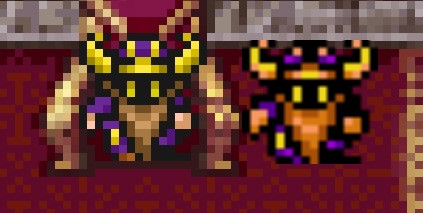
Super Famicom sprite on the right. King Giott is the king of the dwarves and is seemingly the ruler of the Underworld. He is very aware of the presence of the dark crystals in his domain and actually keeps the final one locked away in a location that is inaccessible to Golbez. Of course, Golbez finds a way, but it’s nice that this fella at least had a plan.
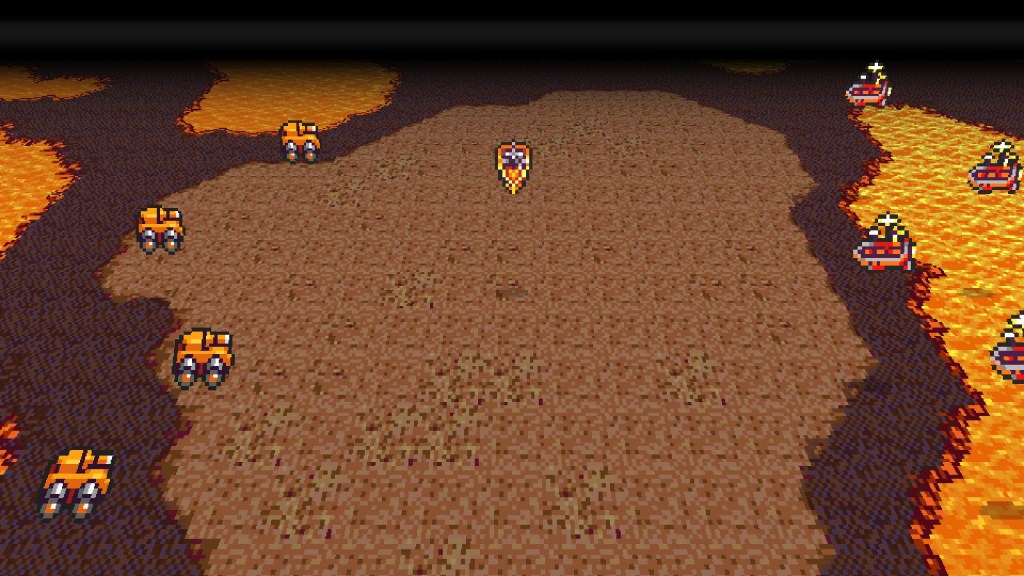
His main role in the story is to provide backup to the crew. He helps gather all of your friends to cheer you on during the final battle, informs you about the Lunar Whale (which is how your party gets to the moon) and helps wage war against the Red Wings and the forces of evil leading to some Advance Wars looking fights.
Edge Geraldine
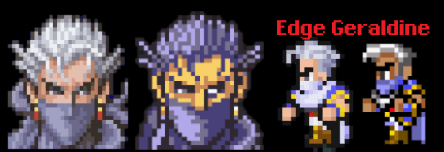
Edge joins the crew in the mid 90s and would go on to win several world titles in his long and storied career. He would go on to – oh sorry, wrong Edge.
Edge Geraldine is the prince of the Kingdom of Eblan – I bet you’re tired of hearing about all the royalty we pal around with – and you are introduced to him as he is trying to get revenge on one of the archfiends for seemingly killing his mother and father. This leads the crew back to the underworld after Cid blew up the entrance to it, so his quest for vengeance makes his goals line up with the party’s goals. While trying to get his revenge, Edge and the party encounter his parents who have been turned into monsters by the evil Dr. Lugae who works under Golbez. So now Golbez wants to stop the same guys we want to stop and he becomes a permanent party member.
This is unfortunate because I really hate Edge. Despite being 26 he acts like a doofus teen. When Kain gets mind controlled he is the only one that seems reluctant to take him back, despite being the one least equipped to have an opinion on it. He also has a very obvious crush on Rydia, which is cute, but it doesn’t make up for him being something of an asshole. I would trade him for Yang or Cid if I could, but that is not possible.
I wish I could say he makes up for it in combat, but I really don’t think he does. The ninja class in this game takes its first step into becoming the ninja class we all know and love because it is the only one that can dual wield and wouldn’t you know it, the prince of Eblan happens to be a ninja! So he can hit pretty hard and he’s fast but I think he takes damage almost as badly as the mages in your party do. There were a few boss battles where he would die relatively early for me and I would just elect to keep him dead as opposed to wasting the time needed to prop him up and keep him fighting.
But hey though, he can steal. And steal is actually good for the first time in the series because you can steal some useful items. It’s not just potions and hi potions anymore. Thanks!
FuSoYa
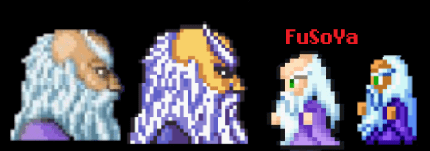
After the bad guys get all the crystals, it becomes imperative for your party to reach the moon. There, you learn about Lunarians. Lunarians are a race of interstellar people who had their planet destroyed. They wanted to relocate to Earth but found that the people of Earth were unevolved and Lunarians were not compatible with them. Who would wanna live with a bunch of ape men? They might try to smack your monolith! So the Lunarians decide to go into a deep sleep, on a second moon that they created, until humanity has evolved to an acceptable level for them. FuSoYa is charged with watching over the resting Lunarians until the time comes to awaken them. FuSoYa has a brother by the name of Kluya that we will get into shortly.
It’s really jarring getting to the moon and discovering this guy. There are other humanoid like creatures on the moon, but they are related to a guy you find on earth called Namingway, and they look like this:
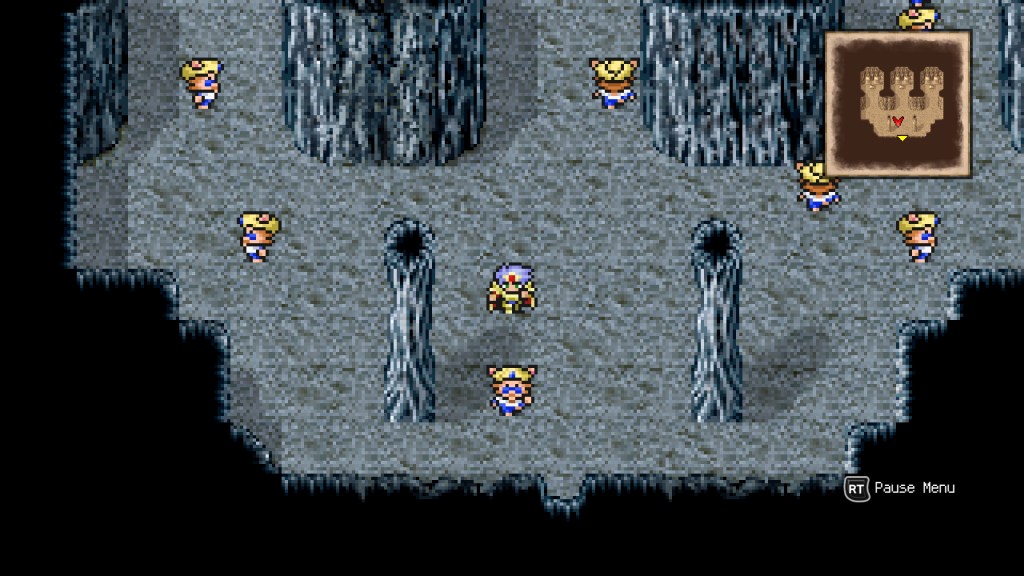
They are called Hummingway and I do not trust them. For reference, Namingway exists so you can rename your characters. The Hummingway people note that the guy on earth is ‘exceptionally good at naming things.’
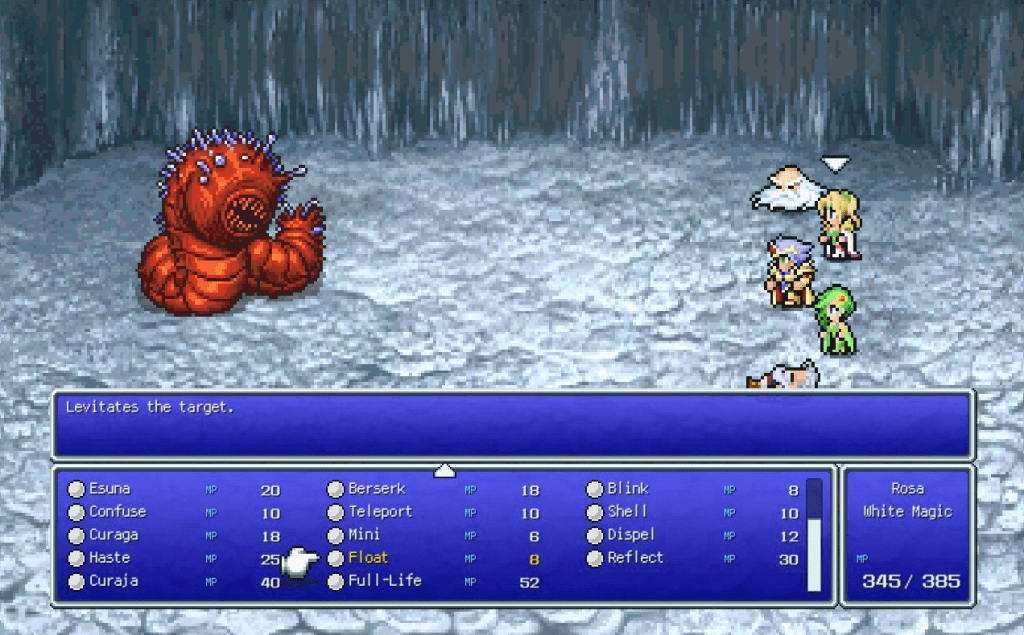
FuSoYa isn’t in your party for very long, but he does leave a mark. He is similar to Tellah in that he has a gigantic spell catalogue with a limited MP pool, but he DOES have enough magic to cast meteor and it is every bit as powerful as you were led to believe when Tellah cast it. I have never once seen it cause below 9,999 damage so if you were in a hurry and had plenty of restorative items, casting meteor on enemy hordes can actually get you some places. There is a brief period where FuSoYa is in your party while Kain is not and during this window is when it is considered easiest to tackle the ultimate eidolon, Bahamut. It’s actually easy regardless once you know how to fight Bahamut (use reflect), but if you’re just trying to DPS rush, FuSoYa is your man!
Also he has the best corpse in the game.
Golbez
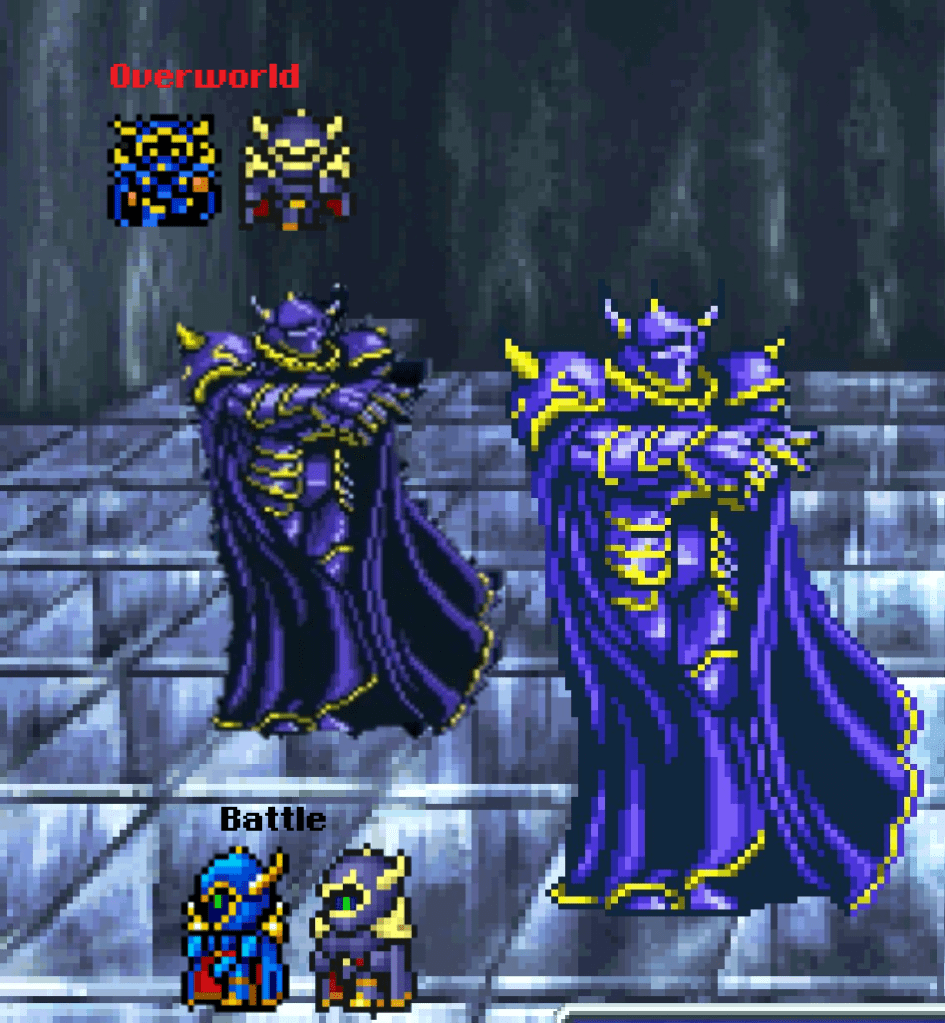
I really don’t like the change to Golbez’s sprites. His original is much darker blue and looks cooler whereas the PR goes for a darker and more sinister look. I just don’t think it’s as visually interesting. At least the boss version of Golbez looks mostly the same.
So back to FuSoYa’s brother, Kluya. Kluya went to earth in order to teach the people down there about all sorts of fun futuristic stuff. Magic, how to build airships, things of that nature. Kluya also made the Lunar Whale, which is the ship that allows Cecil and crew to go to the moon. While down there he fell in love with a woman and had two children with a woman named Cecilia. Cecil and Theodor. That’s right, Cecil is half-Lunarian! But what of Theodor? Well, as a child, the true main antagonist Zemus reached out to him and due to his half Lunarian nature, he became corrupted and was rebranded as Golbez. Golbez would then act on Zemus’s behalf in order to achieve what the main bad guy wants, a barren planet for Lunarians to inhabit.
Throughout the game Golbez is portrayed as intimidating and heartless, a beast of a man who has otherworldly strength. He is only brought to his knees by the casting of meteor (as is Zemus actually, must be a Lunarian thing) but outside of that he is very rarely shown as weak. At the very end of the game, Golbez snaps out of the control of Zemus and tries to redeem himself by teaming up with FuSoYa to put an end to all of this madness. It doesn’t totally work. It’s still really cool seeing your former arch nemesis get a battle sprite like everyone else.

The plot twist of Golbez and Cecil being brothers is pretty compelling and makes Golbez’s late-game face turn hit hard because the player has to keep wondering what Cecil thinks of all this. While Cecil is reluctant to forgive Golbez for everything evil he has done, I must remind you that Golbez is responsible for basically every death in the game to this point, he does eventually come around to wishing Golbez well. Cecil realizes that, as a fellow half-Lunarian, he could also have very easily fallen under the influence of Zemus.
The game concludes with Golbez going into a slumber with the rest of the Lunarians since he does not feel worthy of returning to earth just yet.
I’m sure the Star Wars references were flying in 1991 since the heavily armored villain turned out to be related to the main character and then also went on to team up with the heroes to conquer the real villain. Good thing I don’t care about Star Wars!
The Archfiends

Clockwise from top left: Scarmiglione, the Blighted Despot. Cagnazzo, the Drowned King. Barbariccia, the Empress of the Winds and Rubicante, Autarch of Flame.
That’s right, the fiends are back! The Final Fantasy I tradition continues! They don’t have a lot of personality, but they are the strongest soldiers in Zemus’s army and all serve some plot significance. Scarmiglione is sent out to kill Cecil and prevent him from becoming a paladin. Cagnazzo is the false King Baron. Barbariccia is there to to try to prevent the party from escaping the hostage exchange for Rosa unharmed and Rubicante serves as the main motivation for Edge to join your crew. Hey, fuck you Rubicante.
My main take away from these guys is that they all have names that sound like they’d be Dark Souls or Elden Ring bosses. I can just see someone going “YOU NEED TO NOT ROLL TO AVOID CAGNAZZO’S WATER ATTACKS, THE KEY TO BEATING HIM IS TANKING ONE AND ATTACKING HIM WHILE HE IS ATTACKING YOU” or something like that.
Zemus
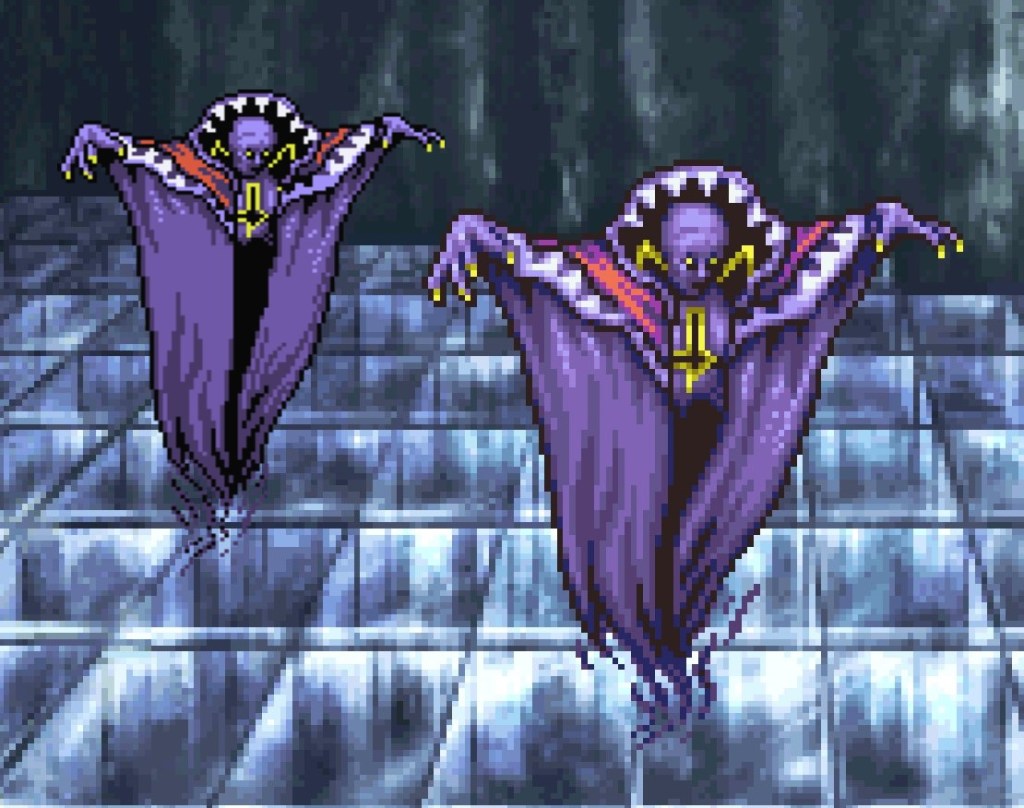
This game really got hijacked by moon people, eh? Zemus is the true enemy of the game and is the one who has been corrupting the people of earth, mostly through the usage of half-Lunarian Golbez. Whereas FuSoYa and the rest of the Lunarians want to coexist with the people of earth, Zemus wants to destroy the people on the blue planet so the Lunarians can just have a place of their own. He wants to do this by activating the giant of babel. FuSoYa forces him into a sleep like the rest of the Lunarians in order to avoid this, but he does eventually wake up. Thanks to your efforts, along with some help from the dwarves, his giant of babel attack strategy does not quite go as planned.
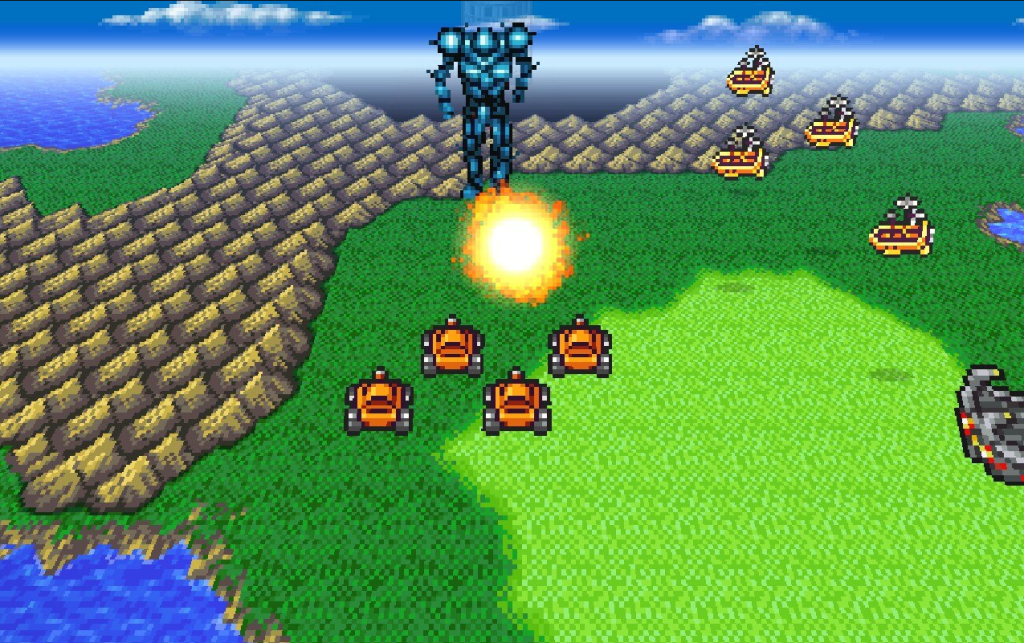
After the Giant is taken care of, FuSoYa and Golbez decide to take on Zemus and seem to take him down through using meteor. Unfortunately, Zeromus rises from the ashes of Zemus and meteor does not work on that fiend. Golbez tries to use the crystal in order to counter this new baddie, but he has been an evil man for far too long and the crystal does not respond to him. Good thing there’s still Cecil!
Zeromus
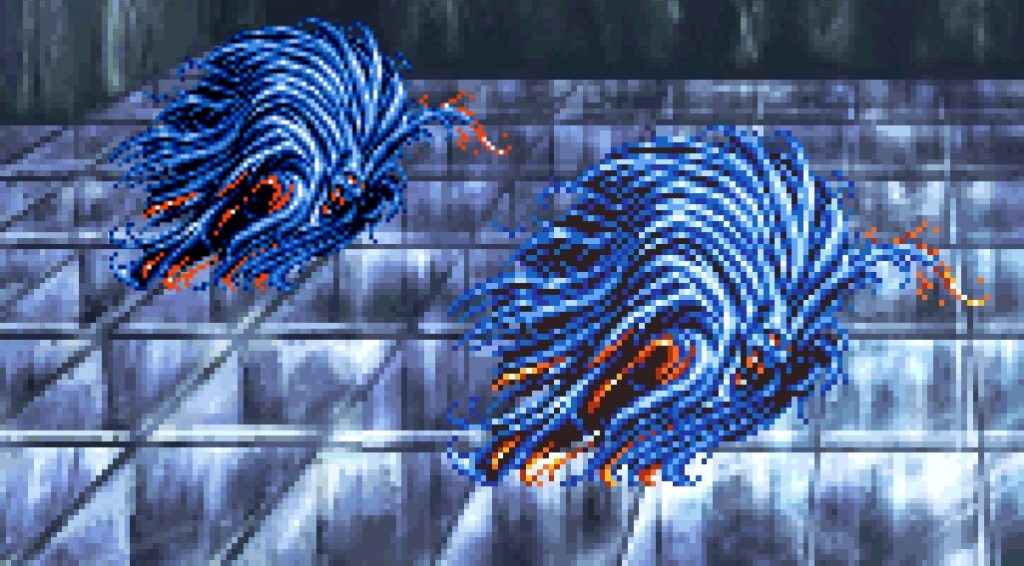
Zeromus is the final boss of Final Fantasy IV. He has two forms, the first of which doesn’t do anything until you use the crystal on him. Instead, the first form acts as a story sort of battle. Your friends back on earth realize something is going on while you’re on the moon and start to pray for your safety. The battle starts with your party out of commission but slowly everyone gets revived and healed up. It feels a bit like the final boss of Earthbound, Giygas, though this game did come first. It’s really nice seeing all of your temporary party members come back and wish you well in the final battle. It’s also another attempt by Golbez to have something of a redemption arc.

I have dubbed this form “Zeromus the Hedgehog” in my file names for some reason.
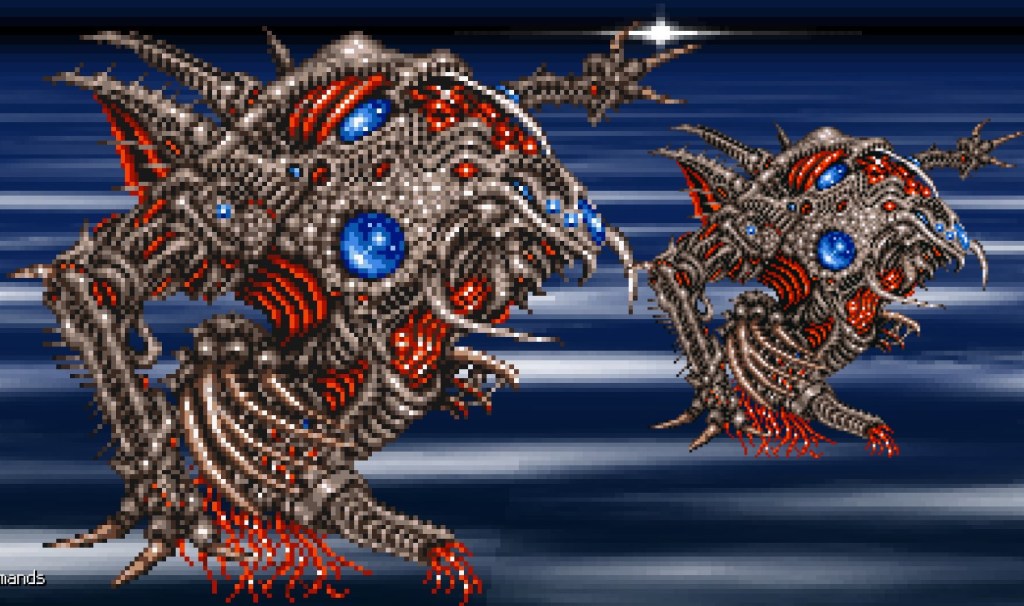
His final form looks PEAK SNES to me, it reminds me of a boss from Super Metroid or something. I really adore how it looks. He is pretty difficult as he constantly uses an attack that hammers the entire party called “Big Bang.” In my first attempt, he ended up killing my party pretty quickly because Rydia and Rosa died to a single big bang attempt. You are able to nullify some of that damage via shell and protect, but Zeromus’s other big attack – black hole – nullifies all magic so that’s really not a permanent solution.
All you need to do is keep attacking. I don’t know why, but in my second try, both Rosa and Rydia survived the initial big bang and kept going strong. The same issue happened during Cloud of Darkness in FF III where it felt like the enemy was doing inconsistent and random damage. Maybe I got hit with a critical or something? I’m unsure but I won and the only casualty was Edge.
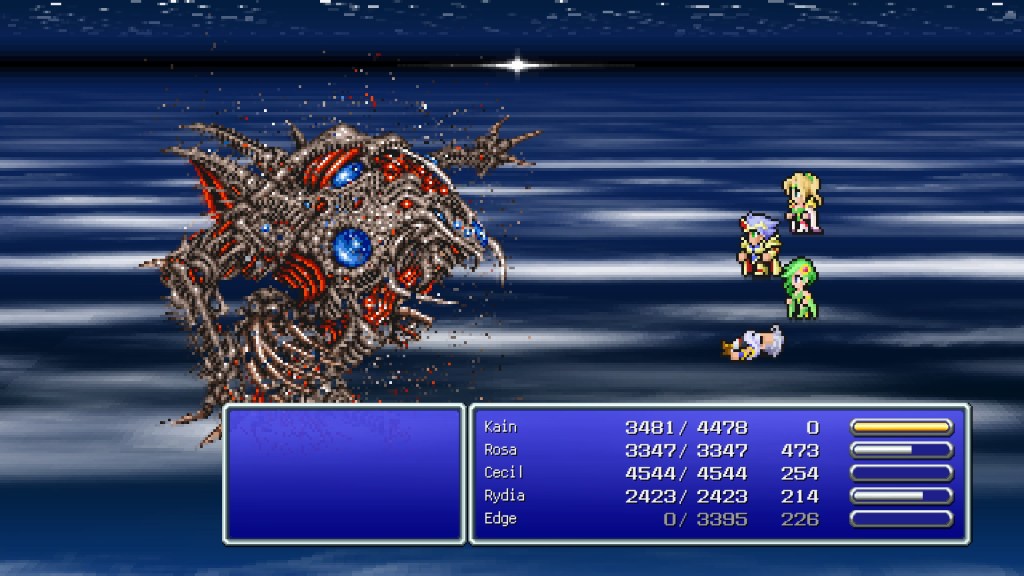
Gotta love Kain being off screen here. I do enjoy that jump baby. With this the game concludes and it appears all is well. OR IS IT? …No I’m not gonna play after years. At least for a while.
It started here
ATB system, an intricate story, characters who learn abilities as they level, five-man parties
Mentioned in a bit of detail above so I won’t go too much into this. Just understand that a lot of SquareSoft RPGs used a version of the ATB system and it remained a thing in the franchise until Final Fantasy X swapped it out. It returned with some tweaks in Final Fantasy X-2 before being brought back for Final Fantasy XIII and XIII-2. I suspect that we will never see it again as Square Enix seems to view Final Fantasy as an action-RPG franchise at the moment while Dragon Quest is their turn based alternative.
More mobile chocobos
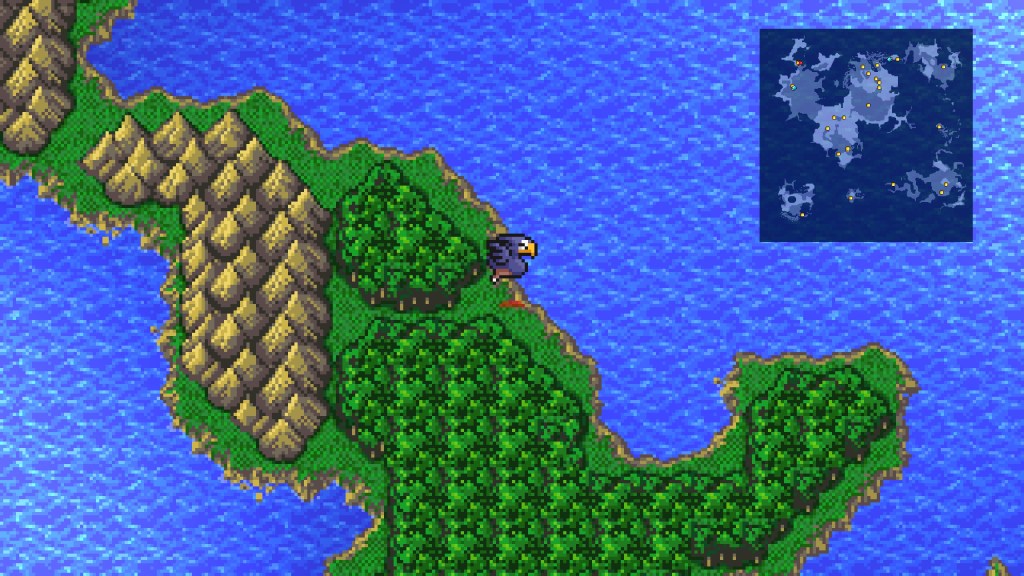
In FF II and III, the chocobo was a pretty straight forward beast. It could be used to move a little more quickly on the world map and avoid battle. In IV, the black chocobo is added to the lineup and it can fly you some places. It only comes into play one time, but chocobos being used to access previously inaccessible areas would return in a big way later on. I cannot tell you how much time I wasted with chocobo breeding in Final Fantasy VII and I have IV for giving them that versatility in the first place.
Blatant fourth wall breaking
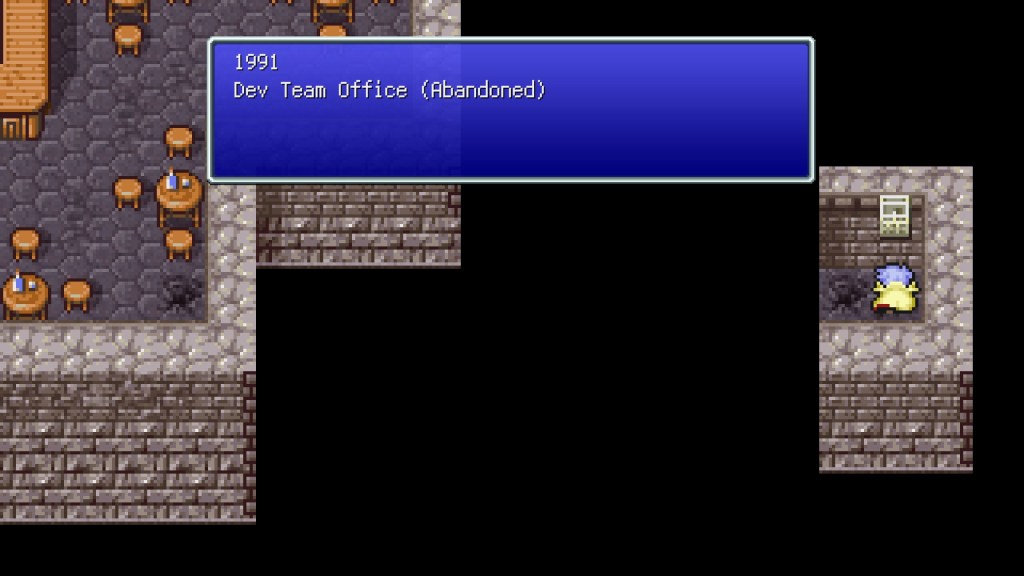
The original release of Final Fantasy IV contained a room where you could chat with the developers of the game. It was not included in the North American version of the game as well of a later Japanese release called “Easy Type.” If you’ve gotten the ‘fast’ ending in Chrono Trigger before, it’s a similar concept but without the need to defeat Lavos at the start of the game. It’s a shame that the Pixel Remaster did not decide to bring it back, I think it’s a pretty fascinating bit of history. Still, it’s nice that you can still visit where it was and dream of what could have been.
Demon Wall
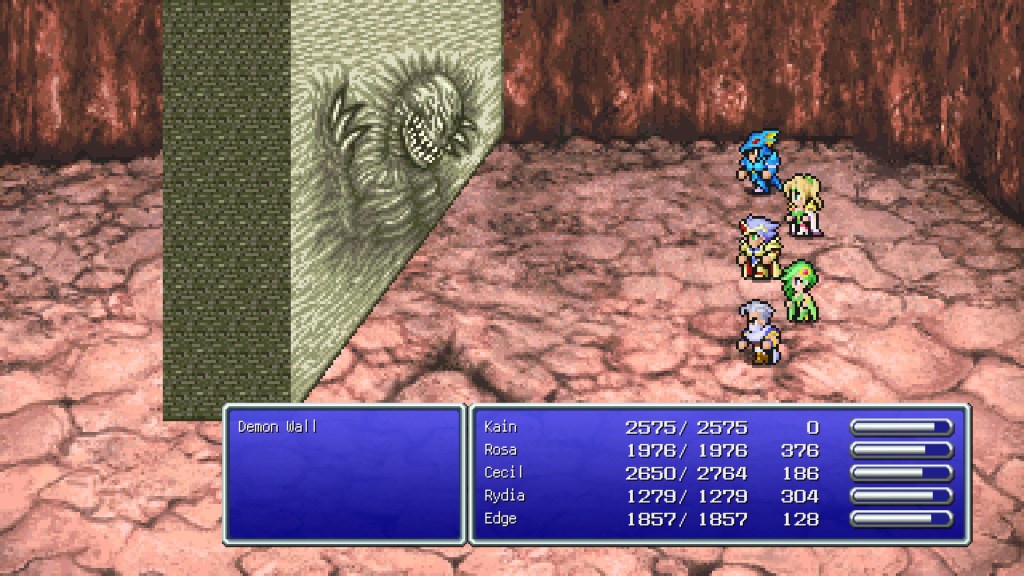
This is a recurring boss enemy in the Final Fantasy franchise and it is almost always battled in the same way. It’s a DPS race against the clock and if the wall corners your crew, you all die instantly. In my opinion, the demon wall is almost always one of the hardest bosses in whatever game it appears in. For instance, the Demon Wall you fight in Final Fantasy VII at the end of disc 1 is the hardest boss in the game to me and despite finishing that game roughly 50,000,000 times I will still occasionally lose to it. It’s a real bastard.
The version you fight in Final Fantasy IV is a complete joke compared to later iterations, so be thankful.
Summons have personalities
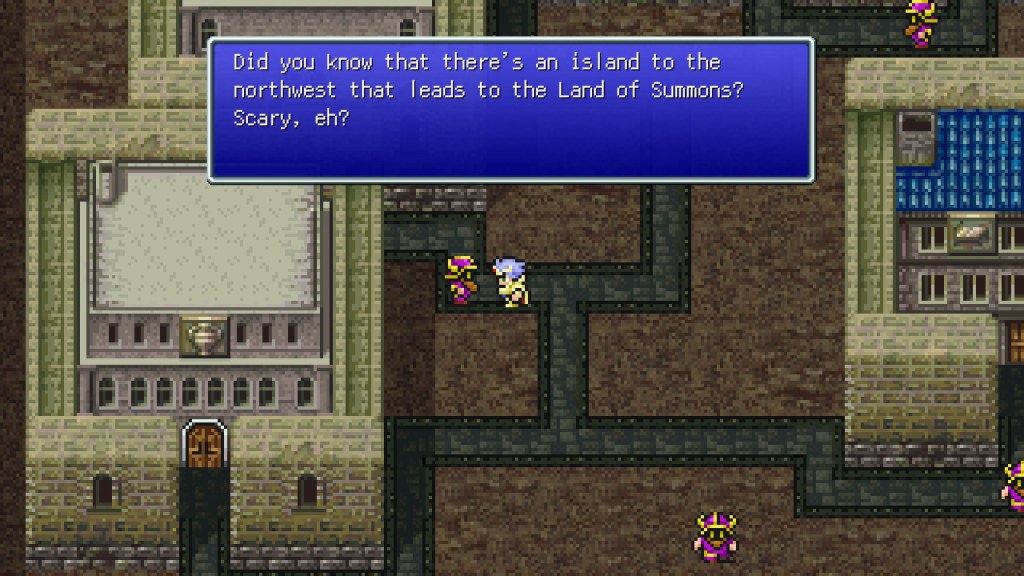
This is a little contentious, but I’m going to attribute this to IV. In Final Fantasy III your optional summons did have dialogue but everything else was bought in a magic store, which to me suggested they were mindless monsters with one sole purpose. In IV, that ability is gone and instead eidolons form a relationship with a summoner that allows it to be summoned. You discover these things have thoughts and feelings when you travel to the Land of the Summons in the underworld. A little girl in this area laments that she has fangs and claws unlike Rydia, who just looks like a regular person. It’s simple stuff, but it adds some depth to the world.
This little area also gives you access to optional summons Ashura and LEVIATHAN! That’s right, the bad boy that attacked your party and fucked everything up can be controlled by you! Hoorah!
In conclusion
Final Fantasy IV is a fantastic game that really put the franchise on its best foot forward heading into a new generation of consoles. From both storytelling and gameplay standpoints, this is the peak of the franchise at this point in history. Listen to your elders and give this game a try because I think it can really help you appreciate how far these story-focused Final Fantasy titles have come. This is a must play for anyone with an interest in the history of Final Fantasy.
My score: 4.5/5
Up Next

 Vidya Thoughts
Leave a comment