
Moving on from II
Final Fantasy III was unleashed on the masses on April 27, 1990. It was the last Final Fantasy title to appear on the Famicom/NES. The Super Famicom/SNES was around the corner, so it was no surprise that this would be the final entry of the fledgling franchise to appear on Nintendo’s first console.
From a business perspective, Final Fantasy II performed pretty well, selling 800,000 units according to an interview with Electronic Gaming Monthly. When Final Fantasy II was greenlit by SquareSoft, the original had shipped (not sold) 500,000 units. So logically it would make sense for Square to make another sequel. It should be noted that the initial sales success of II probably had more to do with it being a sequel to a hit game than anything to do with quality, as the VGSales wiki states that it has sold less total units, including remakes, than any other entry in the franchise.
It’s difficult to say what public reception on the game was. Go figure, finding public reaction to an 80s game released exclusively in Japan is hard. Looking at the makeup of III, it’s hard to think of it as anything other than a hard pivot away from what made II so different. It feels like a return back to the way the original title did things in so many ways. To start with, the man most associated with Final Fantasy II, Akitoshi Kawazu, moved on from the franchise at this point and was given his own property to steer: SaGa. SaGa would make its U.S. debut in 1990 as The Final Fantasy Legend, mere months after the release of the original Final Fantasy on the U.S. NES. SaGa is known as a very unique franchise that tries a lot of different things, very fitting for the Final Fantasy II guy.
When asked about III, Kawazu said the following in an interview with 1up.com (archived via retronauts) “I don’t know that much about Final Fantasy III because at that point, I wasn’t really involved. Final Fantasy II was basically my system, and it’s an eclectic kind of system. Eclectic because I made it, you know? There was nobody else I could hand the torch off to afterwards, because there was nobody else who could fathom it. [laughs] That’s why it changed.”
Basically, there wasn’t anybody around who wanted to make another II. So instead of making the next Final Fantasy an even sharper pivot away from the original, Hironobu Sakaguchi and his team decided to go back to basics and create something that feels a bit more like Final Fantasy II than the real Final Fantasy II did. The four elemental crystals were back and as prominent as they were in the original, the player characters were once again blank slates and D&D style magic charges were brought back along with traditional character levels. No longer did you need to wail on your teammates to get those stats to increase, they would now go up if you simply got enough experience!
The long voyage overseas
The game would release in Japan roughly a month before the North American release of the original Final Fantasy. Just like its predecessor, Final Fantasy III did not receive an English release during this era. Just like with II, the Super Famicom is most likely to blame for this.
“Nowadays we know that when you’ve got a platform like PlayStation, you’ll have PlayStation 2 and then PlayStation 3, and where you’ve got Xbox, you move on to Xbox 360 – you can sort of assume what’s going to happen in the future,” Hiromichi Tanaka, a designer on the Famicom trilogy of Final Fantasy titles, said in an interview with Eurogamer in 2007. “But back then, that was the first time that we’d seen a new generation of consoles, and it was really difficult to predict what was going to happen. At that time, then, we were working so hard to catch up on the new technology that we didn’t have enough manpower to work on an English version of Final Fantasy III.”
And it would take a long time for an English version of Final Fantasy III to surface. The first time it got brought over to English speaking countries was in 2006, as a straight up 3D remake for the Nintendo DS. Some core changes were made to this version of the game though, most notably that the main characters were no longer faceless avatars without much of a personality. Square elected to give backstories to your main party of four. The story around them was basically the same, but they would have more to say about things. It was a good version of Final Fantasy III but it wasn’t quite the original version of the game that we missed out on back in the day.
A 2D version of Final Fantasy III would not be officially localized until July 28, 2021 with the Pixel Remaster release. That’s right, the version of the game being played for this retrospective is the closest thing North American players have to the original Final Fantasy III experience. And it was released two-and-a-half years ago! With Final Fantasy XVI being released simultaneously worldwide in 2023, it’s safe to say that the way video games get translated and localized has changed a lot over the years.
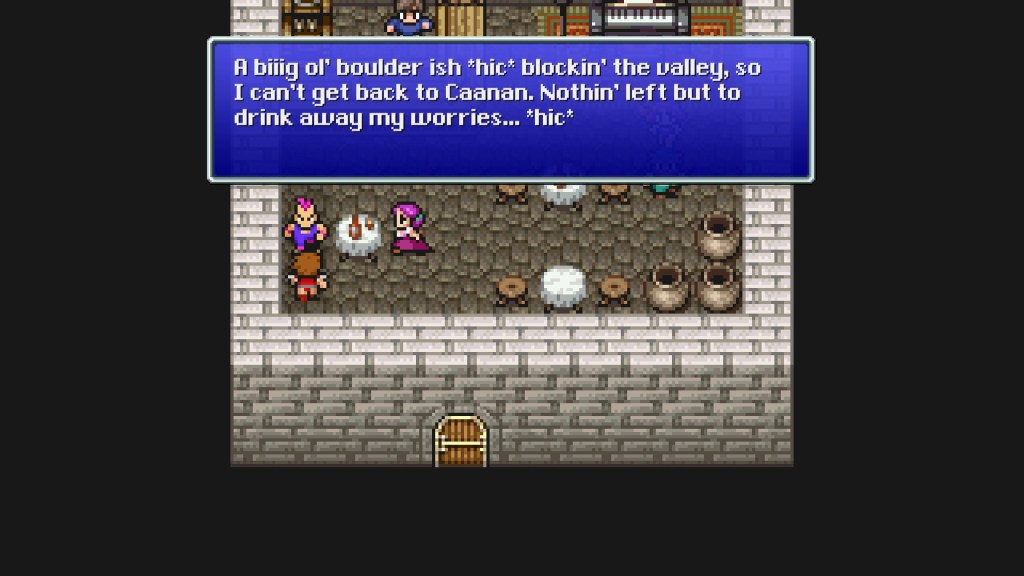
The other Pixel Remaster games use updated scripts from other localized Final Fantasy games. For instance, Final Fantasy I and II use the scripts from the Gameboy Advance remakes as a baseline.
“The processes for reviewing existing text and translating from scratch are quite different. For FFIII we used a similar method to most other games we localize, with a few tweaks due to the relatively low volume of text,” Dan Gidion, an English translator for the Pixel Remasters said.
So basically, the Pixel Remaster of FFIII has a modern translation done using modern localization practices. It’s fascinating that a game originally released over 30 years ago essentially received a fresh translation. According to Gidion, the sole translation work was done by lead English translator Paula Kaye Gerhold. The rest of the team edited her work. Remember, this is based off of a Famicom game, so a one-person translation job isn’t as absurd here as it would be for something like Final Fantasy XVI.
“I’m extremely partial to FFIII because it had never been translated into English before in this iteration, so having a hand in the first English version of the script for the original FFIII was an amazing experience. Moreso than reworking an existing translation, it’s always nice to get your hands on something you can start from scratch,” Gerhold said.
So for those of you who pout about the lack of an official Mother 3 localization, you should always retain a little bit of hope. If Final Fantasy III can make the jump 30 years later, I’m sure Mother 3 can eventually get an official English release.
The Secret Best One
For me, my Final Fantasy III journey started out in the mid 2000s. By that point, I was well aware that FFIII was the ‘missing’ Final Fantasy title. For those of you who remember Sonic CD, there was a bit of an air of myth around that game for a long time. It was the hardest one to play and it also just so happened to be the best one. Time would later prove this once objective fact to be a little more contentious as more people got their hands on Sonic CD. So by that logic, I thought FFIII was secretly the best one because it was the only one deemed unsuitable for Western audiences.
So I modded a PSP using a hack that took advantage of the game Grand Theft Auto: Liberty City Stories and loaded a bunch of NES and SNES games onto there. In my mind, it was the ultimate gaming device. When I was done putting in my reps on the first few levels of Adventure Island, I decided to play the forbidden Final Fantasy title. The one that was too good for American eyes. And…I fell off of it, just like I did the first two Final Fantasy titles. Are you surprised? I’m not! I don’t remember thinking it was too hard or anything like that, but the lack of a focused narrative was a bit of a turnoff. Teenager me just had no patience. These damn kids.
In my last retrospective, I compared Final Fantasy II to a couple of other sequels that were a little ‘rough’ compared to their originals. So let’s revisit those real quick. The Mario franchise pivoted from Mario 2/Lost Levels/Mario 2 USA into Mario 3, a game that felt more like a sequel to the original and would go on to become one of the most revered games of all time. The Zelda franchise was similar, going back to the top-down-aesthetic for its third game, Link to the Past. That too would go on to become one of most revered games of all time. Castlevania III would also do this, feeling much more actiony and less obtuse than Castlevania II. Many consider III to be the height of the NES Castlevania games, but to be fair it does not reach the same levels of praise that Mario 3 and Link to the Past have. It does not consistently appear in BEST VIDEO GAMES OF ALL TIME FOR REAL lists. Rondo of Blood and Symphony of the Night would get there though. Final Fantasy III doesn’t quite hit those highs, but it’s a little closer than I thought it would be.
Some new, some old
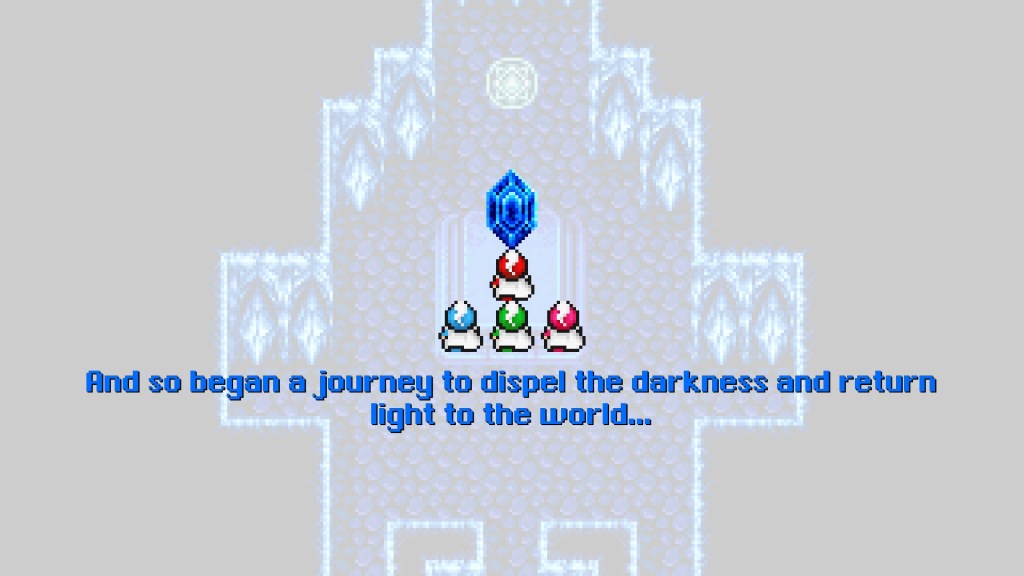
The world of Final Fantasy III is once again based around the four elemental crystals. A long time ago, a society of people referred to as ‘The Ancients’ used the light of the crystals to advance civilization and accidentally triggered something of a cataclysm. Four Warriors of Dark emerged to put a stop to all that and restore balance. Very Kingdom Hearts-esque balance of light and dark stuff going on here. It was predicted that a flood of darkness would do what the light had done at some point in the future and that four Warriors of Light would emerge to restore the balance once more. The game starts with four orphans being stranded in a cave and encountering the wind crystal. The Wind Crystal anoints the four as Warriors of Light and sends you on your way to restore light to the crystals and save the world.
The imbalance of light and dark is started by a man named Xande, who acts as the main villain for a vast majority of the game. Xande is the disciple of Noah, a legendary figure who doesn’t actually appear in the game. Noah had three disciples and gifted each one of them different things. He gave the other two power over magic and the world of dreams, but Xande is given the gift of mortality. Kind of a raw deal, eh? So he gets pissed off at suddenly having to deal with the concept of death by draining the light from the crystals and flooding the world with darkness. This results in a large portion of the world being turned to stone and being literally flooded with water.
While this is going on, a hunk of earth containing two of the crystals gets thrown into the air. Xande gets the impression that the Warriors of Light will emerge from this mass of land to put an end to his evil ways, so he constantly bombards the area with monsters and baddies. This is where your game starts, on the floating continent. It’s not immediately pointed out to you that there are basically two full world maps, so when you discover that there’s an additional world below it feels like a pretty big moment. It feels like the first time the player steps out of Midgar in Final Fantasy VII, but on a much smaller scale.

Employment opportunities
Back to the Wind Crystal. The party’s mission is laid out by this seemingly inanimate object and in order to accomplish this, the crystal unleashes a new gameplay system onto the player. The job system. This gameplay mechanic would go on to become one of the most prominent things about the Final Fantasy franchise. Final Fantasy I had jobs you chose at the start of the game. The player could make a party with Warriors, Black Belts, Black Mages, White Mages, Red Mages and Thieves. Final Fantasy III starts everybody out as an Onion Knight but once you receive your first set of jobs from the Wind Crystal, you are able to change your group of players on the fly.
You start out with a pretty basic crop of jobs, basically the ones from the original Final Fantasy minus the Thief, but unlock more as you progress through the game and restore light to the crystals. The final number of jobs ends up being 22, and while some of these jobs are just powered up versions of other jobs you unlock, it still allows for a lot of experimentation. If you played Final Fantasy I and found your party wasn’t doing it for you, well, tough shit. You gotta start over and put a White Mage in there or something. Here, you can just switch your job out and see if the new one does something more for you. It is worth noting that Final Fantasy’s main competitor, Dragon Quest, also implemented a job system in their third game. It was called the vocation system. That game was released on February 10, 1988, so it’s a safe assumption that this mechanic influenced FF III in some way. There’s only seven different jobs in that game and there are 22 here. Basic math teaches us that 22 is bigger than seven so obviously that means FF III is better than DQ III!
You can also level up your individual jobs. I like to think Kawazu came in during the development of FF III and said “hey, you guys aren’t leveling up enough stuff here” so they threw in job levels to appease him. It’s actually a smart idea to do this instead of just having all level 50 characters feel the exact same, it allows for the more ‘unique’ feeling character customization like you’d see in FF II. Maria could be your bow user there, Firion could be your sword user, etc. In practice, this just means if you want to be proficient in a job, you actually have to use it. If you die to a boss and switch to a fresh job your characters have no experience in, you’re probably not gonna be able to do any better than you did on your previous attempt. You better go grind!
The implementation of it is extremely basic in this game. Each job gets a unique ability and can equip different equipment, but that’s about as deep as it gets. In later iterations of the job system you can often mix-and-match jobs by taking the abilities of one job and equipping it to the second job. So if you want your Knight to be able to cast white magic, you can! Whether they will be any good at it, who knows, but you can do it. It’s a great bit of customization. That doesn’t show up here, but ya gotta start somewhere.
In the Famicom and DS versions of Final Fantasy III, changing your jobs does have a slight catch. On the Famicom, you have something called capacity points. If you want to switch to another job, you need to have enough points to do so. Points are awarded after every battle, but it is still kind of restrictive having all of these options held back by a point system. In the DS version, the point system is replaced by the job adjustment phase. Here, instead of requiring points to switch jobs, you can do it whenever you want. Unfortunately this freedom comes with giant stat penalties until your adjustment period is over. This is done to prevent the player from rapidly switching jobs to accomplish a task. So yeah, you can make someone a White Mage in order to heal your group if you forgot to bring a healer with you, but they won’t be a very effective one.
The Pixel Remaster nixes this entirely, with the only asterisk to switching jobs being that if you switched from a physical job to a magic one, you have no magic charges. I think this encourages the player to switch jobs more freely and experiment with ones they normally wouldn’t bother with. For instance, in the DS version I probably would have played about two battles with a full-powered Bard before shrugging my shoulders and never using that again. Here, I have a little bit longer of a leash because I can just switch off of it whenever and it’s no big deal. It’s not a whole to-do getting a bunch of points or getting hit with stat penalties, I can just do it. It doesn’t quite feel like an authentic FF3 experience where you gotta make your choices and stick with em for a while, but given that the job system generally just works like it does here in future games, I’m okay with it.
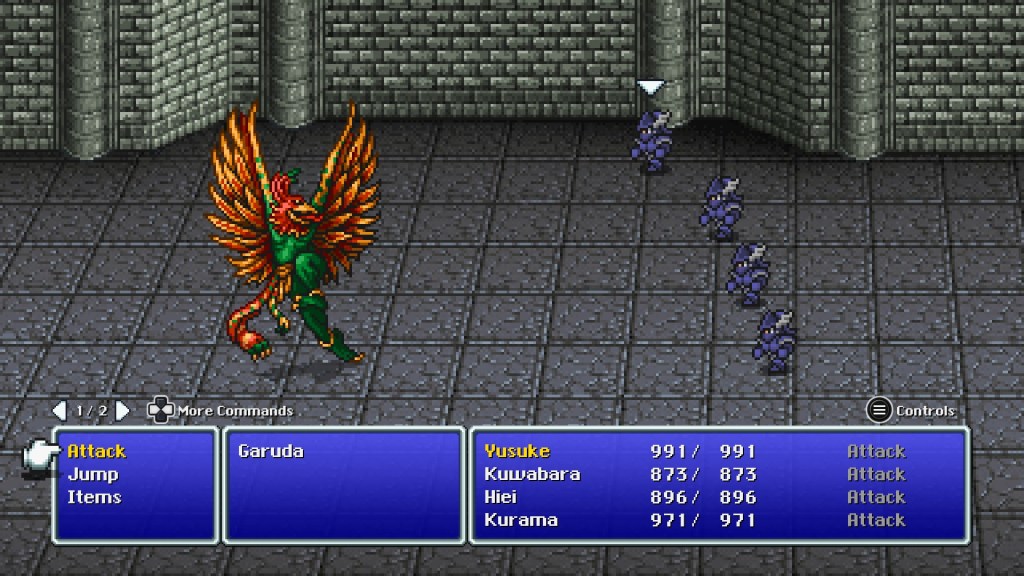
A lot of your strategy in combat now revolves around what jobs you take with you into battle. Given that the Famicom Final Fantasy games are all fairly simple in combat – you’ll often go through long streaks where you do nothing but standard attacks – this slight change of pace feels like a world of strategy has been added to your affairs. There are bosses where your party composition absolutely matters. For instance, you fight a monster named Garuda at some point. The NPCs in the area basically tell you what you need to do. You need a party full of Dragoons. If you don’t enter the fight with that crew, you’re probably not going to win. It’s not a huge, game-changing amount of thought you need to put into battles, but what’s there is noticeable.
A kinder world
The Pixel Remasters change to make game mechanics kinder fits in a little bit with how Final Fantasy III feels in general. Final Fantasy II was a mean game that often felt like it was punishing the player when they tried to engage with it. I never got that feeling while playing III. The massive dungeons of II are mostly, heavy emphasis on mostly, gone. The several empty rooms you encountered in Final Fantasy II have vanished. In fact, if you go off the beaten path at all, odds are you will find a horde of treasure chests waiting for you. You’re also gated out of things by the world map – if you remember, I veered a little too far left at the beginning of Final Fantasy II and got my ass handed to me. In this, I don’t even know if it’s possible to wander into an area you’re too weak to be in.
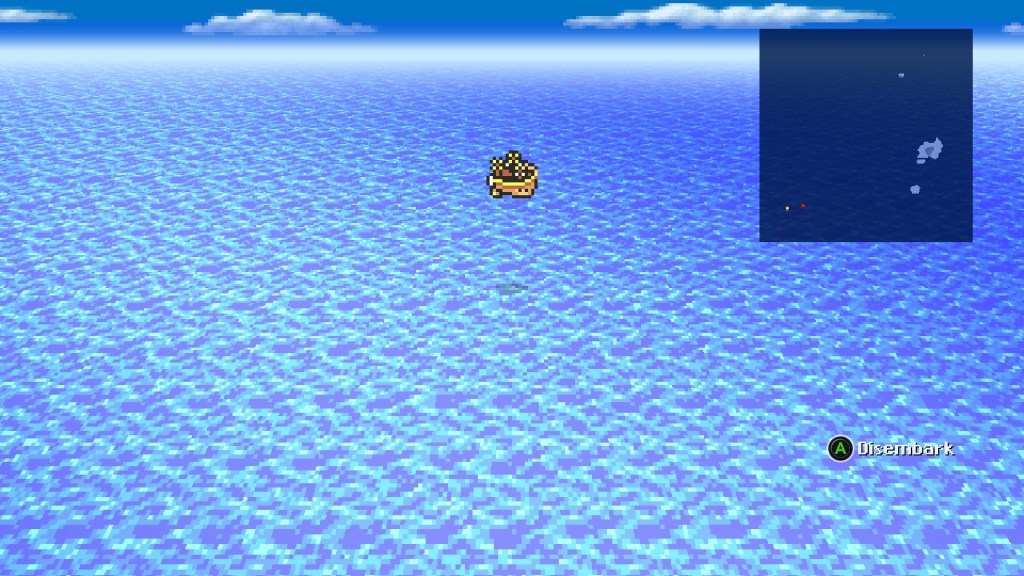
Instead of using WRPG-style “strong enemies gatekeep this area” tactics like II uses, III uses world map obstacles to bar your progress and kind of tell you where to go without actually telling you where to go. For instance, you receive an airship absurdly early in the game. This is probably the most useless airship of all time. It cannot go over mountains and you can’t evade combat while in it. It’s just a means to travel a little faster and get over a couple bodies of water. The one path out of the mountainy area you’re in is blocked by a giant boulder. So this communicates to the player that wherever you need to go is in this immediate area and that the long term goal is removing that boulder and finding a way to move further. It’s linearity without feeling like linearity and can help even people who don’t talk to a ton of NPCs figure out where to go through environmental clues.
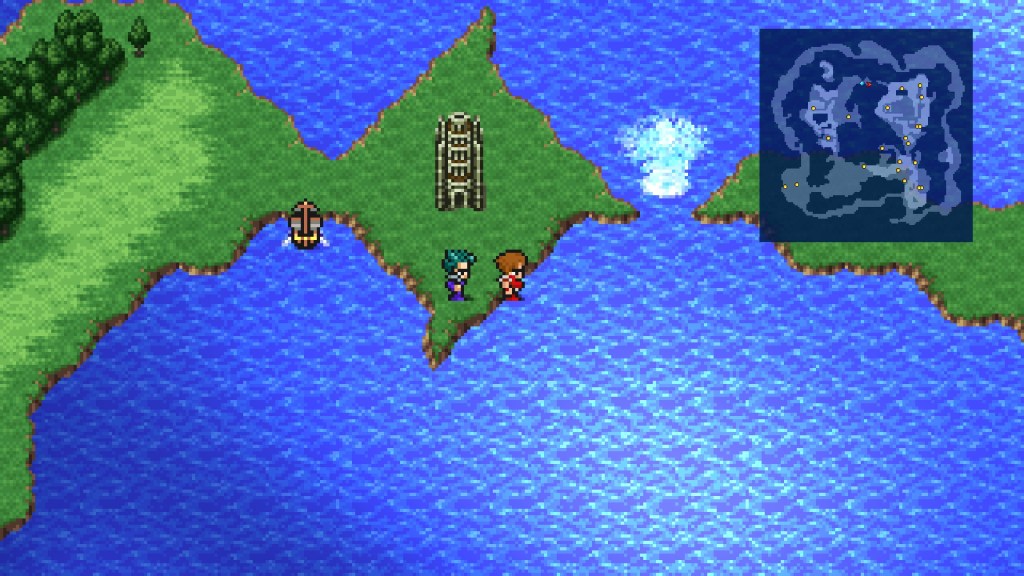
Even compared to Final Fantasy I, they make your life a little easier. As I mentioned earlier, the magic charge system is back but conserving your magic very rarely comes into play. I found that the game gave me plenty of charges in each level of magic, to the point where the only time I found myself thinking about how much magic I was using came at the very end of the game. Otherwise I was just casting freely. I’m sure it feels a little more restrictive in the Famicom version, but in the Pixel Remaster, my mages actually felt like mages for the first time. It wasn’t 99% using a knife while the other 1% of the time was spent casting Fir3 or Nuke.
Not only do they make life easier by making it less of a task to find your bearings, they also add a couple of things to make exploration feel unique and interesting. For the first time in the series you can cast spells on yourself in order to access new areas. Early in the game you have to find a way to get into a village of gnomes. In other fantasy settings, gnomes are already pretty short but in Final Fantasy III they are microscopic. The player needs to cast mini on the party in order to access the village. You even need to go through little mini dungeons. Yeah, your physical attacks are useless in this state, but it’s a clever little trick that adds some variety to your adventures and encourages you to use the job system to switch out of all your physical professions. At certain points you even need to turn your party into toads in order to get around! Hey, it’s a nice way to get people to use spells they probably would never otherwise use. I mean, who uses status effect magic in non Shin Megami Tensei titles?

Trials and tribulations
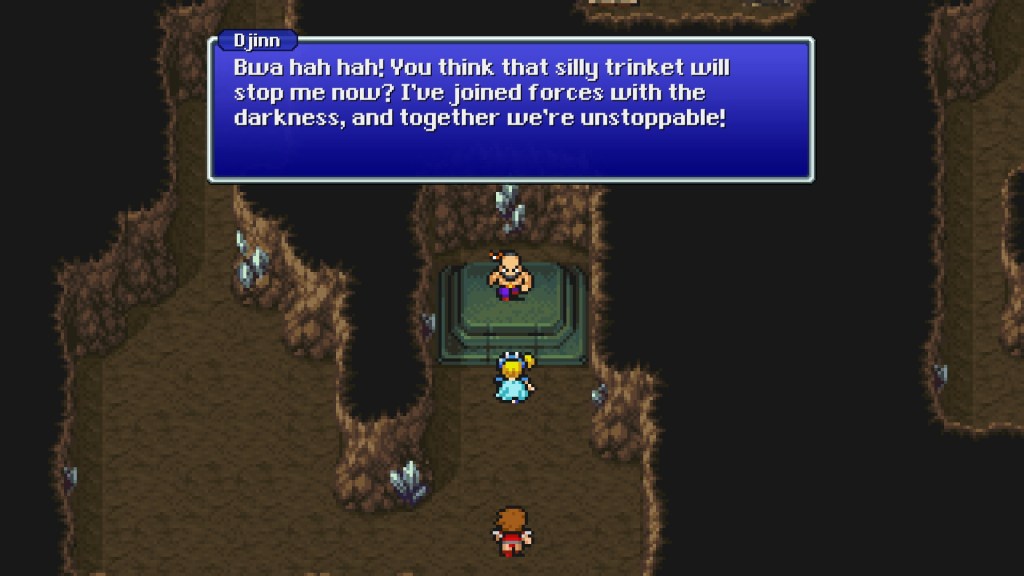
Despite being less mean than Final Fantasy II, I didn’t really find FF III to be any easier than the other two Famicom titles. I found the boss fights required a lot more thinking about each maneuver. In Final Fantasy I and II, most things went down by simply jamming on the attack button but in Final Fantasy III I found myself thinking about individual turns a lot more than I had in the past. For instance, Djinn, one of the first bosses in the game, caused me some havoc and downed a couple of party members relatively quickly. I won the fight, but I briefly got flashbacks to my first time playing FF1 and getting my ass kicked by Garland.
You might remember how I said the super long dungeons of Final Fantasy II were MOSTLY gone. Most every labyrinth in the game takes maybe 20 minutes to complete. They are short and don’t have many winding paths. If you use the in-game maps, it is pretty impossible to get turned around. They save the dungeon slog for the very end, where they deliver one of the most brutally long and difficult final dungeons I can remember.
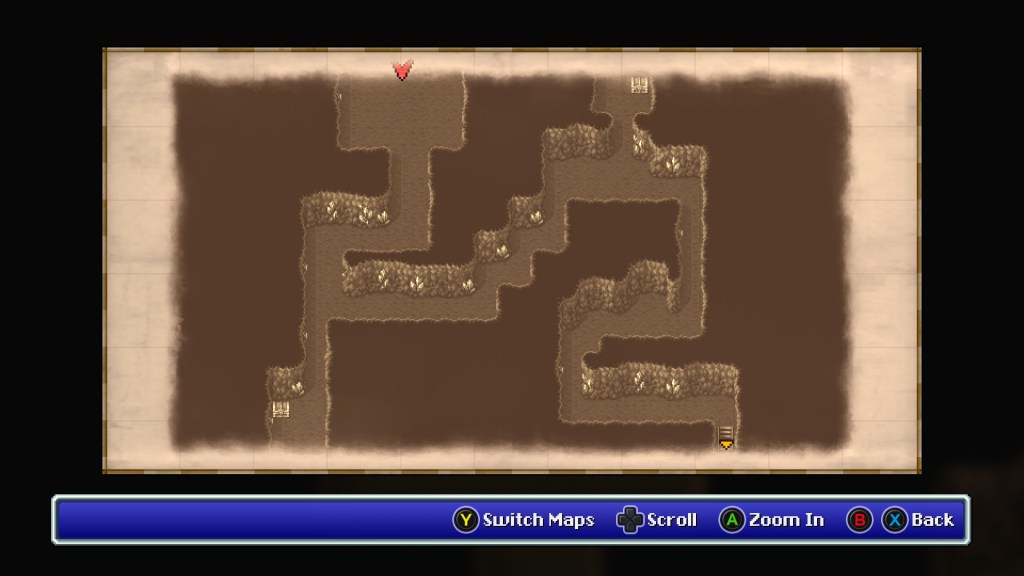
First, the final dungeon is split in two. You have the actual final dungeon, which is called the Crystal Tower and then a bonus final dungeon that contains the best weapons and jobs in the game, Eureka. Eureka is an optional area but it might as well be mandatory. If you don’t go through Eureka, you don’t get access to great spells like flare or strong equipment like the Excalibur and Masamune. And good fucking luck in Crystal Tower without the Ninja and Sage jobs. Still, my complaining is less about Eureka, which to me feels like a really solid bonus dungeon that would be worth doing even if it didn’t feel mandatory. It’s full of really fun and challenging boss fights and when you’re done, you can just teleport out and be at the base of the crystal tower again. But healed up! Unless I just missed them, there aren’t tents in this game, so getting a chance to restore your magic charges and health for free before the final dungeon is very much appreciated.
Okay. So you’ve stormed through Eureka and got your end-game equipment. You’re probably feeling confident with your Ninja and Sage fucking up everything around you. Well, you’re not prepared for anything. The march to Xande is exceptionally long and perilous, but not something that’s unreasonable. If you’ve made it this far, you’ll be fine. But as soon as you defeat Xande and save the world is when the fuckery begins. For fans of Final Fantasy IX who were baffled by Necron jumping in and replacing Kuja as the final boss, that little series tradition actually starts here. After you defeat Xande, a new enemy called the Cloud of Darkness pops up and claims responsibility for everything. They were manipulating Xande. Jerk!

From here, the dungeon continues. You need to go through several more rooms with very hard end-game enemies and also defeat four additional bosses. These bosses are all harder than anything you’ve fought so far and can easily lead to a game over. After that’s over, you get to tangle with the Cloud of Darkness who is without a doubt the hardest boss in the game. She has an absurd amount of health and constantly slams the party with attacks that hurt everyone for over 1000 HP each. She HAS other attacks, but for me all she did was spam an attack called particle beam over and over again. And I lost a lot. I think I had to try this fight about eight times before I finally won, and when I did it didn’t feel like I actually did so by skill. Just like with Chaos from FF1. But hey, at the end of the day, I won.
The job system also sadly falls apart here. Since this game includes two ‘ultimate’ jobs, the ideal party for the final boss for most players involves making your physical specialists into Ninjas and your magic specialists into Sages. So that customization you had going throughout the entire game just vanishes because most players don’t have the skill or patience to bring a party led by a Thief or something through the final fight of the game. I am a stubborn asshole though and left one of my units as a Dragoon for the final area. Dragoons are cool, what do you want from me?
Now my complaints here aren’t about it being hard. Being met with a game over isn’t a big deal for me. I mean, isn’t that part of what makes Dark Souls so good? You suffer and suffer but when you come out on top by mastering a perilous fight, it feels fantastic. What makes the Crystal Tower suck isn’t even related to my playthrough of the game, but is instead related to the original version. This dungeon I think took me an hour and a half or two hours to trek through. It’s long and brutal and feels like a proper final voyage. In the Pixel Remaster, you are able to quick save before boss battles. So if any of the four fearsome fiends takes you down, it’s okay, you can try again. In the Famicom version, you can’t. It’s a two hour trek through the dungeon without any save points and if you die, too fucking bad, you gotta start over.
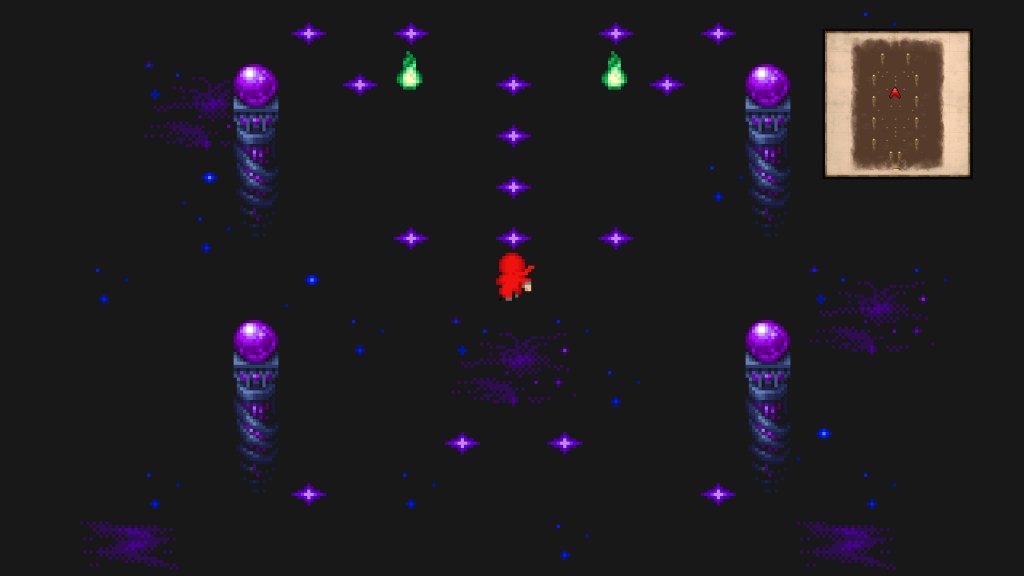
Given how the rest of the game is structured, this gauntlet is so cruel that I imagine it would prevent a vast majority of people from actually clearing the game. Like if you made it all the way to the Cloud of Darkness and died, that’s just two hours gone. You gotta run up again. I think if this happened to me I would just grind and grind and grind and grind until I was so absurdly powerful that the final boss didn’t mean anything to me anymore. It just feels like a time waster in a game that had been surprisingly kind to the player’s time to that point.
That’s really my only complaint about how FF III plays. It easily has the most gameplay depth out of the Famicom games, the world is a joy to explore, the music is once again brilliant and I just feel like this game has a sense of whimsy that’s hard to articulate. If I were to recommend one Final Fantasy from this era to play, it would be III without a second thought.
The heroes of light and their jobs
So in past entries, this is where I would talk about the major characters. I’m still going to do that, but I’m putting the characters in their own little section and sticking the main four and their jobs here. The job system is easily the most important thing about this game and I think it deserves a breakdown of its own. So for starters, let’s talk about my Warriors of Light.

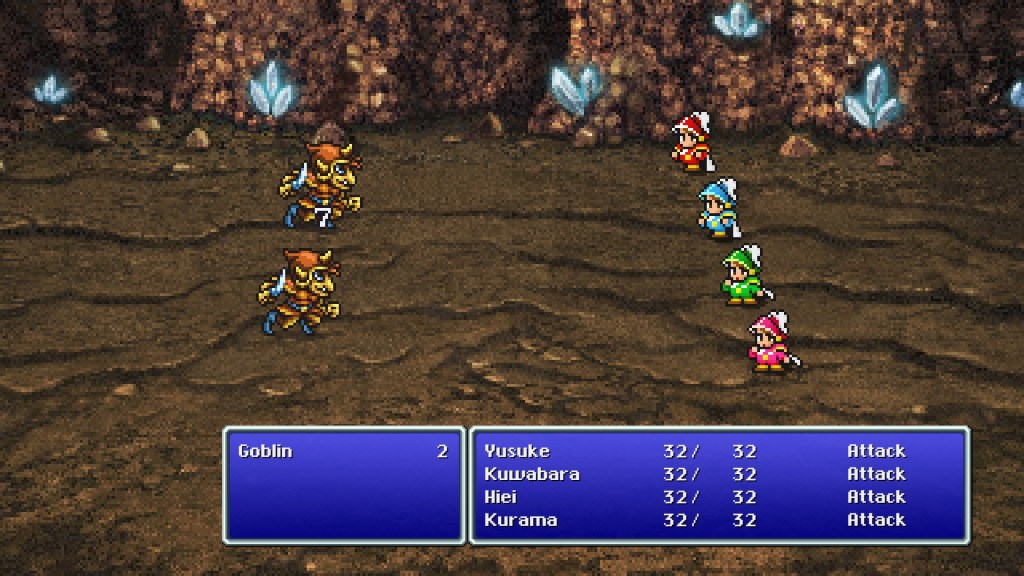
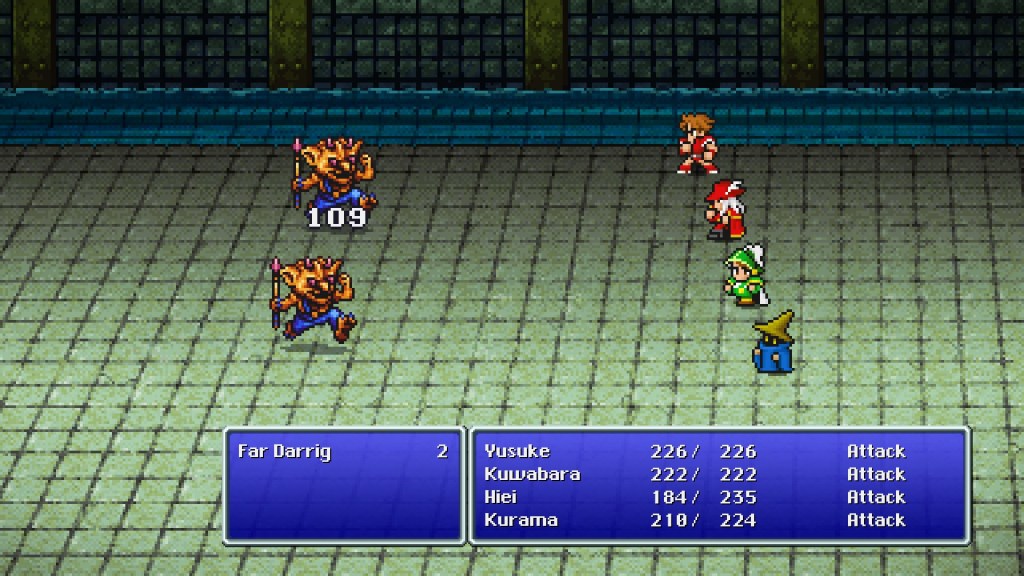
I decided to name my four orphans after the best four person party of all time, the main characters of Yu Yu Hakusho. On the left we have Yusuke who was my lead orphan. He used primarily ‘physical’ jobs and worked as a Thief for most of the game. Kuwabara (top) was my healer and magic user. He briefly became a Summoner, but generally stayed in white magic professions. Kurama (right) was originally my Black Mage but I pivoted away from black magic at some point and had him focus on physical jobs like Black Belt and Viking. Hiei (bottom) became a Dragoon and stayed there. A stubborn man who refuses to change.
Now for the fun. Pixel Remaster Sprites on the left, Famicom sprites on the right. For the first time in the Pixel Remasters, it appears some gameplay changes were made to how the jobs work. So I will try to cover those differences as best I can.

All of your orphans start with this job. It is completely useless for a vast majority of the game. However, if you have patience, once the Onion Knight job hits level 90 it starts to become a power house. When you reach level 99, the Onion Knight achieves 99 in every stat. Of course, this requires your patience in grinding up to job level 99, so to most people this little guy is useless and not used beyond the opening acts of the game. In the DS version, the orphans do not start as Onion Knights. Instead, it is a super secret overpowered job. Given that the Onion Knight being so strong is a bit of a secret in the first place, I’d say that while this is a different approach, it achieves roughly the same thing.
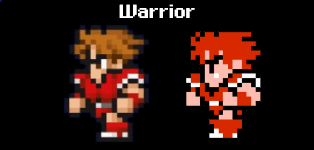
Your basic physical job from the original Final Fantasy returns again and with it, the same (or at least very similar) sprites that were used in that game. This is your first basic physical attacker job and it has no special abilities. It outlives its usefulness as soon as you unlock your second set of jobs.
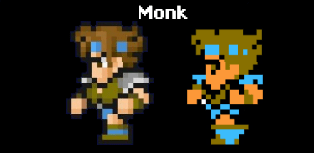
The other ‘physical damage’ job you get at the start of your journey. Just like the Warrior, it doesn’t have any special abilities and gets replaced as soon as you unlock your second set of jobs. They excel in unarmed combat. I like to think of the Monk as being the choice for people who are ‘too cool’ to use warriors.
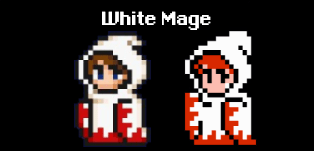
Every party needs a healer and the White Mage returns to provide just that. Just like with the other two starter jobs, the White Mage gets replaced at some point. However, the replacement comes with the third set of jobs you unlock, so you have to deal with this one a little longer than the other two. I feel this choice made magic usage in the early goings of FF III feel really inferior to just using physical characters. Still, better to use cure than a potion, ya know?

The Vivster returns! Absolutely useless here though. I did not find casting very fruitful in this game, so even the superior versions of this job you unlock later didn’t see a lot of use. Still, I had Kurama learn all of the black magic I could just in case I decided to switch back to those jobs at some point. I just never did.
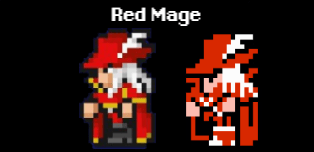
Rounding out your first batch of jobs is the Red Mage who, yep, uses both white and black magic. Just like in FF I, I didn’t feel like the Red Mage had heals good enough to work very well as a primary healer, but during the stretch of the game where I didn’t find the mage jobs particularly useful, the Red Mage’s versatility was appreciated. Still, it’s kind of a bummer that there’s no real reason to use the original crop of jobs once new things start popping up.

We are on to the second group of jobs! After your orphans restore light to the fire crystal, they earn jobs that are a little more varied than the first lot. The Ranger excels in bows and can be used equally as effectively in the front row as he can in the back row. In the Famicom version, apparently the Ranger could use three different levels of white magic. But in the Pixel Remaster and DS versions, the Ranger gets no magic and instead gains access to the barrage skill. This allows you to hit multiple enemies for less damage than a normal attack. Useful in theory, but another job in this grouping does the multiple attack thing better. I like that the GBA sprite for Thief in Final Fantasy I seems to be based off of the Ranger instead of the actual Thief job from FF III.
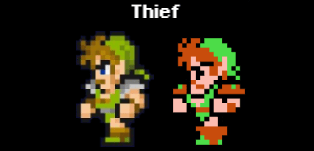
Speaking of thieves, hey, there he is! I love that this little fella has a moustache, it makes him look like a rapscallion. The Thief is a useful guy because if your leader is one, you can unlock doors without needing to use keys. He also gets two unique commands instead of the usual one. The first is obvious: steal. That’s right, the Thief job can finally steal in this game! Unfortunately, most of the items you can steal are totally useless. No golem flutes here. I think I only stole potions and high potions in this playthrough. The Thief can also use ‘scram’ which is just a fancy way of saying flee. This guarantees escape from battle. Very handy, especially in the Famicom version where running away lowers your defense to zero.
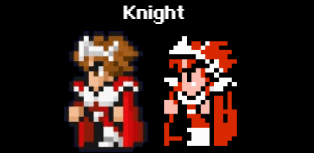
Another returning job from the original Final Fantasy. If you don’t remember, this is the ‘advanced’ version of the Warrior job that Bahamut bestows upon the party. The Knight’s special ability is ‘defend,’ which basically does as it sounds. Apparently if the Knight defends in the Famicom version of the game, they will always receive one damage. I did not use the Knight enough to test this as I made Yusuke a Thief pretty quickly after I got this batch of jobs. The Knight will also take damage for any ally that is in critical condition – think of this as the first version of techniques like ‘cover’ from later entries in the franchise.
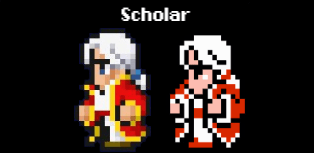
The Scholar is a job that the game directly tells you to use in one boss battle. It’s because the Scholar’s special command is ‘Study,’ which allows him to see the enemy’s remaining HP and weaknesses and the boss is able to change his weaknesses on a whim. White Mages can eventually learn the ability “Libra,” which does exactly what Study does, except on a job that might be useful. In the Pixel Remaster, they give pity to the Scholar by boosting the effectiveness of items you use in combat, but it really isn’t enough. For most players, I would say use the Scholar for that one specific boss battle and then ditch it forever. The Famicom sprite is awesome at least!
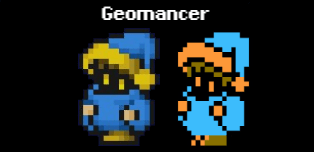
We are on our third set of jobs! You unlock this next batch after you awaken the water crystal and unflood the lower world map. The Geomancer, or as I like to call him, the Black Mage with a little night cap. I consider this to be something of a gimmick job because it’s a magic specialty profession that doesn’t have access to magic charges. He accomplishes this through his special command “Terrain,” which summons a magic spell based on the environment you’re in. I tried using one for a while, making Hiei a Geomancer while he was going through a bit of an identity crisis, but I found the job to be too random to be truly useful. I could see those kids in school that had ferrets or iguanas being really into this job for some reason. No, I won’t elaborate.
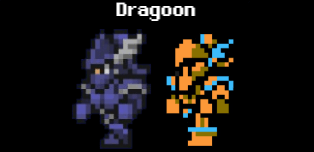
Iconic job, coming through! The Dragoon makes its first true playable appearance here and this job lives up to its ‘elite’ status that later games gives it. I like how the Famicom version uses a golden knight looking palette for the job, but I feel like the black armor of the Pixel Remaster suits the profession’s place in the franchise a little better. The Dragoon’s special ability is jump. Of course. For those of you that don’t know, when the Dragoon’s turn comes up in battle he will jump into the air. He is immune to all attacks while up there. A turn later he will come back down and cause massive damage to whoever he is attacking. This is exceptionally handy because he will often go several turns without being attacked, which can save your party from being wiped out. I had a boss battle or two that was won by a jumping Dragoon.

The Black Mage put on a viking helmet, how cute! In the DS and Pixel Remaster versions of Final Fantasy III, the Viking is something of a traditional tank. He can equip the best equipment in the game and gets access to the provoke command, which draws the aggro of enemy combatants, allowing you to safely traverse Sastasha with your party. Or, uh, the Goldor Manor. In the Famicom version he doesn’t have the provoke ability and can just defend, making him feel like kind of a pointless job since he does not hit hard enough to replace any of the physical professions. In the Pixel Remaster he seems kinda weak to magic damage, so I didn’t get much usage out of his tanking powers. But hey, good attempt.
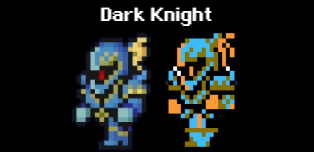
This job is sort of a weird one, I feel like it has different uses depending on the version of the game you’re playing. In the Famicom version, the Dark Knight is something of a Paladin. He can equip all this heavy armor and also use the first three levels of white magic skills. In the DS version, the Dark Knight is more like he is in other entries in the franchise. His special ability there is “Souleater,” which functions like Darkness does in other games. The Dark Knight will sacrifice a portion of his HP to cause big damage to all enemies. In the Pixel Remaster, he gets BladeBlitz, which attacks all enemies but never seemed particularly strong to me. It’s useful for a dungeon called the “Cave of Shadows” where all the enemies multiply when you attack them (think the hydra from the Disney Hercules movie) only because those enemies don’t multiply when they are attacked with a dark blade, which is the Dark Knight’s signature weapon. That’s it though. He doesn’t hit particularly hard or defend particularly well. It seems like they didn’t know what to do with this job, hence how its role changed three times.
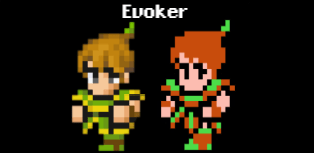
We have the first summoner job of the franchise. There are eight summon spells in the game and that’s what your Evoker has to work with. Unlike in most later entries, summons have multiple abilities. They can either attack the enemy or assist the party. Not being able to choose which version of the summon you use is a major oversight and makes summon magic something you wouldn’t want to overly rely on. In the Famicom version of the game, it seems like there is a 50/50 chance of casting either version of the summon spell but in the Pixel Remaster I found that casting summons in dire situations would often get me the ‘party benefit’ ability instead of the ‘enemy attack’ one. Can’t confirm whether that was a real change or if I’m just lucky. It’s just weird sending Ifrit out there and having him heal the party. You’re not Siren, buddy. Evoker is one of the most useless jobs in the game because there are two other jobs that do exactly what it does but way better. Still, he has the coolest attack pose of any job.

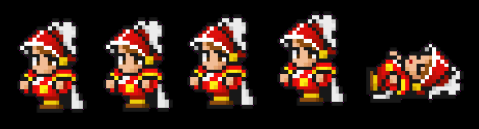
In the name of the moon, I will punish you!
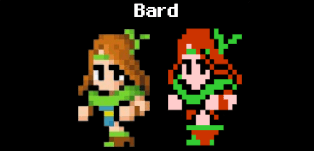
The spoony one shows up. Hooray! The Bard uses harps to attack the enemy and his special ability is sing, which does something different based on what harp you have equipped. An absolute gimmick job that doesn’t accomplish much of anything because the stuff the sing command does is replicated by other jobs far better. Sure, it’s nice to have an MP-free party heal option, but it doesn’t really cure enough to actually help you. In the Famicom version, apparently the Bard can also buff your party members and weaken enemies by lowering their levels. Seems more useful than what I had access to, but I still don’t think I’d ever use an ability that could potentially lessen my EXP gains.
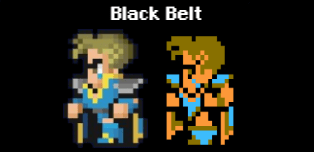
This is probably the single most damaging job you have access to in the game if you play your cards right. The Black Belt specializes in unarmed combat and as your job level increases, so too does his unarmed skills. I basically had a Black Belt in my party until I unlocked the Ninja job. In combat, his main special ability is boost, which amplifies the Black Belt’s attack. This stacks, which I did not know while I was playing. Woulda been nice to know! He also has a second ability in the Pixel Remaster that attacks every enemy. It hits hard too, it can lead to some really quick grinding if you need it. Allegedly it is possible to one hit the final boss with the right set up, but I am not smart enough to figure that out.
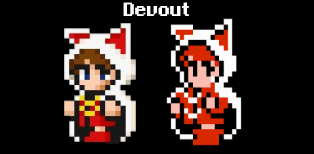
Welcome to our final batch of jobs! Well, minus the two you earn from Eureka anyway. First up is Devout, which is a powered up version of the White Mage job. Think White Wizard from the first game but with a way more adorable outfit. I mean just look at this thing! Devout gets a ludicrous amount of magic charges and I think his heals hit harder than the Sage job you earn in Eureka but I don’t know for sure. During my struggles against the Shadow of Darkness, I made my Sage a Devout instead and that was the attempt that put me over the top. I don’t know if that’s what actually did it or if it was just luck, but I will take it! He has one of my favorite animations in the game!

Daw look, he’s making a little heart with his fingers!

Your powered up Black Mage. The Black Wizard equivalent if you’re gonna use Final Fantasy I terms. Much like the Devout, it’s just a superior version of the original job. The Magus has more magic charges and hits harder. I mentioned earlier that I don’t find black magic particularly useful in this game, so as a result the Magus didn’t see a lot of use. The Sage job you get in Eureka trumps this in most every way unfortunately. Don’t worry Black Mage bros, I hear there are big things in store for us in Final Fantasy IV.
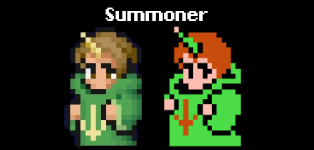
The final job in this batch. The absolute lamest batch of jobs because they are all just powered up versions of other jobs you already had access to. The key difference between the Summoner and Evoker is that when a Summoner calls on a beast, they use an ultimate attack instead of the two different ones Evokers use. Summoners still can only use summon magic, so their versatility is pretty limited. I like that later versions of Summoners at least make them proficient in white magic also. Eiko was the best healer in Final Fantasy IX, so she obliterates the FF III Summoner job.
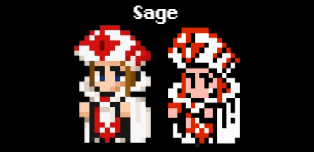
It’s time to talk about the two bonus jobs you earn in Eureka, starting with the fake pope! In the DS version, you actually unlock these final two jobs as part of the last batch with your upgraded magic casters. They nerf them hard there so the player actually has a reason to use other professions instead. Not so in the Pixel Remaster and Famicom versions, where it is hands down the best magic job in the game. The Sage has access to every single kind of magic. It can also use the Summoner’s version of summon magic. I would say this is the equivalent of the Red Wizard from Final Fantasy I, except the Red Wizard couldn’t use level 8 magic whereas the Sage can use fucking everything. I would wager most parties that finish Final Fantasy III probably have a Sage in there somewhere. The Pixel Remaster and 3D versions add a small weakness to the Sage in that they have fewer magic charges than the Devout or Magus, but by the time you’re using a Sage you probably have a horde of elixirs so that doesn’t even matter. Getting these last two jobs is quite an undertaking, so it’s nice that they make them so powerful. However, it’s kinda sad that party variety gets thrown out as soon as they show up.
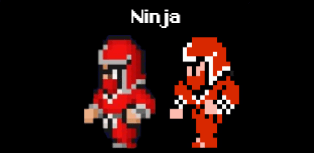
Last one! Oh thank God. The Ninja does what the Sage does but for physical users. What I mean by that is they can equip every single bit of equipment in the game, minus the Onion Knight exclusive gear. They hit really hard and can throw shurikens. The shurikens you receive in later entries into the franchise aren’t known to hit THAT hard, but the ones you get here pack a real wallop. You can hit harder with a shuriken than you can with any weapon in the game. By the time I fought Cloud of Darkness, I had six shurikens and they were able to chop away over half of the boss’s health. I didn’t grind with the Ninja at all though and I have heard tale of high level Ninjas causing beyond 9,999 damage with a throw. These guys will most likely replace your physical attack jobs as soon as you get them, unless you are stubborn like I am and demand a Dragoon so your party still has some uniqueness to it.
Notable Characters
Cid

Cid is back! He’s a little gnome looking guy this time. You meet him early in your quest in the town of Kazus, which is under a curse from a bad creature named Djinn. The curse makes everybody in the town invisible. Very spooky.

As is tradition, Cid is your airship man and hooks your party up with a vehicle extremely early on in the game. It would later blow up as you attempt to destroy a boulder. Cid eventually reveals to the party that he had attempted to save a bunch of people from the lower world, but the airship he was using crashed and the only survivors were the four orphans and himself. Cid also has a wife who the game names Mrs. Cid. I thought that was cute. His last name is apparently “Haze” but I don’t remember that being brought up anywhere in the game.
Princess Sara
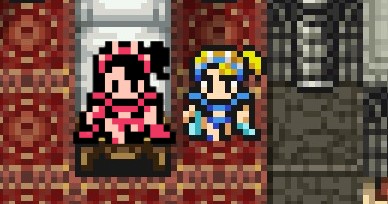
Sara is the princess of Sasune, a kingdom that is on the floating continent. She shows up early in the game as part of the quest to defeat Djinn and has a mythril ring that can help take care of him and help save the town of Kazus. She has a strong interest in whoever your lead character is, in my case it was Yusuke. As far as I can tell, she has no real character beyond that.

It’s funny how we get another princess with the name “Sara” in this franchise. Granted, she ditches the h the one in Final Fantasy I and Garnett have, but it’s still interesting that this seems to be a name they like to affix to royalty. In a parallel dimension, maybe Princess Sara/Sarah is a recurring character like Cid, or Biggs or Wedge.
Desch

Desch is an Ancient who has forgotten his memory. In Final Fantasy III, Ancients were responsible for causing the flood of light that threw off the balance of the world and exiled themselves out of shame. Desch’s father, Owen, made the tower of Owen in order to keep the floating continent afloat. Desch is the guardian of said tower but he has amnesia and doesn’t remember his purpose, so he just wanders around the world hitting on women and buying up the spell ‘mini’ so your party doesn’t have as easy access to it.
He eventually remembers that purpose as the party journeys through the Tower of Owen. He then throws himself into a furnace in the tower to help keep it afloat, apparently killing him and contributing to our first onscreen suicide in the franchise! …Alas, he doesn’t actually die as he comes back at the end of the game, but it was still a noble act. I feel like if they made a modern version of Final Fantasy III, Desch would be the breakout hit. He just seems like that kinda guy. I don’t love his red jammies that he wears in the Famicom version.
Aria

I forgot to capture her in-game, so apologies for the generic black background I used here that makes her look like a job instead of a character. There is no Aria job, I swear!
Aria is the first major character that the party meets on the lower world. It’s a flooded mess when the player first arrives, with only a couple of locations that they can visit. Her job is basically to guide the party to the water crystal. This unfloods the world and sets way for the rest of the game. No, nobody remembers being in stone and nobody questions why everything in the world is a little moist now. This isn’t without sacrifice though. Just like Desch, she sacrifices herself for the greater good. In this case, it was to save your party from an attack from the water crystal’s guardian, kraken. Unlike with Desch, she actually dies. This is one of three main character deaths in the game, which is a big step down from the blood and gore we saw in Final Fantasy II.
Prince Alus
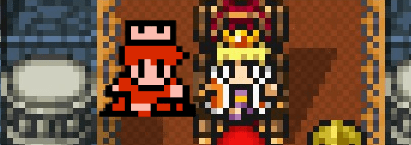
When your party gets to explore the lower continent more in depth, they come across the kingdom of Saronia. They get shot down while flying near the area and discover there’s some sort of civil war going on. Turns out the king there had commanded his forces to fight each other!

See?
The son of this no good king, Alus, was cast out from the kingdom by his father who he notes is acting strangely. The orphans team with Alus to take back the kingdom. While there, they discover that the king’s adviser Gigametz is actually the one pulling the strings. Gigametz had corrupted the king! The king, ordered to deal with his son, elects to stab himself instead of killing his own flesh and blood. This makes Alus the new king! …Well once you deal with Gigametz who is actually just a monster named Garuda.
The bits in Saronia are probably my favorite parts of the game. What can I say, I’m a sucker for a prince reclaiming his lost kingdom.
Fake Warriors of Light
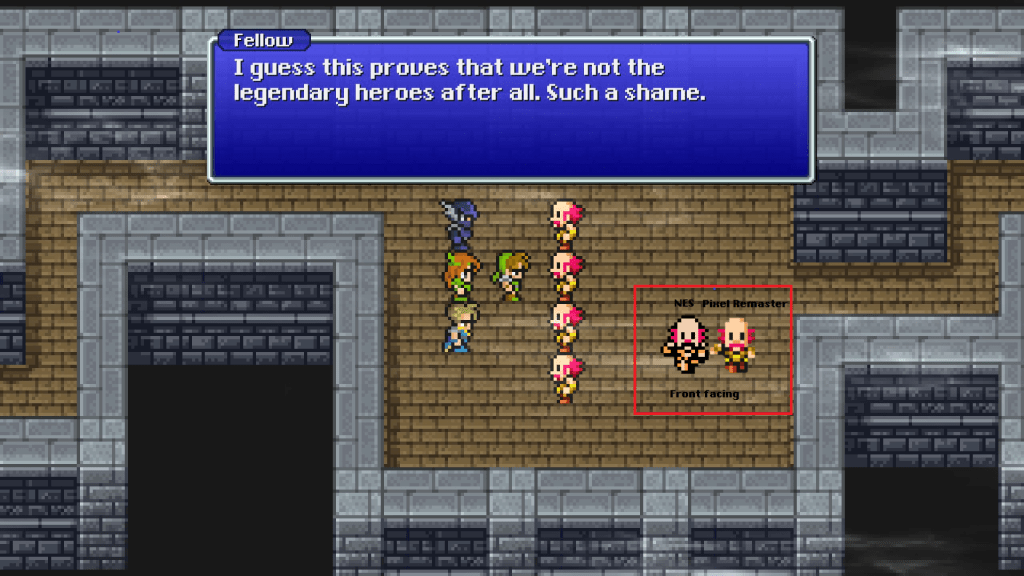
I’m sure you can’t read my writing there because I wasn’t thinking when I made this image, but in the boxed off area you have the front facing sprites for these characters. Left is Famicom and right is Pixel Remaster.
This group of four weird old guys believe they are the true Warriors of Light for some reason and try to rush ahead of the party in the lower world in order to save the day before the party can. They are portrayed as goofballs and in a bit of gameplay feeding into storytelling, they are trapped and put in mortal danger by a group of goblins. Goblins, to this point at least, are always an early enemy game that don’t offer much resistance to you. So in this way, the game communicates that these fellas are total jokes. You’d think these would just be one-off joke characters, but they make a comeback late game.
Doga and Unei
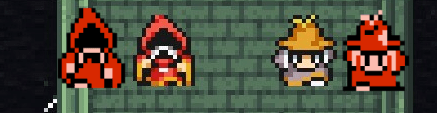
You might remember when I talked about Xande way up there that I mentioned he was just one of three disciples of a man named Noah. These are the other two! Doga (left) gets power over all things magic and Unei gets power over all things in the dream world. A lot better of a deal than ‘mortality’ I must say, no wonder Xande freaked out and tried to flood the world with darkness.
Their purpose in the game is to guide the player to the Crystal Tower dungeon and Eureka. It is revealed that the only way get access to those places is via a key that can only be made through their demise. The party is reluctant to kill these two because they offer a lot of help to them in the lower world, but they attack the group and leave them no choice. Your party kills them, making the Warriors of Light official major character body count two while Xande’s evil forces only have Aria and a bunch of nameless people. Good wins again baby!
Despite the handicap of being dead, Doga and Unei come back in the final dungeon. Before dealing with the dark crystals and Cloud of Darkness at the end of the game, the Warriors of Light are ensared in a trap called the curse of the five wyrms.
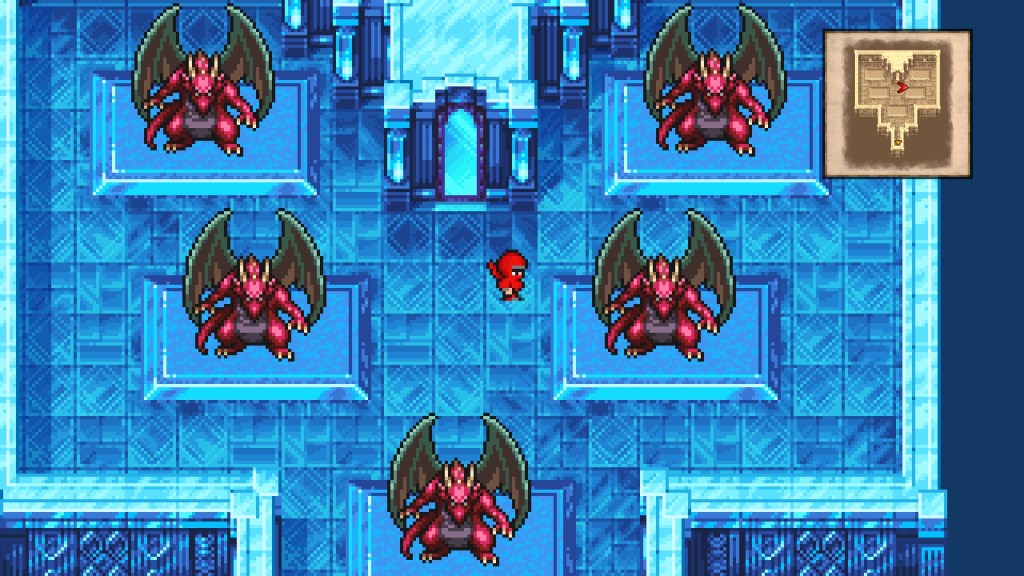
The only solution to this is to bring five souls of light to combat the five wyrms, so Doga and Unei gather them. They bring Cid, Princess Sara, Desch, Prince Alus and one of the fake Warriors of Light along for the ride. Yes, one of the joke characters gets a chance to shine at the every end! Hell yeah!
My favorite random enemy, Bugbear

This is apparently a recurring enemy in the franchise, but he doesn’t make a return until Final Fantasy XI. You know, the MMO where they had to scrub the entire franchise for enemies to use. Anyway, I love this guy. It looks like he’s reacting to somebody flashing him. “NOOOOOO I DON’T LIKE THIS AT ALLLLLLLL”
Xande

Just like above, if you can’t read the text in the boxed off area, those are Xande’s overworld sprites. On the left is the Famicom version and on the right is the Pixel Remaster version.
As previously mentioned, Xande is the major antagonist for most of the game. He does not seem to have his paws in everything that’s going wrong with the world like the emperor does in Final Fantasy II, but he very clearly wants to bake the world in darkness and force them to deal with mortality much like he has to. When you face off with this guy, it’s presented kind of like a final boss battle and it is a little tricky, but definitely not even close with what’s to come. There’s not much to Xande’s personality outside of being an evil guy angry with the hand he got dealt in life, so him being the original victim of a Necron-style hijacking feels okay. It’s not like he was a super interesting character the party needed to deal with in order to feel some closure, he was just an evil guy. I’m sure I will have much more to say about Necron and his hijacking of Kuja at a later date.
The New Four Fiends
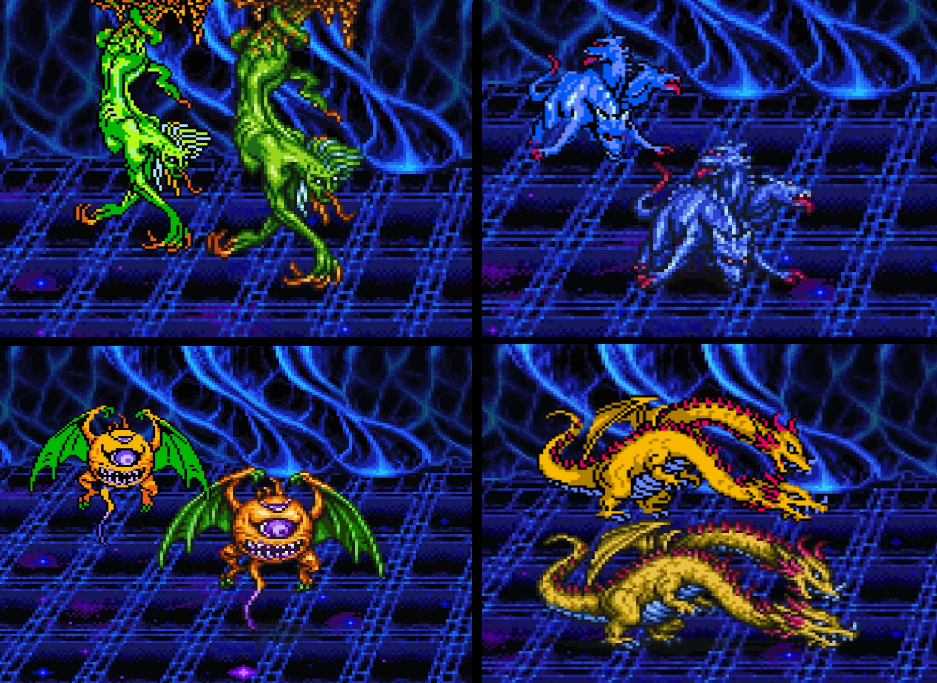
Top left: Echidna. Top right: Cerberus. Bottom left: Ahriman. Bottom right: Two-headed Dragon.
After the Cloud of Darkness comes to tell the party that their journey has much more to go, it’s revealed that you need to restore the four crystals of darkness in order to bring balance back to the world and deal with the new threat. Remember, a big theme of this game is that there needs to be a balance between the light and the dark, so it makes sense that there’d be four crystals of darkness in order to balance out the four crystals you deal with in the overworld. These are all found in the final dungeon and just like the normal crystals you see in the overworld, these have guardians too. They also happen to be some of the hardest bosses in the game.
The only one that didn’t provide much of a challenge, in this playthrough at least, was the two-headed dragon. All he did was physically attack someone in my party and as long as I healed up every turn there was really no threat of defeat. Compare this to Ahriman who starts your fight with him by casting meteor and will occasionally whip it back out for funsies. I can only imagine the sense of dread Famicom players felt when facing down with that eyeball after not saving for over an hour. They see the text that says meteor is coming and probably felt a sense of dread. Quite a difference! Poor little two-headed dragon.
Cloud of Darkness
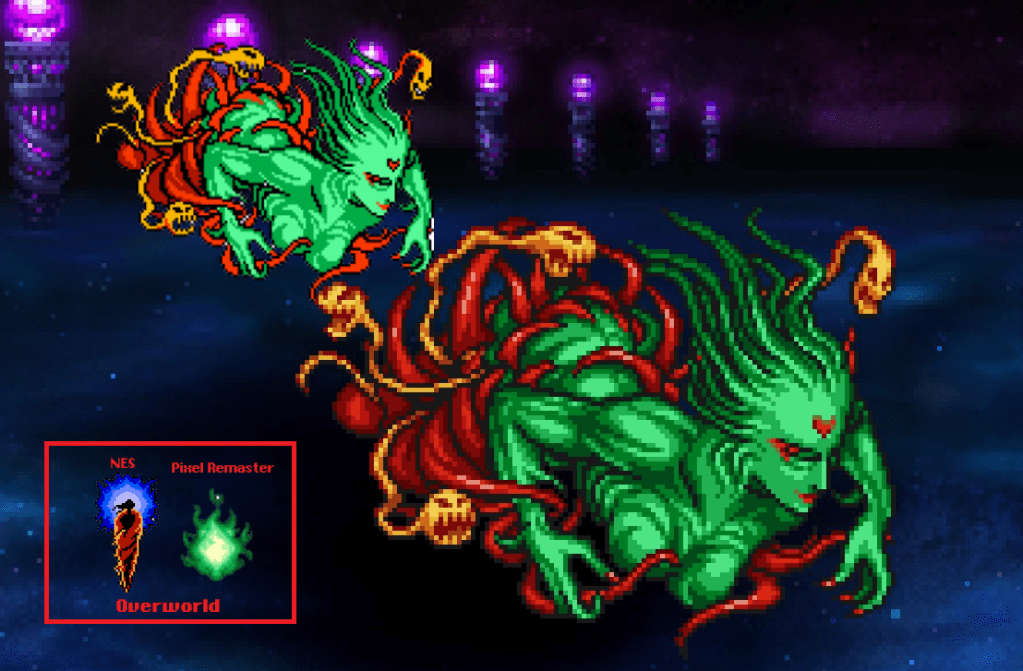
I vastly prefer the Famicom’s sprite for Cloud of Darkness in the overworld. It kinda resembles the final boss version whereas the Pixel Remaster takes the cloud thing literally and makes it look a little like a green puff of smoke.
Here she is, the final boss of the game and the true reason why darkness is threatening to overtake the world and throw everything out of balance. She really has no character and just represents the true ending to your journey. As I mentioned above, this is definitely the hardest boss of the franchise to this point. She is cheap, has a ton of health and comes at a time when your resources are probably at their lowest. I’m sure veterans of III will laugh at my struggles, but to a normal party I feel Cloud of Darkness feels much more like a super boss than a final boss. Which is great in some ways because isn’t it weird that super bosses are always stronger than the big canon threat that comes at the end of your journey? I’m sure if you die to it once and don’t have quicksaves, a party would overprepare to take it down. Nothing focuses you quite like losing two hours of progress.
My first exposure to this villain was in Dissidia for the PSP, where she looks like this.
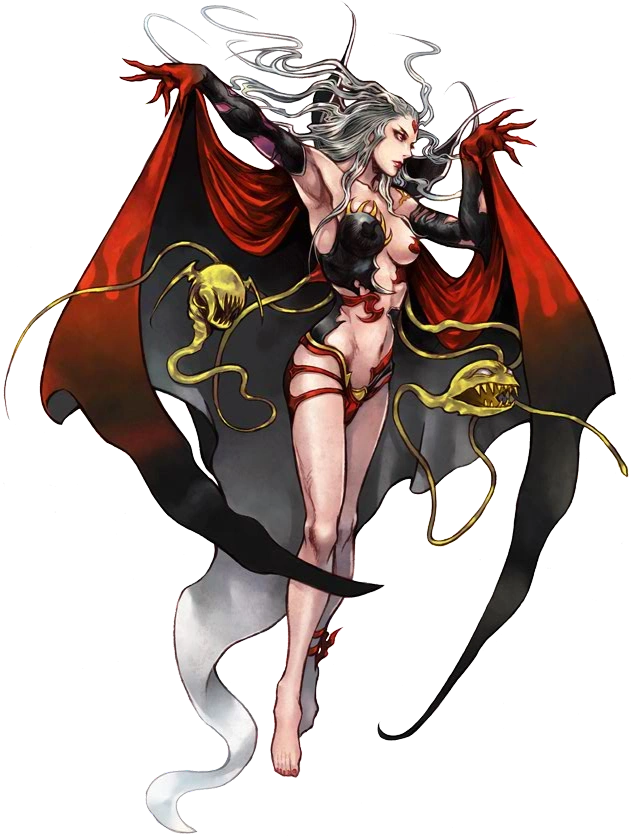
What the heck, why aren’t you green!? Next you’re gonna tell me they arbitrarily turned someone blonde.
It started here
The job system, multiple overworlds, Necron
All mentioned above so I’ll only talk about these briefly here. The job system would go on to become one of the core elements of the franchise, playing a particularly important role in Final Fantasy V, Tactics and the two MMOs. Multiple overworlds, and by this I mean the floating continent and the world below it, aren’t used THAT much in the franchise but it’s always very memorable when they pop up. The most prominent example of this is in Final Fantasy VI. Necron is, well you know, he hijacks the end of the game. It doesn’t happen very often and this is mostly just me wanting to mention this jackass one more time.
Moogles
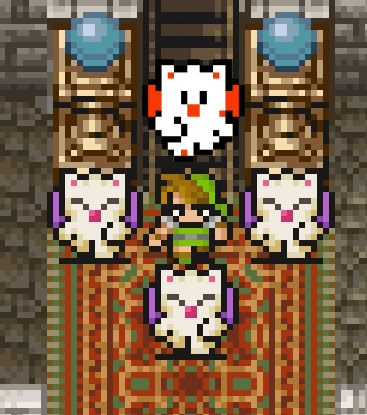
The one on top is the Famicom sprite, obviously. The second game in a row to introduce us to a mascot character! Here they play the role of Doga’s friends and they just hang out in Doga’s mansion. They don’t do anything remarkable, just sell you stuff and let you recover your HP and MP by drinking out of some sort of suspicious jug. But they would make an impression and become one of the main mascots for the series. They don’t appear as frequently as chocobos do, but it’s always a treat when they show up. Kupo!
Fat chocobo

The Chocobo Forest returns from Final Fantasy II but this time it feels like much more than an easter egg. The world map is full of these things and if you put a gyashl green (also making its debut here, named after the town of Gyashl in-game) in the middle of the forest, the fat chocobo will plop down. It acts as an item storage service. In the Pixel Remaster at least, you don’t really have a limit on the number of items you can have so I don’t understand the purpose of this thing, but it’s nice that he shows up. Maybe it’s so you don’t accidentally sell items you may want? Maybe it’s a way to stock up on hi-potions without having to settle for only 99? Well, whatever the case, I never used him.
Airship interiors
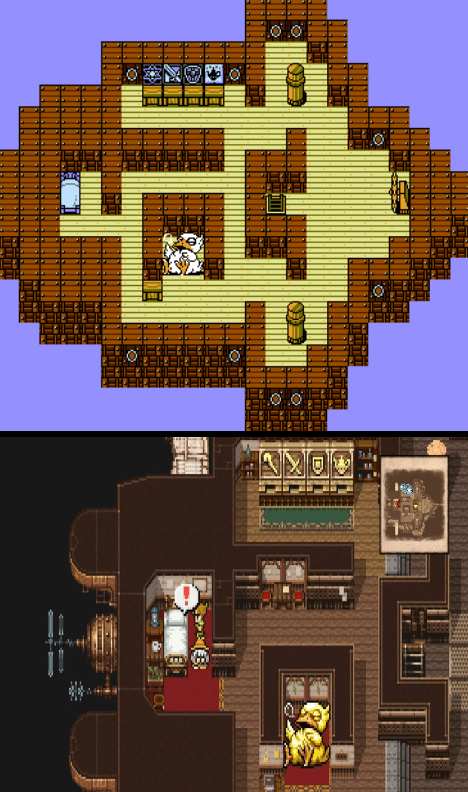
Here is the first time you really get to go inside your airship and poke around. While this may not seem like a big deal, in later titles the airship acts as a hideout for your characters. This is often where you can switch party members or catch a free heal instead of using a tent or hitting up an inn. In Final Fantasy III, the airship interior has shops that contain solid weapons, armor and magics. It took me FOREVER to find weapons that the Dark Knight could use in game, so the airship weapon shop was the first place I really had them in an easy to access place. As you can also see, the fat chocobo is there. And a bed! For reference, the airship you can go inside of is called “The Invincible.”
Familiar faces
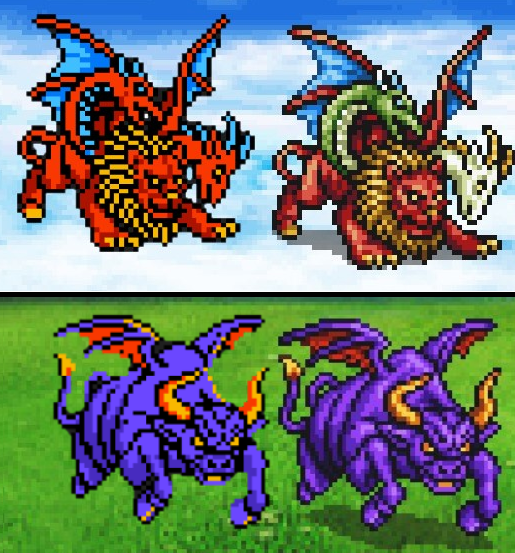
Top: Chimera. Bottom: Catoblepas. The Chimera actually doesn’t make its first appearance here, that was in the original Final Fantasy. However I did not highlight it in that roundup and I didn’t personally encounter a whole lot of “series staple” enemies in this playthrough so I felt I would use this time to point out the chimera! Catoblepas actually did debut here, though he also appears in the GBA remakes of the first two titles. I feel like they can never figure out what they want catoblepas to actually be, so he always looks kinda different. His core tenets are his horns, every single catoblepas has wings. In this game, he’s a bull with wings! Perhaps Red Bull should pay Square some royalties? In Final Fantasy X, he’s a palette swap of the behemoth. In FFXII he, uh, is an orc.
Summons
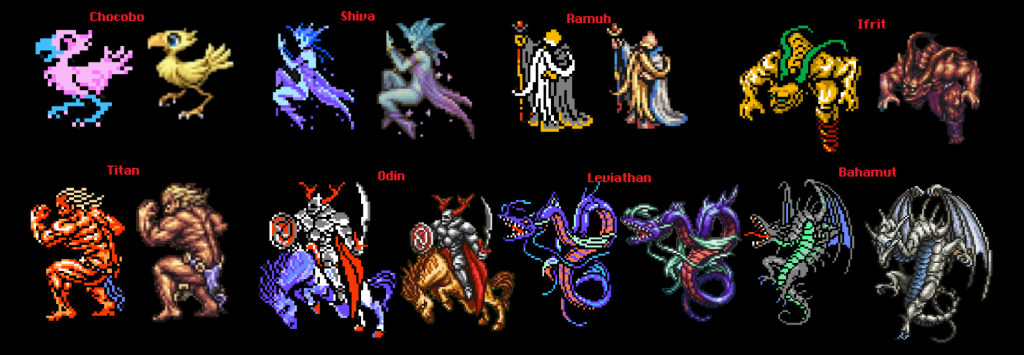
One of the most recognizable elements of the franchise started here. This would become a real calling card for the series during the Playstation era when the summon spells were considered graphical showcases. It might be seen as laughable NOW, but back in the day the summon scenes in Final Fantasy VIII totally blew my mind. They were the best graphics I had ever seen, I could not comprehend something ever surpassing that. They get a nice and simple start here. On the Famicom, each summon gets three different colors which are based on their three different moves. The attack variant, the support variant and the ultimate attack. I didn’t notice any color differences in the Pixel Remaster but there is also a chance that I’m just blind. The coolest one here is Leviathan. He looks like a jackass.
Side quests
This is probably something of a contentious take, considering the job advancement that took place in Final Fantasy I is technically optional, but this is the game where I feel like optional content really took off. There are several optional dungeons you can trek through that have some really solid rewards. Odin, Leviathan and Bahamut can be acquired well before they are found in magic shops by finding them in the overworld and beating them. Eureka is one gigantic optional dungeon at the end of the game. I feel like if you skip doing a lot of the things you don’t actually have to do, you’re robbing yourself of a good experience. Most of my favorite boss battles in this game are through side quests.
Auto-Attack
This doesn’t apply to the Pixel Remaster version of the game, but I do feel like it’s worth mentioning. In the first two Famicom Final Fantasy titles, if you were targeting a group of enemies and one of the enemies a character was targeting died before that character would attack, they would just swing at thin air. It made selecting who you want your party to attack very important. Auto Attack is introduced in the Famicom version of III. Now, when an enemy you’re targeting dies before you can attack, your character will simply target a different enemy instead of wasting their time. A really big time saver and I am grateful the Pixel Remasters just added those into Final Fantasy I and I.
In conclusion
Final Fantasy III might feel like a more iterative sequel than Final Fantasy II, but that isn’t a bad thing here. FF III takes ideas from the original and expounds on them. In doing so, SquareSoft created one of the most important systems in the franchise. A version of the job system is seen in several games in the franchise and while the implementation of it here is slightly basic, it’s a really solid start. This is definitely the most well rounded of the Famicom trio and it’s a damn shame that it took 30-something years for English speaking countries to receive an official version of the 2D game in English. For fans of the franchise, this is an absolute must-play.
My score: 4/5
Up next

Final Fantasy IV: Fly Me To The Moon…
Previous: Final Fantasy II: Ambitious to a Fault
 Vidya Thoughts
Leave a comment