
A trying time for sequels
Final Fantasy II was unleashed into the world on December 17, 1988. The original Final Fantasy title turned out to be a hit, with 520,000 copies shipped in Japan. Hironobu Sakaguchi, the ‘father’ of Final Fantasy that I mentioned in the last article, pushed for a large number of carts to be developed so a sequel could potentially be on the table. Luckily for him, those copies did not rot on the shelf and SquareSoft elected to move on to make a sequel to what would become their flagship franchise.
Video game sequels were tough to figure out at the time, and quite frankly they still are. How do you even follow up on a major hit? Do you stay close to the original vision or do something completely different? Nintendo had a mega hit on their hands with Super Mario Brothers and released Super Mario Brothers 2 in 1986. The game looked and played basically the same but was exponentially harder than the original release. It was so infamously mediocre that Nintendo of America elected not to release the title in North America at all – instead they altered a game called Doki Doki Panic and released it as Mario 2 for the United States. You will not find many people who will claim either version of Mario 2 as their favorite game of all time.
On the other side of the Nintendo spectrum was Zelda 2, also released in 1988. That game took the top-down Zelda formula and turned it more into a side-scrolling adventure game. There were still puzzles to solve and secrets to find but it just looked and felt like something else entirely. Zelda 1 is a fairly universally beloved game, so much so that it often tops best games of all time lists even to this day. Zelda 2? Not so much. That said, while most normal people don’t think much of Zelda 2, notable developers like the people who made Hollow Knight cite it as one of their favorite games ever and note it as an inspiration for their games. Something to keep in mind when thinking of that game’s legacy.
And who could forget Castlevania 2: Simon’s Quest (1987)? It added RPG elements and was non-linear – a big departure from a game where the player generally just walks in a straight line to their destination. The clues they receive in order to progress are also quite vague and hard to figure out. As someone who has only played the game well after release, I picked it up, said “oh that’s why people hate this” and put put it back down. I also believe it has officially been labeled a shitty game that sucks ass.
The original Final Fantasy was released in 1990 in North America and found some success, so work had begun to go into Final Fantasy II – there are English prototype roms out there to prove it. However, note that release date: 1990. The Super Nintendo would release in North America in 1991. In Japan, Final Fantasy IV was set for release in that very year. So what makes more sense logically? Release Final Fantasy II in 1991 – at the earliest – on a rapidly aging system that nobody plays anymore or skip it and release Final Fantasy IV instead?
Final Fantasy II was skipped, relegating it to the same fate that Mario Lost Levels would have. Since the Internet was in its infancy, most people playing Final Fantasy II on the Super Nintendo weren’t aware that they were actually playing Final Fantasy IV. Square would not correct the Final Fantasy numbering internationally until Final Fantasy VII and by the time VII came out, respectfully, very few people cared about the three titles they were missing out on. Final Fantasy II would not receive an official release in North America until 2003. Ironically, on the Playstation 1, which was in itself a rapidly aging system that nobody played anymore. But hey. It was here!
So was it like Mario 2 in that it was skipped over for a reason in that it was kinda middling and samey? Was it like Zelda in that it was too different for most? Was it like Castlevania in that it was hard to figure out without some guidance?
All is not as it seems
On a surface level, Final Fantasy II looks very similar to the original game. In the NES version, most character sprites look like recolored versions of sprites that showed up in the original. The main character, Firion, looks just like the fighter with some extra work done. Another character, Guy, looks like the sprite edit of the Thief. It looks visually uninspired and some might even think it’s a touch up of the original release. The combat is also very similar feeling. It’s still a turn based system and it largely relies on using physical attacks or magic.
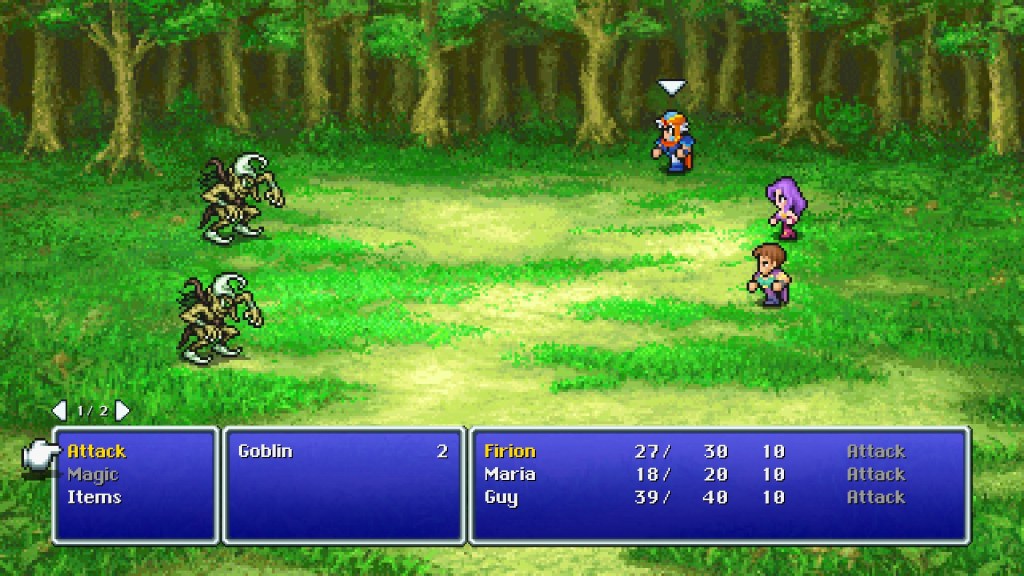
That’s on a surface level though. When actually playing the game, the player realizes that Final Fantasy II is actually a fair bit different than the original and that realization starts immediately. When the player creates their party, they are no longer making four blank slate characters with no personality traits or dialogue. Instead, they get four characters with canon names who have dialogue. The original game was definitely an adventure with story as set dressing whereas this game eyed offering more of a story to go along with that grinding.
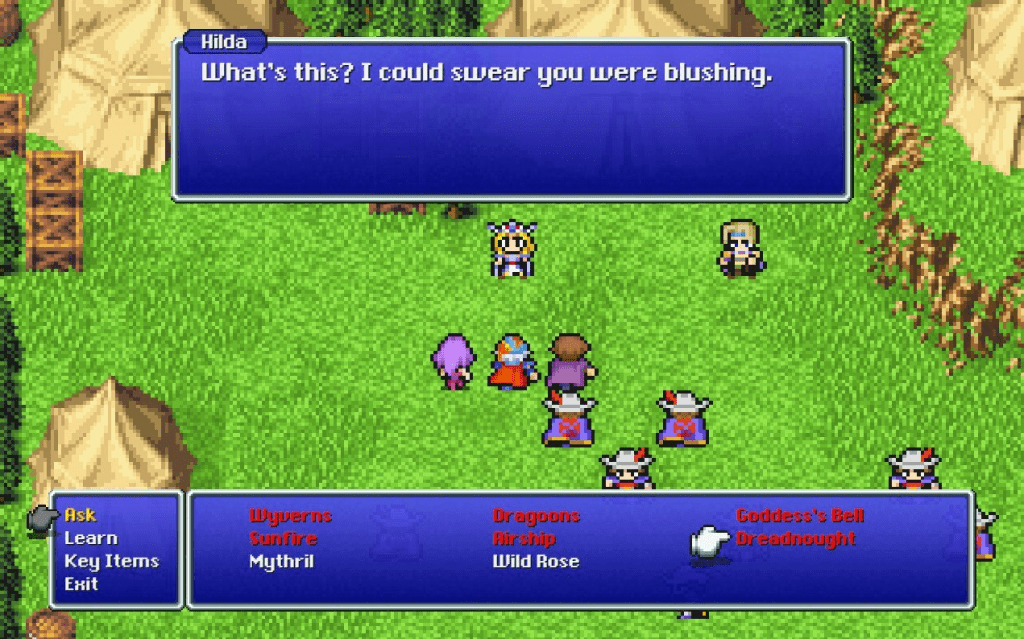
The story isn’t going to win any awards – this was a Famicom/NES game after all – but things are more fleshed out. The player’s main party joins a resistance movement, highlighted by Princess Hilda of Fynn (currently on exile in Altair) and Prince Gordon of Kashuan, to fight against the evil Palamecian Empire that is using demons and technology in order to conquer the world. Every town the player goes to has unique NPCs with unique Empire-related problems. The character section in the last article was relatively short but in this game, it felt like every location had someone new and interesting thrown into the mix. Characters have more to say and they give the player more motivation to go from one location to the next.
Adding to this expanded story is something called the key terms system. You can learn specific terms from NPCs and then ask other NPCs about them, which can change their dialogue and give you more story or direction. This small little step makes the storytelling feel a lot more immersive than in the original game. The player’s conversations with these NPCs that spout like three lines of dialogue total feel more like actual conversations because they are answering questions for the player. It feels interactive! The player doesn’t get key items and have NPCs just psychically know that they have the item, the player has to present it to them specifically. This system would never come back but it does a really impressive job of making Final Fantasy II feel like it has some sort of grand narrative.

Having an actual cast of characters is really nice for those of us who started with later, story heavy Final Fantasy titles. Yes, you can role play as your thief in Final Fantasy I, but at the end of the day “GP or HP?” is a character that lives exclusively on your game cart or save file. When you talk to someone on the playground, they won’t know what the hell you’re talking about. With II, if you want to talk about the main character, everybody has the same one. Firion. Or maybe “Nathan” if you’re one of those weirdos who names RPG characters after your real friends.
I definitely named Aerith and Tifa after a crush or two in my day, no judgement here.
Oh! Aerith! That reminds me…on top of having more narrative, the game takes on a decisively darker tone than the original Final Fantasy. Yeah, chaos and Garland are no good assholes trying to take over the world. But do they actually kill anyone? Thinking as hard as I can, I can’t think of a single character or NPC that gets killed by the bad guys. In fact, every single death in the game can be attributed to the Warriors of Light. Murderous jerks. In 2? Well…

You thought Aerith was the first character to die in Final Fantasy history? No. If you meet anyone remotely important, there is a good chance they bite the bullet at some point. There are literal bombings on cities that take place in this game. Death is all over the place. It reminds me of when people are talking about what will happen at the end of a popular show – it always involves the question of ‘whether X character will die.’ I remember so much speculation about the potential death of Don Draper at the end of Mad Men. Death isn’t the only way to make something tragic! Still, Final Fantasy II kills off roughly a billion characters. I suppose it’s nice that the bad guys actually kill more people than the main party this time around.
The nitty gritty
For as different as this game feels from a narrative standpoint, it feels even more different when you’re actually grappling with the ‘core’ gameplay. I described the original Final Fantasy as a game designed with grinding in mind. Final Fantasy II takes this idea and supercharges it. There are no longer traditional levels. Instead, every single skill your character has needs to be leveled in some way. If your character wants to get better at evasion, you better make sure you have a shield. Got a fancy new sword? Better go out and do some random battles so your character can actually wield it properly. Have you ever played Morrowind? You know how when you start the game your character moves at like two miles per hour and if you want to get quicker you gotta, well, keep moving? This is a lot like that.
The goal of this is to create an immersive experience. If the player wants Maria to play like a white mage, simply teach her the proper skills, give her the right gear and her stats will progress in that way. If the player wants Firion to just be the warrior from FF1 simply jam on that attack button baby and they’re like halfway there.
I looked around to find if there were Western games released around this time frame that incorporated these mechanics. Leveling up every single thing is not terribly uncommon in CRPGs, for instance. But I could find nothing. So I’m not comfortable with saying that Final Fantasy II was the first video game to do something like this, but I will say it feels like Akitoshi Kawazu – the designer most people credit for Final Fantasy II being the way it is – got into a time machine and grabbed a bunch of mechanics from the 90s and tossed them into a blender for a console game released in 1988. Seriously, it feels nuts that an NES/Famicom game from the 80s would have this kind of stuff in it. I would love to ask someone like Todd Howard if they drew inspiration from Final Fantasy II of all things.
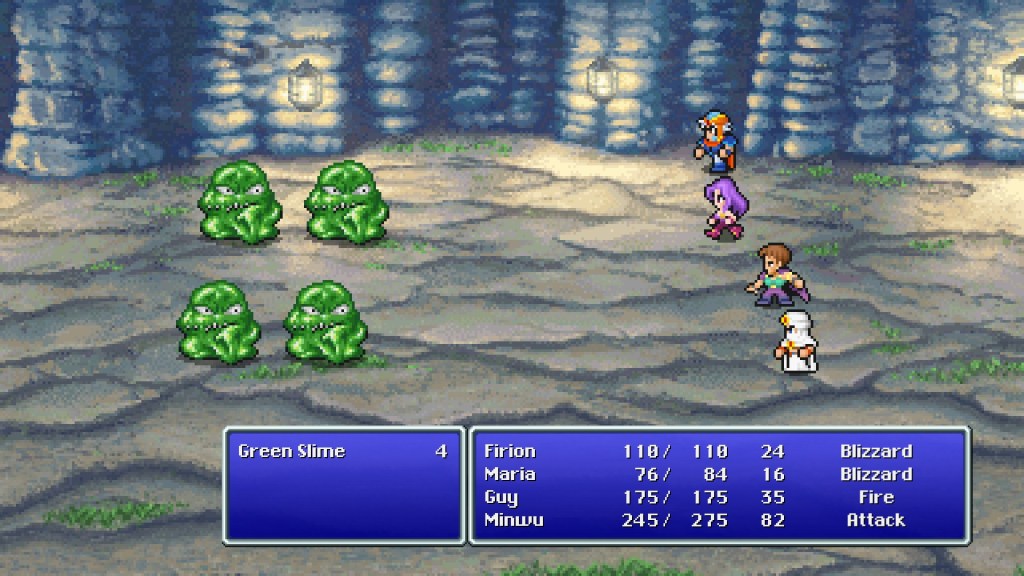
The way I approached the Pixel Remaster version of II was me just playing the game naturally. I had tried playing Final Fantasy II in the past and read about how cruel the leveling system is and just kind of fell off. The consensus best way to level stats for your characters was to wail on each other over and over again until you felt you were strong enough to continue. If you wanted to have your HP increase, you had to perpetually walk around with your HP very low. You needed to cast fire on yourself over and over and over again until it leveled up. Trying to play this way was an immediate turn off, so my suggestion to those playing FFII for the first time is to simply move forward. Don’t worry about over grinding spells and weapons until you HAVE to worry about it.
It’s still a bit of a cruel system because no matter what spell the player is casting, it needs to be worked on. For instance, this game has Esuna. In Final Fantasy X when Yuna casts Esuna, it cures all status ailments as soon as she learns it. In Final Fantasy II, when Firion learns Esuna, the only status ailments it can cure are Poison and Darkness. The player has to keep leveling it up to cure Amnesia, Toad and Stone. On top of that, you also have Basuna in this game. Esuna cures status ailments that persist after battle while Basuna cures status ailments that fade after battle. So if a character gets confused, the player needs to cast Basuna on him. Esuna does nothing. Of course, the player needs to level Basuna up to level 6 in order to cure confuse and the later FF mechanic of just smacking the shit out of a confused party member doesn’t work. So there is a need to grind both Esuna and Basuna if the player wants to effectively deal with status ailments. And you know what that entails? Casting Esuna and Basuna over and over again to no effect in battle. It gets tedious.
This game is grindy. It felt grindy even in the Pixel Remaster and as I noted in FF1, that version took a lot of the grind out of the original. My strategy when going from one dungeon to the next was to just cast spells on repeat in order to level them up. This did not cover all my skills though, at some point I had to pick and choose. So by the end of the game I was using Flare, Holy and Ultima pretty much exclusively as my damage dealing magic. The only buff skill I really bothered with was haste because it was really useful in the original but found it pretty lacking here. So my trips in dungeons consisted of me using the same spells over and over, running out of MP (the D&D-esque charge system is gone) and then attacking over and over. It felt dull and repetitive here, so I can only imagine how an NES player in 2024 would feel.
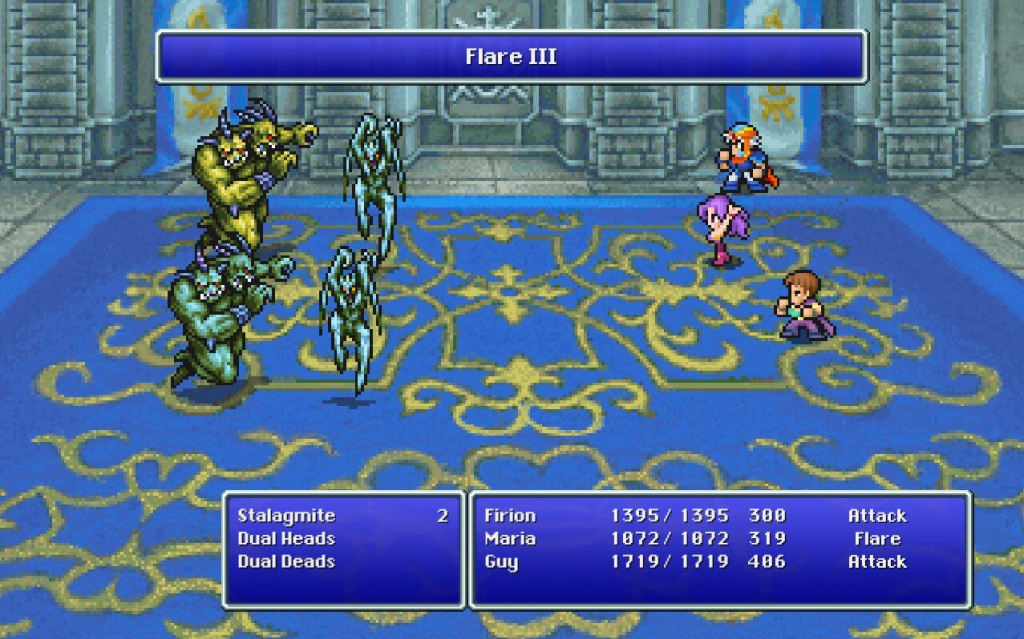
Jackassery
Speaking of dungeons, they are much more lengthy and involved here. I found that basically every one had multiple floors with lots of twists and turns. Even though I feel like my MP wasn’t lacking, I had to cut off my magic grinding less than halfway through most dungeons because I suddenly wouldn’t have the ability to heal myself. I feel like needing to grind every little aspect of your character is a poor combination with the resource management required of early Final Fantasy. This approach encourages the player to grind away from their main objective and as a result, the journey through dungeons feels unexciting because to conserve resources, they mostly running away or just jamming on the attack button. These dungeons are far lengthier than what showed up in FF1, you don’t want to run out of magic halfway through.
Also. This game is an asshole. Observe.
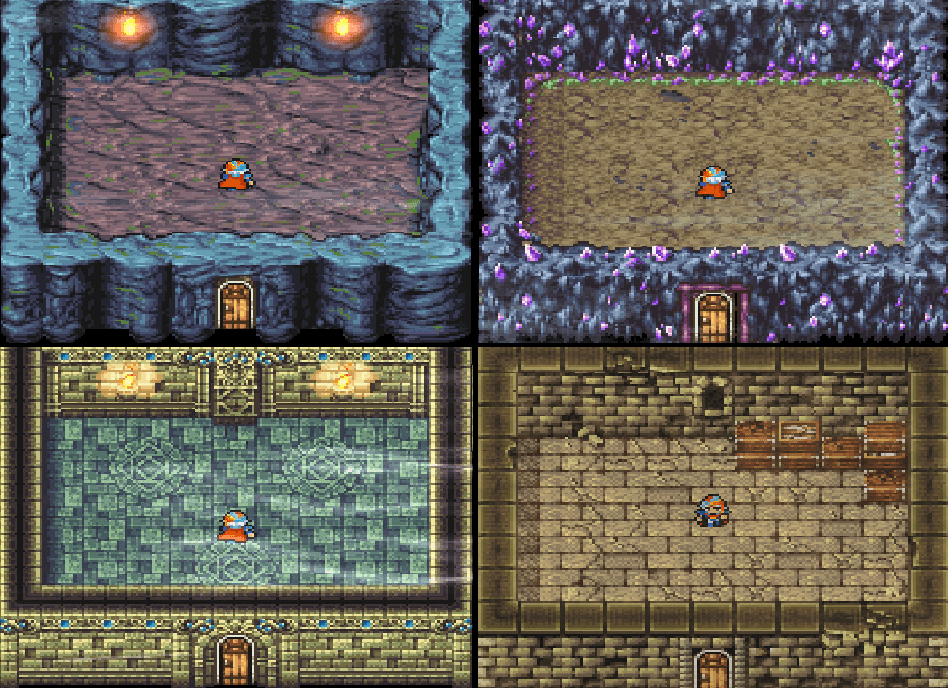
This exceptionally boring looking screenshot compilation is of four empty rooms. Your eyes do not deceive you, they are entirely empty. Nothing. What if I told you every single fucking dungeon is full of these empty rooms? They’re just there for seemingly no reason. If you’re like me, you try to get every single treasure chest that you can. You need those stinkin’ potions! So naturally you go from room to room trying to find all these chests and you get met over and over again with empty rooms. If there are five rooms on a floor, odds are that four of them will be empty. Sometimes more. But I’m gonna check every time because what if the fifth door has something? This actively punishes the player for exploration and encourages them to stick to the main path. If the player goes to every side room, they’re probably gonna get into more random battles, which will further drain their resources. It feels like you are being punished for trying to engage with the game.
Going back to Kawazu’s wacky time machine, I want to discuss another open world WRPG mechanic. Sometimes a game will gatekeep the player from certain areas by placing exceptionally hard enemies in their path. If someone were to run straight for New Vegas at the beginning of Fallout New Vegas, they are probably going to run into Cazadors and Deathclaws, the hardest enemies that game has to offer. It’s a subtle way of telling the player to fuck off. An unsubtle way of this is seen in basically any Pokemon game, where the roadblock can range from “some guy is thirsty” to “a bunch of people are hanging out here for some reason.”
At the beginning of Final Fantasy II, I was mashing monsters left and right. Nothing felt out of the ordinary. However, I went one pixel too far to the left and I encountered this.

I screencapped this because I was excited to see a bomb already. Hell yeah dude, a famous Final Fantasy enemy! What this screencap doesn’t show you is that these bombs self destructed for around 300 or so damage, well beyond what my characters have here. It should be noted that Bombs show up in the final dungeon too. Granted, by then they are pretty weak and easy to manage, but they are legitimately a final dungeon enemy. By going like a pixel off the main path I got destroyed. Some players find these early hard encounters useful for grinding spells since harder enemies equals better stat gains, but since I was trying to do a straight up playthrough without looking for too much guidance, this just served to annoy me. It ensured that I would basically not move a fraction off of the main path. Plus, in a game without autosaves, a random encounter that blows you out can make you lose hours of progress and it just isn’t fun.
There are also things the game doesn’t flat out tell you. Characters can wear any kind of equipment and equip any sort of weapon they want, which is good. But, unless I missed it, they don’t mention that wearing certain equipment has penalties. Heavy armors, shields and certain weapons cut your magic expertise by as much as 70%. The game doesn’t say that your mages actually need to dress like mages if they want to be successful (and if it does, I missed it), so you might just think your characters all suck ass at magic and never bother with it. And then, if you want to level up your defense or your evasion, you need those things, so if you’re aware of this mechanic you might feel the need to have grinding equipment and fighting equipment. Neat for MMOs. Extremely, extremely tedious for single player games.
Did you know that you basically go through the entire game with three characters? Now you might be looking at screenshots and notice that there are four characters in each one, but Final Fantasy II uses a rotating fourth cast member. This character changes all the time and after the first one, they kind of are all useless. Why? Because you haven’t grinded all of their abilities, stats and magic. You quickly get the impression that these characters leave you, so why would you waste time and effort making these characters as powerful as the main cast when they are just going to go away in an hour? You get a permanent fourth at the very end of the game and by then, do you really want to build this guy up so he can cast flare as well as the rest of your party can? As I said, this game is an asshole.

The trimmings
I want to briefly touch on music here. In my Final Fantasy I writeup, I wasn’t terribly kind to the music. I said the Pixel Remaster tracks felt like they came off of an assembly line. So using the magical power of 2024 technology, I modded in the original soundtrack into the Pixel Remaster and I gotta say it’s fantastic. The songs are all very catchy and they feel like they were composed with the NES’s sound chip and limitations in mind. I found myself humming tunes when not playing the game far, far more than I did with FF1’s remastered soundtrack. When playing these games, I think it is absolutely essential to put on Uematsu’s original soundtrack. It’s just fantastic. Sometimes just sticking with the original thing is the way to go and prettying it up for, well, whatever reason, is just unnecessary. I’m not a music guy so you’ll have to excuse me for the shallow analysis.
Final Fantasy II is an ambitious title. It sets out to do so much more than what Final Fantasy I accomplished. It takes the ideas of Final Fantasy I and expounds on them in many ways. I admire it for setting the series tradition of reinventing themselves for each new title. Without Final Fantasy II being a strange mess, you don’t have the weird game about a bunch of orphans with amnesia as the follow up to the game about a bunch of revolutionaries fighting against an evil corporation. I think it had a lot of interesting ideas, but ultimately feels too mean to truly recommend to anybody. I would say if you want to understand the Final Fantasy franchise as a whole, it’s important that you play and try to complete this game. The amount of things here that would go on to be staples in video games as a whole is really impressive, but if you’re looking for an actual solid game that you’re going to want to play over and over again? You should look elsewhere.
The cast
Unlike with Final Fantasy I, you have quite the collection of characters here. Just like with that game, I decided to compare character sprites between the Pixel Remaster and the original.
Firion
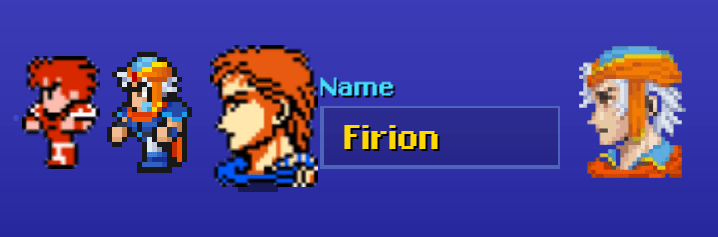
The main character of the game. As you will notice here, he borrows the Warrior sprite from the original Final Fantasy (NES). In the remaster, he gets altered to look more like the official artwork for the character. I was against drastic alterations to character sprites in the original Pixel Remaster, but I feel like since the original Final Fantasy II looks so similar to Final Fantasy I, changing things up is acceptable. These are actual characters now, so making Firion’s sprite just the generic fighter sprite feels unfair to him.
This is still an early JRPG, so Firion still doesn’t have a lot to his character. If I were to sum it up best, just think of generic main character dialogue and you have most of what he says. It’s nothing impressive, but it’s a start. They do have one thing with his character I really like though. There’s a scene where there is an imposter masquerading around as Princess Hilda. In this scene, she tries to seduce Firion – it gets so far that the rest of the party just leave the room because I guess they wanna let Firion get his freak on. And it even seems like it’s going to happen! This is like 30-something years before Clive and Jill laid naked on the beach in Final Fantasy XVI.
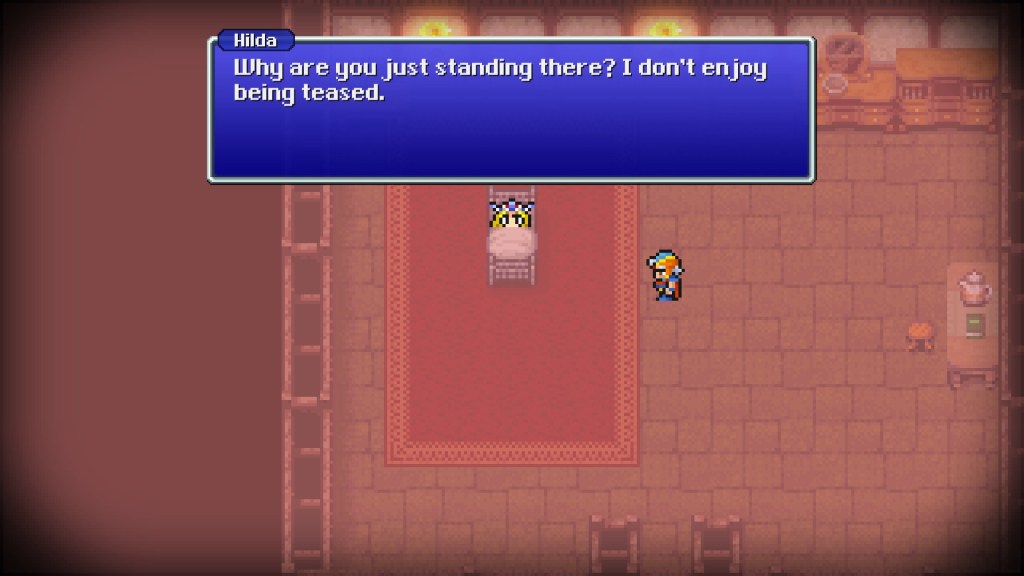
Of course, this is a fake. But it’s a neat little touch to his character. Yeah, he gets all horned up too! I just thought it was hilarious that the party, including Maria who I am pretty sure is supposed to be Firion’s love interest, are just cool with him randomly going to town on the princess during a pretty tense time in their world.
The way I used Firion here was pretty disjointed. At first I tried to make him a magic and sword wielder. I tried to make sure fire, blizzard and thunder were always fairly highly leveled but – since I wasn’t willing to take my armor off during big fights – I decided it was ultimately useless to focus so hard on that. In the end, he became a fairly dedicated warrior and when equipped with the blood sword, he made absolute short work of the final boss of the game. It was actually such an easy victory that I thought maybe I was playing something other than Final Fantasy II. I’ll take it!
Maria
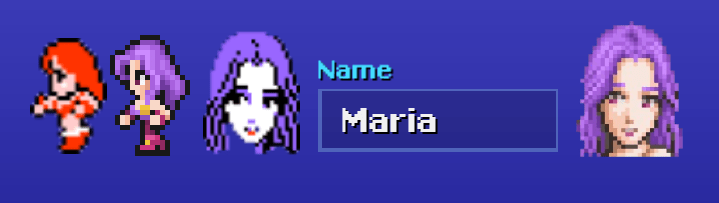
I really like how close the Pixel Remaster keeps Maria’s character portrait to the original. It basically looks the same but less pale. To me, her NES sprite looks like a female warrior. I am pretty sure it’s also a reuse of an FF1 sprite since I think this is how Princess Sarah looks in the 8-bit Theater comics, but I don’t know for sure so I’ll give them the benefit of the doubt. Her new sprite matches her hair color instead of the weird red->purple thing the NES has going on so I like that.
Maria’s actual character is…uhm…I have no idea actually. I feel like she maybe says three words for most of the game. Then you meet her brother who has been acting as the dark knight for the empire the entire game and her character becomes ‘brother of the former bad guy.’ She’s there. But this is your first canon female party member – the white mage in FF1’s gender is ambiguous – so I guess take what you can get?
So when I play games like this, I like to have my lady characters be magic users. Like everyone else in the world. So Maria was pretty much doomed to be my magic flunky throughout the game. Until I got Ultima, her main usage in combat was to be the party healer. I made sure Cure, Esuna and Basuna were all as leveled as I could make them and generally speaking I never ran into too much trouble. I think I ran into two game overs the entire way? Not bad. As a result of this, I will name her MVP of my party.
Guy

Another case where I think the Pixel Remaster does a great job of capturing what the original portrait is going for. I am curious to see how the remasters handle IV-VI considering those are SNES games. Just like with Firion, his Remaster sprite is made to look more like his official artwork which I think is a good call because his original sprite is just a recolor OC Do not steal of the Thief.
Guy’s personality is very simplistic. Apparently his official backstory is that he was raised by wolves. I don’t remember this being brought up in the game, but the first couple of times I saw him speak I thought maybe the font pack I installed with my game altered and fucked up the translation. No…he just talks like a caveman because he’s something of a wild man. Think a more useful version of Gau from Final Fantasy VI, but with none of the bad guy copying skills.
In my playthrough, Guy was an axe wielding mad man who I tried to make proficient in magic but ultimately found it not worth the effort. I didn’t keep it up as long as I did with Firion, but I did at least try to make him a viable Holy and Flare user. I failed, mind you, because with my armor all equipped he was only doing like 100 damage with level IX holy but an effort was made. Perhaps I need to get good. During the endgame, Guy took on some healing duties since I had Maria focused on casting Ultima. But I can’t say he was too great at it. Kind of a jack of all trade and a master of none. Like the red mage!
Oh and he can talk to beavers. He’s the best character in the game.
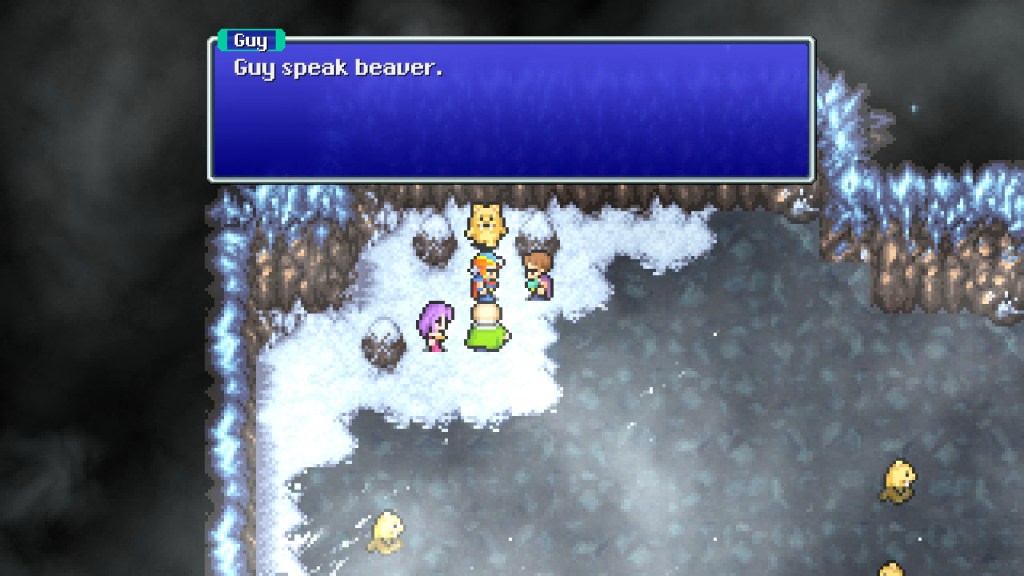
Guy indeed speak beaver.
Leon
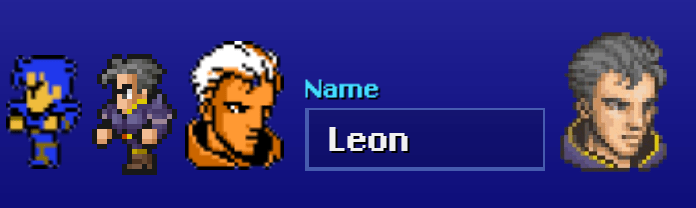
Another warrior edit for this guy, but I kinda like that decision because it gives him and Firion a bit of a Dante and Virgil from Devil May Cry thing. Speaking of Virgil, I feel like his NES portrait looks a bit like what an NES portrait of Virgil would look like. The remaster went with black hair because I guess that’s what his character art looks like. Okay. Probably the one character where I prefer the original.
Despite being the fourth main character on the character naming screen, you don’t actually get Leon until the very end of the game. This is because Leon spends almost the entirety of the game acting as the evil Emperor’s right hand man and generally being an evil asshole. Eventually Leon turns against the emperor and joins the good guys, but it’s not like he ever gets a true character arc. I’d say he’s like a really dumbed down version of Shadow the Hedgehog. No I will not elaborate.
Since Leon is the dreaded ‘fourth’ party member that I mentioned above, he didn’t do much for me at all. I think I just had him attack blindly during the final dungeon. I did teach him flare and a couple of other odd magics but he never really needed to use them because Firion with his blood sword and Maria with ultima were just dominating everything. He got to be part of the final party that saved the world but didn’t contribute very much. What a jerk!
Minwu

I love Minwu’s NES sprite so much. It looks like a character from Mario 2 (U.S.). I think they did a good job of recapturing the feel of it for the Pixel Remaster but damn. The original rules. I also don’t know why they decided to mask him up for the Pixel Remaster when he is maskless in the original. You’re a handsome dude Minwu, no need to hide that face away!
His character trait seems to be reliability. The Joe Kido of Final Fantasy II. He is Princess Hilda’s trusted white mage advisor person and is tasked with joining the crew to go get some mythril so the resistance forces can make some cool weapons to fight the emperor. He leaves the party so he can focus on healing up the King of Fynn. He comes back at some point to help the party acquire ultima and ultimately sacrifices himself to save the group. One of many deaths. But Minwu was an exceptionally useful party member so I was sad to see him go.
He is the first ‘fourth’ party member of the game and honestly he sets unrealistic expectations for the rest of the fourth members. He comes equipped with a bunch of leveled up white magic skills. I mean, just look at this shit

I think my other characters had like 20 MP and level 2 spells max at this point. I liken him to someone like Frederick from Fire Emblem Awakening. A character you get early to make things seem easier. Fredrick becomes useless later because other characters catch up and surpass him whereas Minwu becomes useless later because he leaves the party and fucking dies.
Josef

I love Josef’s sprites. The first one just looks like an old businessman LARPing as an elf. The Pixel Remaster one gives him a gigantic forehead because he does all of his exercising at the library.
Josef is a bit cold towards the party when you first meet him but he eventually becomes a big ol softie when Firion and crew save his daughter from slavers. His main purpose in the game is to give the party a snowcraft in order to transgress an impassable snowfield in order to obtain an item called the Goddess’s bell. He joins you briefly and is probably the most useless of the ‘fourth’ party members. He doesn’t come with any magic and while he fills the monk role you’d see a lot of later – he fights with his fists you see – I don’t think he ever did very much damage. Like Minwu, he dies saving the party. His death involves saving you from a giant boulder!
Leila
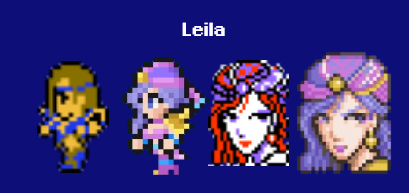
Looks just like a recolor of Maria, so automatically I prefer the remaster’s sprite. I think they did a really good job of making it match with her new portrait. I don’t think I like her having purple hair instead of red hair – especially since we already have one purple haired lady in the crew – but that’s a nitpick.
Leila is a pirate and hooks the party up with a boat, which allows them access to most of the world. There are really only a couple of places that you can’t reach by boat so it’s probably the most useful boat in the franchise? I guess we’ll see. She starts off mean, remember pirate, but joins the party as another relatively useless fourth party member. Unlike Minwu and Gordon she doesn’t die, though I was concerned when she got separated from the party in the Leviathan dungeon, and ends up being a big part of the resistance against the empire. She doesn’t have much of a personality but the pirate lingo makes her stand out so I always liked when she would show up. At the end of the game she suggests Firion becomes a pirate with her, which apparently upsets Maria. Firion is a lady’s man!
Gordon
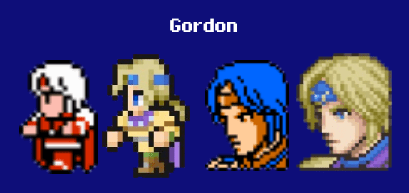
Damn, I love Gordon’s NES sprite. The white hair looks cool on him. I don’t understand why the NES portrait looks like Marth but, you know, that was the style at the time.
Gordon is the prince of Kashuan and has probably the only thing resembling a character arc in this game. He starts the game being a depressed coward because he feels like he let his brother, Scott, die. Eventually he decides to prove himself and in doing so helps the party defeat a giant airship that had been bombing all of society. The king of Fynn even acknowledges him and gives him a prominent position in the rebellion’s forces. He later agrees to partner up with Hilda, the princess of Fynn, in order to build up their kingdoms from the depths the empire has plunged them to. It’s not exactly the most compelling character arc, but it’s something! Oh and he’s another useless fourth party member. I got nothin’ on his gameplay because I legitimately don’t remember it.
In some versions of Final Fantasy II, Scott is a playable character. I generally feel like the bonus dungeons added to some Final Fantasy ports really suck and are rarely worth doing, but hey, he’s there if you want him. Since this remaster is supposed to be relatively faithful he was not a playable character here. It’s okay Scott, you were engaged to Princess Hilda before the game started, you won in some small way right?
Ricard
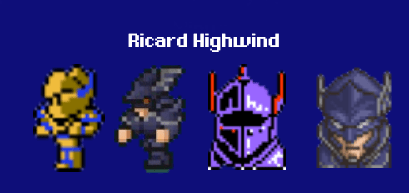
God damn look how cool Ricard’s NES sprite is. And he’s a good guy! This guy would have been a mega hit over here if it hadn’t released 15 years later. Since he’s kind of a dark character, I definitely agree with the decision to make him look kinda edgy in the Pixel Remaster. I don’t like his portrait as much though. Hide that mouth fella.
Ricard plays the role of the last dragoon in the world. That’s right, the extremely popular and beloved dragoon class debuts here. Want a character to be a megahit? Give them a spear and make them friendly with wyverns, odds are they will be one of the most popular characters in your game. Your party meets Ricard in Leviathan’s guts and he basically just exists to save the party from the emperor. He sacrifices himself so your party can regroup and challenge the emperor another day. Three of the five ‘fourth’ characters die. Not good odds!
In combat, Ricard had a pretty damn solid attack stat because he was putting up numbers comparable to Firion while he was in my party. He is probably the most useful fourth since Minwu, but he isn’t around long enough to make much of an impact. He also has no magic but he was hitting so hard that I didn’t mind it for once.
Princess Hilda
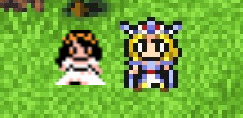
Princess Hilda is the second princess in the Final Fantasy universe and immediately she is a lot more memorable than Princess Sarah. Why does Sarah get used so much more in other media? It’s not fair! Her deal is that her kingdom, Fynn, has been overtaken by the empire so she is working with rebellion forces to take it back through their hideout in Altair, the game’s first town. She ends up giving the crew a lot of their tasks, starting with FIND MYTHRIL and evolving to STORM FYN AND TAKE BACK THE CASTLE. She was engaged to Gordon’s brother Scott at some point, but he died and I believe the game suggests her and Gordon are going to pair off now in order to help recover the world. Neat.
I decided not to make a separate character entry for the King of Fynn because he spends the entirety of the game either sick in a bed or dead. He’s not much of a character, so I consider Hilda the true face of the kingdom.
In case you were curious, this is the follow up to Firion and fake Hilda’s romp. It made me chuckle at least.
Cid
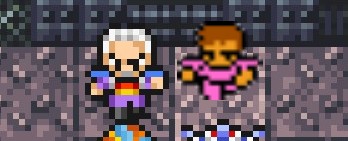
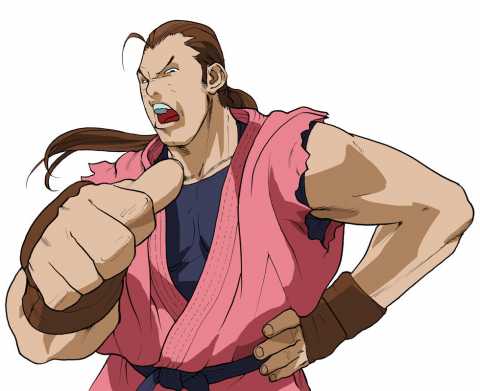
I like how NES Cid looks like Dan Hibiki of Street Fighter fame.
This is the official debut of the eternal Cid character. For those of you that don’t know, every Final Fantasy title has a character named Cid in it. Their importance varies from title to title. In some Final Fantasy games he is an important NPC, in some he is a playable character and in others he is an old mechanic that lets you perv on his mechanic daughter. He is typically an engineer of some sort or has a fondness for airships.
In Final Fantasy II he falls into the NPC line of Cids. His main purpose is to provide air travel to the party – at first he has an attendant that will charge you to fly to various world map locations but eventually you get his airship because he dies. A net gain, dare I say?
Paul

Paul is a thief character that is part of the resistance. He owes the party a debt because they saved him from a bunch of slavers in the game’s first dungeon, Semitt Falls. To repay this debt, Paul busts the crew out of prison, gives information about how to open up a secret passage at Fynn castle and even gives you a blood sword – well the location to it anyway – if you talk to him at the right time. The blood sword makes the end of the game a complete cakewalk so I really like Paul! The NES version of him appears to play up on his status as a thief by making him a ninja while the remaster goes more with updated renditions of his appearance. I prefer ninja Paul, he doesn’t have a bowl cut.
My favorite sprite, Ogre Mage
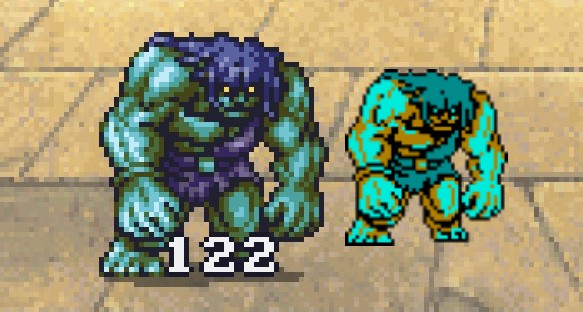
Just like with Final Fantasy 1, I just wanted to highlight a random enemy sprite I really like. This time it’s a very early enemy called the Ogre Mage who…yeah, I bet you can guess everything about him by his name. I really like the shadows over his eyes, it makes him look really demented. He reminds me of Sloth from Full Metal Alchemist.

Forces of the Palamecian Empire
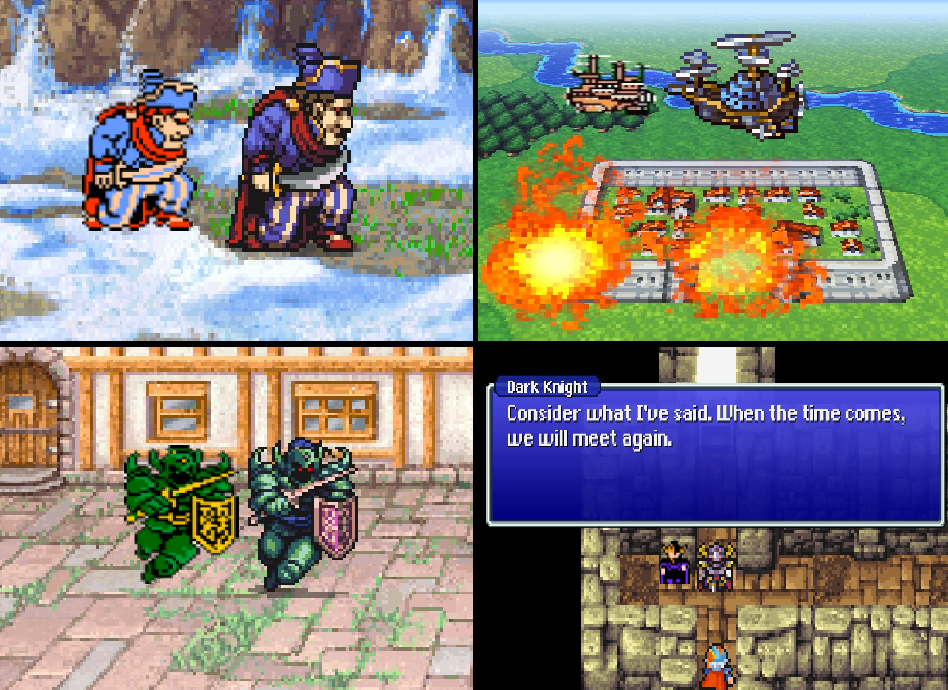
The main badguys of the game! The connection between all of the villains is made a lot more obvious here because they are all part of the same empire, there isn’t some 2000 year relationship going on! So let me break down these four screenshots real quick.
Upper Left: Borghen. He’s a sniveling coward who betrays the kingdom of Kasuan because he sees the tides turning and wants to join the winning team. He’s portrayed as incompetent, though he does manage to kidnap Josef’s daughter Nelly at some point. The party runs into him while trying to find an item called the Goddess’s Bell and the boss fight is great because it’s one of those times where the gameplay matches what the story tells you – this guy is a joke. But upon death he triggers a boulder that kills Josef because even this joke character has to get a confirmed kill. I like to think this guy laid the ground for characters like Solt and Peppor from Chrono Cross or Zorn and Thorn from Final Fantasy IX.
Upper Right: The Dreadnought. The first portion of the game involves the rebellion trying to destroy this thing. It is a warship of immense power and is probably the most devastating weapon that the empire has available to them. You destroy it by trekking through it like a dungeon and tossing some sunfire into the engine. I found this to be one of the game’s more intimidating dungeons because I ran out of MP about halfway through, I had no ethers and I couldn’t exit to go heal up. I was very grateful there wasn’t a big boss at the end of the dang thing. I was pretty surprised when an early game cutscene shows this giant ship just flat-out bombing cities. Impressively, it even changed the look of the city. I’m not sure if this happened in the NES version or not, so if this is a Pixel Remaster exclusive…nice touch!
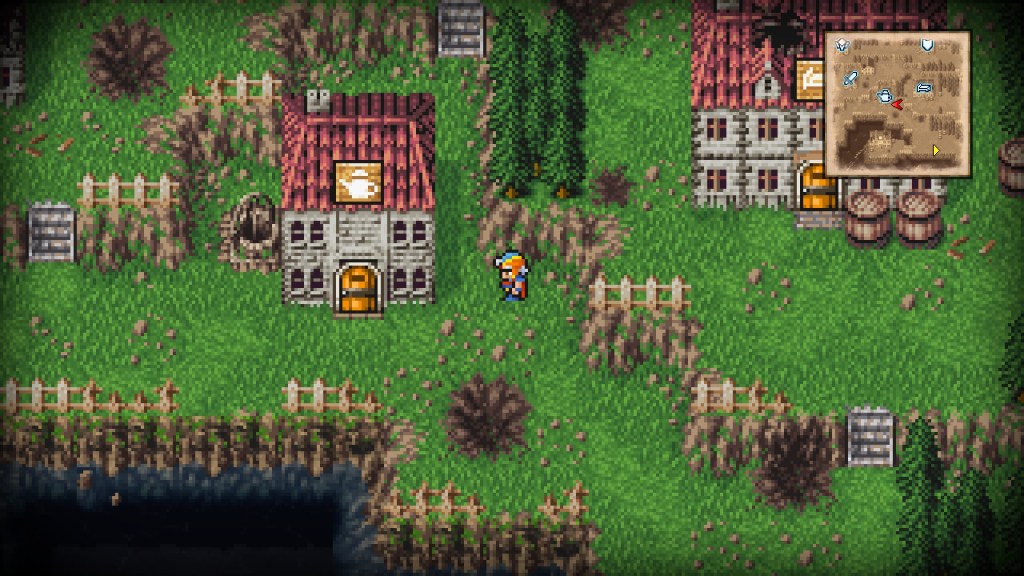
Lower Left: Captain. The Captain is not a major character, but I thought he would be a good choice when talking about the grunts of the empire. When the party goes to Fynn, something strange happens that doesn’t happen in any other town in this game. Random battles! This is an excellent little bit of gameplay serving the story because Fynn is overrun by the empire so it makes sense that this town is swarming with baddies. The Captain comes in as an elite unit the party has no chance of beating the first time they arrive into town. You are told to stay away from them – they aren’t random battles, they are NPCs – because you don’t want to raise alarms that the resistance is moving around. It would be wise to listen to the warnings because the Captain one shot every member of my party with ease. When you actually liberate Fynn later in the game, it feels like some nice progression being able to explore the town without fear of a Captain wrecking you.
Lower right: The Dark Knight: Final Fantasy titles love their brooding dark knights. The Dark Knight here is the right hand man of the emperor for most of the game and later tries to ascend to the throne when he believe the emperor has been killed. It turns out that this character is Leon, the party’s fourth member that they were separated from at the beginning of the game. The game never says why Leon turns to evil but I appreciate that they never excuse away his actions by saying he was brain washed or he couldn’t help it. When he joins the party, he never acts overly friendly towards them either. He’s just there because a bigger threat arrives. I think he’s probably the most interesting villain in the game just because what drives him is mostly a mystery.
The Emperor
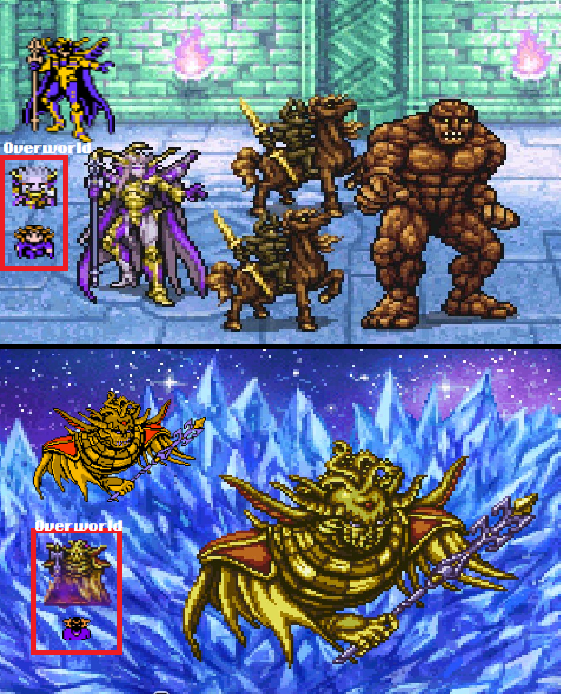
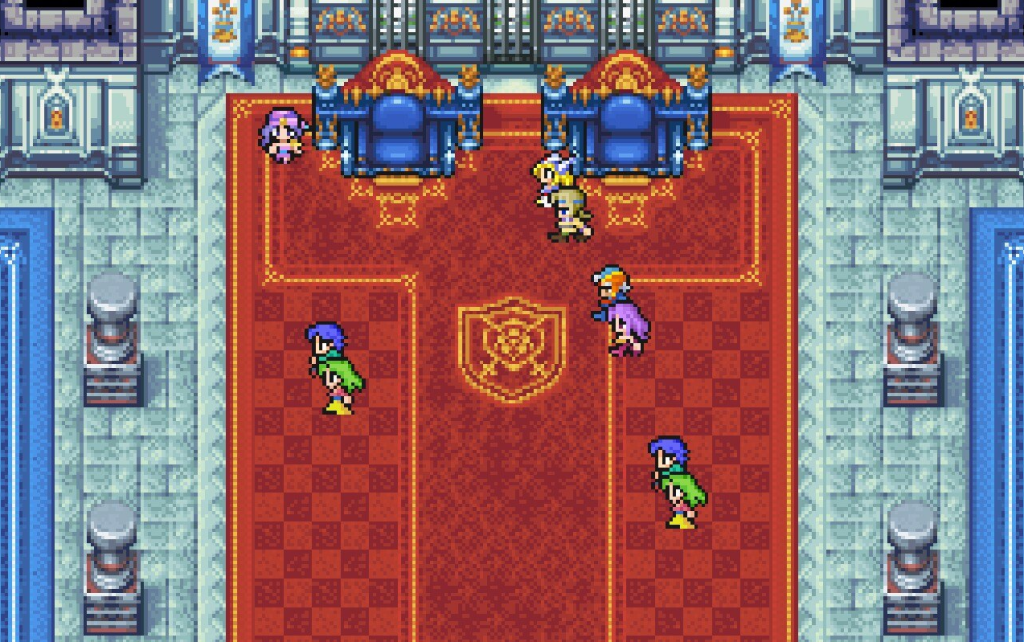
Apparently this guy is also known as Emperor Mateus, but I never saw that in the game so I’ll stick with just calling him “The Emperor.” If you close your eyes and think of the most generic evil dude ever, well, you got him. He wants to destroy the world and will use magic and technology to achieve those goals. In your initial battle with him, he is portrayed as something of a coward because he summons a bunch of guards to help him out. He’s a bit of a pushover here. The game goes to a lot of lengths to convince you that he’s dead and that the Dark Knight is now the true main enemy. They even celebrate his death with a fun dance at the castle in Fynn!
He’s not done though. He comes back from the dead by conquering hell or something – the specifics of it are vague but he says that he gained powers in hell and will topple your forces and presumably the world. This is when the Dark Knight decides to become Leon again and help the party save the world from the obviously bigger threat. I think the Remaster does a good job with his overworld sprite because he looks far more intimidating and boss-like upon his return.
The Emperor serves as the final boss of the game and compared to Chaos he’s a bit of a joke. If you remember with Chaos, I had went beyond the level cap of the original Final Fantasy and was still struggling to defeat him – it was an absurdly challenging battle that represented a large step up in difficulty from the rest of the game. The Emperor on the other hand is stupidly easy, as long as you have the blood sword. Firion was causing like 7,000 damage per hit with his sword and Maria was causing over a thousand with Ultima. Maria also still had normal armor equipped so if I had died, I would have stripped her down and assumedly hit far harder. He’s probably a fair deal more difficult without the blood sword, but if the game is going to give me an easy way to deal with the final boss, why wouldn’t I do that?
It started here
Here is a look at some franchise staples that got their start with this game.
Cid, the word Highwind (Ricard’s last name), main character deaths, Final Fantasy ‘sequels’ having nothing to do with the previous entry
These are touched on above so I won’t go into much more detail about them. The Cid thing is fun because everybody knows about Cid and everyone has a favorite Cid. Me? I’m a basic bitch and my favorite Cid is Cid Highwind from Final Fantasy VII. The word Highwind also goes on to become a bit of a Final Fantasy staple. Fun fact, in the very first Kingdom Hearts game you have to run a race against Riku, the rival of the main character Sora, and the reward for winning is the ability to name your ship. In my first playthrough, I of course entered the name Highwind and was pleasantly surprised to see that Riku had also chosen that as the name for the ship. It felt extra good considering I don’t think I have ever won that race despite playing Kingdom Hearts 85,000,000 times in my life, so I never actually got to name the ship myself, but it still got the name I wanted. Why does Sora act so distressed over it? You got the name you wanted buddy!
The sequel thing is definitely the most important part here and is a key element of the franchise. I think III regresses things a little bit and is a bit more like the first game, but generally each new Final Fantasy reinvents itself in some way and feels a lot different than what came before it.
Chocobos
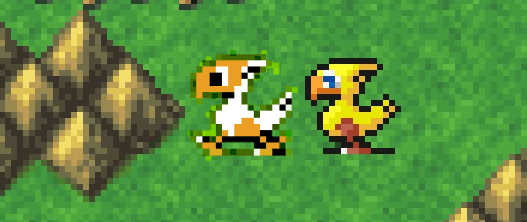
That’s right, we got our first mascot! The Chocobo Forest is south of Kashuan and is pretty well hidden, to the point that it almost feels like an easter egg for players familiar with the franchise. But no, it was always there and Final Fantasy II is just a mean game that doesn’t want to give you easy access to a ‘skip battle’ mechanic.
The chocobo functions much like it does in later games. You find one and ride it around the world map. You can’t enter towns with it, but while you are riding you move quicker and random encounters are disabled. In the console version of the remaster and modded PC versions you can just turn off random encounters if you want to, so the chocobo being here is even more of a ‘fun little easter egg’ for those players.
Sadly no chocobo inbreeding until Final Fantasy VII.
Unwinnable battles
A fine JRPG tradition like no other. Occasionally you will have fights that you can’t win no matter what you do and just exist to progress the story. The one I remember most vividly in my head is Beatrix from Final Fantasy IX. This game starts out with an unwinnable battle that separates Leon from your crew and gets your characters to join the resistance. I like these in the sense that it really helps show your party’s progression when you fight unbeatable enemies again and come out on top.
Familiar monsters

I feel like it’s a good thing to point out the first appearance of iconic enemies in the franchise. Here’s a little mashup of some familiar faces. The one that may not be as immediately obvious is the iron giant in the top right. He looks far more sinister than later incarnations of that baddie, I actually prefer this aesthetic. I think I like the NES version of the (King) Behemoth because it looks like it has a giant fin on its back. Ya gonna go swimming or something buddy?
MP (Magic Points)
Mentioned exceptionally briefly above, but Final Fantasy I used magic charges while this game introduces the MP system to the Final Fantasy franchise. Most games in the franchise use it from here on out, with the most prominent exceptions leaping to mind being Final Fantasy VIII (which replaces it with the junction system) and Final Fantasy XVI (which is an action game and has different mechanics all together). I think the charge system worked great for what Final Fantasy I was going for, but MP suits the franchise better as a whole. Oh, charges are back in FF3? …Well okay!
Ultimate weapons for real this time, I swear
The Excalibur comes back! Again! But this time it’s overshadowed by the blood sword, which I am far more comfortable in calling an ultimate weapon than the Masamune or Excalibur from the original. The blood sword doesn’t work against every enemy in the game, its actual stats are lower than several other weapons, but it does work against every big enemy in the final dungeon which I think goes a long way into cementing its status as an ultimate weapon. There are several hard enemies that pop out in chests in the final dungeon and the blood sword makes short work of them and I’ve already mentioned how the final boss gets obliterated by it.
Dual wielding weapons

What would later go on to become the calling card of the ninja job, dual wielding starts here. Every character can dual wield every type of weapon, except those that require two hands to wield (bows). You can also dual wield shields if you want to. This is handy for grinding up weapon levels since you can do two types if you so choose to. For me, in more cinematic titles, when a character reveals they dual wield they instantly become way cooler. To mention Kingdom Hearts again, one of the things I remember the most about the original’s secret ending is when the mysterious cloaked figure (who would go on to become Roxas) pulled out his second keyblade. At that very moment I became obsessed with what the next Kingdom Hearts game would look like. I would like to think I have Final Fantasy II to thank in some small way for that.
In conclusion
Final Fantasy II is an ambitious but flawed game that can feel like it’s actively punishing the player for trying to get the most out of it. It feels like a game created with knowledge of future mechanics but without the knowledge of what makes them work or fun to engage with. I admire the heck out of it and cannot bring myself to hate it, I legitimately don’t understand people who plop it on ‘worst game ever made’ lists because it absolutely doesn’t belong there.
Just like with the original Final Fantasy, it’s a good idea to at least try the NES version before jumping into the Pixel Remaster. It’s nice to gain some perspective on what it originally looked and felt like. Unlike with the original Final Fantasy, I feel like you don’t lose out on a whole lot by sticking with this version of the game. Even with some quality of life and balance tweaking, the Pixel Remaster still feels like an ancient grindy NES game.
For most players, you only need to play a little bit. There is no need to beat the whole thing just to claim you’ve beaten every Final Fantasy. It’s worth sticking through to see all the innovation as it can help you appreciate what the title is going for, but don’t feel bad if you get annoyed and bounce off of it.
My score: 2 out of 5
Up next
Final Fantasy III, Jobber to the Stars
Previous: Final Fantasy I
 Vidya Thoughts
Leave a comment