
NOTE: This is best read after playing Like a Dragon Gaiden: The Man Who Erased His Name. I do not mark spoilers, so if you want to experience the end to the game yourself, I suggest you go play.
When you sit down with a television show or movie, you give a commitment of time to it. For a movie, let’s say two-and-a-half hours. For a series of 10 movies, that’s 25 hours of time. For a television show, this expands a fair deal. The running time for a drama that most of you reading knows about, Breaking Bad, clocks in at around 60 hours. For a series like the Simpsons, that has been going on for basically forever, that running time is 200 hours.
This is where video games set themselves apart. For a long time, I considered a ‘long’ playtime of a game to clock in at around 60 hours. I’m just talking about single player RPGs here, for an MMO this is basically baby stuff. In my playthrough of Persona 5 Royal, I think I spent around 100 hours with that cast of characters. 100 hours with Joker and Makoto, 60 hours with Walter White.
This time, think about a long running video game franchise. Earlier we established for a series of 10 movies, you’d have around 25 hours of run time. Let’s expound on this and think about the James Bond movie franchise. 53 and a half hours for all 25 movies. A pretty solid amount of time to understand one character I would say. That’s still shorter than your average long video game. But what about a series of long video games?
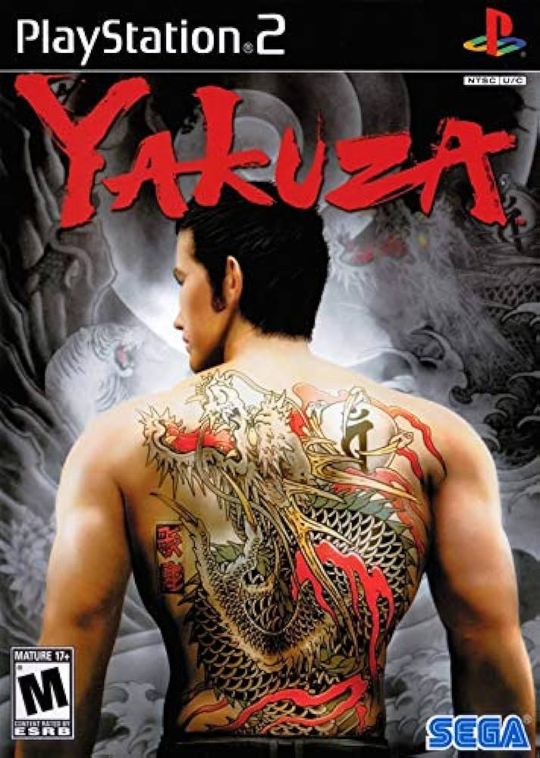
The Yakuza franchise has been running since December 8, 2005 and encompasses seven (soon to be eight) mainline titles and several spinoff games. The franchise, up until Yakuza: Like a Dragon, focused primarily on the exploits of Kazuma Kiryu. If you focus primarily on the main story of every game that has been released in the West, you’re probably looking at well over 200 hours of gametime. Roughly as many hours as one would put into watching every episode of The Simpsons. If you do every substory and try to experience as much of the story of every game as possible? Your playtime is going to eclipse 500 hours and that is probably being conservative. 200 hours for 34 years of watching Simpsons. 500+ for 18 years of Yakuza where you get to live through the exploits of a fictional character.
That’s 500 hours of getting to know Kazuma Kiryu. There are people who have spent more time with this virtual former Yakuza than they have with their own real life friends. As one of those people who has sunk 500+ hours into the franchise, I feel like I have gotten to know Kiryu very well. He is a stoic man. He has a kind side and will help basically anybody who is down on their luck, but he doesn’t seem overly sentimental about it. He does show a love and fondness for people he considers ‘family’ (A young girl/woman as of Y6 named Haruka that’s essentially his adopted daughter, her son Haruto and a crew of orphans) but I don’t think he is outwardly sappy about it. You just know he cares.
Not only have we sunken a lot of time into playing as Kiryu, but we have also got to experience him in various stages of life. This is one of the big benefits video gaming has in terms of storytelling. In Breaking Bad, if you wanted to show a 17 year old Walter White, you would need to hire an actor to play him. In Yakuza, no matter what, Kiryu is going to look like and be the same Kiryu. Through playing those 500 hours we have seen Kiryu in various stages of life. We have seen him take the fall for a murder he didn’t commit, we have seen him basically adopt a young girl, we have seen him fall in and out of love, we have seen him become the patriarch of the Dojima clan only to vacate it, we have seen him ‘retire’ into life as a taxi driver and we have gotten to see him be a lovable ol’ grandpa. There is no ‘other’ Kiryu actor. Kiryu is Kiryu.
The latest game in the Yakuza/Like a Dragon franchise (Like a Dragon Gaiden: The Man Who Erased His Name) enters us into another phase of his life. He is a man who must pretend he is dead in order to protect his loved ones. He has basically no interactions with familiar faces from those 500+ hours of gametime. There are only small little parts in the story for series mainstays like Haruka Sawamura, Goro Majima, Taiga Saejima and Daigo Dojima. We only know how Kiryu feels about these people because we have played previous games where he is the star.

Taking him away from those he loves makes for a very isolating experience. The game takes place in familiar territory, but everything feels so foreign. We know this is the guy we’ve spent so much time with because the game explicitly tells us that he is Kiryu, but he spends most of the game’s runtime being referred to as Joryu. Kiryu is supposed to be a dead man, so we have this new identity. Most of that time as Joryu is spent around characters the player probably won’t be familiar with. You’re playing as someone familiar yet someone different.
Yet at the end of the game, we experience something that feels so much deeper because of how much time we’ve spent with Kiryu. As I’ve said, we know he is a stoic man with a heart, but he isn’t usually put into situations where he can’t interact with his loved ones. This game saves the first interactions with his ‘family’ for the very end. A camera spies the orphans that he cares about visiting his fake grave. A pair of those orphans notice the camera and start talking to it. They never bought that their ‘Uncle Kaz’ was dead and take this as a sign that he’s still kicking. They proceed to tell him about their life.
As the player, you know this is the one area Kiryu cares deeply about. He loves those damn kids. So you are aware that what you are watching has weight. Your mind might flashback to Yakuza 3 where you experience a great deal of playtime hanging around these orphans. You might remember Kiryu putting on a wrestling match to cheer one of these kids up, you might remember Kiryu trying to find out who stole some money from one of the kids, heck you might even remember having to make donations back to the orphanage during Kiryu’s time as a taxi driver in Yakuza 5.

But what really sells that weight is Kiryu’s reaction. He openly sobs. And not just silently crying as he watches something, he does what I can best describe as ‘ugly crying.’ As the orphans talk into the camera about their lives since the death of ‘Uncle Kaz,’ you hear as his breathing gets more and more shallow. You hear everytime he starts to choke up. You hear him sob. You see tears drop onto the screen. Because you spent so much time living as Kiryu and getting to know him through the franchise, this moment feels exceptionally powerful. You’ve seen Kiryu cry. You’ve never seen this.
His voice actor gives such an amazing performance here that I sincerely worry about how the English dub patch will convey this. Kiryu has been voiced by the same man (Takaya Kuroda) since the inception. So when you hear Kiryu break down, you hear the same voice you’ve heard for years doing it. It’s like a dear friend finally can’t deal with it anymore. Will his new English voice actor YongYea be able to get across these same complex feelings in a different language? Doubtful.
The conversation ends with the orphans saying they were gonna bring everyone back ‘tomorrow’ so they could talk with Kiryu too. They even promise to bring a present! Unfortunately, since Kiryu is supposed to be dead and since the orphans weren’t actually supposed to spot the camera, there is no second video. The camera got removed. However, the gift still comes. You don’t get to physically have it because how can a dead man take something? You get a picture of it instead. It’s a drawing made by what is the equivalent to Kiryu’s grandchild. Haruka’s son. It even has Kiryu in it.
When the player sees this, their mind might flash back to Yakuza 6. The feeling of shock when you discover Haruka now has a child and all the missions spent walking around and comforting this kid. You don’t know much about this kid’s personality now, but you were there from the beginning. You spent probably 50 hours with that little kid. You had to move the controller up and down to comfort him when he cried. He’s Kiryu’s ‘grandson’ but you are aware of him too. You spent time with him.
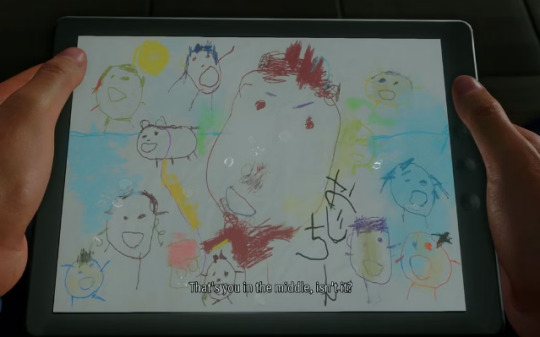
And Kiryu’s tears and reactions to this young boy are every bit as gut wrenching as you might expect. You want nothing more for him to go back to his old life in Kamurocho. You want him and Majima to have one more fight. You want Daigo to show up and be like “Look dude, I need ONE more thing from you.” But that time has passed. That Kiryu is gone. And in that moment you feel it. Life has continued without him there and the kids are doing well and he did all he could for them while he was ‘alive.’ He accomplished something great and as a person who played 500+ hours, you feel a piece of that too.
The feelings you get here are feelings that are exclusive to video games. You simply watch Walter White build his meth empire. You simply watch James Bond race around really shitty CGI icebergs. You got to experience these moments Kiryu went through because for 500+ hours you were there too. You were playing pocket circuit like an idiot, you were training up that number one hostess. You put in the time and you got rewarded for it.
In short, Like a Dragon Gaiden: The Man Who Erased his Name is everything that is right about storytelling in video games. It is an experience that can mean something if you merely watch it on youtube, but if you truly put in those 500+ hours it feels a lot more impactful. I can’t wait to see where we go from here.
 Vidya Thoughts
Leave a comment